




Agartala does not announce itself the way most Northeast Indian capitals do. There are no Himalayan peaks visible from the city, no great river bending through its centre, no ridge-top drama. What Agartala offers instead is something more intimate and more layered: the accumulated cultural weight of a royal dynasty — the Manikya kings — who ruled Tripura for over five centuries, the most Bengali-influenced capital in the Northeast, and a city that sits in one of India’s most geographically extraordinary positions — almost entirely enclosed by Bangladesh, connected to the rest of India by a thin land corridor.
The city’s character is shaped by this unique geography and history. Bengali and Kokborok languages coexist in the markets. Hindu temples built by the Manikya kings stand alongside government buildings inherited from the colonial era. The Ujjayanta Palace — built in 1901 and now a state museum — anchors the city centre with an architectural ambition that speaks to a royal house determined to demonstrate its cultural sophistication. And around every corner, Tripura’s indigenous tribal culture — the Kokborok-speaking Tripuri, the Reang, the Jamatia — adds a dimension that complicates and enriches what might otherwise be a straightforwardly Bengali city.
Quick Facts About Agartala
| State | Tripura |
| Role | State Capital |
| Altitude | 12 metres (nearly at sea level) |
| Language | Bengali, Kokborok, Hindi, English |
| Religion | Hinduism (majority); Islam; Christianity; tribal faiths |
| Airport | Maharaja Bir Bikram Airport — 12 km from city; connected to Kolkata, Delhi, Guwahati |
| Rail | Agartala Railway Station — connected to Kolkata via Assam |
| No ILP Required | Tripura is open to all Indian nationals — no Inner Line Permit needed |
| Foreign Nationals | Standard Indian visa; no additional permit |
| Best Time | October to March |
| Bangladesh Border | Akhaura border crossing — 4 km from Agartala city centre |
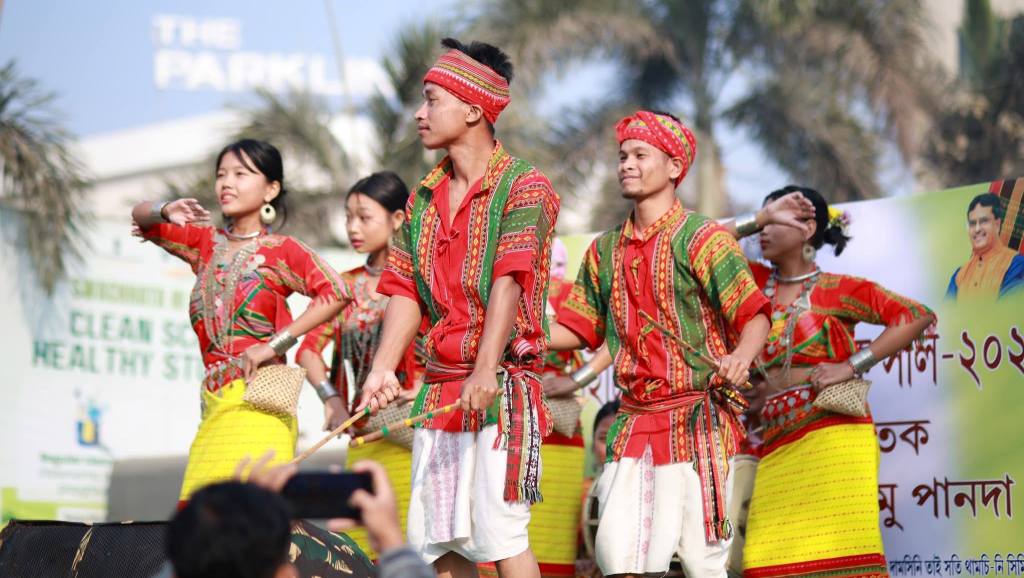
The People of Agartala: Bengalis, Kokborok & the Manikya Legacy
Agartala’s population reflects Tripura’s complex demographic history. The state was ruled by the Manikya dynasty — a Kokborok-speaking Hindu royal family whose lineage dates to at least the 14th century — until its accession to India in 1949. Under Manikya rule and particularly following the partition of Bengal in 1947, large numbers of Bengali Hindus migrated to Tripura from what became East Pakistan (now Bangladesh). Today, Bengalis form the majority of Tripura’s population, while the indigenous Tripuri (Kokborok-speaking) communities comprise approximately 31%.
Kokborok language and culture: Kokborok, the language of the indigenous Tripuri people, is a Tibeto-Burman language with its own script and a literary tradition of considerable depth. The state government has made Kokborok an official language alongside Bengali, and efforts to preserve and promote it — in schools, in media, and in cultural institutions — represent one of Tripura’s most important ongoing policy commitments.
The Manikya royal legacy: The Manikya dynasty’s cultural contribution to Tripura extends far beyond the Ujjayanta Palace. They built temples, patronised literature and music in both Bengali and Kokborok, established the pilgrimage tradition at Tripura Sundari (Matabari), and maintained a court that was a genuine centre of artistic and intellectual life. Their legacy is the most visible connective thread in Agartala’s heritage landscape.
Garia Puja and tribal festivals: The Garia Puja — a major festival of the Tripuri tribal communities — is one of the most important cultural events in Tripura. It celebrates the Garia deity associated with prosperity and well-being, and its rituals, performed with bamboo poles, traditional costumes, and community dancing, represent the living tradition of Tripura’s indigenous culture.
| Important: Tripura does not require an Inner Line Permit — it is one of the most accessible states in Northeast India. All Indian nationals can travel freely without any advance permit. This makes Agartala an excellent first-time Northeast India destination and an underrated gateway to the region. |
Top Attractions in Agartala
1. Ujjayanta Palace — The Royal Heart of Agartala
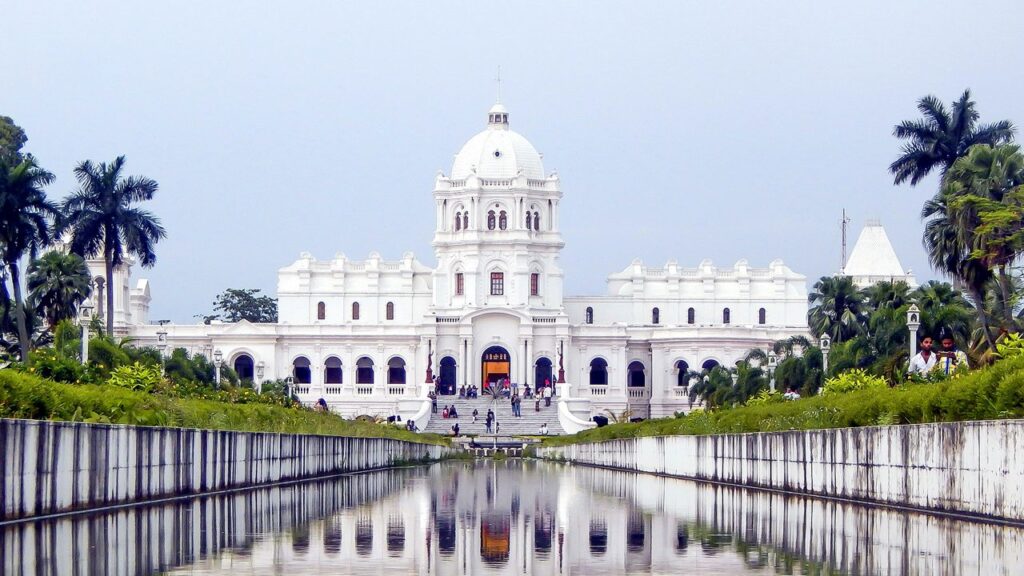
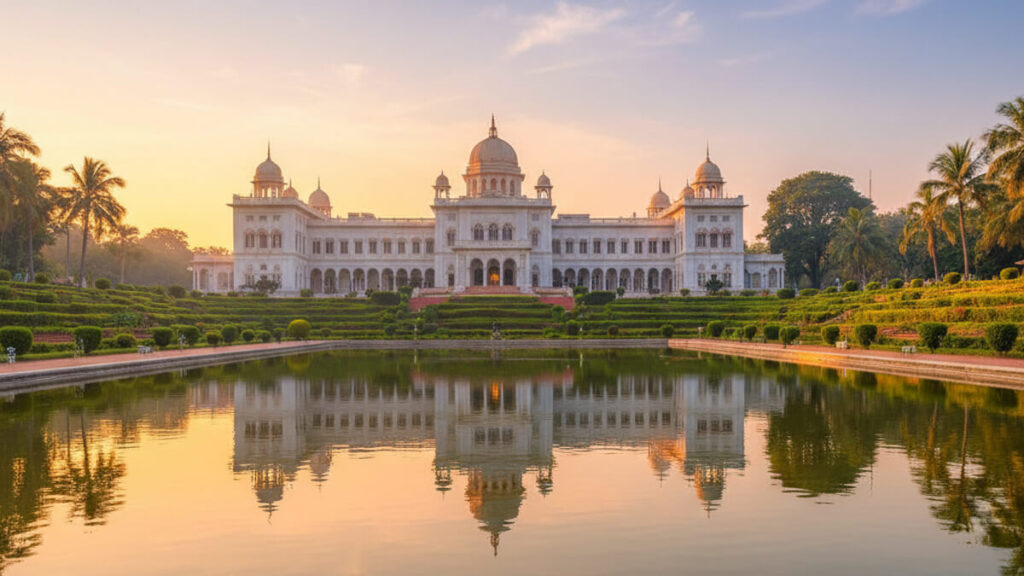
The Ujjayanta Palace — its name meaning ‘victorious’ — was built by Maharaja Radha Kishore Manikya in 1901 and served as the royal seat of the Manikya dynasty until 1949. The palace is one of the finest examples of Indo-Saracenic architecture in Northeast India — a dramatic white structure with Mughal domes, Renaissance-influenced facades, and extensive Mughal garden grounds that set it apart from everything else in the city. Converted into the Tripura State Museum in 2011, it now houses one of the finest collections of tribal artefacts, royal regalia, and natural history specimens in the Northeast.
- Built 1901 by Maharaja Radha Kishore Manikya; now houses the Tripura State Museum
- Indo-Saracenic architecture: Mughal domes, Renaissance facades, extensive formal gardens
- Museum collections: Tripuri royal regalia, tribal artefacts from all 19 Tripura tribes, natural history gallery
- The palace grounds — a large formal garden with fountains and pathways — are as significant as the interior
- Best photography in early morning when the white facade catches low eastern light
- Allow 2–3 hours for the full museum and grounds visit
| The Ujjayanta Palace grounds are one of the finest public gardens in Northeast India — wide, well-maintained, and flanked by the palace facade at one end and the city at the other. The morning walk through the grounds, before the museum opens, is one of Agartala’s best free experiences. |
2. Tripura Sundari Temple (Matabari) — The 51st Shakti Peetha
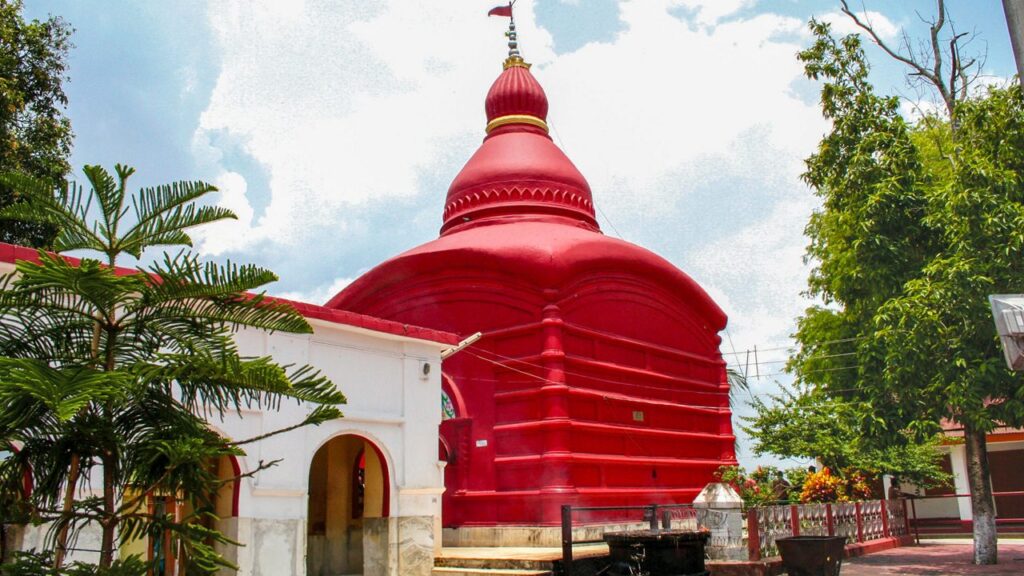
The Tripura Sundari Temple at Matabari, 55 km south of Agartala, is the most sacred Hindu pilgrimage site in Tripura and one of the 51 Shakti Peethas of India — the sacred seats of the goddess established at the points where parts of Sati’s body fell to earth. The temple houses the Soroshi deity, one of the most revered manifestations of the goddess in the Northeast, in a compact 16th century structure of exceptional sanctity.
- One of India’s 51 Shakti Peethas — among the most sacred Shakti sites in India
- The 16th century temple is a compact, intensely spiritual structure inside a larger complex
- The sacred pond (Kalyan Sagar) adjacent to the temple is filled with large tortoises considered sacred
- The kund (sacred bathing tank) is used for ritual bathing by pilgrims
- 55 km south of Agartala on the way to Udaipur; combine with Neermahal Water Palace on the same day
- Most powerful pilgrimage experience during the Kali Puja and Durga Puja festival periods
3. Fourteen Gods Temple (Chaturdash Devata Temple)
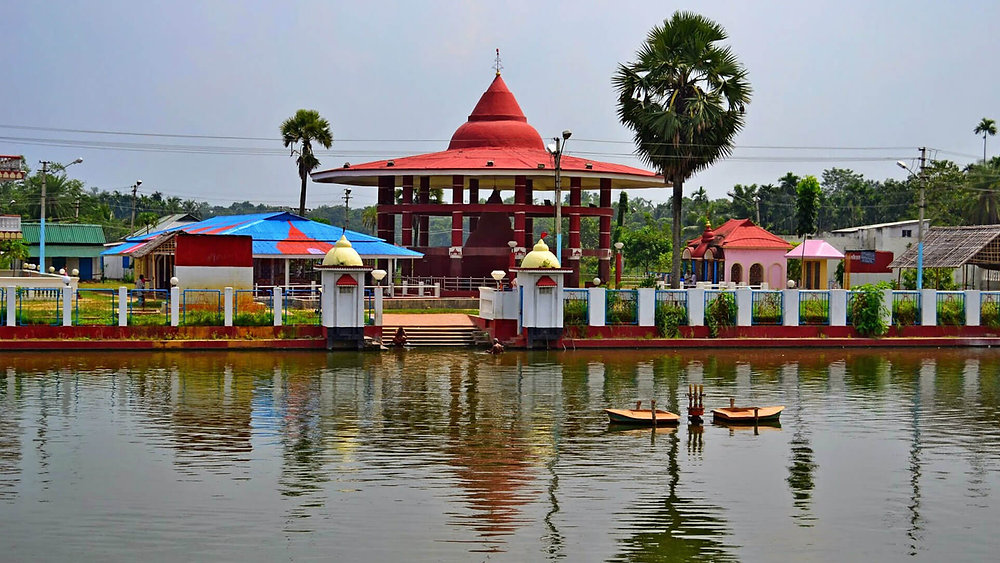
The Chaturdash Devata Temple (Temple of Fourteen Gods), 8 km north of Agartala at Old Agartala, is one of the most important centres of the Tripuri indigenous religious tradition. The 14 deities worshipped here represent the 14 major gods of the Tripuri people’s traditional faith — a pre-Hindu religious system that has been partially syncretised with Hinduism but maintains its distinctive Tripuri character. The Kharchi Puja festival held here in July is one of Tripura’s most significant cultural events.
- 14 deities representing the traditional Tripuri religious pantheon
- Kharchi Puja (July): 7-day festival; one of the most important tribal-Hindu religious events in Tripura
- 8 km north of Agartala city centre in Old Agartala area
- The temple architecture is modest but the spiritual and cultural significance is profound
4. State Museum & Heritage Sites in Agartala
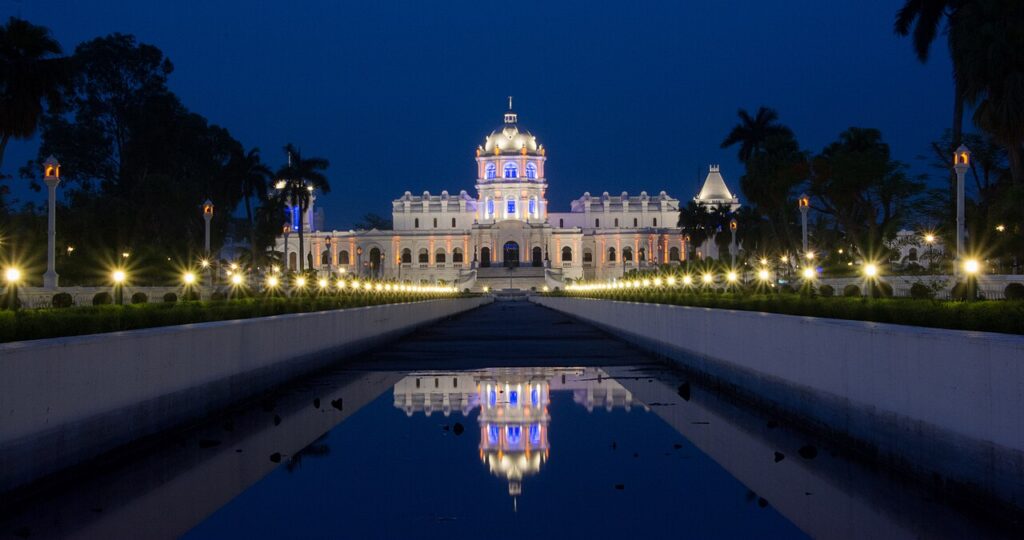
The Tripura Government Museum (in addition to Ujjayanta Palace’s State Museum) maintains collections of significant archaeological finds from Unakoti and other sites, manuscripts, coins, and ethnographic objects. The city also contains several other heritage temples and structures from the Manikya period, including the Gedu Mia’s Mosque (an architecturally notable Islamic structure reflecting the Muslim community’s long history in Tripura), the Jagannath Temple, and the Laxmi Narayan Bari temple complex.
- Tripura Government Museum: archaeological finds from Unakoti and across the state
- Jagannath Bari Temple: annual Rath Yatra chariot festival draws thousands
- Durga Bari: the most important Durga Puja venue in Agartala; the October festival transforms the city
5. Akhaura Border Crossing — The Bangladesh Gateway
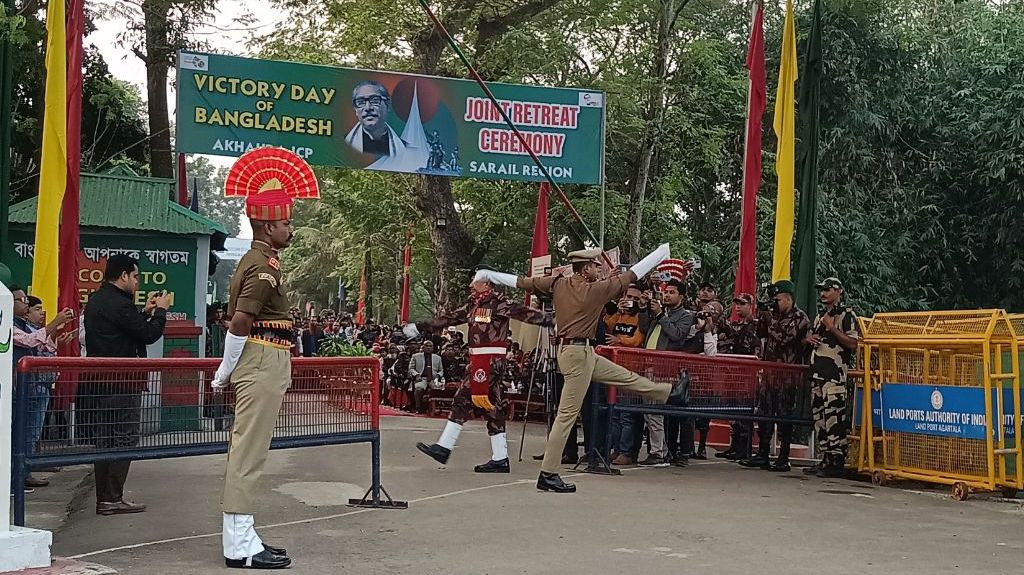
The Akhaura-Agartala integrated check post, 4 km from Agartala city centre, is one of India’s most active land border crossings with Bangladesh — processing thousands of people and substantial trade volumes daily. While Indian nationals cannot enter Bangladesh at this point without a Bangladesh visa, the crossing zone and the land border itself are visible from the approach road, and the commercial and cultural exchange at this frontier is part of Agartala’s daily reality.
- 4 km from city centre; visible approach to the integrated check post
- The proximity to Bangladesh shapes Agartala’s cultural and commercial character significantly
- Agartala is the closest major Indian city to Dhaka (Bangladesh’s capital) by road
- Several Bangladesh-origin cultural influences are evident in Agartala’s cuisine, textiles, and music
6. Heritage Park & Rabindranath Tagore Road
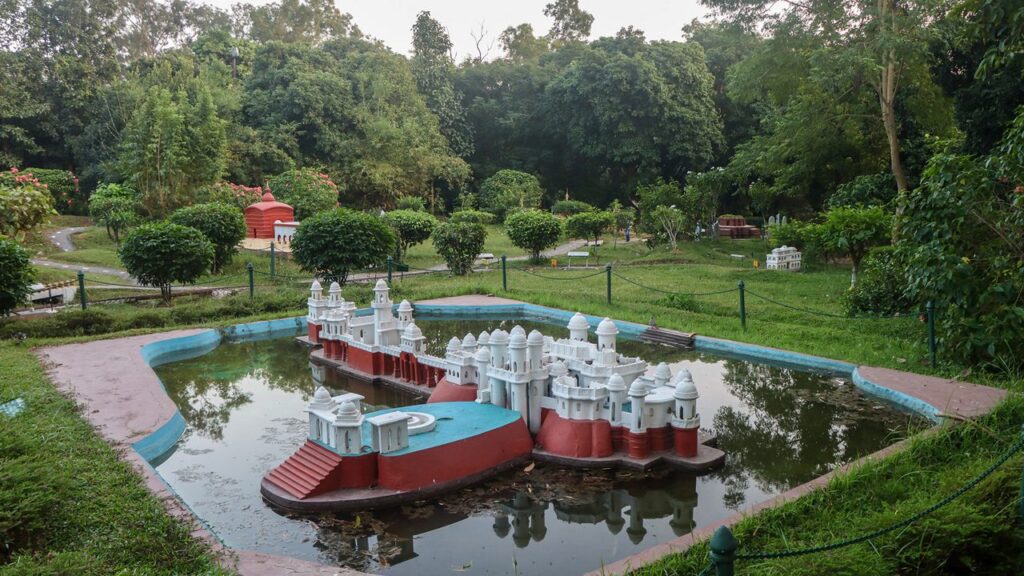
The Heritage Park in Agartala is a pleasant landscaped space featuring models of Tripura’s major heritage monuments — allowing visitors to see scaled representations of Neermahal, Unakoti, and other sites they may not have time to visit in person. Rabindranath Tagore Road (connecting to Rabindra Kanan cultural complex) reflects Agartala’s deep connection to the Bengali literary and cultural tradition of which Tagore is the supreme expression.
Agartala’s Festival Calendar
- Durga Puja (October): Agartala celebrates Durga Puja with the full Bengali cultural intensity — elaborate Puja pandals (temporary temples), processions, cultural performances, and community feasting across eight to ten days. The city’s Durga Bari is the epicentre.
- Kharchi Puja (July): The most important indigenous festival in Tripura — held at the Chaturdash Devata Temple; 7-day celebration of the 14 Tripuri gods; attended by both Hindu and tribal communities.
- Garia Puja (April): The Tripuri tribal spring festival — bamboo poles, traditional costumes, community dancing; reflects the pre-Hindu religious culture of the state’s indigenous communities.
- Ker Puja (August): Another major Tripuri tribal festival — held to drive away disease and misfortune; associated with the Ker deity; the ritual includes a brief period when traffic stops and no one may leave their home.
Tripura & Bengali Cuisine in Agartala
Dishes to Try
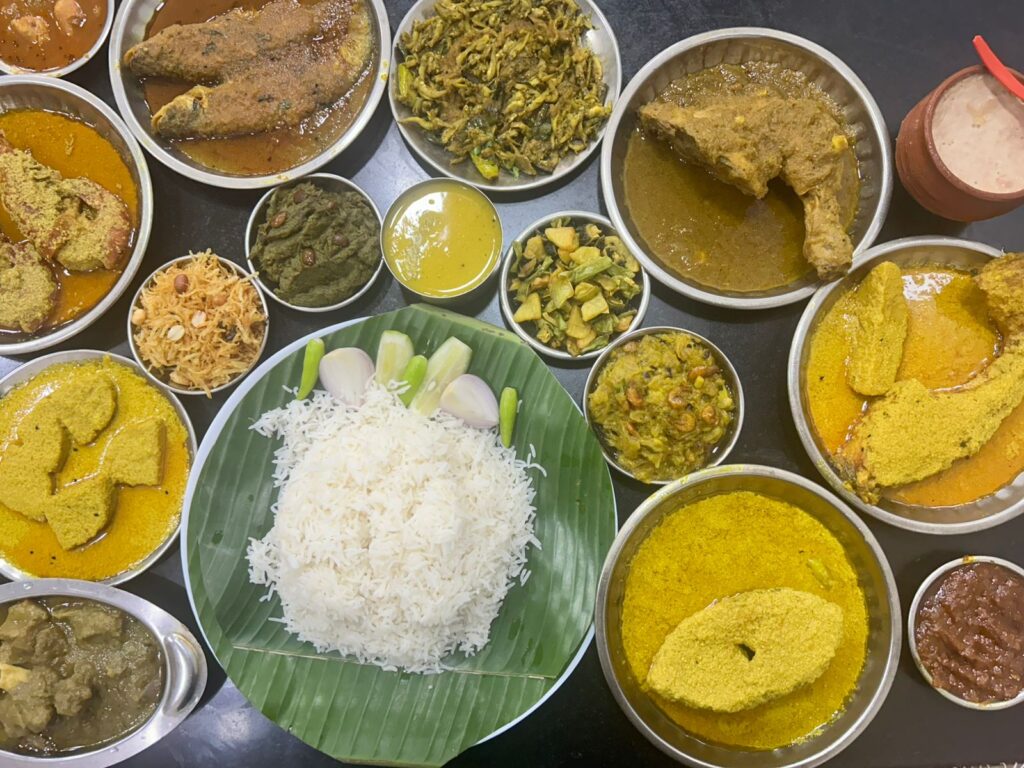
- Mui Borok (Tripuri tribal food) — The cuisine of the Kokborok-speaking Tripuri people: rice-based, with fermented fish (berma), bamboo shoot, and wild herbs; sharply different from Bengali cooking
- Berma — Fermented dried fish; the foundational flavouring of Tripuri cuisine; pungent, umami-rich, acquired-taste essential
- Wahan Mosdeng — Pork or beef preparation with chili and spices; one of Tripura’s most distinctive dishes
- Chakhwi — Leafy greens with pork or chicken; a simple, satisfying tribal preparation
- Bengali fish curry (Maach Jhol) — The dominant culinary tradition in Agartala; the standard Bangali fish curry cooked with mustard oil and spices is superb in Tripura where the freshwater fish supply is excellent
- Muri Ghonto — Bengali fish-head rice preparation; a Bengali classic executed with exceptional freshwater fish
Recommended Restaurants
- Swagat Restaurant — The most consistently recommended Tripuri and Bengali restaurant in Agartala
- Hotel Welcome Palace restaurant — Reliable Bengali and Indian food in comfortable surroundings
- Ujjayanta Palace area stalls — Street food and quick meals near the palace grounds; best in the evening
- Local fish markets (Battala area) — The most authentic food-culture experience in Agartala; morning market with extraordinary freshwater fish selection
Where to Stay in Agartala
- Hotel Welcome Palace — The most reliable full-service hotel in Agartala; central location; ₹3,500–₹6,000
- Royal Guest House — Mid-range; reliable; ₹2,000–₹3,500
- Ginger Hotel — Budget-friendly chain hotel; good value; ₹1,500–₹2,500
- Budget guesthouses near the railway station — Multiple options; ₹600–₹1,800
How to Reach Agartala
By Air
- Maharaja Bir Bikram Airport — 12 km from city; daily flights from Kolkata (55 min), Guwahati (55 min), Delhi (2.5 hrs), Imphal, and Aizawl
- IndiGo, Air India, and SpiceJet operate regular services
By Train
- Agartala Railway Station is on the Lumding–Sabroom broad-gauge line
- Kanchanjunga Express (Kolkata–Agartala): approximately 36 hours from Kolkata
- Multiple weekly trains from Guwahati via Lumding junction
By Road
- NH8 from Silchar (Assam): approximately 200 km; 6–7 hours through the Barak Valley
- NH44 via Karimganj and Dhubri from Guwahati: long but scenic
Best Time to Visit Agartala
- October to March: Best weather; cool and dry; Durga Puja (October) is the cultural highlight of the year
- April to May: Garia Puja (April); warm; pre-monsoon
- July: Kharchi Puja — extraordinary tribal-Hindu festival; can be hot and humid
- June to September: Monsoon; heavy rain; some flooding possible; not recommended for first visits
Sample 3-Day Agartala Itinerary
- Day 1 — Royal Agartala: Morning Ujjayanta Palace museum and grounds; Chaturdash Devata Temple; Heritage Park; Durga Bari; evening Rabindra Kanan cultural complex
- Day 2 — Day Trip South (Neermahal + Matabari): Early departure; Tripura Sundari Temple (Matabari, 55 km); Neermahal Water Palace on Rudrasagar Lake (70 km); return to Agartala
- Day 3 — Nature & History: Sepahijala Wildlife Sanctuary (28 km); afternoon Sepahijala botanical garden and zoo; return to Agartala; evening Agartala market and cuisine exploration

[…] is most efficiently visited as part of a combined day trip from Agartala that includes the Tripura Sundari Temple at Matabari (Udaipur) — the two sites are 30 km apart […]