




Assam, the gateway to Northeast India, is a state of extraordinary contrasts — sprawling tea gardens, thundering rivers, ancient temples, and national parks that shelter some of the world’s rarest wildlife. Bisected by the mighty Brahmaputra River, one of Asia’s greatest waterways, Assam has been a crossroads of cultures for thousands of years, and its blend of Assamese, tribal, and Bengali traditions creates one of the richest cultural confluences in the region.
Home to Kaziranga National Park — a UNESCO World Heritage Site and the last stronghold of the Indian one-horned rhinoceros — as well as Majuli, the world’s largest river island and a centre of Vaishnavite culture, the state offers wildlife encounters and cultural experiences that are genuinely world-class.
In this Assam travel guide, we cover the state’s culture, top destinations, experiences, travel tips, and everything you need to plan a memorable journey.
Culture of Assam: Communities, Festivals, Traditions, and Cuisine
Assam’s cultural identity is shaped by an extraordinary diversity of communities — over 30 tribal and non-tribal groups — united by the Brahmaputra River, the Assamese language, and the shared joy of Bihu.
Communities of Assam
- Assamese — The largest cultural group; custodians of Assamese language, literature, and the Vaishnavite tradition
- Bodo — The largest plains tribal community, known for dokhona weaving and traditional music
- Mising — A riverine tribe known for their elevated bamboo homes and apong rice beer
- Karbi — Hill-dwelling tribe of the Central region; known for the Karbi cultural tradition
- Rabha — Tribe known for intricate handloom weaving
- Bengali community — Significant presence, particularly in the Barak Valley
Festivals of Assam
Bihu — The Heartbeat of Assam
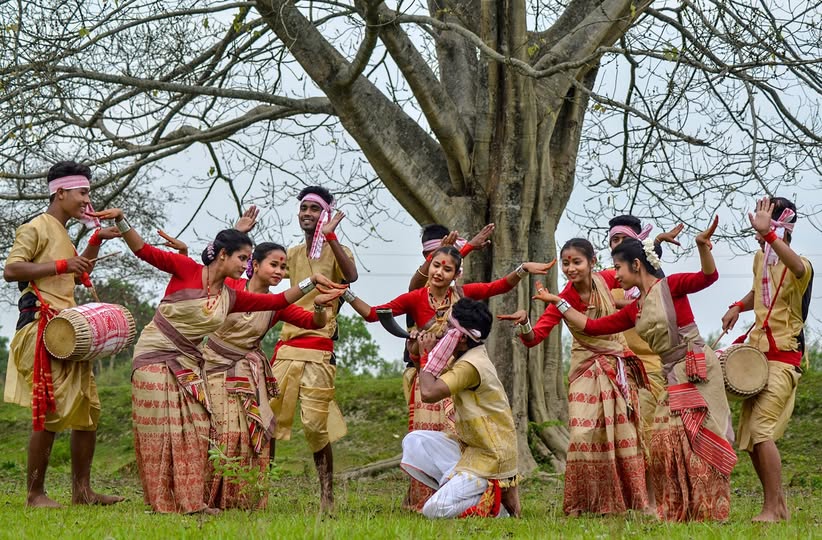
- Three Bihu festivals mark the agricultural calendar: Rongali (spring/new year, April), Kongali (autumn, October), and Bhogali (harvest, January)
- Rongali Bihu is the biggest — marked by energetic Bihu dance, Bihu music, and celebrations across the state
- The Bihu dance is one of India’s most recognised folk dances
Ambubachi Mela
- One of India’s largest Hindu gatherings, held annually at Kamakhya Temple in Guwahati
- Celebrates the annual menstruation of the goddess Kamakhya
- Draws hundreds of thousands of pilgrims from across South Asia
Other Important Festivals
- Ali-Ai-Ligang — Spring festival of the Mising tribe
- Jonbeel Mela — Traditional barter fair of the Tiwa and Rabha tribes
- Bwisagu — New year festival of the Bodo community
Religion and Lifestyle in Assam
- Vaishnavism (a form of Hinduism focused on Vishnu/Krishna) has deeply shaped Assamese culture through the Sattra monastery system established by saint Sankardeva
- Islam is widely practiced, particularly in western part of the state
- Tribal animist traditions coexist alongside mainstream religions
- The Brahmaputra River shapes daily life — seasonal flooding, fishing culture, and riverine transportation
Assam Cuisine
- Masor Tenga — Sour fish curry made with tomatoes, lemon, or fermented bamboo; the defining dish of the state
- Assamese Thali — A traditional multi-course meal served on bell-metal plates with rice, fish, lentils, and vegetable preparations
- Pitha — Rice cakes prepared in different styles; central to Bihu celebrations
- Duck with Ash Gourd — A celebratory dish especially popular in the Brahmaputra valley
- Mishing Apong — Rice beer made by the Mising tribe; different varieties for different occasions
- Assam Tea — First-flush Assam tea from the gardens of Jorhat and Dibrugarh is among the finest in the world
Top Tourist Destinations in Assam
1. Kaziranga National Park — Rhino Country
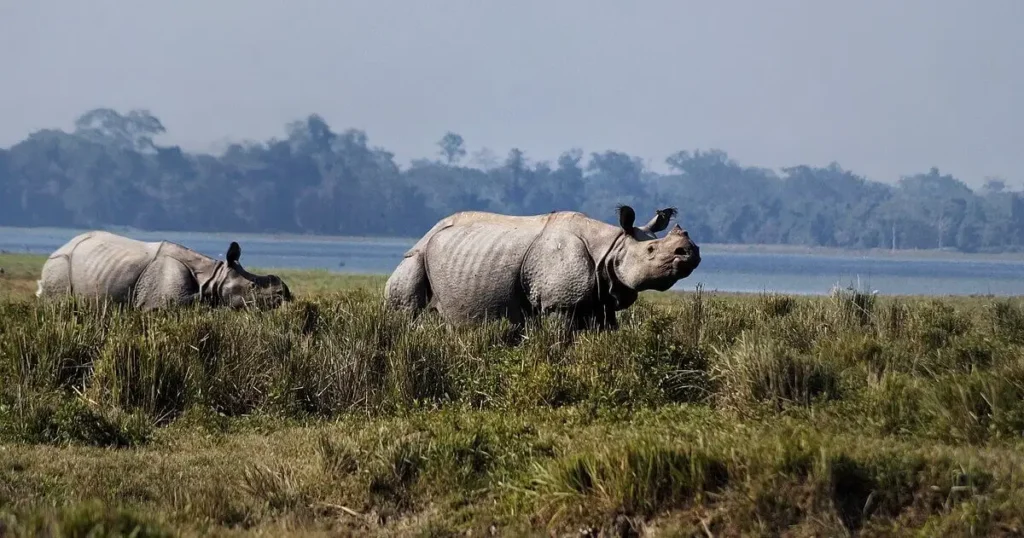
Kaziranga National Park, a UNESCO World Heritage Site in the Brahmaputra floodplain, is the world’s most important sanctuary for the Indian one-horned rhinoceros. With over 2,600 rhinos — more than two-thirds of the world’s entire population — Kaziranga also supports the highest density of tigers of any protected area in the world.
Key Highlights
- Indian one-horned rhinoceros — The highest concentration in the world
- Royal Bengal Tiger — Highest tiger density of any Indian national park
- Asian Elephant, Wild Buffalo, and Swamp Deer
- Elephant and jeep safaris through different zones (Central, Eastern, Western, Burapahar)
Best Experiences
- Early morning elephant safari for close rhino encounters
- Jeep safari for wider wildlife coverage
- Birdwatching — over 480 bird species including migratory species
- Best season: November to April (park closed during monsoon)
2. Guwahati — Gateway City
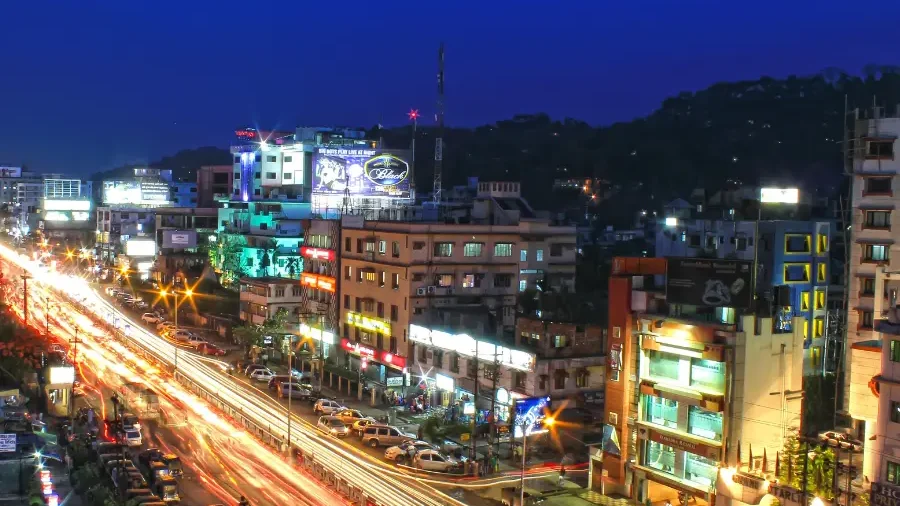
Guwahati, Assam’s largest city and the commercial hub of Northeast India, sits on the banks of the Brahmaputra River. It is the gateway to the entire Northeast and home to the famous Kamakhya Temple — one of Hinduism’s most important Shakti shrines.
Key Highlights
- Kamakhya Temple — One of India’s most significant Shakti temples on Nilachal Hill
- Umananda Temple — India’s smallest inhabited island on the Brahmaputra
- Nehru Park — Peaceful river island accessible by boat
- Assam State Museum — Collection of archaeological and cultural heritage
Best Experiences
- Brahmaputra river cruise at sunset
- Temple visits at Kamakhya and Umananda
- Shopping for Assamese silk (Muga, Eri, Pat) at local markets
3. Majuli — The World’s Largest River Island
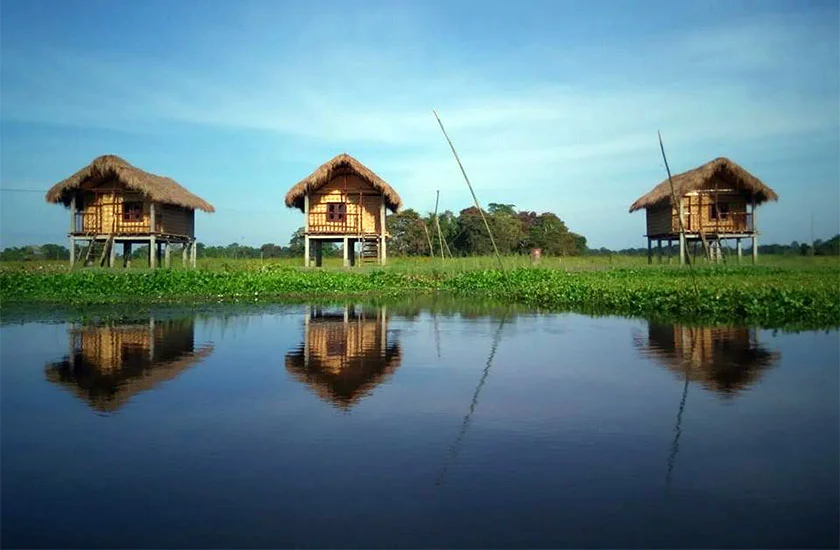
Majuli, in the heart of the Brahmaputra River, is the world’s largest river island and a living centre of the Vaishnavite culture. The island is home to the Sattra monasteries — cultural institutions that have preserved Assamese music, dance, mask-making, and literature for over 500 years.
Key Highlights
- Sattra monasteries — Kamalabari, Auniati, Dakhinpat, and Garamur sattras each with unique traditions
- Traditional mask-making and pottery crafts
- Bird sanctuary — Over 100 migratory bird species visit each winter
- Mising tribal villages — Elevated stilt homes and traditional lifestyle
Best Experiences
- Staying overnight in a monastery guest house or tribal homestay
- Attending evening prayers and cultural performances at the sattras
- Cycling through the island’s villages and wetlands
4. Manas National Park — UNESCO Biosphere Reserve
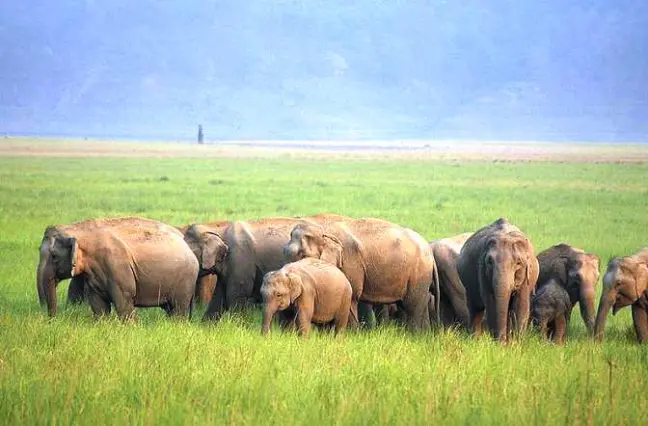
Manas National Park, a UNESCO World Heritage Site and one of India’s Project Tiger reserves, sits on the foothills of the Himalayas at the Bhutan border. Home to rare species including the Golden Langur, Pygmy Hog, Hispid Hare, and Wild Water Buffalo, Manas offers some of the most pristine wilderness in South Asia.
Key Highlights
- Golden Langur — Critically endangered primate found only in this region
- Pygmy Hog — World’s smallest wild pig; Manas is a key conservation site
- Royal Bengal Tiger and Indian Elephant
- Manas River — Clear Himalayan river forming the Bhutan border
Best Experiences
- Jeep and elephant safaris
- River rafting on the Manas River
- Birdwatching — 380+ species including Bengal Florican
5. Tezpur — City of Eternal Romance
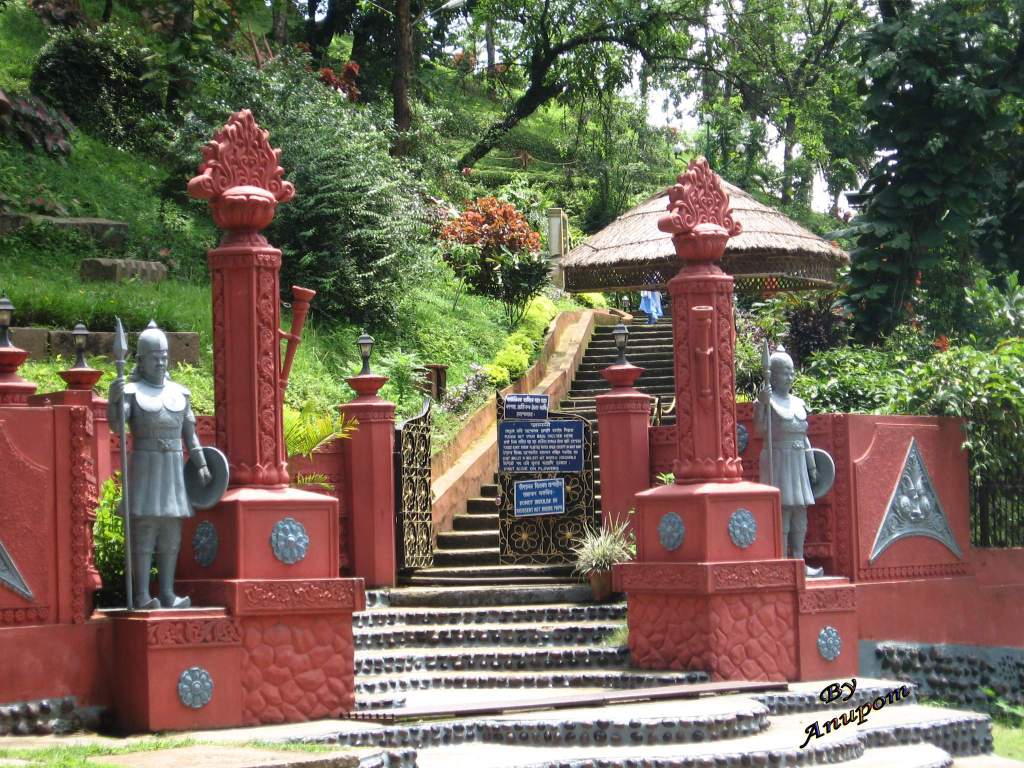
Tezpur, on the north bank of the Brahmaputra, is the cultural capital of the state — a city of ancient temples, archaeological sites, and scenic riverside beauty. Known in mythology as the ‘City of Blood’, Tezpur offers a gentler, more cultural Assam experience.
Key Highlights
- Da Parbatia — 6th century Gupta-era temple ruins
- Agnigarh Hill — Mythological site with panoramic Brahmaputra views
- Cole Park — British-era park on the riverbank
- Gateway to Nameri National Park and Arunachal Pradesh
Other Must-Visit Places in Assam
- Jorhat — Tea garden capital with colonial-era planter bungalows
- Sivasagar — Former Ahom Kingdom capital with historic tanks and temples
- Dibrugarh — Northeast’s tea heartland; gateway to Arunachal Pradesh
- Haflong — The only hill station of the state in the Dima Hasao district
- Pobitora Wildlife Sanctuary — Highest rhino density per square kilometre in the world
Top Experiences in Assam
Cultural Tourism in Assam
- Bihu festival participation in April — the most joyful celebration in Northeast India
- Sattra monastery stays on Majuli island
- Silk weaving workshops — Muga, Eri, and Pat silk are Assam’s most famous exports
- Tea estate stays and factory tours in Jorhat and Dibrugarh
Adventure Tourism
- Wildlife safaris in Kaziranga and Manas National Parks
- River rafting and kayaking on the Brahmaputra tributaries
- Elephant safari through tall grass country
- Trekking in Karbi Anglong hills and Dima Hasao
Nature & Rural Experiences
- Brahmaputra river cruise from Guwahati to Jorhat
- Wetland birdwatching at Dibru-Saikhowa and Deepor Beel
- Tea garden morning walks in Assam’s famous estates
- Village stays with the Mising or Bodo communities
Best Time to Visit Assam
- November to April — Best weather; Kaziranga open; clear skies
- April — Bihu festival season; most vibrant cultural time
- October — Post-monsoon green landscapes; park re-opening
- June to September — Monsoon; Kaziranga flooded; rhinos move to higher ground
Key Tourist Information for Assam
Permits
No Inner Line Permit (ILP) is required for Indian or foreign nationals to visit Assam. Standard ID proof applies to hotel check-ins. Foreign nationals should carry passport and visa copies.
Travel Essentials
- Good road and rail connectivity from the rest of India — easiest entry point to the Northeast
- Carry insect repellent for wildlife park visits
- Book safari jeeps in advance for Kaziranga during peak season (Nov–Feb)
- Brahmaputra river cruise bookings require advance planning
- Assam has the best mobile and internet connectivity of all Northeast states
How to Reach Assam
By Air
- Lokpriya Gopinath Bordoloi International Airport, Guwahati — Main hub; connected to Delhi, Kolkata, Mumbai, Bengaluru, and other major cities
- Dibrugarh Airport — Domestic connections from Kolkata and Guwahati
By Train
- Guwahati is one of India’s major rail junctions — connected to Delhi, Kolkata, Mumbai, and Chennai
- Dibrugarh, Jorhat, Tezpur also have rail connections
By Road
- NH27 and NH15 connect Assam to West Bengal and the rest of India
- Regular AC bus services from Kolkata and Siliguri to Guwahati
Accommodation in Assam
Travelers can choose from:
- Colonial-era tea estate bungalows in Jorhat and Dibrugarh — one of Assam’s most distinctive experiences
- Wildlife resort lodges near Kaziranga and Manas
- Sattra monastery guest houses on Majuli island
- Tribal homestays with Mising and Bodo families
- Modern hotels and guesthouses in Guwahati and major towns
Why Visit Assam
Assam is the ideal starting point for any Northeast India journey — accessible, diverse, and immediately rewarding. The combination of world-class wildlife, living cultural traditions, the world’s finest tea, and the great Brahmaputra River makes it a destination with something for every kind of traveler. Come for the rhinos, stay for everything else.
