




The photographs look impossible. Wooden boats appear to hover in midair above a perfectly detailed riverbed of sand, pebbles, and fish. The water is not merely clear — it is transparent in a way that defies the word itself, reflecting the surrounding forest while simultaneously revealing everything beneath the surface. This is the Umngot River at Dawki, on the India-Bangladesh border in the Jaintia Hills, and it is exactly as extraordinary as it looks.
Dawki is a small border town 95 km south of Shillong, set where the Umngot River flows down from the Meghalaya plateau and crosses into Bangladesh. For most of the year, the river runs with exceptional clarity — snowmelt and spring water feeding it from the Jaintia Hills above, the lack of heavy industry in the watershed keeping it clean. From October to April, before the monsoon muddies the water, the Umngot at Dawki is genuinely one of the most astonishing natural sights in India.
Quick Facts About Dawki
| State | Meghalaya |
| District | East Jaintia Hills / West Jaintia Hills |
| Altitude | 90 metres |
| Distance from Shillong | 95 km; approximately 3 hours by road |
| Distance from Guwahati | 185 km; approximately 5 hours by road |
| Language | Pnar (Jaintia), Khasi, English, Hindi |
| Border | India-Bangladesh border point; Tamabil on the Bangladesh side |
| Permit Required | No special permit; standard ID required at the border bridge area |
| Best Time | October to April for clear water; avoid monsoon (June–September) |
| River | Umngot River (also called Dawki River) |
The People of Dawki: The Pnar (Jaintia) Community
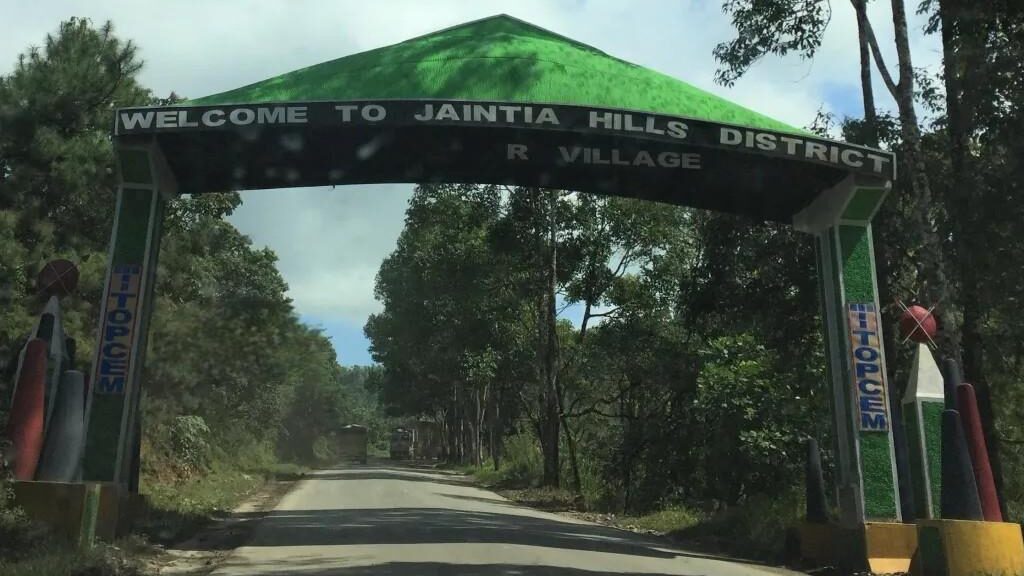
Dawki sits in the transition zone between the Khasi and Jaintia Hills, and the local community is primarily Pnar — the Jaintia people, also a matrilineal society closely related to the Khasi. The Pnar maintain their own distinct dialect (Pnar/War Jaintia), their own festival traditions (Behdienkhlam being the most important), and their own community governance structures.
River culture: The Umngot River is not just a tourist attraction — it is the lifeline of the Dawki community. Local fishermen have worked these waters for generations, and the extraordinary clarity of the river is in large part a result of community-managed watershed protection. The annual boat race festival, held during the Shad Suk Mynsiem celebrations, is a major community event with boats decorated and raced competitively.
Border economy: Dawki is one of the most important India-Bangladesh border trade points in the Northeast. The suspension bridge over the Umngot marks the international boundary, and trade in coal, limestone, betel nut, and manufactured goods has sustained the local economy for decades.
The Umngot River — What Makes It So Clear
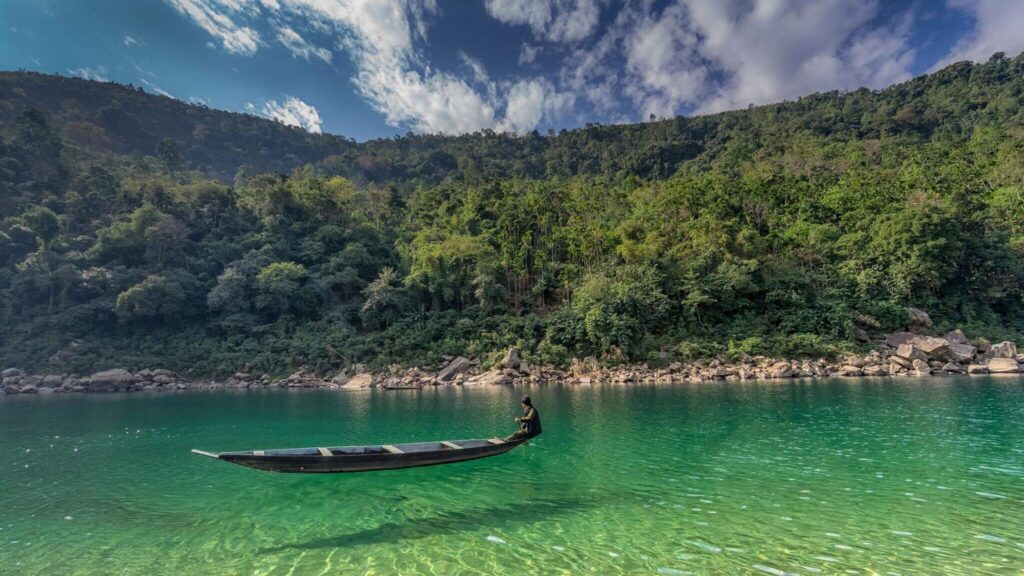
The extraordinary transparency of the Umngot is not an accident. It is the product of several factors working together: the river’s source in the clean limestone aquifers of the Jaintia Hills; the relative absence of industrial activity in its upper catchment; the low turbidity of the substrate; and the shallow, wide nature of the riverbed, which allows light to penetrate fully.
The clearest water is reliably found from October to April, when monsoon sediment has settled and the river runs at lower, steadier volumes. By May, the pre-monsoon can begin to stir the riverbed slightly. The monsoon months (June–September) bring high water and significant sediment — the river looks nothing like the photographs during this period.
| The best time for the ‘floating boats’ photograph is a calm morning between October and February, preferably before 9 AM when the light is low and there are fewer boats creating ripples. The clearest water is typically in November and December. |
Top Attractions & Activities in Dawki
1. Boating on the Umngot River
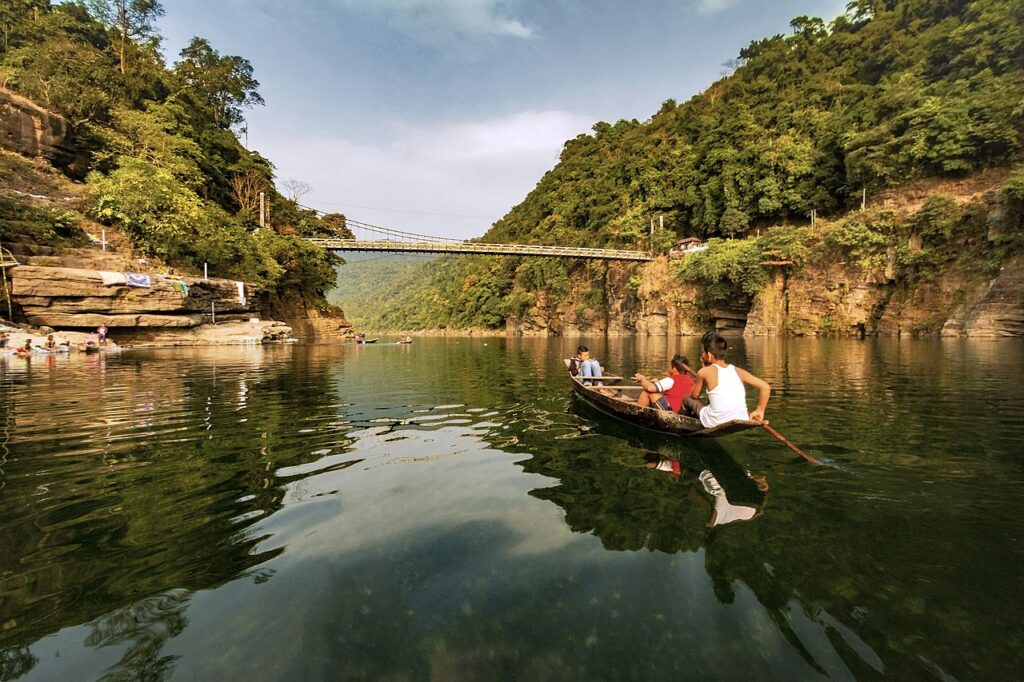
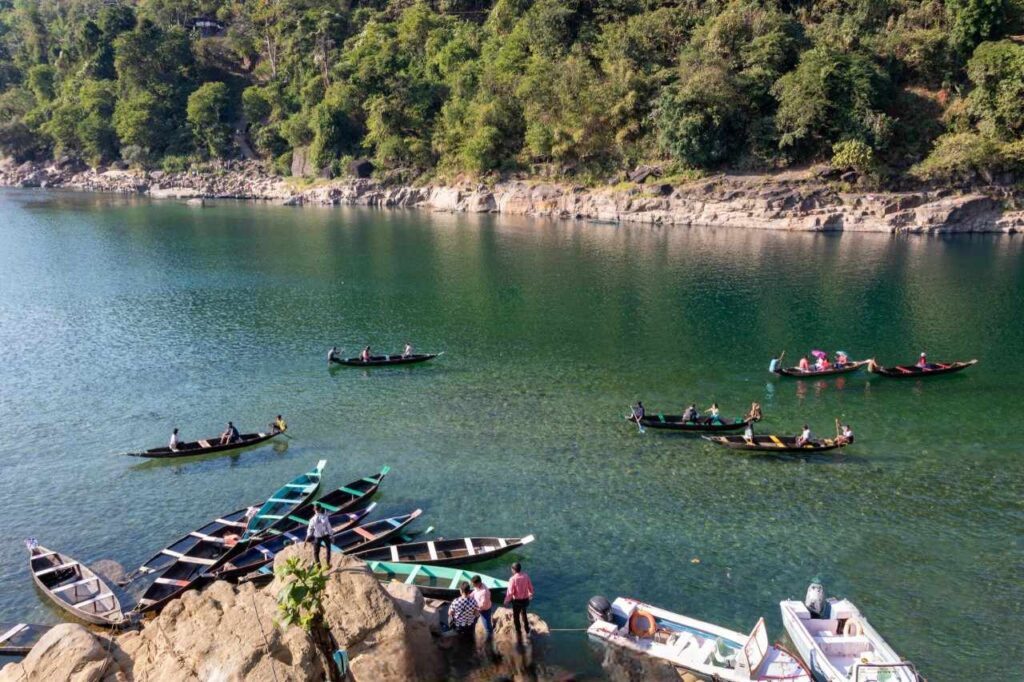
Boating is the reason most people come to Dawki. Wooden rowboats — and motorised boats for longer excursions — are available for hire from the riverbank throughout the day. The boats are operated by local boatmen who know the clearest sections of the river, the best light angles, and where the fish schools congregate below.
- Standard 30-minute boat ride: ₹400–₹600 per boat (negotiated at the ghat)
- Longer upstream excursion (2–3 hours): ₹1,000–₹1,500; reaches calmer, less visited sections
- Motorised boats available for larger groups or longer distances
- Early morning (7–9 AM) offers the best light and fewest other boats on the water
2. The India-Bangladesh Suspension Bridge
The historic suspension bridge spanning the Umngot at the India-Bangladesh border is one of the most photographed landmarks in Meghalaya — a graceful iron structure with a mid-point that marks the international boundary between the two nations. Visitors can walk to the Indian side of the bridge; crossing into Bangladesh requires a valid visa and proper documentation at the immigration checkpoint.
- Historical border bridge with mid-point international boundary marker
- Excellent photography subject at dawn and dusk when light rakes across the metalwork
- Border trade activity visible — trucks and goods crossing throughout the day
3. Camping on the Riverbank
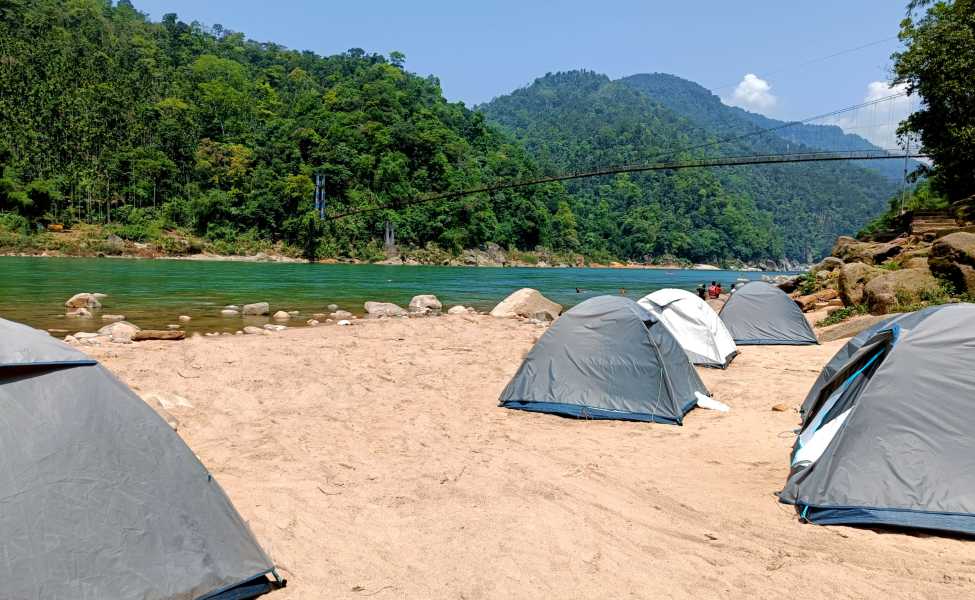
Camping beside the Umngot River is one of Meghalaya’s finest outdoor experiences. Several operators in Dawki offer riverbank camping packages with tents, meals, and boat rides included. Waking at dawn beside the glassy river — before any other tourists arrive and before the boatmen begin work — is a profoundly peaceful experience.
- Several licensed camping operators along the Dawki riverbank
- Packages typically include tent, bedding, dinner, breakfast, and a morning boat ride
- Best season: November to March — cool nights, clear water, minimal tourists in early morning
- Advance booking strongly recommended for weekends and holidays
4. Shnongpdeng — The Adventure Village
Shnongpdeng, 3 km upstream from Dawki on the Umngot, has developed as a dedicated adventure tourism village offering a wider range of activities than Dawki town itself. Cliff jumping, snorkelling, kayaking, and zip-lining over the river are all available, alongside camping and basic accommodation. The stretch of river at Shnongpdeng is equally clear and significantly less crowded than the main Dawki ghat.
- Cliff jumping (8m and 14m platforms) into the transparent river
- Snorkelling in the clear water — visibility allows underwater photography
- Kayaking upstream through the gorge
- Zip-line over the river — 200 metres with river views
- Camping packages with adventure activity bundles
| Shnongpdeng is highly recommended over the main Dawki ghat for younger travelers and those seeking more than just boating. The activities are well managed, the stretch of river is equally beautiful, and the crowd levels are significantly lower. |
5. Krang Suri Falls — Nearby Day Trip
Krang Suri Falls, 50 km from Dawki, is one of Meghalaya’s most beautiful and most Instagrammed waterfalls — a 25-metre cascade into a turquoise pool surrounded by forest, with a natural swimming hole at the base accessible via a short staircase. The colour of the water — caused by the same limestone chemistry that makes the Umngot clear — is extraordinary. Best combined with a Dawki trip on a 2-day itinerary.
6. Annual Boat Race
The Dawki annual boat race, held during the Shad Suk Mynsiem (spring) festival in April, is one of Meghalaya’s most colourful local events. Decorated wooden boats race competitively on the Umngot while the banks fill with spectators, food stalls, and cultural performances. It is not a major tourist event, which makes it all the more authentic and worth attending if your timing aligns.
Where to Eat in Dawki
Dawki’s food scene is basic — this is a small border town, not a tourist hub. A handful of small restaurants and tea stalls serve rice, dal, pork, and simple preparations. Most visitors on day trips eat at the riverside stalls; those camping or staying overnight eat at their accommodation.
- Dawki town stalls — Rice, dal, local greens, and pork; simple and sufficient
- Camping meal packages — The best food in Dawki; operators typically cook fresh meals on the riverbank
- Krang Suri area — Better restaurant options; worth factoring into a day combining both destinations
Where to Stay in Dawki
- Riverbank camping — The top recommendation; several operators; advance booking needed
- Shnongpdeng adventure camps — Good combination of accommodation and activities; 3 km from Dawki
- Basic guesthouses in Dawki town — A few simple options; ₹600–₹1,200 per night
- Day trip from Shillong — Many visitors do Dawki as a long day trip (95 km each way); possible but leaving early and returning late makes for a tiring day; overnight is preferable
How to Reach Dawki
- From Shillong: 95 km south on NH206 toward the Bangladesh border; 2.5–3 hours by car. Shared taxis from Iewduh (Bara Bazar) in Shillong.
- From Guwahati: 185 km; approximately 5 hours via Shillong on NH6 then NH206.
- From Jowai: 50 km; 1.5 hours on the Jowai–Dawki Road — makes an excellent combined itinerary.
- By road from Bangladesh: Tamabil is the Bangladesh border crossing; regular transport connections to Sylhet (45 km) on the Bangladesh side.
Travel Essentials for Dawki
- No permit required for Indian nationals; standard ID for the border bridge area
- Foreign nationals should carry passport — border security is present and checks can occur
- Cash only — no ATMs in Dawki; use Shillong or Jowai ATMs before arrival
- Mobile signal is variable — Airtel and BSNL have the best coverage
- Sunscreen and hat essential — the river reflects sunlight intensely and sunburn is common
- River currents: The Umngot can run fast after rains; check conditions before cliff jumping or swimming
Best Time to Visit Dawki
- November to February: Peak clarity; calmest water; best photography; cool mornings; highly recommended
- October: Post-monsoon; water rapidly clearing; still relatively uncrowded
- March to May: Good clarity; warmer; pre-monsoon; Boat Race festival in April
- June to September: Monsoon; river runs fast and opaque; boating suspended or significantly restricted; not recommended
Also Read: Best Time to Visit Northeast India — Month-by-Month Guide
