




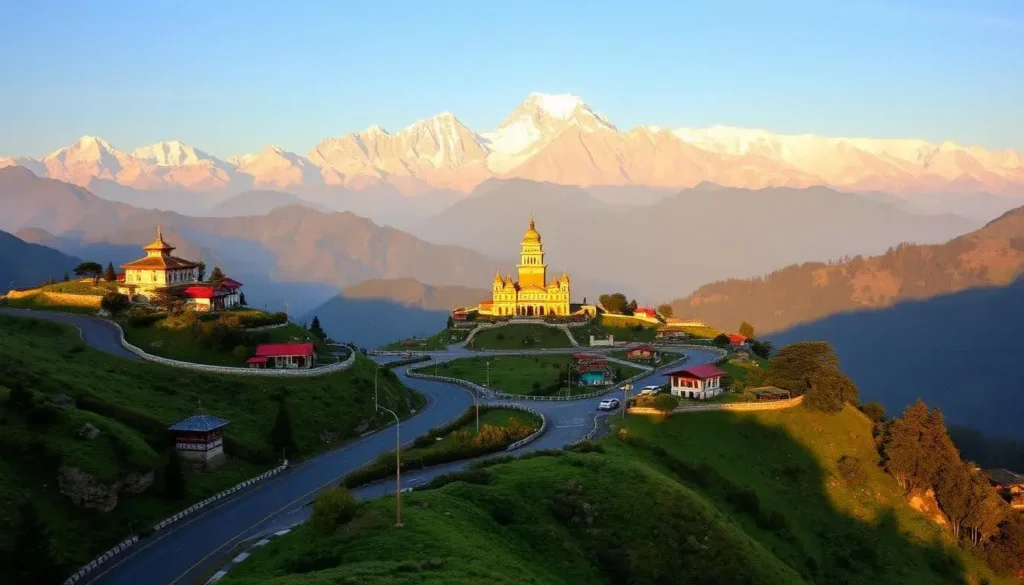
Perched at 1,650 metres on a ridge above the Ranipool River in East Sikkim, Gangtok does something that few Himalayan capitals manage — it balances the ancient and the modern with genuine grace. The pedestrianised MG Marg, lined with cafes and mountain-view benches, runs past monasteries and government buildings with equal ease. Buddhist prayer flags snap above boutique coffee shops. Taxis negotiate hairpin bends past monasteries whose monks have been chanting the same texts for three centuries.
Gangtok is simultaneously the most practical and the most personally rewarding base for exploring Sikkim. Every permit needed for North Sikkim’s high-altitude lakes, the Goecha La trek, and the state’s restricted zones can be processed here within 24 hours. The city’s own attractions — Rumtek Monastery, the Namgyal Institute of Tibetology, the Enchey hilltop gompa, and the cable car with its Kangchenjunga panorama — reward at least two full days before you even leave the ridge. And the food, from momos to butter tea to excellent Tibetan-influenced cuisine, is among the best in the Northeast.
Quick Facts About Gangtok
| State | Sikkim |
| Role | State Capital |
| Altitude | 1,650 metres (5,413 feet) |
| Language | Nepali, Sikkimese (Bhutia), Lepcha, English, Hindi |
| Religion | Buddhism (Vajrayana); Hinduism |
| Nearest Airport | Pakyong Airport — 31 km; Bagdogra Airport (West Bengal) — 124 km |
| Nearest Rail | New Jalpaiguri (NJP) — 148 km; approximately 4–5 hours by road |
| Permit Required | No permit for Gangtok itself; Restricted Area Permit needed for North Sikkim |
| Best Time | March to May; October to December |
| Distance from NJP | 148 km; approximately 4–5 hours by road on NH10 |
The People of Gangtok: Lepcha, Bhutia & Nepali Communities
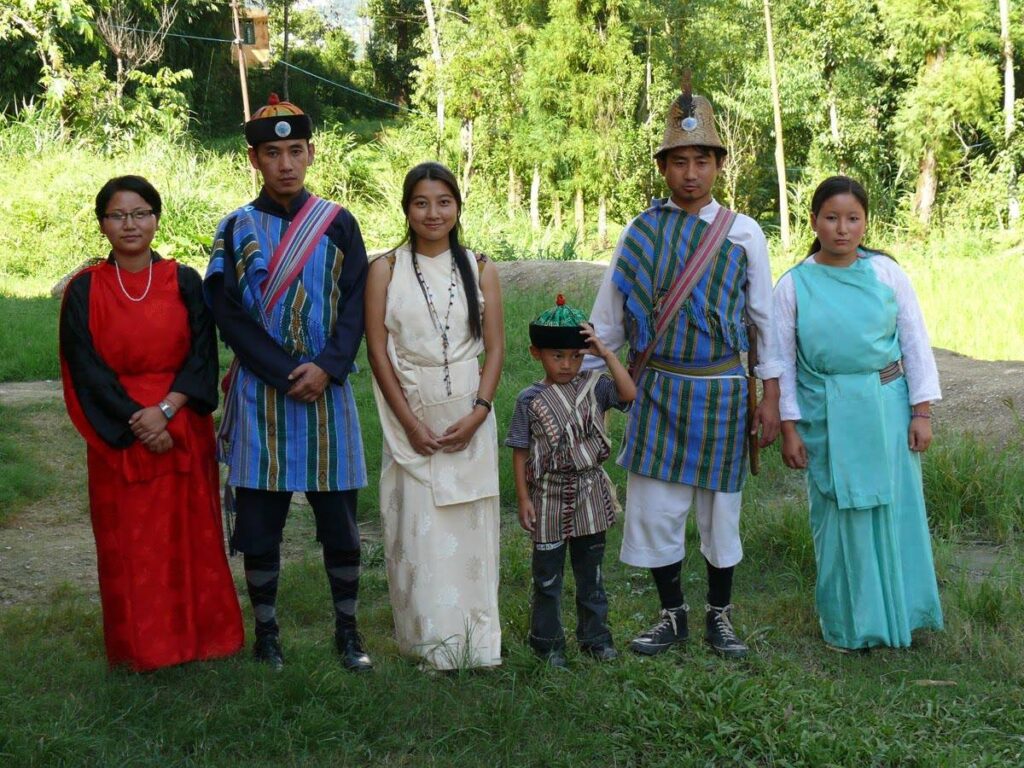
Gangtok’s cultural identity is shaped by Sikkim’s three primary communities living in close proximity — the Lepcha (the original inhabitants, known as the Rong people), the Bhutia (Tibetan-origin Buddhist community, custodians of the monastery tradition), and the Nepali (the largest community, bringing Hindu festivals and agricultural traditions). This diversity is not merely demographic — it is visible in the city’s temples and monasteries, its food, its festivals, and its architectural character.
Lepcha culture: The Lepcha are Sikkim’s indigenous people, with a unique language and a deep spiritual relationship with the natural environment. Their traditional ecological knowledge and the sacred landscapes they protect — particularly in North Sikkim’s Dzongu region — represent one of India’s most significant indigenous heritage traditions.
Bhutia Buddhist tradition: The Bhutia community’s monastery culture has given Sikkim its most distinctive cultural identity. The Rumtek, Enchey, Phodong, and Ralang monasteries represent different schools and lineages of Vajrayana Buddhism, and the Bhutia community’s festivals — Losar, Saga Dawa, Pang Lhabsol — remain the most spectacular events in the Sikkimese calendar.
Nepali community: The Nepali-speaking majority community brought Hinduism, the Dasain and Tihar festivals, and the agricultural practices that shaped Sikkim’s terraced landscape. The interplay between Hindu and Buddhist traditions in Gangtok’s daily life is one of the city’s most distinctive characteristics.
| Language tip: While Nepali is the most widely spoken language, English is near-universal in Gangtok’s hotels, restaurants, and tourist facilities. Most taxi drivers also speak adequate English. The city is one of the most traveler-friendly capitals in Northeast India. |
Top Attractions in Gangtok
1. MG Marg — The Heart of the City
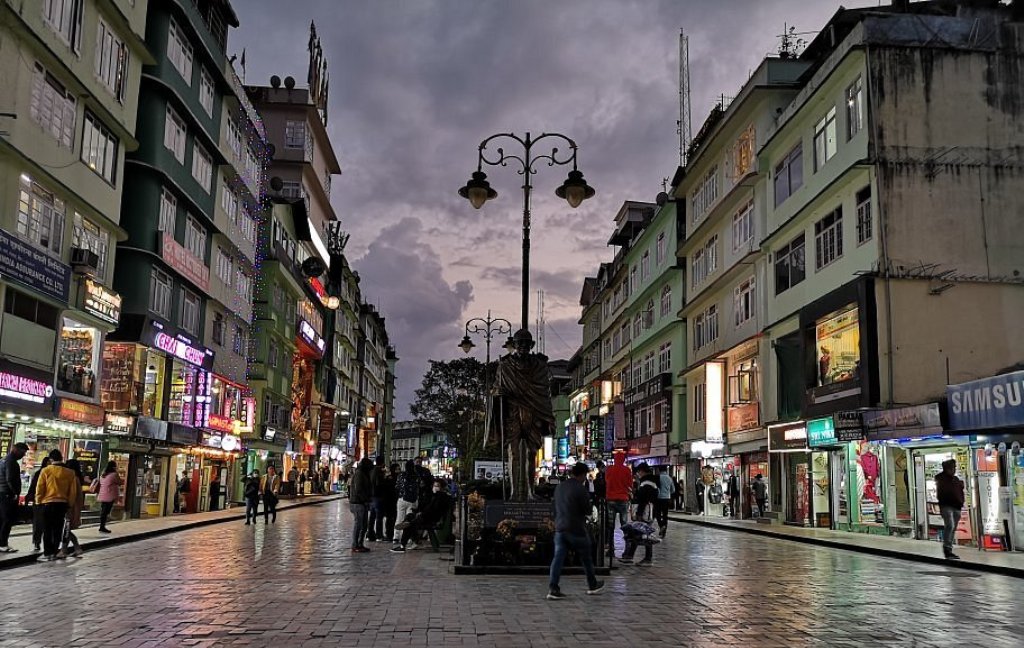
Mahatma Gandhi Marg, better known simply as MG Marg, is Gangtok’s pedestrianised central boulevard — a 600-metre stretch of cafes, shops, restaurants, and viewpoints that functions as the city’s living room. Clean, well-maintained, and animated at all hours, MG Marg is where Gangtok’s social life plays out. On clear days, the Kangchenjunga massif is visible at the northern end of the road — an unsolicited reminder of where you are.
- Pedestrianised; no vehicles; the safest and most pleasant urban walking in Northeast India
- Lined with restaurants, bakeries, and shops selling Sikkimese handicrafts and organic products
- MG Marg viewpoints offer Kangchenjunga views on clear mornings
- Evening atmosphere particularly lively; street food vendors and illuminated storefronts
2. Rumtek Monastery — Seat of the Kagyu Lineage
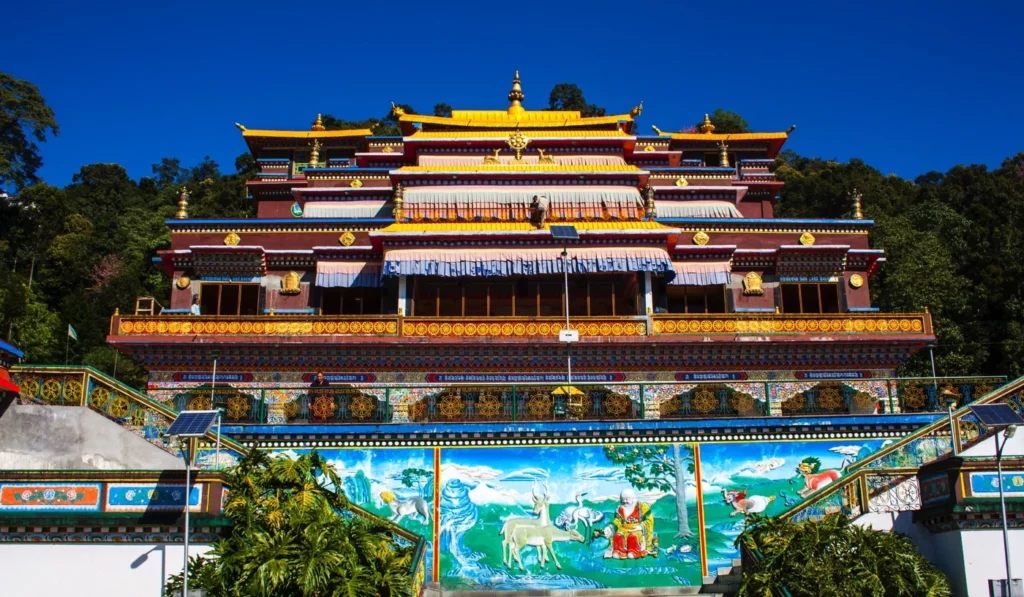
Rumtek Monastery, 23 km south of Gangtok at 1,550 metres, is the most important Kagyu Buddhist monastery outside Tibet and one of the most significant religious institutions in the entire Himalayan Buddhist world. The monastery was established by the 16th Karmapa — the head of the Karma Kagyu lineage — who fled Tibet in 1959 and built Rumtek as the seat of his tradition in exile. The golden spire of the main temple, the extraordinarily detailed murals of the assembly hall, and the adjoining institute and museum make this a full half-day’s immersion.
- Seat of the Karma Kagyu lineage — one of the most important Tibetan Buddhist institutions in the world
- The main assembly hall has exceptional murals and an impressive Buddha image
- The Nalanda Institute of Higher Buddhist Studies is adjacent — library open to researchers
- Relic stupa (Golden Stupa) houses important sacred objects of the 16th Karmapa
- Photography restrictions inside the main prayer hall — check at the entrance
| Rumtek is a living monastery, not a museum. Morning prayers begin around 7 AM — attending is permitted and deeply atmospheric. Remove shoes before entering prayer halls, dress modestly, and walk clockwise around all religious structures. The monks are welcoming to respectful visitors. |
3. Namgyal Institute of Tibetology (NIT)
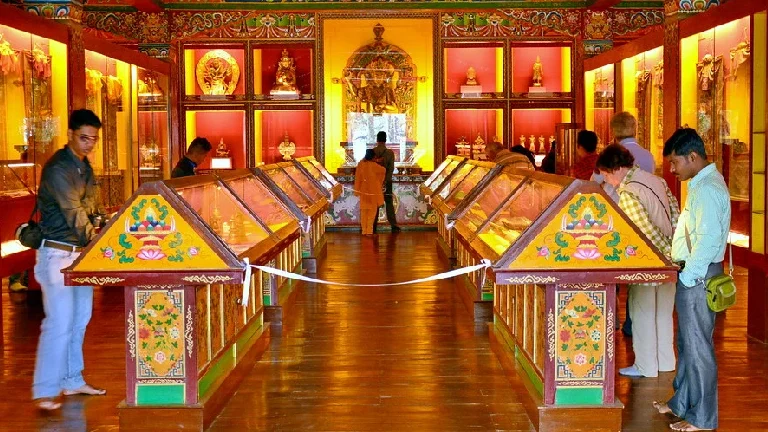
The Namgyal Institute of Tibetology, established in 1958, is one of the world’s foremost research centres on Tibetan Buddhist scholarship, language, and iconography. Its museum houses one of the finest collections of Tibetan Buddhist art outside Tibet — rare thangka paintings, ritual objects, manuscripts, and statuary that represent centuries of artistic and spiritual achievement. For anyone with an interest in Himalayan Buddhism, this is essential.
- World-class collection of Tibetan Buddhist thangkas, manuscripts, and ritual objects
- Research library with over 30,000 volumes — the finest Tibetan Buddhist library in India
- The institute building itself is a notable example of traditional Sikkimese architecture
- Allow 1.5–2 hours for a thorough museum visit
4. Enchey Monastery
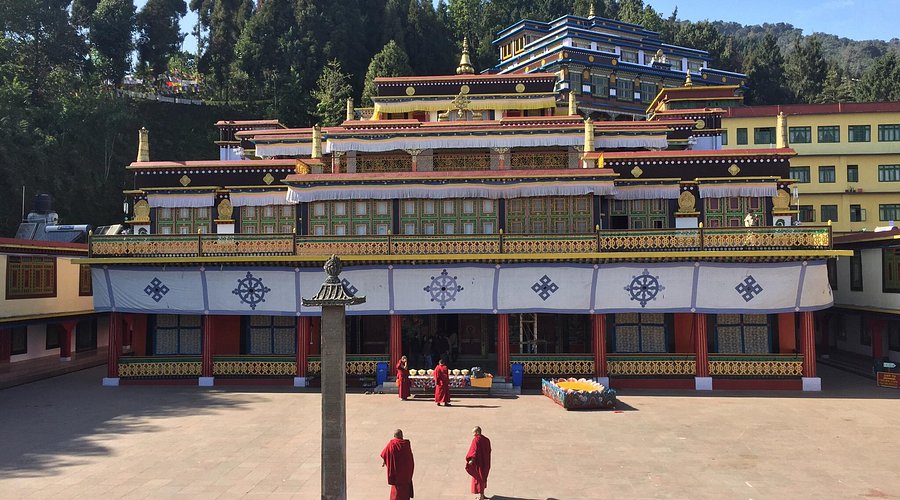
Enchey Monastery, set on a spur above Gangtok at 1,675 metres, offers one of the finest viewpoints over the city and valley. The 200-year-old Nyingma school monastery is active, intimate, and atmospheric — a pleasant contrast to the larger and more formal Rumtek. The early morning views from the monastery terrace, before mist fills the valley, are among the finest in Gangtok.
- 200-year-old Nyingma monastery with active resident monks
- Terrace viewpoints over Gangtok and the Rangit valley
- The December Chham (masked dance) festival at Enchey is one of Gangtok’s most spectacular cultural events
5. Gangtok Ropeway (Cable Car)
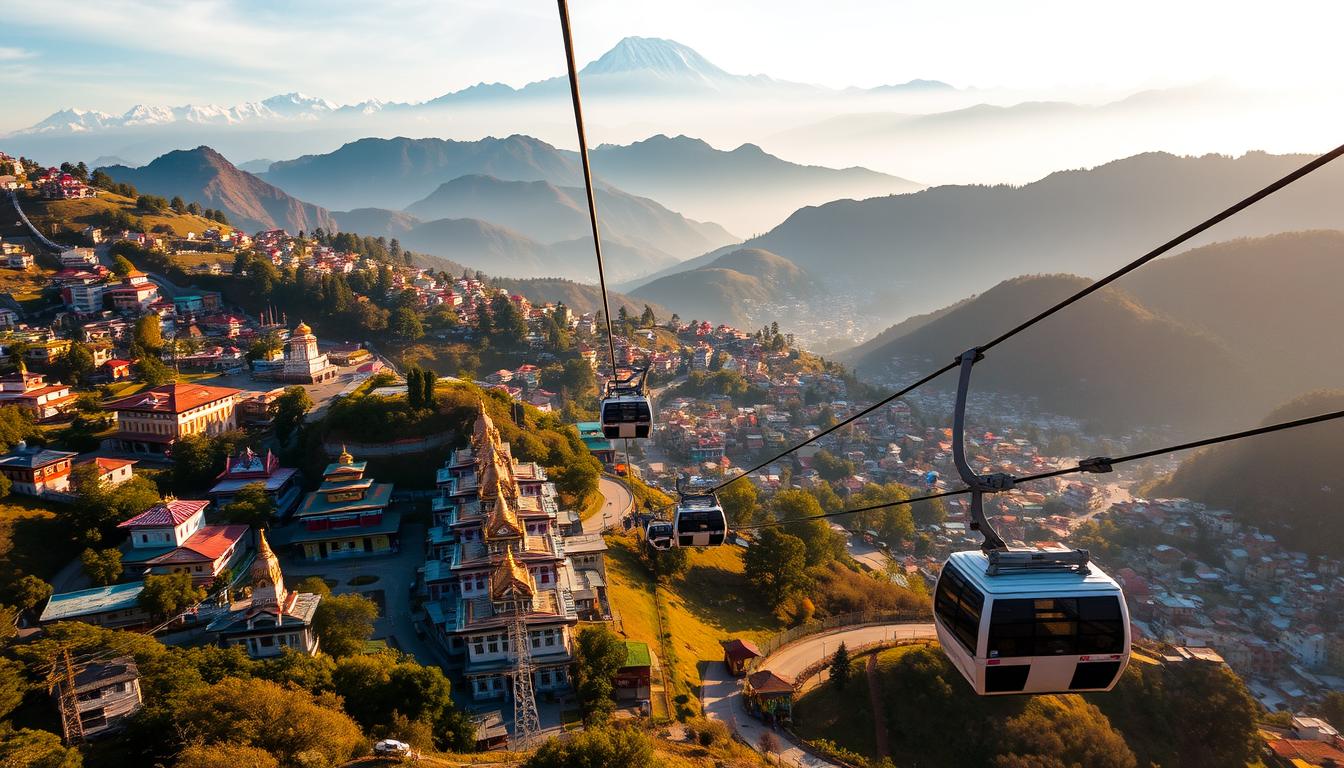
The Gangtok Ropeway — a three-station cable car connecting Deorali, Nam Nang, and Tashiling — provides the finest aerial perspective on the city, the valley, and on clear days, Kangchenjunga. The ride is not very long but the views, particularly in the morning before cloud builds, are exceptional.
- Three stations; full circuit takes approximately 30 minutes
- Best on clear mornings (October–December) for Kangchenjunga views
- Operational most days but closes in heavy rain and fog
6. Flower Exhibition Centre & Do-Drul Chorten
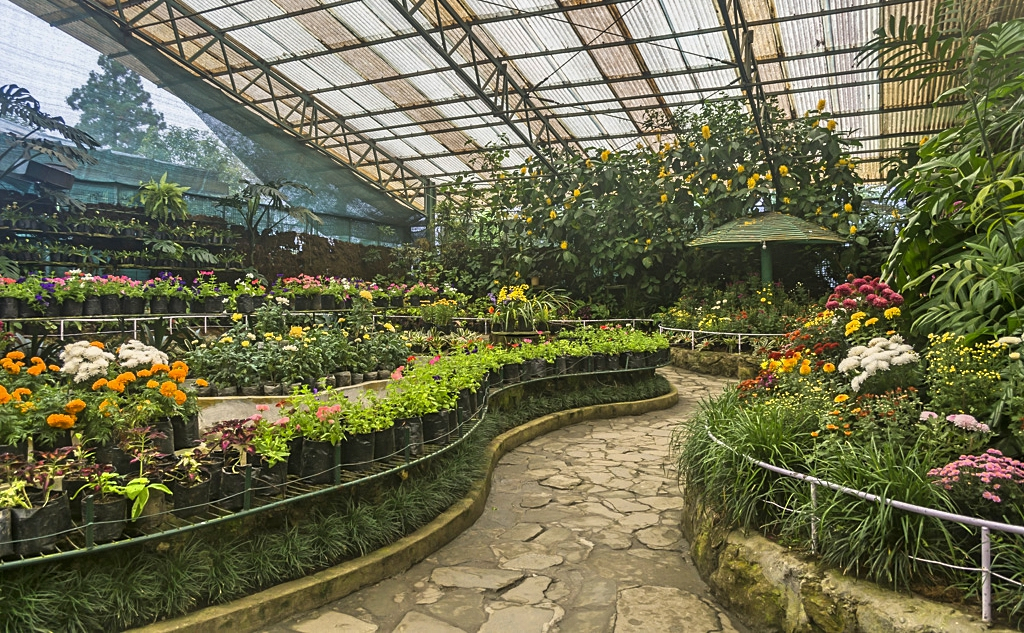
The Do-Drul Chorten stupa, built in 1945, is one of the most important stupas in Sikkim and a significant pilgrimage site. The 108 prayer wheels surrounding the stupa make it a meditative circuit walk. Adjacent to this, the Flower Exhibition Centre showcases Sikkim’s extraordinary orchid and rhododendron diversity — particularly rewarding in spring (March–May) when varieties are in bloom.
- Do-Drul Chorten: walk the 108-prayer-wheel circuit clockwise at dawn for the most atmospheric experience
- Flower Exhibition Centre: over 450 orchid species from Sikkim on display during spring
7. Tsomgo (Changu) Lake — Day Trip
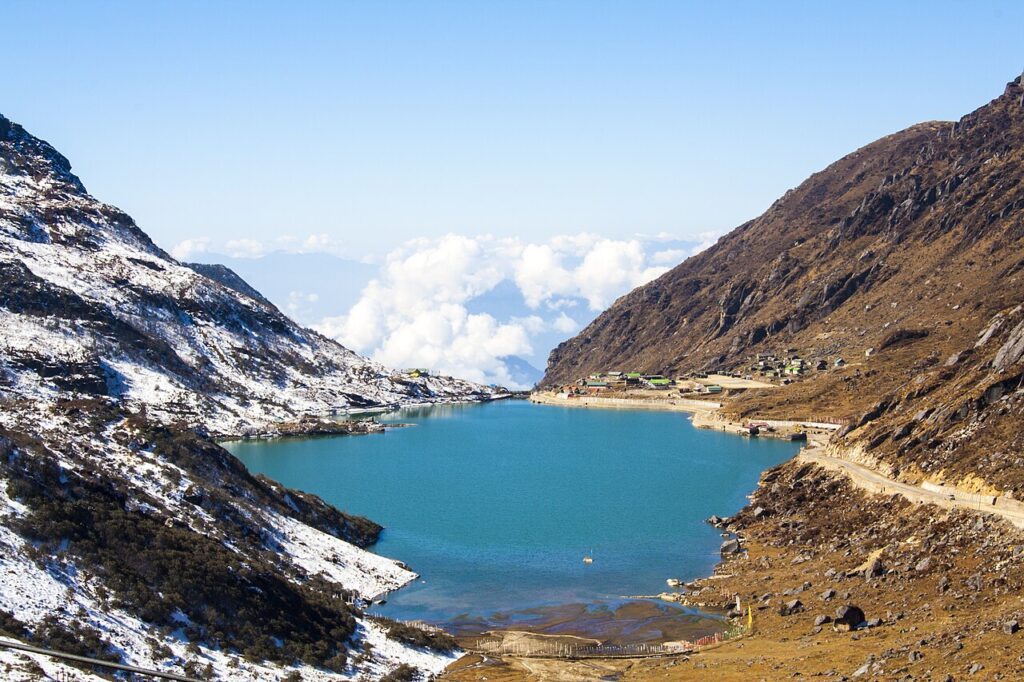
Tsomgo Lake, at 3,753 metres, is a sacred glacial lake 40 km from Gangtok and one of the most popular day trips from the city. The lake sits in a high-altitude valley ringed by hills and reflects the surrounding landscape with exceptional clarity. A special permit (beyond the standard Sikkim permit) is required for Tsomgo — arrange through a registered Gangtok operator.
- Sacred lake at 3,753m — partially frozen in winter, turquoise in summer
- Yak rides available at the lakeside
- Combined with Baba Mandir (a revered army shrine nearby) on the same day
- Special permit required — arrange through Gangtok operators; same-day processing
Permit Hub: Gangtok for North Sikkim & Beyond
One of Gangtok’s most practical functions for travelers is as the permit processing centre for Sikkim’s restricted areas. All permits for North Sikkim (Lachen, Lachung, Gurudongmar, Yumthang) must be obtained in Gangtok through registered tour operators, who process the paperwork within 24 hours.
- North Sikkim Restricted Area Permit — Required for all travelers to Lachen, Lachung, Gurudongmar Lake, and Yumthang Valley; obtained in Gangtok; Indian nationals processed quickly; foreign nationals require a separate Inner Line Permit
- Nathula Pass Permit — Required for both Indian and foreign nationals; only Indian nationals permitted on certain days; arrange through Gangtok operators
- Dzongri/Goecha La Trek Permit — Forest Department permit from Yuksom; travel to Yuksom via Gangtok and Pelling
Also Read: How to Apply For Travel Permits for Traveling to Northeast India
| Permit practical tip: Arrive in Gangtok one day before you plan to travel to North Sikkim. Register with a licensed operator on Day 1 and submit permit documents; permits are typically ready by the next morning. Most operators also arrange transport and accommodation in North Sikkim as a package. |
Top Things to Do in Gangtok
- MG Marg evening walk — The social heart of the city; cafes, views, and excellent street food
- Rumtek Monastery morning visit — Leave Gangtok by 7 AM; attend morning prayers; explore at leisure
- Namgyal Institute of Tibetology — Half a day; the finest Buddhist art collection in Northeast India
- Rope way morning ride — Book the first cable car of the day for the clearest Kangchenjunga views
- Tsomgo Lake day trip — Full day; high-altitude lake; arrange permit and vehicle the day before
- Monastery circuit — Enchey + Do-Drul Chorten + Tashi View Point in a half-day loop
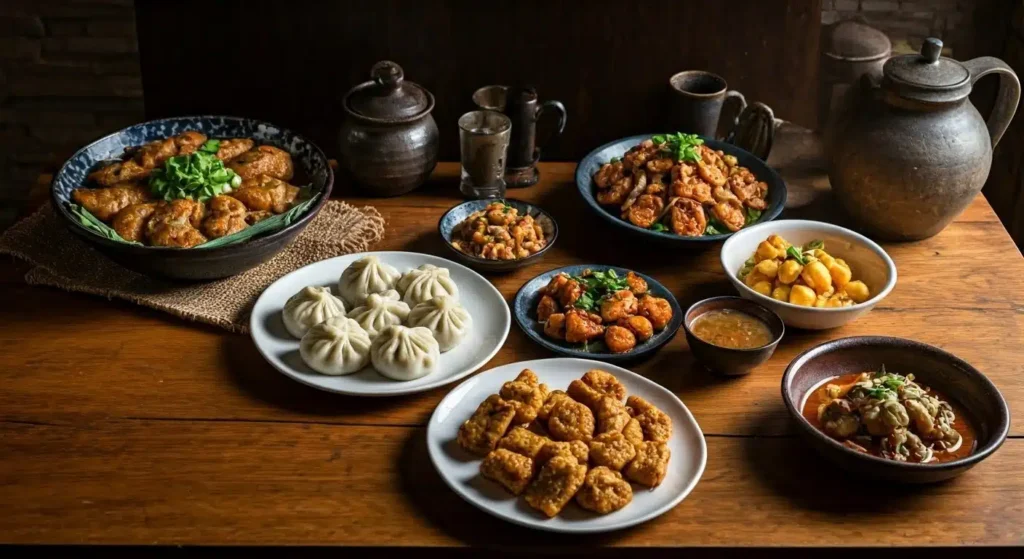
- Sikkim food exploration — Momos, thukpa, sel roti, tongba (millet beer) — follow your nose through the MG Marg area
Where to Eat in Gangtok
Sikkimese & Tibetan Dishes
- Momos — Sikkim’s most beloved street food; pork, beef, and paneer versions; steamed and fried; best from roadside stalls near MG Marg
- Thukpa — Tibetan noodle soup; deeply warming at altitude; available everywhere
- Phagshapa — Strips of pork fat with dried chilies and radishes; quintessentially Sikkimese
- Sel Roti — Crispy fried rice bread; a festival staple; available year-round at bakeries
- Tongba — Warm fermented millet beer served in a bamboo vessel; the essential Sikkimese social drink
- Gundruk ko Jhol — Fermented leafy green soup; earthy, warming, and deeply traditional
Recommended Places
- Baker’s Café — MG Marg; best breakfast in Gangtok; excellent coffee and baked goods
- House of Bamboo — Authentic Sikkimese cuisine; one of the best local food experiences in the city
- Nimtho — Award-winning restaurant; modern takes on traditional Sikkimese recipes
- Taste of Tibet — Reliable, affordable Tibetan food near MG Marg
- Local momo stalls (evening) — The definitive Gangtok food experience; the evening rush near MG Marg
Where to Stay in Gangtok
- Heritage hotels — Elgin Nor-Khill is Gangtok’s most celebrated heritage property — a 1930s royal guesthouse; excellent views and colonial-era atmosphere
- Mid-range hotels — Several well-run options with Kangchenjunga views; Hotel Sonam Delek and Modern Central Lodge are popular; ₹2,500–₹5,000
- Budget guesthouses — Concentrated in the MG Marg area and below; ₹900–₹2,000; reliable options include Hotel Tibet and several family-run guesthouses
- Homestays — Available in and around Gangtok with Lepcha and Bhutia families; the most culturally immersive option
How to Reach Gangtok
From New Jalpaiguri / Siliguri (Most Common Route)
- New Jalpaiguri (NJP) is the major rail and air hub for Sikkim access — 148 km from Gangtok
- Shared taxis and buses from NJP to Gangtok run throughout the day — approximately 4–5 hours on NH10
- Private taxi: approximately ₹3,000–₹4,000; more comfortable; flexible departure
By Air
- Pakyong Airport (31 km from Gangtok) — Sikkim’s own airport; connections from Kolkata; limited flights
- Bagdogra Airport (West Bengal) — 124 km; better connectivity to Delhi, Kolkata, Guwahati, and Mumbai; taxi 4 hours
By Train
- New Jalpaiguri (NJP) is the main railhead — well connected to Kolkata, Delhi, Guwahati, and major cities
- The Darjeeling Mail, Padatik Express, and multiple weekly trains connect NJP to major cities
Travel Essentials for Gangtok
- No permit needed for Gangtok itself — just standard ID
- North Sikkim permits: process through a registered Gangtok operator; ₹300–₹500 per person including paperwork
- ATMs widely available on MG Marg and throughout the city
- Mobile: All major Indian networks function well in Gangtok
- Altitude: 1,650m is comfortable for most travelers — no acclimatisation needed for Gangtok itself
- Carry warm layers: even in summer, evenings at 1,650m are cool
Best Time to Visit Gangtok
- March to May: Rhododendrons in bloom on surrounding hills; pleasant temperatures; pre-monsoon clarity
- October to December: Post-monsoon; best Kangchenjunga visibility; crisp weather; Losar and other festivals
- January to February: Cold but clear; potential snow nearby; very few tourists
- June to September: Monsoon; heavy rainfall; North Sikkim roads often closed; not recommended for first visits
Sample 3-Day Gangtok Itinerary
- Day 1 — City Exploration: Morning ropeway ride; Namgyal Institute of Tibetology; MG Marg afternoon; Enchey Monastery sunset; evening on MG Marg for food and atmosphere
- Day 2 — Rumtek & Permit Day: Early morning drive to Rumtek (morning prayers); full monastery exploration; return to Gangtok; afternoon permit processing for North Sikkim with operator
- Day 3 — Tsomgo Lake Day Trip: Early departure for Tsomgo Lake (permit arranged previous day); Baba Mandir; return to Gangtok by evening for onward travel to North Sikkim

2 Comments
[…] Regency Gangtok is set to redefine the hospitality landscape of the Eastern Himalayas after Chief Minister Prem […]
[…] school holidays and long weekends turn Cherrapunji, Gangtok, and Kaziranga uncomfortably crowded. If your dates overlap with these windows, book accommodation […]