




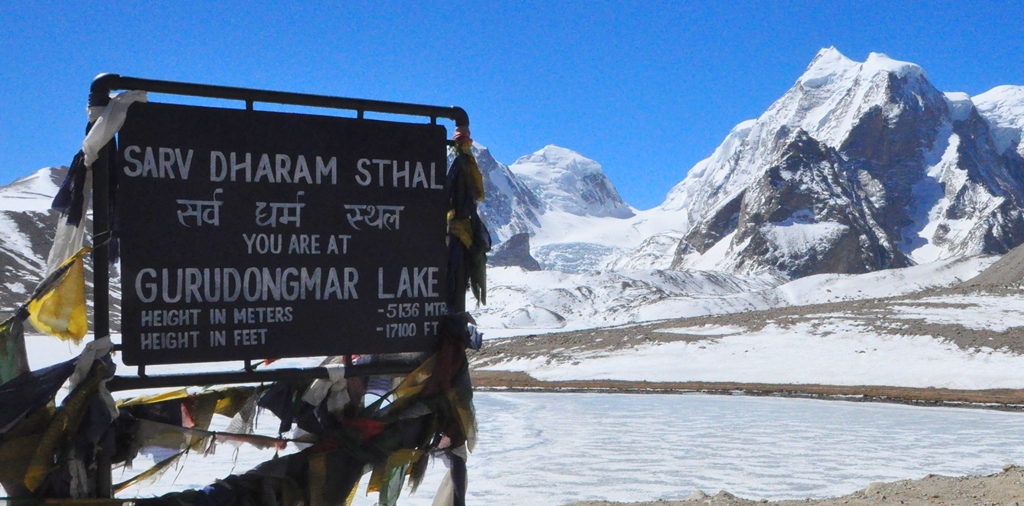
At 5,183 metres above sea level, Gurudongmar Lake sits so high that the surrounding landscape is stripped of almost everything — colour, vegetation, the comfortable weight of air. What remains is pure: a body of water of astonishing blue-grey intensity, ringed by barren peaks along the Tibet border, reflecting a sky that feels closer than it should. On the clearest days, the surface is still enough to double the mountain world above it. In the depth of winter, it freezes — all except for a small section said to have been blessed by Guru Padmasambhava, which remains liquid even when the temperature plunges below -20°C.
Gurudongmar Lake is one of the highest accessible lakes in the world — higher than Pangong Tso in Ladakh, higher than Tso Moriri, and approached by a road that climbs through landscapes of increasing drama and austerity. It is sacred to both Buddhists and Sikhs, and the combination of extreme altitude, exceptional natural beauty, and deep spiritual significance makes it unlike almost anywhere else in India. Getting here requires planning, permits, proper acclimatisation, and the acceptance that the mountain will dictate the terms — not the traveler.
Quick Facts About Gurudongmar Lake
| State | Sikkim |
| District | North Sikkim |
| Altitude | 5,183 metres (17,005 feet) |
| Lake Type | High-altitude glacial lake |
| Sacred To | Buddhists and Sikhs (associated with Guru Padmasambhava and Guru Nanak) |
| Base Town | Lachen — 65 km from the lake; overnight mandatory |
| Distance from Gangtok | 175 km; approximately 8–10 hours by road |
| Permit Required | North Sikkim Restricted Area Permit (processed in Gangtok through registered operators) |
| Foreign Nationals | Inner Line Permit (ILP) required; access conditions may vary — verify current status before travel |
| Best Time | May to June; September to October; avoid December–March for road closures |
The Sacred Significance of Gurudongmar Lake
The Buddhist Connection
Guru Padmasambhava — the 8th century Buddhist master who brought Vajrayana Buddhism from India to Tibet — is said to have visited the lake during his journeys through the Himalayas. Local tradition holds that the Guru touched the surface of the frozen lake and blessed it, leaving a section permanently unfrozen as a source of water for the region’s people and animals. This section remains ice-free even in the deepest winter — a phenomenon that has no satisfactory scientific explanation and which reinforces the lake’s status as a place of extraordinary spiritual power.
The Sikh Connection
Guru Nanak, the founder of Sikhism, is also believed to have visited Gurudongmar Lake during his extensive journeys through South and Central Asia. A small Gurudwara (Sikh shrine) was established at the lakeside to mark this association. The combination of Buddhist and Sikh veneration at the same high-altitude lake is unusual and reflective of the syncretic spiritual traditions of the Himalayan world.
| Whether you hold any religious belief or not, arriving at Gurudongmar Lake after the long drive from Lachen and standing at 5,183 metres before that expanse of still water and mountain silence produces a response in most travelers that exceeds mere scenic appreciation. This is a place that demands a moment of genuine stillness. |
The Route: Gangtok to Gurudongmar Lake
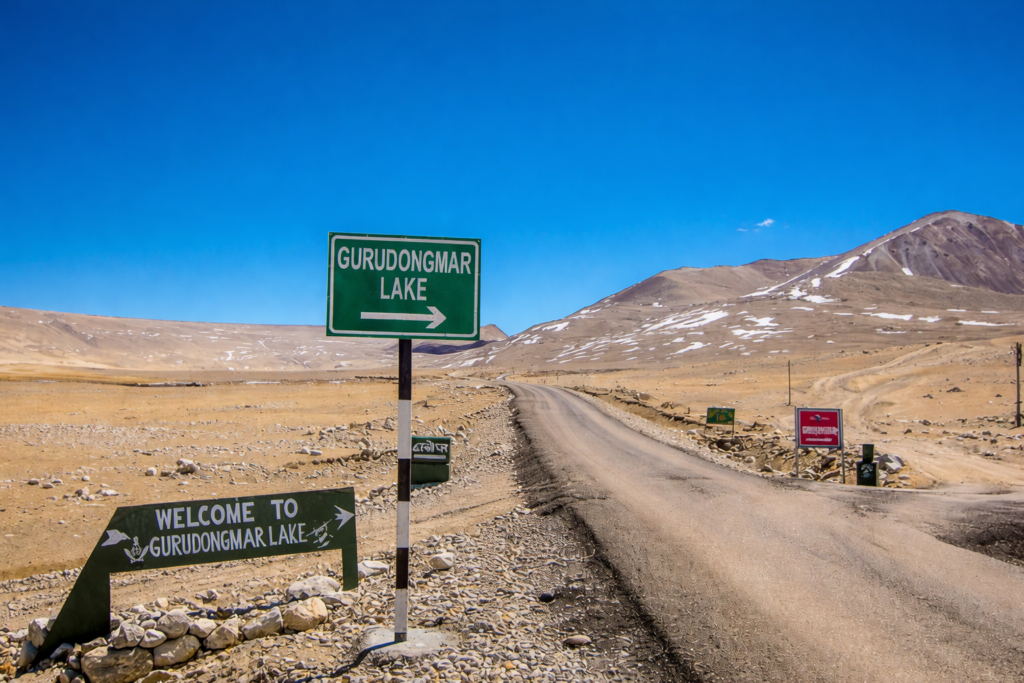
The drive from Gangtok to Lachen follows the Teesta River valley north before climbing into the mountains of North Sikkim. The road passes through Chungthang — the confluence of the Lachen Chu and Lachung Chu rivers — before continuing north to Lachen. The scenery becomes increasingly dramatic as altitude increases.
Stage 1: Gangtok to Lachen (136 km, 7–8 hours)
- Mangan: The North Sikkim district headquarters; last reliable fuel stop before Lachen
- Chungthang: Scenic river confluence; good lunch stop
- Lachen: Small mountain town at 2,750m; overnight mandatory for acclimatisation before the high-altitude drive to Gurudongmar
Stage 2: Lachen to Gurudongmar (65 km, 2.5–3 hours each way)
The drive from Lachen to Gurudongmar Lake is one of the most dramatic high-altitude road journeys in India. The road climbs continuously, passing through the valley of the Lachen Chu and ascending through increasingly barren terrain. At around 4,500 metres, the landscape becomes almost extraterrestrial — no trees, no grass, only rock, thin soil, and the occasional prayer flag. The lake appears suddenly as the road crests a low ridge.
- Depart Lachen no later than 6 AM — the lake is approximately 3 hours away
- Road passes through Thangu valley (3,900m) — a beautiful intermediate stop for acclimatisation
- The final 20 km above Thangu are the most altitude-intensive — drive slowly and avoid exertion
- Total drive time from Lachen: approximately 2.5–3 hours
Altitude & Acclimatisation — The Essential Guide
Gurudongmar Lake at 5,183 metres is significantly higher than any destination accessible by road in Northeast India. Altitude sickness is a genuine risk and can affect even experienced travelers. The consequences of ignoring altitude symptoms at this elevation can be serious.
The Mandatory Acclimatisation Protocol
- Night 1 in Gangtok (1,650m): The starting point; no altitude concerns
- Night 2 in Lachen (2,750m): First acclimatisation night — essential; do not skip this to save time
- Day 3 — Drive to Gurudongmar (5,183m) and return to Lachen: The high-altitude day; depart early, spend maximum 30–45 minutes at the lake, return to Lachen by early afternoon
- Night 3 in Lachen or descent to Gangtok: Some travelers descend directly after Gurudongmar; others overnight in Lachen again
| Do not rush the acclimatisation. The single most common mistake made by travelers to Gurudongmar is skipping the Lachen overnight to save a day. At 5,183 metres, the oxygen level is approximately 54% of sea level. Going from Gangtok to Gurudongmar in a single day is dangerous and strongly inadvisable. |
Symptoms to Watch For
- Mild AMS (Acute Mountain Sickness): Headache, nausea, dizziness, fatigue — common at 5,000m+ even with acclimatisation; rest, hydrate, descend if symptoms worsen
- HACE (High Altitude Cerebral Edema): Severe headache, confusion, loss of coordination — descend immediately; this is a medical emergency
- HAPE (High Altitude Pulmonary Edema): Breathlessness at rest, cough, blue lips — descend immediately; medical emergency
- Diamox (Acetazolamide): Consult your doctor about prophylactic use before travel; widely recommended for travelers with history of altitude sensitivity
At the Lake: Essential Rules
- Spend no more than 30–45 minutes at the lake — most symptoms worsen with prolonged stay at altitude
- No running or strenuous activity at the lake — walk slowly and breathe deliberately
- Stay warm — temperature at the lake can be -5°C even in summer; windchill makes it feel significantly colder
- No littering — the extreme fragility of the high-altitude ecosystem makes this non-negotiable
- Photography: Allow time to acclimatise before operating camera equipment; keep equipment warm inside your jacket between shots
What to Expect at Gurudongmar Lake
The Landscape
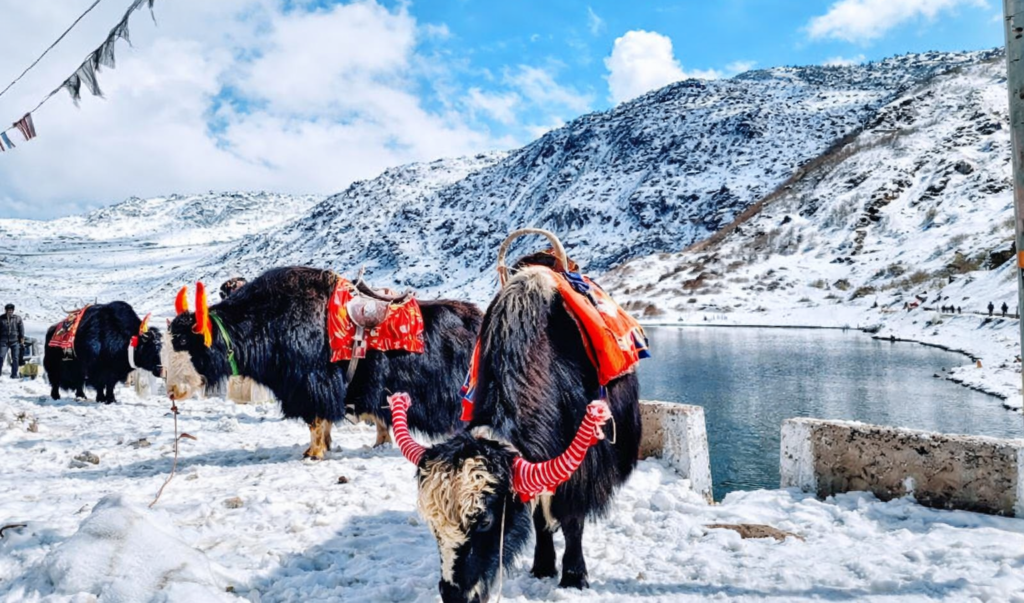
The area around Gurudongmar Lake is high-altitude desert — austere, barren, and extraordinarily beautiful in its severity. The colour palette is reduced: grey rock, blue-grey water, white snow and ice on the surrounding peaks, and the occasional burst of colour from prayer flags at the lakeside shrine. The Tibetan plateau begins just beyond the mountain ridgeline to the north.
The Lake Itself
The lake is approximately 5 km in length and varies in colour depending on weather conditions — from a deep midnight blue in overcast conditions to brilliant turquoise-silver in bright morning sun. The partial ice cover in winter creates extraordinary patterns. In summer, the shoreline is accessible and the water appears impossibly clear.
The Shrine Area
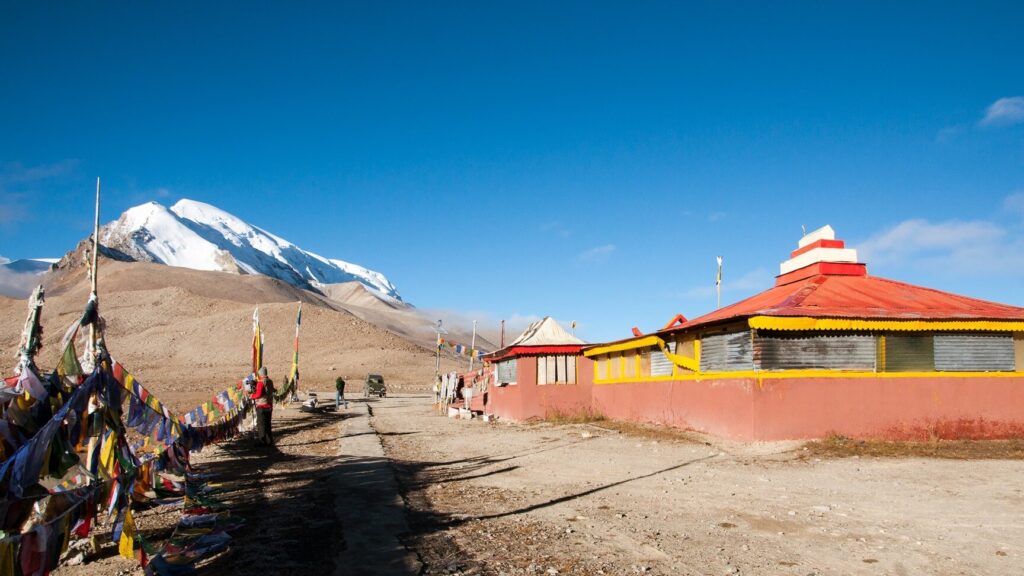
A small Buddhist shrine and the Gurudwara marking Guru Nanak’s visit are located at the accessible end of the lake. Prayer flags and mani stones surround the shrine. The atmosphere — silence broken only by wind and prayer flags — is unlike any other place in Sikkim.
Where to Stay Near Gurudongmar
- Lachen — The mandatory overnight base; several guesthouses and homestays; basic but comfortable; most are run by Lepcha and Bhutia families
- Army-controlled guesthouses near Gurudongmar Lake — Available for some travelers through operator arrangements; basic facilities at extreme altitude; generally for overnight military/official purposes
- Most common itinerary — Overnight in Lachen (nights 1 and 2); day trip to Gurudongmar on Day 2 morning; return to Gangtok on Day 3
Where to Eat Near Gurudongmar
- Lachen village restaurants — Simple Sikkimese and Tibetan food; thukpa, momos, rice dishes; warming and satisfying at altitude
- Packed lunch — Most operators arrange packed lunches for the Gurudongmar day; eating at the lake itself is not recommended — cold temperature affects appetite and the short visit time makes it impractical
Permits for Gurudongmar Lake
Gurudongmar Lake requires a North Sikkim Restricted Area Permit, which must be obtained in Gangtok through a licensed tour operator. The permit process typically takes 24 hours and costs approximately ₹300–₹500 per person (inclusive of paperwork fees).
- Indian nationals: North Sikkim RAP — processed in Gangtok; requires ID proof and 2 passport photos
- Foreign nationals: Inner Line Permit (ILP) required for North Sikkim; process through Gangtok operators; verify current access restrictions as conditions for foreign nationals at the Gurudongmar area may vary
- Group requirement: Solo travel to North Sikkim is not permitted — you must travel in a group of at least 2 (some regulations require a minimum of 4); operators can arrange group consolidation for solo travelers.
Also Read: How to Apply For Travel Permits for Traveling to Northeast India
How to Reach Gurudongmar Lake
- From Gangtok: Day 1 — drive Gangtok to Lachen (136 km, 7–8 hours); Day 2 — drive Lachen to Gurudongmar Lake (65 km, 2.5–3 hours) and return to Lachen; Day 3 — drive back to Gangtok (7–8 hours)
- Transport: No public transport to Gurudongmar Lake; private 4WD vehicles (Bolero, Tata Sumo, or Innova) arranged through Gangtok tour operators; approximately ₹10,000–₹15,000 for a 3-day vehicle package
- Combined itinerary: Many operators combine Gurudongmar with the Yumthang Valley (Lachung side) in a 4–5 day North Sikkim package — this is the most efficient approach
Travel Essentials for Gurudongmar Lake
- Acclimatisation is not optional — follow the protocol above strictly
- Warm clothing layers: base thermal layer, mid fleece, outer windproof shell; hat, gloves, neck gaiter
- Sun protection: at altitude, UV radiation is extreme; high-SPF sunscreen and glacier glasses essential
- Water: carry 2 litres minimum; stay hydrated; altitude dehydration occurs faster than at sea level
- Medications: pain relief (paracetamol or ibuprofen for altitude headache), antacids, and rehydration salts
- No ATMs in Lachen; carry sufficient cash from Gangtok
- BSNL mobile signal in Lachen town; no signal between Lachen and the lake
Best Time to Visit Gurudongmar Lake
- May to June: Post-winter; road accessible; clear skies; some residual snow adds to the drama
- September to October: Post-monsoon clarity; best photography light; stable weather
- November: Early winter; the lake may begin to partially freeze; spectacular but cold
- December to April: Road to Gurudongmar frequently closed due to heavy snowfall; not recommended
- July to August: Monsoon; North Sikkim roads occasionally disrupted by landslides; possible but uncertain
Also Read: Best Time to Visit Northeast India — Month-by-Month Guide
