




Few Indian cities carry as much history per square kilometre as Kohima. At 1,444 metres in the Naga Hills, the capital of Nagaland was the site of one of the most decisive battles of the Second World War — the Battle of Kohima in 1944, sometimes called the Stalingrad of the East, where Allied forces halted the Japanese advance into India in brutal hand-to-hand combat on a tennis court that is now a war cemetery. That history, layered over centuries of Naga tribal tradition and the extraordinary cultural effervescence of the annual Hornbill Festival, makes Kohima one of Northeast India‘s most compelling destinations.
But Kohima is more than its history. It is the cultural gateway to one of India’s most extraordinary tribal civilisations — 16 Naga tribes, each with its own distinct language, dress, and traditions, coming together in a city that manages to feel simultaneously deeply traditional and surprisingly cosmopolitan. The markets sell smoked meat and fresh chilies alongside smartphones. The restaurants serve Naga pork alongside wood-fired pizza. The evenings ring with church choir rehearsals from a dozen denominations. The city is worth more than a transit day.
Quick Facts About Kohima
| State | Nagaland |
| Role | State Capital |
| Altitude | 1,444 metres (4,737 feet) |
| Language | Angami Naga, Nagamese (Creole), English, Hindi |
| Religion | Christianity (predominantly Baptist) |
| Nearest Airport | Dimapur Airport — 74 km (only airport in the state) |
| Nearest Rail | Dimapur Railway Station — 74 km |
| ILP Required | Yes — all Indian nationals require an ILP to enter Nagaland |
| Best Time | October to May; December for Hornbill Festival |
| Distance from Dimapur | 74 km; approximately 2.5–3 hours by road |
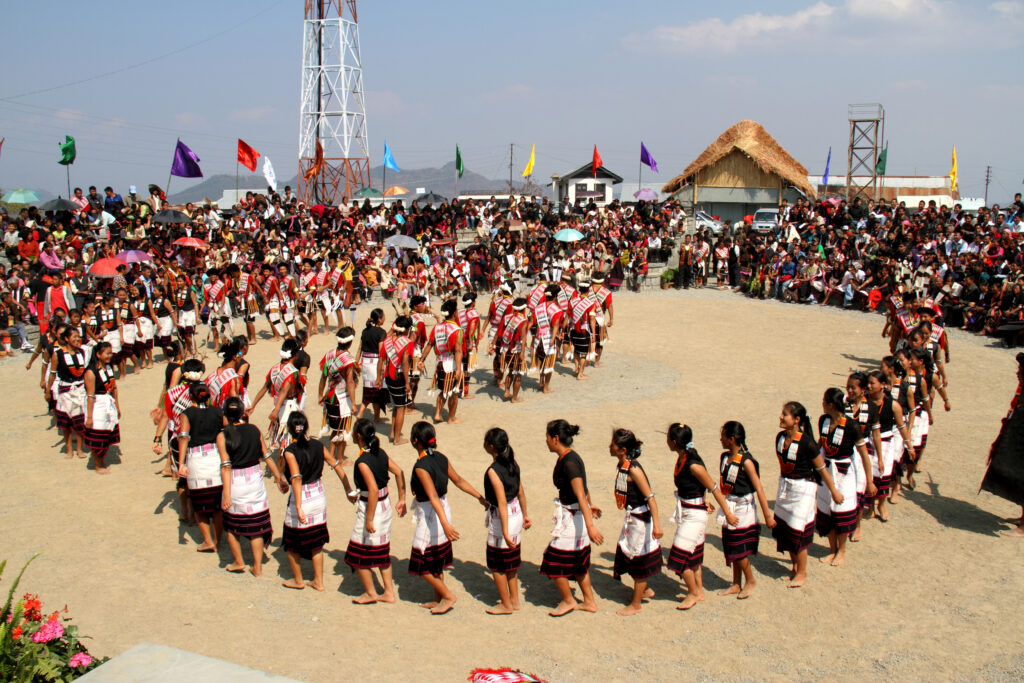
The People of Kohima: The Angami Tribe
Kohima is the homeland of the Angami, one of Nagaland’s most prominent and historically significant Naga tribes. The Angami are known throughout the Northeast for their martial traditions, their spectacular terraced rice agriculture, their distinctive warrior dress, and their role in leading Naga resistance movements across multiple centuries.
Angami identity: The Angami are traditionally divided into two groups — the Chakhro (Western Angami) and the Chakroma (Eastern Angami). Their traditional villages, built on hilltops for defensive advantage, are surrounded by stone walls and feature the characteristic Naga morung (communal house for young men) as a central institution.
Sekrenyi Festival: The most important Angami festival, held in February, is a 10-day purification and celebration ceremony involving elaborate rituals, traditional songs, and community feasting. It is one of the finest opportunities to witness Angami culture outside of the Hornbill Festival.
Naga Cuisine in Kohima: Angami cooking is characterised by smoked meats, axone (fermented soybean), bamboo shoot preparations, and the famous Naga King Chili (Bhut Jolokia) — once certified as the world’s hottest chili. Kohima’s markets are among the best places in Nagaland to experience authentic Naga food culture.
Language: Nagamese — a Creole language mixing Assamese with multiple Naga languages — serves as the lingua franca of Nagaland. English is the official language and is widely spoken in Kohima.
| Cultural tip: Nagaland is a predominantly Christian state and Sundays are observed with great seriousness. Most businesses in Kohima are closed on Sunday. Plan accordingly — Sunday mornings are, however, an extraordinary time to attend a church service and hear the extraordinary Naga choral tradition. |
Top Attractions in Kohima
1. Kohima War Cemetery
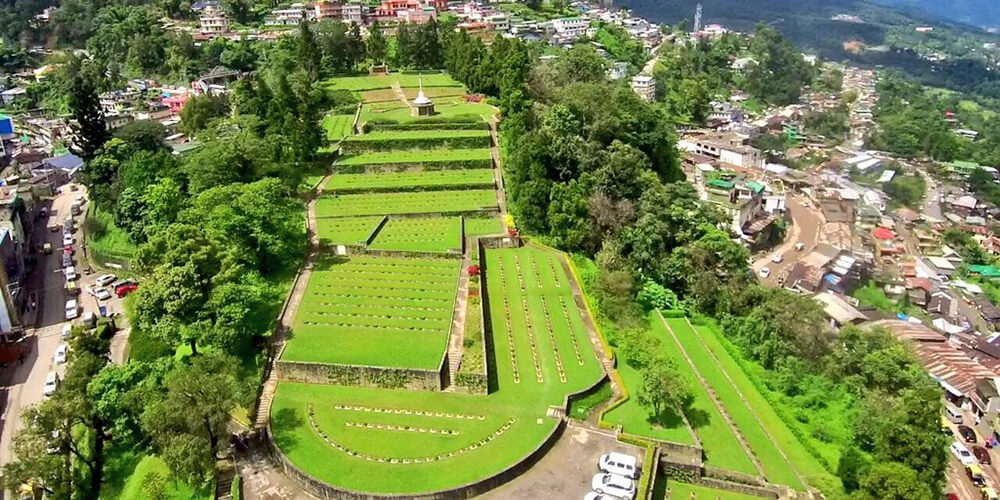
The Kohima War Cemetery, maintained by the Commonwealth War Graves Commission, is one of the most moving memorials in Asia. Set on the steep hillside of Garrison Hill — the very ground where some of the Battle of Kohima’s most intense fighting took place — the cemetery holds the graves of 1,421 Allied soldiers who fell in the battle of April–June 1944. The famous epitaph inscribed on the memorial stone has been called the finest war epitaph in any language:
| “When you go home, tell them of us and say, for your tomorrow, we gave our today.” — Epitaph at Kohima War Cemetery, attributed to John Maxwell Edmonds |
- 1,421 graves of Commonwealth soldiers — British, Indian, and East and West African regiments
- The site of the famous tennis court battle, where fighting occurred across a district commissioner’s tennis court
- Immaculately maintained; free to visit; open daily
- The views over Kohima town from the cemetery are excellent
- Early morning or late afternoon visits are most atmospheric
2. The Battle of Kohima Museum
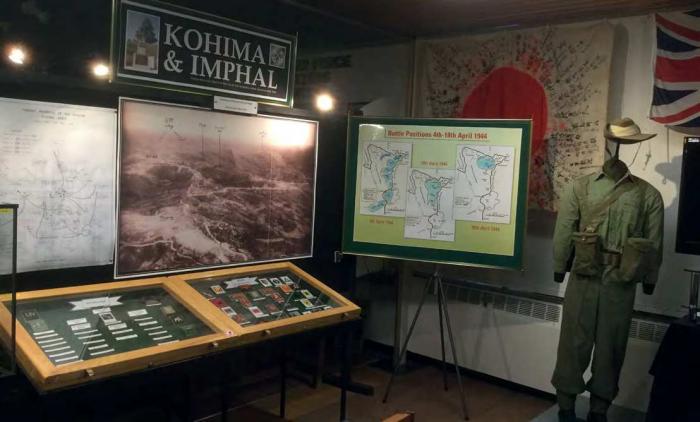
The Battle of Kohima Museum, adjacent to the war cemetery, presents the story of the 1944 battle with exceptional clarity and depth — covering both the Allied and Japanese perspectives, the role of Naga civilians and scouts who were essential to the Allied victory, and the strategic significance of the battle in the broader Pacific War. One of the finest small military museums in India.
- Detailed exhibits on the Battle of Kohima including maps, artefacts, and personal accounts
- The pivotal role of Naga scouts and civilians — largely unacknowledged in mainstream histories — is given due prominence
- The Japanese perspective is presented with balance and historical honesty
- Allow 1–1.5 hours for a thorough visit
3. Nagaland State Museum
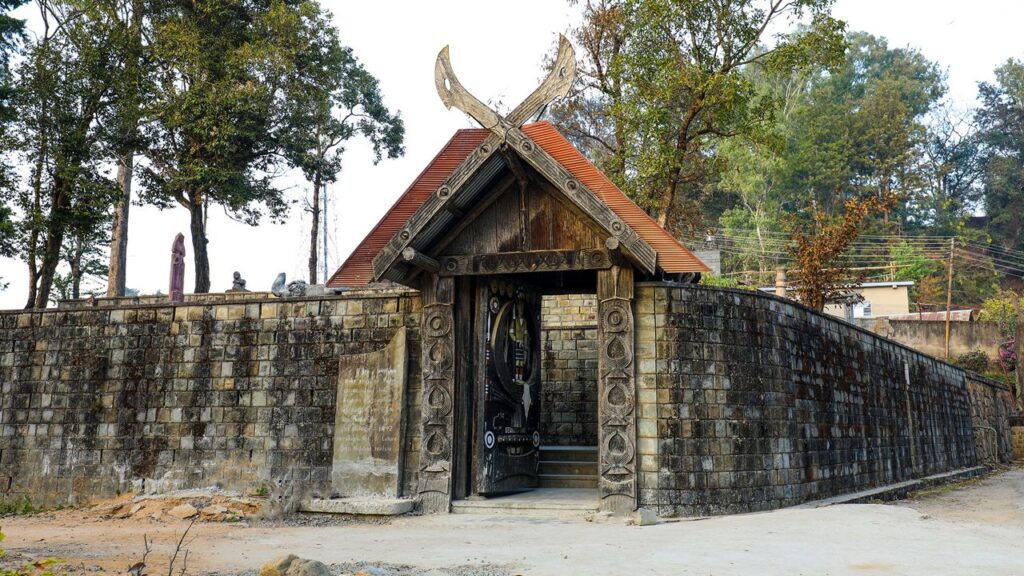
The Nagaland State Museum, set in a pleasant heritage building near the city centre, houses one of the finest collections of Naga tribal artefacts in India — traditional weapons, ceremonial dress, carved wooden panels, jewellery, textiles, and domestic implements from all 16 Naga tribes. Essential context for any deeper exploration of Nagaland’s cultural landscape.
- Collections representing all 16 Naga tribes of Nagaland
- Outstanding collection of Naga warrior regalia — spears, daos (machetes), warrior shields
- Traditional Naga architectural elements including carved house facades
- Photography restrictions apply to some collections — check at the entrance
4. Naga Heritage Village (Kisama) — Day Trip
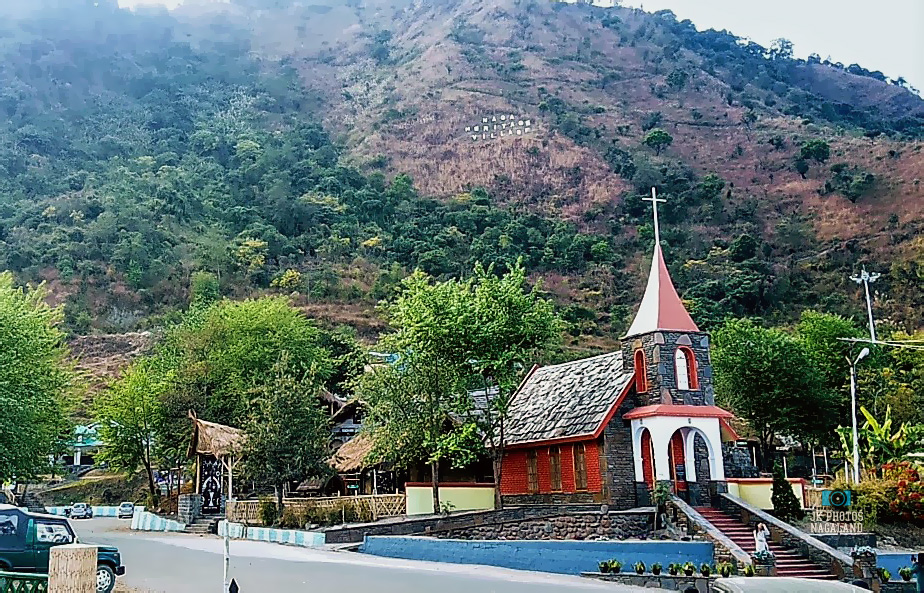
The Naga Heritage Village at Kisama, 12 km from Kohima, is the permanent venue of the Hornbill Festival and serves as a year-round exhibition of traditional Naga architecture and tribal culture. Each of Nagaland’s tribes has a representative morung (traditional house) at Kisama, and these can be explored independently outside the festival period. See the dedicated Kisama article for full details.
5. Kohima Village (Bara Basti)
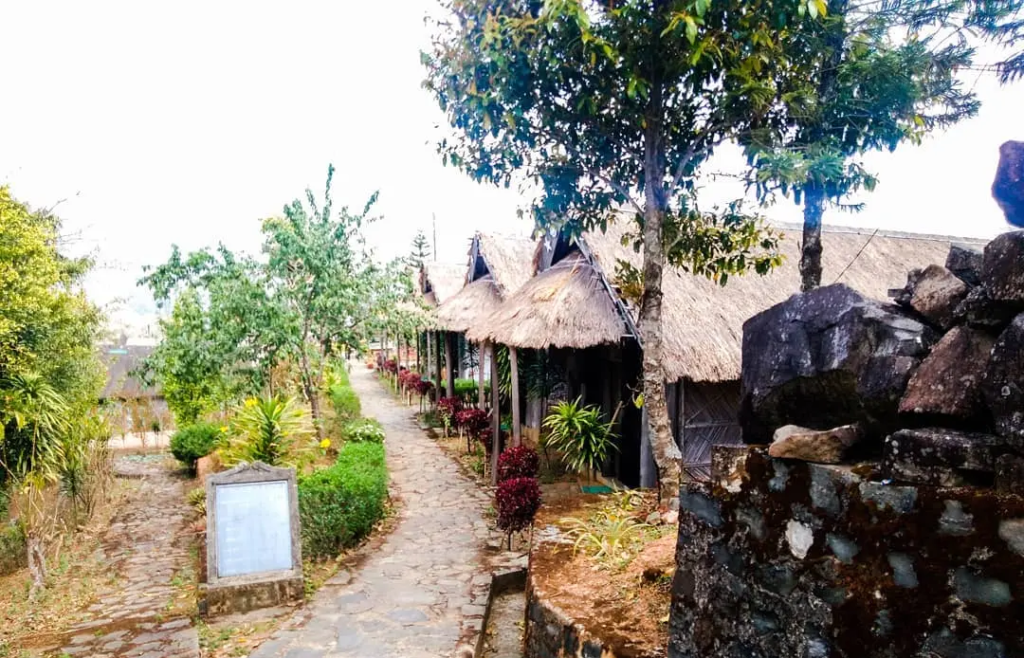
Kohima Village — also called Bara Basti — is the largest Naga villages in Nagaland and sits within the city itself, a remarkable example of a living traditional community coexisting within a modern capital. The village is famous for its enormous traditional thatched chief’s house (morung), its stone terraces, and its role as a centre of Angami cultural life. Village walks with a local guide are available and offer insights unavailable in any museum.
- Largest Angami village in Nagaland — located within Kohima city
- Traditional chief’s house with impressive hornbill carvings and warrior insignia
- Stone-walled terraces and traditional architecture still in daily use
- Hire a local guide from the Kohima Tourism office for the most informative experience
6. Dzükou Valley — Day Trek from Kohima
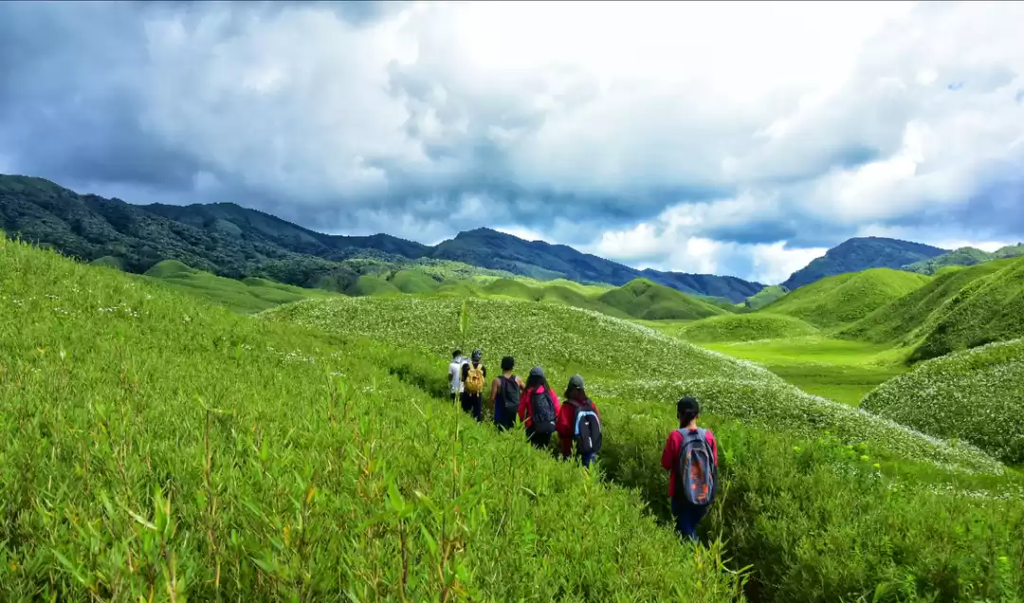
Dzükou Valley, one of Northeast India’s finest trekking destinations, is accessible from Kohima in a full-day or overnight trek. The valley sits on the Nagaland–Manipur border and is famous for its rolling green hills, seasonal flowers, and panoramic views. See the dedicated Dzükou Valley article for the complete guide.
7. Kohima Zoological Park
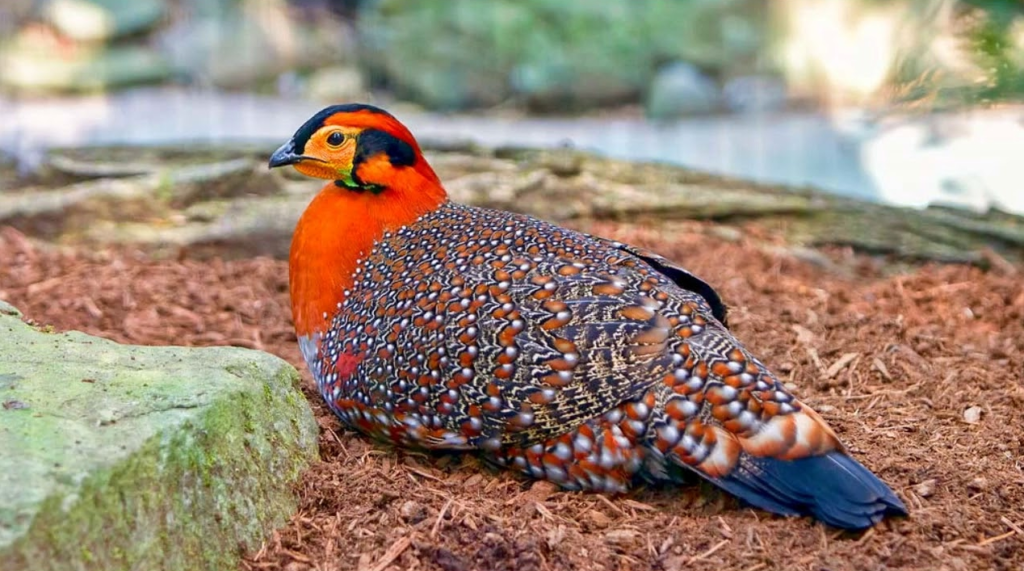
The Kohima Zoological Park, set on a forested hillside, is home to several endangered Northeast Indian species, including the Blyth’s Tragopan (Nagaland’s state bird), Hoolock Gibbon, Slow Loris, and Leopard. A pleasant half-day visit, particularly for families and wildlife enthusiasts.
- State bird: Blyth’s Tragopan — a strikingly coloured pheasant
- Endangered Northeast Indian primates in naturalistic enclosures
- Set in forested hillside — pleasant walking environment
8. Cathedral of Kohima (Mary Help of Christians Church)
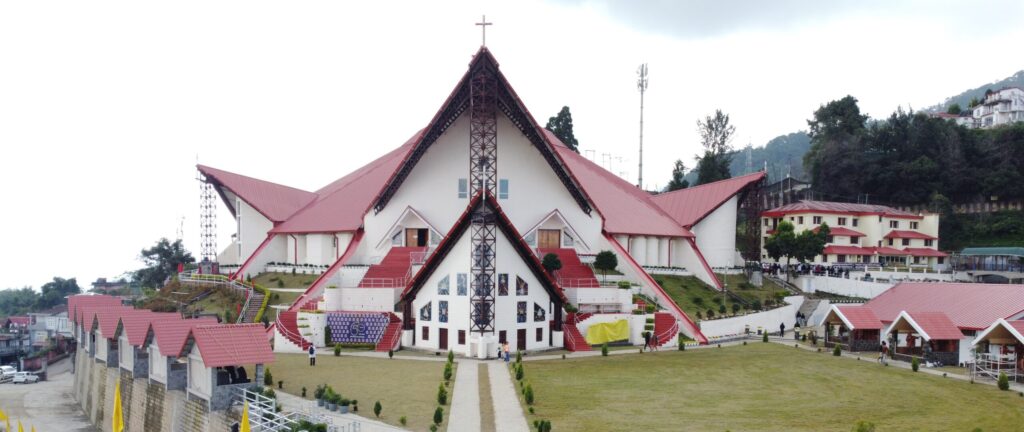
Perched on Aradura Hill, the Mary Help of Christians Cathedral is the principal church of the Roman Catholic Diocese of Kohima, Nagaland. Consecrated in January 1991, its distinctive Naga-Gothic design can seat up to 4,500 worshippers. Uniquely, much of its construction was funded by the Japanese people as a memorial to soldiers lost in the Battle of Kohima during World War II, making it a lasting symbol of peace and reconciliation.
The Hornbill Festival — Northeast’s Biggest Event
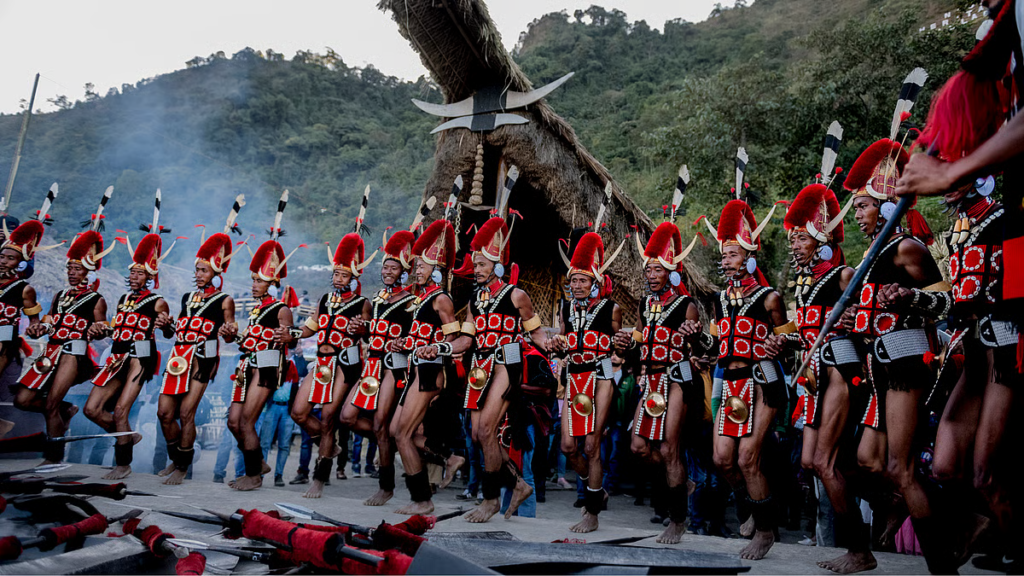
The Hornbill Festival, held every year from December 1–10 at Kisama Heritage Village, 12 km from the city, is the state’s most celebrated cultural event and one of the finest cultural festivals in all of India. Named after the Great Indian Hornbill — a bird of profound symbolic importance across all Naga tribes — the festival brings together all 16 tribes in a shared celebration of Naga identity, heritage, and artistic expression.
- Cultural performances: Each tribe performs its traditional dances, songs, and ceremonial displays — a concentrated experience of Naga cultural diversity that would otherwise require weeks of travel to witness
- Traditional Naga sports: Naga wrestling (a form with deep cultural significance), spear throwing, archery, and traditional games
- Food festival: An extraordinary range of Naga tribal cuisine from all 16 communities — the best single opportunity to taste the full breadth of Naga food culture
- Handicraft market: Traditional Naga textiles, woodcarvings, jewellery, and crafts available directly from artisan communities
- Music stage: Contemporary Naga music — rock, folk fusion, and traditional — performed by both established and emerging artists
| Book accommodation and travel well in advance for Hornbill Festival (December 1–10). Kohima and Dimapur hotels fill up weeks ahead. Many travelers use Dimapur as a base and commute to Kisama daily. The first weekend (December 1–2) and the final day (December 10) tend to be the most spectacular. |
Top Things to Do in Kohima
- War Cemetery at dawn or dusk — The most peaceful time; the epitaph hits hardest in quiet light
- Battle of Kohima Museum — 1–1.5 hours; essential for understanding the history
- Kohima Village walk with guide — 2–3 hours; the living tradition that no museum can replicate
- State Museum — Half a day; the finest collection of Naga tribal artefacts in one place
- Morning market at Kohima Main Market — Fresh Naga produce, smoked meats, live animals, dried chilies — raw, authentic, and extraordinary
- Sunday church service — Naga choral tradition is extraordinary; any Baptist church on Sunday morning
- Dzükou Valley day trek — Early departure from Kohima; return by evening; see Dzükou guide
Where to Eat in Kohima
Naga Dishes to Try
- Smoked pork with axone — The definitive Naga dish; fermented soybean and smoked meat in a deeply savoury preparation
- Bamboo shoot curry — Fresh or fermented bamboo shoot cooked with pork or chicken
- Naga King Chili dishes — Bhut Jolokia used as a flavouring — extraordinary heat and flavour; approach with respect
- Sticky rice and smoked meats — Traditional combination available throughout the market
- Zutho (rice beer) — Traditional Naga rice beer; slightly sour and warming
Recommended Eating Spots
- Dzükou Tribal Kitchen — Kohima’s most celebrated Naga restaurant; authentic tribal recipes with excellent presentation
- Ozone Café — Popular local favourite; Naga and continental options; reliable quality
- Kohima Main Market stalls — The most authentic and affordable option; morning visits best for smoked meat and fresh produce
- Hotel dining rooms — Most mid-range hotels offer a reliable Naga menu; ask for the local dishes rather than the generic Indian options
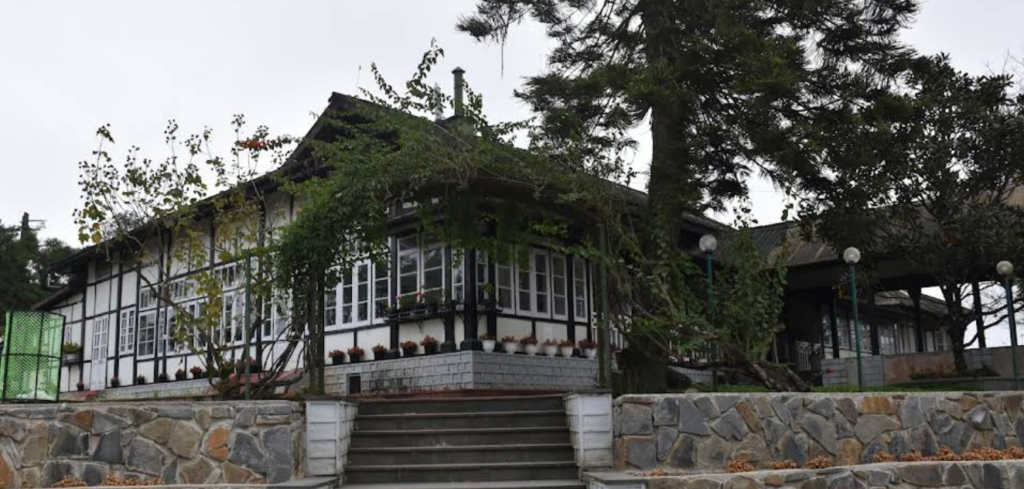
Where to Stay in Kohima
- Mid-range hotels — Several clean, well-run options in the city centre; ₹2,000–₹4,500 per night. Hotel Japfü and Hotel Vivor are among the most reliable.
- Budget guesthouses — Available throughout the city; ₹800–₹1,800 per night
- Homestays — Available with Angami families in Kohima Village and surrounding villages; the most culturally immersive option
- Hornbill Festival period — Book 6–8 weeks in advance minimum; prices triple during the festival
How to Reach Kohima
By Air
- Dimapur Airport is the only airport in Nagaland — 74 km from Kohima
- Connected to Kolkata, Guwahati, Delhi, and Imphal
- Taxi from Dimapur to Kohima: 2.5–3 hours; approximately ₹1,500–₹2,000 by private taxi or ₹250–₹350 shared
By Train
- Dimapur Railway Station — well connected to Guwahati, Kolkata, and Delhi
- The Naga Queen Express (Guwahati–Dimapur) and Brahmaputra Mail are popular options
- Onward taxi from Dimapur to Kohima as above
By Road
- National Highway 29 (Dimapur–Kohima): 74 km; 2.5–3 hours
- From Imphal (Manipur): 140 km on NH2; 5–6 hours through the Naga Hills
- From Guwahati: approximately 390 km; best to fly or train to Dimapur then drive
ILP — Inner Line Permit for Nagaland
All Indian nationals require an Inner Line Permit to enter Nagaland. Apply online at ILP (Inner Line Permit) – Nagaland ILP — processing takes a few hours. Foreign nationals currently do not require a special Protected Area Permit for most of Nagaland but must register with local authorities on arrival.
Carry printed copies of your ILP at all times — checkpoints are common on entry roads and at inter-district junctions.
Best Time to Visit Kohima
- October to April: Best weather; clear skies; comfortable temperatures; Dzükou Valley accessible
- December 1–10: Hornbill Festival; the most culturally vibrant time in all of Nagaland
- February: Sekrenyi Festival (Angami); excellent cultural experience with fewer tourist crowds than Hornbill
- June to September: Monsoon; heavy rain; Dzükou Valley trek difficult; some roads prone to landslides
Sample 3-Day Kohima Itinerary
- Day 1 — History & Heritage: Morning at War Cemetery and Battle Museum; afternoon Kohima State Museum; evening Kohima Village walk with guide
- Day 2 — Dzükou Valley Trek: Early morning departure for Dzükou Valley via Viswema or Zakhama trailhead; full day trek; return to Kohima by evening
- Day 3 — Kisama & Culture: Naga Heritage Village at Kisama; Kohima Zoological Park; morning market; afternoon drive to Dimapur for onward journey

3 Comments
[…] Kohima, the capital of the state, serves as the cultural and historical gateway to the state. Known for its World War II heritage, vibrant festivals, traditional villages, and local markets, Kohima offers visitors a deep insight into Naga culture and history. […]
[…] offer quite different experiences. The Nagaland approach (via Viswema or Zakhama village near Kohima) is the more popular and involves a steeper, forest-dense ascent. The Manipur approach (via Mao, […]
[…] permits specify the entry point (e.g., entering Nagaland via Dimapur or Kohima). Make sure your permit matches your actual route. If your plans change, update your permit before […]