




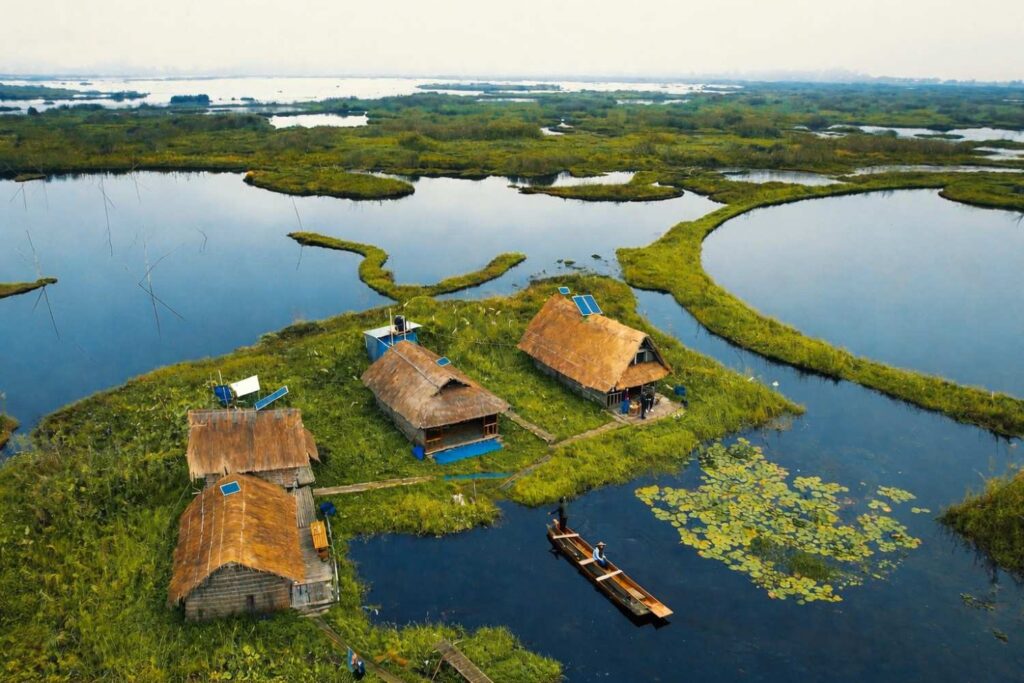
Loktak Lake does something no other lake in Asia does. Across its 287 square kilometres of freshwater surface — the largest natural freshwater lake in Northeast India — float thousands of circular masses of vegetation, soil, and organic matter that have accumulated over centuries into buoyant islands called phumdis. Some phumdis are small enough to step across. Others are large enough to support houses, fishing communities, and the entire ecosystem of a national park. The communities that live on these floating mats have built homes, nets, and livelihoods on surfaces that rise and fall with the water level, that migrate slowly with the wind and the current, that are simultaneously land and water.
The southern end of Loktak Lake contains the most extraordinary of its phumdis — a 40 square kilometre mass dense enough and stable enough to have been declared the Keibul Lamjao National Park, the world’s only floating national park. And within this floating park lives the Sangai — the brow-antlered deer of Manipur, the state’s most iconic animal, once nearly extinct and now the subject of one of India’s most successful conservation programmes. Loktak is not merely a beautiful lake. It is an ecosystem of global uniqueness, a living cultural landscape, and one of Northeast India’s most compelling destinations.
Quick Facts About Loktak Lake
| State | Manipur |
| District | Bishnupur, Imphal West, Imphal East |
| Area | 287 sq km (lake surface) |
| Designation | Ramsar Wetland of International Importance (1990) |
| Special Feature | Phumdis — floating biomass islands unique to Loktak |
| Keibul Lamjao NP | 40 sq km floating national park — world’s only floating national park |
| Distance from Imphal | 48 km; approximately 1.5 hours by road |
| ILP Required | Yes — Inner Line Permit required for all Indian nationals entering Manipur |
| Best Time | October to April; November–February for Sangai sighting |
| Nearest Town | Moirang — 7 km from the main lake viewpoints |
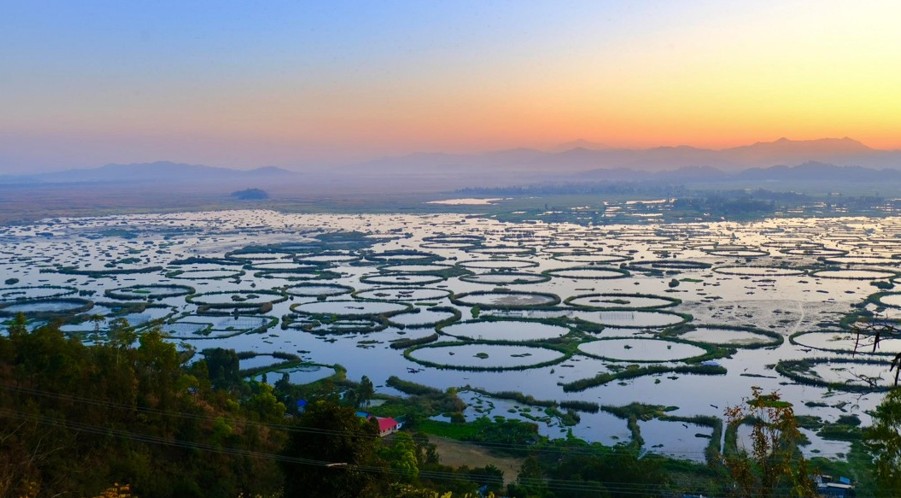
Understanding Phumdis — Loktak’s Living Islands
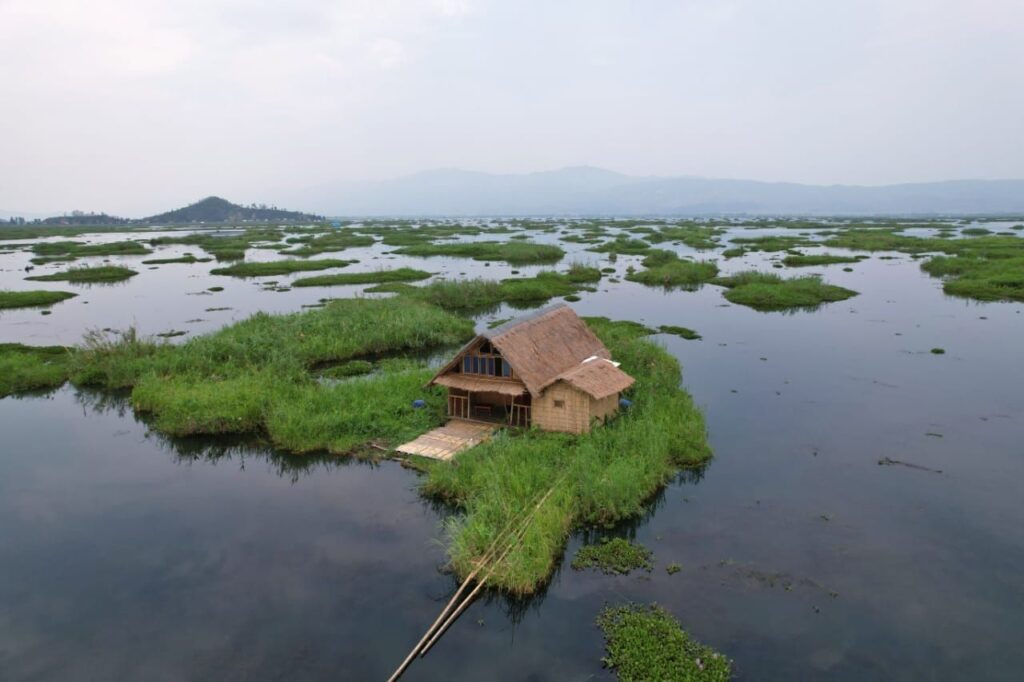
Phumdis are the defining feature of Loktak Lake and one of the most remarkable natural phenomena in South Asia. They form when vegetation — primarily sedges, grasses, and reeds — dies and accumulates on the lake surface, binding with soil and organic matter over time into dense, buoyant mats. The phumdis range in thickness from a few centimetres to several metres, and in size from a few square metres to several square kilometres.
Ecological function: Phumdis are not merely curiosities — they are critical ecological structures that support an entire aquatic ecosystem. They provide nesting habitat for waterbirds, feeding grounds for fish, and shelter for the Sangai deer. They also act as water purification systems, absorbing nutrients and filtering the lake water.
Human habitation: Approximately 4,000 families live on phumdis in the Loktak Lake catchment — the Meitei fishing communities known as Kaibarta or Chakpa. Their floating homes, built on bamboo frames on the phumdi surface, are among the most distinctive dwellings in Northeast India. The children of these families walk to school on floating paths, and their entire daily life is calibrated to the seasonal rise and fall of the lake level.
Threats: The phumdis are under pressure — changes in the lake’s water level (affected by the Ithai Barrage built in 1983), agricultural runoff, and unsustainable fishing practices have reduced their quality and coverage. Conservation of the phumdis is inseparable from the conservation of the Sangai and the broader Loktak ecosystem.
| Traveler’s note: If you visit Loktak without understanding what phumdis are, the lake is beautiful. If you visit with that understanding — and with knowledge of the communities that live on them and the deer that depends on them — it becomes one of the most thought-provoking destinations in Northeast India. |
The Sangai — Manipur’s Dancing Deer
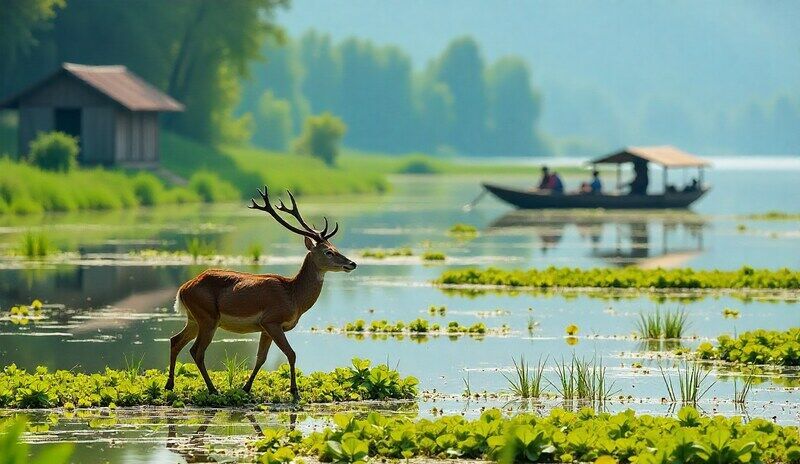
The Sangai (Rucervus eldii eldii) — the Manipur brow-antlered deer — is one of India’s most endangered large mammals and Manipur’s state animal. Found only in the phumdis of Keibul Lamjao, the Sangai is adapted to living on floating vegetation mats in a way that no other deer on Earth is. Its large hooves and splayed legs allow it to walk on the yielding phumdi surface. Its brow antlers curve forward dramatically in a shape unlike any other deer species.
Near-extinction and recovery: By 1975, the Sangai population had fallen to just 14 individuals — critically close to extinction from hunting and habitat loss. The declaration of Keibul Lamjao as a national park in 1977 and subsequent conservation efforts brought the population back. Today, approximately 260 Sangai live in the floating park — a fragile recovery that depends entirely on the health of the phumdi ecosystem.
Sighting: Sangai are shy and best observed from the park’s watchtowers in the early morning and late afternoon. November to February is the optimal season — the animals are more active in the cooler months and the phumdi vegetation is lower, improving visibility.
Top Attractions at Loktak Lake
1. Keibul Lamjao National Park
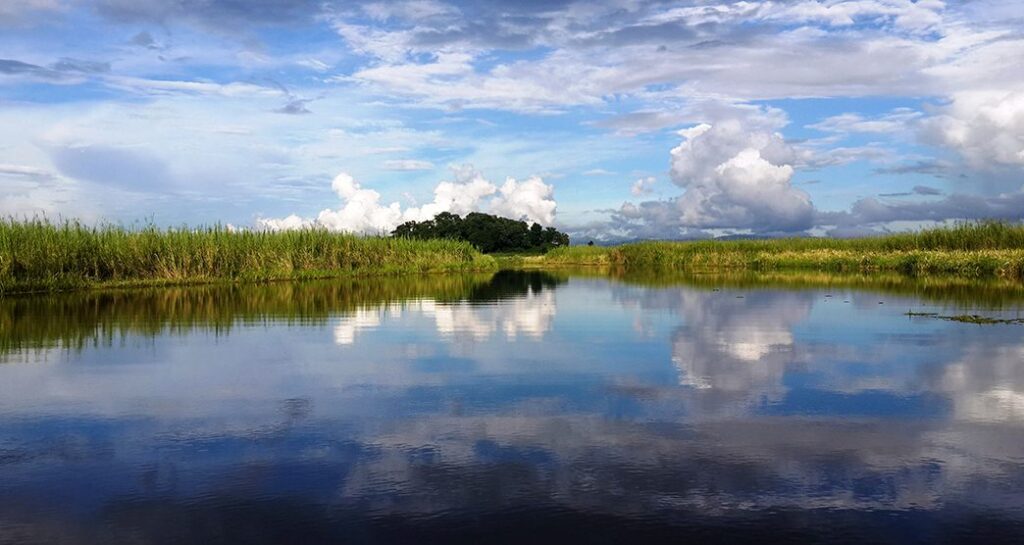
The floating national park at the southern end of Loktak is the primary destination for most visitors — a 40 square kilometre phumdi mass that supports the world’s last wild population of the Sangai deer, along with populations of Otter, Hog Deer, and over 100 bird species. The park is accessible by boat from Sendra Island and has a network of raised watchtowers for wildlife observation.
- World’s only floating national park — the phumdi surface rises and falls with the lake level
- Watchtowers at key positions around the park perimeter — the best Sangai observation points
- Early morning visits (5:30–8:00 AM) give the best Sangai sighting probability
- Entry by boat from Sendra or by the road causeway to the park edge
- Forest Department permits required at the park entry point
| The most important Sangai-watching advice: position yourself at a watchtower before first light and wait quietly. The Sangai emerge onto the phumdi surface from the denser reed beds at dawn and again around sunset. Movement and noise reduce sighting probability dramatically. Patience is the essential tool. |
2. Sendra Island
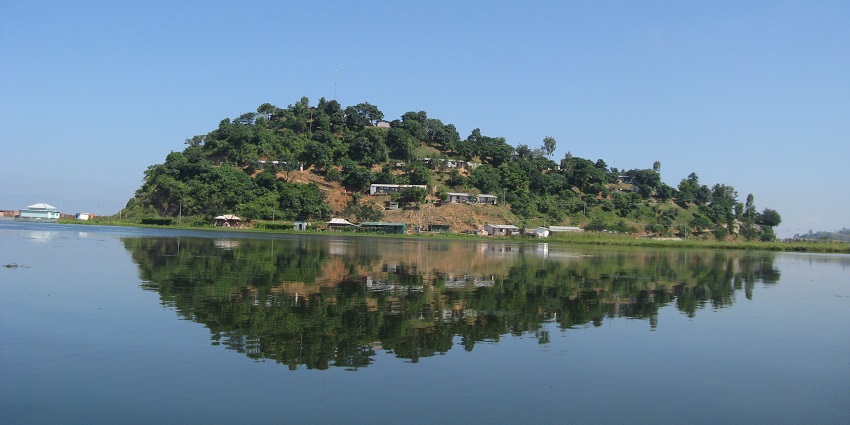
Sendra Island is a small forested hill that rises above the Loktak Lake surface, connected to the mainland by a causeway and accessible by boat from multiple points. The Manipur government tourist bungalow on Sendra offers some of the finest lake views available — from the island’s modest height, the panorama of phumdis, open water, and the hills enclosing the basin is genuinely beautiful. Boat services to Keibul Lamjao depart from Sendra.
- Boat departure point for Keibul Lamjao National Park
- Government tourist bungalow with lake-view accommodation (book in advance)
- 360-degree lake views from the island’s highest point
- Pleasant early morning walk before the boat to Keibul Lamjao
3. Loktak Development Authority Viewpoint (Moirang)
The main Loktak viewpoint near Moirang town offers the most accessible and panoramic view of the lake’s phumdi landscape — a wide observation deck above the lake surface with the floating mats stretching to the distant hills. Dawn and dusk are the finest times, when light rakes across the water and phumdi surfaces in vivid horizontal bands.
- Most accessible panoramic viewpoint — suitable for all ages and mobility levels
- Dawn and dusk light creates extraordinary photography opportunities
- Information boards about the phumdi ecosystem and Sangai conservation
4. Phumdi Village Boat Tour
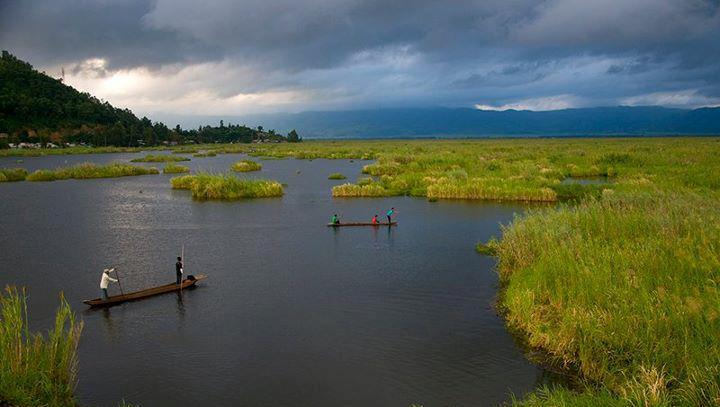
The most immersive Loktak experience is a slow boat tour through the phumdi channels — following the waterways between floating mats, approaching the stilted fishing homes of the Kaibarta community, watching the fishermen check their nets, and experiencing the landscape from water level. Local boat operators in Moirang and at Sendra arrange these tours; early morning departures capture the mist rising from the water and the best bird activity.
- Duration: 2–3 hours for a full phumdi channel circuit
- Early morning (6–8 AM) for mist, birds, and fishing activity
- Arrange through local operators at Moirang or Sendra; approximately ₹400–₹800 per boat
- Bring binoculars — the lake’s birdlife is exceptional from water level
5. INA Memorial, Moirang — Historical Site
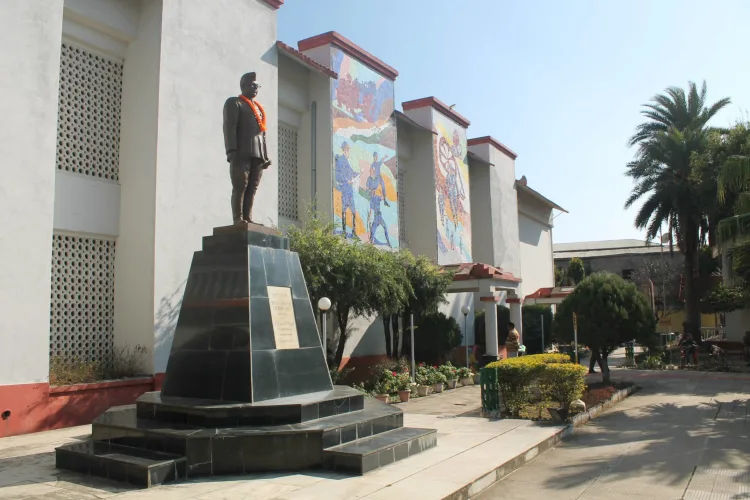
At Moirang, 7 km from the main lake viewpoints, stands the Indian National Army Memorial Museum — marking the site where Netaji Subhas Chandra Bose’s Indian National Army first raised the Indian tricolour on Indian soil in 1944, before the Battle of Imphal ended the Japanese advance. The museum contains the largest collection of INA artefacts, photographs, and documents in India, and the memorial holds deep significance for Indian independence history.
- Site where INA first raised the Indian flag on Indian soil — April 14, 1944
- Museum with extensive INA artefacts, weapons, uniforms, and documents
- Free entry; well-maintained; allow 1 hour
- Combine with Loktak lake visit on the same day — Moirang is the connecting town
6. Loktak Birdwatching
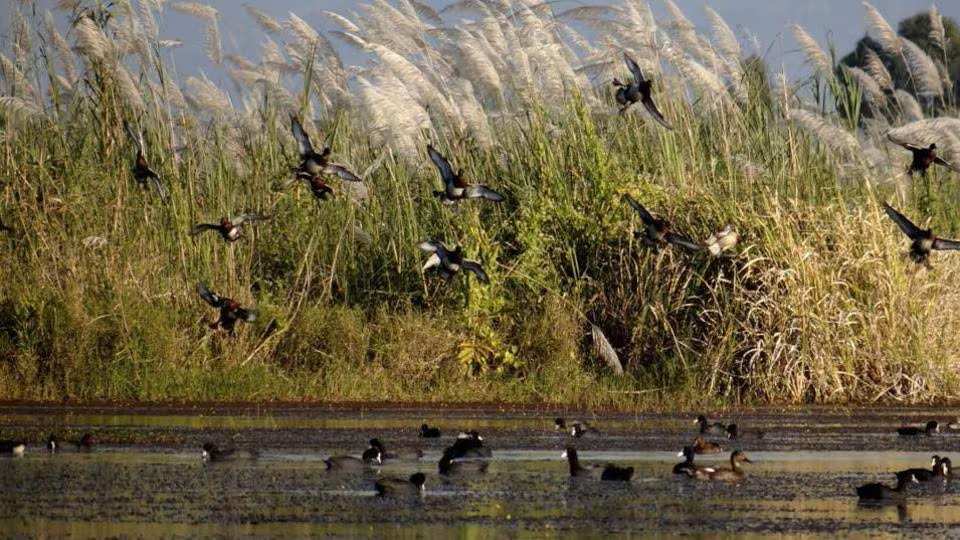
Loktak Lake is a Ramsar Wetland of International Importance and one of the finest birdwatching destinations in Northeast India. Over 200 bird species have been recorded on and around the lake, including globally threatened species of waterbird.
- Spot-billed Pelican — winter visitor; large colonies on open water sections
- Lesser Adjutant Stork — resident; frequently seen at phumdi edges
- Pallas’s Fish Eagle, Grey-headed Fish Eagle — resident raptors
- Multiple species of duck, teal, and grebe in winter (October–March)
- Purple Swamphen, Pheasant-tailed Jacana — walk on phumdi surfaces
- Best birdwatching: early morning from Sendra viewpoint or from the boat
The Loktak Fishing Community
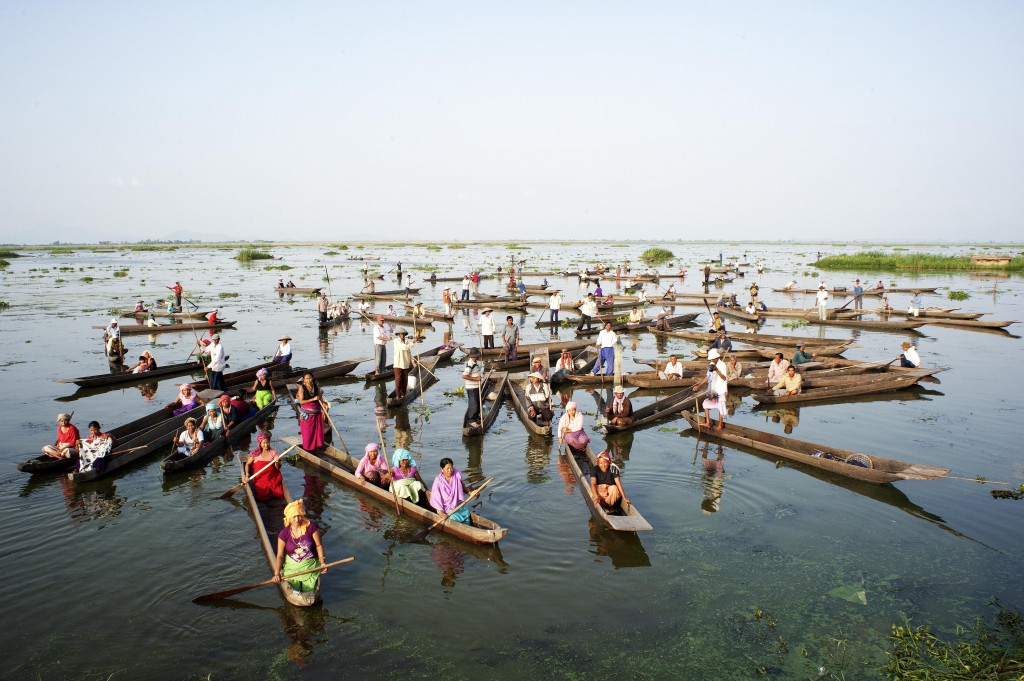
The Kaibarta (also called Chakpa) fishing community of Loktak Lake has lived on the phumdis for generations, maintaining a way of life calibrated entirely to the floating ecosystem. Their traditional fishing implements — the athaphum (a conical trap made from bamboo and set into the phumdi), the net systems that exploit the phumdi channels — represent centuries of ecological knowledge.
Visiting the floating fishing settlements with a local guide is one of the most culturally distinctive experiences available at Loktak. The homes — bamboo and thatch structures on floating mats — the floating vegetable gardens, and the community’s daily rhythms offer a window into a way of life found nowhere else in India.
| Cultural note: The floating fishing communities of Loktak face an uncertain future — the Ithai Barrage’s alteration of lake levels has disrupted the phumdi ecosystem and the livelihoods that depend on it. Visiting with genuine curiosity and purchasing fish or craft directly from community members provides tangible support to people whose traditional way of life is under pressure. |
Top Things to Do at Loktak
- Dawn boat tour through phumdi channels — The definitive experience; 6 AM departure; mist, birds, fishing activity
- Keibul Lamjao National Park — Sangai watching — Watchtower before first light; patience rewarded
- Sendra Island sunrise — Walk the island perimeter at dawn before the Keibul Lamjao boat departs
- INA Memorial at Moirang — 1 hour; essential historical context for the Imphal-Kohima battle story
- Birdwatching from Loktak viewpoint — Bring binoculars; dawn and dusk best
- Photography — The phumdi landscape is one of the most visually distinctive in Northeast India; the combination of water, floating vegetation, and distant hills rewards all lenses
Where to Eat & Stay at Loktak
- Sendra Tourist Bungalow — Government accommodation on the island; the best-positioned property for a full Loktak experience; book through Manipur Tourism; ₹1,500–₹2,500
- Moirang town guesthouses — Basic options near the lake access points; ₹600–₹1,500
- Day trip from Imphal — Most visitors do Loktak as a day trip from Imphal (48 km); possible and manageable with early departure
- Local fish meals — Fresh lake fish (ngaton, ngakra) prepared by Kaibarta community; the most authentic eating at Loktak; arrange through local guides
How to Reach Loktak Lake
- From Imphal: 48 km south on NH102 to Moirang; approximately 1.5 hours by car. Taxis available from Imphal city.
- By shared vehicle: Shared taxis from Imphal’s Khwairamband market to Moirang throughout the day.
- Sendra Island: Accessible by road via causeway or by boat from Moirang ghat.
- Keibul Lamjao: Boat from Sendra (20 minutes) or by road to the park’s north gate.
Travel Essentials for Loktak
- Manipur ILP required for all Indian nationals — apply online at manipurilp.in or at Manipur House offices
- Carry your ILP at all times — checkpoints are active throughout Manipur
- Cash only at Loktak — no ATMs near the lake; use Imphal ATMs before departure
- Binoculars essential for Sangai watching and birdwatching
- Waterproof bag for boat tours — lake spray and occasional rain
- Wear dark or neutral colours for Keibul Lamjao wildlife watching
Also Read: How to Apply For Travel Permits for Traveling to Northeast India
Best Time to Visit Loktak Lake
- November to February: Best overall; clear skies; Sangai most active and visible; winter migratory birds present on the lake
- October: Post-monsoon; lake still high and lush; birds arriving; pleasant temperatures
- March to May: Warm; lake level dropping; phumdis more consolidated; still excellent for birds
- June to September: Monsoon; lake floods extensively; phumdis partially submerged; road access affected; not recommended

[…] the war cemetery — rewards at least two full days of unhurried exploration. Add the day trips to Loktak Lake, Keibul Lamjao, and the Sekta archaeological site, and Imphal reveals itself as one of the most […]