




Meghalaya, meaning ‘Abode of Clouds’, is one of Northeast India’s most visually spectacular and culturally rich states. Known for receiving some of the highest rainfall on Earth, this small hill state has been sculpted by water into a landscape of thundering waterfalls, translucent rivers, cathedral-like cave systems, and the famous living root bridges — one of the most extraordinary examples of human engineering in harmony with nature.
Home to three major tribal communities — the Khasi, Garo, and Jaintia — Meghalaya is one of the few matrilineal societies in the world, where property and family names pass through the mother’s line. This cultural distinctiveness, combined with the state’s extraordinary natural beauty, makes it a destination unlike anywhere else in South Asia.
In this Meghalaya travel guide, we cover the state’s culture, top tourist destinations, best experiences, travel tips, and everything you need to plan a memorable trip.
Culture of Meghalaya: Tribes, Festivals, Traditions, and Cuisine
Meghalaya’s culture is shaped by its three indigenous tribal groups — the Khasi, the Garo, and the Jaintia (Pnar) — each with their own distinct language, customs, and traditions. The state is one of the rare matrilineal societies in India, where descent and inheritance follow the mother’s lineage.
Tribal Heritage of Meghalaya
Major Tribes
- Khasi — Primarily inhabiting the East and West Khasi Hills; known for their matrilineal society, distinctive dress, and deep connection to nature
- Garo — Found in the Garo Hills; known for their vibrant festivals, bamboo crafts, and warrior traditions
- Jaintia (Pnar) — Inhabiting the Jaintia Hills; known for weaving traditions and unique cultural ceremonies
Each tribe is known for:
- Traditional handwoven textiles and bamboo crafts
- Community-based governance systems (Dorbar Shnong among the Khasi)
- Distinctive music, dance, and oral traditions
- Deep reverence for forests and natural conservation
Festivals of Meghalaya
Nongkrem Festival
- Celebrated by the Khasi tribe in November near Shillong
- A five-day harvest thanksgiving ceremony featuring traditional dances
- One of the most important cultural events in the Khasi calendar
Wangala Festival
- The biggest festival of the Garo tribe, celebrating the end of the harvest season
- Marked by traditional Garo dances, music, and feasting
- Usually held in November across the Garo Hills
Other Important Festivals
- Behdienkhlam — Jaintia rain festival to drive away disease and evil spirits
- Shad Suk Mynsiem — Spring festival of the Khasi people
- Cherry Blossom Festival — Shillong’s modern cultural celebration held in November
Religion and Lifestyle in Meghalaya
- Christianity is the dominant religion, particularly among the Khasi and Garo communities
- Traditional beliefs (Niam Khasi) continue to coexist alongside Christianity
- Community councils (Dorbar) play a central role in social governance
- Matrilineal family structures are unique to the Khasi and Jaintia communities
Meghalaya Cuisine
- Jadoh — One-pot rice and pork dish cooked with blood, ginger, and spices; the most iconic Khasi dish
- Dohneiiong — Pork cooked with black sesame; deeply flavourful and aromatic
- Dohkhleh — A pork salad with onions, chili, and ginger; popular street food
- Tungrymbai — Fermented soybean preparation unique to Meghalaya
- Kyat — Traditional rice beer brewed by Khasi and Jaintia communities
Top Tourist Destinations in Meghalaya
1. Shillong — The Scotland of the East
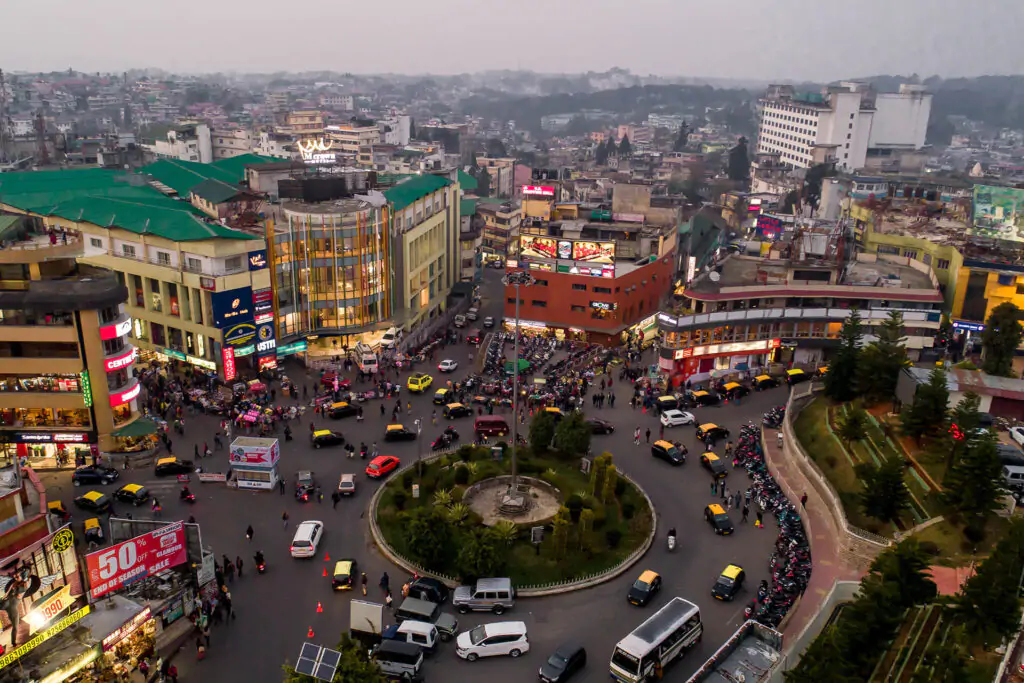
Shillong, the capital of Meghalaya, is a vibrant hill city perched at 1,500 metres and one of Northeast India’s most cosmopolitan destinations. Known for its colonial architecture, thriving music scene, and scenic viewpoints, Shillong serves as the gateway to the state.
Key Highlights
- Ward’s Lake — A scenic artificial lake in the heart of the city
- Elephant Falls — A three-tiered waterfall just outside the city
- Shillong Peak — The highest point in the city with panoramic views
- Police Bazar — The commercial and cultural hub of the capital
Best Experiences
- Live music at local cafes — Shillong is India’s rock music capital
- Cultural exploration and colonial-era architecture
- Day trips to surrounding waterfalls and viewpoints
2. Cherrapunji (Sohra) — Land of Waterfalls
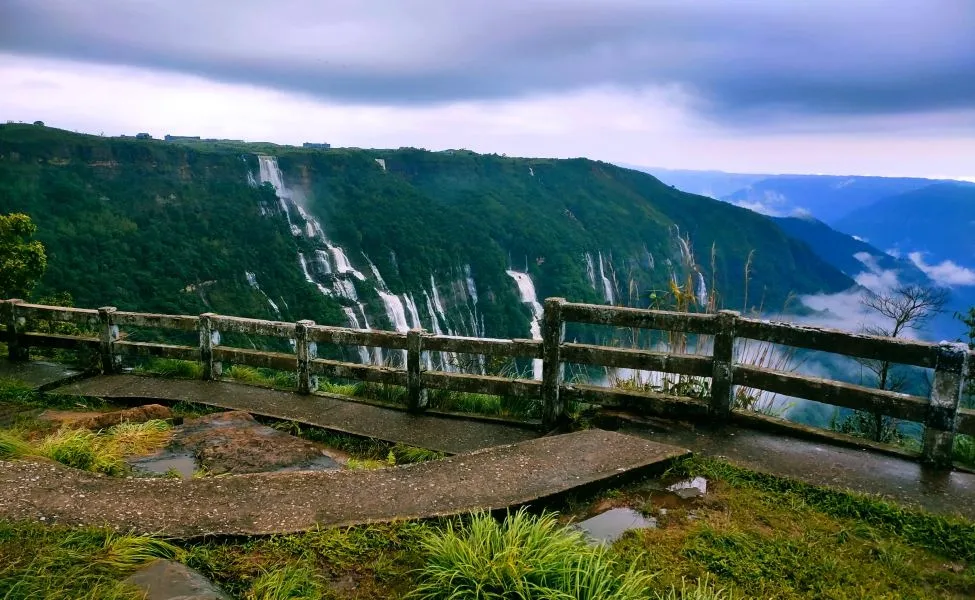
Cherrapunji, one of the wettest places on Earth, is a must-visit destination in Meghalaya. Perched on the southern edge of the Khasi Hills, it overlooks the Bangladesh plains and is home to some of the world’s most spectacular waterfalls and the famous living root bridges of the Nongriat village.
Key Highlights
- Nohkalikai Falls — India’s tallest plunge waterfall at 340 metres
- Seven Sisters Falls — One of the widest waterfalls in India, best seen during monsoon
- Mawsmai Cave — One of Meghalaya’s most accessible cave systems
- Double Decker Living Root Bridge at Nongriat — A 3,500 trek from Tyrna village
Best Experiences
- Trekking to the double decker root bridge at Nongriat
- Waterfall photography during and after the monsoon
- Cave exploration at Mawsmai
- Viewpoints overlooking the Bangladesh plains
3. Dawki — The Crystal Clear River
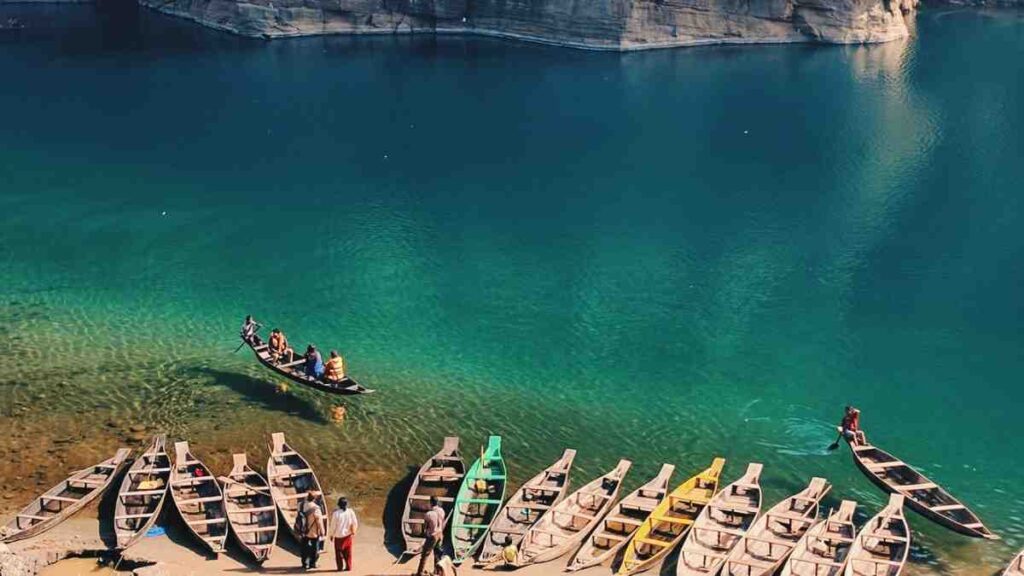
Dawki, located on the border with Bangladesh, is famous for the Umngot River — one of the clearest rivers in Asia. Boats appear to float on air above the transparent riverbed, creating one of the most photographed scenes in all of Northeast India.
Key Highlights
- Umngot River — Translucent waters with boats appearing to hover in mid-air
- India-Bangladesh border bridge — A historic suspension bridge over the river
- Annual boat race — Held during the Shad Suk Mynsiem festival
Best Experiences
- Boating on the Umngot River (best from October to March)
- Photography of the extraordinary transparent waters
- Camping on the riverbanks
4. Mawlynnong — Asia’s Cleanest Village
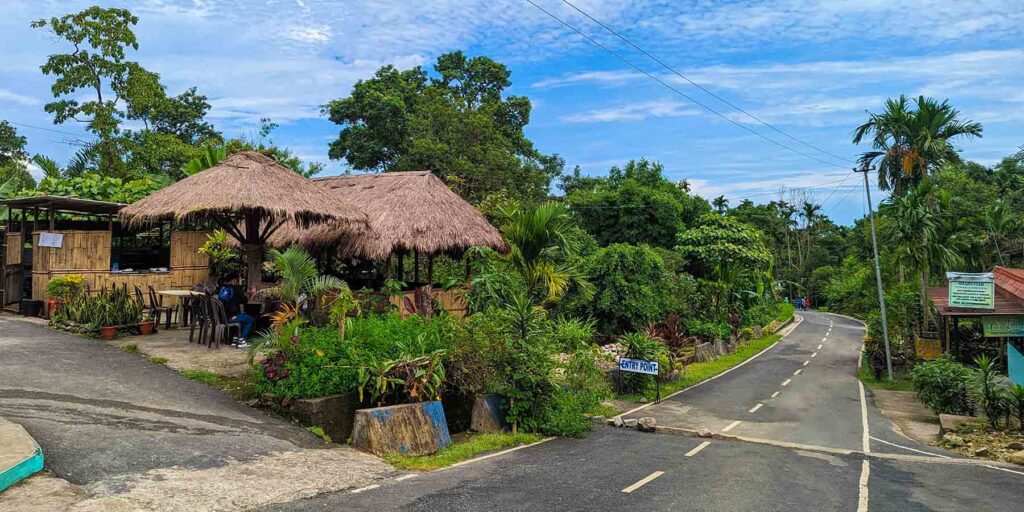
Mawlynnong, a small Khasi village near the Bangladesh border, was named Asia’s cleanest village and remains a powerful example of community-driven environmental stewardship. Bamboo dustbins line every path, flowers bloom in every corner, and a skywalk offers views over the Bangladesh plains.
Key Highlights
- Immaculate village paths and community-maintained gardens
- Skywalk bamboo tower with views into Bangladesh
- Living root bridge in the nearby village of Riwai
- Sacred grove (Law Kyntang) maintained by the community
Best Experiences
- Village walks and community interaction
- Staying overnight in a local homestay
- Day trip to the single root bridge at Riwai
5. Jowai & Jaintia Hills — Off the Beaten Path
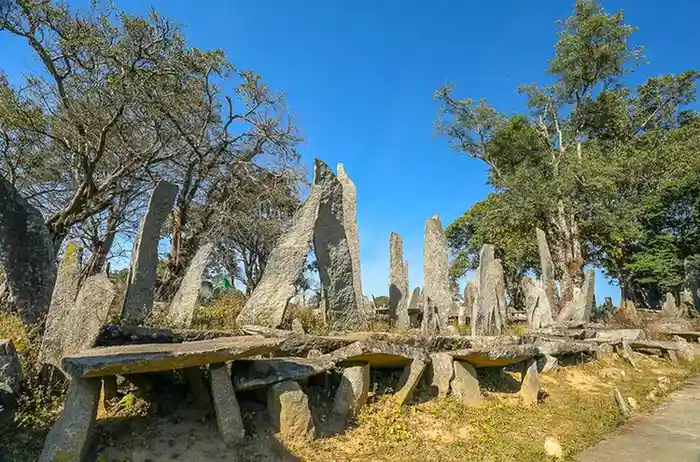
The Jaintia Hills district, centred around the town of Jowai, is Meghalaya’s least visited but most rewarding region for adventurous travelers. Home to Krem Liat Prah (the longest cave in South Asia), the sacred Thadlaskein Lake, and the Syntiew Mawoo waterfall, this region offers genuine offbeat travel.
Key Highlights
- Krem Liat Prah — Longest cave system in South Asia at over 31 km
- Thadlaskein Lake — Sacred natural lake of the Jaintia people
- Nartiang Monoliths — Megalithic stone structures dating back centuries
Best Experiences
- Caving and speleological exploration
- Cultural immersion in Jaintia traditions
- Megalithic heritage tourism
Other Must-Visit Places in Meghalaya
- Laitlum Canyons — Dramatic ridgeline viewpoints near Shillong
- Nongriat Village — Home of the famous double-decker root bridge
- Nohsngithiang (Seven Sisters) Falls — Best during monsoon
- Mawsynram — Often the world’s wettest recorded spot
- Tura — Gateway to the Garo Hills and Nokrek National Park
Top Experiences in Meghalaya
Cultural Tourism in Meghalaya
- Village homestays with Khasi or Garo families
- Festival participation — Nongkrem, Wangala, Cherry Blossom
- Traditional handloom shopping — Meghalaya silk and bamboo crafts
- Community-led eco-tourism in sacred groves
Adventure Tourism
- Trekking to living root bridges and waterfall viewpoints
- Caving in the Jaintia Hills — from beginner to expert level
- River kayaking on the Umngot and other crystal rivers
- Zip-lining and rock climbing near Shillong
Nature & Rural Experiences
- Waterfall chasing during and after the monsoon season
- Birdwatching in Nokrek National Park and Nongkhyllem Reserve
- Sacred grove walks — community-protected forests with exceptional biodiversity
- Photography of misty highlands and terraced landscapes
Best Time to Visit Meghalaya
- October to May — Best weather, clear skies, comfortable temperatures
- November — Nongkrem and Cherry Blossom festivals
- July to September — Monsoon season; waterfalls are most dramatic but travel requires flexibility
- December to February — Cool and clear; ideal for root bridge treks
Key Tourist Information for Meghalaya
Permits
No Inner Line Permit (ILP) or Protected Area Permit (PAP) is required for Indian or foreign nationals to visit Meghalaya. Standard ID proof for hotel check-ins is sufficient.
Travel Essentials
- Carry cash — ATMs are limited outside Shillong and Cherrapunji (UPI Payments are widely used now)
- Mobile connectivity is good in Shillong but patchy in remote valleys
- Hire local guides for root bridge treks and cave exploration
- Waterproof gear is essential even outside the monsoon season
- Respect community-managed areas — follow instructions in sacred groves
How to Reach Meghalaya
By Air
- Shillong Airport (Umroi) — Limited connections; mainly from Kolkata
- Guwahati Airport (Assam) — Main entry point, 2 hours from Shillong by road
By Train
- No direct rail access to Shillong
- Guwahati is the nearest major railhead, well-connected to all Indian cities
By Road
- Shillong is 100 km from Guwahati — 2–3 hours by road
- Frequent buses and shared taxis from Guwahati’s ISBT terminal
- NH6 and NH40 connect Assam to Meghalaya
Accommodation in Meghalaya
Travelers can choose from:
- Traditional Khasi and Garo homestays — most authentic option, widely available
- Eco-lodges and forest retreats in Cherrapunji and the Jaintia Hills
- Budget guesthouses and hotels in Shillong
- Heritage boutique hotels in Shillong
Homestays are particularly rewarding in Mawlynnong, Nongriat, and the Jaintia Hills, where they directly support local communities and provide unmatched cultural access.
Why Visit Meghalaya
Meghalaya is a destination that earns its superlatives. The world’s wettest landscapes, Asia’s cleanest village, the longest cave systems in South Asia, and bridges grown from living tree roots — no other state in India offers this combination of natural wonder and cultural depth. For travelers seeking beauty, authenticity, and genuine discovery, Meghalaya delivers at every turn.

[…] a city that feels unlike anywhere else in India. At 1,496 metres above sea level, the capital of Meghalaya is one of Northeast India’s most cosmopolitan and culturally vibrant […]