




Rain Museum plans are taking shape in Sohra, formerly known as Cherrapunjee, as the Meghalaya government moves forward with a proposal to establish a dedicated museum and research centre in one of the wettest places on Earth.
Sohra has long held a place in global weather records for its torrential rainfall. Now, the state aims to transform that meteorological distinction into a scientific and cultural landmark through the Sohra Rain Museum Research Centre initiative.
According to a senior official from the Meghalaya Basin Development Authority (MBDA), the proposal is currently under process and is expected to receive support from institutions within the state as well as central agencies.
Scientific Vision Behind the Sohra Rain Museum Research Centre
The proposed centre will be developed along the lines of the High Altitude Cloud Physics Laboratory in Mahabaleshwar. Its objective is not only to celebrate local culture but also to provide advanced scientific infrastructure for high-end rainfall research.
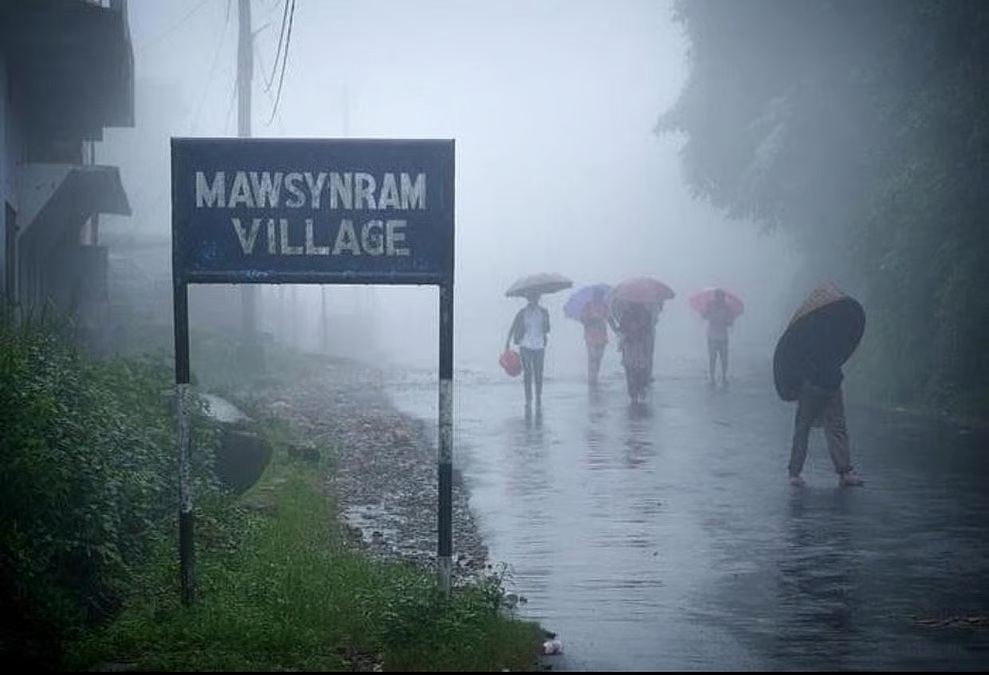
A white paper prepared by the Kolkata-based National Council of Science Museums highlighted why Sohra and neighbouring Mawsynram present a unique opportunity for atmospheric studies. Unlike other high-rainfall regions such as Hawaii or La Réunion, which are surrounded by vast oceans and influenced by cyclonic systems, Sohra’s rainfall mechanism is distinct.
Moisture-laden clouds from the Bay of Bengal travel northward across the plains of Bangladesh before abruptly ascending nearly 4,500 feet along the southern edge of the Khasi Hills. This topographical interaction results in intense rainfall without direct cyclonic disturbances.
The Sohra Rain Museum Research Centre aims to establish a state-of-the-art meteorological instrumentation laboratory. It will offer facilities to national and international researchers to study mechanisms behind very heavy rainfall and develop predictive parameterisation models.
Infrastructure and Collaboration Plans
The Meghalaya Rain Museum project includes both indoor and outdoor segments. The museum component will display historical, cultural, and climatic narratives that reflect how rainfall has shaped local life for generations.
The research wing is envisioned to include advanced observing systems, a dedicated data centre, and working spaces for visiting scientists. Collaboration is expected with institutions such as the India Meteorological Department (IMD).
Notably, the IMD office in Cherrapunji hosts an S-band Doppler Weather Radar installed by ISRO. This radar supports long-range data collection, flood early warnings, and thunderstorm and hailstorm nowcasting. The proposed research centre is expected to benefit from strategic coordination with such existing infrastructure.
Officials have indicated that both independent researchers and institutional projects will be allowed to conduct studies at the facility.
Tourism and Capacity Building
Beyond research, the Rain Museum is envisioned as a premier capacity-building institution. Visitors will gain insight into the people, culture, and environmental dynamics of Sohra, where rainfall has been an intrinsic part of life for centuries.
By integrating scientific research with public engagement, the Meghalaya Rain Museum initiative seeks to position Sohra as both a global research hub and a unique tourism destination.
If implemented as proposed, the project could redefine how extreme weather regions are studied and experienced — blending meteorology, culture, and sustainable tourism under one roof.
