




Sikkim, one of India’s smallest and most ecologically diverse states, is a Himalayan jewel tucked between Nepal, Tibet, Bhutan, and West Bengal. Once an independent kingdom, Sikkim became India’s 22nd state in 1975 and retains a distinct cultural identity shaped by its Lepcha, Bhutia, and Nepali communities, centuries of Buddhist tradition, and some of the most dramatic mountain scenery in Asia.
From the high-altitude wonder of Gurudongmar Lake to the rhododendron forests of Yumthang Valley, the ancient monasteries of Rumtek and Pemayangtse, and the legendary Goecha La trek in the shadow of Kangchenjunga — the world’s third-highest peak — Sikkim rewards travelers with experiences of extraordinary depth and beauty.
In this Sikkim travel guide, we cover the state’s culture, top destinations, best experiences, travel tips, permits, and everything you need to plan your trip.
Culture of Sikkim: Communities, Festivals, Traditions, and Cuisine
Sikkimese culture is a harmonious blend of Lepcha, Bhutia, and Nepali traditions, united by a shared reverence for the Himalayan environment and Buddhist and Hindu spiritual practices.
Communities of Sikkim
- Lepcha — The original inhabitants; known as ‘Rong’ people; deeply connected to the forests and rivers of the state
- Bhutia — Tibetan-origin community; custodians of Sikkim’s Buddhist monastery traditions and the Tsongkhapa lineage
- Nepali (Gorkhali) — The largest community; brought rich Hindu traditions, festivals, and agricultural practices
This cultural diversity is of the state’s greatest strength — the state celebrates both Buddhist and Hindu festivals with equal enthusiasm, and the three communities have coexisted peacefully for centuries.
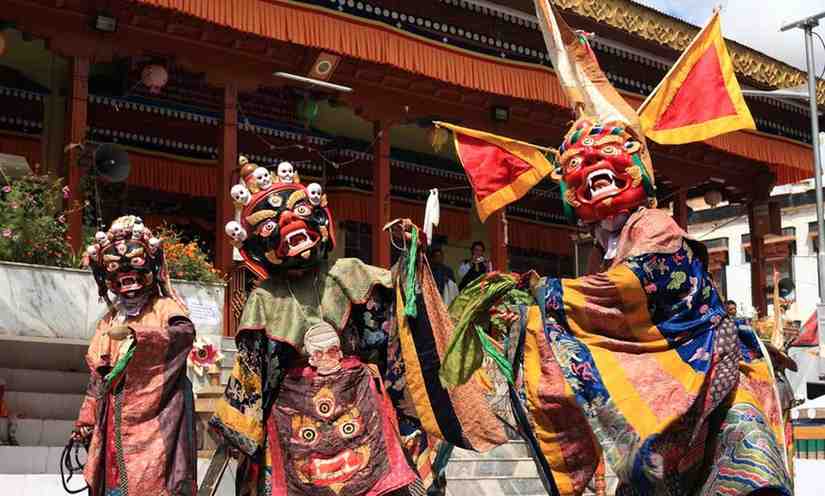
Festivals of Sikkim
Losar — Tibetan New Year
- Celebrated by the Bhutia community, usually in February or March
- Marked by monastery prayers, masked Cham dances, and community feasting
- Best experienced at Rumtek, Pemayangtse, or Enchey monastery
Saga Dawa
- The holiest festival in the Buddhist calendar, marking the birth, enlightenment, and passing of Lord Buddha
- Celebrated in May or June with processions around Gangtok’s main street
Pang Lhabsol
- A unique festival celebrating the guardian deity of Kangchenjunga
- Features warrior dances performed in elaborate costumes
Other Festivals
- Dasain and Tihar — Major Hindu festivals celebrated by the Nepali community
- Tendong Lho Rum Faat — Lepcha harvest festival in August
- Bumchu — Sacred water ceremony at Tashiding Monastery
Religion and Lifestyle in Sikkim
- Buddhism (Vajrayana tradition) is the state religion and deeply shapes daily life
- Hinduism is widely practiced by the Nepali community
- Prayer flags, mani stones, and chortens (stupas) line mountain paths and village entrances
- Sikkim was declared India’s first fully organic state in 2016 — agriculture and food culture reflect this commitment
Sikkim Cuisine
- Momos — Steamed or fried dumplings filled with pork, beef, or cheese; a staple across all communities
- Thukpa — Hearty noodle soup with vegetables or meat; perfect for cold mountain nights
- Sel Roti — Crispy fried rice bread traditionally made during festivals
- Gundruk — Fermented leafy greens; a distinctly Himalayan preservation technique
- Tongba — Warm millet beer served in a bamboo container and sipped through a bamboo straw; the quintessential Sikkimese social drink
- Phagshapa — Strips of pork fat cooked with radishes and dried chili
Top Tourist Destinations in Sikkim
1. Gangtok — The Himalayan Capital
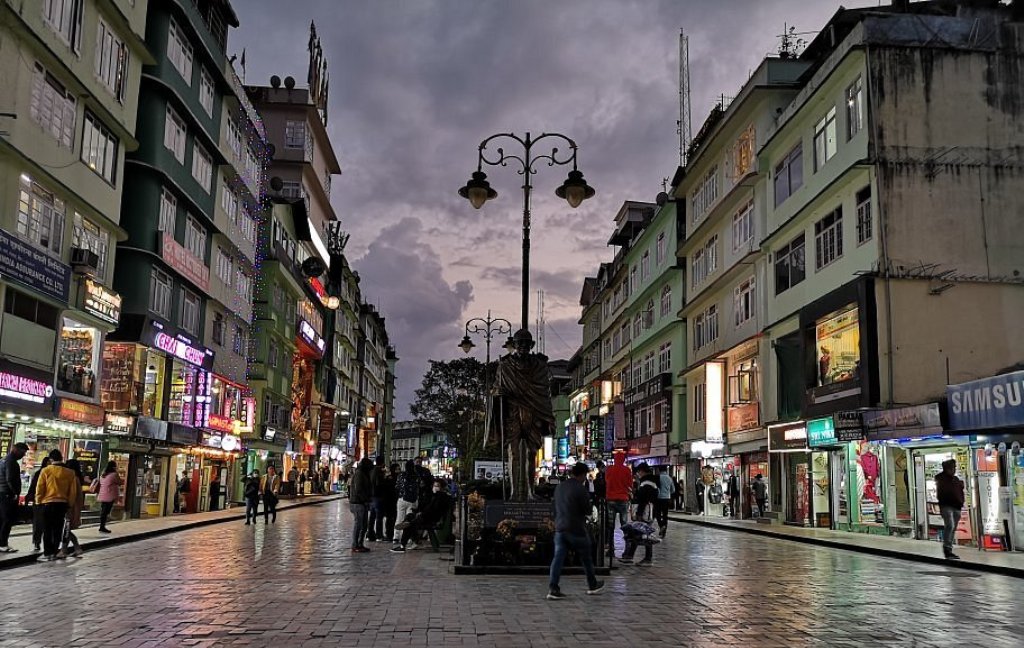
Gangtok, perched at 1,650 metres on a ridge above the Ranipul River, is Sikkim’s vibrant capital and the base for most travel in the state. Clean, well-organised, and culturally rich, Gangtok offers mountain views, excellent food, and a lively market district, as well as being the permit hub for restricted areas.
Key Highlights
- MG Marg — The pedestrianised main street lined with cafes, shops, and mountain views
- Rumtek Monastery — One of the most important Kagyu Buddhist monasteries in the world
- Enchey Monastery — An 200-year-old monastery above the city
- Namgyal Institute of Tibetology — Outstanding museum of Tibetan Buddhist art and scholarship
Best Experiences
- Monastery hopping in and around Gangtok
- Permit processing for North Sikkim and border zones
- Trekking day trips to Tsomgo Lake and Baba Mandir
2. Gurudongmar Lake — High-Altitude Marvel
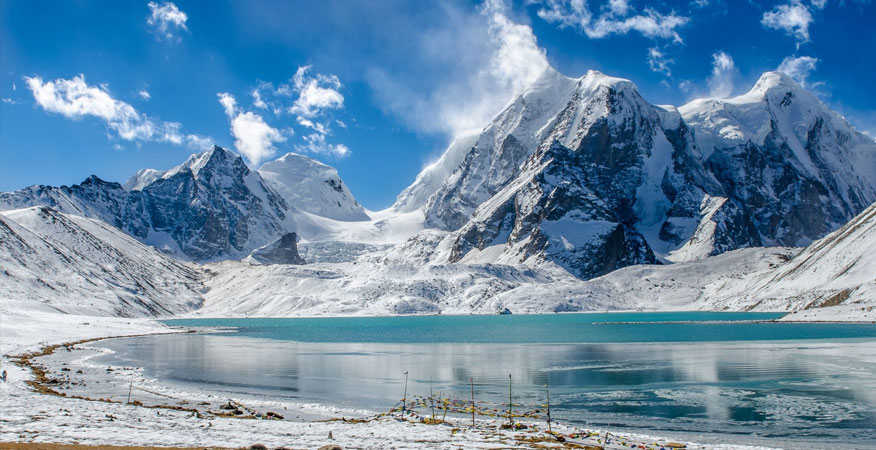
At 5,183 metres above sea level, Gurudongmar Lake is one of the highest lakes in the world and one of India’s most spectacular high-altitude destinations. Sacred to both Buddhists and Sikhs, the lake remains partially frozen even in summer and offers views of Himalayan peaks that feel almost impossibly close.
Key Highlights
- One of the world’s highest lakes, sacred to Buddhists and Sikhs
- Dramatic Himalayan panoramas from the lakeside
- The route from Lachen passes through extraordinary mountain landscapes
Best Experiences
- Early morning visit before clouds roll in (permits required)
- Photography of the frozen lake edges against mountain backdrops
- Overnight stay in Lachen village before the drive up
3. Pelling & West Sikkim — Monastery Country
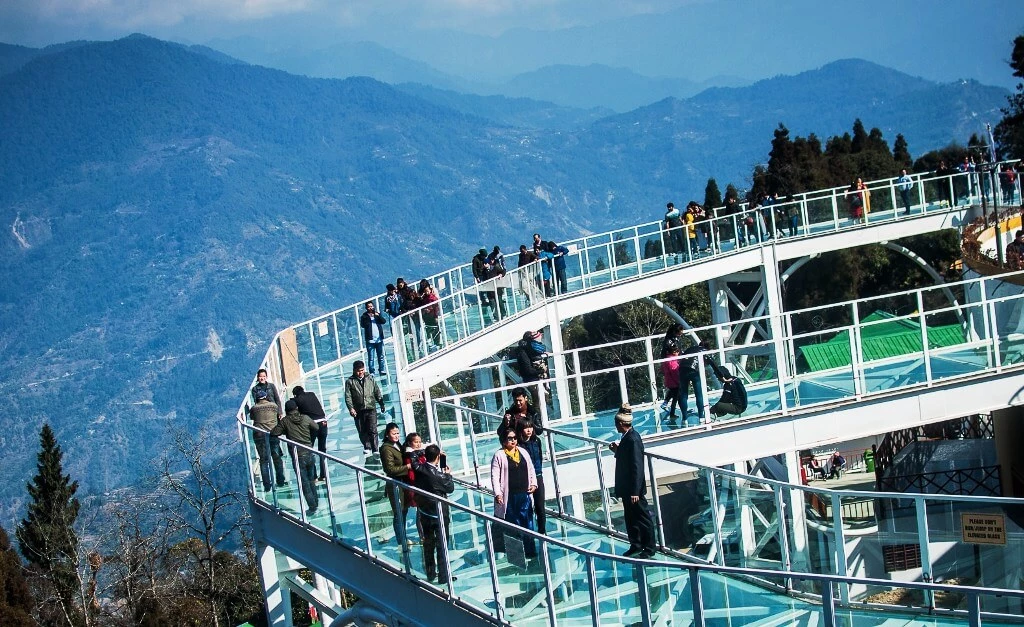
Pelling, in West Sikkim, is the base for exploring some of the state’s oldest and most revered monasteries, including Pemayangtse (one of the oldest Gompa in the state) and Sangachoeling. On clear mornings, the view of Kangchenjunga from Pelling is one of the finest mountain vistas in India.
Key Highlights
- Pemayangtse Monastery — One of the oldest and most revered monasteries
- Kangchenjunga views — Spectacular clear-day panoramas from Pelling and Darap
- Rabdentse Ruins — The remains of Sikkim’s second royal capital
- Khecheopalri Lake — A sacred ‘wish-fulfilling’ lake surrounded by forest
Best Experiences
- Monastery trail from Pemayangtse to Sangachoeling
- Sunrise viewpoints over Kangchenjunga
- Day hike to Rabdentse ruins and Khecheopalri Lake
4. Yumthang Valley — Valley of Flowers
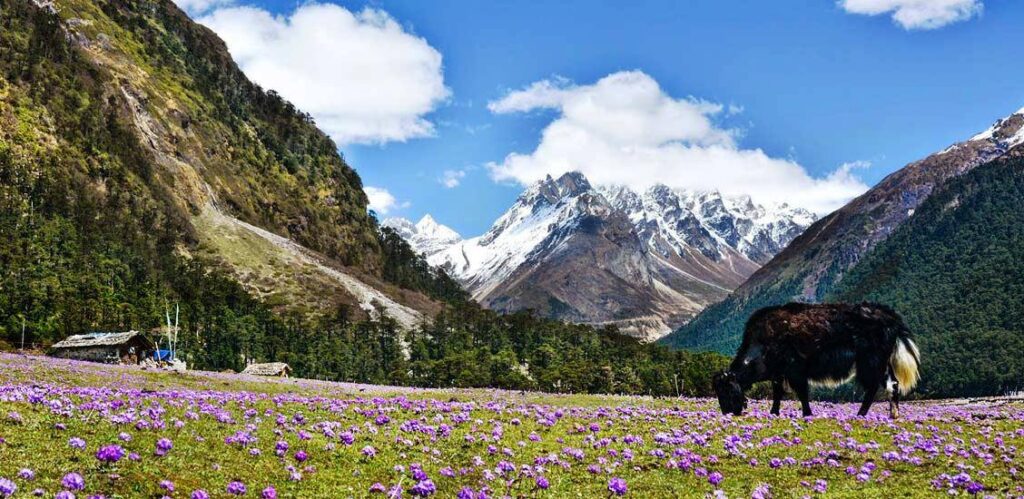
Yumthang Valley in North Sikkim, at 3,564 metres, is carpeted with rhododendrons from March to May, earning it the title ‘Valley of Flowers of the North.’ The valley is also home to hot springs, a river meadow, and on clear days, spectacular snow peak views.
Key Highlights
- Rhododendron bloom — 24 species flowering from March to May
- Shingba Rhododendron Sanctuary — Dedicated protected area for the blooms
- Teesta River headwaters — Crystal clear mountain river running through the valley
- Zero Point (Yumesamdong) — Snow-covered plateau beyond Yumthang at 4,428m
Best Experiences
- Visiting during the rhododendron season (March–May)
- Hot spring dips at Yumthang
- Photography of snow peaks and flower carpets
5. Goecha La Trek — The Signature Himalayan Experience
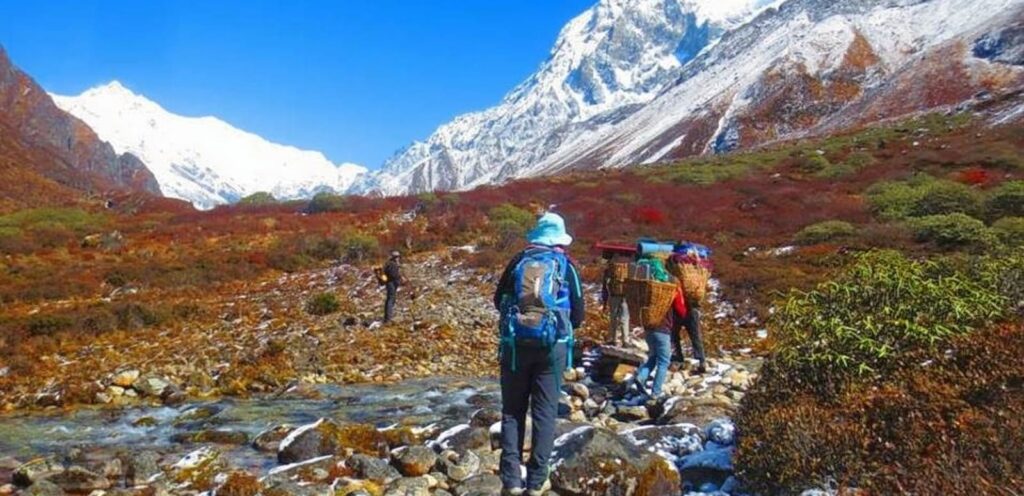
The Goecha La trek is a premier trekking route, leading through rhododendron forests, alpine meadows, and glacial moraines to a high pass at 4,940 metres with direct views of Kangchenjunga’s south face. One of the finest high-altitude treks in India.
Key Highlights
- Direct views of Kangchenjunga (8,586m) — the world’s third-highest peak
- Passes through Dzongri meadows, a popular camping spot
- Diverse ecosystems from dense forest to alpine tundra
Best Experiences
- Best attempted October to November or March to May
- Requires trekking permit and experienced guide
- 7–12 days depending on itinerary and fitness
Other Must-Visit Places in Sikkim
- Tsomgo (Changu) Lake — Sacred lake at 3,753m near Nathula Pass
- Tashiding Monastery — Sikkim’s most sacred monastery
- Ravangla — Quiet hill town with Buddha Park and Maenam trek
- Namchi — Home to the massive Samdruptse Guru Padmasambhava statue
- Zuluk — Remote eastern Sikkim route with spectacular mountain switchbacks
Top Experiences
Cultural Tourism in Sikkim
- Monastery trail — Rumtek, Pemayangtse, Tashiding, Enchey, Sangachoeling
- Festival experiences — Losar, Saga Dawa, Pang Lhabsol
- Homestays with Lepcha or Bhutia families in rural villages
- Organic farm visits and local market exploration
Adventure Tourism
- Goecha La trek and Dzongri meadow trek
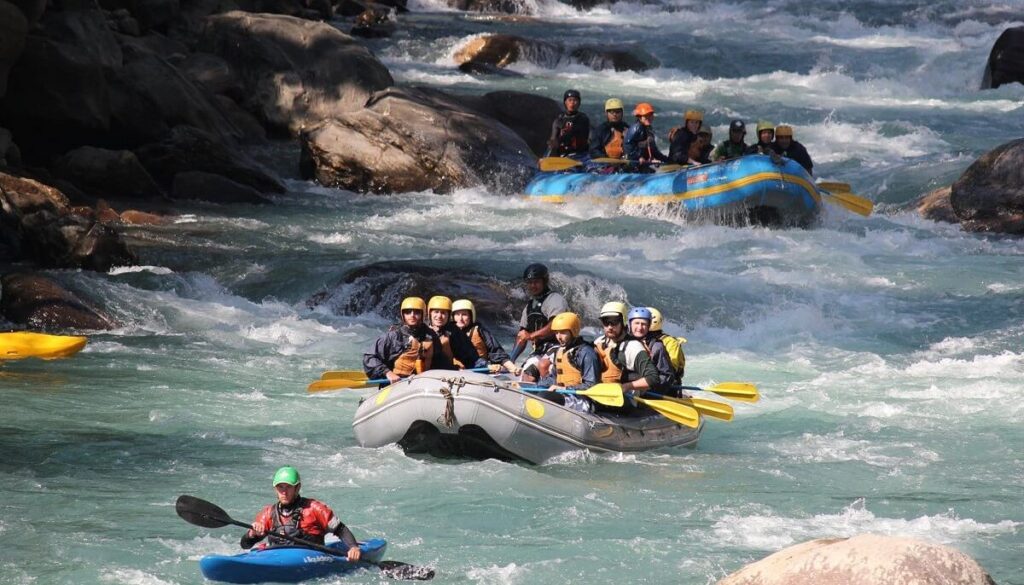
- White-water rafting on the Teesta and Rangit rivers
- Mountain biking on the Silk Route (Old Silk Trade Route through East Sikkim)
- Paragliding from Gangtok viewpoints
Nature & Rural Experiences
- Birdwatching — Sikkim has over 550 bird species, including rare Himalayan species
- Rhododendron season walks in Yumthang and Singalila
- Organic tea plantation visits in Temi
- Village walks in Darap, Yuksom, and Dzongu
Best Time to Visit Sikkim
- March to May — Rhododendrons bloom, clear views, best for trekking
- October to December — Post-monsoon clarity, peak mountain views, festival season
- January to February — Snow season; high passes closed, but romantic for winter travel
- June to September — Monsoon; North Sikkim roads often closed, leeches on trails
Key Tourist Information for Sikkim
Permits
Most of Sikkim is open to Indian and foreign tourists without a special permit. However, certain areas require permits:
- North Sikkim (Lachen, Lachung, Gurudongmar, Yumthang) — Restricted area permit required; obtainable in Gangtok through registered tour operators, processed within 24 hours
- Nathula Pass — Permit required for both Indian and foreign nationals; only Indian nationals permitted on certain days
- Dzongri/Goecha La trek — Trekking permit required from the Forest Department in Yuksom
Foreign nationals must obtain an Inner Line Permit (ILP) for North Sikkim, available in Gangtok.
Travel Essentials
- Carry cash — ATMs limited in North and West Sikkim
- Altitude sickness precautions for North Sikkim (above 3,500m)
- Warm clothing essential year-round; extreme cold in high-altitude zones
- Hire registered local guides for treks and restricted area visits
- Respect monastery protocols — remove shoes, dress modestly
How to Reach Sikkim
By Air
- Pakyong Airport (near Gangtok) —The state’s own airport; limited connections from Kolkata
- Bagdogra Airport (West Bengal) — Primary entry point; well connected to major Indian cities; 4–5 hours from Gangtok by road
By Train
- New Jalpaiguri (NJP) is the nearest major railhead, 4 hours from Gangtok
- Well-connected to Kolkata, Delhi, and major Indian cities
By Road
- NH10 connects Siliguri to Gangtok via Rangpo
- Frequent shared taxis and buses from Siliguri’s SNT terminal
- Scenic mountain drive of approximately 4–5 hours from the plains
Accommodation in Sikkim
Travelers can choose from:
- Village homestays with Lepcha, Bhutia, or Nepali families — particularly rewarding in Yuksom, Darap, and Dzongu
- Buddhist monastery guest houses — Simple, peaceful, and culturally immersive
- Eco-resorts and mountain lodges in Pelling, Ravangla, and Namchi
- Budget to mid-range hotels in Gangtok
Why Visit Sikkim
Sikkim is where Himalayan grandeur meets Buddhist serenity and organic warmth. The combination of world-class trekking, ancient monasteries, exceptional biodiversity, and some of the most hospitable communities in India makes it a destination that stays with travelers long after they leave. Whether you come for the mountains, the monasteries, or simply the momos, Sikkim never disappoints.
