




At 10,000 feet above sea level, perched on a spur above the Tawang Chu River valley and gazing toward Tibet across ancient trade routes, Tawang is one of the most breathtaking destinations in all of India. The drive up to it — over the Se La Pass at 4,170 metres, through cloud forests and past a lake that stays half-frozen even in summer — is one of the great mountain road journeys in Asia. And the arrival, when the massive white walls of Tawang Monastery first come into view against the Himalayan sky, is genuinely unforgettable.
More than just a scenic destination, Tawang carries centuries of history, spirituality, and cultural identity. It is the birthplace of the 6th Dalai Lama, the site of one of Asia’s largest Buddhist monasteries outside Tibet, and the homeland of the Monpa people — one of the most distinctive tribal communities in Northeast India. For travelers seeking depth, beauty, and genuine discovery, Tawang delivers at every altitude.
Quick Facts About Tawang
| State | Arunachal Pradesh |
| District | Tawang District |
| Altitude | 2,669 metres (8,757 feet) — town centre; surrounding areas up to 4,500+ metres |
| Language | Monpa, Hindi, English |
| Religion | Tibetan Buddhism (Gelug school) |
| Nearest Airport | Tezpur Airport (Assam) — 317 km; Guwahati Airport — 450 km |
| Nearest Rail | Tezpur or Rangapara (Assam) |
| Permit Required | Inner Line Permit (ILP) for Indian nationals; Protected Area Permit (PAP) for foreign nationals |
| Best Time to Visit | March to October; avoid heavy snow months Dec–Feb for road travel |
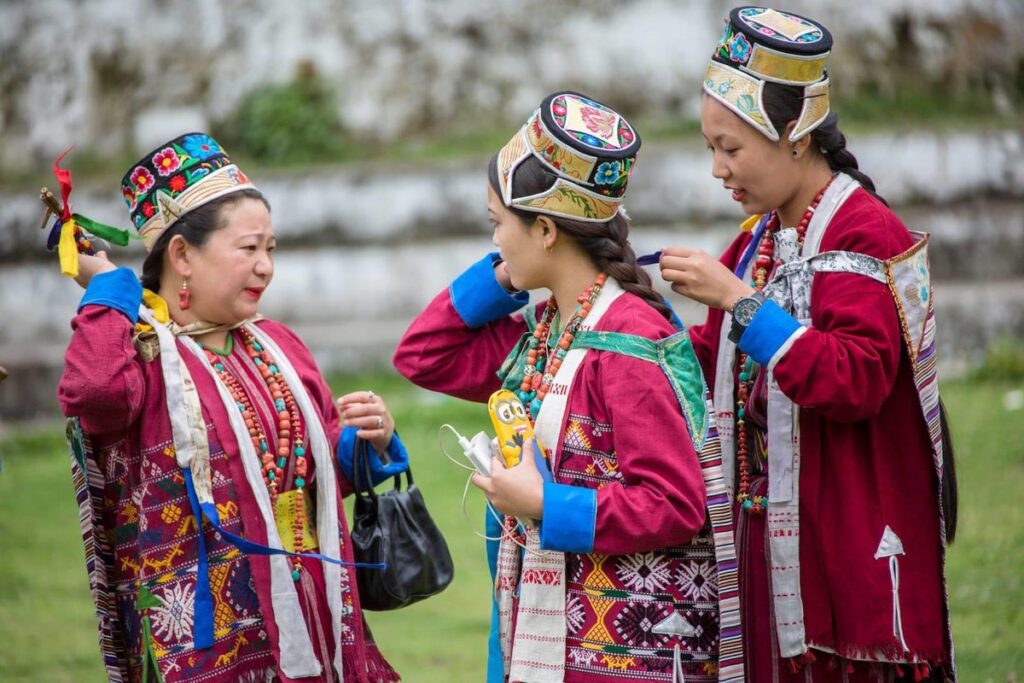
The People of Tawang: The Monpa Tribe
The Monpa are the indigenous inhabitants of the Tawang and West Kameng districts of Arunachal Pradesh — a Tibeto-Burman people whose culture, religion, and way of life are deeply intertwined with Tibetan Buddhism. The name ‘Monpa’ roughly translates to ‘people from the land of Mon’, and their traditions place them firmly within the broader Himalayan Buddhist cultural world.
The Monpa are skilled craftspeople — known for their thangka paintings (Buddhist scroll paintings), traditional wooden masks used in Cham dance ceremonies, handwoven woollen carpets (locally called Monpa carpets), and yak-wool fabrics. Their festivals, architecture, and cuisine all reflect centuries of high-altitude living shaped by Buddhist values.
Population: Tawang district has a small but culturally rich population of approximately 50,000 people, predominantly Monpa.
Language: Monpa language (a Tibeto-Burman tongue); Hindi is widely understood in the town; English is spoken at tourist facilities.
Religion: Tibetan Buddhism of the Gelug school (the same tradition as the Dalai Lama). The monastery and religious calendar shape the rhythm of daily life.
| Traveler’s Tip: The Monpa people are warm and welcoming to respectful visitors. If invited into a home, accept tea (traditionally served with butter and salt — acquired taste) and never refuse food offered to you. This is a mark of deep hospitality. |
Top Attractions in Tawang
1. Tawang Monastery (Galden Namgyal Lhatse)
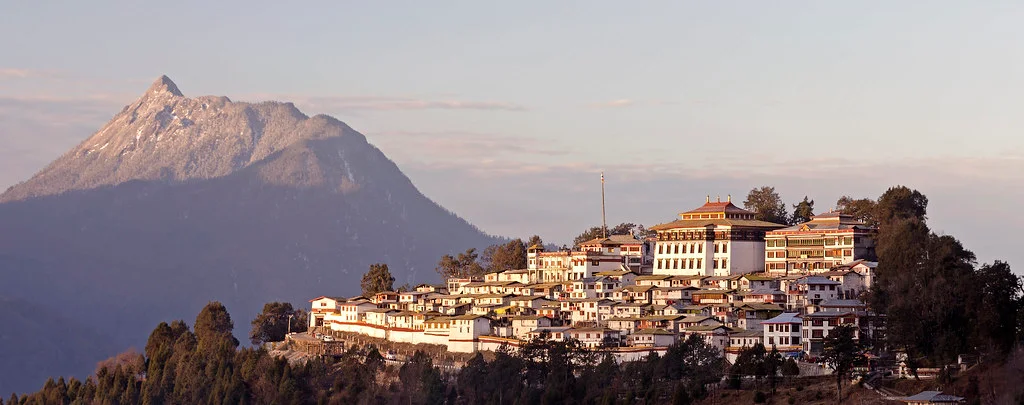
Tawang Monastery is the largest Buddhist monastery in India and the second largest in the world after Lhasa’s Potala Palace. Founded in 1681 by Merag Lama Lodre Gyatso under the guidance of the 5th Dalai Lama, the monastery sits at 3,048 metres and houses over 500 resident monks, an extraordinary library of ancient Buddhist manuscripts, and a stunning 8-metre gilded statue of the Buddha.
- The main assembly hall (dukhang) features magnificent murals and a towering Buddha image
- The library holds over 400 volumes of Kangyur (Buddha’s teachings) and ancient Tibetan texts
- The monastery museum displays rare thangkas, weapons, and historical artefacts
- The rooftop offers panoramic views over the Tawang valley and surrounding Himalayan peaks
- Annual Torgya Festival (January) features spectacular Cham masked dances
| Visit early morning (6–8 AM) for the morning prayer session — the sound of hundreds of monks chanting in the main hall is one of the most moving experiences Tawang offers. Dress modestly and remove shoes before entering any prayer hall. |
2. Se La Pass (Sela Pass)
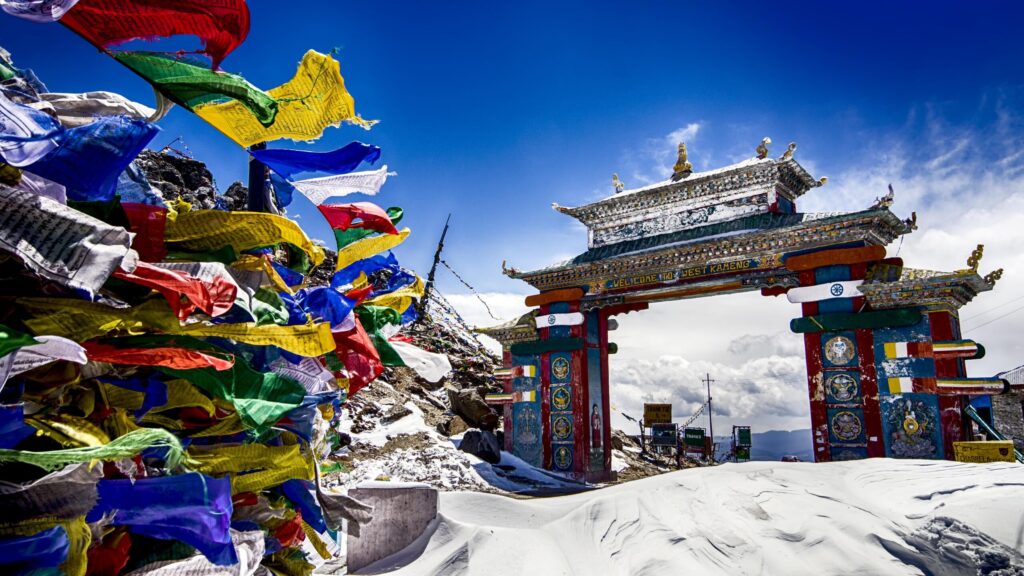
Se La Pass, at 4,170 metres, is the high-altitude gateway to Tawang and one of the most dramatic mountain passes in Northeast India. The road climbs through forests of fir and rhododendron, past the sapphire-blue Se La Lake (partially frozen much of the year), and emerges onto a windswept plateau with 360-degree views of Himalayan peaks. A war memorial commemorates the Indian soldiers who defended this pass in the 1962 Indo-China War.
- Se La Lake — A stunning high-altitude lake beside the pass; often surrounded by snow
- War Memorial — Poignant memorial to the 4th Corps soldiers of 1962
- Panoramic Himalayan views from the pass summit
- Best experienced early morning before clouds build
| Altitude Warning: Se La Pass is at 4,170 metres. Take it slow, stay hydrated, and do not attempt the pass if experiencing severe headache, nausea, or dizziness. Acclimatise in Dirang for a night before proceeding to Tawang. |
3. Bumla Lake (Shonga-tser Lake)
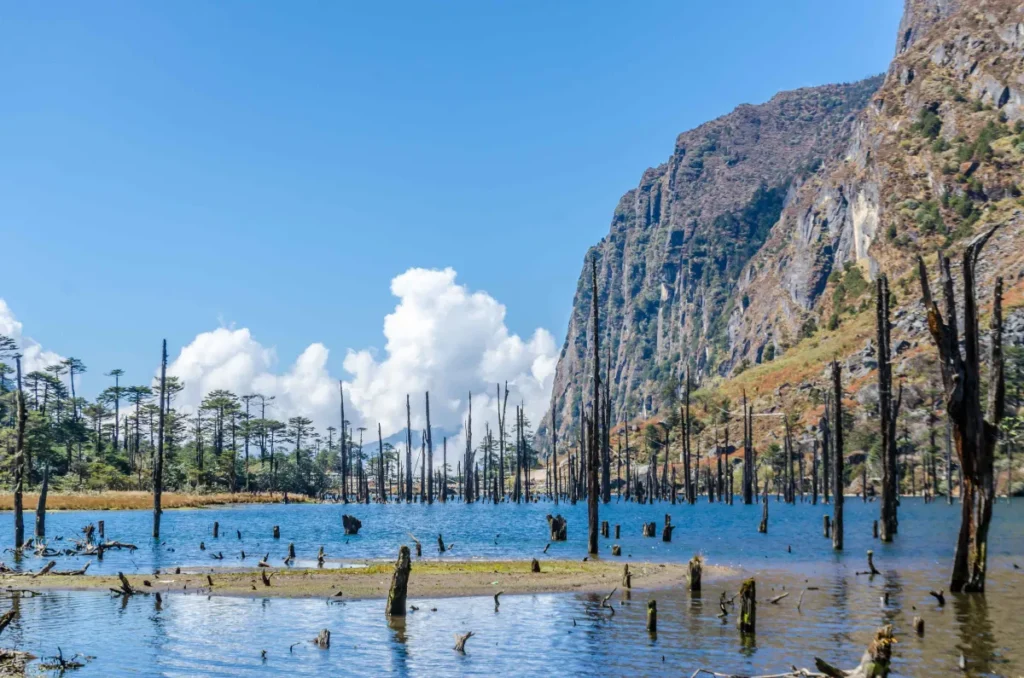
Bumla Lake, at 4,700 metres near the India-China border, is one of the highest lakes accessible by road in Arunachal Pradesh. The lake sits inside a restricted military zone — a special permit is required beyond the standard ILP — and is accessible only with a registered local tour operator. On clear days, the views from the lake’s edge stretch into Tibet.
- Located just 37 km from Tawang town, near the Line of Actual Control
- Surrounded by treeless high-altitude terrain — stark, alien, and magnificently beautiful
- Requires additional restricted area permit beyond standard ILP
- Only accessible April to October when the road is clear of snow
4. Urgelling Monastery — Birthplace of the 6th Dalai Lama
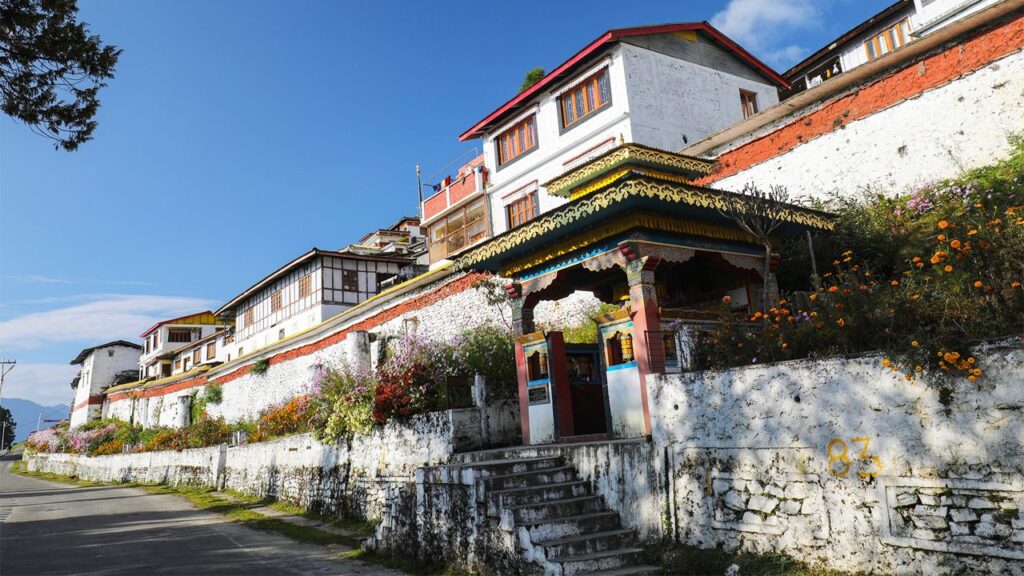
Urgelling Monastery, a small but historically significant gompa about 5 km from Tawang town, is the birthplace of Tsangyang Gyatso — the 6th Dalai Lama, born in 1682 and one of the most celebrated and unconventional figures in the history of Tibetan Buddhism. The monastery is a peaceful, intimate site and a place of deep significance for Tibetan Buddhists worldwide.
- Birthplace of Tsangyang Gyatso, the 6th Dalai Lama
- Small and atmospheric compared to the main monastery — more intimate experience
- Surrounded by ancient juniper trees and prayer flags
5. Tawang War Memorial
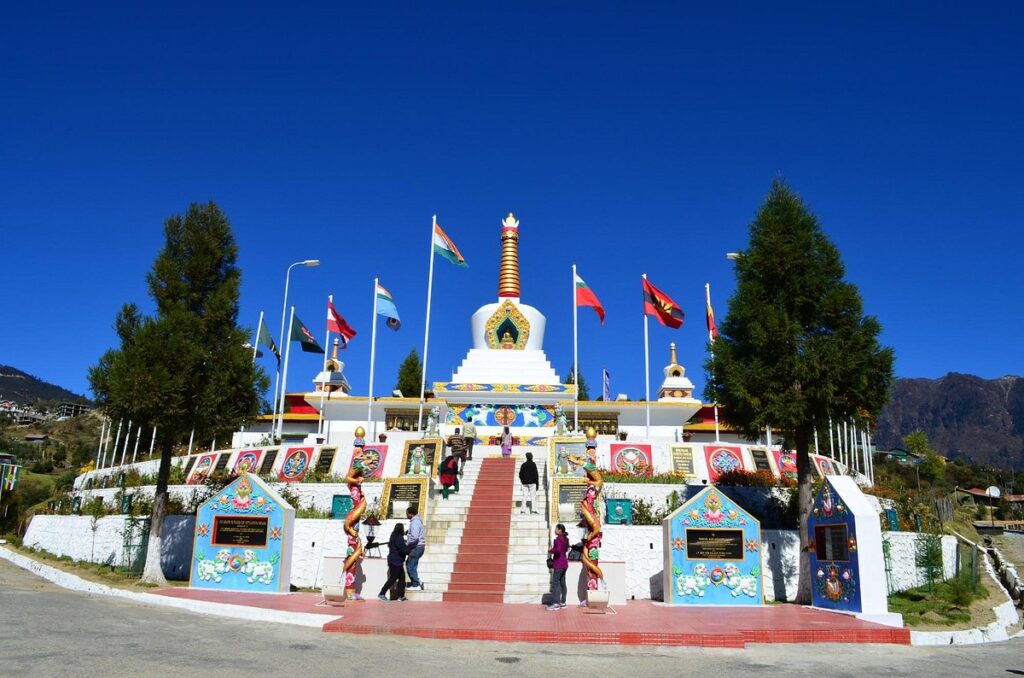
The Tawang War Memorial, built by the Indian Army, commemorates the soldiers who sacrificed their lives during the 1962 Indo-China War. The memorial features a 40-feet high structure with the names of all the martyrs inscribed on it. A light and sound show in the evenings narrates the history of the war in a moving and informative way.
- Evening light and sound show (weather permitting) — highly recommended
- Inscriptions of all 2,420 martyrs of the 1962 war
- Located near the town centre; easily walkable
6. Nuranang Falls (Jung Falls)
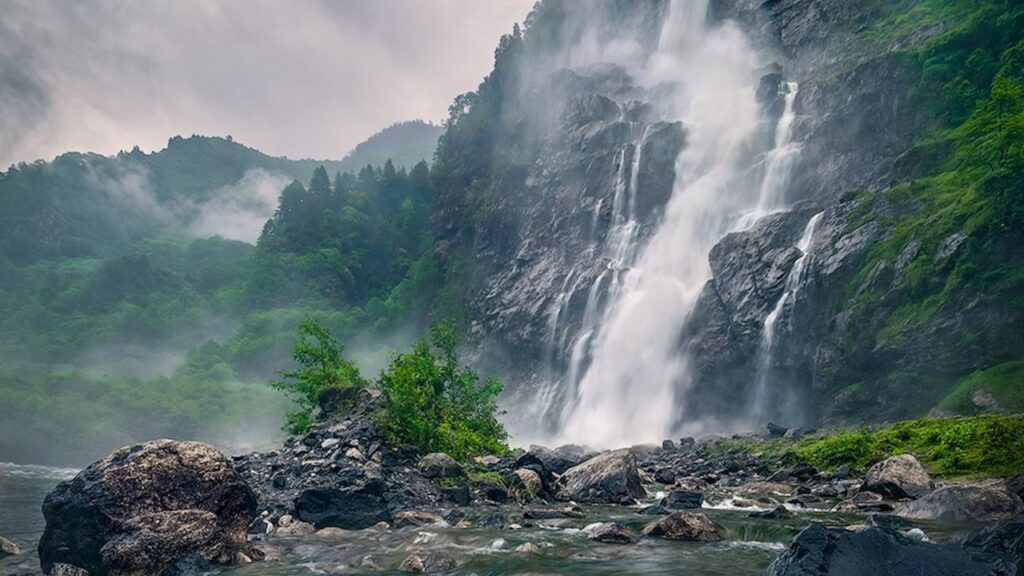
Nuranang Falls, also called Jung Falls, is a powerful 100-metre waterfall set in a gorge on the road between Dirang and Tawang. The waterfall was made famous in Bollywood cinema and is now one of the most visited natural attractions on the Tawang route. A short walk from the road leads to a viewing platform above the falls.
- 100-metre waterfall cascading through a narrow gorge
- Best visited between May and October when water levels are highest
- The falls power a small hydro project — the industrial element adds to the drama
7. PT Tso Lake (Paradise Lake)
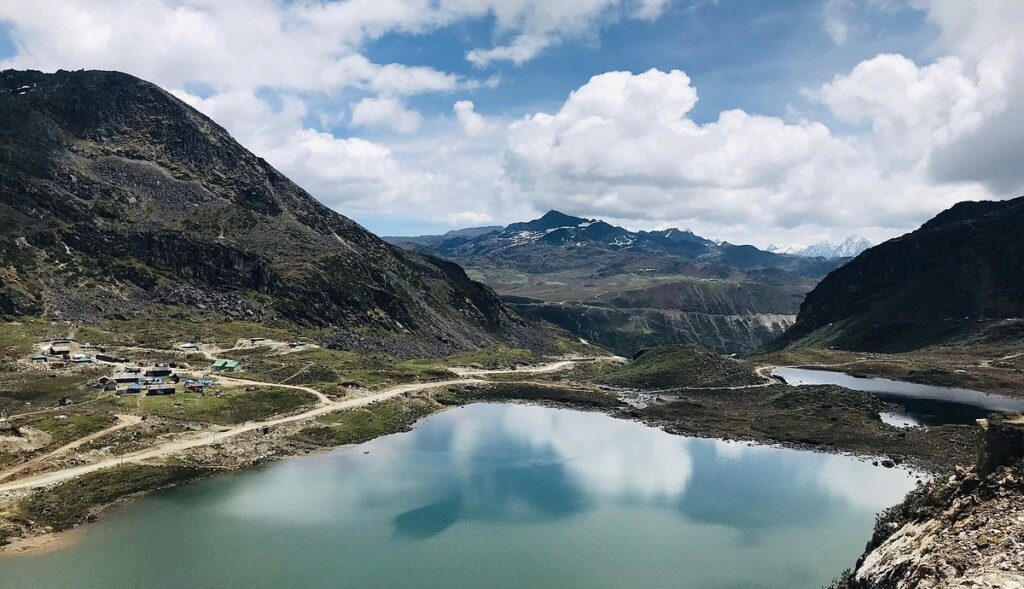
PT Tso Lake, at 4,095 metres, is a sacred high-altitude lake about 17 km from Tawang. The lake is believed to be blessed by the Dalai Lama and holds spiritual significance for local Monpa Buddhists. The surrounding landscape of high-altitude meadows, snow peaks, and prayer flags makes it one of Tawang’s most photogenic locations.
- Sacred lake at 4,095 metres with views of multiple Himalayan peaks
- Best visited April to October (road accessible)
- Combined with a visit to Bumla Lake on the same day
Top Things to Do in Tawang
Attend a Festival
Tawang’s festivals offer some of the most spectacular cultural experiences in Northeast India. The annual Torgya Festival (January, three days) at Tawang Monastery features monks performing elaborate Cham masked dances representing the victory of good over evil. The Lossar Festival (Tibetan New Year, February) sees the entire town celebrate with prayer ceremonies, feasting, and traditional performances.
Explore the Tawang Circuit by Motorcycle or 4WD
The mountain roads around Tawang — to Bumla, PT Tso, Gorichen base, and the remote villages of the district — are a motorcyclist’s and adventure driver’s paradise. Many travelers hire a Bolero jeep with a local driver for a 2–3 day circuit covering all the key sites. Roads are rough, passes are high, and the views are magnificent.
Trek to Gorichen Base Camp
Gorichen, at 6,538 metres, is the highest peak in Arunachal Pradesh and one of the great trekking objectives in the Eastern Himalayas. The trek to the base camp passes through rhododendron forests, alpine meadows, and glacial terrain. A specialised trekking permit is required and an experienced local guide is essential.
Visit the Craft Centres
Tawang has several craft shops and government emporiums selling authentic Monpa handicrafts — hand-knotted carpets, thangka paintings, wooden masks, yak-wool textiles, and silverwork. The Tawang Handloom and Handicraft Centre is the best place to buy directly from artisans and understand the techniques involved.
Birdwatching
The forests and alpine meadows around Tawang are exceptional birding territory. Species including the Blood Pheasant, Satyr Tragopan, Fire-tailed Myzornis, Ward’s Trogon, and multiple species of laughingthrush have been recorded in the district. October to April is the best season.
Where to Eat in Tawang
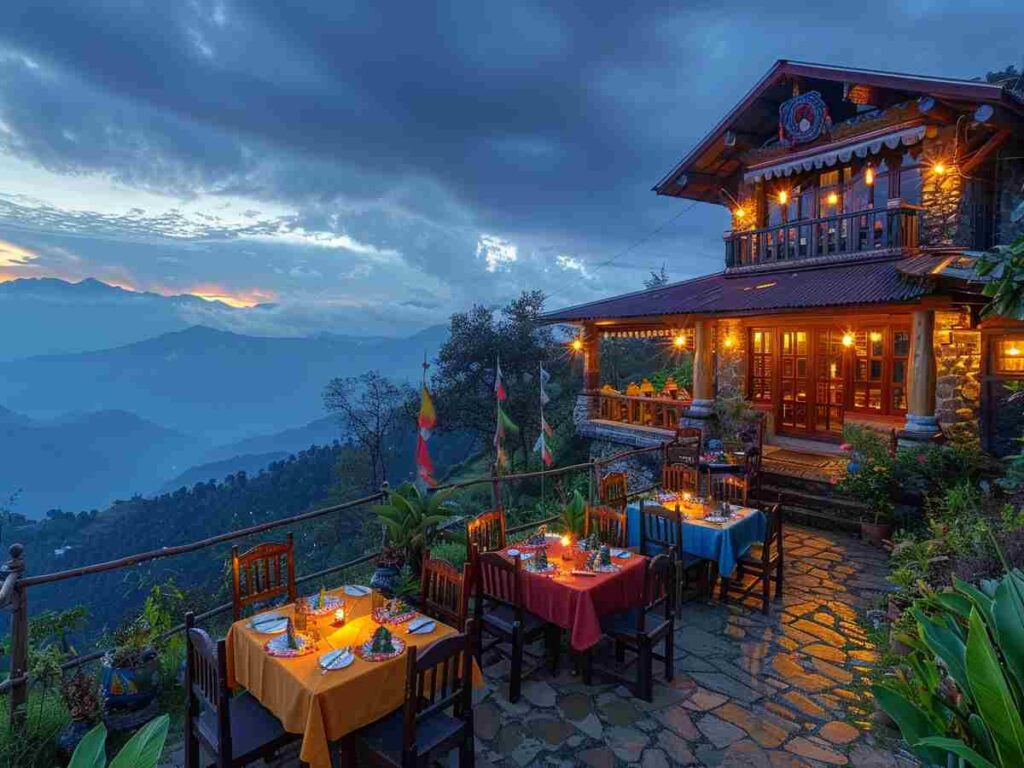
Tawang’s food scene is small but deeply satisfying, particularly if you seek out authentic Monpa and Tibetan-influenced cuisine.
- Thukpa — Hearty noodle soup with meat or vegetables; the ideal warming meal at altitude
- Momos — Steamed dumplings; pork and cheese versions are particularly good in Tawang
- Zan — Monpa staple made from millet flour; dense and filling; eaten with meat and vegetables
- Butter Tea (Po Cha) — Salted tea churned with yak butter; an acquired taste but essential for altitude
- Apong (Rice Beer) — Local fermented rice beer; different varieties across the community
- Yak dishes — Yak meat curry and yak cheese (chhurpi) are unique to this altitude
| The local market near the monastery has several small restaurants and tea stalls serving authentic Monpa food at very affordable prices. Look for places with handwritten menus and busy local patronage. |
Where to Stay in Tawang
- Homestays — The most authentic option; several Monpa families offer warm rooms and home-cooked meals. Book through local tour operators or the district tourism office.
- Government Tourist Bungalows — Well-maintained and affordable; book in advance through Arunachal Pradesh Tourism.
- Budget Guesthouses — Several options in the town centre ranging from ₹600–₹1,500 per night.
- Mid-range Hotels — A handful of cleaner properties with hot water and mountain views; ₹2,000–₹4,000 per night.
| Book accommodation well in advance for the October–November peak season and during major festivals. Tawang’s limited room supply means popular places fill up weeks ahead. |
Travel Essentials for Tawang
Inner Line Permit (ILP)
All Indian nationals require an ILP to enter Arunachal Pradesh. Apply online at ILP Arunachal Pradesh — processing takes a few hours. For Bumla Lake and border areas, an additional restricted area permit is required and must be arranged through a registered local tour operator.
Foreign nationals require a Protected Area Permit (PAP). See the NorthEast India Connect Travel Permits guide for full details.
Altitude & Health
- Acclimatise first — Spend at least one night in Dirang (1,560m) or Bomdila (2,415m) before ascending to Tawang (2,669m) and higher excursions.
- Altitude medication — Consult your doctor about acetazolamide (Diamox) before travel if you have a history of altitude sickness.
- Hydration — Drink plenty of water; avoid alcohol in the first 24 hours at altitude.
- Watch for symptoms — Severe headache, vomiting, loss of coordination, or breathlessness are signs to descend immediately.
Weather & Clothing
- Summer (May–Sep): Daytime 10–20°C; cooler at night and at passes. Light layers with a warm jacket essential.
- Autumn (Oct–Nov): Best clear sky season; daytime 5–15°C; cold nights. Thermal base layers required.
- Winter (Dec–Feb): Heavy snowfall; Se La frequently closed; sub-zero temperatures at the pass. Extreme cold gear required.
- Spring (Mar–Apr): Rhododendrons bloom; unpredictable weather; muddy roads possible.
Connectivity & Cash
- BSNL has the most reliable mobile signal in Tawang; private carriers are patchy
- ATMs are available in Tawang town but often run out of cash — carry sufficient INR from Guwahati or Tezpur
- Internet is available but slow; download offline maps and important bookings before departure
How to Reach Tawang
From Guwahati (most common route)
- Fly or take the train to Guwahati → drive to Tezpur or Bhalukpong (entry point of Arunachal Pradesh)
- From Bhalukpong: Bomdila (142 km, 5 hrs) → Dirang (43 km, 1.5 hrs) → Se La Pass (76 km, 3 hrs) → Tawang (81 km, 3 hrs)
- Total road distance from Guwahati to Tawang: approximately 450–480 km, 12–14 hours by road
- Recommended to break journey at Dirang (night 1) then Tawang (night 2 onwards)
By Air
- No airport in Tawang; nearest operational airports are Tezpur (Assam) and Lilabari (North Lakhimpur)
- Tezu Airport (in eastern Arunachal) and Itanagar’s Hollongi Airport are available for other parts of the state
By Shared Taxi / Bus
- APST (Arunachal Pradesh State Transport) buses run from Tezpur to Tawang — journey time 12–14 hours
- Shared taxis (Bolero/Sumo) from Tezpur and Bhalukpong — more comfortable and faster
- Private taxi hire from Guwahati is the most convenient option for groups
By Helicopter
- Pawan Hans operates helicopter services between Guwahati/Tezpur and Tawang on select days — check availability seasonally
- Helicopter services are weather-dependent and frequently cancelled in the monsoon and winter
Best Time to Visit Tawang
- April to June: Spring; rhododendrons in bloom on the passes; moderate temperatures; ideal for first-time visitors
- July to September: Monsoon; misty and atmospheric; some road closures possible; lush green landscapes
- October to November: Peak season; crystal clear skies; best mountain views; Torgya festival preparations begin
- December to February: Heavy snow; Se La may close; for experienced cold-weather travelers only; Torgya Festival in January
| October is widely considered the best single month to visit Tawang — the post-monsoon clarity brings the sharpest mountain views of the year, the rhododendrons have gone but the landscapes are vivid green-to-gold, and the roads are fully open. |
Sample 4-Day Tawang Itinerary
- Day 1 — Bhalukpong to Dirang: Enter Arunachal at Bhalukpong; drive through Bomdila; overnight in Dirang for acclimatisation. Visit Dirang Dzong and hot springs.
- Day 2 — Dirang to Tawang via Se La: Early morning departure; Se La Pass and lake stop; Nuranang Falls; arrive Tawang by afternoon.
- Day 3 — Tawang: Morning prayer session at monastery; monastery museum and library; Urgelling Monastery; War Memorial light & sound show in evening.
- Day 4 — High-Altitude Circuit: Bumla Lake and PT Tso Lake (requires additional permit and operator); return to Tawang for overnight.
Responsible Travel in Tawang
- Always walk clockwise around monastery structures, mani walls, and prayer wheels — this is a fundamental Buddhist practice
- Do not photograph monks or religious ceremonies without permission
- Carry out all plastic waste — Tawang’s high-altitude ecosystem is fragile
- Bargain respectfully; local livelihoods depend on fair trade
- Book through local Monpa guides and operators to ensure your spending benefits the community directly
