




In the Lower Subansiri district of Arunachal Pradesh, at an altitude of 1,500 metres, lies one of the most extraordinary valleys in Northeast India — a wide, flat expanse of green paddy fields, pine-forested hills, and traditional bamboo villages that has been home to the Apatani people for centuries. Ziro Valley is the kind of place that makes travelers stop checking their itineraries and simply stay.
Ziro carries significant cultural and natural credentials. The valley is on UNESCO’s Tentative List as a World Heritage Site, recognised for the Apatani people’s exceptional land management system — a model of sustainable agriculture that uses no draft animals, no machines, and no chemical inputs to produce yields that have astonished agricultural researchers worldwide. Ziro also hosts the Ziro Music Festival, now one of India’s most beloved independent music events, attracting artists and audiences from across Asia and beyond.
Quick Facts About Ziro Valley
| State | Arunachal Pradesh |
| District | Lower Subansiri |
| Altitude | 1,500–1,700 metres |
| Main Town | Hapoli (also called Ziro) |
| Language | Apatani, Hindi, English |
| Nearest Airport | Lilabari Airport (North Lakhimpur) — 100 km; Itanagar (Hollongi) — 115 km |
| Nearest Rail | North Lakhimpur — 100 km |
| Permit Required | ILP for Indian nationals; PAP for foreign nationals |
| Best Time to Visit | March to October; September for the Music Festival |
The People of Ziro: The Apatani Tribe

The Apatani are one of the most distinctive and remarkable tribal communities in all of Northeast India. Numbering approximately 60,000 people, they have lived in the Ziro Valley for centuries and have developed one of the most sophisticated indigenous agricultural and ecological management systems in Asia.
The Apatani’s paddy-cum-fish cultivation system — growing rice in flooded fields that simultaneously raise fish — is the foundation of the UNESCO nomination. This system maximises land use, eliminates the need for ploughing, controls pests naturally, and produces exceptionally high yields on a valley floor that supports the entire community’s food needs without external inputs.
Traditional facial tattoos and nose plugs: Older Apatani women traditionally wore facial tattoos and large nose plugs (yaping hullo) as a mark of tribal identity. According to oral tradition, this practice was adopted to make Apatani women less attractive to raiders from neighbouring tribes. The practice has been discontinued among younger generations but elderly women carrying these markings are still present in the villages.
Village structure: The Apatani live in densely packed villages of bamboo and wood houses with remarkable internal organisation. The villages of Hong, Bamin, Hija, Mudang Tage, and Hari are the most visited.
Governance: The Buliang (village council system) governs Apatani communities through community consensus — one of the oldest and most functional indigenous governance systems in the region.
| Cultural Sensitivity Note: Apatani elders with facial tattoos and nose plugs are community members, not tourist attractions. Always ask permission before photographing individuals, and approach all interactions with genuine curiosity and respect rather than treating the community as a spectacle. |
Top Attractions in Ziro Valley
1. Apatani Villages
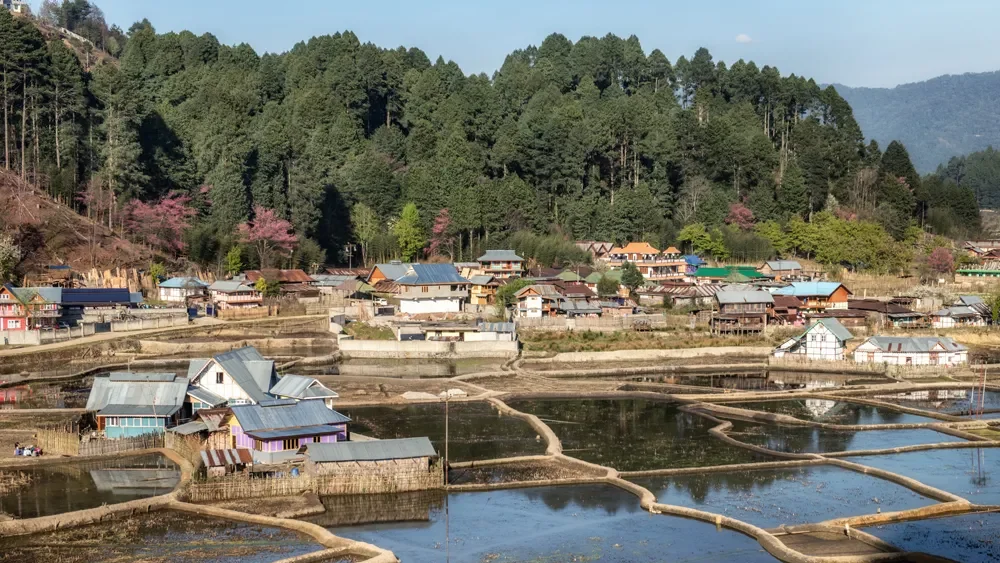
The villages of the Ziro Valley are living museums of one of the world’s most carefully managed traditional landscapes. Walking through Hong, Hija, or Bamin villages, past traditional Apatani homes with their distinctive carved facades and bamboo storage structures, past the fish-paddy fields and the community granaries, is an immersive cultural experience of the highest order.
- Hong Village — The most photographed Apatani village; classic paddy field landscapes and well-preserved traditional architecture
- Bamin Village — Known for its weaving traditions; opportunity to observe traditional Apatani textile production
- Hija Village — The oldest continuously inhabited Apatani village; rich in oral history
- Mudang Tage — Cultural centre; hosts community festivals and traditional ceremonies
2. The Paddy-Fish Fields
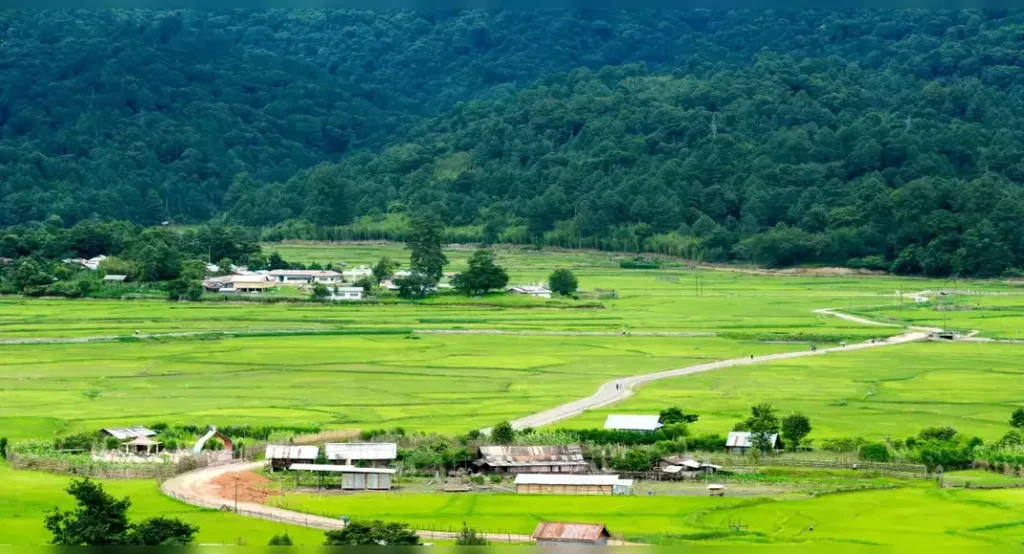
The Apatani paddy-fish cultivation system is the reason Ziro Valley is on UNESCO’s Tentative List. Viewed from a slight elevation above the valley floor — particularly from the pine ridge near Talley Valley — the patchwork of flooded paddy fields stretching across the valley basin creates one of the most beautiful agricultural landscapes in India, particularly at dawn and dusk when the water reflects the light.
3. Ziro Music Festival
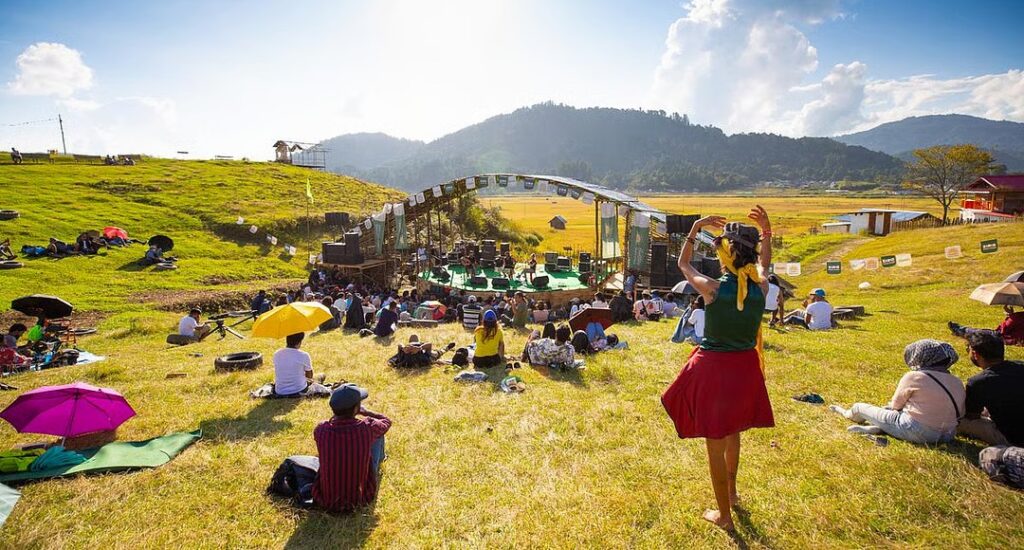
The Ziro Music Festival, held annually over four days in late September, has become one of India’s most celebrated independent music events. Set in the natural amphitheatre of the valley, the festival brings together Indian and international artists across folk, indie, electronica, jazz, and experimental genres — performing against a backdrop of pine forests, paddy fields, and Apatani village life.
- Held annually in late September — typically the last weekend of the month
- Around 3,000–5,000 attendees camp in the valley across four days
- A carefully curated line-up that has featured artists from India, Southeast Asia, Europe, and beyond
- The combination of music, landscape, and cultural immersion makes this one of Asia’s most distinctive festival experiences
| Festival Tip: Book tickets and accommodation at least 3–4 months in advance — the festival sells out. Camping on the festival grounds is part of the experience; bring a good sleeping bag as nights at 1,500m can be cold in September. |
4. Talley Valley Wildlife Sanctuary
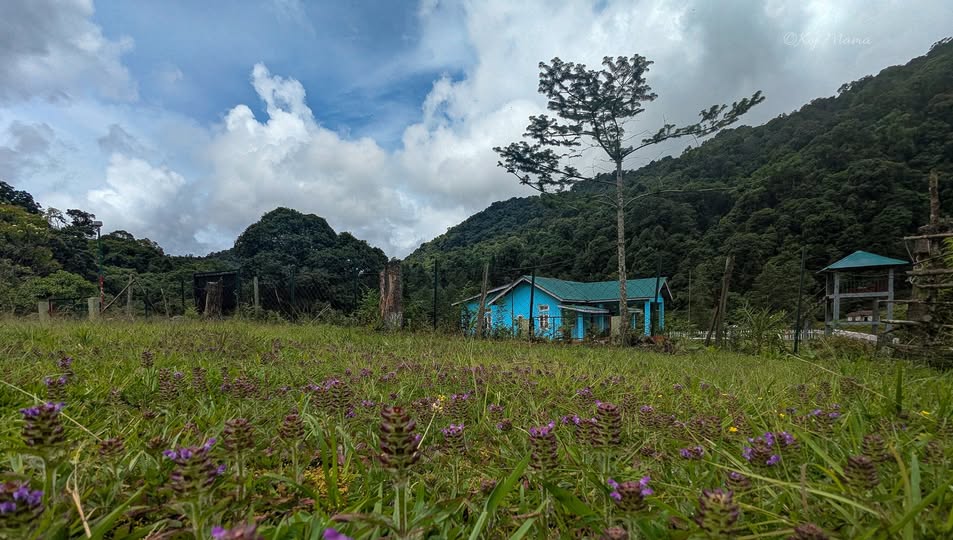
Talley Valley Wildlife Sanctuary, adjacent to Ziro Valley at higher elevation, is one of Arunachal Pradesh’s most pristine and biodiverse protected areas. The sanctuary supports clouded leopard, Asiatic black bear, Slow loris, and an extraordinary density of orchids and rhododendrons. A permitted trek into the sanctuary is one of the best wildlife and nature experiences in the state.
- Rich subtropical and temperate forest ecosystem
- Over 150 bird species including the Ward’s Trogon and Blyth’s Tragopan
- Orchid diversity — hundreds of species in bloom from February to April
- Requires a separate forest department permit in addition to ILP
5. Kile Pakho — Pine Ridge Viewpoint
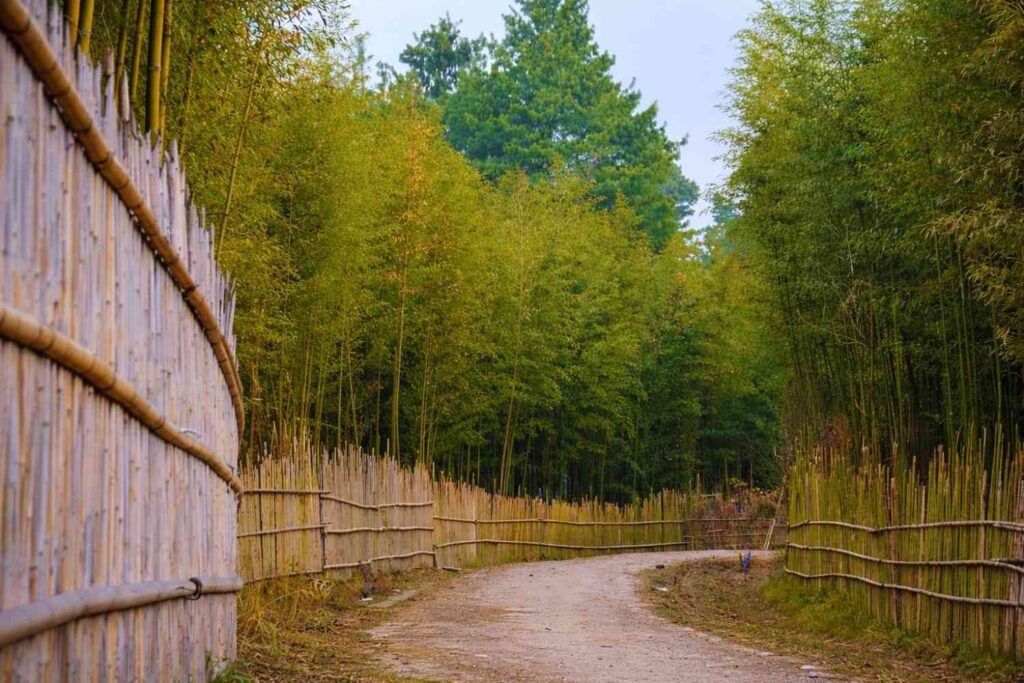
Kile Pakho is a pine-forested ridge above Ziro town that offers the most famous aerial views of the valley — the classic photograph of Ziro, looking down over the patchwork paddy fields with the Apatani villages nestled at the edges. Sunrise from Kile Pakho is one of the finest light shows in Northeast India.
6. Dolo Mando (Dolo Mando Hill)
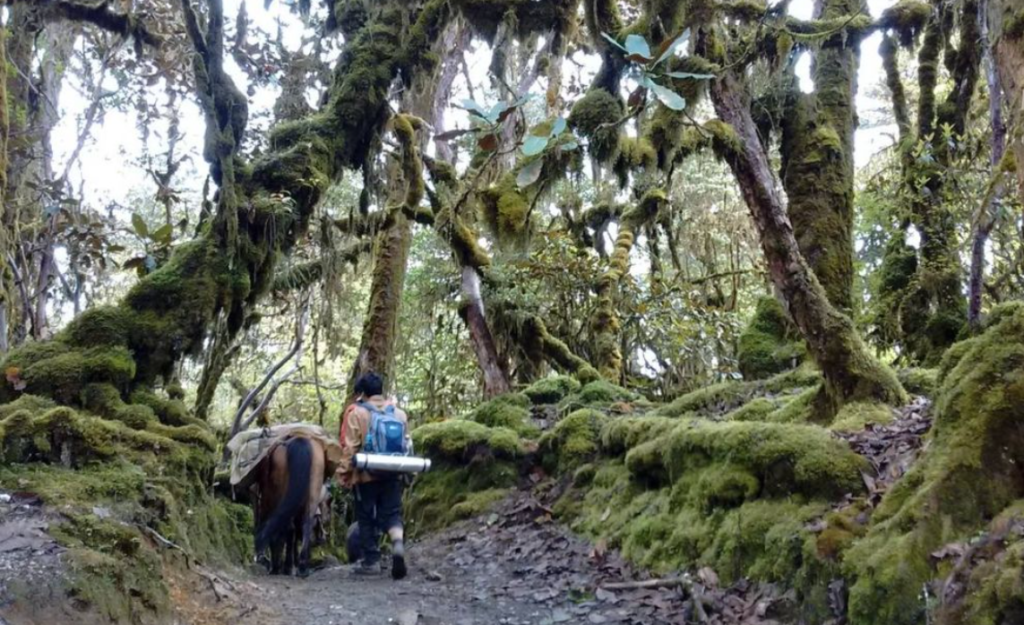
Dolo Mando, a small hill at the edge of Hapoli, is sacred to the Apatani people and serves as the site for the Myoko festival ceremonies. A gentle hike to the summit offers views over the entire valley and is particularly atmospheric during festival season.
Festivals of Ziro Valley
- Myoko (March–April): The most important Apatani festival — a community celebration of prosperity, friendship, and the new agricultural season. Rituals, traditional dances, feasting, and the rare ritual log-pulling (ayum) ceremony take place across multiple days.
- Dree (July): Agricultural festival praying for a good harvest; features prayers at sacred groves and community gatherings
- Murung (January): Traditional harvest festival with community dancing and feasting
- Ziro Music Festival (September): Four-day independent music festival; one of India’s best
Top Things to Do in Ziro
- Village walks — Self-guided or guide-led walks through the Apatani villages; the paddy field paths are particularly beautiful at dawn
- Trek to Talley Valley — 1–2 day trek through exceptional forest; requires permit and guide
- Kile Pakho sunrise — 45-minute walk from Hapoli town; bring a flask of hot tea
- Weaving workshops — Apatani women weave on traditional back-strap looms; several villages offer short workshops for visitors
- Participate in Myoko — If visiting in March or April, ask your homestay host about participating in Myoko ceremonies; most families welcome respectful visitors
- Photography — Ziro is one of the finest photography destinations in Northeast India; paddy fields, village life, and festival colour all reward the camera
Where to Eat in Ziro
- Pila Pila — Bamboo shoot and pork curry; the defining Apatani dish; available in most homestays
- Apong — Apatani rice beer; served at community gatherings and homestays
- Roasted chicken with local herbs — Simple, fragrant, and deeply satisfying
- Market food — The Hapoli weekly market has vendors selling Apatani street food including grilled meats and rice preparations
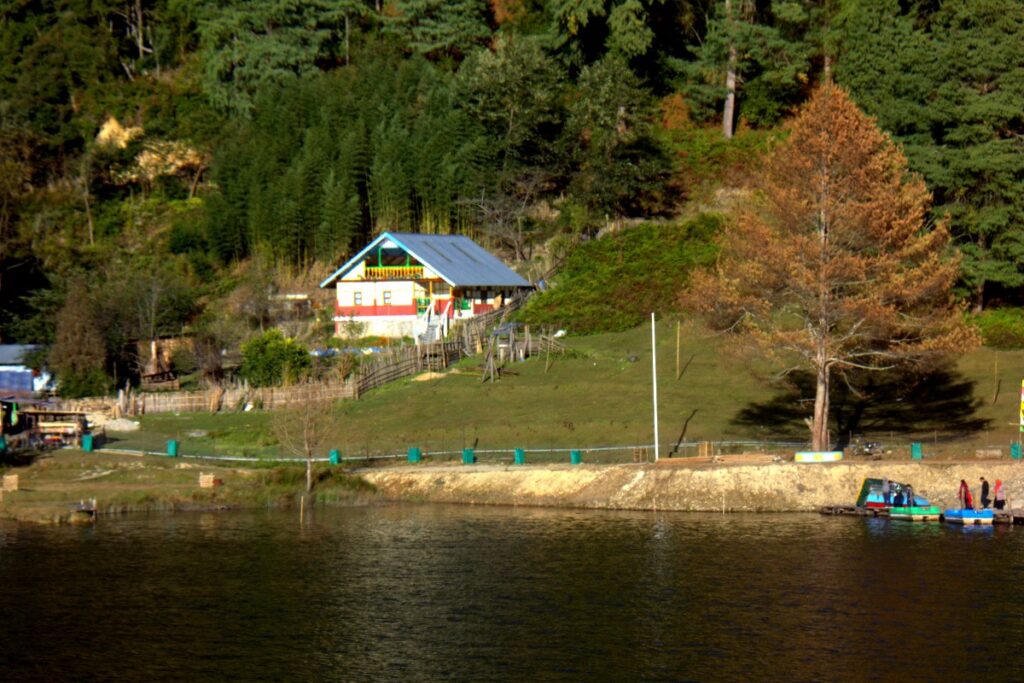
Where to Stay in Ziro
- Apatani homestays — The unambiguous first choice; waking up in a traditional Apatani home with valley views and home-cooked meals is the definitive Ziro experience. Several are bookable through local operators.
- Circuit House / Government Bungalows — Well-maintained options for budget travelers; book through Arunachal Pradesh Tourism
- Festival camping — During the Ziro Music Festival, camping on the valley floor is an experience in itself
How to Reach Ziro Valley
- From Guwahati: Fly or train to Guwahati → drive to North Lakhimpur (315 km, 7 hrs) → Ziro (100 km, 4 hrs). Total: approximately 10–12 hours.
- From Itanagar: Itanagar to Ziro is approximately 115 km; 4–5 hours by road via NH415.
- By Air: Lilabari Airport (North Lakhimpur) has connections from Kolkata and Guwahati. Itanagar’s Hollongi Airport also connects to major cities.
- By Bus: APST buses run from Itanagar and North Lakhimpur to Ziro. Journey time 4–6 hours.
Travel Essentials for Ziro
- ILP required for all Indian nationals — apply at ILP Arunachal Pradesh before travel
- Carry cash — very limited ATM access in Ziro; withdraw cash in North Lakhimpur or Itanagar
- Mobile signal: BSNL is most reliable; other carriers have limited coverage
- Weather: Ziro can be misty and cool year-round; carry layers regardless of season
- Hire a local Apatani guide for village walks — they provide essential context and ensure culturally respectful interactions
Also Read: How to Apply For Travel Permits for Traveling to Northeast India
