


Behdienkhlam Festival 2026
Hosted by: Behdienkhlam Festival 2026
Jowai, West Jaintia Hills, Meghalaya, India
Get Direction12:51 am-Saturday
July 11, 2026-Tuesday
July 14, 2026
When a People Chase Away the Darkness — and Dance in the Rain
In the hills of the Jaintia region, every July, an ancient prayer rises from the earth. Behdienkhlam — meaning "chasing away the demon of cholera" — is the most celebrated cultural festival of the Pnar people of Meghalaya, and one of the most visually extraordinary and spiritually alive gatherings in all of Northeast India.
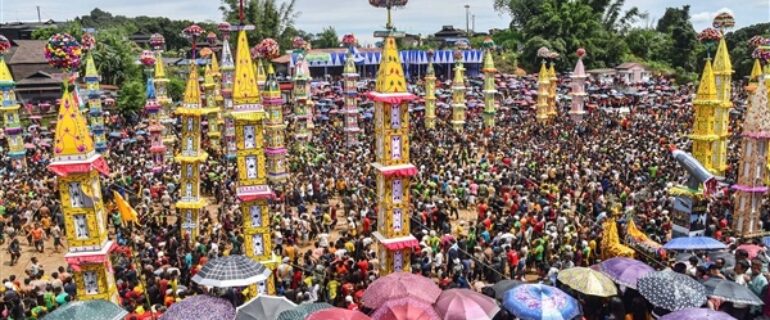
Celebrated annually in Jowai after the sowing season, the Behdienkhlam Festival is both an invocation to God for a bountiful harvest and a defiant act of communal protection — a people standing together against disease, misfortune, and evil. Young men beat the rooftops of every home with bamboo poles in a symbolic gesture of driving away plague and evil spirits, while the Daloi performs sacred rites passed down through generations.
But this festival is as joyful as it is spiritual. The climax unfolds over three days, building to a thunderous finale at the muddy pool of Aitnar — where two groups battle over a massive undressed beam, smearing each other with mud in wild, gleeful celebration. On the final day, the community gathers at Mynthong to watch dad-lawakor — a traditional football-like game played with a wooden ball between the Northerners and Southerners, where the winning side is believed to bring a bumper harvest to their region in the coming year. It is also said that rain on the day of the festival is a blessing — a sign that the goddess herself is pleased.
Mud, music, prayer, and play — Behdienkhlam is community in its most ancient and joyful form.