




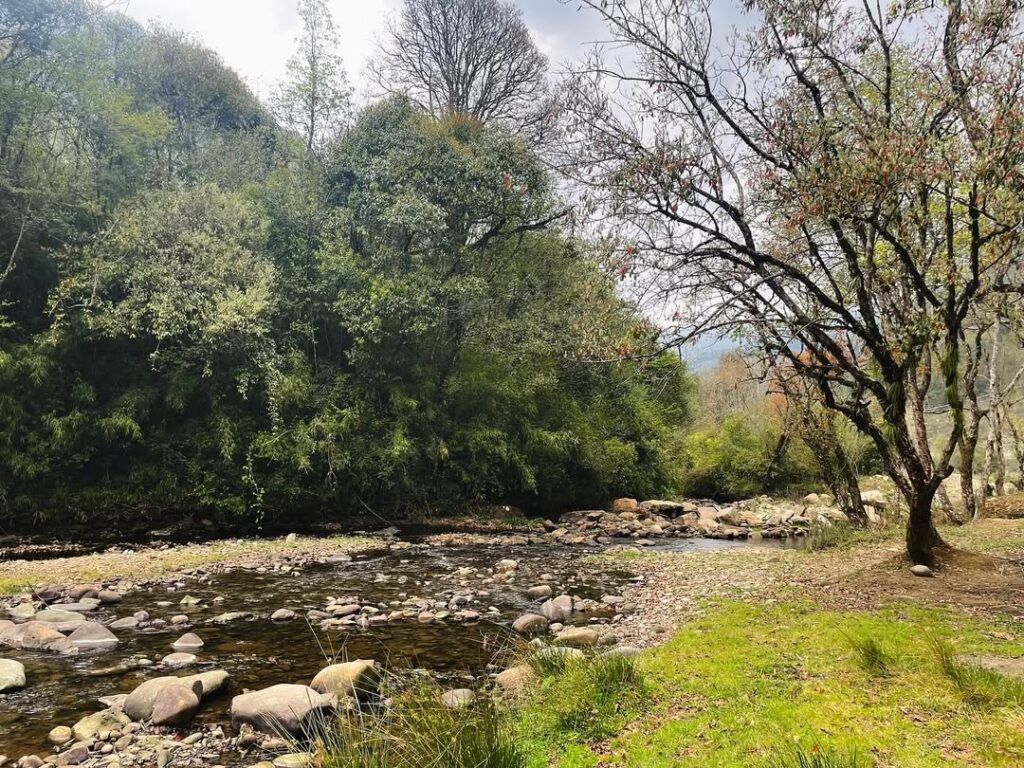
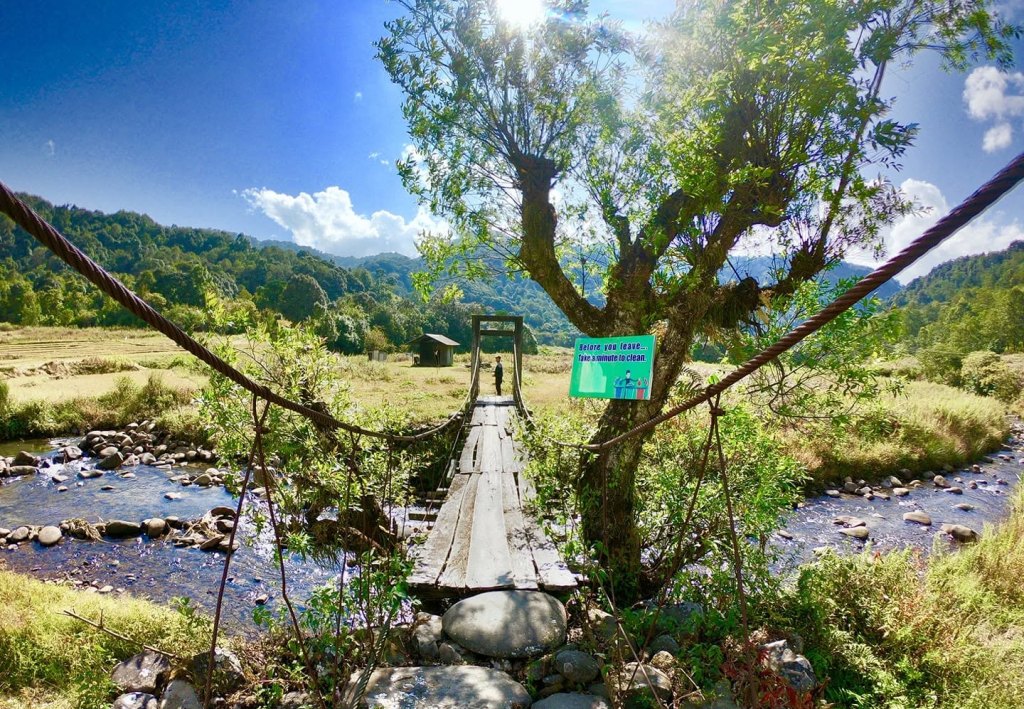
The Dzuleke River does something unusual at the edge of the village. It runs through the valley in plain sight — rushing over stones, flanked by forest — and then, at the boundary where the village begins, it goes underground. The river submerges into the earth and continues beneath the village, invisible but audible in certain places through gaps in the rock. ‘Dzu’ means water in Angami. ‘Leke’ means underground. The village is named for the river’s disappearing act, and there is something apt about this: Dzuleke is itself a place where things that should have vanished have instead gone underground and emerged, intact, somewhere unexpected.
What should have vanished, in the conventional trajectory of Naga village life, was the wildlife. Dzuleke’s forests were historically a hunting ground — and the hunting was intensive. By 1999, the village community could see what was happening: the wildlife was declining, the forests were thinning, and the trajectory was one way. In that year, the village council took a unanimous decision: no more hunting. No more tree felling in the community forest. The decision was not imposed by law or by an outside NGO — it was made by the approximately 30 households of the village for themselves, because they understood what they were losing.
The recovery since 1999 has been extraordinary. The forests have thickened. The Blyth’s Tragopan — Nagaland’s state bird, one of the most beautiful pheasants in Asia, previously shot for food — is now regularly seen and heard in the village forest. The North East Initiative Development Agency (NEIDA), working with support from the Sir Ratan Tata Trust, arrived in 2014 to help formalise the community’s eco-tourism model. Between 2015 and 2019, Dzuleke received over 11,000 visitors. The community earned more than one million rupees from tourism in that period. And 10% of all tourism income goes into the Dzuleke Development Fund, managed by the community’s own Eco-Tourism Board.
Quick Facts About Dzuleke Village
| State | Nagaland |
| District | Kohima |
| Tribe | Angami Naga |
| Households | Approximately 30–32 households |
| Distance from Kohima | 40 km; approximately 2 hours by road |
| Distance from Khonoma | 10 km (Khonoma = India’s first green village) |
| Name Meaning | Dzu = water; Leke = underground — the Dzuleke River disappears underground at the village |
| Hunting Ban | Unanimously imposed by the village council in 1999 |
| State Bird | Blyth’s Tragopan — present in the village forest; Nagaland’s state bird |
| Eco-Tourism | Managed by the Dzuleke Eco-Tourism Board (DETB) with NEIDA/Tata Trust support |
| Visitors | Over 11,000 visitors between 2015 and 2019 |
The Eco-Tourism Model — How It Works
What makes Dzuleke exceptional among Nagaland’s community tourism villages is not just the destination but the governance model. Every household participates. No single family monopolises the tourism income.
Rotational homestay allocation: Each participating family is allocated homestay guests on a rotational basis — forms are renewed every April, new households can apply, and the rotation ensures all families benefit equally from the visitor flow. No family can accumulate a disproportionate share of tourism income.
Guide rotation: The same rotational principle applies to tourist guides — trained, certified, and rotated so that the income from guiding is distributed rather than concentrated.
The Dzuleke Development Fund: 10% of all tourism-related income is deposited into a community fund managed by the Eco-Tourism Board, directed toward village infrastructure, forest protection, and community development. This mechanism was designed with NEIDA and has been maintained continuously since the fund’s establishment.
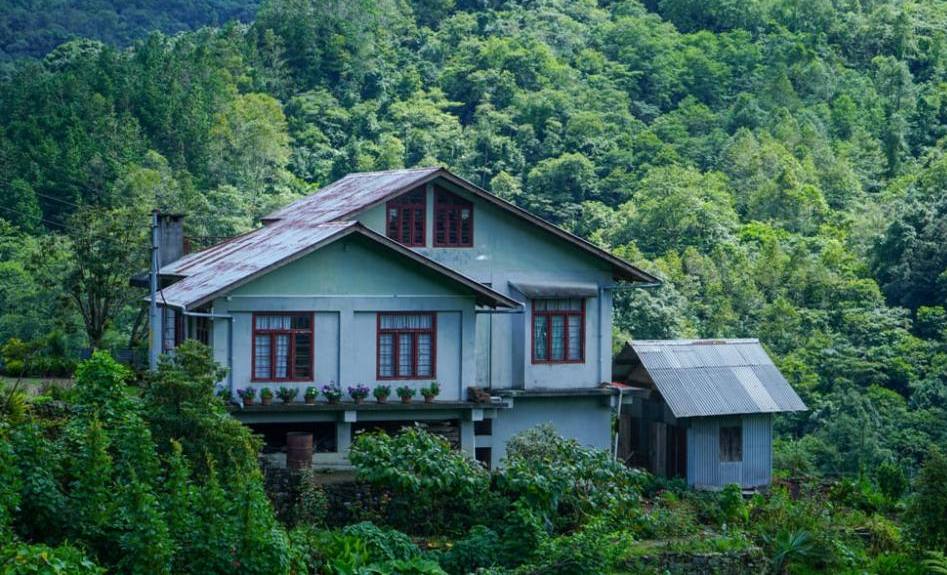
Homestay standards: To qualify as a registered homestay, families must meet basic hospitality standards — clean accommodation, adequate bathroom facilities, and home-cooked meals. NEIDA provided training in hospitality management, housekeeping, English language, cooking, and accounting to participating families.
| The ‘Self Payment Counter’: On the road to Dzuleke village, vegetable stalls operate without shopkeepers. The price is written on a card. A locked box accepts payment. No one steals. This detail — documented by multiple visitors and cited in academic research on the village — is the most concise possible description of the community’s character. It is not an exhibit; it is how Dzuleke works. |
The Wildlife of Dzuleke Forest
Blyth’s Tragopan
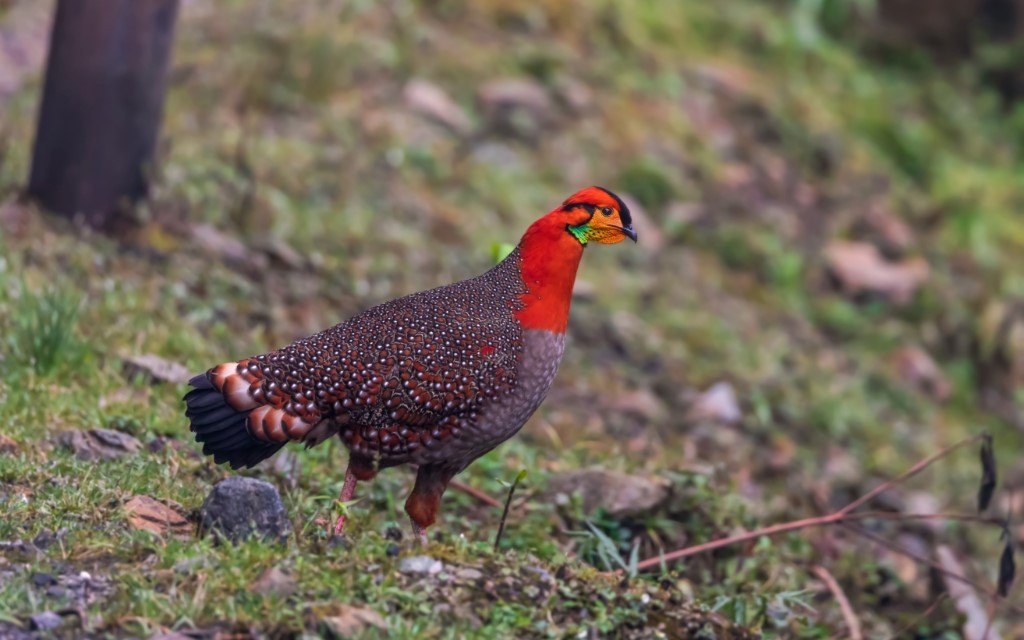
The Blyth’s Tragopan (Tragopan blythii) — Nagaland’s state bird, one of Asia’s most spectacular pheasants — is the centrepiece of Dzuleke’s wildlife recovery. The male is extraordinary: crimson and orange body plumage, pale spots, a vivid blue-and-red facial skin that inflates during display, and a call that carries through the forest on still mornings. Before the 1999 hunting ban, the Tragopan was regularly hunted for food. It is now a forest presence that can be heard — and on patient early morning walks, seen — throughout the village’s protected forest.
- Best sighting: early morning (5:30–7:30 AM) on the forest trails north of the village
- The Tragopan is most vocal from February to May — the pre-breeding season
- Classified as Vulnerable by the IUCN; the Dzuleke population is a conservation success story
- Local guides will position you for sightings based on current bird locations
Stump-Tailed Macaque and Barking Deer
The stump-tailed macaque — a large, unusual-looking primate with a reddish face, stocky build, and very short tail — is present in the Dzuleke forest along with the barking deer (Indian muntjac). Both species benefit from the hunting ban. Barking deer are most commonly heard at dusk — their sharp, dog-like bark carries across the valley as an alarm call.
Mountain Bamboo Partridge and Other Birds
The forest supports an excellent diversity of forest birds beyond the Tragopan. The mountain bamboo partridge, multiple warbler species, laughingthrushes, and sunbirds have all been recorded. Butterfly diversity is also exceptional — the protected forest supports a population of rare montane butterfly species that attract specialist naturalists.
What to Do in Dzuleke
- Guided forest trek — The primary activity; follow a trained local guide into the community forest for bird and wildlife watching; 2–4 hours; best started before 6 AM
- Village walk — The village itself is small enough to walk in 30 minutes; stone walkways, traditional Angami houses, the self-payment vegetable counters, and the community’s daily life
- River picnic — The Dzuleke River has designated picnic areas where it is audible and accessible; the sound of the river in the forest is one of the finest natural sounds in the Kohima district
- Bird and butterfly watching — Multiple day circuits with specialist guides; the butterfly diversity alone is sufficient reason for naturalists to spend 2–3 nights
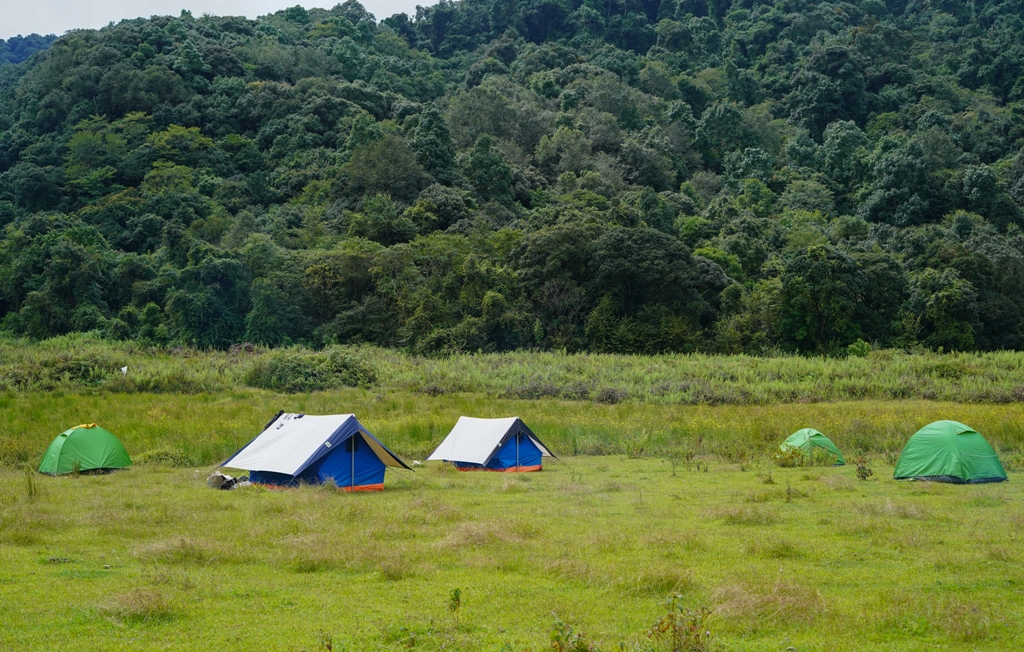
- Camping — Basic camping facilities within the forest; arrange through the DETB
- Treehouse — A treehouse was constructed during the COVID lockdown period (2020) as a community project; available for stays through the Eco-Tourism Board
- Bhoot Jolokia challenge — The ghost pepper grows abundantly in and around Dzuleke; for those willing, the local guides offer what has become a characteristic visitor experience
Dzuleke Homestay Experience
Staying in a Dzuleke homestay is the destination’s defining experience. The homestay families cook meals with organic produce — vegetables from terraced fields, meat from community-raised livestock, forest herbs. The Angami Naga food tradition of the Kohima district (smoked meat, fermented bamboo shoot, sticky rice, local greens) is what you eat; the family dining table is where you eat it.
- ₹500–₹1,200 per person per night including meals (rates set by the DETB rotation)
- No mobile signal in the village — carry a charged power bank and download offline maps before arrival
- The only social infrastructure is the homestay, the church, and the forest — this is the experience
How to Reach Dzuleke Village
- From Kohima: 40 km; approximately 2 hours by road via the Kohima–Khonoma road. The last section is village road.
- Via Khonoma: Khonoma village (10 km from Dzuleke; India’s first green village) is a convenient first stop on the same route.
- By shared taxi: Shared taxis from Kohima in the direction of Mokokchung pass near Khonoma junction; local transport from there to Dzuleke
- Private taxi: Most efficient; approximately ₹1,500–₹2,500 from Kohima for a full day hire
Best Time to Visit
- October to March: Best overall; clear forest conditions; excellent birdwatching; cool but comfortable temperatures
- February to March: Pre-breeding season; Tragopan most vocal; Sekrenyi festival in February at nearby Angami villages
- June (paddy planting): Agro-tourism season — visitors can participate in paddy field planting
- July to September (monsoon): Wild berries ripen on the roads (especially August); forest intensely green; trails can be slippery; leeches active on trails — gaiters/leech socks essential
