




The Adi are among Arunachal Pradesh’s largest indigenous communities. The name “Adi” means “hillman” or “mountain dweller” and was adopted after Independence to replace the colonial-era term “Abor,” which had been imposed by the British. Today, the Adi comprise several sub-groups spread across the Siang Valley and surrounding hill districts.
Aalo, renamed from Along in 2006, serves as the headquarters of West Siang district and the cultural centre of the Galo people, a major Adi sub-group. Set at the confluence of the Sipu and Siyom rivers and surrounded by forested hills and orange orchards, the town occupies a strategic position between the Brahmaputra plains and the Eastern Himalayas.
Aalo also holds a special place in Arunachal Pradesh’s cultural history. In August 1968, local intellectuals gathered here to launch the Donyi-Polo revival movement, an effort to preserve and strengthen the indigenous faith centred on the Sun (Donyi) and Moon (Polo). The movement would become one of India’s most significant indigenous cultural revivals.
For travelers, Aalo is far more than a district headquarters. It is the essential gateway to West Siang and the remote valleys beyond, including Mechuka. Whether arranging transport, exploring Galo culture, or preparing for the mountain journey ahead, Aalo is the natural starting point for deeper exploration of the region.
Quick Facts About Aalo (Along)
| State | Arunachal Pradesh |
| District | West Siang |
| Former Name | Along (renamed Aalo in 2006) |
| Altitude | 300 metres (980 feet) |
| Location | Confluence of Sipu and Siyom (Yomgo) rivers |
| Primary Tribe | Galo (sub-group of Adi); also Adi Minyong, Adi Padam |
| Distance from Pasighat | 105–106 km; approximately 5 hours by road |
| Distance from Mechuka | 180 km; approximately 7–8 hours by road |
| ILP Required | Yes — Arunachal Pradesh ILP |
| Best Time | October to April |
| Festivals | Mopin (April, Galo); Yomgo/Solung (September) |
| Sumo Counter | Aalo Sumo Stand — book Mechuka-bound Sumos the evening before or early morning; separate ticket from Pasighat/Likabali Sumos |
| Accommodation | Hotel Donyi Polo Regency; government circuit houses; basic guesthouses in town |
Understanding Aalo (Along): The Cultural Epicenter of the Galo Tribe
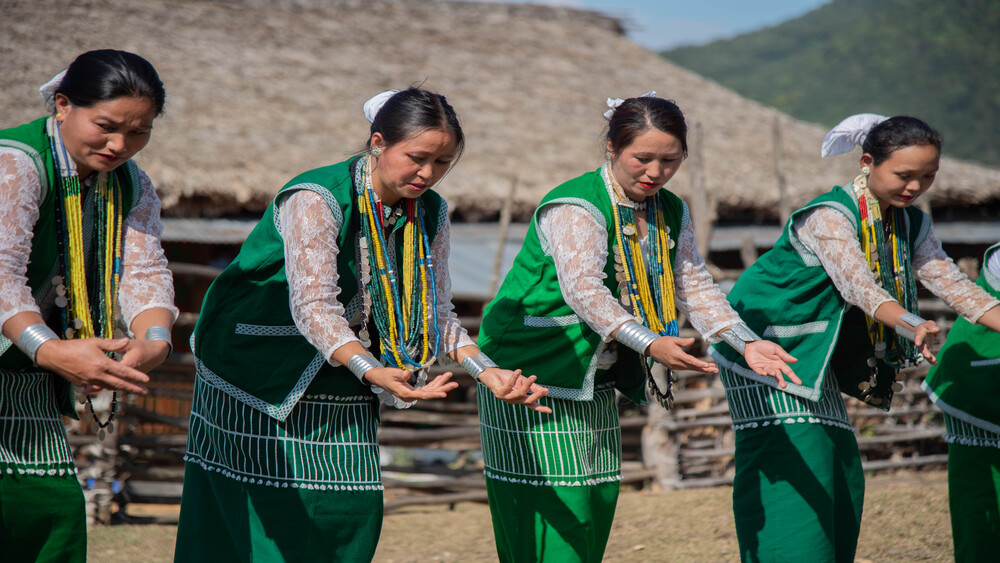
The Galo people are one of the principal sub-groups of the Adi ethnic family of Arunachal Pradesh. Aalo serves as their cultural and administrative heartland: the Galo Welfare Society, multiple Donyi-Polo institutions, traditional village councils (Kebang), and the region’s most accessible examples of longhouse architecture are all concentrated here. Galo identity is embodied in distinctive material culture, including the traditional woven Gale skirt worn by women — a hand-loomed garment in black and red patterns that has become one of the most recognised markers of Galo tribal dress. Travelers interested in Galo tribe traditional dress, the Gale, can find weavers at work in Kazu Village (2 km from town) and examples in the local market.
The Donyi-Polo Faith — Born in Aalo
The Donyi-Polo religion — centred on the worship of Donyi (the Sun) and Polo (the Moon) — is the indigenous animist faith of the Adi, Galo, Nyishi, Tagin, and related Tani peoples of Arunachal Pradesh. It predates any organised religion in these hills; its rituals, prayers, and cosmological understanding were transmitted orally through generations by priests (Miri in Adi), oral poets, and village elders.
By the 1960s, Christian missionary activity and Hindu nationalist organisations were converting significant numbers of Adi and Galo community members. Talom Rukbo (1937–2001) — an Adi man who graduated from St Edmund’s College, Shillong in 1960, served as a language officer in the state government, and took early retirement in 1972 to devote himself to the movement — became the primary organiser of the revival. At the landmark 1968 meeting in Aalo, the community resolved to build a Donyi-Polo Dere and begin formally preserving the tradition.
The Central Donyi-Polo Dere: A Living Indigenous Faith in Practice
The Central Donyi-Polo Dere in Aalo — established in 1972, making it the first and most historically significant of the over 400 Donyi-Polo community centres across Arunachal Pradesh — is not merely a monument to a revival movement. It is a large, formalized community prayer hall where community members gather for organized congregational prayers on specified days, complete with specific altars honoring the Sun (Donyi) and Moon (Polo). Unlike the un-institutionalised, village-elder-led practices of earlier generations, the Dere architecture represents a deliberate act of cultural self-determination: giving indigenous faith the same institutional permanence as the churches and temples that were competing for converts.
| The Donyi-Polo revival is one of India’s most successful indigenous cultural movements. Officially recognised as a distinct religion in the 2011 Census, it has about 1.5 million followers in Arunachal Pradesh. The Central Donyi-Polo Dere in Aalo, where the revival began in 1968, remains its most important site. |
The Galo Longhouses — Architecture Without Nails
The Galo community builds their traditional longhouses — the Mosup — without a single metal nail. The entire structure, often 30–50 metres long and raised on timber stilts, is assembled using interlocking timber joinery, bamboo lashing, and precise carpentry refined over generations. The longhouse serves as a community gathering space as well as a family residence, with the central fire the social and spiritual heart of the building.
Visiting a traditional Galo village near Aalo — Kazu Village, 2 km from the town centre, is the closest and most accessible — provides a direct encounter with this architectural tradition. The Dere, the community hall where village councils (Kebang) meet to make collective decisions, is another distinctive architectural element: every Adi/Galo village has one, and the quality of its construction reflects the community’s civic pride.
Top Things to Do in Aalo, Arunachal Pradesh
1. Crossing the Hanging Cane Bridge at Kabu Village
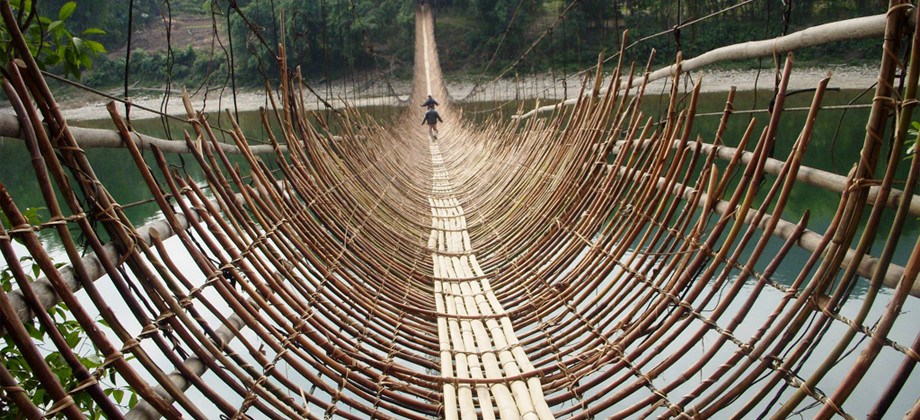
One of the most remarkable — and most overlooked — experiences near Aalo is the traditional cane suspension bridge at Kabu Village over the roaring Siyom River. Constructed entirely of woven cane and bamboo using techniques passed down through generations of Adi craftspeople, this bridge is a major cultural and visual landmark: locals still use it daily, crossing while balancing heavy loads in the baskets carried on their backs in the traditional Adi manner. The contrast of the organic, hand-woven structure against the turbulent Siyom below makes it one of the most photographed and most viscerally memorable sights in West Siang. Do not confuse this with the iron Patum Bridge; the Kabu cane suspension bridge is a separate, entirely traditional structure.
2. The Central Donyi-Polo Dere: Witnessing a Living Indigenous Faith
The founding site of the Donyi-Polo revival; open to respectful visitors. The prayer hall’s specific altars honouring Donyi (Sun) and Polo (Moon) and the structured congregational worship practice — a deliberate contrast to the informal village practice of earlier generations — make a visit here one of the most intellectually and emotionally resonant experiences available in Arunachal Pradesh. Come with genuine curiosity and respect; ask before photographing.
3. The Patum Iron Bridge and Siyom River Panoramas
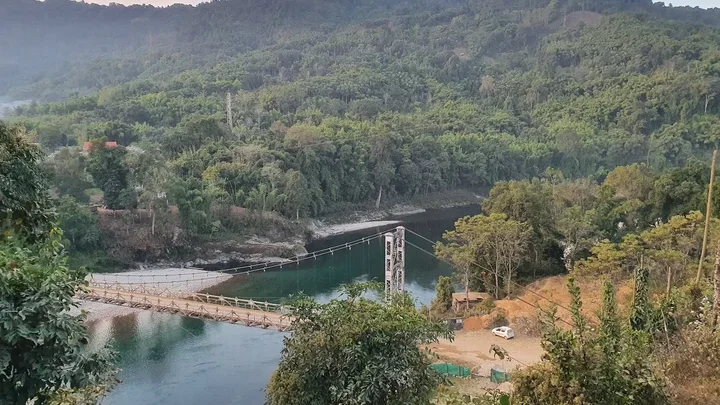
The Patum Iron Bridge — 146 metres long across the Siyom River, approximately 4 km from the main town — is one of Aalo’s most photographed landmarks, offering dramatic views of the river gorge below and the forested hills above. The bridge is a functional piece of infrastructure as well as a scenic viewpoint. Note: the Siyom valley is currently subject to major hydroelectric development (see infrastructure context below); seasonal water levels and river clarity fluctuate as a result, and the panoramas from the bridge may vary depending on construction activity upstream.
4. The Aalo Daily Market — Authentic Galo Commerce
The Aalo Daily Market is the epicentre of authentic Galo commercial and social life. Arriving in the morning, travelers encounter a functioning indigenous marketplace where bamboo shoots (both fresh and fermented), smoked fish, locally foraged herbs, traditional woven Gale skirts, and a range of Adi forest products are traded alongside everyday provisions. This is not a curated craft market — it is a living, working daily exchange that happens to be extraordinary for outsiders. Searches for “Galo tribe traditional dress Gale” often lead here.
5. Kazu Village — Adi Tribal Life
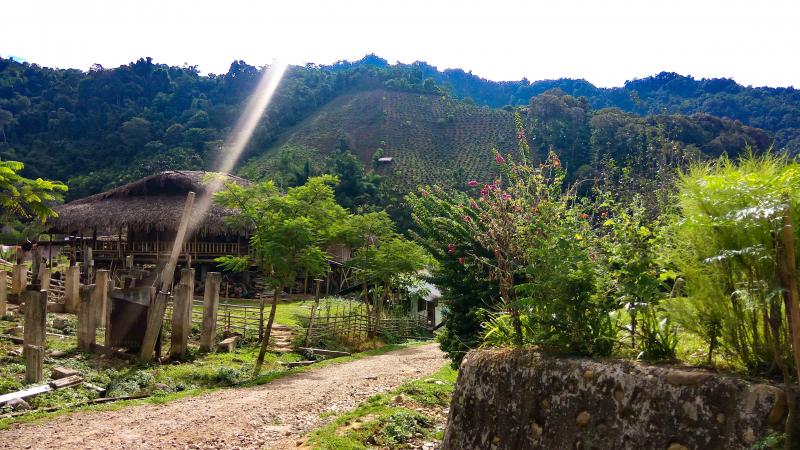
Kazu Village, 2 km from Aalo town centre, is the hub of native Adi community life most accessible to visitors — a settlement where traditional Galo longhouse architecture, Donyi-Polo practice, weaving, and community social organisation are all observable within a 20-minute walk.
6. Mechuka — The High-Altitude Culmination (180 km North)
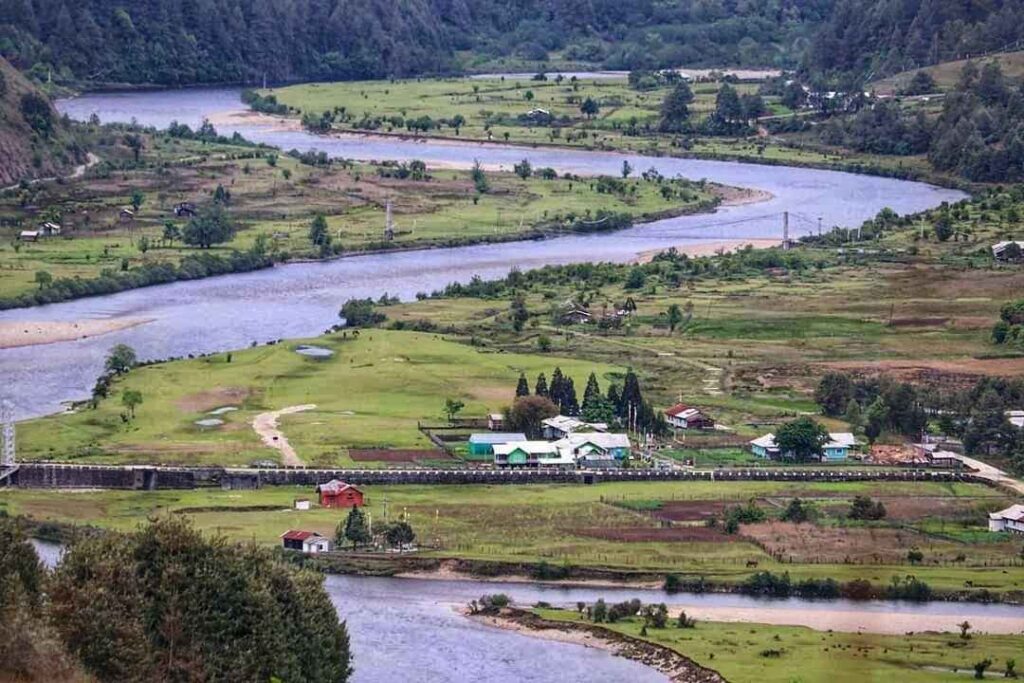
Mechuka (Menchuka), 180 km north of Aalo, is one of Arunachal Pradesh’s most spectacular and least visited destinations — a Buddhist Himalayan hamlet at 6,000 feet above sea level, 29 km from the Indo-Tibetan border, with the 400-year-old Samten Yongcha Monastery as its cultural centrepiece. For full logistics, see our dedicated Mechuka Travel Guide.
The Mopin Festival: Celebrating the Galo Calendar in April
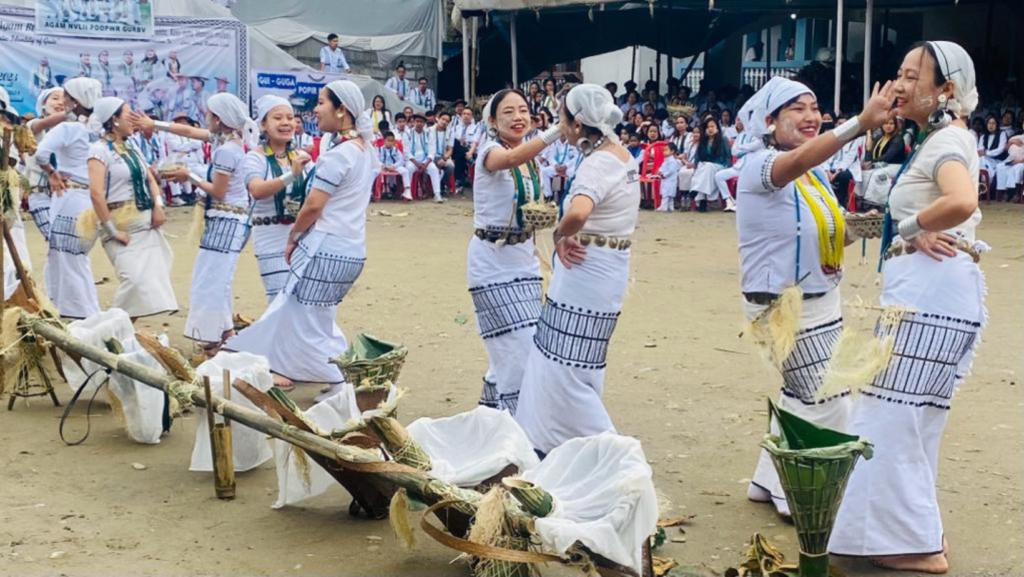
Celebrated by the Galo community in early April, Mopin is one of Arunachal Pradesh’s most vibrant tribal festivals. Marking the start of the agricultural season, the festival centres on prayers for prosperity, good harvests, and protection from misfortune. Rituals are led by the Mibu (priest) and accompanied by apong (rice beer), traditional foods, and the graceful Ponung dance.
The most distinctive feature of Mopin is the application of Ette, a white rice paste placed on the faces of family, friends, and visitors. Far more than a festive gesture, Ette symbolizes blessings, prosperity, and protection from evil spirits. Travelers attending Mopin are often included in this ritual and should receive the blessing respectfully.
Festival highlights include:
- Ponung dance — women in traditional Galo attire perform synchronized circular dances accompanied by folk songs.
- Ette application — the festival’s central blessing ritual, symbolizing prosperity and well-being.
- Mithun sacrifice — a traditional ceremonial practice involving Arunachal Pradesh’s most culturally significant domesticated animal.
- Community celebrations — shared meals, rice beer, music, and social gatherings that bring villages together.
Mopin remains a community festival rather than a tourist performance. Visitors who attend with respect, cultural sensitivity, and local guidance are generally welcomed into the celebrations.
The Siyom Valley & Hydroelectric Context: What Travelers Should Know
The Siyom River, which defines Aalo’s landscape, is both one of Northeast India’s most scenic rivers and one of its most debated. The wider Siang Valley—of which the Siyom is a tributary—hosts several existing and proposed hydroelectric projects, including developments around the Siyom Hydro Project. These projects are gradually reshaping parts of the valley, influencing seasonal water levels, river clarity, and rafting conditions.
If you plan to raft or kayak on the Siyom, check current conditions with local operators before arrival. Water levels and visibility can vary significantly due to construction activity, dam operations, and seasonal weather patterns. As a result, the crystal-clear turquoise waters often seen in older photographs may not always reflect present-day conditions. This is not a reason to skip Aalo—only a reminder to rely on up-to-date local information rather than outdated travel guides.
How to Reach Aalo: Detailed Train, Road, and Air Logistics
By Road from Pasighat: 105–106 km; approximately 5 hours via the Siang Valley Highway. The highway has seen significant widening improvements in recent years. Travelers coming from Dibrugarh or Guwahati typically pass through Pasighat en route.
From Likabali to Aalo: Likabali (in Assam) is the road entry point for travelers arriving from lower Assam. The Likabali to Aalo road condition varies seasonally — the approach to Aalo from Likabali is generally manageable in the dry season but can be disrupted during the monsoon. Budget at least 3–4 hours for this stretch.
By Air: Pasighat Airport is the nearest airstrip with regular connections to Guwahati; 105–106 km from Aalo by road. Check IndiGo and Air India for current Pasighat-Guwahati schedules.
By Train: Silapathar Railway Station (Assam) is approximately 150 km; Murkongselek is another option at 130 km. From either railhead, hire a private vehicle or join a shared Sumo to Aalo.
| ⚠️ CRITICAL TRANSIT WARNING: The highway from Pasighat to Aalo has improved, but the Aalo–Mechuka stretch remains vulnerable to landslides, especially from May to September near the Siyom Hydro Project area. Carry extra cash, expect delays, and allow at least a 48-hour buffer before flights from Dibrugarh or Guwahati. |
Navigating the Aalo to Mechuka Route: The Ultimate Gateway Playbook
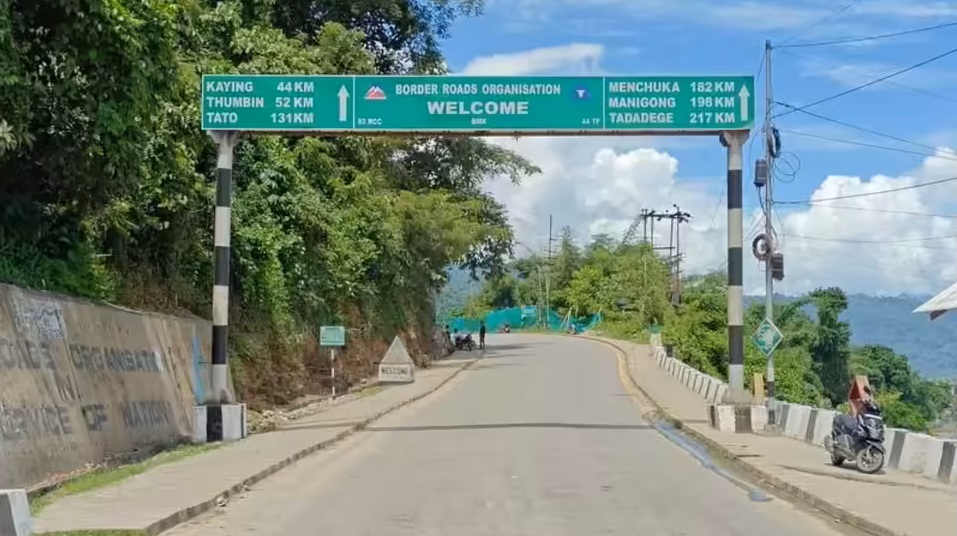
Aalo is the mandatory transit hub for Mechuka, and the logistics here deserve more granular attention than most travel guides provide. Travelers arriving from Pasighat or Likabali do not continue directly to Mechuka in the same vehicle. The shared Tata Sumos that run the Pasighat–Aalo or Likabali–Aalo route terminate at Aalo. A completely separate ticket must be purchased, and a new Sumo boarded, for the onward journey to Mechuka.
Step-by-Step Aalo Sumo Logistics
- Arrive in Aalo from Pasighat, Likabali, or Dibrugarh the previous evening if possible
- Evening or early morning: Go directly to the Aalo Sumo Stand and book your Mechuka-bound Sumo seat. Sumos to Mechuka fill quickly, and the departure is typically early morning (6–7 AM). Do not assume a seat will be available if you arrive at the stand on the day of travel without a prior booking.
- The 180 km Aalo–Mechuka route takes 7–8 hours on a good day. The road climbs steeply from the Siyom valley into the alpine terrain of Shi-Yomi district. Mountain driving conditions, narrow road sections, and seasonal landslide risk are all factors.
- Arunachal Pradesh ILP is required for all Indian nationals. A separate Mechuka Inner Line Permit or restricted area permit may also be required — verify current requirements with your operator or with the District Commissioner’s office in Aalo before departure.
- Searches for “Arunachal shared sumo fare Aalo” or “where to stay in Aalo West Siang” can be answered at the Aalo Sumo Stand and the local hotel cluster near the town centre.
| 💡 Insider Route Tip: The Pasighat–Aalo–Mechuka Tri-District Circuit. Plan your West Siang trip as a three-stage journey: Pasighat (lowland Adi culture), Aalo (the Galo cultural heartland and key transit hub), and Mechuka (a high-altitude Memba-Buddhist valley near the Tibetan border). Each offers a distinct cultural and ecological experience. Spend at least a full day in Aalo to arrange onward Sumo transport, visit the Central Donyi-Polo Dere and Kabu Village cane bridge, and explore the Aalo Daily Market before continuing to Mechuka. |
Best Time to Visit Aalo
- October to February: Best weather; river clarity generally at its best (subject to hydro project conditions); cultural calendar active; ideal for Kabu bridge and Siyom valley exploration
- April (Mopin Festival): The defining cultural experience of the Galo calendar; Ette blessing, Ponung dance, community gathering — the most immersive time to visit
- September (Yomgo/Solung): Another major Adi celebration with separate rituals and community significance
- May to September (Monsoon): Heavy rain; Siang and Siyom rivers flooding; landslide risk on Aalo–Mechuka road extremely high; avoid unless specifically planned for festival purposes
%20Travel%20Guide:%20Gateway%20to%20Mechuka,%20Galo%20Tribe%20Culture%20&%20the%20Siyom%20River)