




There is a morning every June in Sikkim when something shifts. Farmers wade into flooded terraced fields before sunrise; the air smells of wet earth and rain, and the Naumati Baja — a nine-instrument brass ensemble — starts playing across the valley. What follows is not a performance for visitors. It is the real thing: the actual planting of rice seedlings that will feed families through the year, surrounded by music, prayer, and a community that has been doing this same ritual for centuries. This is Asar Pandhra, and it is one of the most genuinely rooted agricultural festivals left in India.
Asar Pandhra 2026 falls on June 29, marking the 15th day of the Nepali month of Asar (Ashadh) — the fixed date when Sikkim, Nepal, and the Darjeeling hills collectively celebrate the commencement of the paddy planting season. If you have been looking for a travel experience that is the complete opposite of staged, this is it.
Quick Facts: Asar Pandhra
| Detail | Information |
|---|---|
| Festival | Asar Pandhra (also Asar 15, Ropain Festival, Assar Pandhra) |
| Date | June 29, 2026 (15th of Ashadh in the Nepali calendar) |
| Celebrated In | Sikkim, Darjeeling Hills, Nepal |
| Key Locations | Martam Village, Chota Singtam, Namchi (Sikkim) |
| Core Ritual | Ropain — collective transplanting of rice seedlings |
| Ploughing Method | Joru Gotnu — ox-drawn wooden plough |
| Traditional Food | Dahi Chewra Kera (curd, beaten rice, banana) |
| Traditional Music | Naumati Baja (nine-instrument brass ensemble) |
| Highway to Gangtok | NH10 (primary); NH717A via Lava–Gorubathan (monsoon alternate) |
| Organic Status | Sikkim is the world’s first 100% certified organic state |
Understanding Asar Pandhra: Sikkim’s Ancient Paddy-Planting Ritual
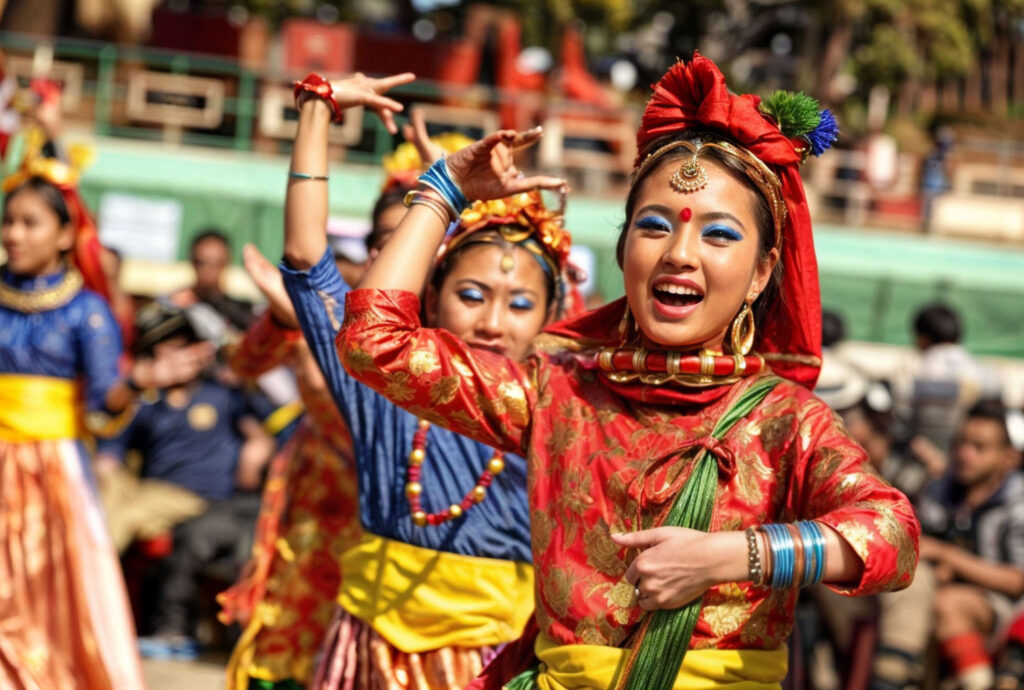
The name tells the entire story. “Asar” in Nepali refers to the months of June and July — the sowing season — and “Pandhra” means the fifteenth. Together: the fifteenth of Asar, the day when the paddy season formally begins across the Himalayan farming belt.
The date corresponds to the heart of the monsoon, when the rains have sufficiently saturated Sikkim’s terraced hillside fields and conditions are ideal for transplanting rice seedlings from nursery beds into the prepared paddies. In Nepal, the occasion is officially called Rastriya Dhanropai Diwas — declared National Paddy Day in 2004. In Sikkim, it carries equivalent cultural weight without the formal nomenclature. It is simply the day when everyone who farms does what farmers do: they go to the fields.
What makes Sikkim’s Asar Pandhra distinct from rice-planting celebrations elsewhere in South Asia is its organic purity. Sikkim is the first state in the world that is 100% organic: all farmland is certified organic, with a total ban on chemical fertilizers and pesticides, benefiting over 66,000 farming families. The mud you wade into at Asar Pandhra is completely clean — bio-rich, nourished solely by traditional compost and organic bio-manure. For eco-conscious travellers, that is not a minor detail. It means the soil you are putting your hands into has the biological complexity and microbial health that most of the world’s paddy fields lost decades ago.
The Cultural Anatomy of Asar Pandhra: Mud, Music, and Community
The Bhumi Puja: Blessing the Earth First
Before any ox enters the terraced mud, the village performs a Bhumi Puja — an earth-blessing ceremony at the main water inlet channel of the terrace. Offerings of local ginger, grain, and incense are made to appease the water and soil deities, asking that the crop remain free from disease. This is not a symbolic gesture; for communities that have farmed these hillsides for generations, beginning without the blessing simply does not happen. The ceremony is quiet, intimate, and one of the more affecting things to witness if you arrive early enough.
The Joru Gotnu: Ox-Ploughing and the Halo Tradition
Once the puja is complete, the fields are prepared using Joru Gotnu — the traditional method of ploughing rice paddies with pairs of oxen (goru) guided by a wooden plough (halo). Before the oxen enter the mud, they are meticulously decorated with flower garlands around their horns — an acknowledgment that the animals doing this work are not just farm equipment but partners in the community’s agricultural covenant with the land.
The person steering the halo is traditionally an experienced male elder; this role carries both technical and ceremonial significance within the village. The plough breaks and turns the flooded paddy silt in preparation for planting, and the sight of decorated oxen moving through terraced fields with the Himalayan hills behind them is the kind of image that stays with you.
The Ropain: Rhythmic Rice Transplanting by Hand
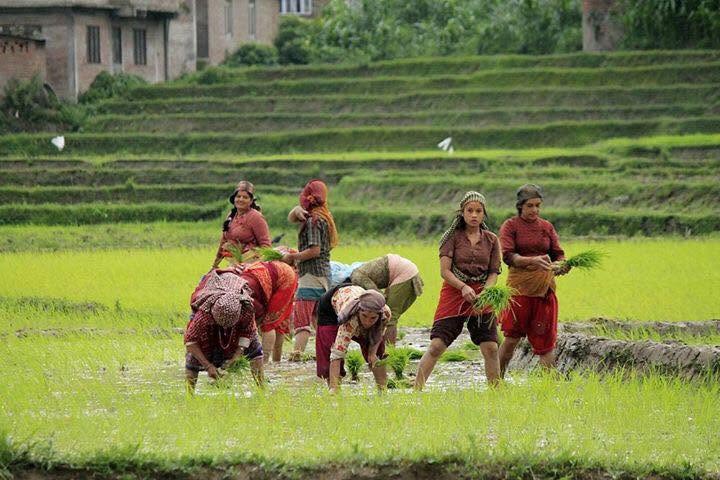
The ropain — the collective transplanting of rice seedlings — is the heart of the day. While the halo elder manages the ploughing, the transplanting itself is handled primarily by groups of women, moving in synchronized rows across the flooded terraces, pushing bundles of young green seedlings into the mud at regular intervals.
This is physically demanding work, bent at the waist in water that reaches the knees, and the Naumati Baja provides the rhythm that makes it sustainable for hours. The nine-instrument brass ensemble — a combination of drums, horns, and woodwinds whose sound carries across paddy fields in a way that no recorded music can replicate — has been the soundtrack to this labour for generations. Arriving at a field where the Naumati Baja is playing while rows of farmers transplant in the rain is one of the more immersive things you can experience in Northeast India.
In past decades, the inauguration of planting was accompanied by a lunch feast organised by the landowner for the assembled workers. This tradition of collective agriculture — where the community labours together on large plots and the host provides the meal — is still practised in Martam and Chota Singtam, though in modified form as farm sizes and labour dynamics have shifted.
What to Eat: Dahi Chewra Kera and the Farmer’s Meal
The time-honoured tradition of savouring Dahi Chewra Kera — curd, beaten rice, and banana — is eaten to this day. When served this meal on banana leaves by a local family, accept it with both hands as a sign of respect for the household’s hospitality. This is not a detail to overlook: in Nepali and Sikkimese etiquette, how you receive food matters as much as whether you eat it.
This is not festival food in the catered sense. It is the farmer’s meal — cooling, light, and exactly right after hours of planting in monsoon rain. The combination has been eaten in paddy fields across the Himalayan belt for generations, and its simplicity is the point.
In the evening, the community gathers around a bonfire for traditional music and folk dances. Many also visit the Gufa — the meditation caves used by Buddhist monks — acknowledging the Tibetan Buddhist spiritual tradition that overlays much of Sikkim’s cultural life alongside the older Nepali agricultural customs.
Asar Pandhra Gear & Etiquette Survival Guide
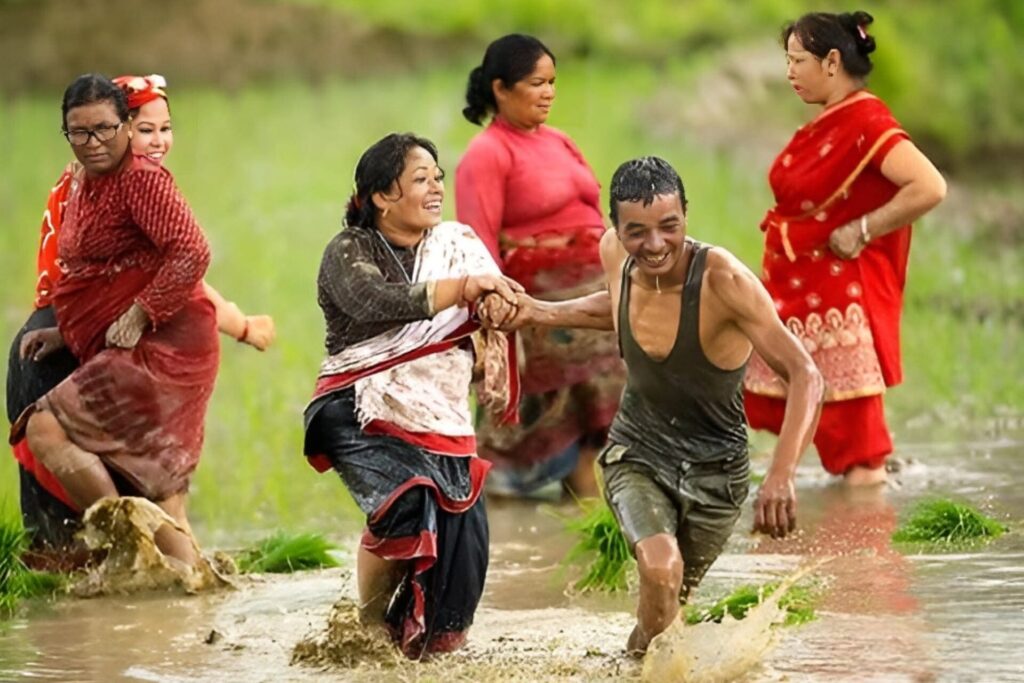
Because this is a living, working agricultural ritual — not a staged show — a few ground rules:
- Footwear: Do not wear expensive leather shoes or heavy hiking boots into the fields. Use lightweight rubber sandals or go barefoot like the locals to navigate the thick clay silt without getting stuck or damaging anything.
- Leech protocol: The organic terraced fields of Sikkim are full of active leeches (juga) during the June rains. Carry a small pouch of coarse salt or apply mustard oil to your feet and ankles before wading in. Both methods are used by local farmers themselves. Check your legs after leaving the fields.
- Camera protection: Heavy monsoon rain and flying mud from the Joru Gotnu ploughing can ruin phones and cameras within minutes. Use dedicated waterproof pouches or silicone rain sleeves — not zip-lock bags, which fail under sustained rain.
- Participate, don’t just observe: The farmers of Martam and Chota Singtam are genuinely welcoming. Ask permission to step into the mud and help plant a row of seedlings. It is considered an honour and a gesture of communal goodwill — far more meaningful than photographing from the stone retaining walls.
- Dahi Chewra Kera etiquette: Receive the traditional meal with both hands. Eat it from the banana leaf. Do not ask for a plate.
- Cash only: Martam and Chota Singtam have no reliable ATMs during the Asar Pandhra. Withdraw in Gangtok before travelling to the village.
How to Reach the Paddy Fields: Navigating NH10 During Monsoon Peak
Important: NH10, the main road between Siliguri (NJP/Bagdogra) and Gangtok, is frequently disrupted by monsoon landslides and road collapses.
For the June 29 Asar Pandhra festival, avoid travelling to Gangtok on the same day. Arrive by June 27 if possible and check NH10 conditions before departure. While the normal journey takes 3.5–4 hours, closures may force a 7–9 hour diversion via NH717A, often at double taxi fares.
From Gangtok, both Martam Village and Chota Singtam are less than an hour away, making festival-day travel easy.
Best Villages to Experience Asar Pandhra 2026: Martam vs. Chota Singtam
Martam Village is the most immersive option. Set in a valley of terraced paddy fields and traditional Sikkimese architecture 25 km from Gangtok, Martam’s Asar Pandhra celebration is among the most intact in the state. Homestays here are excellent — book directly through the village or via Sikkim Tourism at least 6–8 weeks in advance. Karma Martam Retreat offers structured guided immersion packages for Asar Pandhra , including the Bhumi Puja, Joru Gotnu, ropain planting, and evening cultural programme — their 2026 Asar Pandhra event runs July 2–6.
Chota Singtam in East Sikkim is the traditional site for the government-organised Asar Pandhra celebration, attended by the Agriculture Minister and senior officials who join local farmers in the actual planting. It is public, accessible, and representative of how Asar Pandhra operates at the state level. Good for visitors who want breadth and scale; Martam is better for depth and immersion.
Namchi in South Sikkim and Gyalshing in West Sikkim both host strong local celebrations with good road connectivity from Gangtok.
Extending Your Trip: Sikkim Beyond Asar Pandhra
June is an underrated month to be in Sikkim. The hills are intensely green, the rivers are full, and the state has a particular quality in the monsoon that disappears once the dry season arrives.
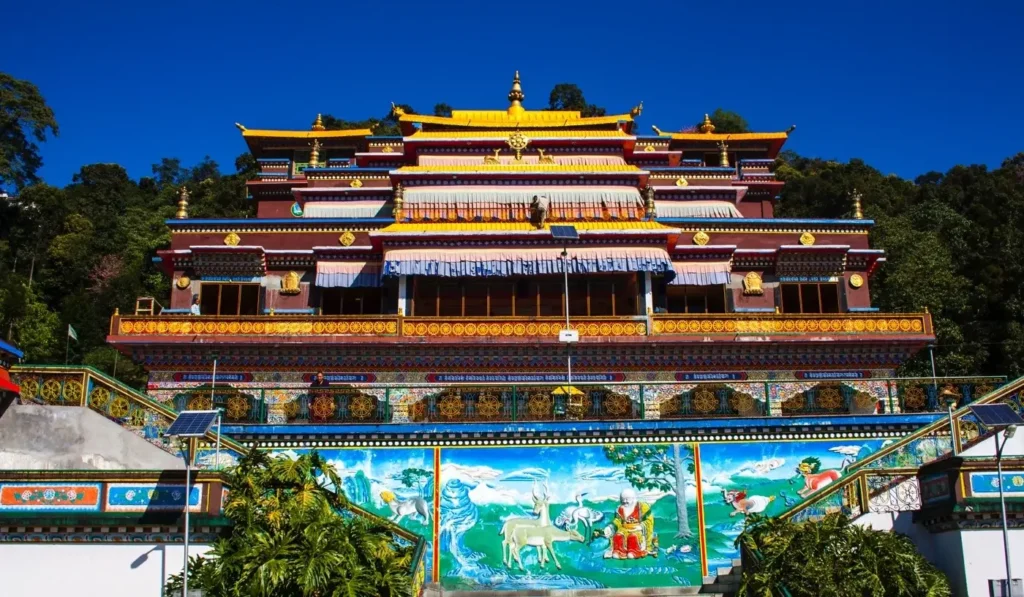
Rumtek Monastery (24 km from Gangtok) is one of the most significant Kagyu Buddhist monasteries outside Tibet. The Temi Tea Garden in South Sikkim — Sikkim’s only commercial tea estate — is extraordinary in the June monsoon flush. The Seven Sisters Waterfalls on the road north toward Lachen are at their most dramatic in late June and July.
Use the NE India Trip Planner for a wider Northeast itinerary, and the NorthEast India Connect Travel Permits guide for permit requirements if you plan to travel beyond Gangtok into North or West Sikkim.
Asar Pandhra will not offer you a pristine stage-managed experience. It will offer you mud, music, the smell of rain on terraced earth, leeches if you are not prepared, a detour via Lava if NH10 decides otherwise — and, if you let it, a community doing something ancient and essential. For travellers who find that more compelling than any ticketed festival, June 29, 2026 in Sikkim is worth building a trip around.
