




In a moment of immense pride for Assam and the entire Northeast region, the spectacular new terminal at Lokpriya Gopinath Bordoloi International Airport (LGBI Airport) in Guwahati has been selected among the world’s most beautiful airports for 2026 by the prestigious Prix Versailles — one of the most respected international architecture and design awards on the planet.
The recognition is not merely a feather in Guwahati’s cap — it is a powerful global acknowledgement that Northeast India is now producing world-class infrastructure rooted in indigenous cultural identity. The Prix Versailles jury, which evaluates commercial spaces across more than 100 countries, singled out LGBI Airport’s terminal for its exceptional fusion of contemporary architecture and Assam’s rich natural heritage.
What Makes the Terminal Truly World-Class?
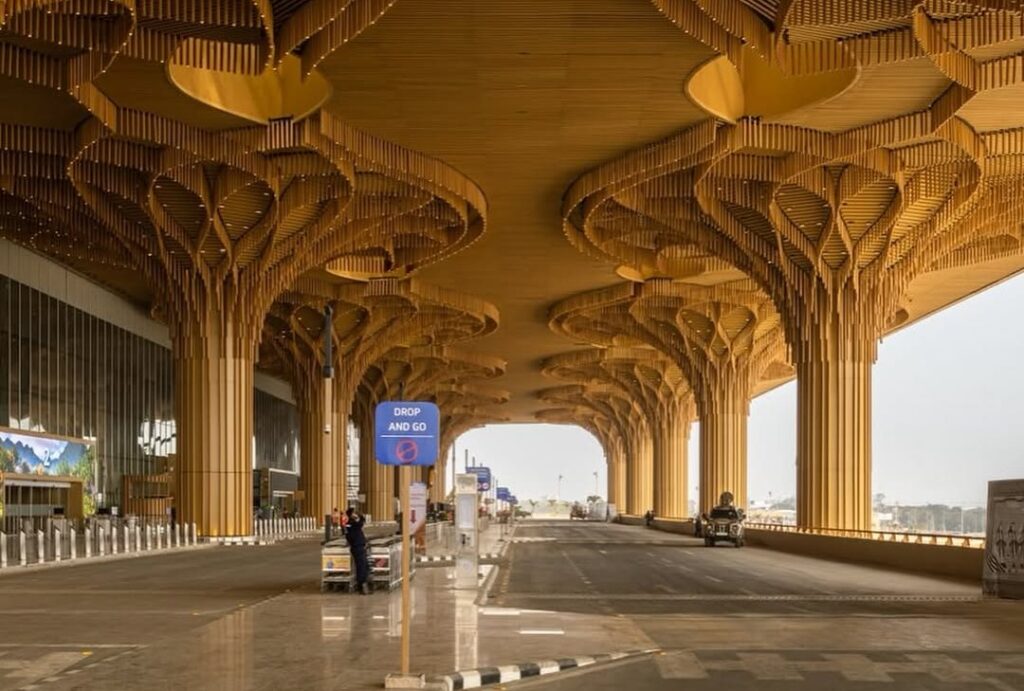
At the heart of the award-winning design is an architectural language drawn directly from Assam’s natural and cultural landscape. The terminal’s towering bamboo-themed columns fan out like a canopy of forest trees, creating an immediate visual identity that feels both monumental and deeply rooted in the region’s ecology.
The bamboo-inspired structural design — rendered in golden-hued materials that glow warmly under natural and artificial light — pays homage to Assam’s centuries-old tradition of bamboo craftsmanship, which underpins everything from traditional homes to Bihu festival decorations. Few airports anywhere in the world can claim a design philosophy this organically tied to its homeland.
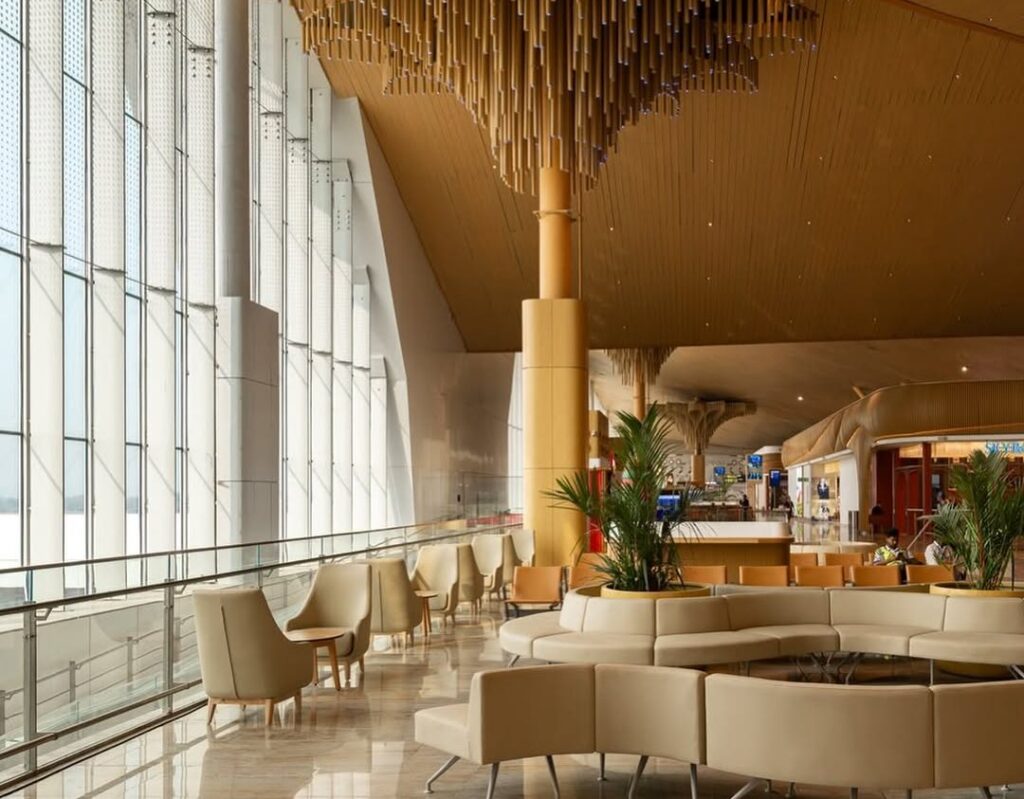
Beyond the iconic facade, the terminal incorporates nature-integrated spaces throughout, most spectacularly in the form of its indoor Sky Forest — a lush, living green space within the passenger terminal that blurs the boundary between built structure and the natural world. The Sky Forest offers travellers a moment of calm amid the bustle of a busy international airport, a rare and memorable architectural gesture.
About the Prix Versailles — The Architecture Oscar
The Prix Versailles is an international award established under the auspices of UNESCO and the United Nations. Each year it recognises the world’s most beautiful and innovative commercial spaces across categories including airports, hotels, shopping centres, campuses, and restaurants. To be named among the world’s most beautiful airports is to join a select global hall of fame — previous honourees have included iconic terminals from Singapore, Tokyo, and across Europe.
Guwahati’s inclusion in this company is a direct result of the vision behind the new terminal: that an airport in Northeast India need not look like every other glass-and-steel hub on earth, but can instead become a gateway experience — the first and last impression visitors carry of Assam.
A Milestone for Assam and Northeast India
For Assam and the broader Northeast region, the Prix Versailles recognition carries significance far beyond architecture. It places the state on an international map of design excellence at a time when the region is experiencing remarkable infrastructure growth, with major projects reshaping connectivity across the Seven Sisters.
LGBI Airport is already the primary aviation hub for Northeast India, handling millions of passengers annually and serving as the gateway for travellers arriving to explore Assam’s cultural richness, the Kaziranga National Park, the Brahmaputra river valley, and the wider Northeast. The global award will undoubtedly heighten international curiosity about the region as a travel destination.
The Airports Authority of India (AAI), which operates LGBI Airport, deserves credit for commissioning a terminal design bold enough to draw on vernacular identity rather than defaulting to generic modernity. The result — now globally celebrated — proves that regional culture and world-class infrastructure are not competing values, but deeply complementary ones.
What This Means for Guwahati’s Future
Recognition from an authority like Prix Versailles typically catalyses increased international attention — from tourism boards, airlines, and global travellers. For Guwahati, which has been steadily growing as a MICE destination (Meetings, Incentives, Conferences, and Exhibitions) and as the commercial capital of Northeast India, this moment could serve as a significant inflection point for inbound tourism and investment.
For the people of Assam, this is more than an award. It is validation of a living culture — one that began in bamboo groves and hand-loom looms, and has now found its way into an internationally celebrated work of contemporary architecture. Guwahati Airport is, without question, a source of pride for all of Northeast India.
