




Every community that has been in a land for long enough eventually designates a point of origin — a place that is the before, the root from which everything else grew. For a remarkable number of Nagaland’s tribes, that place is Khezhakeno. The village in the Phek district — situated at 1,660 metres above sea level, 48 kilometres from Kohima in the Chakhesang homeland — is held in the oral traditions of the Angami, Chakhesang, Lotha, Sümi, and Rengma tribes as the place where their ancestors settled after crossing into these hills from Burma and Manipur, and from which they eventually dispersed to their present territories across what is now Nagaland.
Today, Khezhakeno is not a ruin or a museum. It is a living village, inhabited by the Kozabomi — the people of Chief Koza who founded the original settlement — maintaining active customary relationships with distant communities through formal brotherhood pacts and traditional treaties. It is also the cultural anchor of the Southern Nagaland Heritage Circuit: a 3-day loop that takes in Angami villages, the Zuketsa pine ridge, and the highland town of Pfutsero.
Quick Facts About Khezhakeno Village
| State | Nagaland |
| District | Phek |
| Tribe | Chakhesang Naga (Khezha sub-tribe); Kozabomi |
| Altitude | 1,660 metres above sea level |
| Distance from Kohima | 48 km via NEC Viswema–Kidima–Zuketsa road; approx. 2.5–3 hours |
| Distance from Pfutsero | 23 km; approx. 1 hour (nearest sub-divisional HQ) |
| Population (2011) | 3,281 persons; 606 households |
| Historical Role | Ancestral origin village of Angami, Chakhesang, Lotha, Sümi, and Rengma Naga tribes |
| Key Sites | Tso-Tawo spirit stone; Chida Lake (Lowho); monoliths; Tribal Museum at Chida; Mihki footprint stone |
| ILP Required | Yes — Nagaland ILP mandatory for all Indian nationals; foreign nationals register at local police station within 24 hours |
| Best Time | October to April |
| Key Festival | Sekrenyi (February) — shared Chakhesang and Angami celebration |
| 📝 Nagaland ILP Requirements for Phek District All Indian nationals must carry a valid Nagaland Inner Line Permit (ILP) before entering the state. Checkpoints on the Kohima–Pfutsero road will audit these documents and turn back travelers without one. Foreign nationals must register at the local police station within 24 hours of arrival. Apply online via the Nagaland e-ILP portal or in person at Nagaland House offices in major cities. Do not proceed to Khezhakeno without one. |
Khezhakeno Village: The Ancestral Homeland of the Naga Tribes
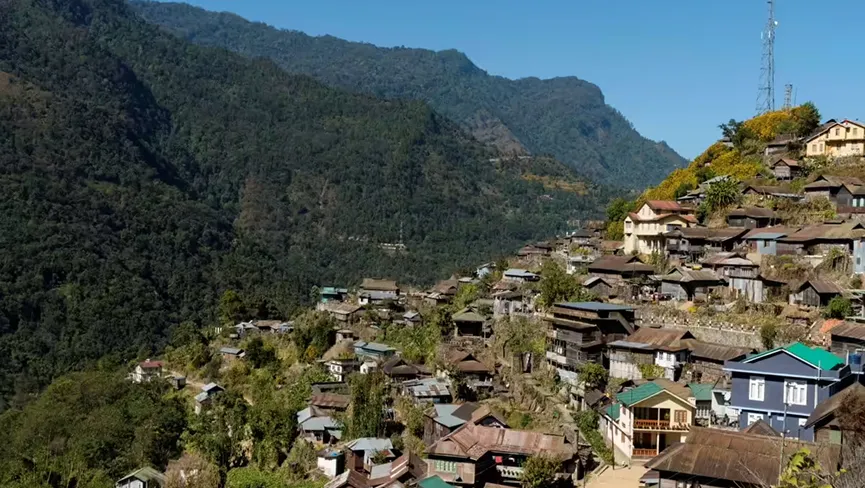
What is broadly consistent across the traditions of the Angami, Chakhesang, Lotha, Sümi, and Rengma is the role of Khezhakeno as a waystation of profound significance — a settlement where the proto-tribal communities stayed long enough to consolidate distinct identities before dispersing to their present territories. The migration from Burma/Myanmar through the valley of Imphal in Manipur and northward into the Naga Hills appears in multiple tribal oral histories as established fact; the specific route and timing vary, but the Khezhakeno connection is consistent across all traditions.
The divine sign of the walking stick: At Shajouba hill (near Tadubi, Manipur), the migrating group’s chief thrust his walking stick into the ground to seek divine guidance. The stick tilted northeast — toward what is now Nagaland. A swallow appeared and flew in the same direction. The group followed. This narrative of guidance by natural sign marks the moment of directional commitment to the hills.
The original Kozabomi: After the other tribal groups dispersed, those who remained were the Kozabomi — the people of Chief Koza, who founded the permanent settlement. Today’s Khezhakeno is still inhabited by the Kozabomi/Khezha Chakhesang, who maintain the deepest continuous connection to the site and its sacred objects.
The Sacred Legends of Khezhakeno: The Paddy-Multiplying Stone
The Tso-Tawo Stone and the Legend of the Dispersal
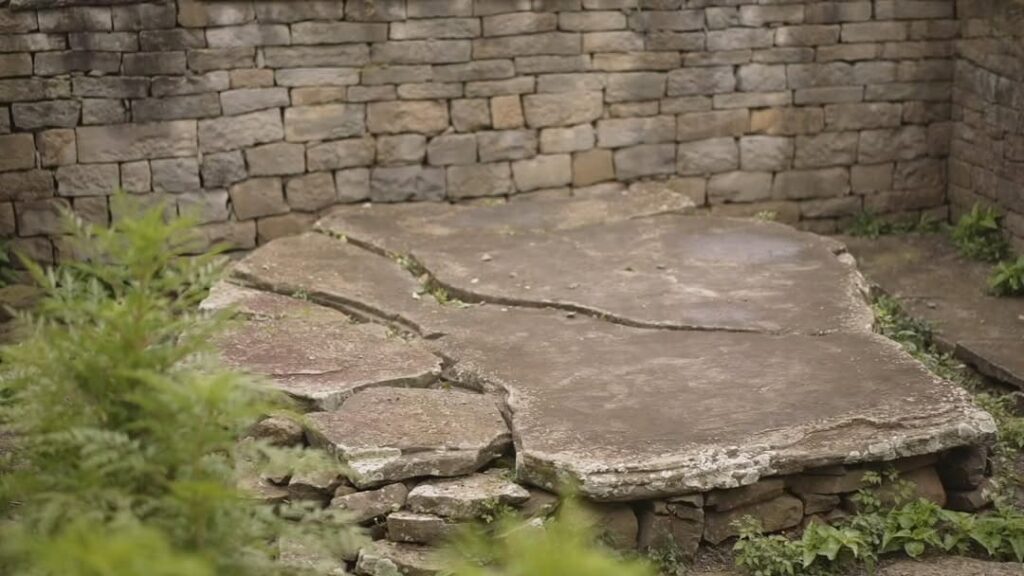
The most famous physical artefact at Khezhakeno is the Tso-Tawo — a large flat stone slab with an extraordinary legend attached to it. According to the tradition preserved here, a basket of paddy placed on the Tso-Tawo in the morning sun would double in quantity by evening. The stone’s power is believed to have been destroyed when it was burned — the precise circumstances unrecorded. What remains is the charred remnant, preserved in its original location: the ruin of a miraculous object that is itself a memorial to what the community once had.
Tourism Nagaland describes the Tso-Tawo as the significant first settlement site of Koza, the foremost Naga ancestral forefather — giving the stone not just miraculous but genealogical significance. It marks the exact place where the Naga ancestral story formally began.
| Visiting the Tso-Tawo: The stone’s location is known to all residents and readily pointed out. Approach with the same respect given to any sacred object in an active indigenous community — ask permission before photographing, and listen to the account that local guides provide. The stone is not spectacular to look at; its significance is entirely in the story. |
Top Things to Do in Khezhakeno and the Phek District
1. Standing at the Historic Tso-Tawo Stone Site
The Tso-Tawo site is the most historically charged location in Nagaland — the place where multiple tribes’ shared ancestral story formally began. A visit here is not a tourist attraction in the conventional sense; it is an encounter with the foundation myth of several million people. Combine it with a guided village walk to the Mihki stone — a footprint of a legendary figure engraved in rock, described by residents as evidence of the giant stature of the forefathers.
2. Walking the Pine Slopes of Chida Lake
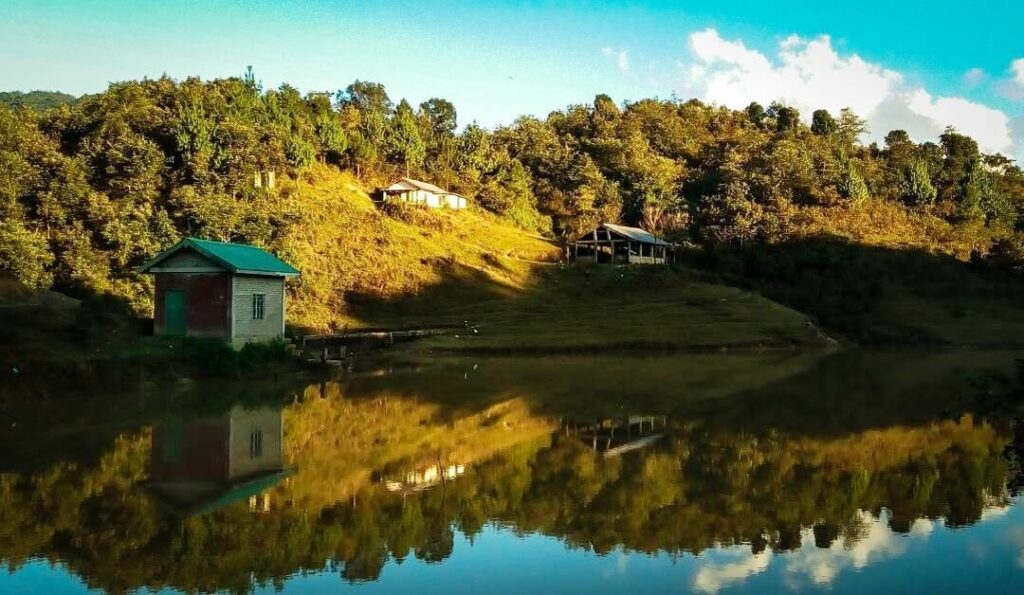
Chida Lake — also known as Lowho — sits on the pine-covered slopes near the Nagaland–Manipur state border, fed by springs of the Kapamedzü Range. Locals describe it as serenely calm, placed face-to-face with the sky. On clear days, the hills of Nagaland and Manipur are visible from its edge; in exceptional conditions, the Assam plains appear at the horizon. Critical logistics: There are no commercial shops or restaurants at the lakeside — pack all food and water from Pfutsero or Kohima. The Tribal Museum at Chida, inaugurated under India’s Ministry of Culture, houses Chakhesang artefacts and textiles and is worth an hour of your time.
3. Discovering the Living Customary Treaties of the Khezha People
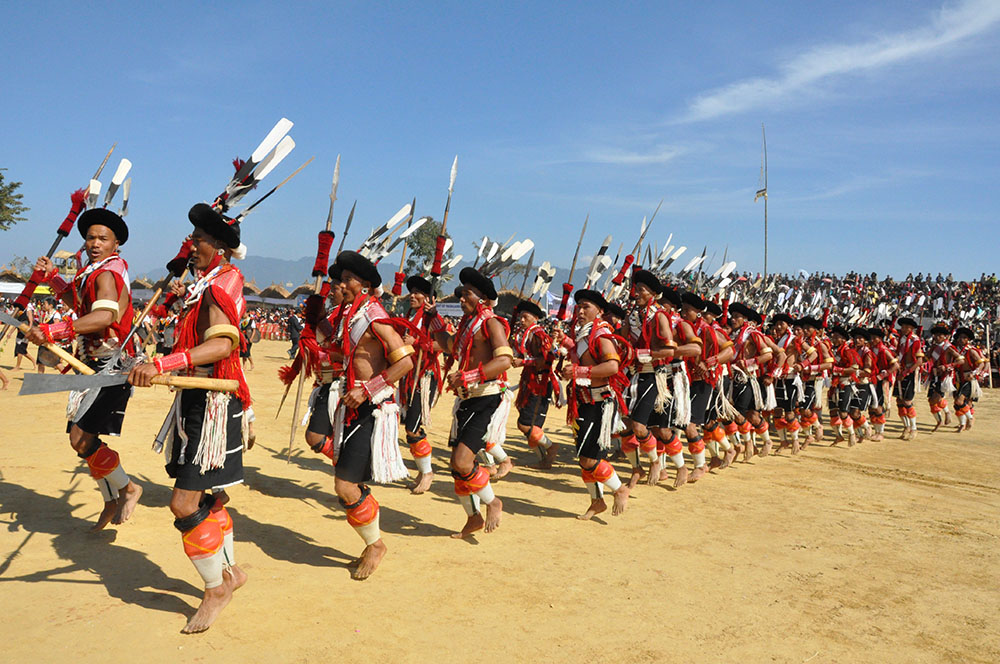
Khezhakeno is an active centre of customary governance. The Khezhakeno–Lazami brotherhood pact (2014, reaffirmed 2016) and an 89-year-old traditional treaty with Zhobumai (renewed 2016) are living examples of Naga customary law, demonstrating that the village’s role as an ancestral meeting point continues in practice. The Sekrenyi festival — held in February, shared with the Angami Naga — is the most important annual cultural event in the area; confirm the Sekrenyi festival dates in Nagaland for any given year with Nagaland Tourism. The Chakhesang are also renowned for their traditional handloom geometric patterns in deep reds, blacks, and yellows — available at village weavers and Pfutsero market stalls.
| ⚠️ CRITICAL TRANSIT & ROAD WARNING The NEC Viswema–Kidima–Zuketsa mountain road is exceptionally scenic but highly vulnerable. During the monsoon months (June to September), dense fog can reduce visibility to less than five feet and landslides can cut off the Zuketsa pass without warning. A 4WD vehicle is non-negotiable outside the dry winter window. Always begin your return drive to Kohima by 2:30 PM to avoid being caught on unlit mountain passes after dark. If the road is blocked, Pfutsero is the only reliable shelter. |
How to Reach Khezhakeno: Permits, Driving Routes, and Pitstops
ILP first: Obtain your Nagaland Inner Line Permit before departure. Checkpoints enforce Nagaland ILP requirements for Phek district at all regional entry points.
Also Read: How to Apply For Travel Permits for Traveling to Northeast India
From Kohima (48 km; 2.5–3 hours): Take the NEC Viswema–Kidima–Zuketsa road, passing through Angami villages before climbing to the Zuketsa junction.
Zuketsa Junction — essential pitstop: The highest point on this ridge — a chilly, pine-covered junction where vendors sell organic cabbage, local fruits, and hot tea. The road splits here; take the Pfutsero direction.
From Pfutsero (23 km; approx. 1 hour): Nearest town with ATMs and accommodation. The Pfutsero to Khezhakeno taxi fare for a private round trip is approximately ₹1,000–1,500.
Vehicle: 4WD strongly recommended; mandatory in and after monsoon.
Calculate your exact route distance with our Map Distance Calculator tool
| 💡 The Pfutsero Homestay Strategy Pfutsero is the highest inhabited town in Nagaland at over 2,100 metres — it gets intensely cold, particularly November through February. Look for community-run homestays that provide traditional wood-fired kitchen hearths (dais), which serve as both the primary source of evening warmth and the setting for authentic Chakhesang cultural interaction. Book in advance through Nagaland Tourism or Kohima-based operators. |
The Perfect Phek District Travel Circuit: Combining Kohima, Pfutsero, and Khezhakeno
The most rewarding way to visit Khezhakeno is as part of a 3-day Southern Nagaland Heritage Circuit moving logically from Angami cultural territory through the Zuketsa ridge into the Chakhesang heartland.
| When | Stop | What to Do |
| Day 1 AM | Kohima | War Cemetery; Angami heritage walk; local market |
| Day 1 PM | Kigwema / Viswema | Traditional Angami longhouses; morung culture |
| Day 1 Eve | Zuketsa Pass (en route) | Roadside tea; organic cabbage market; pine ridge views |
| Day 1 Night | Pfutsero — Base Camp | Highest town in Nagaland (2,100 m+); wood-fired homestay |
| Day 2 | Khezhakeno Village | Tso-Tawo stone; Mihki footprint; monoliths; Chida Lake picnic |
| Day 2 Eve | Return to Pfutsero | Overnight; sunset over Nagaland-Manipur hills |
| Day 3 | Pfutsero → Kohima | Depart by 9 AM; return via Zuketsa; arrive Kohima by noon |
| 💡 Insider Circuit Tip The Kohima → Kigwema/Viswema → Zuketsa Pass → Pfutsero → Khezhakeno → Kohima loop works because the geography is sequential — each stop is on the natural road south. Do not attempt Khezhakeno as a single long-day return from Kohima (96 km each way on mountain roads). One night in Pfutsero transforms this from an exhausting there-and-back into an immersive cultural journey. |
Best Time to Visit Khezhakeno
- October to February: Cool and dry; Sekrenyi festival in February; monolith and village walks most comfortable; clearest views from Chida Lake
- March to May: Spring; wildflowers in the hills; lush terraced fields beginning a new season; pine slopes at their most vivid
- June to September (Monsoon): Road conditions highly variable; dense fog and landslide risk on Zuketsa pass; not recommended for first-time visitors
