




The name alone tells you something. Lunglei comes from two Mizo words: lung (rock) and lei (bridge). Not named for a famous chief, a river, or a colonial administrator — but for a specific rock formation sitting over a stream in the valley below. The British found that arch unusual enough to name their entire South Lushai Hills administrative centre after it. The town grew; the name stayed. And the actual bridge of rock is still there, in the Nghasih stream, waiting to be visited.
Today, Lunglei is Mizoram‘s second-largest city, the headquarters of Lunglei District, and the primary hub for the state’s vast southern region. It sits at 1,222 metres (4,009 feet) at its ridge-top city centre — making it significantly higher than Aizawl’s 1,132 metres — perched on a spur of the Lushai Hills with forested ridges dropping away on all sides. Greenpeace India has documented Lunglei as the only Indian city with particulate matter levels under the WHO’s prescribed 20 µg/m³ threshold — a clean-air credential that feels viscerally real the moment you arrive. Most travellers pass through on their way to Phawngpui (Blue Mountain). That is a mistake worth correcting.
Quick Facts About Lunglei
| State | Mizoram |
| District | Lunglei District (HQ) |
| Status | Mizoram’s second-largest city |
| Name Meaning | Lung = rock/stone; Lei = bridge — named after a natural rock arch over the Nghasih stream |
| Altitude | 1,222 m (4,009 ft) at ridge-top city centre; river valleys below drop to ~700 m |
| Distance from Aizawl | 169–175 km south on NH306; approx. 5–6 hours by road |
| British History | Capital of British South Lushai Hills, 1889–1898 |
| Air Quality | Only Indian city with PM levels under WHO’s 20 µg/m³ threshold (Greenpeace India) |
| ILP Required | Yes — Mizoram Inner Line Permit (apply at mizoramilp.in) |
| Best Time to Visit | October to April |
The Origin of Ze-Mnui: Exploring the Literal Bridge of Rock
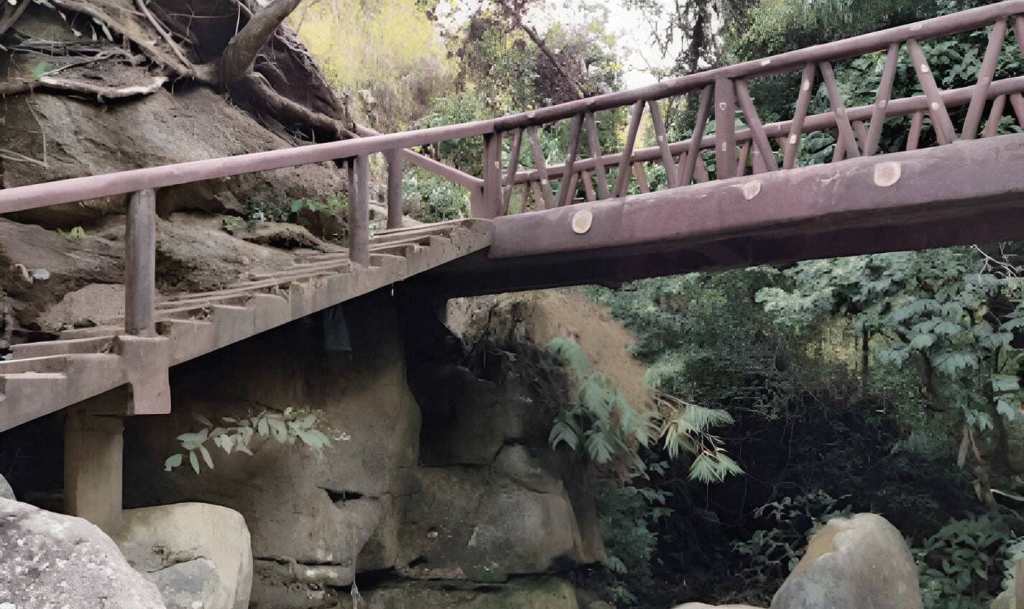
From 1889 to 1898, Lunglei served as the capital of the British South Lushai Hills district before the region was merged with the North Lushai Hills under Aizawl. Despite losing its capital status, Lunglei remained an important commercial and administrative centre, with road access only arriving in the 1950s.
The city is named after the Lung-lei, a natural bridge-like rock formation spanning the Nghasih stream below the town. About a 15-minute walk from the town centre, the site is a popular attraction and is best visited with a stroll along the riverside. Wear shoes with a good grip, as the rocks can be slippery.
Saikuti Hall: The Epicentre of Southern Mizo Art and Literature
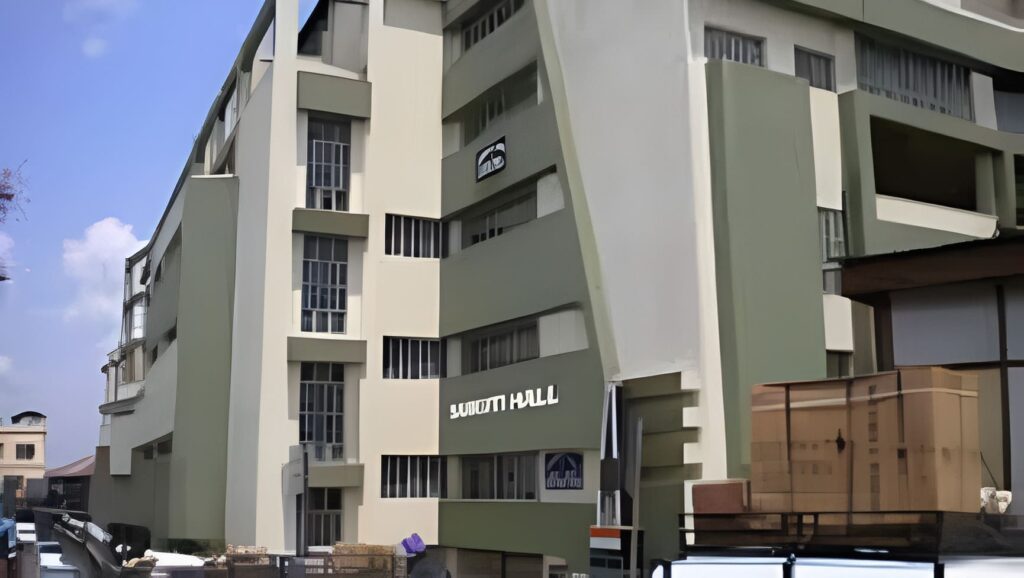
Saikuti Hall, named after renowned Mizo poet Saikuti (1877–1927), is Lunglei’s main cultural venue. It hosts traditional dance performances, music events, art exhibitions, and major community celebrations throughout the year. For visitors interested in Mizo culture beyond Aizawl, the hall offers an excellent introduction to the rich artistic and cultural traditions of southern Mizoram.
Colonial Footprints: Deconstructing the Myth of Thangliana Lung
Many travel guides incorrectly identify the Thangliana Lung Memorial. It does not honour a Mara chief but commemorates Captain Thomas Herbert Lewin, a British administrator known to the Mizo people as Thangliana, meaning “Man of Great Fame.” Lewin learned the Mizo language, married a Mizo woman, and helped negotiate a lasting peace treaty with Chief Rothangpuia, earning widespread respect.
The memorial recognises this unique chapter in Mizo history and Lewin’s role in the former South Lushai Hills administration. Memorials associated with him can also be found elsewhere in the district, including Tlabung.
Off the Beaten Path: The Enigmatic Buddha Engraving of Mualcheng
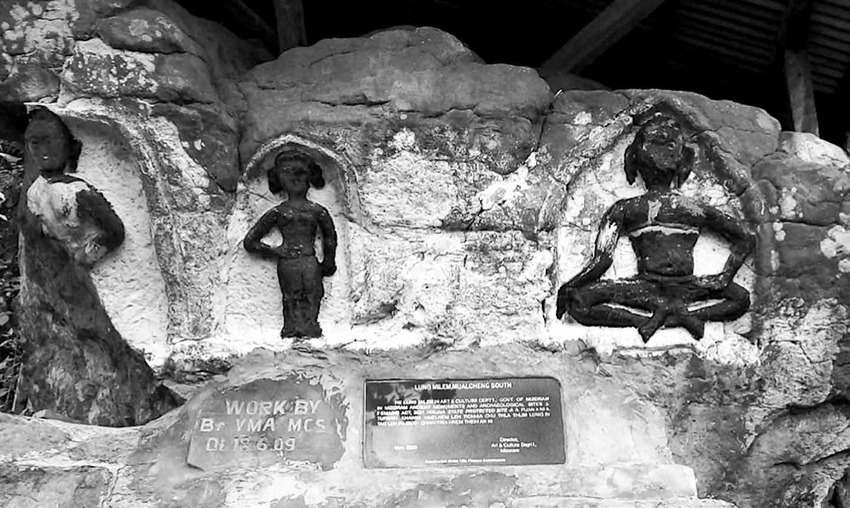
About 50 km southeast of Lunglei, near Mualcheng village, is a mysterious rock carving of Lord Buddha that remains unexplained. As noted by Mizoram Tourism, its origin, age, and artistic influences are still unknown, making it one of the state’s most intriguing archaeological sites. The journey passes through the forested hills of southern Lunglei and is best made in a 4WD vehicle or a hired Bolero, especially during or after the monsoon, when road conditions can be challenging
Southern Wilderness Circuits: Khawnglung and Thorangtlang Wildlife Sanctuaries
Lunglei is the logical base for two of Mizoram’s least-visited wildlife sanctuaries — both rewarding, both requiring advance planning.
Khawnglung Wildlife Sanctuary
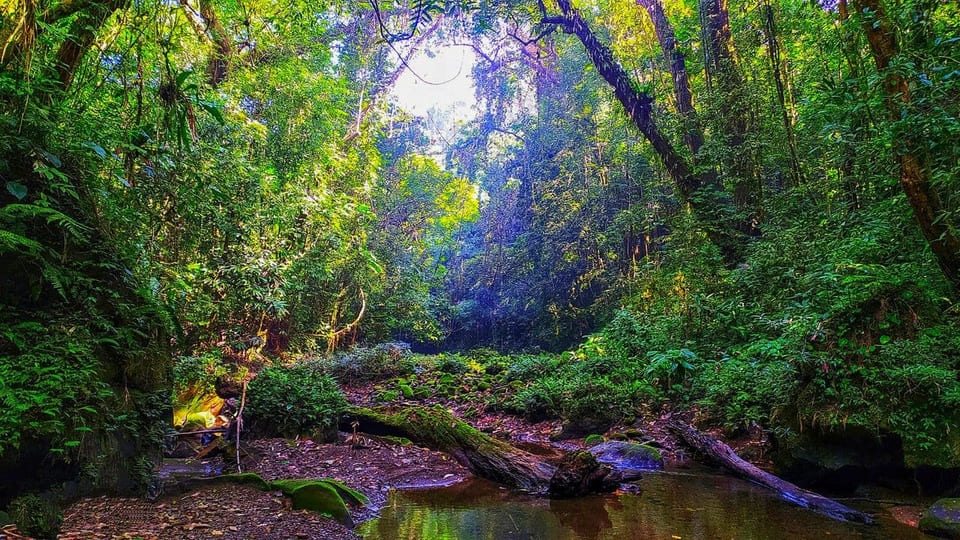
Approximately 35 kilometres from Lunglei town, the Khawnglung Wilflife Sanctuary covers 35 square kilometres of forested hills at up to 1,300 metres. The wildlife roster includes Hoolock Gibbons, Serow, Barking Deer, Sambar, Wild Boar, and Leopard. What distinguishes Khawnglung from similar sanctuaries elsewhere in the Northeast is the historical layer: the site of the ancient Mara dynastic capital — Khawnglung Village — sits within or adjacent to the sanctuary boundary, its ruins adding a dimension that pure wildlife visits lack. A local tracker is essential; hire one at the sanctuary entrance.
Thorangtlang Wildlife Sanctuary
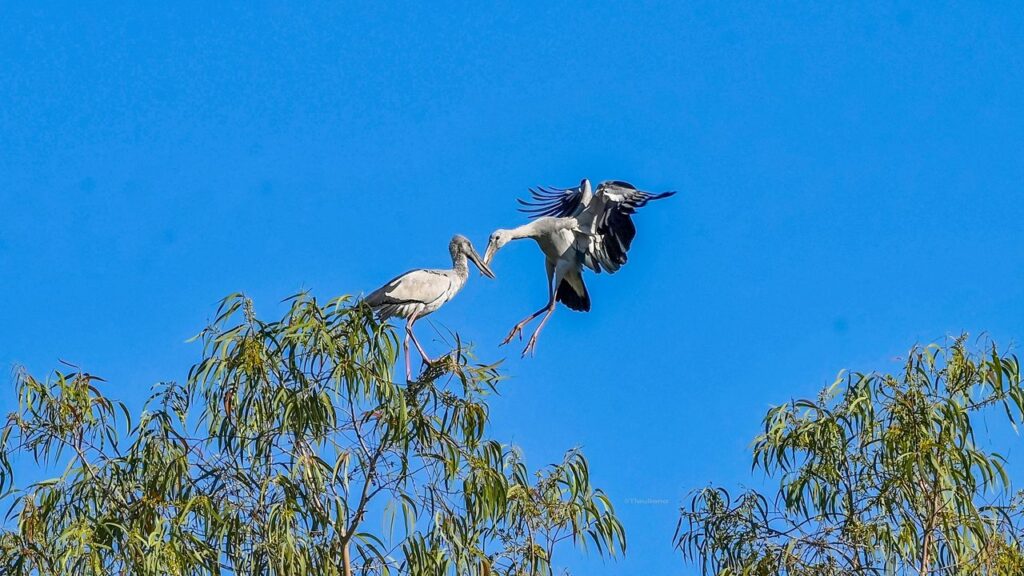
In the southern Lunglei district, Thorangtlang Sanctuary is less visited than Khawnglung but ecologically distinct — supporting Tiger, Leopard, Porcupine, Leaf Monkey, and a diverse birdlife assemblage in terrain that approaches the Myanmar border. Entry requires a forest department permit; arrange through the Lunglei District Forest Office before departure.
Attractions at a Glance: Distance & Logistics
| Attraction / Site | Distance from Lunglei | Primary Draw | Best Transport |
| The Rock Bridge (Lung-lei) | ~15-min walk / short drive | The exact geological arch that named the city | Walk from town; grip-soled footwear essential |
| Theiriat Tlang | 1 km from town centre | Grassy hillock with panoramic sunset ridge views | Auto-rickshaw + short walk |
| Buddha Image, Mualcheng | 50 km south-east | Unexplained ancient cliff-face rock engraving | Private 4×4 or hired Bolero jeep |
| Khawnglung Wildlife Sanctuary | ~35 km from Lunglei | Hoolock Gibbons, Serow, old Mara dynastic ruins | Permitted safari vehicle + local tracker |
| Thorangtlang Wildlife Sanctuary | South Lunglei district | Leopard, Tiger, Porcupine, Leaf Monkey | Hired jeep; forest dept. entry permit |
Lunglei Expedition Logistics: Pawan Hans Helicopter
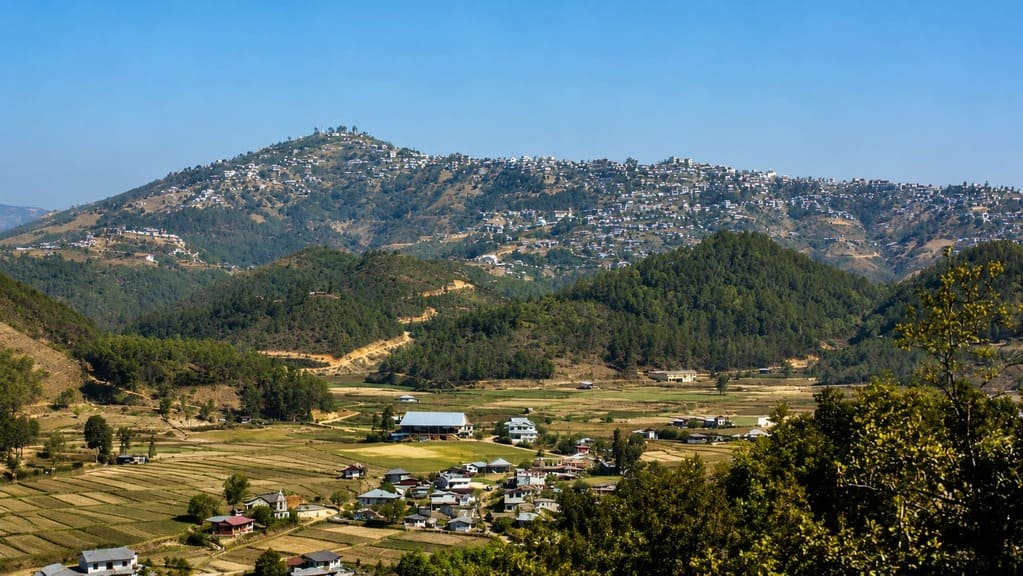
The Pawan Hans Helicopter from Aizawl to Lunglei
The road from Aizawl to Lunglei covers about 169–175 kilometres via NH306 through Serchhip district and usually takes 5–6 hours, though monsoon conditions can cause delays. For a faster alternative, Pawan Hans Limited operates a scheduled helicopter service between Lengpui Airport and Lunglei, reducing the journey to approximately 40–50 minutes while offering spectacular views of the Mizo Hills.
Here is everything you need to know actually to book it:
| Route | Aizawl (Lengpui) → Lunglei (and return) |
| Operator | Pawan Hans Limited (under Ministry of Civil Aviation) |
| Aircraft | Bell 407 or Dauphin helicopter; approx. 7 passenger seats |
| Flight Time | ~40–50 minutes (vs. 5–6 hours by road) |
| Fare (approx.) | ₹2,000–₹3,000 per seat (subsidised state/GoI rate; confirm at booking) |
| Booking Method | Mizoram Tourism Development Corporation (MTDC) office, Aizawl; or Pawan Hans Aizawl office |
| Advance Booking | Strongly recommended 2–3 days ahead; seats fill fast on weekend and Monday departures |
| Baggage Allowance | Strictly 5–7 kg; excess will be left behind — pack light |
| Weather Dependency | Flights cancel on low visibility / bad weather with no notice; have road backup plan |
| ILP Checkpoint | ILP checked at Lengpui helipad before boarding |
How to Book — Step by Step
- Visit or call the Pawan Hans Aizawl office or the Mizoram Tourism Development Corporation (MTDC) office in Aizawl. Online booking for this route is not reliably available through the main Pawan Hans portal — confirm current availability at the office directly.
- Book 2–3 days in advance — seats are limited to 6–7 per flight and local government officials, medical passengers, and freight regularly take priority under the state subsidy scheme.
- Carry your ILP — it is checked at the Lengpui helipad before boarding. No ILP, no boarding.
- Arrive 45 minutes early — helicopter operations run on strict weight and weather windows. Late arrivals are bumped without refund.
- Have a road backup — Pawan Hans cancels on low cloud or heavy rain with minimal notice. The 5–6 hour NH306 road option should always be your contingency. Stop at Vantawng Falls (137 km from Aizawl, on-route) to make the road journey worthwhile in its own right.
ILP Procurement for Lunglei
All Indian nationals need a valid Mizoram Inner Line Permit (ILP) to enter the state, including Lunglei. The permit is valid across Mizoram and can be obtained online or at Mizoram House offices in major cities, as well as at Lengpui Airport and designated entry checkpoints. Applying online in advance and carrying printed copies is recommended, as permits are checked along the route.
Foreign nationals require a Protected Area Permit (PAP), which must be arranged through a registered tour operator or the Ministry of Home Affairs.
Also Read: How to Apply For Travel Permits for Traveling to Northeast India
How to Reach Lunglei
- By road from Aizawl: 169–175 km on NH306 toward Tlabung; 5–6 hours. Plan a stop at Vantawng Falls (137 km from Aizawl) — the tallest waterfall in Mizoram and one of Northeast India’s most striking road-trip stops.
- By helicopter (Pawan Hans): ~40–50 minutes from Aizawl Lengpui Airport; see full booking guide above.
- Nearest airport: Aizawl Lengpui Airport (AJL) — connected to Guwahati, Kolkata, Imphal, and Delhi.
- Nearest railway: No direct rail. Bairabi (Assam border) and Silchar are the nearest stations; most travellers fly to Aizawl and connect by road or helicopter.
Best Time to Visit Lunglei
- October to February: Peak season — clear skies, excellent road conditions, best wildlife sanctuary visibility, cultural events at Saikuti Hall; cold nights above 1,200 m, carry layers
- March to April: Warm pre-monsoon; Khawnglung forests in new growth; Chapchar Kut festival season — one of Mizoram’s most important spring celebrations
- May: Late spring; warming; accessible but pre-monsoon humidity building
- June to September: Monsoon; NH306 can be disrupted by landslides; remote sites including Mualcheng become difficult; helicopter services frequently cancelled; not recommended
Lunglei does not have the pull of Aizawl’s ridge-top drama or the trekking fame of Phawngpui. What it has instead is the quality that rewards the traveller willing to go one step further south: a city with a name rooted in a specific rock in a specific stream, clean mountain air that feels like an argument against everything modernity has done to Indian cities, and a surrounding landscape of sanctuaries, ancient mysteries, and forested ridges that most of the country has not yet discovered.
That, for the right kind of traveller, is exactly the point. Explore more Mizoram travel guides on NorthEast India Connect.
