




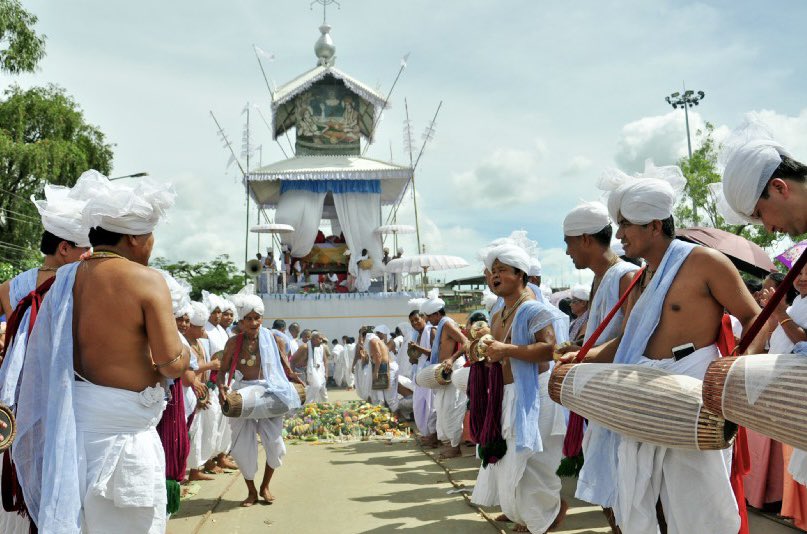
Picture thousands of devotees in white traditional attire, barefoot on heat-softened tarmac, straining together against thick ropes to pull a towering wooden chariot through the heart of Imphal. The belief driving every pull is simple and ancient: whoever gets to hold those ropes will have their sorrows washed away. This is Kang Chingba, Manipur‘s version of the great Rath Yatra, and it remains one of the most physically and spiritually charged festivals anywhere in Northeast India.
Kang Chingba, also called the Kang Festival or Manipur’s Rath Yatra, is celebrated by the Meitei community of Manipur every year in the Manipuri lunar month of Engen, which falls between late June and early July. The festival runs across ten days, centred on the journey of Lord Jagannath, his brother Balabhadra, and sister Subhadra, in a celebration that closely echoes the famous Puri Rath Yatra of Odisha while carrying distinctly Manipuri customs and history of its own.
Fast Facts: What to Know About Manipur’s Rath Yatra
| Detail | Information |
|---|---|
| Festival | Kang Chingba (also Kang Festival, Manipur Rath Yatra) |
| Timing | 2nd to 10th day of Engen month, Manipuri lunar calendar (late June–early July) |
| Duration | 10 days (extending to 12 with closing rites) |
| Celebrated By | Meitei community of Manipur, Vaishnavite Hindus |
| Main Venue | Shree Shree Govindajee Temple, Imphal |
| Other Major Venues | Shree Bijoy Govindajee Temple; ISKCON Imphal, Sangaiprou |
| Deities | Lord Jagannath, Balabhadra, Subhadra |
| Introduced as Public Festival | 1832, by Maharaja Gambhir Singh |
| Earliest Royal Worship | 1697–1709, during the reign of Charairongba |
| Final Day Rituals | Purna Yatra (Kang Len), Hari Shayan, Ningol Paali |
| Prasad | Khechri, served on lotus leaf |
| ILP Required for Indians | Yes, mandatory |
Kang Chingba 2026 and 2027: Dates to Know
Because Kang Chingba follows the Manipuri lunar calendar rather than the Gregorian one, its exact dates shift slightly each year, though it consistently falls within the last week of June through mid-July. The festival always begins on the second day of Engen and runs for ten days to Purna Yatra, with Hari Shayan and Ningol Paali following two days later. Check the official Manipuri lunar calendar closer to the date for confirmed dates, since Engen does not map onto a single fixed Gregorian date — we will update this guide once dates are officially published.
What Is Kang Chingba? Origins and Meaning
The word Kang refers to the large wooden chariot that carries the deities during the festival. Kang Chingba literally means “pulling the Kang,” and this ceremonial procession is the heart of the celebration.
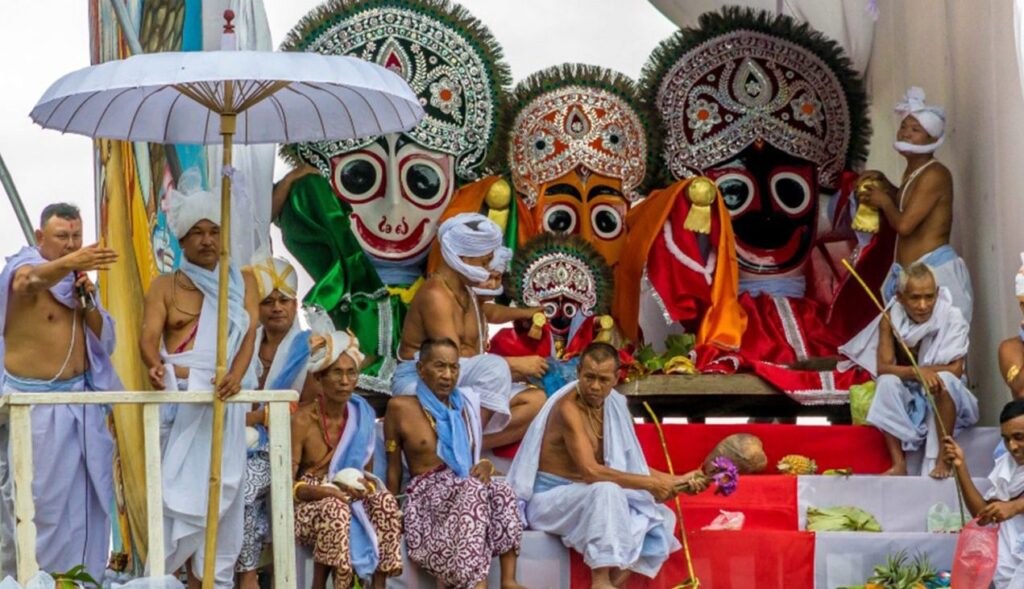
Inspired by the Rath Yatra of Puri, Kang Chingba honours Lord Jagannath, Balabhadra, and Subhadra while incorporating distinctive Meitei traditions. The chariot reflects local architectural styles and was once crowned with the seven-coloured flag of Kangleipak before it was replaced by the Kangshi bell used today.
The History Behind Kang Chingba: From Royal Patronage to Public Festival
The history of Kang Chingba spans more than a century and several Manipuri kings, gradually evolving into the festival celebrated today.
Jagannath worship in Manipur began during the reign of Meidingu Charairongba (1697–1709), when a Brahmin from Puri settled in Imphal. The festival first entered the royal palace in 1780 under Maharaja Bhagyachandra after the establishment of the Shree Bijoy Govindajee Temple.
Kang Chingba became a public festival in 1832 under Maharaja Gambhir Singh with the installation of the Shree Shree Govindajee Temple, which remains the main centre of celebrations. Later, during Sir Churachand Maharaja’s reign, the festival spread to neighbourhoods across the Imphal Valley.
The Ten Days of Kang Chingba: How the Festival Unfolds
The Opening Procession at Govindajee Temple
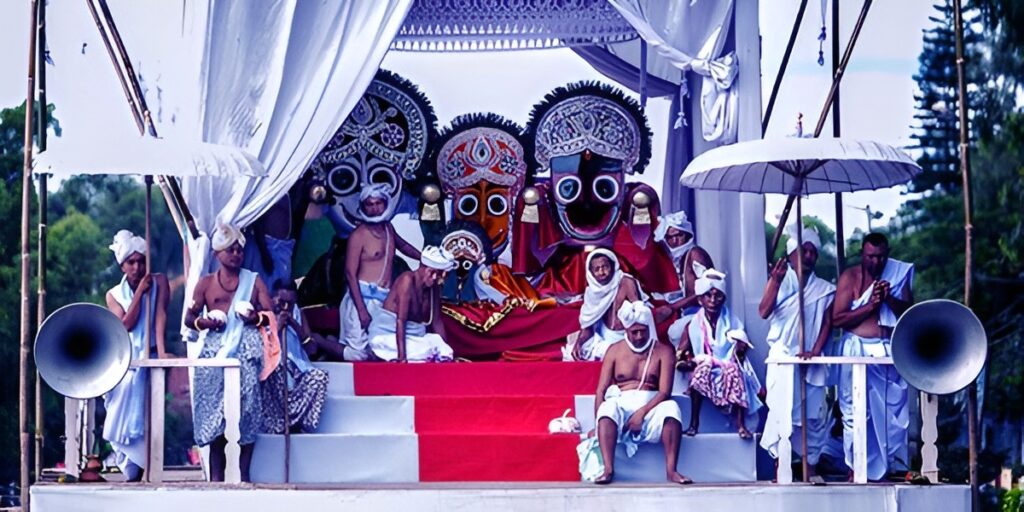
Kang Chingba begins on the second day of Engen and concludes on the tenth day with Purna Yatra or Kang Len. The festival opens with the idols of Jagannath, Balabhadra, and Subhadra being placed on the decorated Kang chariot and pulled through the streets as Sankirtana groups perform devotional music.
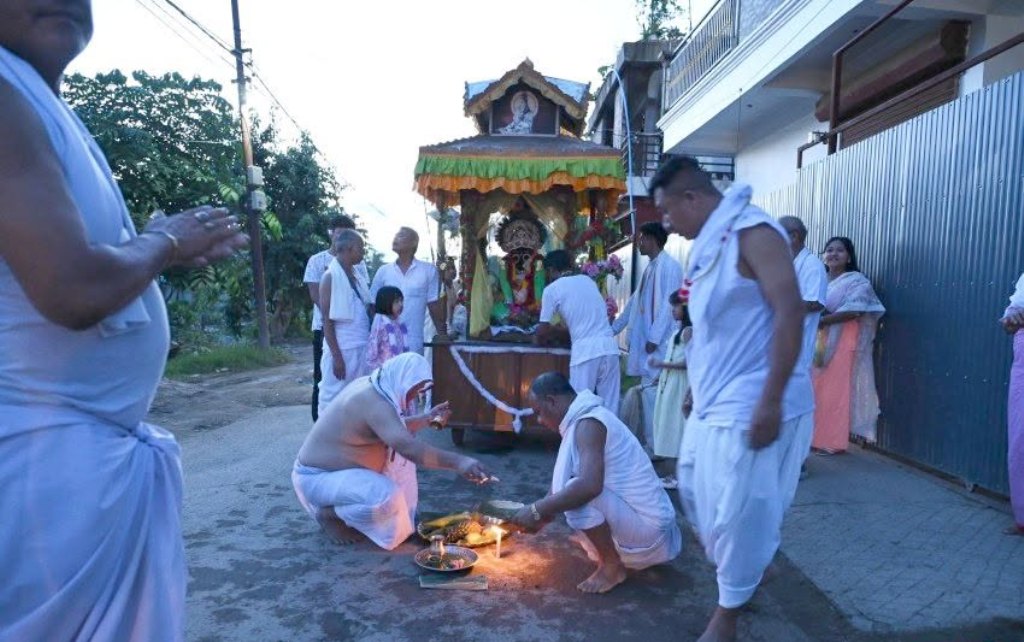
Traditionally, the procession at Shree Bijoy Govindajee Temple is held before lunch, while the larger Konung Kang Chingba at Shree Shree Govindajee Temple takes place afterwards. Locality-level celebrations begin only after this main procession, and ISKCON Imphal also organises its own Puri-style Rath Yatra.
The chariot follows a traditional route between the Govindajee Temple and Sanathong before returning. Along the way, devotees play traditional instruments and offer fruits, flowers, incense, and barti (ghee-soaked cotton wicks).
Nine Evenings of Devotional Song and the Story Behind Khechri
From the first to the tenth day, evenings are marked by Jayadev devotional singing and Choitep Chongba performances at local Brahmin mandaps, offering a quieter and more reflective side to the festival.
After the rituals, devotees share Khechri as prasad. According to tradition, the dish originated when Subhadra hurriedly cooked rice and pulses together while her brothers were away. It is still served on lotus leaves and is typically accompanied by simple seasonal vegetables and traditional Meitei side dishes.
Purna Yatra and the Closing Rituals
On the tenth day, Purna Yatra or Kang Len, the chariot procession follows the same traditional route as the opening day. Devotees, often barefoot and dressed in white, pull the chariot, with water sometimes sprayed along the route to cool the path.
The festival concludes on the twelfth day of Engen with Hari Shayan, marking the symbolic resting of Lord Hari. Around this time, unmarried women observe Ningol Paali, while seasonal offerings such as pineapples, pears, lotus flowers, and garlands of soaked peas and paddy mark the closing celebrations.
Inner Line Permit (ILP): What Every Visitor to Manipur Needs to Know
Before travelling to Imphal for Kang Chingba, ensure you have the required Inner Line Permit (ILP).
Since 2019, all Indian citizens who are not residents of Manipur must obtain an ILP before entering the state. Travelling without a valid permit may result in penalties.
Tourists can apply online through the official Manipur ILP portal or obtain a permit on arrival at Imphal Airport or Mao Gate. Keep a printed or digital copy with you, as it may be checked during your stay.
Foreign nationals require a Protected Area Permit (PAP) instead of an ILP. Following the 2024 policy change, the PAP must be arranged in advance through the official e-FRRO portal or a registered tour operator.
Where to Experience Kang Chingba: Govindajee Temple and Beyond
The Shree Shree Govindajee Temple in the Imphal palace complex is the main centre of Kang Chingba, hosting the state’s largest chariot procession and attracting thousands of devotees, along with senior government dignitaries.
ISKCON Imphal at Sangaiprou organises the second-largest celebration. Smaller processions also take place at Shree Bijoy Govindajee Temple and in many Imphal Valley leikais, including historic Brahmapur, offering a more local festival experience.
How to Reach Imphal for Kang Chingba
Imphal is the main gateway to Manipur and the ideal base for experiencing Kang Chingba.
By air, Imphal International Airport has regular flights from major Indian cities and allows on-arrival ILP processing if needed. Imphal is also connected by road via NH37 and NH2, while the nearest major railway stations are in Assam, with onward travel by road or air.
Once in Imphal, the Govindajee Temple and the old palace complex are easily reached on foot or by local transport, although roads along the procession route are closed to vehicles during the festival.
Practical Tips for Visitors
Wear modest, comfortable clothing—preferably white, as traditionally worn during the festival. If you wish to help pull the chariot, expect large crowds, as many devotees consider it a sacred act.
The festival takes place during the hot summer season, so carry water, sun protection, and be prepared to walk for long periods. Photography is generally allowed during the procession but should be kept discreet during evening devotional performances. If offered Khechri prasad, accept it respectfully as part of the festival tradition.
Frequently Asked Questions
What is the difference between Puri Rath Yatra and Kang Chingba? Both commemorate the same journey of Lord Jagannath, Balabhadra, and Subhadra, but Kang Chingba has developed distinct local features over nearly three centuries — including the Meitei architectural style of the chariot, locally composed Sankirtana hymns, the Khechri prasad legend specific to Manipur, and a structured sequence of royal-temple, locality-level, and closing rituals such as Ningol Paali not found in the Puri tradition.
Can tourists pull the chariot in Manipur? Yes, the chariot-pulling ropes are open to all devotees and visitors who wish to participate, regardless of background. Expect crowding, since many local devotees consider the opportunity spiritually significant.
What is the traditional dress for the Kang festival? Devotees typically wear white traditional attire during the main procession days. Visitors are welcome to dress modestly in light, comfortable clothing if they do not have access to traditional Manipuri garments.
Do I need a permit to visit Manipur for Kang Chingba? Yes. Indian citizens who are not residents of Manipur need an Inner Line Permit, available online in advance or on arrival at Imphal Airport. Foreign nationals require a Protected Area Permit arranged ahead of travel.
Why Kang Chingba Matters Beyond the Festival Grounds
Kang Chingba is a unique adaptation of Puri’s Rath Yatra, shaped over centuries by Manipuri kings and local traditions. While centred on Lord Jagannath, it blends royal processions, community celebrations, women-led rituals, and devotional performances into a distinctly Manipuri festival.
For travellers exploring Northeast India’s cultural diversity, Kang Chingba offers a rare opportunity to experience the region’s rich Vaishnavite heritage alongside its better-known indigenous traditions.
Use the NE India Trip Planner to start planning a visit around Kang Chingba, and explore the NorthEast India Connect Festivals & Events category for more celebrations across the region.
