




There is a valley in Arunachal Pradesh where the relationship between a community and its land has never been broken. The Apatani people of Ziro have farmed the same terraced rice fields for generations, developed one of the most sophisticated indigenous agricultural systems in Asia, and every July they stop working the fields to celebrate the work itself. This is the Dree Festival — the largest tribal festival in Arunachal Pradesh and one of the most genuinely rooted agricultural celebrations anywhere in India.
The Dree Festival 2026 falls on July 5, with village-level rituals beginning on the evening of July 3 at Nenchalya Ground, near Old Ziro, in Lower Subansiri district. If the Ziro Festival of Music introduced you to the valley in September, this will show you an entirely different dimension of the same place — older, more sacred, and entirely community-owned.
Quick Facts: Dree Festival
| Detail | Information |
|---|---|
| Festival | Dree Festival 2026 |
| Date | July 5, 2026 (village rituals begin July 4 evening) |
| Location | Nenchalya Ground, Old Ziro, Lower Subansiri, Arunachal Pradesh |
| Celebrated By | Apatani tribe |
| Duration | 3 days |
| Five Deities | Tamu, Metii, Meder, Mepiñ, Danyi |
| Key Offering | Dree Taku (cucumber), Dree ‘O’ (rice/millet beer) |
| Folk Dance | Daminda, Pri-Dance |
| Sports | Iisañ (high jump), Giibii (traditional wrestling) |
| ILP Required | Yes — Indians via eilp.arunachal.gov.in |
| Nearest Airport | Lilabari Airport (~100 km) or Donyi Polo Airport, Itanagar (~140 km) |
| Nearest Rail | Naharlagun Railway Station (~140 km via Trans-Arunachal Highway) |
What Is the Dree Festival? Ziro’s Sacred Agricultural Ritual
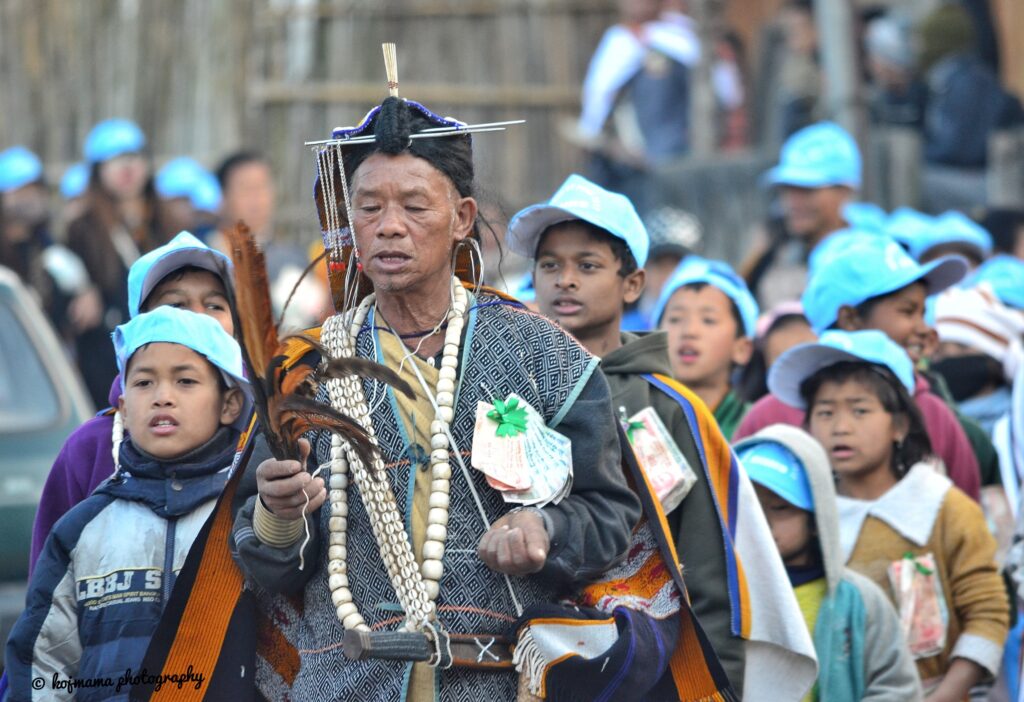
The word “Dree” refers to the Apatani month spanning June and July — the period when Ziro Valley’s rice crop is at its most vulnerable. The Dree Festival is the Apatani community’s most important annual act of collective protection for the coming harvest, simultaneously a prayer, a community reunion, and a public declaration of cultural identity.
According to Apatani oral tradition, cultivation was begun by mythological ancestors Anos Donii and Abba Liibo, who brought agriculture to the human realm. Their work was disrupted by a demon named Pyokuñ Pembò Pyoyi Tadù, from whose defeated body poured swarms of insects, pests, and crop-eating birds. The Dree rituals were established to counter these forces — and they have been performed every year since.
Until 1967, the Dree existed as separate village-level rituals without a common date. It was a group of Apatani students at Jawaharlal Nehru College, led by Shri Lod Kojee, who — inspired by attending the Mopin Festival at Pasighat — unified the celebration into a single centralised event. July 5 was fixed as the permanent date. The Danyi sun deity worship was added. A quietly village-level ritual became the largest tribal festival in Arunachal Pradesh, and that founding story — of young people honouring tradition while building something new — is embedded in every celebration since.
Core Rituals of Dree 2026: The Five Apatani Deities Explained
Understanding Tamu, Metii, Meder, Mepiñ, and Danyi
What makes the Dree Festival theologically distinctive is the precision of its divine invocations. Each of the five deities addresses a specific threat to agricultural and human welfare:
- Tamu is propitiated to ward off insects and pests that attack the rice crop
- Metii is propitiated to ward off epidemics and illness in the human community
- Meder is a purification ritual to cleanse the agricultural fields of unfavourable elements
- Mepiñ seeks blessings for healthy crops and the well-being of mankind
- Danyi, the sun deity, is propitiated for soil fertility, abundance of aquatic life in the rice fields, healthy cattle, and general prosperity
The Danyi worship is particularly significant because it reflects the Apatani understanding of sunlight as the ultimate agricultural force — and because it was the 1967 addition that transformed the festival from a village ritual into a community-wide celebration. The rituals are conducted by the Kharii (high priests) in sequence, supported by the village-level Dree Pontañ committees through voluntary household contributions.
The evening of July 4 is when each Kharii performs these four sacred rites at their village altar — offerings of fowl, eggs, and rice beer — so that priest representatives from across the valley can convene at Nenchalya Ground on July 5 for the centralised celebration.
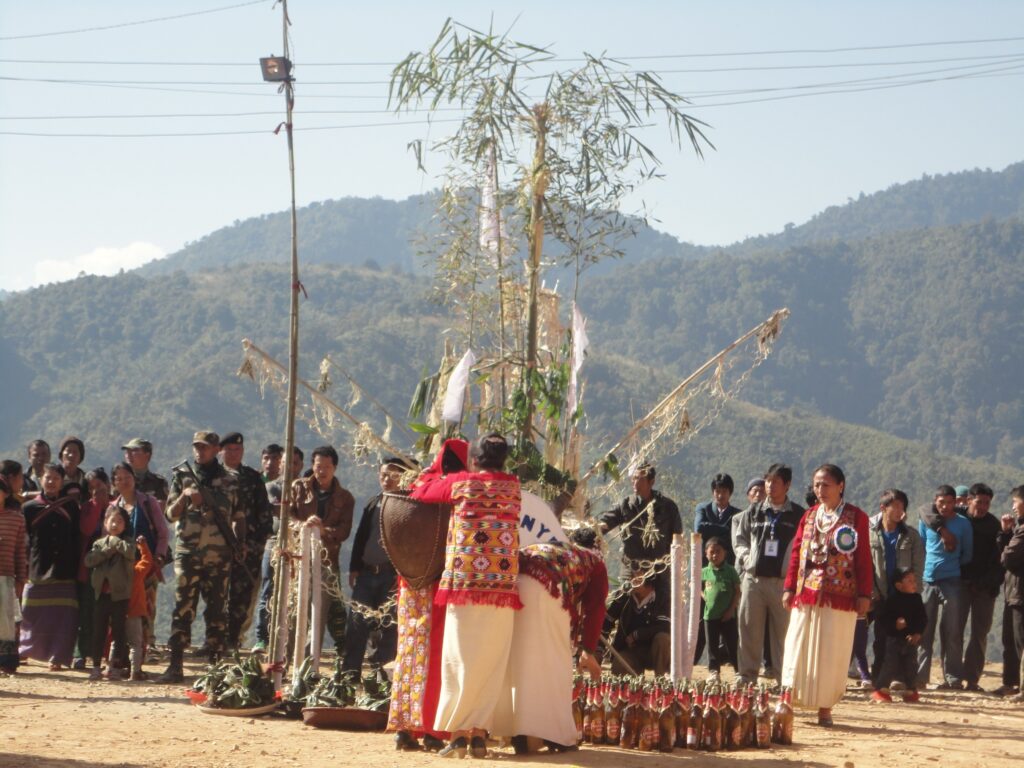
Key Highlights at Nenchalya Ground: Daminda Dance and Sacred Offerings
The Symbolic Giving of Dree Taku (Cucumber) and Dree ‘O’
The July 5 ceremony at Nenchalya opens with the unfurling of the Dree Flag, the Dree Anthem, and then the community feast: every person present receives Dree Taku (cucumber) and Dree ‘O’ (rice or millet beer). Cucumber holds particular symbolic weight — it is the direct fruit of the earth the festival is invoked to protect, offered to all as a reminder of what the prayers are for.
Regarding the Dree ‘O’: in Apatani households during the festival, refusing the bamboo mug when it is offered is considered highly discourteous. If you do not drink alcohol, the correct response is to accept the mug with both hands, raise it slightly as a gesture of respect, and press it briefly to your lips before setting it down. This small gesture acknowledges the hospitality and the cultural significance of the offering without requiring you to drink. Knowing this in advance will save an awkward moment in someone’s home.
The Daminda folk dance takes over the grounds after the feast — women in black jackets, cane headbands, and the traditional aputu (nose plug), men and youth together in a display of collective identity that has no parallel in the Northeast. The main stage at Nenchalya also features theatrical enactments of Apatani migration myths, depicting how ancestors originally carried the first paddy seeds into the Ziro plateau — ancient storytelling that contextualises everything else happening around it.
Iisañ (high jump) and Giibii (traditional wrestling) run across the three festival days for youth, alongside oral knowledge contests for elders (ayú and bwsi) and inter-group Daminda competitions for women.
The Eco-Science Behind Ziro’s UNESCO-Nominated Rice-Fish Farming
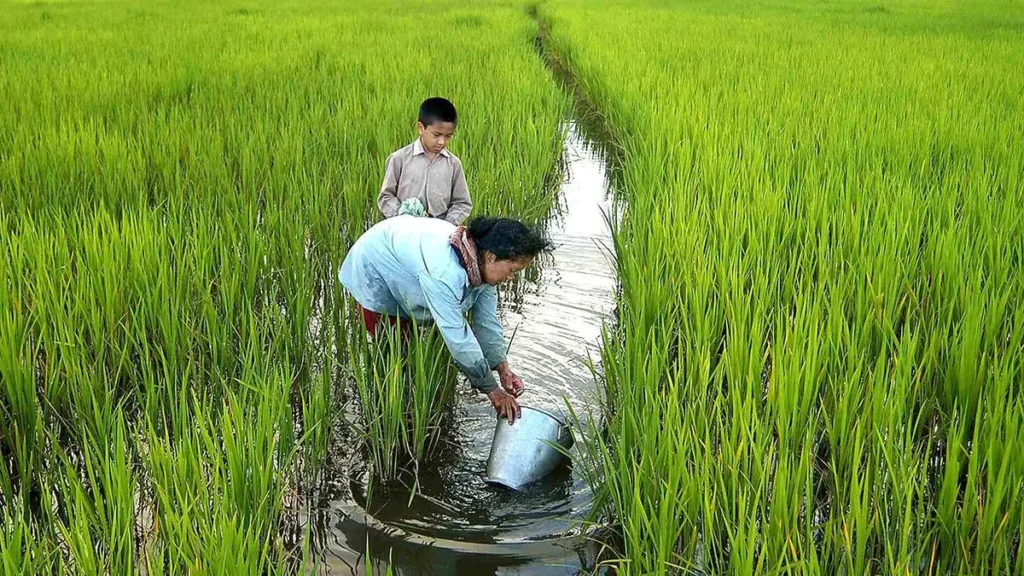
No article on the Dree Festival is complete without understanding what the festival is protecting — and why it matters beyond Arunachal Pradesh.
The Apatani Cultural Landscape is on the UNESCO Tentative World Heritage List, recognised for an agricultural system that produces rice yields comparable to mechanised farming on steeply terraced hillsides at 5,500 feet — without draft animals, without chemical inputs. The key innovation is wet rice-fish cultivation: fish species locally called Aji Nguyi are reared directly in the flooded paddy channels alongside the rice crop (Amo). The fish naturally fertilise the soil through waste, control insects and weeds, and aerate the mud around the rice roots. The system is a closed loop — the rice needs the fish, the fish need the rice, and the farmer manages both.
The Dree Festival falls precisely when the rice is in the tillering stage — when stems are branching out and the plant is most vulnerable to pest damage. This is the moment when propitiating Tamu, the deity who protects against insects, is not abstract theology but practical urgency. The festival calendar is, in essence, the Apatani agricultural calendar expressed in spiritual form.
Dree Festival 2026 Monsoon Survival Checklist
July 5 brings heavy rain to the Lower Subansiri district. Pack accordingly:
- Footwear: Leave leather hiking boots behind. The Nenchalya Ground and village paths turn to ankle-deep clay silt in the rain. Rubber gumboots or waterproof strap sandals with aggressive treading are the right choice.
- Rain gear: Standard umbrellas fail in the valley’s wind. Wear a heavy-duty poncho with your arms free; bring silicone rain sleeves or waterproof pouches for cameras and phones — flying mud during the sports competitions is a real hazard.
- Cash: Keep a minimum of ₹5,000 in small-denomination notes. Monsoon storms frequently knock out power, taking ATMs and UPI payment networks offline across Ziro town.
- Homestay etiquette: Remove wet footwear at the outer threshold when entering a traditional pine-planked Apatani home. Dry your feet near the central open hearth (Melo) before entering further. This is a basic courtesy that signals awareness of local norms.
- Dree ‘O’ etiquette: Accept the bamboo mug with both hands even if you do not drink. Raise it slightly, touch it to your lips, set it down. Do not refuse outright.
- ILP: Print at least three copies. Multiple checkposts will ask for one each.
How to Reach Ziro in July: Navigating the Trans-Arunachal Highway During Monsoon
Getting to Ziro for the Dree Festival is the most logistically demanding part of the trip — and in July, the highway itself becomes one of the variables.
The primary route from the plains runs via the Trans-Arunachal Highway (TAH) through Itanagar, Naharlagun, and Potin before climbing into Ziro. The total distance from Naharlagun to Ziro is approximately 140 km. In good conditions, this takes around 4 hours. In July, it frequently takes 6–8 hours or more.
The specific bottleneck to plan around is the Hoj-Potin stretch of the TAH — a 20-km mountain corridor notorious for the Kala Mitti (black clay) landslide point and the Hoj Second Block Point, both of which have repeatedly blocked traffic for hours during monsoon season. As recently as June 2026, a fresh landslide at Hoj Second Block Point brought all vehicles to a standstill for hours. The Possa-Potin section under Yazali circle is similarly prone. The Lower Subansiri district administration has in past years issued travel advisories recommending against night travel on this stretch during the monsoon — follow that advice strictly. Local drivers refuse to take this road after 2 PM on rainy days, and for good reason.
The practical approach: take the overnight Donyi Polo Express (Train 15617) from Guwahati, arriving at Naharlagun around 7:30 AM. Board a shared Tata Sumo by 8:00–8:30 AM at the latest. Drivers experienced on this route strongly prefer navigating the vulnerable clay cliffs before the afternoon downpours — departing after 10 AM significantly increases your chances of hitting a blockage. Vehicles depart from the Naharlagun taxi stand toward Ziro throughout the morning.
By Air: Lilabari Airport (North Lakhimpur, Assam) is approximately 100 km from Ziro; taxis cover this in 3–4 hours via NH-415. Donyi Polo Airport near Itanagar is an alternative if flight connectivity allows. Guwahati remains the most reliable air gateway for most travellers.
Arrive in Ziro at least one day before July 4 — the July 3 buffer accounts for the real possibility of road delays.
Essential Travel Permits: How to Secure Your Arunachal Pradesh ILP for Dree
Every visitor to Arunachal Pradesh needs a permit. No exceptions, and no workarounds.
Indian nationals (ILP): Apply online at eilp.arunachal.gov.in. Fee: ₹100. Processing typically takes 24–48 hours during working hours — apply at least a week before travel during the busy July period. Select Lower Subansiri as the district and Kimin or Itanagar as your entry point, depending on your route. Print at least three copies for the multiple checkposts between Naharlagun and Ziro.
Foreign nationals (PAP): Apply through the e-FRRO system or an authorised registered travel agent. Allow a minimum of 4 weeks before travel; foreign tourists must travel on designated circuits with a registered operator.
Also Read: How to Apply For Travel Permits for Traveling to Northeast India
Where to Stay and What to Eat in Ziro
Book accommodation 6–8 weeks in advance — the festival period fills every room. Homestays with Apatani families are the most rewarding option, placing you inside the cultural context of everything you are visiting rather than adjacent to it. Look for registered options in Hapoli and Old Ziro through Arunachal Tourism.
The community feast at Nenchalya Ground on July 5 is open to all visitors. Apong (rice beer) is integral to the celebration — offered at every gathering as hospitality, libation, and social glue. Yatang (rice pudding cooked in bamboo) is worth seeking out at local stalls. Traditional Apatani dress — the distinctive black jackets, cane headbands, and the ceremonial ornaments of the women — is extraordinary to observe; appreciate it openly if invited to do so, but do not ask to try on ceremonial items.
Extending Your Trip: Ziro Valley Beyond the Festival
Early July puts you in Ziro at its most lush — rice fields intensely green, pine ridges dark against monsoon cloud. The Hong and Hari villages are worth a morning walk through the paddy fields and fish-farming channels. Talley Valley Wildlife Sanctuary, accessible from Ziro, shelters red pandas, clouded leopards, and exceptional birdlife in temperate forest that most visitors to Arunachal never reach.
If your schedule allows, Tawang — a two-day journey northwest via Bomdila and Dirang — is one of the great Himalayan destinations in India. Check the NorthEast India Connect Travel Permits guide for permit requirements across different districts, and use the NE India Trip Planner to build a wider itinerary.
The Dree Festival is, at its core, a prayer for enough — enough rain, enough sun, enough soil health to carry the rice from seedling to harvest. For a community that has farmed the same valley for centuries without exhausting it, the prayer seems to be working. July 5, 2026, Nenchalya Ground, Old Ziro.
