




In the Khonghampat Orchidarium, the trees have become furniture. Not in the conventional sense — no one has cut them. The orchids have colonised them. Every tree in the 200-acre garden, maintained by the Forest Department of Manipur on a forested hillock 7 kilometres north of Imphal on National Highway 2 (NH2) toward Dimapur, carries at least one orchid plant growing epiphytically on its bark — drawing moisture from the air, nutrients from the host surface, and light from whatever angle the canopy allows. Founded by the Manipur Forest Department in 1976, the orchidarium houses 500 orchid varieties from across the Indo-Burma biodiversity hotspot, making it the state’s most important living flora archive and one of the finest orchid collections in Northeast India.
Quick Facts About Khonghampat Orchidarium
| State | Manipur |
| Location | 7 km north of Imphal on NH2 (Imphal–Dimapur highway); adjacent to Manipur Zoological Garden |
| Area | 200 acres (81 hectares) of native forest garden on a hillock |
| Orchid Collection | 500 varieties documented; 110+ species on active display |
| Key Species | Blue Vanda (Vanda coerulea); Foxtail Orchid (Rhynchostylis retusa); Dendrobium; Cymbidium; Cattleya; Phalaenopsis |
| Peak Bloom | April (single finest month); March–May overall best window |
| Entry Fee | Free (Manipur Forest Department botanical garden) |
| Closed | Mondays; closes 4:30 PM daily |
| Nearest Airport | Bir Tikendrajit International Airport, Imphal — ~18 km; 30–35 minutes |
| ILP Required | Yes — Manipur ILP mandatory for all Indian nationals since December 2019 |
| On-Site Facilities | Limited; no restaurants; pack water and snacks from Imphal before departing |
| 📝 Manipur Travel Compliance: Inner Line Permit (ILP) Rules for Visitors Since December 2019, all Indian nationals must carry a valid Manipur Inner Line Permit (ILP) before entering the state. This applies regardless of your destination within Manipur — including the Khonghampat Orchidarium. Apply online via the Manipur ILP portal before departure, or collect at Bir Tikendrajit International Airport arrival counters on landing. Foreign nationals require separate clearance through a registered tour operator. See our Manipur ILP Guide for the full application process. |
Understanding Khonghampat Orchidarium: Manipur’s Living Flora Archive
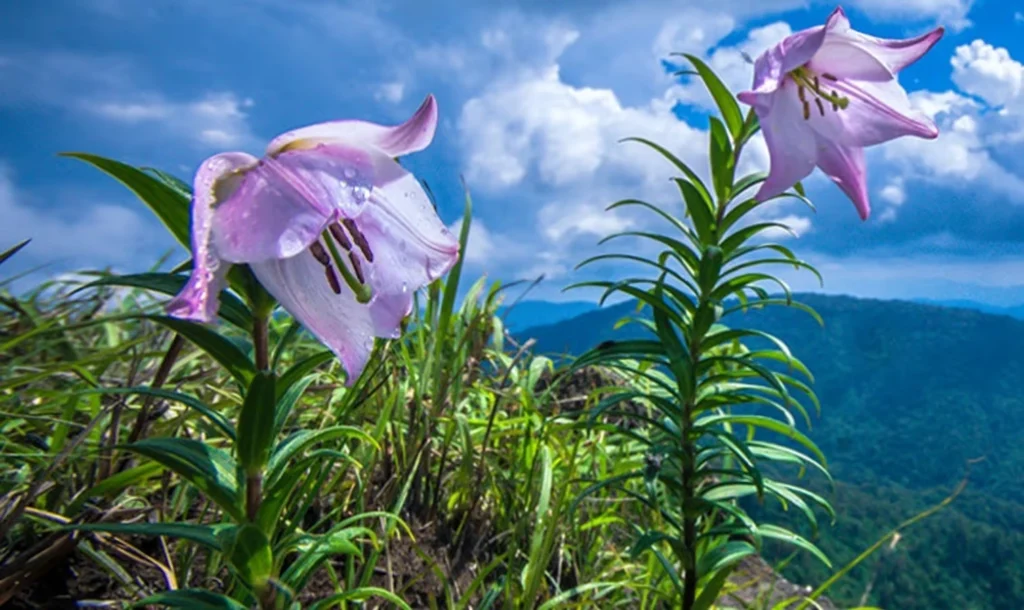
Manipur’s position at the convergence of the Indo-Himalayan and Indo-Burmese biodiversity zones, combined with its altitudinal variation from the warm Imphal Valley (786 m) to the high ridges of Ukhrul (over 2,000 m), creates conditions that support over 500 wild orchid species across the state. Many of these are epiphytes — growing on trees rather than soil, and highly vulnerable to logging and habitat loss. The orchidarium functions as a conservation buffer: a living archive of species in diminishing numbers in the wild, preserved in cultivation by the Manipur Forest Department botanical garden programme.
A common point of confusion worth clarifying: while the Siroi Lily (Lilium mackliniae) is Manipur’s famous endemic state flower — found exclusively on the peaks of Ukhrul — it is a lily, not an orchid. Khonghampat is the premier conservation archive for the state’s orchid heritage, specifically housing the endangered Blue Vanda (Vanda coerulea) and the Foxtail Orchid (Rhynchostylis retusa) among hundreds of others. The two institutions serve entirely distinct botanical functions.
The Botanical Magic: Over 500 Orchid Varieties in a Single Forest Canopy
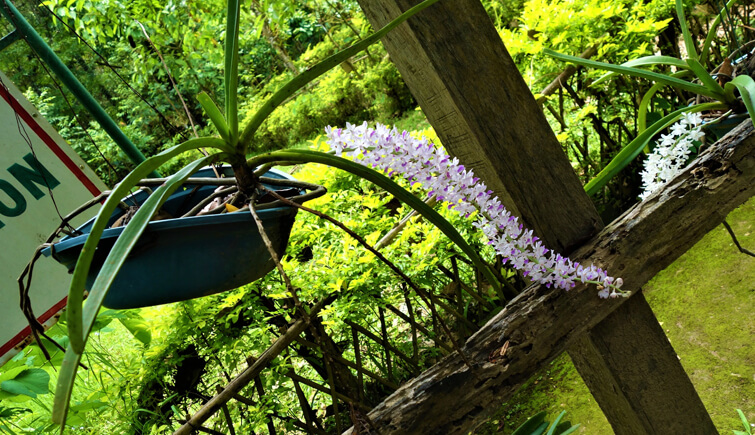
The collection spans the major orchid genera of the Northeast Indian hills, each with distinct visual character:
- Dendrobium: The second-largest orchid genus; the Khonghampat collection spans the full colour palette (white, yellow, pink, purple, striped). Dendrobiums grow on host trees throughout the garden, creating cascades of bloom during the April–May peak
- Blue Vanda (Vanda coerulea): Vivid purple and blue flat flowers; heavily over-collected for the international orchid trade and now endangered in the wild; one of Khonghampat’s most celebrated specimens
- Foxtail Orchid (Rhynchostylis retusa): Dense hanging racemes of pink and white spotted blooms — the most iconic orchid image in Manipur
- Cymbidium: Large terrestrial orchids; some Khonghampat Cymbidium species are among the rarest orchids in the world and are subjects of active propagation programmes
- Phalaenopsis (Moth Orchid): Grown in pink and yellow specifically for Manipuri wedding ceremonies; the most widely cultivated orchid genus globally
- Cattleya: The most visually exotic in the collection; large, highly fragrant, pink-purple-white blooms that reward an early morning visit for their full fragrance
Identifying the Rare Bee-Shaped and Lizard-Shaped Varieties
Among the most discussed features of the orchidarium are species that practise natural mimicry — flowers evolved to resemble bees, moths, or lizards as a pollination strategy. The bee orchids mimic female bees in colouring and texture to attract male pollinators; the lizard orchids produce long, narrow petal projections with a distinctly reptilian appearance; the moth orchids (the Phalaenopsis genus, from the Greek for ‘moth-like’) complete the mimicry collection. These are the most photographed subjects in the garden — ask Forest Department staff to point you to their current location, which shifts seasonally.
Best Time to Visit Khonghampat Orchidarium: Tracking the April Peak Bloom
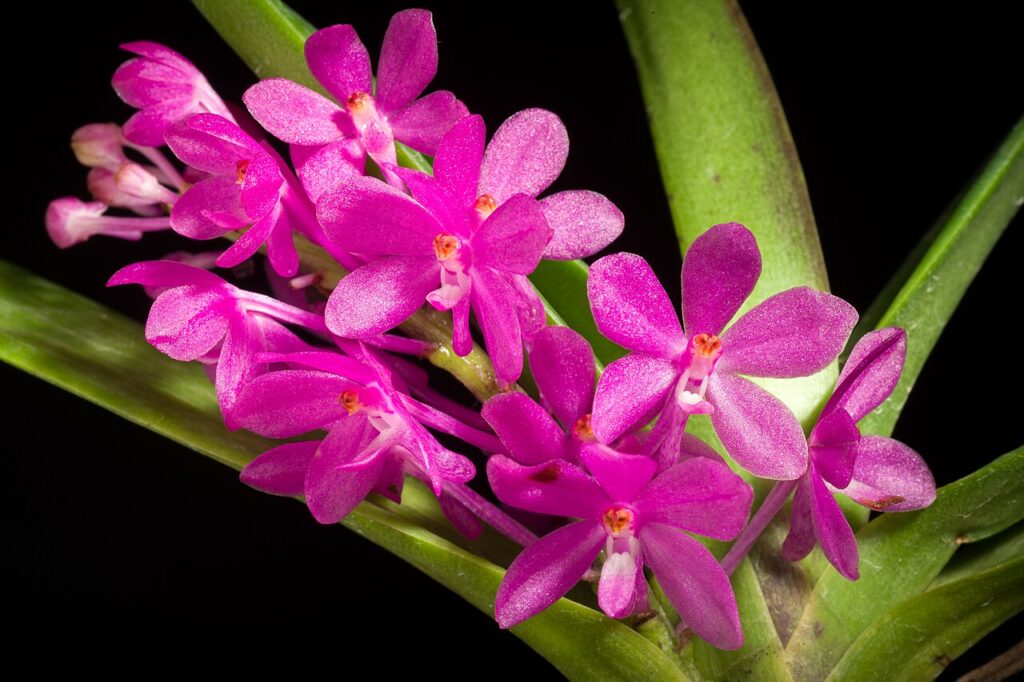
The best months to see orchids in bloom in Manipur at Khonghampat are March through May, with a clear peak in April:
- March: Early Dendrobium and Rhynchostylis emerging; very few visitors; finest window for individual flower photography without crowds
- April: Single best month; maximum species simultaneously in flower; Vanda and Phalaenopsis at their peak; visitor numbers highest
- May: Full bloom, including Cymbidium and rarer species; pre-monsoon showers begin; tracks can be muddy by late May
- June–September: Late-season blooms; garden intensely green in monsoon; photography challenging in heavy rain
- October–February: Off-peak; limited flowers; worthwhile for those combining with Imphal’s historic sights
| 📷 Photography timing: Morning light (8–10 AM) through the forest canopy creates the finest dappled conditions for orchid photography. Bring a telephoto zoom (70–200mm) for high-canopy epiphytes on host trees, and a macro lens for the bee- and lizard-shaped low-lying mimics. Depart Imphal by 8:30 AM. |
| 📷 Khonghampat Orchidarium Field & Photography Guide This is a living native forest preserve, not a greenhouse display. Keep these parameters in mind: Lens selection: Telephoto zoom (70–200mm) for high-canopy epiphytes; macro lens for insect-mimicking low-lying varietiesFootwear: Unpaved, undulating dirt tracks become muddy with early pre-monsoon showers in May — sturdy sneakers or light trail shoes with traction requiredCombine with the Zoo: Manipur Zoological Garden sits immediately adjacent — coordinate a shared gate drop-off to maximise a single half-day tripPack food and water: On-site stalls are limited; bring drinking water and light snacks from Imphal city centre before boarding your auto-rickshawCash for return cab: Entry is free; carry ₹100–200 notes for your prepaid auto-rickshaw fare from Imphal — NH2 mobile data can lag and cause digital wallets to time out |
How to Reach Khonghampat: Navigating NH2 (Imphal–Dimapur Highway) Logistics
The orchidarium is 7 km north of Imphal on National Highway 2 (NH2) — note that older guides refer to this as NH39; under India’s renumbered highway scheme, it is now officially NH2. Update GPS and mapping apps accordingly before navigating.
How to travel from Imphal city centre to Khonghampat: Auto-rickshaw, approximately 20 minutes, ₹60–100 one way. Ask for ‘Khonghampat Orchidarium’ or ‘Manipur Zoo’ as the landmark. Depart by 9:00 AM — NH2 is a heavy commercial transport vein for trucks moving between Dimapur and Imphal, and midday traffic near the bazaars causes significant bottlenecks. From Bir Tikendrajit International Airport: approximately 18 km, 30–35 minutes by prepaid taxi.
| Location | Transit | Character |
| Imphal City Centre / Kangla Fort | Start | Urban and historic; Ima Keithel; Govindajee Temple |
| Mantripukhri Area (NH2) | ~10 min north | Heavy truck corridor to Dimapur; midday bazaar bottlenecks |
| Khonghampat Orchidarium + Manipur Zoo | 7 km; ~20 min | 200-acre forest garden; adjacent zoo; free entry |
Combining Your Trip: Manipur Zoological Garden and Kangla Fort
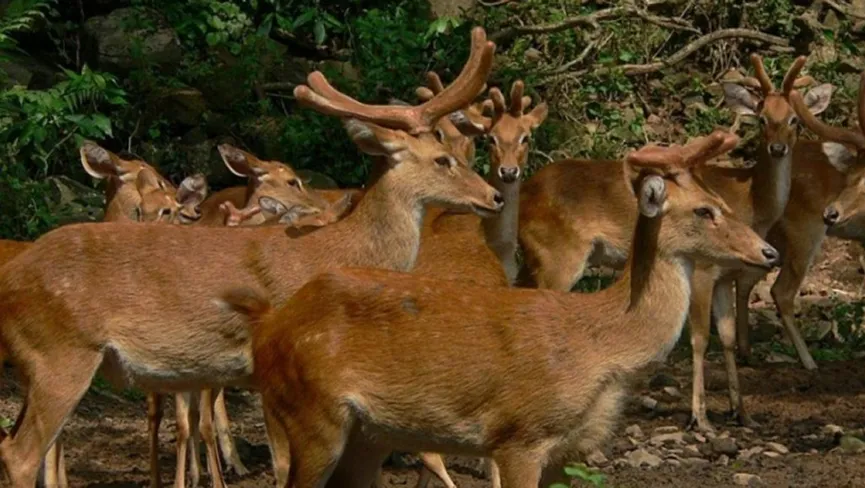
The Manipur Zoological Garden — home to the Sangai (Manipur brow-antlered deer, the state animal) and other endemic Northeast Indian wildlife — sits immediately beside the orchidarium. Combine both in a single half-day trip from Imphal; the shared entrance area makes this seamless. The return drive south on NH2 passes through the cultural heart of Imphal: Kangla Fort (the ancient seat of the Manipur dynasty, 15 minutes south), Ima Keithel (the world’s only all-women market), and the Shree Shree Govindajee Temple. A morning at the orchidarium and zoo followed by a Kangla Fort and Ima Keithel afternoon is the most efficient full-day Imphal cultural circuit.
