




Reiek is the easiest answer to the question that every thoughtful traveler to Mizoram eventually asks: where can I understand what Mizo life looked like before the missionaries, before the roads, before the modern ridge-top city? The answer is Reiek Heritage Village — a lovingly reconstructed traditional Mizo settlement on a hilltop 29 km west of Aizawl, set within a forest reserve that offers both the cultural experience of the village and the natural experience of the surrounding hills and forest.
The heritage village at Reiek is not a living museum in the sense of being inhabited — it is a physical reconstruction of the traditional Mizo zawlbuk (bachelor’s dormitory), morung-style houses, and communal spaces that defined pre-Christian Mizo settlement patterns. But the forest that surrounds it is entirely real — thick, birdsong-filled, and laced with trails that offer some of the finest accessible trekking within day-trip distance of Aizawl. And the view from the Reiek summit, looking north over the Tlawng River valley with the rolling Mizo Hills extending in every direction, is one of the finest panoramas in the state.
Quick Facts About Reiek
| State | Mizoram |
| District | Mamit |
| Altitude | 1,465 metres (Reiek summit) |
| Distance from Aizawl | 29 km; approximately 1–1.5 hours by road |
| Trek Distance (to summit) | Approximately 6 km from the Reiek base village |
| Trek Duration | 3–4 hours return; full day recommended |
| ILP Required | Yes — Mizoram ILP |
| Best Time | October to May; October–November for best clarity |
| Activities | Heritage village exploration, forest trekking, birdwatching, panoramic views |
| Famous For | Traditional Mizo heritage village; forest trek; Tlawng valley panorama |
The Heritage Village — Pre-Christian Mizo Life
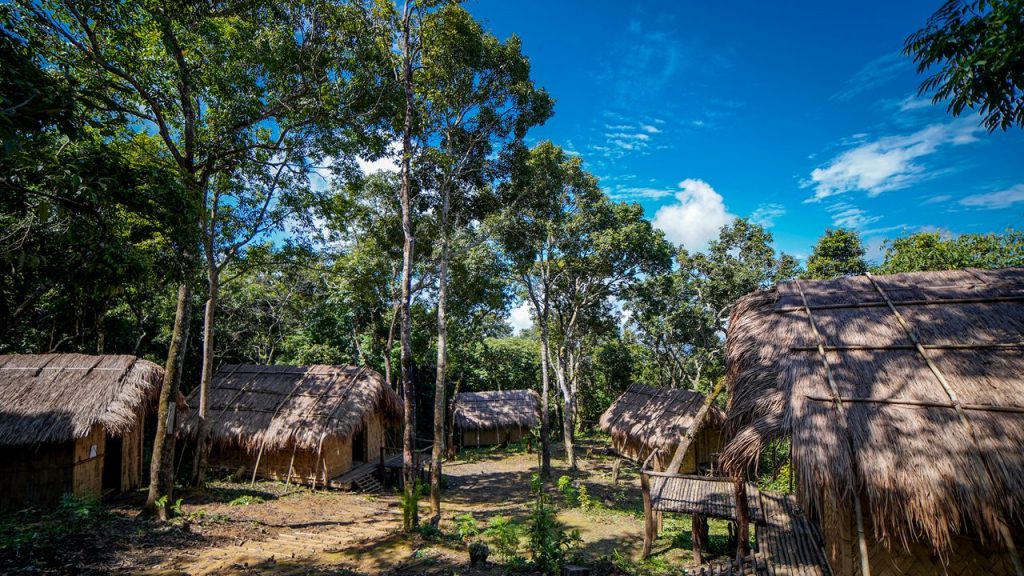
What Is Reconstructed Here
The Reiek Heritage Village is a physical reconstruction of the kind of settlement that would have existed in the Mizo Hills before the arrival of Christianity in the late 19th century and the subsequent transformation of Mizo society. The pre-Christian Mizo lived in fortified hilltop villages — defensive positions chosen for their visibility and difficult approach — organised around the zawlbuk (the men’s communal house) as the social and political centre.
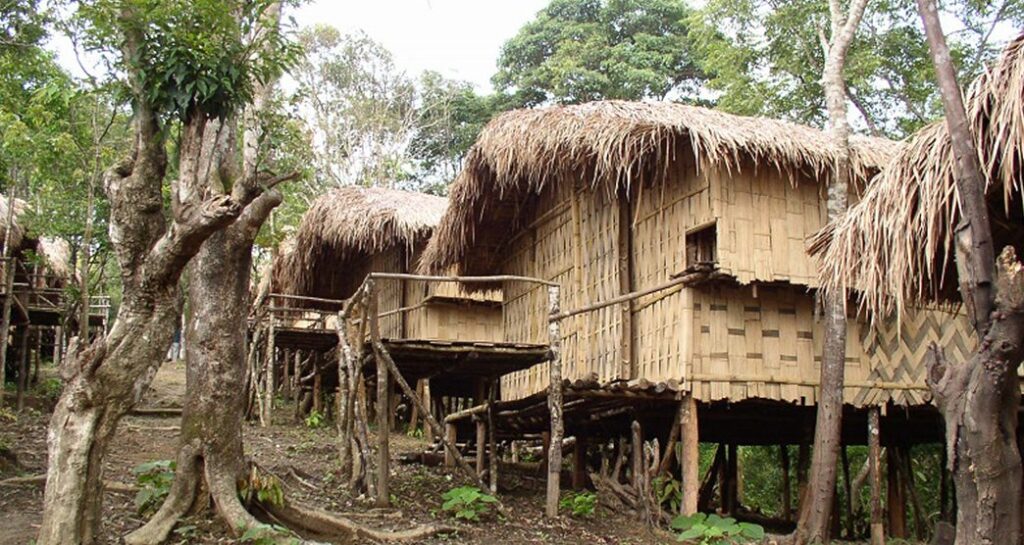
The Zawlbuk: The Zawlbuk was the central institution of pre-Christian Mizo social life — a large communal building where young men lived, received their education in community skills and values, hosted guests, and maintained the community’s fire and security. It was the place where oral traditions were transmitted, where disputes were resolved, and where the community’s collective identity was most physically expressed. The Zawlbuk reconstruction at Reiek is the most important element of the heritage village.
Traditional house construction: The reconstructed houses at Reiek demonstrate the traditional Mizo building techniques — bamboo and timber construction with thatched roofs, built without nails using interlocking timber joinery, elevated on stilts above the ground. The construction methods are explained through interpretive materials at the site.
Fortification elements: Pre-Christian Mizo villages were heavily fortified — stone walls, sharpened bamboo stakes, and defensive positioning on hilltops. Reiek’s reconstruction includes these defensive elements, contextualising the Mizo’s historical reality as a society in which inter-village conflict was a regular feature of life.
| Historical context: The transformation of Mizo society following Christianity’s arrival in 1894 was profound and rapid. Within two generations, the headhunting practices, the zawlbuk institution, and many traditional material practices had been substantially modified or discontinued. Reiek offers a window into the world that existed before that transformation — and makes the subsequent change all the more remarkable to contemplate. |
The Cultural Exhibits
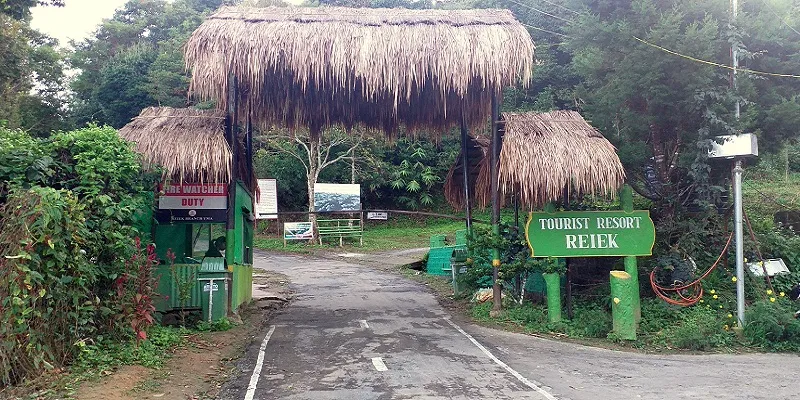
The heritage village includes interpretive panels explaining Mizo traditional practices, oral literature, and the social structures of pre-Christian community life. Key elements include:
- Thangliena Gallery — Named after a famous Mizo chief; contains accounts of traditional leadership, warfare, and community decision-making
- Agricultural displays — Jhum (shifting cultivation) implements and the seasonal calendar of Mizo agriculture
- Craft demonstrations — On weekends and during peak tourism periods, craft demonstrations of traditional weaving, bamboo work, and musical instrument making
- Oral literature — Panels presenting Mizo folk tales, proverbs, and the Mizo cultural values embedded in traditional narratives
The Reiek Trek — Forest & Summit
The Trail
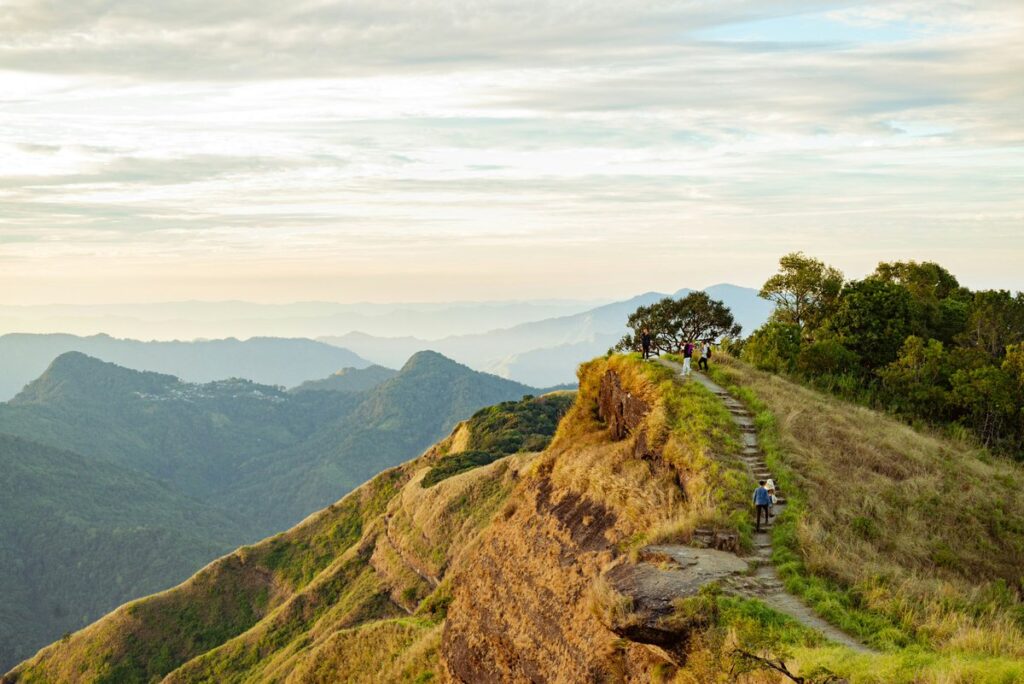
The Reiek Heritage Village sits at the base of a forested hill, and the trail to the Reiek summit (approximately 1,465 metres) passes through some of the finest accessible forest within day-trip distance of Aizawl. The trail climbs for approximately 3 km from the heritage village through dense mixed forest — bamboo groves, rhododendron stands, and the semi-evergreen forest typical of Mizoram’s middle altitudes — before emerging above the treeline onto the upper slopes with panoramic views.
- Distance: Approximately 3 km from the heritage village to the summit; 6 km return
- Duration: 1.5–2 hours to the summit; 1–1.5 hours return; allow a full day with heritage village exploration
- Difficulty: Moderate; sustained but not extreme ascent; manageable for reasonably fit walkers
- Trail character: Dense forest for most of the ascent; the forest is excellent for birdwatching; the upper section opens onto the ridgeline with views
The Summit View
The Reiek summit offers one of the finest panoramic views within easy reach of Aizawl — a 360-degree perspective across the rolling Mizo Hills, with the Tlawng River valley to the north, the ridgelines receding toward the Bangladesh border to the west, and Aizawl visible on its ridge to the northeast on clear days. The light in the early morning and late afternoon is particularly fine.
- 360-degree panorama; Tlawng River valley most dramatic to the north
- Aizawl visible on its ridge to the northeast on clear days
- The ridgeline walk from the summit area extends along the forest edge — excellent for birdwatching
- A shelter at the summit area allows for rest and refreshment
Wildlife & Birdwatching at Reiek

The Reiek Reserved Forest is one of the most accessible forests in Mizoram for birdwatching — dense enough to support a full range of Mizoram’s forest bird community, close enough to Aizawl to reach on an early morning departure.
- Blyth’s Tragopan — Present in the forest; best observed on the trail before 7 AM
- Great Hornbill — Frequently heard and seen flying between forest sections
- Hoolock Gibbon — Dawn calls are a reliable feature of early morning forest walks at Reiek
- Multiple sunbird species — Active along the forest trail in the flowering season
- Kalij Pheasant, Red Junglefowl — On the forest floor; best in early morning
- Multiple warbler, babbler, and laughingthrush species — The forest understorey bird community is excellent
| Birdwatching timing at Reiek: Depart Aizawl by 5:30 AM to reach the forest trail at first light (approximately 6 AM). The hour between 6 and 7 AM, when the forest dawn chorus is at full volume and the birds are most active, is the most productive birdwatching window. The Hoolock Gibbon calls are most frequent in this window. |
Reiek as a Day Trip from Aizawl
At 29 km from Aizawl on a good road, Reiek is one of the few destinations in Mizoram that can be fully experienced as a single day trip from the capital. The recommended day plan:
- 5:30 AM — Depart Aizawl for Reiek (29 km; 1 hour)
- 6:30–8:30 AM — Forest trail walk for birdwatching; early morning is the best window
- 8:30–10:30 AM — Heritage village exploration; traditional architecture, zawlbuk, exhibits
- 10:30 AM–1 PM — Summit trek and panoramic views
- 1–2 PM — Lunch at the guesthouse canteen or packed lunch at the summit
- 2–4 PM — Return descent and departure for Aizawl
Reiek in the Context of Mizo Cultural History
The deeper value of Reiek lies in the cultural reflection it prompts. The Mizo transformation in the 20th century — from a headhunting, zawlbuk-organising, animist society to one of India’s most literate, Christian, and community-oriented peoples — happened within living memory of the grandparents of people who are alive today. It is one of the most dramatic cultural transformations in modern Indian history, and it happened largely peacefully, largely from within, shaped primarily by the encounter between Mizo cultural values (particularly tlawmngaihna) and Christian social teaching (particularly community service and literacy).
Reiek makes this transformation visible and tangible. Standing in the Zawlbuk of the heritage village and then walking 29 km back to the churches and the literacy programmes of Aizawl, the journey of the Mizo people in the past 130 years becomes comprehensible in a way that no book alone can convey.
Where to Eat & Stay at Reiek
- Mizoram Tourism Guesthouse (Reiek) — Simple accommodation at the heritage village base; ₹700–₹1,500 per night; the best option for those wanting to experience the forest at dawn
- Heritage village canteen — Basic Mizo food; reliable for lunch during the visit
- Day trip from Aizawl — The most practical approach; most visitors do Reiek as a day excursion
- Camping — Available near the summit with prior permission; carry all equipment
How to Reach Reiek
- From Aizawl: 29 km west on the Aizawl–Reiek road; approximately 1–1.5 hours by car. The road passes through the Tlawng River valley before climbing to the Reiek area.
- By private taxi: The most practical option; approximately ₹1,500–₹2,000 for a day hire from Aizawl
- By shared vehicle: Occasional shared vehicles from Aizawl toward Mamit district pass through the Reiek area — enquire at the Aizawl Zarkawt taxi stand
Travel Essentials for Reiek
- Mizoram ILP– required — carry at all times
- Trekking boots or sturdy shoes for the summit trail
- Binoculars — essential for the excellent birdwatching
- Water and snacks — limited food options at the summit
- Light waterproof layer — Mizoram showers arrive quickly
- Insect repellent for forest sections — particularly during and after monsoon
Also Read: How to Apply For Travel Permits for Traveling to Northeast India
Best Time to Visit Reiek
- October to February: Best clarity; excellent birdwatching; panoramic views at their clearest; comfortable trekking temperatures
- March: Chapchar Kut festival period in Aizawl — combine Reiek with the festival for a perfect Mizoram cultural and natural weekend
- April to May: Spring; forest in new leaf; warmer; good for all activities
- June to September: Monsoon; forest intensely green; trails wet and slippery; Hoolock Gibbon calling more actively; views cloud-covered but forest atmosphere is extraordinary
Sample Mizoram Circuit Incorporating Reiek
- Day 1 (Aizawl): Bara Bazar morning; Mizoram State Museum; Solomon’s Temple; Durtlang Hills sunset
- Day 2 (Reiek day trip): Pre-dawn departure; Reiek forest birdwatching at first light; heritage village; summit trek; return to Aizawl for Chapchar Kut if in March
- Day 3–4 (Tamdil + Champhai): Southeast circuit; lake, valley, and border town
- Day 5 (return or Phawngpui extension): Return to Aizawl and depart; or extend south to Lawngtlai for the Phawngpui trek (2 additional days)
