




There is a moment in Moreh when you realise the border you are standing at is unlike most borders in the world. At this crossing point in the Chandel district of Manipur, the international boundary between India and Myanmar is not a hard line of fences and restrictions but a permeable membrane — a living interface between two countries that share ethnic communities, family relationships, languages, and trade networks that predate both nations by centuries. The Meitei, the Kuki, the Chin, the Naga — these communities have relatives on both sides of the line. The market at Namphalong, on the Myanmar side a few hundred metres from the Indian gate, is full of Indian traders as often as Burmese ones.
Moreh is simultaneously a practical border crossing, a commercial hub, and a window onto one of Asia’s most complex cultural interfaces. It is not a conventional tourist destination — there are no heritage monuments, no manicured parks, no luxury hotels. What it offers is something rarer: an authentic, unfiltered encounter with the reality of life at the edge of India, where Southeast Asia begins and the familiar markers of Indian everyday life give way to something more ambiguous, more complex, and more genuinely interesting.
Quick Facts About Moreh
| State | Manipur |
| District | Tengnoupal (formerly Chandel) |
| Altitude | 914 metres |
| Distance from Imphal | 110 km; approximately 4 hours by road on NH102 |
| Opposite Town (Myanmar) | Tamu, Sagaing Region, Myanmar |
| Border Type | Officially a Friendship Gate with regulated crossing |
| Population | Approximately 15,000 (Moreh town) |
| ILP Required | Yes — Manipur ILP; additional Free Movement Regime (FMR) documentation for border crossing |
| Best Time | October to April |
| Significance | India’s main land border crossing with Myanmar; key node on India-Myanmar-Thailand trilateral highway |
Understanding the Border at Moreh
The Free Movement Regime
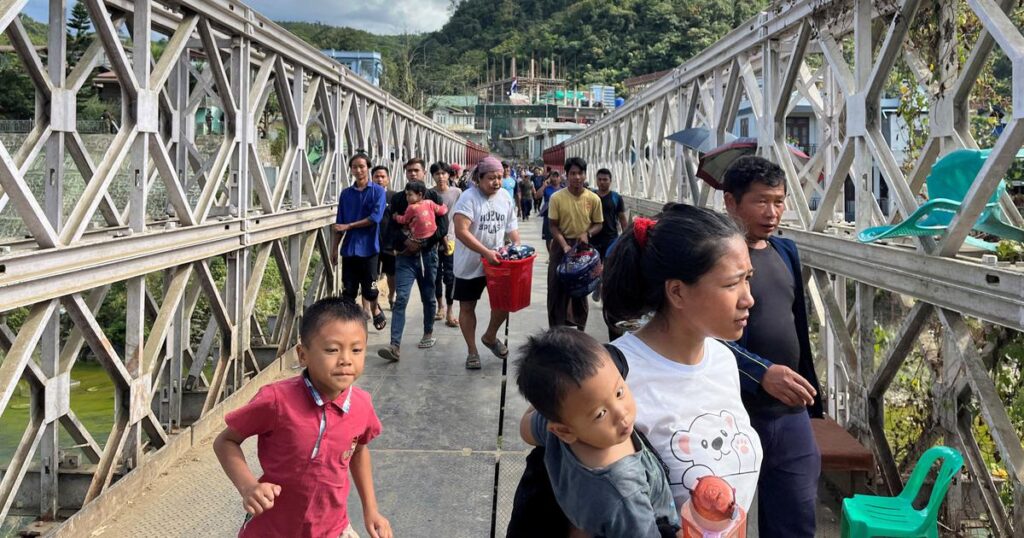
The India-Myanmar border in Manipur (and across Northeast India generally) operates under a Free Movement Regime (FMR) that allows residents of both countries living within 16 km of the border to cross freely without a visa for stays of up to two weeks. This regime reflects the deep cultural and kinship ties across the border — Naga, Kuki, Chin, and other communities whose villages straddle the line have always moved freely across it for trade, family visits, and social occasions.
For travelers, the FMR means that Indian nationals can cross into Tamu (Myanmar) for day visits with appropriate border documentation — a unique opportunity to briefly experience a Southeast Asian border town that is entirely unlike the India they have been traveling through.
| Important note: Border crossing regulations can change at short notice and are subject to political conditions on both sides. Always verify current crossing status with Manipur Tourism or the Moreh Land Customs Station before planning a Myanmar crossing. During periods of political instability in Myanmar, the border may be restricted. |
The Historical Context
The Moreh-Tamu border crossing sits astride one of the most historically significant corridors in South and Southeast Asia. The ancient trading routes connecting India to Southeast Asia passed through this valley. During WWII, the Kabaw Valley on the Myanmar side of the border was a theatre of extraordinary suffering — Allied forces retreated through it in 1942 under appalling conditions, and it was later recaptured in some of the hardest fighting of the Burma campaign. The Japanese forces that fought at the Battle of Imphal came through Tamu and the Kabaw Valley.
The Stilwell Road: Part of the historic Ledo Road (Stilwell Road), built by Allied forces during WWII to supply China overland from India, passes through this region. The route remains one of the most evocative WWII engineering achievements in the world.
India-Myanmar-Thailand Trilateral Highway: The modern successor to the historic trade route — a highway project connecting Moreh to Mae Sot in Thailand via Myanmar — is under construction and, when complete, will make Moreh one of the most significant overland transit points in South and Southeast Asia.
The Communities of Moreh
The Kuki-Chin-Mizo Community
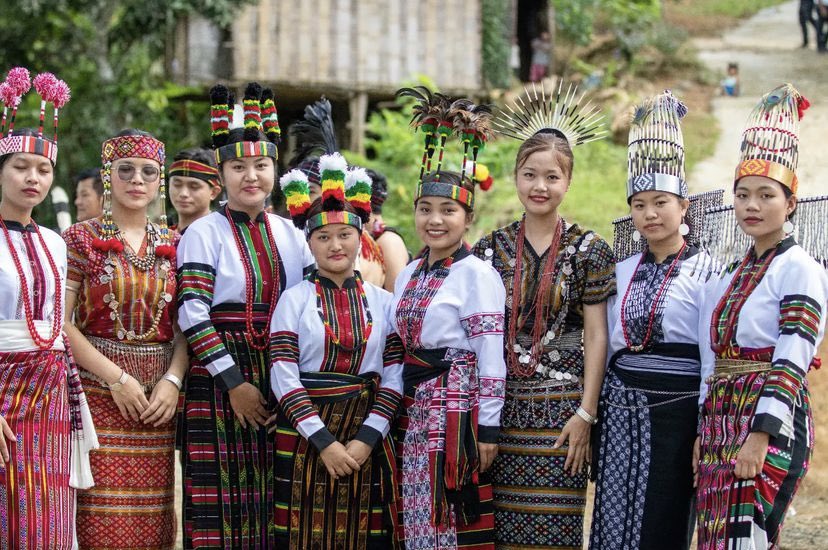
Moreh and the Chandel district are predominantly inhabited by Kuki, Chin, and related Zo communities — a group of Tibeto-Burman peoples whose cultural territory spans the India-Myanmar border in this region with complete disregard for the political line. The same family groups live in Moreh and in Tamu, in Churachandpur (Manipur) and in Chin State (Myanmar). Their presence at the border is not incidental — it is a statement of the inadequacy of the national boundary as a cultural divider.
Cross-border trade: The Kuki and Chin communities have driven Moreh’s commercial life for generations — managing the flow of goods (agricultural products, consumer goods, textiles, and increasingly manufactured items) in both directions across the border. The Namphalong market in Tamu, accessible from Moreh, functions as a major transhipment point.
Christianity: The Kuki and Chin communities are predominantly Christian, having adopted Christianity through Baptist mission activity in the 19th and 20th centuries. The church culture in Moreh is active and forms an important community anchor.
The Meitei Traders
Alongside the Kuki-Chin communities, a significant Meitei merchant community from the Imphal valley has established itself in Moreh, drawn by the commercial opportunities of the border economy. The interaction between Meitei business culture and the Kuki-Chin community’s border management expertise shapes the distinctive commercial character of the town.
Top Experiences at Moreh
1. Namphalong Market (Myanmar Side)
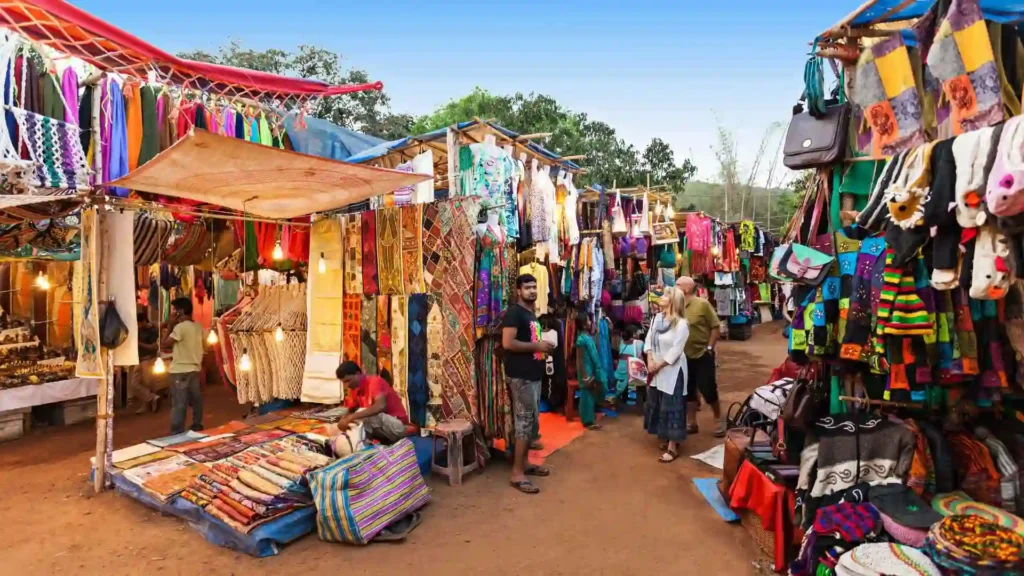
The Namphalong market in Tamu, Myanmar — a few hundred metres beyond the Indian gate — is Moreh’s most commercially distinctive experience. The market sells goods from across Southeast Asia: Thai cosmetics, Chinese electronics, Burmese jade and gems, teak products, dried fish, and a range of goods that simply are not available on the Indian market. The atmosphere is genuinely cross-cultural — Burmese, Indian, and Chin traders and shoppers moving between the stalls in a commercial environment that operates on its own bilateral logic.
- Crossing: Indian nationals with appropriate documentation can cross for day visits — verify current conditions
- Products: Southeast Asian goods, gems, jade, textiles, dried foods
- Currency: Burmese Kyat preferred; some USD transactions; Indian Rupees sometimes accepted
- Time: the market is most active in the morning (7–11 AM)
2. Friendship Gate & India-Myanmar Border
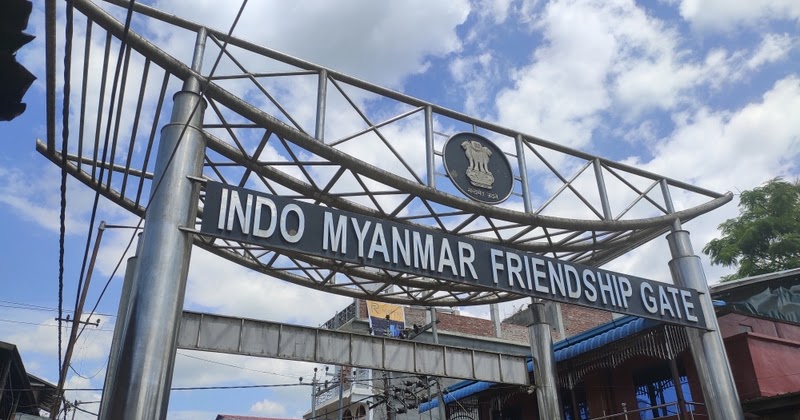
The Friendship Gate — the decorated arch marking the India-Myanmar international boundary — is the most photographed landmark in Moreh. The gate marks the formal crossing point and the contrast between the Indian town behind you and the Burmese landscape ahead is immediate and striking. Photography at and near the gate is generally permitted but check current military/security guidelines on arrival.
- The gate architecture combines Indian and Myanmar artistic motifs
- The border crossing is one of the most photographed international boundaries in India
- Border Security Force (BSF) presence — follow instructions at all times
3. Moreh Market
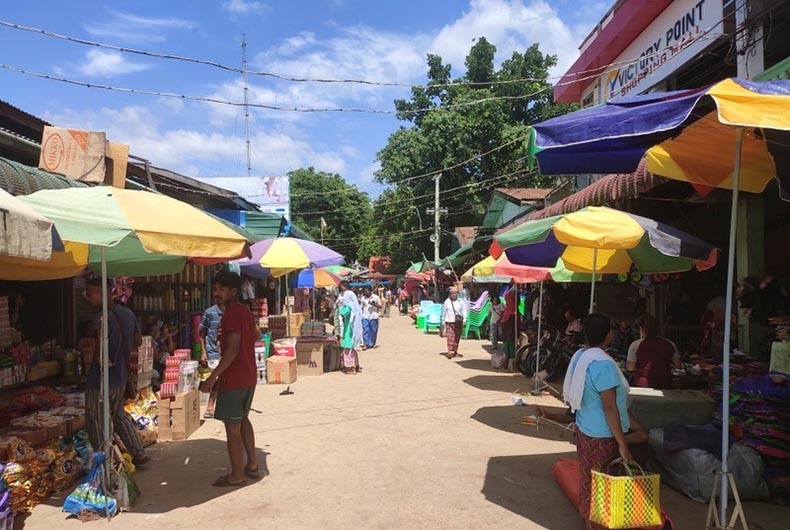
The market in Moreh town itself is a window onto the border economy — a commercial space shaped by the transit of goods in both directions, with products that reflect Southeast Asian trade networks more than Indian supply chains. Textiles, electronics, food items, and household goods from Myanmar, China, and Thailand sit alongside Indian products. The market is particularly active in the morning.
- Active morning market reflecting the border economy
- Good for observing the commercial diversity of a genuine border town
- Bargaining expected and welcomed
4. Tengnoupal District’s Natural Landscape
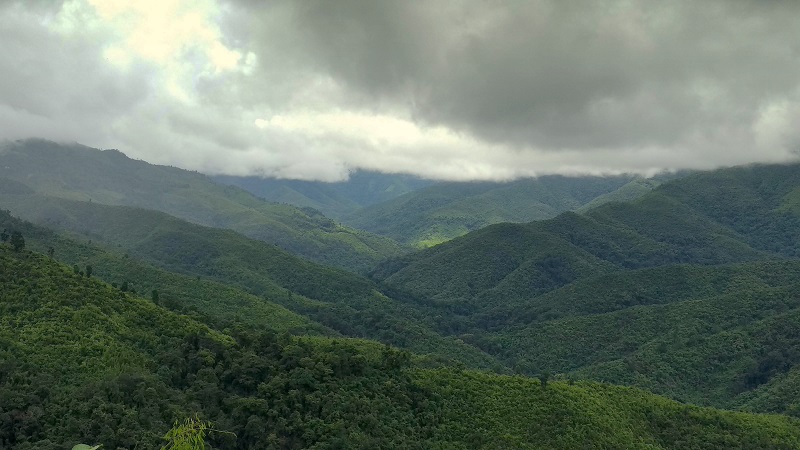
The Tengnoupal district surrounding Moreh is one of Manipur’s least visited but most beautiful regions — forested hills, small rivers, and traditional Kuki and Naga villages in a landscape of considerable scenic quality. Village visits arranged through local guides offer an authentic experience of border-zone community life quite different from the more visited areas of Manipur.
- Forest walks and village visits in the Tengnoupal hills
- The landscape views from the hills above Moreh extend into Myanmar’s Sagaing Region
- Kuki villages: traditional bamboo architecture, community churches, and warm hospitality
5. WWII Sites — Kabaw Valley Connection
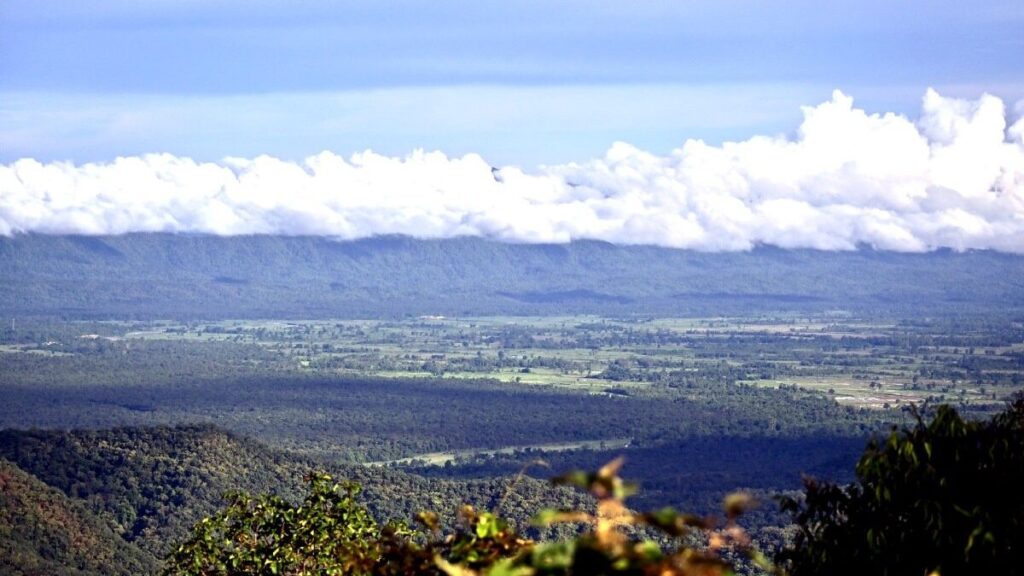
The Kabaw Valley in Myanmar, visible from the hills above Moreh, was the scene of the catastrophic Allied retreat of 1942 — when British and Indian forces withdrew through the valley under monsoon conditions and Japanese pressure, with enormous casualties from combat and disease. Historians estimate over 10,000 people died in the Kabaw Valley retreat. The landscape carries this history mutely, and travelers with WWII interest find Moreh adds significant depth to the Imphal-Kohima story.
- The view across the valley into Myanmar carries WWII historical weight
- The Tamu WWII memorial on the Myanmar side is accessible during border crossings
- Combine with the Imphal War Cemetery and Kohima War Cemetery for the complete NE India WWII narrative
Top Things to Do at Moreh
- Namphalong market visit — Cross the border for the morning market (verify current conditions); the most distinctive commercial experience at the frontier
- Friendship Gate photography — The visual centrepiece of Moreh; best in morning light
- Moreh town market walk — Observe the border economy in action
- Hill viewpoint above Moreh — Views into Myanmar and back toward the Manipur hills
- Village visit in Tengnoupal district — Kuki community villages with local guide; the most culturally immersive experience
- Border economy observation — Simply walking the main street of Moreh and observing the extraordinary commercial complexity of a functioning international border town
Where to Eat & Stay in Moreh
- Basic guesthouses in Moreh town — Several options along the main road; basic but functional; ₹600–₹1,500 per night
- Manipur Tourism Inspection Bungalow — Government accommodation; more reliable than private options; book through Chandel District Tourism
- Day trip from Imphal — Most travelers do Moreh as a long day trip (110 km each way; 4 hours each way); possible with early departure but overnight is more relaxed
- Food — Border town food is eclectic; Meitei, Kuki, and Myanmar-influenced preparations available; the morning market has the best street food
How to Reach Moreh
- From Imphal: 110 km on NH102; approximately 4 hours through the Tengnoupal hills. The road is a mix of good highway and mountain sections — road conditions can vary.
- By shared vehicle: Shared taxis and tempo travellers from Imphal’s Keishampat junction to Moreh; departure throughout the morning.
- Private taxi from Imphal: Most efficient option; approximately ₹2,500–₹3,500 per vehicle; negotiate a full-day hire if doing as a day trip.
Border Crossing — Practical Information
- Indian nationals: Can cross to Tamu (Myanmar) with FMR documentation — Border Area Permit obtainable at the Land Customs Station in Moreh; valid for day visits; no Myanmar visa required for short border crossings under FMR
- Foreign nationals: Cross-border access requires a valid Myanmar visa and separate entry documentation; the Moreh-Tamu crossing is not currently a standard tourist crossing for foreign nationals — verify the current status before planning
- Current conditions: ALWAYS verify border crossing status before travel — political conditions in Myanmar mean the crossing has been restricted at various times since 2021; check with Manipur Tourism or the Moreh Land Customs Station
- What NOT to bring back: Precious stones (jade) without proper customs documentation; restricted goods; wildlife products; drugs (death penalty in both countries)
Travel Essentials for Moreh
- Manipur Inner Line Permit (ILP) essential — carry at all times; multiple checkpoints on the Imphal–Moreh highway
- Additional FMR documentation for Myanmar crossing — obtain at Moreh Land Customs Station
- Cash in Indian Rupees for Moreh; Kyat and USD for Tamu market
- No reliable ATMs in Moreh — carry sufficient cash from Imphal
- Mobile: Airtel and BSNL work in Moreh town; signal degrades on the hill road sections
- Photography: exercise judgment near the border gate and military installations; always ask before photographing security personnel
Also Read: How to Apply For Travel Permits for Traveling to Northeast India
Best Time to Visit Moreh
- October to March: Best overall; dry roads; clear skies; border market at full activity
- April to May: Warm; pre-monsoon; good road conditions; slightly reduced market activity
- June to September: Monsoon; the Imphal–Moreh road passes through hill sections prone to landslides; travel requires flexibility; not recommended for first visits
A Note on Responsible Border Tourism
Moreh is a living border community, not a tourist show. The ethnic tensions, economic pressures, and political complexities of life at this particular border — between India and a Myanmar undergoing significant political transformation — are real and present. Travel here with genuine curiosity about the community’s reality, spend money at local businesses, and approach any encounter with the communities on both sides with respect and without assumptions.
