




Every game has an origin story. Polo — the sport that the British codified, exported to Argentina and America, and turned into one of the most exclusive sporting traditions on Earth — has an origin story that most of its current players do not know. It begins not in England, not in Persia, not in the Argentine pampas. It begins in a flat ground in Imphal, Manipur, called Mapal Kangjeibung, where the Meitei kings played a game called Sagol Kangjei — horse (sagol) and cane-ball stick (kangei) — that can be traced back, according to the Guinness World Records, to approximately 3100 BCE.
Three thousand, one hundred years before the common era. That makes polo, in its Manipuri form, older than the Greek Olympics, older than the Roman Empire, and older than the oldest recorded cricket or football match by an extraordinary margin.
The Mapal Kangjeibung — ‘mapal’ meaning centre and ‘kangjeibung’ meaning the field or ground for sports — has its earliest documented history in the royal Meitei chronicle Cheitharol Kumbaba, which records a polo match held in 33 CE at the command of King Nongda Lairen Pakhangba.
The ground has been used for polo continuously since that record, making it not merely the oldest polo ground in the world but the oldest continuously active sports venue of any kind in human history. Major General Joseph Ford Sherer — the British officer credited with formalising modern polo — played on this very ground in 1850, learning the game from the Meitei players and subsequently carrying it back to create the first polo club in India at Silchar, Assam in 1834. The debt that modern polo owes to Mapal Kangjeibung is the debt of existence itself.
Quick Facts About Mapal Kangjeibung
| State | Manipur |
| District | Imphal West |
| Location | Central Imphal, near Kangla Fort |
| Dimensions | 225 yards in length × 110 yards wide; low 2-foot-high banks enclose the field instead of conventional goalposts |
| Age | 3,500 years of recorded history; earliest record in Cheitharol Kumbaba (33 CE) |
| Guinness Record | Guinness Book of World Records (1991) — polo’s origins in Manipur traced to ~3100 BC |
| Game Origin | Sagol Kangjei — sagol (Manipuri pony) + kangei (game of cane-ball stick); played by barefoot riders |
| First Match Recorded | 33 CE — King Nongda Lairen Pakhangba’s polo match, recorded in Cheitharol Kumbaba |
| British Connection | Major Gen. Joseph Ford Sherer played here in 1850; first polo club in India established 1834 at Silchar |
| ILP Required | Yes — Manipur Inner Line Permit for all Indian nationals |
| Best Time | October to March; November for Manipur International Polo Tournament |
The Mythology and the Chronicles — Sagol Kangjei’s Divine Origin
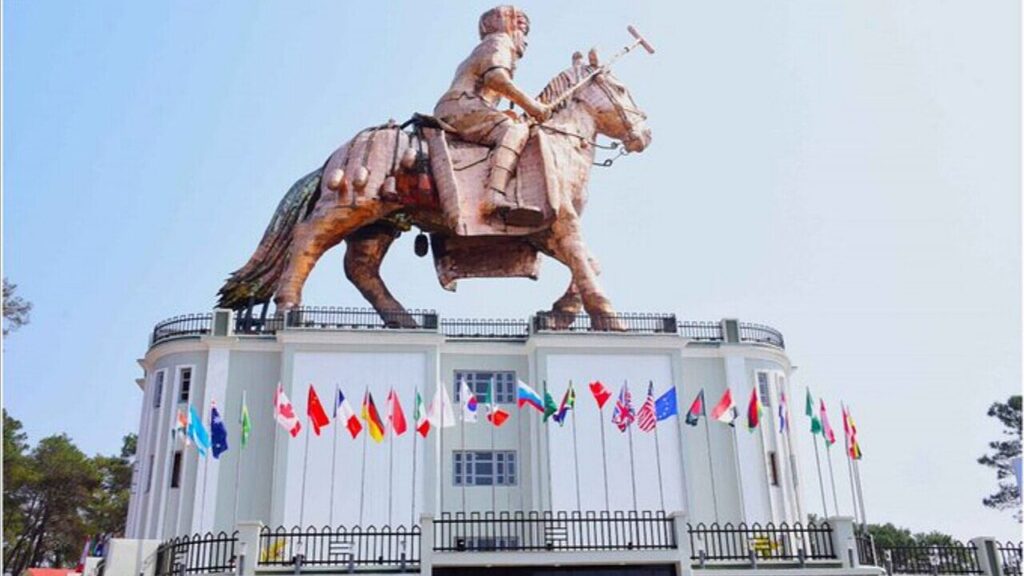
The Meitei origin story of polo is not merely historical — it is theological. The deity king of Manipur, Kangba (who ruled, according to tradition, from approximately 1405–1359 BCE), is credited with the game’s invention in the ancient texts Kangbalon and the Kangjeirol. The game is associated with the Meitei divine world: the Marjing Temple atop a hill in Imphal is dedicated to Iboudou Marjing, the God of Horses, depicted perched on a winged pony. In the Meitei cosmological framework, polo is not simply a sport but a sacred activity with divine patronage.
The Cheitharol Kumbaba — the royal chronicle of the Meitei kingdom, considered one of the most detailed pre-colonial royal chronicles in Northeast India — records the first organised polo match in 33 CE in considerable detail: King Nongda Lairen Pakhangba introduced his queen Laisana to his subjects through a ceremony at which a polo match was played. This is the earliest written record of a polo match anywhere in the world. The ground on which it was played is the ground on which polo is still played in Imphal today.
| A striking anecdote recorded in Meitei manuscripts: Under King Charairongba in 1697 CE, an underdog team of ten players led by the king himself emerged victorious over an opposing team of 100 players. The match, played at Mapal Kangjeibung, is described as one of the most celebrated moments in Meitei polo history — a narrative of skill and courage over numerical advantage that the community still recalls. Source: Incredible India official (incredibleindia.gov.in/en/manipur/imphal/mapal-kangjeibung). |
How Manipuri Polo Became Modern Polo
The British Discovery
Around 1854, English tea planters based in Cachar, Assam, first observed the Meitei game of Sagol Kangjei being played by Manipuri men who had come to Cachar. The planters — soldiers and colonial officers among them — were immediately drawn to the game. Lieutenant Joseph Ford Sherer of the British Army’s Sylhet Light Infantry is credited with being the officer who formalised the rules of what he called ‘polo’ (adopting the Tibetan word for ball, ‘pulu’) and who established the game’s first codified club in India. Sherer had personally visited Mapal Kangjeibung and played on the ground.
The Cachar Club — established in 1833–1834 at Silchar — is considered the first polo club in the world outside Manipur. By 1862, Sherer and Captain Robert Stewart had founded the Calcutta Polo Club. British officers returning to England took the game with them; it spread to Argentina through military contacts; and the global sport of polo that wealthy teams now play at £500 per chukker was born on a flat ground in Imphal.
What Changed
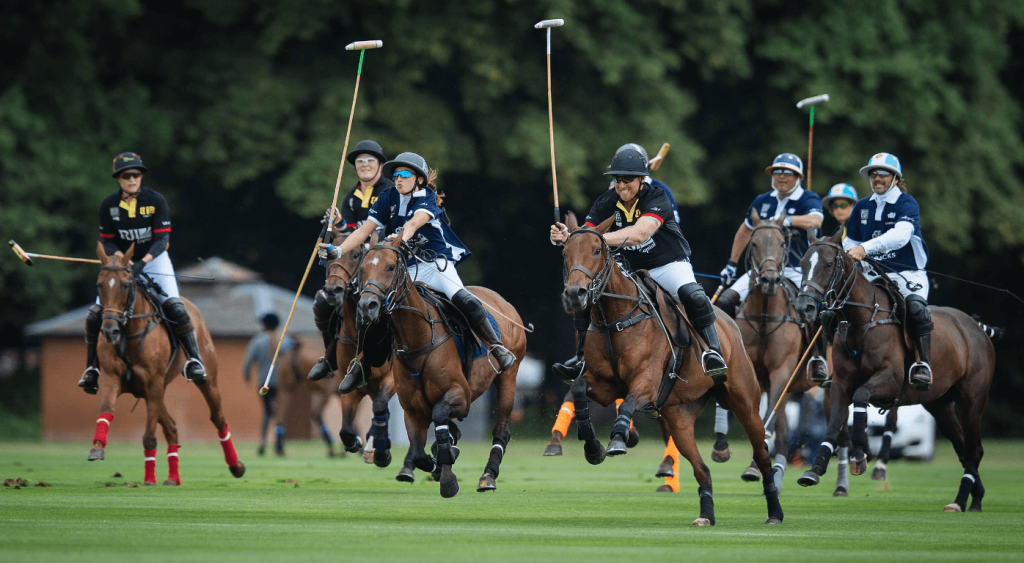
When polo left Manipur and was formalised by the British, several of the game’s most distinctive characteristics were modified. In Sagol Kangjei, riders play barefoot — a connection to the ground through the horse that conventional boots break. The Manipuri pony (Meitei Sagol) — a breed of horse of ancient lineage, averaging 11 to 13 hands in height and adapted to the specific terrain and climate of the Manipur valley — is central to the original game. The conventional polo played internationally uses horses of 15+ hands. In the original game, the goals are two-foot-high earthen banks rather than goal posts — the playing philosophy is different, the scoring is different.
The survival of the original Sagol Kangjei tradition at Mapal Kangjeibung is one of the most culturally significant ongoing sporting practices in India. Matches are still played on Manipuri ponies by barefoot riders — though increasingly, the ponies themselves are under threat.
The Endangered Manipuri Pony — Save Pony, Save Polo
The hoarding outside Mapal Kangjeibung reads: ‘Save Pony Save Polo Save Pologround.’ It is not a tourist decoration. The Manipuri pony — the breed on which polo was invented, one of the purest and most prestigious equine breeds in India — is endangered. The WorldAtlas report on the ground records the All Manipur Polo Association (AMPA) billboard directly; the concern is real and the threat is documented.
Several factors have contributed to the Manipuri pony’s decline: the WWII period caused significant casualties among the ponies (the Japanese and Allied forces both used them, and the post-war disruption of Manipuri society left the breeding population depleted); the adoption of larger imported horses for international polo tournaments reduced demand for the indigenous breed; and urbanisation has reduced the open grazing land that the ponies require.
The Manipur Horse Riding and Polo Association (MHRPA) and the Government of Manipur have implemented breeding and conservation programmes. The international polo community, increasingly aware that the game’s origins depend on the Manipuri pony, has lent some support. But the billboard’s plea remains urgent.
The Annual Tournament & Sangai Festival
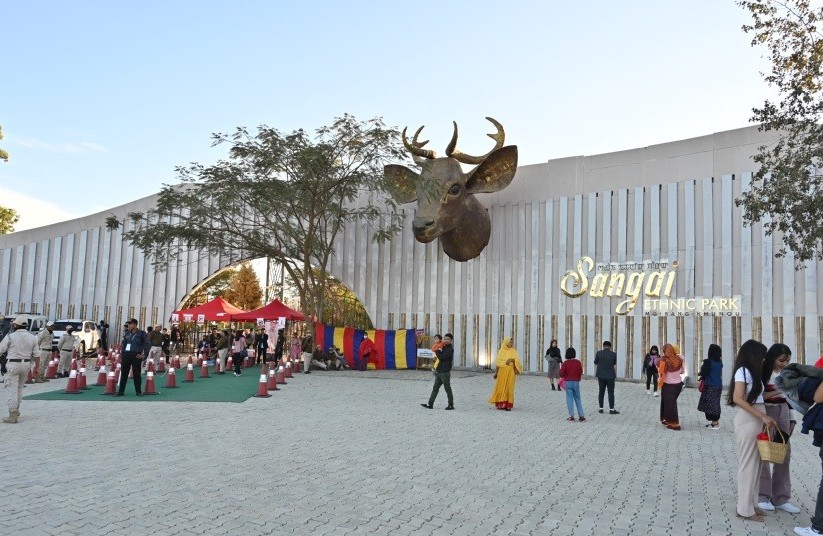
Manipur International Polo Tournament (November): Held annually at Mapal Kangjeibung under the MHRPA, the tournament draws teams from Argentina, Australia, France, Germany, Mongolia, South Africa, the UK, and the USA — an international field assembled at the ground where the game was born. The November tournament coincides with the Sangai Festival (21–30 November), Manipur’s biggest tourism event, making the polo matches part of the state’s most culturally vibrant period.
Hapta Kangjeibung Festival: Hapta Kangjeibung, another of Imphal’s historic polo grounds, is the main venue of the Sangai Festival. The three Kangjeibungs of Imphal — Mapal, Hapta, and Manung (inside Kangla Fort) — collectively represent the oldest urban polo ground landscape in the world.
Visiting Mapal Kangjeibung
- Location: Central Imphal, near Kangla Fort and the Manipur State Museum — all three are within walking distance of each other
- Match viewing: International tournament (November); regular local matches October–April; check the MHRPA schedule on arrival
- The ground itself: Open to visitors between matches; the earthen bank goals are visible at each end; the scale of the ground (225 × 110 yards) is best appreciated on foot
- Marjing Temple: Visit the hilltop temple of the God of Horses before or after Mapal Kangjeibung for the full cultural context of polo in Manipur
How to Reach Mapal Kangjeibung
- From Imphal Airport: 8 km; approximately 20 minutes by auto-rickshaw or taxi.
- From Kangla Fort: Walking distance — the fort and the polo ground are in the same central Imphal area.
Best Time to Visit
- November: Sangai Festival + Manipur International Polo Tournament — the ground is at its most active and the international matches are extraordinary
- October to April: Regular polo season; matches most frequent
- May to September: Off-season; the ground may host other sports
