




Most people who pass through Dirang are on their way to Tawang. The road between Bhalukpong (the Assam border entry point for West Kameng) and Tawang is approximately 280 kilometres of mountain road, and Dirang — at the 140-kilometre mark — is the natural overnight stop. Which is how most people experience it: a comfortable night in a Monpa-hospitality hotel, a warm meal, and an early departure for Sela Pass the next morning.
This is an unfortunate abbreviation. Dirang, at 1,620 metres in the West Kameng district, is the kind of place that rewards the traveller who extends the stopover by a day or two — not because it has a single spectacular headline attraction, but because of the accumulation of genuinely rewarding encounters that a slower pace reveals. The Dirang Dzong — a fortified village of stone and timber built in 1831 that is still inhabited by Monpa families — is one of the most authentic medieval mountain settlements accessible to tourists in the Northeast.
The hot water spring, 1.5 kilometres from the town centre, rich in sulphur and medicinal in local tradition, is one of the most pleasant natural bathing experiences in the Tawang circuit. And the Sangti Valley, 13 kilometres away, is the wintering ground of the black-necked crane — Tibet’s most sacred bird, which migrates from the Tibetan plateau to Sangti each November and returns with its young in April and May.
Quick Facts About Dirang
| State | Arunachal Pradesh |
| District | West Kameng |
| Altitude | 1,620 metres (5,315 feet) |
| Distance from Bhalukpong | Approximately 140 km; 4–5 hours |
| Distance from Tawang | Approximately 140 km; 5–6 hours via Sela Pass |
| Distance from Bomdila | 42 km; 1.5 hours |
| Primary Tribe | Monpa (Tshangla sub-group); also Aka, Sherdukpen, Tibetan communities |
| Religion | Mahayana Buddhism; Tibetan Buddhist tradition |
| Key Attractions | Dirang Dzong, hot springs, Sangti Valley, Kalachakra Gompa, Thupsung Dhargye Ling, Yak Research Centre |
| ILP Required | Yes — Arunachal Pradesh ILP |
| Best Time | March to May; October to November; November–April for black-necked cranes in Sangti |
The Monpa People of Dirang
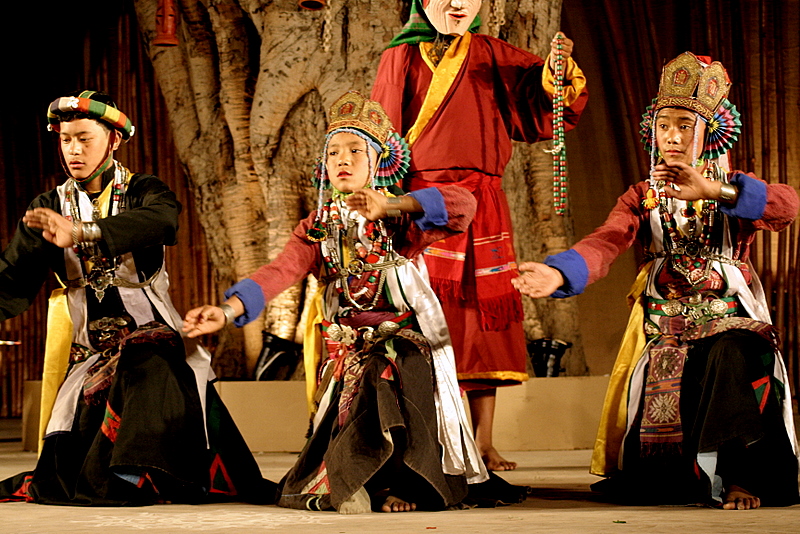
The Monpa are Arunachal Pradesh’s most numerous Buddhist tribal community, concentrated in the West Kameng and Tawang districts. The Dirang Monpa (Tshangla Monpa) are one of three major Monpa sub-groups and speak a language nearly identical to that used in eastern Bhutan — a linguistic connection that reflects the deep cultural ties between the West Kameng highlands and the Bhutanese Buddhist world.
Pastoral and agricultural life: The Dirang Monpa traditionally combined yak herding on the high pastures (above 3,500 metres in summer) with terrace farming in the valley (rice, buckwheat, maize) and trade across the Himalayan passes. This transhumant pattern — seasonal movement between altitude zones — is still practised by families who maintain both valley homes and high-pasture camps.
Traditional house construction: Monpa homes are built of timber and stone on raised platforms, typically constructed in the ninth month of the Buddhist calendar (October–November) when agricultural work is complete. The craft traditions associated with this construction — timber joinery, stone wall techniques, and the decorative painting of facades — are maintained by a dwindling number of skilled craftspeople.
Arts and crafts: Carpet making, bamboo weaving, thangka painting, and the making of wooden bowls are the principal craft traditions of the Dirang Monpa. The Dirang market has several shops selling locally made carpets and handwoven textiles.
Top Attractions in and Around Dirang
1. Dirang Dzong — The Living Medieval Village
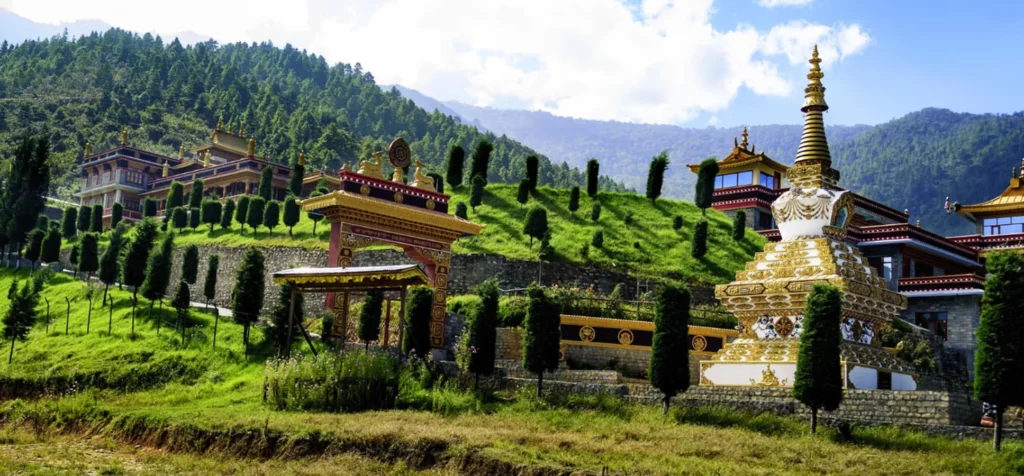
The Dirang Dzong — built in 1831 and constructed on a hillock near the banks of the Dirang Chu river — is not a ruined castle. It is a living settlement. Approximately 50 Monpa families still inhabit the stone and timber houses within the Dzong’s fortified perimeter, maintaining the vegetable gardens, the prayer rooms, and the community spaces that have functioned here for nearly 200 years. The exterior walls are brightly painted in the Bhutanese-Tibetan tradition — white with geometric patterns in red and blue — and the narrow lanes between the houses are paved with flagstone.
The Dzong was built to protect the Dirang community from external raids — its elevated position and defensive walls reflect the political instability of the 19th-century Himalayan hill country. A small stream runs beside it; orange blossoms from the adjacent orchard scent the air in spring; and the view from the Dzong’s highest point over the Dirang Valley is one of the finest in the West Kameng district.
- One of the oldest surviving Monpa fortified settlements in Arunachal Pradesh
- Still inhabited — approximately 50 Monpa families maintain homes within the walls
- The stone staircase entrance and the flagstone lanes within are well preserved
- Legend holds that the oldest surrounding houses may predate the 1831 Dzong construction by centuries
- Best visited on foot from Dirang market — approximately 15–20 minutes’ walk
2. Hot Water Spring (Sulphur Spring)
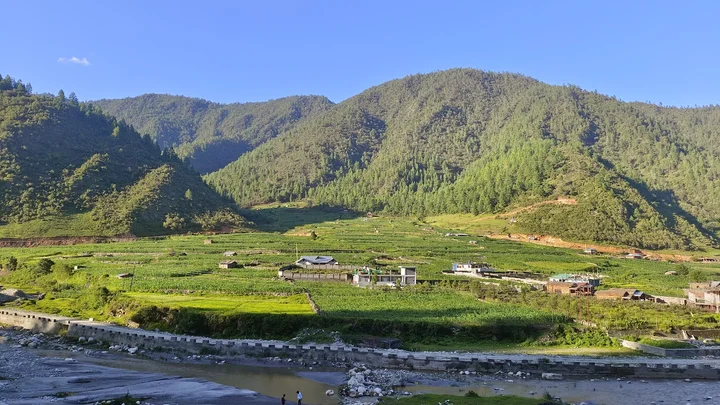
The hot water spring, 1–1.5 kilometres from Dirang town centre on the road toward Tawang, is one of the most reliably rewarding natural attractions in West Kameng. The spring, rich in sulphur content, is considered locally as a holy place with medicinal properties — a short staircase of approximately 500 metres leads from the main road down to the spring, which flows from the hillside and merges into the Dirang Chu River.
- Sulphur-rich water with traditional medicinal properties
- Considered sacred; maintained as a community site
- The soak in the warm water after a mountain driving day is genuinely restorative
- Small bathing enclosure; basic facilities; bring your own towel
- Best early morning; the thermal steam in cool morning air is atmospheric
3. Sangti Valley — Winter Ground of the Black-Necked Crane
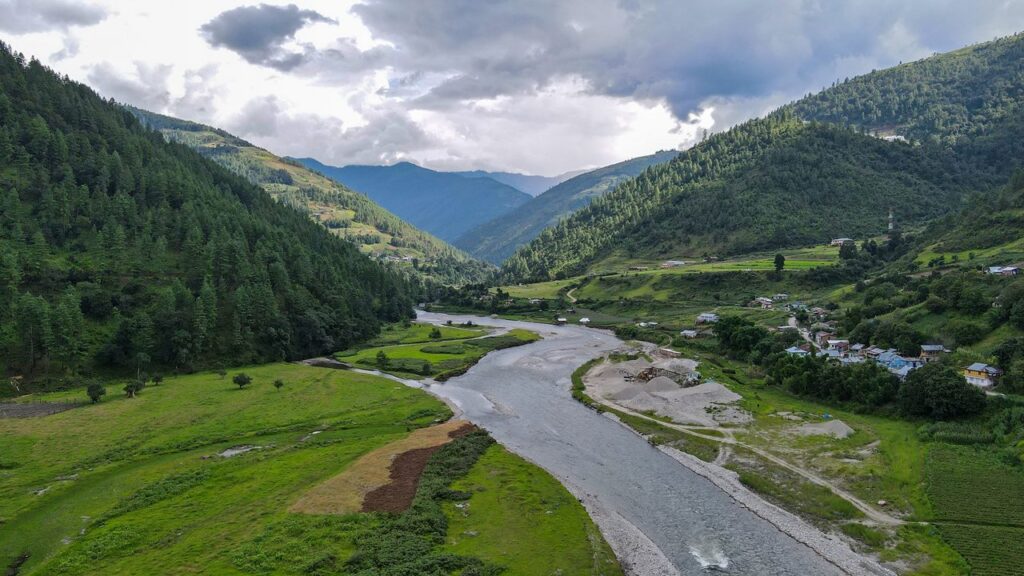
Sangti Valley, 13 kilometres from Dirang town, is one of the most significant wildlife sites in Arunachal Pradesh — a peaceful river valley of meadows, orchards, and farmland that serves as the wintering ground for the black-necked crane (Grus nigricollis), a globally vulnerable species and the most sacred bird in Tibetan Buddhism.
The cranes arrive from the Tibetan plateau in November — sometimes in family groups, sometimes in flocks of 10–20 birds — and remain in Sangti through the winter, feeding in the fields, before returning to Tibet in April and May with their newly hatched young. The Monpa communities of Sangti treat the cranes with a reverence consistent with their Buddhist faith: the birds are not disturbed, not hunted, and their arrival is treated as a blessing.
- Best viewing period: November to March; arrival in late November; peak numbers January–February
- The cranes: Large, elegant birds with black-and-white plumage, red crown, and a wingspan of approximately 2.3 metres
- Birdwatching beyond cranes: Sangti Valley supports excellent bird diversity year-round — the meadow, river, and orchard habitats attract multiple species of duck, kingfisher, and raptor
- Photography: Dawn in the valley, when the cranes feed in the frost-silvered fields, is the finest photography window
4. National Research Centre on Yak
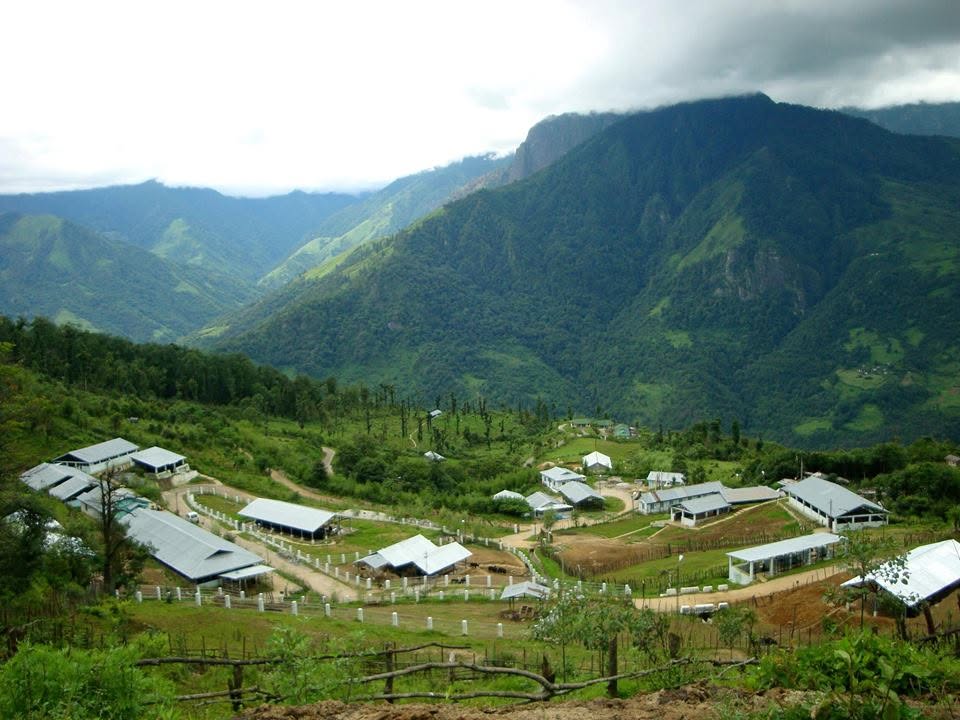
The National Research Centre on Yak — established by ICAR (Indian Council of Agricultural Research) in 1989 at Dirang — is a premier research institution dedicated to the study, conservation, and improvement of yak breeds endemic to the high-altitude regions of Arunachal Pradesh and Sikkim. The experimental yak farm, 31 km from Dirang at approximately 2,700 metres altitude, can be visited by prior arrangement.
- The only ICAR research centre dedicated to yak conservation in India
- Yaks in their natural high-altitude environment — a rare close-observation opportunity
- The centre conducts research on yak genetics, health, nutrition, and their role in high-altitude pastoral economies
5. Thupsung Dhargye Ling Monastery
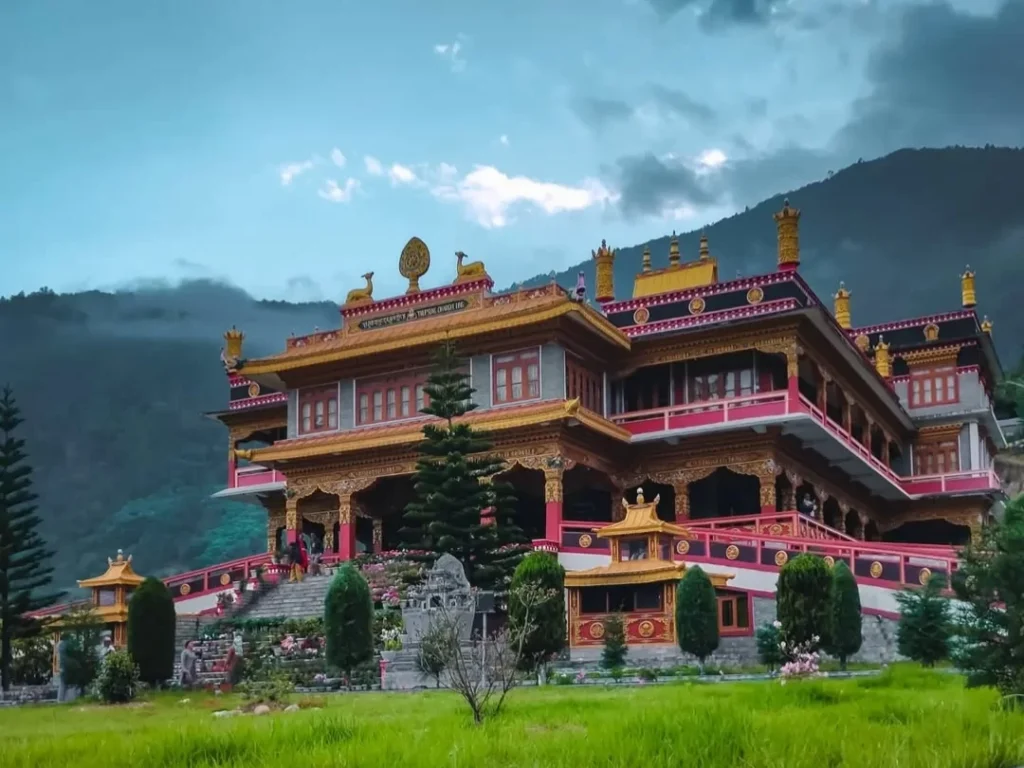
The Thupsung Dhargye Ling Gompa (TDL Monastery) — the newest and largest monastery in Dirang, consecrated by the Dalai Lama on 5 April 2017 and named by him (meaning ‘Place of Flourishing of the Buddha’s Speech’) — stands on a rise above Dirang town, visible from the valley below. Multiple storeys, a wide gateway, prayer wheels aligned along the approach path, and panoramic views of the Dirang Chu valley make it both a spiritual and a scenic destination.
How to Reach Dirang
- From Bhalukpong (Assam border): 140 km; 4–5 hours on the Bhalukpong–Tawang highway.
- From Bomdila: 42 km; 1.5 hours — the same highway, 42 km northeast of Bomdila.
- From Tawang: 140 km; 5–6 hours — driving time includes the Sela Pass crossing (4,170 metres).
Best Time to Visit Dirang
- November to April (Sangti): Black-necked cranes present in Sangti Valley — the primary wildlife draw
- March to May: Spring; apple orchards in bloom; kiwi plantations beginning; pleasant trekking weather
- October to November: Clear skies; excellent mountain views; cranes beginning to arrive
- June to September: Monsoon; some landslide risk on the mountain road; heavy rain reduces visibility
