




Khawzawl is Mizoram‘s newest district — carved from Champhai in 2019 and still finding its place on most travel maps. That invisibility is its greatest asset. Positioned roughly midway on the Aizawl–Champhai Highway through the rolling central Mizo Hills, the district is far enough from the state capital to feel genuinely remote but connected enough by the main eastern highway to be accessible without specialist logistics. For the traveler heading toward the Myanmar frontier, it has historically been a lunch stop. It deserves considerably more than that.
Inside Khawzawl’s borders: a legendary limestone cave system steeped in Mizo oral tradition, an eco-village that has repeatedly won recognition as one of the cleanest settlements in Northeast India, rolling tea terraces that look nothing like the Assam plains, an ancient heritage village holding warrior-era artifacts and historical trees, and a scattering of hidden caves and a mythologized underground spring known only to locals. The district sits squarely in the Indo-Burma biodiversity hotspot — the forests here support hoolock gibbons, barking deer, and bird species that reward anyone willing to walk away from the road.
Quick Facts About Khawzawl District
| QUICK FACTS | KHAWZAWL DISTRICT, MIZORAM |
| State | Mizoram |
| District Created | 2019 — carved from former Champhai district |
| Location | Central-eastern Mizoram on the Aizawl–Champhai Highway |
| Distance from Aizawl | ~150 km via NH306; 4–5 hours on ghat roads |
| Distance from Champhai | ~61 km west; ~2 hours |
| Nearest Airport | Lengpui Airport, Aizawl — approximately 150–170 km |
| Key Attractions | Lianhela Puk, Biate eco-village, Biate Tea Garden, Chawngtlai Village, Khawzawl Hill Viewpoint, Kawlkulh & Ngaizawl caves |
| ILP Required | Yes — Mizoram Temporary ILP (₹20 form + ₹100 processing); valid 15 days |
| Recommended Vehicle | High-clearance 4WD (Tata Sumo, Scorpio, Bolero); local driver strongly advised |
| Best Time | October to April |
Biate — The Cleanest Village in Mizoram
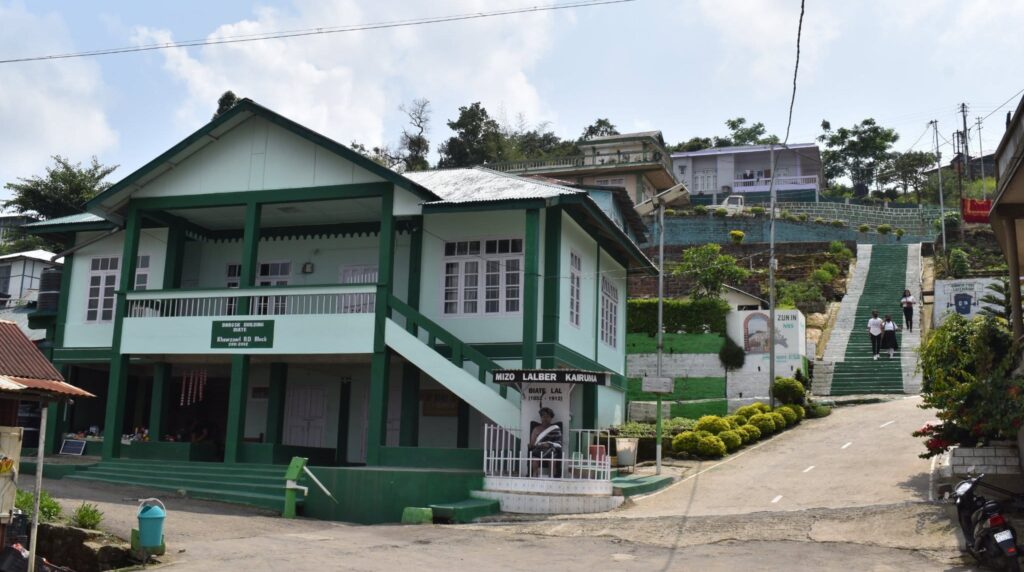
If one place in Khawzawl district has earned a reputation beyond the state’s borders, it is Biate. The town has repeatedly competed for and won recognition in India’s Cleanest Village competitions — including entries in the Swachh Bharat Mission rankings — and stands as one of the most cited examples of community-led civic culture anywhere in the Northeast. The cleanliness is not incidental or the product of a government programme. It is the expression of a deeply embedded Mizo community ethic: the same impulse that produces the famous no-honking traffic culture, the coordinated dawn street-cleaning rounds, and the almost total absence of roadside litter that first-time visitors to Mizoram find genuinely startling.
As an offbeat destination in Mizoram, Biate offers something increasingly rare: a functioning community that has chosen to be a model for how a small town can manage its own environment. Visitors who spend time here rather than simply photographing it tend to leave with a revised sense of what civic life in India can look like.
| Mizo Civic Culture — A Pro Tip for Visitors Mizoram is known for its strong civic culture, with minimal honking, clean streets, and community-led upkeep. Visitors are expected to respect local norms by avoiding litter, limiting horn use, and asking permission before photographing people or homes. Such courtesy is often warmly appreciated by local communities. |
Biate Tea Garden — Emerald Terraces in the Hill Forest
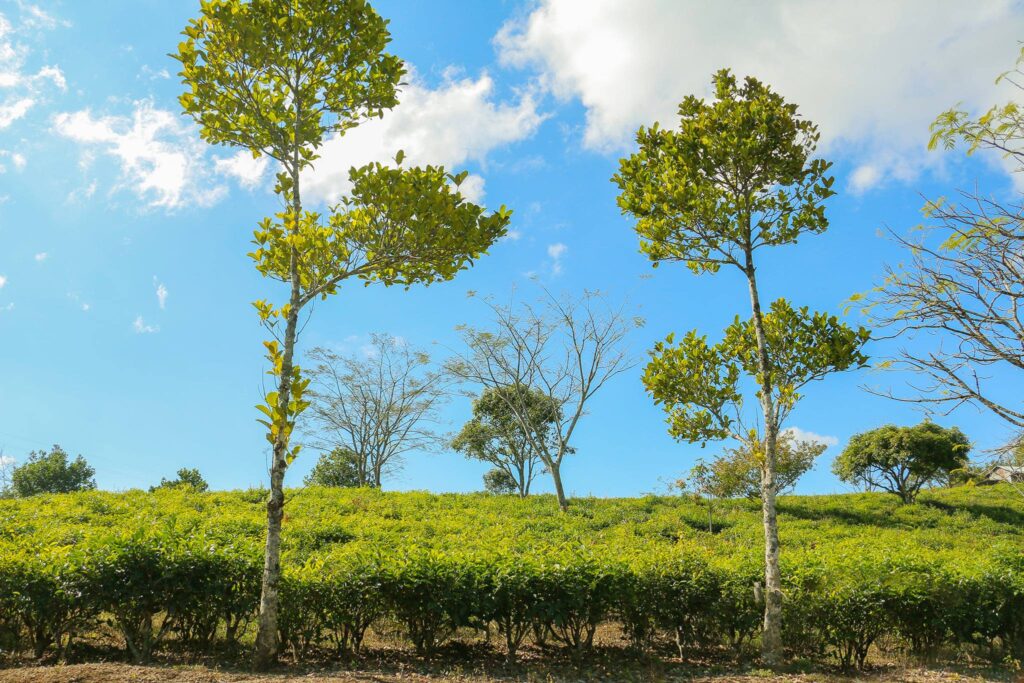
The Biate Tea Garden offers one of the most visually distinctive landscapes in central Mizoram: rows of cultivated tea bushes stepping down the hillside in tight emerald terraces, framed on all sides by the dense subtropical jungle of the Mizo Hills. The aesthetic contrast — the geometric order of tea cultivation against the wild irregularity of the surrounding forest — makes this one of the district’s most photogenic destinations, and one that most travel guides to Mizoram entirely miss.
Unlike the vast commercial estates of Assam, the Biate tea garden operates on a smaller, community-connected scale that makes the experience more intimate. The best time to visit is the morning, when light hits the terraces from the east and mist from the surrounding forest edges the frame. This is also one of the few places in Khawzawl where the phrase “offbeat destination in Mizoram” is genuinely accurate — most travelers on the Aizawl-to-Champhai route pass within a few kilometres of this garden without knowing it exists.
Lianhela Puk — The Cave of the Legendary Ancestor
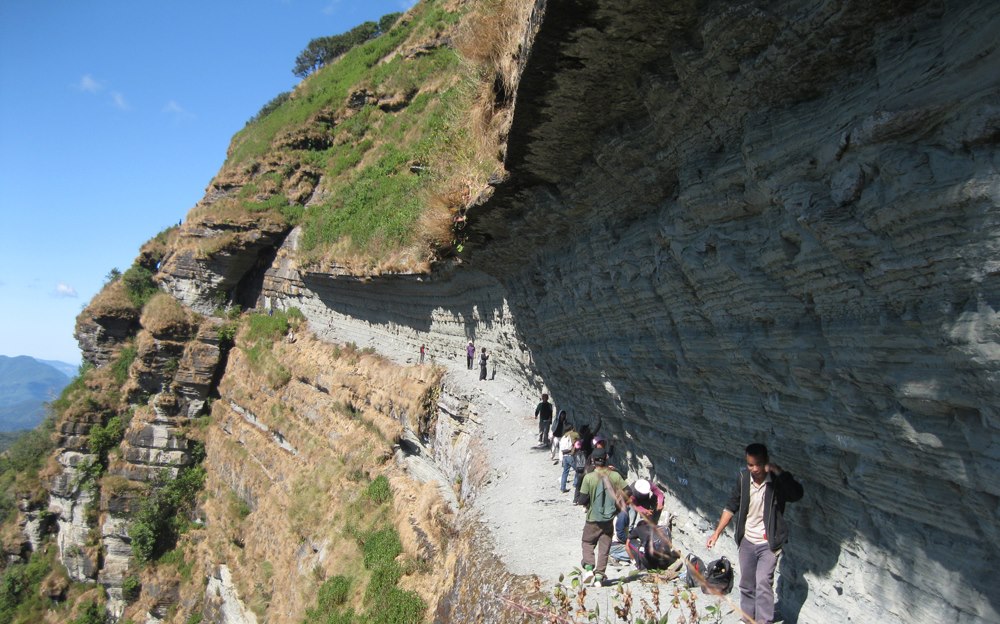
Lianhela Puk is the most significant natural and cultural attraction in the Khawzawl area — a natural limestone cave system whose name carries the memory of a legendary Mizo figure. In the oral tradition preserved by communities here, Lianhela was an ancestor figure who used the cave as both refuge and site of supernatural events. The legend gives the cave the quality that most natural formations in Mizoram share: a story that makes the geology feel inhabited by human memory.
The cave sits on a steep cliffside accessed via a moderately difficult trek through dense tropical vegetation — a natural filter that ensures only genuinely motivated visitors arrive at the entrance. Inside, stalactites and stalagmites have taken thousands of years to form; the air is cool and damp and the sound of dripping water produces an atmosphere visitors consistently describe as simultaneously eerie and peaceful. Caves in the Mizo Hills were historically used by warriors for tactical refuge during inter-tribal conflicts, and Lianhela Puk’s cliff-side position would have made it a defensible stronghold.
- Access — moderately difficult trek through dense vegetation; proper footwear and a torch are essential
- Guide — a local guide from Khawzawl town is strongly recommended for navigating the approach trail
- Formations — stalactites and stalagmites; cool interior temperature contrasts with the hill heat outside
The Hidden Caves — Kawlkulh, Ngaizawl & the Mythic Spring
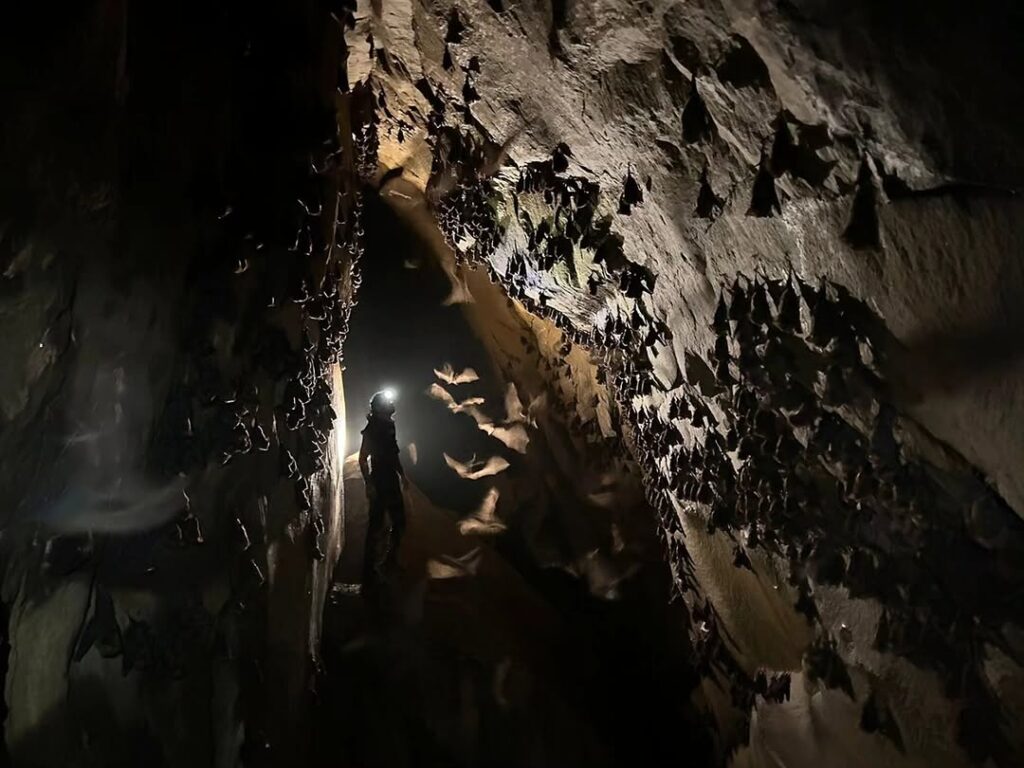
Khawzawl’s cave network extends well beyond Lianhela Puk. Two other significant cave systems — less documented, less visited, and consequently more compelling for the genuine explorer — lie within the district.
Keivawm Puk & Tluangtea Puk (Ngaizawl Village)
Near Ngaizawl village, Keivawm Puk and Tluangtea Puk are natural cave formations that have not been formally developed for tourism and remain known primarily to local communities. Access requires local guidance and is best arranged through the Khawzawl tourism office or village contacts; the reward is the experience of cave exploration in its most unmediated form — no lit pathways, no handrails, no other visitors.
Lalruanga Tui Thuhruk — The Hidden Spring
Among the most intriguing sites in the district is Lalruanga Tui Thuhruk — a hidden underground water spring steeped in Mizo oral mythology. The spring is associated in local tradition with a figure named Lalruanga, and the combination of a living water source deep within a hillside cave and a named mythological connection gives the site a quality of layered significance that purely scenic attractions rarely achieve. Access is limited and conditions can be challenging; this is a destination for explorers rather than casual visitors.
| Practical Note: The caves at Ngaizawl and the Lalruanga spring are not accessible without local guidance. Enquire at the Khawzawl District Tourism Office or ask your homestay host to arrange a local contact. These sites reward persistence — they represent the kind of hidden discovery that generalist travel platforms have not yet catalogued. |
Chawngtlai Historical Village — Mizo Heritage in Stone and Wood
Chawngtlai village, within Khawzawl district, functions as a living repository of Mizo cultural memory. The village is known as a treasure trove of Mizo folklore and material heritage: ancient monuments, historical trees that predate the village’s recorded history, and artifacts from the tribal warrior era that give physical form to the oral traditions carried by the region’s communities. The village offers a direct encounter with the pre-Christian Mizo world — before the missions arrived in the late 19th century and dramatically transformed the cultural landscape of the hills.
For travelers with an interest in Northeast India’s tribal heritage beyond the standard itinerary, Chawngtlai is the kind of discovery that transforms a transit route into a destination. The village is best approached with time — half a day minimum — and ideally with a local guide who can translate the significance of what you are looking at.
Lungkhawdur — The Cloudy Stone of Vanchengpui
In Vanchengpui, a geological formation known as Lungkhawdur — literally ‘Cloudy Stone’ in Mizo — presents one of the district’s most striking natural curiosities. The rock formation’s surface texture and coloration bear a remarkable resemblance to dark, petrified storm clouds: layered, billowing, and almost impossibly expressive for an inorganic material. The site is little known outside the district and has received minimal coverage in regional travel writing — making it one of Khawzawl’s most rewarding low-effort discoveries for travelers willing to ask locals for directions.
Khawzawl Hill Viewpoint — Panoramic Views Across the Central Mizo Hills
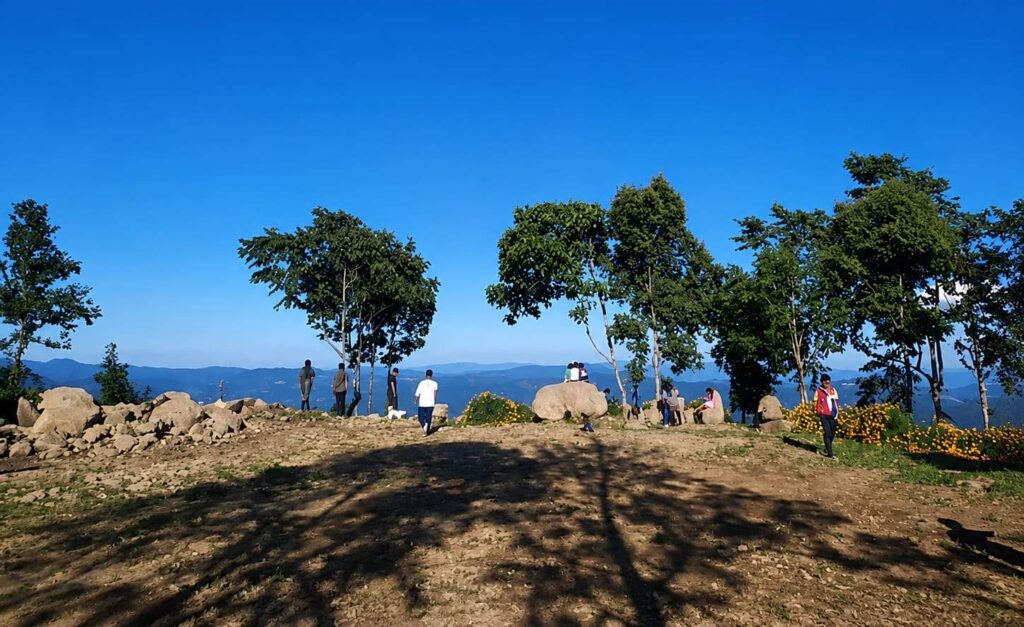
The Khawzawl Hill Viewpoint occupies the highest accessible point in the district, offering views across the rolling central Mizo Hills: north toward Aizawl, east toward Champhai and the Myanmar border, west toward the forested interior ridges. It is one of the finest viewpoints in this less-visited stretch of central Mizoram. The view east on clear days extends toward the Champhai Valley. Best at dawn — when mist fills the valleys and the first light catches the ridges — the viewpoint provides the geographical orientation point that makes the rest of the district legible.
The Indo-Burma Biodiversity Hotspot — Khawzawl’s Wild Interior
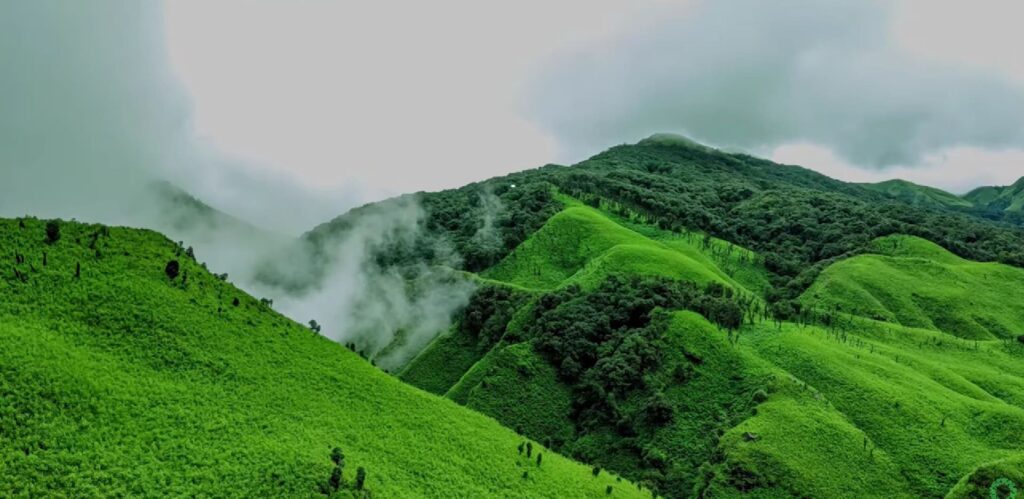
The forests of Khawzawl district form part of the central Mizo Hills ecosystem — one of the less-disturbed sections of the Indo-Burma biodiversity hotspot. The combination of altitude (the highest sections exceed 1,200 metres), high annual rainfall, and relative remoteness from major population centres has preserved forest cover that sustains wildlife communities typical of the eastern Himalayan foothills.
- Hoolock Gibbon — present in forested areas; dawn calls audible from forest edge — one of the most memorable sounds in the Mizo Hills
- Barking Deer & Serow — common in mixed forest; often heard before they are seen
- Forest birds — hornbills, laughingthrushes, sunbirds; bird diversity is typical of the central Mizo Hills and rewards early-morning walks
4-Day Eastern Frontier Slow Travel Itinerary
The standard approach treats Khawzawl as a 2-hour lunch stop on the road to Champhai. The itinerary below treats it as the destination it is — a central base for exploring the hidden heart of eastern Mizoram before continuing to the Myanmar frontier.
Day 1 — Aizawl to Khawzawl
Depart Aizawl early; the 150 km journey on NH306’s ghat roads takes 4–5 hours in a high-clearance vehicle. Arrive Khawzawl by mid-afternoon. Afternoon: Khawzawl Hill Viewpoint for orientation; evening walk through Khawzawl town. Overnight: Government Tourist Lodge or local homestay.
Day 2 — Biate, Tea Garden & Cave Exploration
Full day in the district’s hidden interior. Morning: drive or trek to Biate eco-village and the Biate Tea Garden — emerald terraces in early light. Afternoon: Lianhela Puk cave trek (allow 3–4 hours including the approach). Evening: return to Khawzawl. Overnight: Khawzawl.
Day 3 — Chawngtlai Heritage, Hidden Caves & Lungkhawdur
Morning: Chawngtlai historical village — half-day minimum with local guide. Afternoon: Ngaizawl caves (Keivawm Puk / Tluangtea Puk) and Lalruanga Tui Thuhruk spring, with a local guide arranged through the tourism office. En route: Lungkhawdur stone formation at Vanchengpui. Overnight: Khawzawl.
Day 4 — Khawzawl to Champhai and Zokhawthar
Early departure east toward Champhai (61 km; 2 hours). Champhai: Thasiama Seno Neihna viewpoint and Rih Dil sacred lake, the legendary river of souls on the Myanmar border. Continue to Zokhawthar border market. Return via Khawzawl to Aizawl, or overnight Champhai.
Where to Stay in Khawzawl
Accommodation in Khawzawl is limited but adequate. The main option is the Government Tourist Lodge in Khawzawl town, which is best booked in advance, especially between November and February.
For a more local experience, homestays in Biate and nearby towns offer a chance to engage with community life. Bookings are usually arranged through the district tourism office or local contacts, and cash payments are commonly preferred.
Inner Line Permit (ILP)
An Inner Line Permit is required for all Indian nationals visiting Mizoram. Foreign nationals require a Protected Area Permit (PAP).
How to Apply
- Online through the Inner Line Pass – GoM – Government of Mizoram portal
- At Mizoram House offices in Delhi, Kolkata, and Guwahati
- At the Vairengte border checkpoint from Assam (on-arrival in some cases)
For full permit details and step-by-step application guidance, visit the Travel Permits section on NorthEast India Connect.
How to Reach Khawzawl
By Road — The Aizawl–Champhai Highway
The Aizawl–Champhai Highway (NH306) is the primary route into Khawzawl and the only practical access for most travelers. From Aizawl: approximately 150 km on challenging single-lane ghat roads; allow 4–5 hours minimum.
| Insider Transit Tip — Road Travel in Mizoram The Aizawl–Khawzawl route follows narrow mountain roads with sharp bends and limited passing space. High-clearance vehicles such as the Tata Sumo, Scorpio, or Bolero are recommended, ideally with an experienced local driver. Shared taxis traveling between Aizawl and Champhai via Khawzawl offer a budget-friendly alternative. |
By Air
Lengpui Airport, Aizawl, is the nearest aviation hub — approximately 150–170 km from Khawzawl depending on the mountain route. Direct flights connect Aizawl with Kolkata, Guwahati, Imphal, and Delhi. From Lengpui, hire a vehicle for the onward journey east.
Best Time to Visit Khawzawl
- October to March — dry season; cave treks fully accessible; hill viewpoints clear; Biate tea garden at its most photogenic in the cool air
- April to May — pre-monsoon warmth; forest in new leaf; pleasant for trekking; some wildflowers in the forest understorey
- June to September — monsoon; the approach trail to Lianhela Puk becomes slippery and potentially dangerous; ghat roads require extra caution; not recommended for first-time visitors
