




Meghalaya has inaugurated a one-of-a-kind glasshouse restaurant in Mawrah village in the East Khasi Hills district, marking a significant addition to the state’s growing sustainable tourism offerings. Chief Minister Conrad K. Sangma performed the inauguration on World Environment Day, a deliberate gesture that frames the project as much more than a dining venue — it is part of a broader state vision for tourism that is environmentally conscious, community-driven, and built to last.
A Restaurant Built Around the Landscape
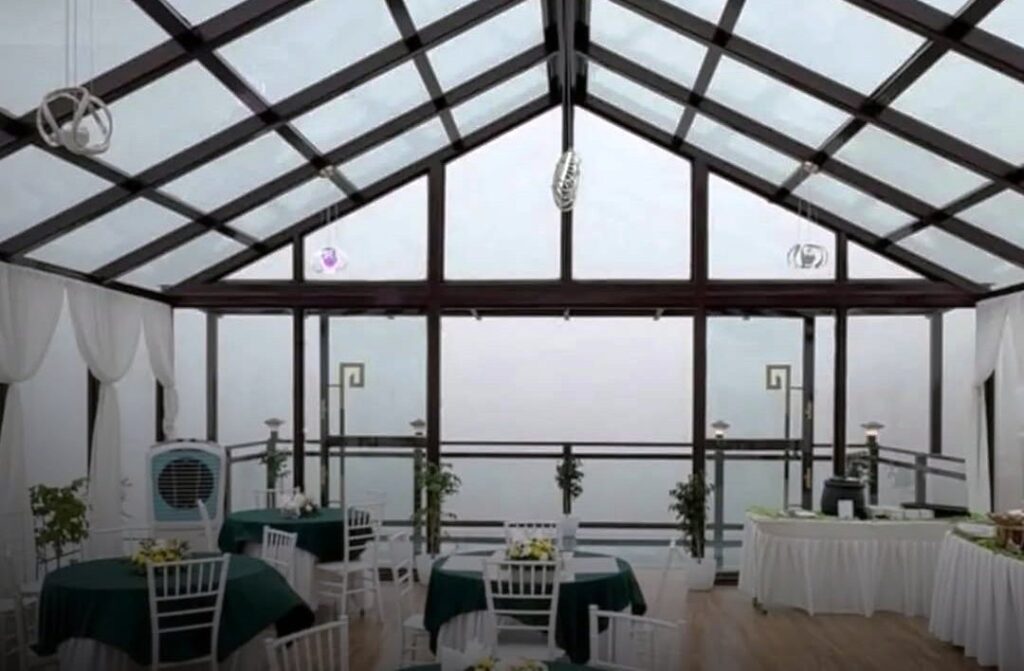
The structure itself is striking. Designed entirely in glass, the restaurant offers visitors uninterrupted panoramic views of the surrounding hills and forests while dining — a setting that changes character with the weather, from mist-draped monsoon mornings to clear, sunlit afternoons.
The restaurant overlooks a scenic lake and is surrounded by eco-cottages, creating a self-contained nature retreat rather than a standalone attraction. The glass design ensures that guests remain visually immersed in the natural environment throughout their visit.
Located in Mawrah village in the East Khasi Hills, the project is accessible from Shillong, Meghalaya’s capital, and is expected to draw both domestic and international travellers looking for immersive, off-the-beaten-path experiences in Northeast India.
Eco-Cottages, Local Jobs, and a Wider Tourism Vision
The development goes beyond the restaurant. Eco-cottages have been introduced alongside it to encourage longer, more immersive stays — a model aligned with the growing global demand for slow travel and nature-based tourism. Together, the restaurant and cottages are designed to create a complete destination experience rather than a single-point visit.
Crucially, the initiative is structured to generate employment opportunities for residents of Mawrah, embedding the local community at the centre of the tourism economy. This approach — where the people living nearest to an attraction also benefit most from it — has become a defining feature of Meghalaya’s rural tourism strategy.
The Story Behind Mawrah
What gives this inauguration its deeper significance is the village’s own journey. Mawrah was once severely affected by water scarcity and environmental degradation. Over time, through community-led effort, it transformed into a model of ecological restoration — a turnaround that has attracted attention well beyond the state.
The glasshouse restaurant and eco-cottages now sit atop that restored landscape, turning Mawrah’s environmental recovery into a tangible tourism asset.
The dam and surrounding greenery that once marked the village’s struggle with water scarcity now form the scenic backdrop that visitors will come to experience — a rare example of a destination where the tourism story and the conservation story are one and the same.
Part of Meghalaya’s Sustainable Tourism Push
The Mawrah project fits into Meghalaya’s wider push to develop tourism infrastructure that is visually compelling, environmentally responsible, and rooted in local communities. The state has been working to diversify its tourism offer beyond its most iconic draws — the living root bridges of Cherrapunji and Mawlynnong, the Dawki river, and the plateau landscapes of the Khasi and Garo Hills — by investing in newer, lesser-known destinations like Mawrah.
For travellers already planning a trip to the region, the glasshouse restaurant offers a compelling reason to extend their itinerary into the East Khasi Hills.
