




Ask anyone from Assam what Bihu means to them, and you will rarely get a short answer. It is not one festival but three, spread across the agricultural year, each marking a different relationship between the Assamese people and the rice that has sustained them for centuries. Bihu is the heartbeat of Assamese identity — celebrated by Hindus, Muslims, Christians, and tribal communities alike, transcending the religious lines that define most festivals in India. If you only know Bihu as the colourful spring celebration with dancing and drums, you are seeing one-third of the picture.
There are three Bihus: Bohag Bihu (Rongali Bihu) in spring, Kati Bihu (Kongali Bihu) in autumn, and Magh Bihu (Bhogali Bihu) in winter. Each corresponds to a distinct stage of the rice cultivation cycle, with its own mood, rituals, and meaning.
Quick Facts: The Three Bihus of Assam
| Bihu | Also Known As | Season | Significance |
|---|---|---|---|
| Bohag Bihu | Rongali Bihu | Mid-April (spring) | Assamese New Year; sowing season; most celebrated |
| Kati Bihu | Kongali Bihu | Mid-October (autumn) | Lean period; prayers for crop protection |
| Magh Bihu | Bhogali Bihu | Mid-January (winter) | Harvest festival; community feasting |
| Celebrated By | All communities of Assam, irrespective of religion | ||
| Core Elements | Bihu dance, Husori, Bihu geet, pitha, gamosa | ||
| Key Instruments | Dhol, pepa, gagana, toka, baanhi | ||
What Is Bihu? Understanding Assam’s Three-Part Agricultural Cycle
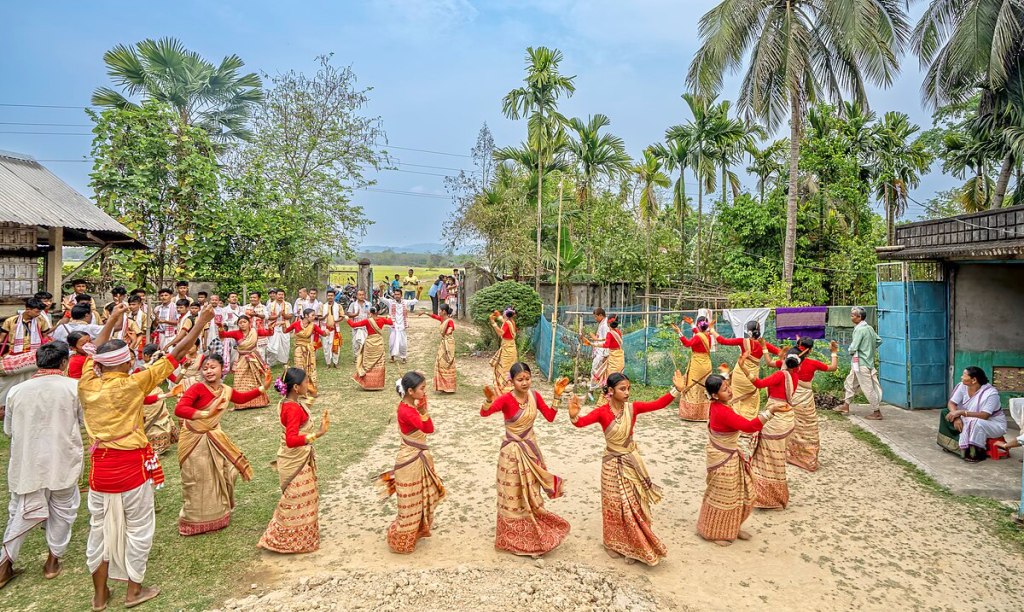
Each Bihu coincides with a specific phase in the agricultural calendar: Bohag Bihu marks the New Year at the start of the sowing season, Kati Bihu marks the completion of sowing and transplanting of paddy, and Magh Bihu marks the end of the harvesting period. This structure reflects centuries of an agrarian society organising its emotional and spiritual life around the demands of the land.
What makes Bihu genuinely distinctive is its universality. It is celebrated by the Ahoms, Bodos, Mishings, and other indigenous groups of Assam, each with regional variations, alongside the broader Assamese Hindu and Muslim population. The Bodo community celebrates a parallel version called Bwisagu, featuring the Bagurumba dance performed by women in traditional Dokhona attire. This breadth is part of why Bihu functions as a marker of Assamese identity rather than a purely religious observance.
Bohag Bihu (Rongali Bihu): Sowing the Assamese New Year
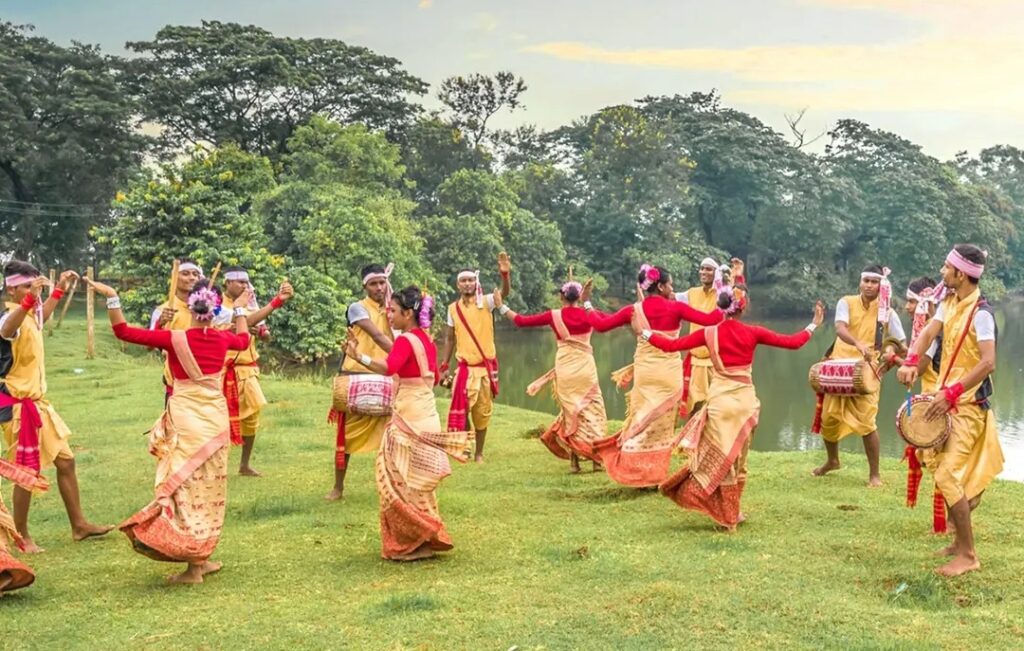
Bohag Bihu falls in mid-April, coinciding with the first day of the Assamese month of Bohag — marking the Assamese New Year and the arrival of spring. Of the three Bihus, this is by far the most celebrated and visually spectacular.
The name Rongali comes from “rong,” meaning colour or joy. The festival unfolds over seven days in its traditional form, with the core celebrations spanning three.
The Seven Stages: From Goru Bihu to Manuh Bihu
Goru Bihu (Cow Bihu) opens the festival on the last day of the outgoing year. Cattle are bathed in local ponds and rivers, smeared with a turmeric and black gram paste, fed gourds and brinjals, and provided with new ropes — gratitude toward animals central to Assamese agrarian life.
Manuh Bihu (Human Bihu) follows on New Year’s Day. People take a ceremonial bath, wear new clothes, and seek blessings from elders. The gamosa is exchanged as a gift — offered to elders as a mark of respect, given to younger family members as a blessing.
Husori and the Bihu Dance define the days that follow. Husori are groups of men, and sometimes women, who move from home to home, singing traditional Bihu songs and performing the Bihu dance to bless each household for the year ahead. Female dancers, or Bihuwatis, traditionally wear the Kopou Phool — the foxtail orchid (Rhynchostylis retusa) — tucked into their hair bun. This delicate, pale flower blooms naturally with the arrival of spring in Assam and has become the single most iconic botanical symbol of the festival, signalling fertility and renewal as visibly as the dance itself.
Mastering the Instruments: The Dhol, Buffalo-Horn Pepa, and Gagana
The Bihu dance is built around instruments with distinct construction and sound. The dhol (drum) sets the tempo that everything else follows. The pepa is a hornpipe made from a split buffalo horn tipped with a bamboo reed — this combination gives it the piercing, high-pitched wail instantly recognisable as the sound of Rongali Bihu. The gagana is a delicate bamboo jaw harp, played by pressing it against the teeth and plucking it while shaping sound with the tongue, producing a resonant drone beneath the dhol and pepa. The toka (bamboo clapper) and baanhi (bamboo flute) round out the ensemble.
Bihu geet, the folk songs sung throughout, are often playful and romantic, expressing the emotions of young people through nature imagery. Public Mukoli Bihu celebrations — performed in open fields, often under the shade of bakul or sonaaru trees in the bright morning hours — are where the festival’s rural, communal character is most visible, and anyone can join.
Modern Venue Realities: Latasil vs. Sarusajai
Guwahati offers two very different Bihu experiences. Latasil Field is the historic soul of urban Bihu: in 1952, the Guwahati Bihu Sanmilani, co-founded by Radha Govinda Baruah, organised the first Mancha Bihu (stage Bihu) here, moving the dance from open fields onto a formal stage for the first time. Performing at Latasil remains a matter of pride for Bihu dancers and troupes, and the ground still hosts the Sanmilani’s annual programme and dance workshops before the festival.
Sarusajai Stadium, by contrast, is the modern mega-venue — large-scale, government-backed Bihu Mela events with thousands of performers, including a Guinness World Record attempt for the largest Bihu dance gathering in 2023. For the historic, intimate version of urban Bihu, go to Latasil for the Mancha Bihu evening shows. For spectacle and scale, Sarusajai is unmatched.
Kati Bihu (Kongali Bihu): The Introspective Autumn Festival of Lamps
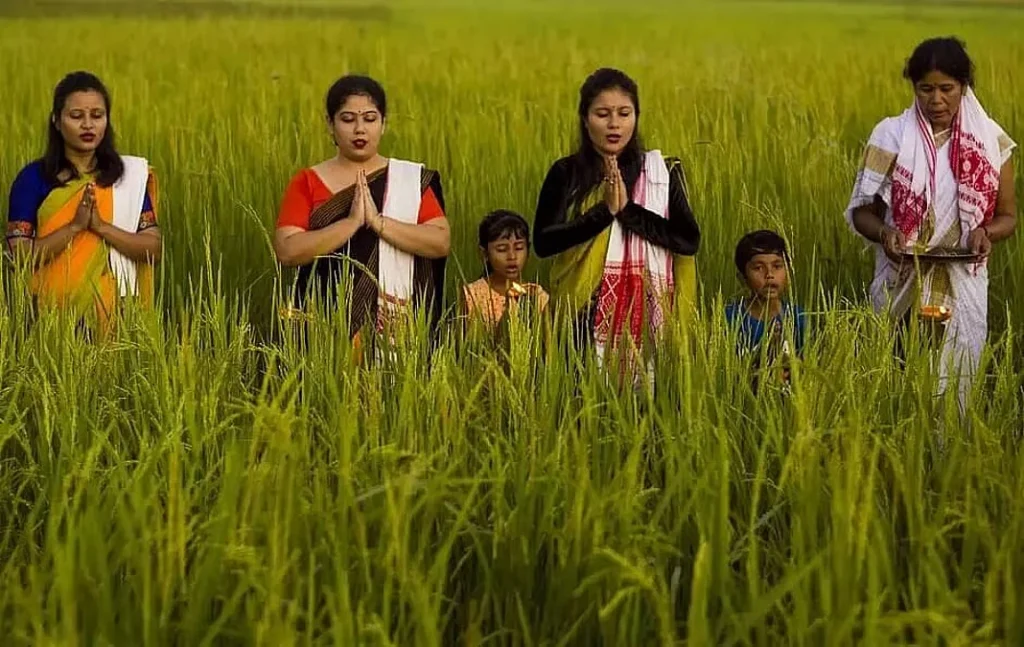
Kati Bihu falls in mid-October, during the Assamese month of Kati, and could not be more different in temperament from its spring counterpart.
This is the period when rice saplings have been transplanted but harvest is still months away — granaries are largely empty, hence the name Kongali, from “kongal,” meaning poor or lacking. The festival reflects that mood entirely: no dancing, no Husori, no public spectacle. Families light earthen lamps near the tulsi plant in the household courtyard and in the corners of paddy fields, praying for the protection and healthy growth of the standing crop. Many also light a lamp at the base of a banana tree or bamboo grove near the field, warding off pests before the rice matures. This is Bihu at its most introspective — patience and quiet hope rather than celebration.
Magh Bihu (Bhogali Bihu): Uruka Feasting and the Science of the Meji Bonfire
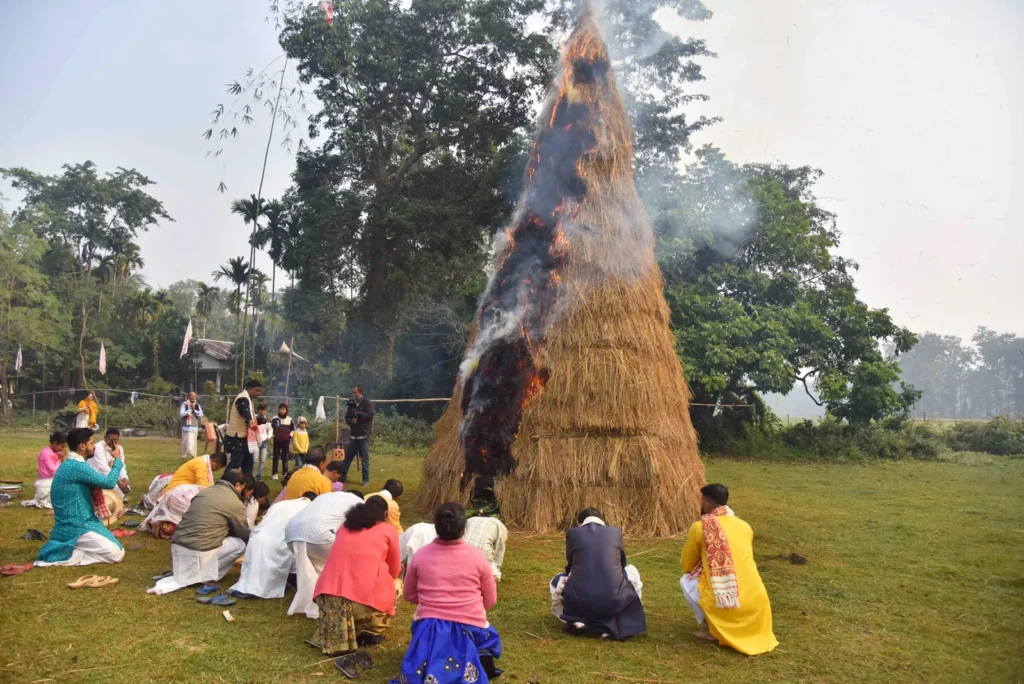
Magh Bihu arrives in mid-January, marking the end of the harvesting period — when granaries are full and the hardest agricultural labour of the year is complete. The name Bhogali comes from “bhog,” meaning feast, and food sits at the centre of this celebration more than any of the other two.
Uruka, the night before the main day, is when the festival’s character comes through most fully. Communities build temporary thatched huts called bhelaghars near the fields, where groups gather to cook a communal feast of fish, meat, and rice delicacies, staying up through the night eating and singing.
At dawn, a large bonfire called the Meji is lit using bamboo, hay, and the previous night’s structures. People circle the fire offering prayers, and the ashes are later scattered across the fields. This is not purely symbolic: burning large quantities of bamboo, hay, and wood produces ash that is highly alkaline and rich in potassium. Scattered over the often acidic soil of the Brahmaputra valley, it functions as a genuine natural soil conditioner — neutralising pH levels ahead of the next planting season, a working version of soil science Assamese farmers practised long before it had a name.
Ceremonial community hunting known as Sikaar was historically associated with Magh Bihu in villages near forest areas. This is now strictly prohibited inside protected zones such as Kaziranga National Park, and the feast today centres entirely on the village bhelaghar.
Pithas made with til (sesame) and narikol (coconut), laru (sweet balls), and chira (flattened rice) are prepared and shared generously throughout the day.
Cultural Icons: The Symbolic Power of the Gamosa and Kopou Phool
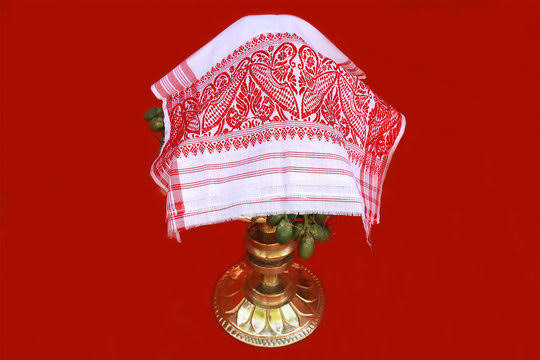
The gamosa is a handwoven white cotton cloth with a red border, often featuring phulam — intricate floral embroidery woven along its edges. Far more than a towel, it functions as a marker of Assamese identity — offered to guests as a welcome, draped over elders’ shoulders as a gesture of respect, and used in religious contexts at the namghar.
The Kopou Phool, meanwhile, belongs specifically to Bohag Bihu and to the women who dance it. Its appearance each April, blooming naturally in sync with the festival itself, has made it inseparable from the visual identity of Rongali Bihu — as recognisable a symbol of the season as the dhol’s beat.
The Ultimate Bihu Cultural & Culinary Etiquette Checklist
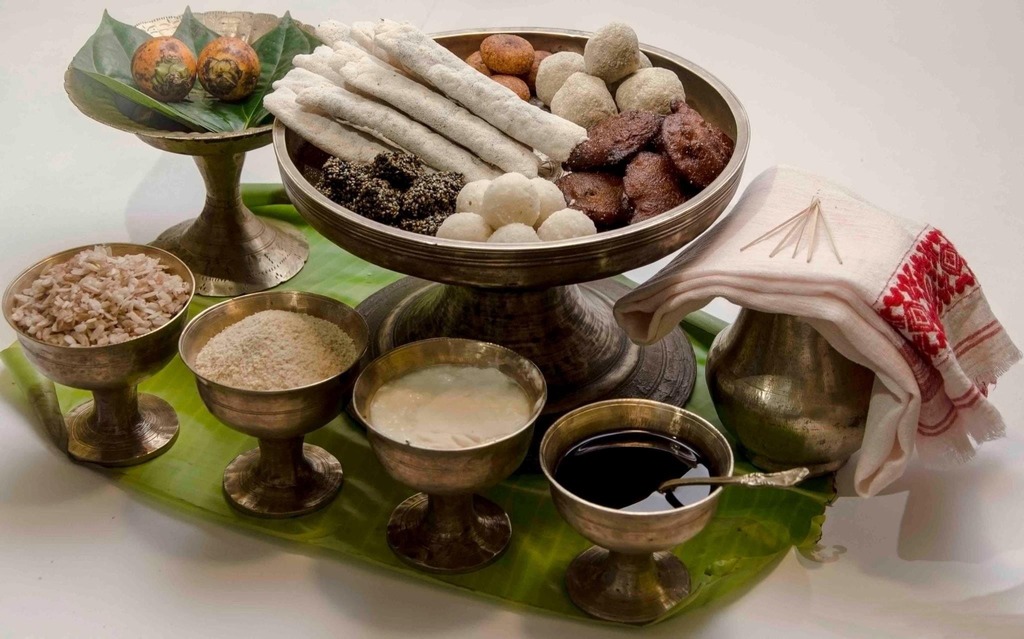
- Gamosa geometry: when gifted a gamosa, look for the phulam embroidery. Accept it with both hands and drape it around your neck with the embroidered end hanging forward on your right side.
- The pitha paradigm: try the gila pitha (soft, deep-fried rice cakes) while hot. Be careful with til pitha — these rolled sesame rice cakes are delicate and crumbly, and eating them clumsily is an instant tourist giveaway.
- Mukoli vs. Mancha timing: watch Mukoli Bihu (open-field style) in the bright morning hours, and save Mancha Bihu (staged evening lineups at venues like Latasil) for after dark.
- Respect Sikaar restrictions: ceremonial hunting once associated with Magh Bihu is banned inside national parks and wildlife reserves. Stick to the village bhelaghar feasts.
Travel Logistics: Visiting Guwahati, Jorhat, and Sivasagar During Bihu Peak
Guwahati hosts the most accessible Bihu experiences, spanning both Latasil Field’s historic Mancha Bihu and Sarusajai Stadium’s large-scale Mela. Jorhat, the cultural capital of upper Assam, is known for authentic, nightlong Bihu programmes and is the gateway to Majuli, where celebrations carry a distinctly Vaishnavite character. Sivasagar offers Bihu against the backdrop of centuries-old Ahom monuments near the Charaideo Moidams, Assam’s UNESCO World Heritage Site.
Book accommodation in Guwahati or Jorhat at least 6–8 weeks in advance for Bohag Bihu, given the scale of domestic travel within Assam during mid-April. If you want authentic muga silk gamosas rather than mass-produced versions, look for handloom cooperative stores in Guwahati’s Pan Bazaar area rather than roadside festival stalls.
Why Bihu Matters Beyond Assam
Bihu is one of the clearest living examples in India of a community’s spiritual calendar built directly around the agricultural one — sowing, waiting, and harvest each given their own emotional register, rather than collapsed into a single undifferentiated “harvest festival.”
It is also a striking example of religious plurality in practice. Hindu, Muslim, Christian, and indigenous communities across Assam observe Bihu in their own ways, and it has never belonged to one religious tradition — a significant part of why it remains the most unifying cultural institution in Assamese life.
Use the NE India Trip Planner to plan a visit around any of the three Bihus, and explore the NorthEast India Connect Festivals & Events category for more celebrations across the region’s eight states.
