




If there is one thing that makes the Mizo people stop everything — farming tools, school, office work — and pour into the streets in traditional finery, it is Chapchar Kut. Every March, the grounds of Lammual in Aizawl fill with bamboo poles clicking in rhythmic percussion, women in Puanchei wraps stepping between them with extraordinary coordination, and tens of thousands of people celebrating a pause in the agricultural calendar marked with feasting and dance since at least the 15th century. This is Chapchar Kut — the largest and most beloved festival in Mizoram, and one of the most visually spectacular cultural events in Northeast India.
Chapchar Kut falls on the first Friday of March every year. Dates for 2027 will be announced closer to the time — watch the Mizoram Art & Culture Department for confirmation. If you have never been to Mizoram, this festival is the best possible reason to go.
Quick Facts: Chapchar Kut
| Detail | Information |
|---|---|
| Festival | Chapchar Kut (also Chapchâr Kût) |
| When | First Friday of March each year |
| Main Venue | Lammual (Assam Rifles Ground), Aizawl, Mizoram |
| Celebrated By | Mizo community across Mizoram |
| Duration | Week-long (single grand main day at Lammual) |
| Festival Origin | c. 1450–1700 AD, Seipui village |
| Revived | 1973 (modern format) |
| Signature Dances | Cheraw (bamboo dance), Khuallam, Chai |
| Key Instrument | Khuang (traditional Mizo drum) |
| ILP Required | Yes — Indians via ilp.mizoram.gov.in |
| Nearest Station | Sairang Railway Station (20 km from Aizawl), operational since September 2025 |
What Is Chapchar Kut? The Agricultural Roots of Mizoram’s Spring Festival
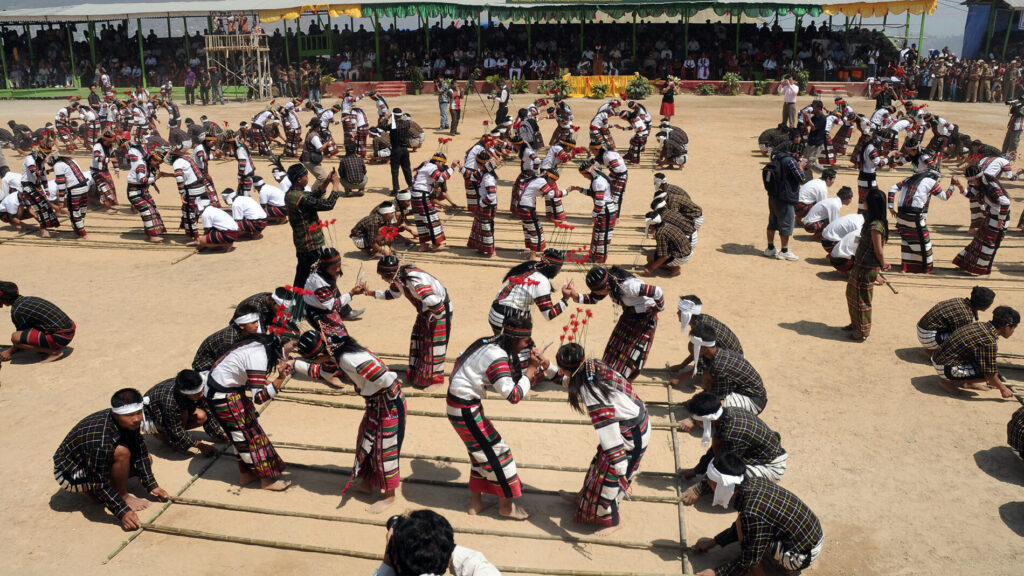
The name breaks down simply but evocatively. “Chapchar” refers to the agricultural pause between felling bamboo forest for jhum cultivation and setting it alight — the days when the cut material dries under the sun and the hardest labour briefly stops. “Kut” means festival. Together: the festival of the waiting time.
Jhum farming demands extraordinary physical effort at the clearing stage. Farmers fell bamboo on steep hillsides in December or January, leave the material to dry for weeks, then burn it before the monsoon arrives. Once the clearing is done, there is a brief window before the burning begins — the Chapchar — when the village breathes.
It was in that pause that the festival was born. According to Mizo oral tradition, the celebration originated between 1450 and 1700 AD in a village called Seipui. Hunters returned empty-handed during the clearing season; rather than let disappointment define the day, the village chief called an impromptu feast of rice beer and whatever meat was available. People sang. People danced. The next year, they did it again — and the practice eventually spread across every village in the hills.
The 1973 Cultural Revival: Balancing Heritage and Modern Faith
The narrative of Chapchar Kut as an unbroken tradition requires one honest correction.
When English missionaries arrived in Mizoram in the late 1890s, the festival declined sharply. The rice beer, animistic prayers, and spiritual context were considered incompatible with Christian values. By the mid-20th century, it had largely faded from public life. A first revival attempt in 1962 stalled over similar concerns.
The turning point was 1973, when Chapchar Kut was relaunched on a mass scale with a deliberate reframing: animistic elements were removed, but the Cheraw dance, community feasting, traditional music, and the agricultural celebration at its heart were all retained. Crucially, the Church no longer opposed it — recognising that what was disappearing was a cultural inheritance belonging to the Mizo people regardless of their faith. That decision is why the festival exists in its current form, and the ease and joy you feel at Lammual directly reflects it.
The Dances: Cheraw, Khuang, and the Chai Circle
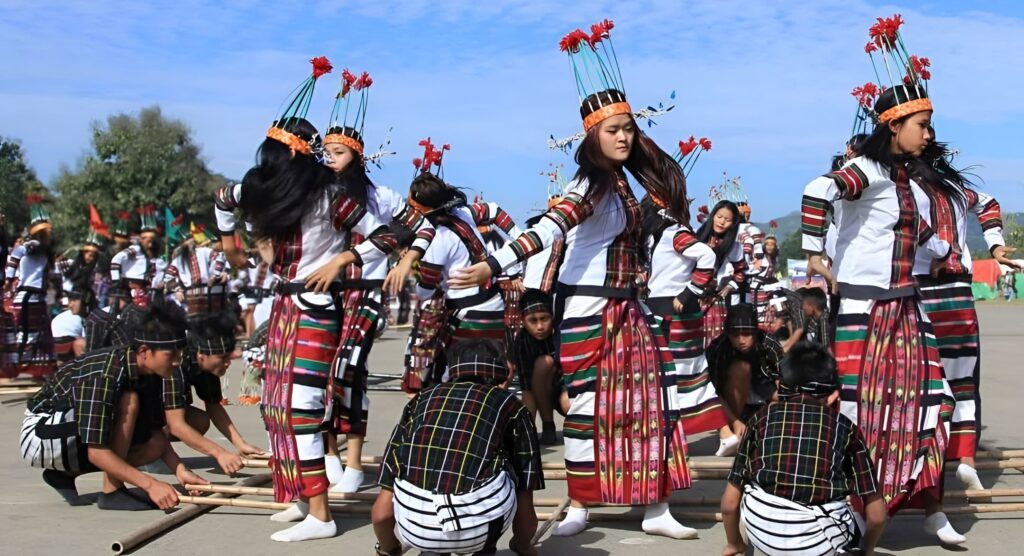
The Cheraw: Bamboo, Rhythm, and Precision
The Cheraw is performed with long bamboo poles laid horizontally in pairs. Six to eight people sit on either side, clapping the poles open and closed while dancers in full traditional attire step in and out between them with footwork that takes months of practice to make look effortless. The pace builds, the percussion of bamboo on bamboo is deeply arresting — and by the time you have watched it for ten minutes, you understand why it represented India at the Republic Day parade in New Delhi in 2014. Around 15,000 performers participate in the Lammual Cheraw, making it one of the largest coordinated folk dance performances in the world.
The Khuang: The Heartbeat You Need to Listen For
What drives the pace of the Cheraw, Khuallam, and Chai is not the bamboo — it is the Khuang, a traditional wooden drum wrapped in animal hide. The Khuang player sets and controls the tempo through every stage of each dance; as the beat quickens, the dancers accelerate in unison. Listen for it when you arrive: understanding that the Khuang is the conductor changes how you hear and watch everything else.
The Chai: When the Audience Becomes the Festival
The Chai is the final dance of Chapchar Kut and the one that belongs to everyone. Performers, tourists, locals, the elderly and the young all join hands in expanding circles that eventually fill the Lammual grounds. By the time it begins, the distinction between audience and participant has dissolved entirely. Wear shoes you can move in — no Chapchar Kut is complete without joining it.
Festival Schedule: Kut Tlan Week and Main Day at Lammual
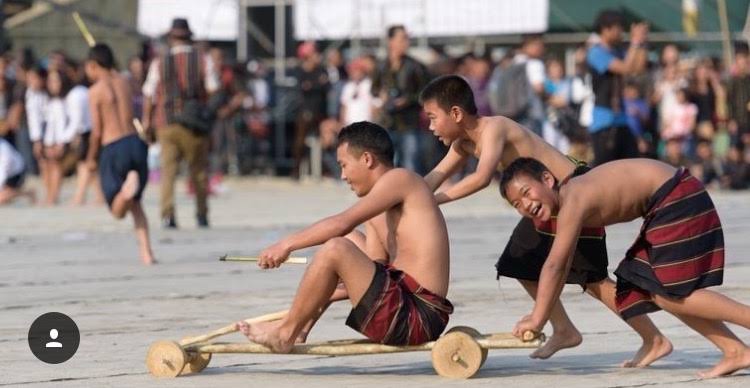
The Week Before
The Kut Tlan ceremony opens the week-long programme 4–5 days before the main day. Events include handloom and handicraft exhibitions, Mizo cuisine food courts, flower shows, art and photography exhibitions at Vanapa Hall, film screenings, a living museum of traditional Mizo life, and the Chapchar Kut Run morning road race through Aizawl’s streets.
Main Day Timings
- 08:30 AM — Arrive early; good perimeter and pavilion spots fill quickly
- 10:00 AM — Kut Puipate inauguration by the Kut Pa (Chief Minister); Kut rore tribal costume parade
- 11:30 AM — Mass Cheraw performance, the centrepiece of the day
- 01:00 PM — Khuallam, Chheihlam, Sarlamkai performances; food stalls active across the venue
- 03:00 PM — Grand Chai circle; all spectators invited onto the grounds
If the food courts are overflowing at midday, look for street vendors selling Changban — a dense, sweet sticky rice cake boiled in leaves. It is portable, filling, and exactly right for eating while watching the afternoon dances.
Chapchar Kut Field & Etiquette Guide
- Footwear: Wear slip-on shoes or sneakers if you plan to join the Chai. Soft soles make stepping onto the ceremonial turf easier.
- ILP hard copies: Carry at least three physical printouts — the Vairengte road checkpoint and Lengpui Airport both require manual verification. A phone screen is not accepted.
- Alcohol: Mizoram enforces prohibition laws in most areas. Do not bring outside alcohol through checkgates or into the festival grounds.
- Photography: Welcomed across all public performances. Ask before photographing individuals at close range.
Sourcing Authentic Dress: Where to Buy a Puanchei in Aizawl
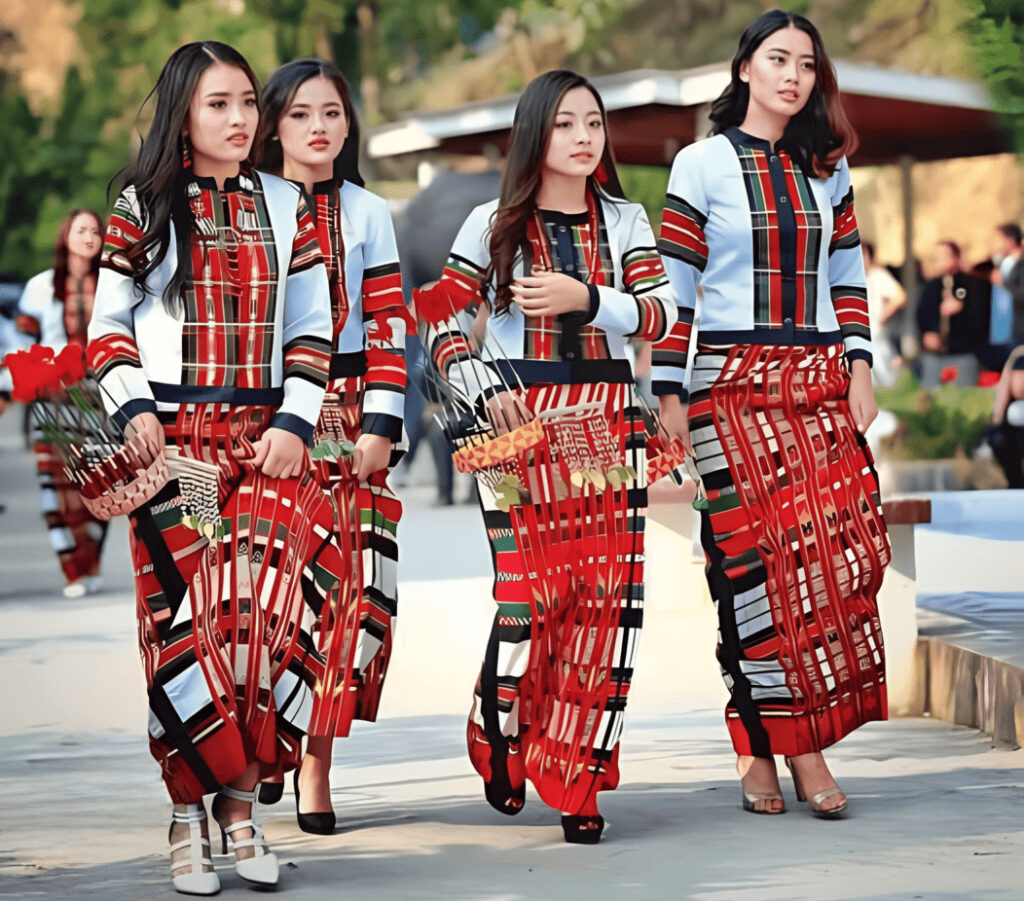
Wearing traditional Mizo attire on the main day is not required, but it is welcomed and appreciated by the community. Two reliable spots:
The Millennium Centre in Dawrpui is the most accessible hub for Mizo handloom, with weavers selling authentic Puanchei (women’s striped wraparound), Kawrchei (shawl), and Ngotekherh (men’s ceremonial shawl) at fair prices. The weavers’ stalls near Solomon’s Cave carry similar attire with cane headbands and beadwork, and tend to be slightly more community-sourced than commercial.
How to Travel to Aizawl: Flights, NH6, and Mizoram’s New Railway
By Air: Lengpui Airport (32 km from Aizawl) has direct flights from Kolkata, Guwahati, Imphal, and Delhi. Book 6–8 weeks ahead — festival week flights fill fast.
By Train: Mizoram now has a working railway connection for the first time. Sairang Railway Station (20 km from Aizawl) was inaugurated by PM Modi on September 13, 2025. The Guwahati–Sairang Express (Train 15609/15610) runs daily, covering 493 km in approximately 13.5 hours. The Sairang–Anand Vihar Rajdhani Express connects to Delhi; the Sairang–Kolkata Express runs tri-weekly. From Sairang, Aizawl is 45 minutes by taxi. Book on IRCTC well in advance.
By Road: From Silchar, NH306 connects into National Highway 6 (NH6) — the primary artery into Aizawl. Journey time is approximately 6–7 hours.
Inner Line Permit (ILP): Non-Negotiable
Every Indian citizen not native to Mizoram must have an ILP before entering the state. Apply at ilp.mizoram.gov.in. Processing is typically quick but apply at least a week before travel. Print three copies — the Vairengte checkpoint and Lengpui Airport both require physical verification. Foreign nationals register with the Foreigners Registration Office on arrival.
Also Read: How to Apply For Travel Permits for Traveling to Northeast India
Where to Stay and What to Eat
The Dawrpui and Zarkawt areas of Aizawl are the most convenient base for Lammual. Book 6–8 weeks in advance. Homestays offer the best cultural immersion — and the best food: Bai (leafy greens and pork stew), Sawhchiar (rice porridge with meat), and smoked pork in bamboo are a Mizo table unlike anything else in the Northeast.
Beyond the Festival
March puts you in Mizoram during its most pleasant season — dry, clear, comfortably cool. Vantawng Falls (170 m) near Thenzawl is the highest waterfall in Mizoram. Phawngpui Blue Mountain (2,157 m) in the south sits inside a national park with orchids and wildlife found nowhere else in the country. Champhai, near the Myanmar border, is Mizoram’s most scenic valley — open, unhurried, and almost entirely tourist-free.
Use the NE India Trip Planner to build a wider itinerary and the NorthEast India Connect Travel Permits guide for permit requirements across states.
Chapchar Kut is a celebration of the pause — the moment between the hardest work and the next hard work when a community dresses up, makes music, and reminds itself why all of it is worth doing. The bamboo poles will be clicking again in March 2027.
