




Picture a stage built from bamboo, set against the open sky of the Brahmaputra, where indie rock gives way to Mising folk drums and back again, and the crowd dancing in front of you includes fishermen, students, and musicians who flew in from three states away. That is the Majuli Music Festival — a festival that has spent the last several years proving that one of India’s most remote, flood-prone river islands can also be one of its most exciting stages for independent music.
The Majuli Music Festival, commonly known as MMF, is a non-profit indie music festival held on Majuli Island in Assam, founded in 2019 by Mukul Doley and his wife Momee Pegu, founder of the cultural initiative RIGBO. MMF was created specifically to promote tourism on the island and help make it more economically self-sufficient as it copes with annual flooding. Five editions in, it has grown into one of the most distinctive entries on India’s independent music festival calendar.
Quick Facts: Majuli Music Festival
| Detail | Information |
|---|---|
| Festival | Majuli Music Festival (MMF) |
| Founded | 2019, by Mukul Doley and Momee Pegu |
| Editions Completed | 5, as of late 2025 |
| Typical Timing | November (varies by year); Date to be Announced |
| Location | Kherkotiya river bank, Jengraimukh, Majuli, Assam |
| Coordinates Region | Majuli Island, Brahmaputra River, Upper Assam |
| Organised By | Majuli Music Festival Foundation (MMFF) |
| Genres | Indie, folk, fusion, jazz, electronic, experimental |
| Duration | 3 days |
| Type | Non-profit, community-driven |
| Nearest Airport | Jorhat Airport (Rowriah) |
| Ferry Access | Nimati Ghat (Jorhat) to Kamalabari Ghat, 1–1.5 hours |
| Official Email | [email protected] |
What Is the Majuli Music Festival? Origins and Mission
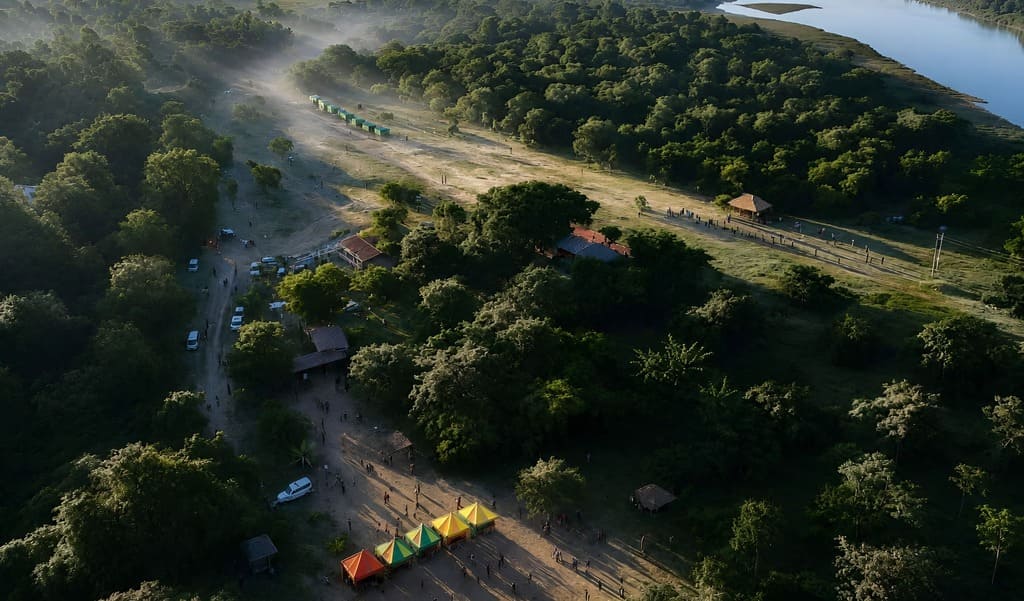
The Majuli Music Festival was born from a personal frustration. Mukul Doley grew up on the island wanting to build a career in music but found no real platform to do it from; after a stint in Mumbai working in film marketing and distribution, he returned to Majuli in 2018 with Momee Pegu to build exactly the kind of platform he had once needed. The first edition in 2019 drew an estimated 26,000 to 30,000 attendees, far beyond what the organisers had planned for, and the festival has been refining its model every year since.
The mission has stayed consistent across all five editions: promote rural tourism, give independent and emerging artists from Northeast India a real stage, and channel the resulting footfall directly into the local economy. The Majuli Music Festival Foundation (MMFF), which organises the event, frames it as more than a concert — a vehicle for preserving Majuli’s traditional music, art, and culture while encouraging visitors to engage with the island’s fragile eco-diversity. The Foundation has also stated an ambition to be known as the “Glastonbury of the Northeast” and as India’s biggest independent music festival, built specifically around the ethos of community ownership rather than commercial spectacle.
Music, Genre Diversity, and the Festival Lineup
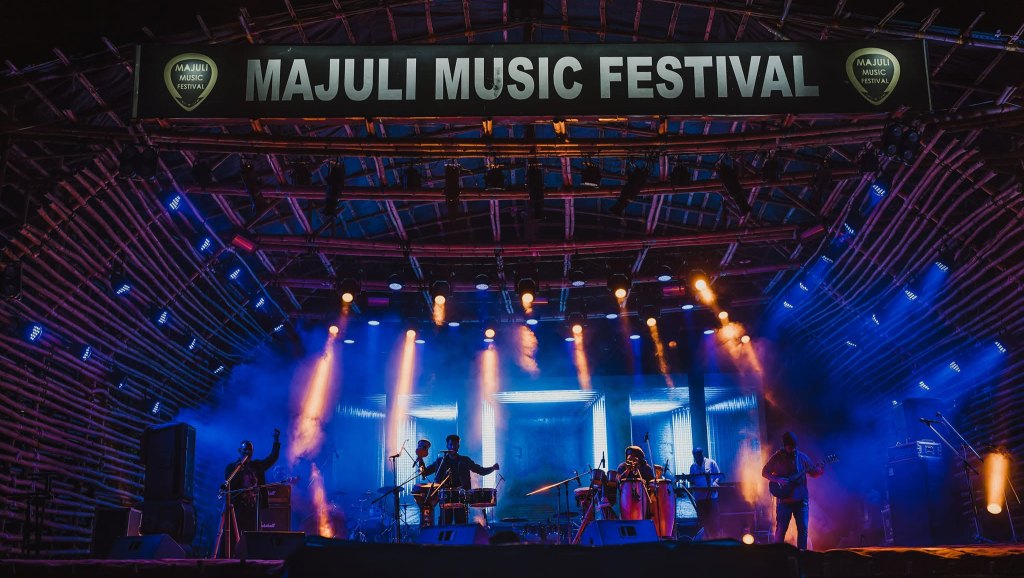
What sets MMF apart from most music festivals in the region is its genuinely broad, non-genre-specific booking philosophy. Recent editions have featured well over 150 artists requesting festival slots, spanning indie rock, folk, fusion, jazz, electronic, and experimental sounds from across India and occasionally beyond.
Past lineups have included established names such as Lucky Ali and Salman Elahi alongside emerging Northeast acts like Miri the Band, Jutimala, and the Tai Folks. The festival has also become a platform for artists using music to speak directly to the region’s social realities — performers exploring themes of Naga identity, Khasi social issues, and other distinctly Northeastern narratives that rarely find space on India’s mainstream festival circuit. Doley has described this as central to the festival’s purpose: helping Northeast Indian musicians carve out their own cultural identity rather than simply imitating global trends.
A dedicated cultural stage runs alongside the main music programming, modelled in spirit on Nagaland’s Hornbill Festival, where local tribal communities — principally the Mising, Deori, and Sonowal Kachari peoples of Majuli — showcase traditional dance, including Sattriya and Bhortal Nritya, alongside community gathering traditions such as the Mising community’s Murong Okum. This cultural layer is not an afterthought; it is treated as equally important to the music itself.
The Venue: Why Majuli Is the Real Headliner
Every account of the Majuli Music Festival eventually arrives at the same point: the island itself is the main attraction, and the music is how you experience it.
Majuli is the world’s largest inhabited river island, sitting in the Brahmaputra and recognised by Guinness World Records for the distinction. The festival grounds sit along the Kherkotiya riverbank near Jengraimukh, where open skies, sweeping paddy fields, and the slow rhythm of river life form a backdrop no purpose-built venue could replicate. Past attendees have described dawn walks along the nearby Jengrai river, catching glimpses of snow-capped peaks in distant Arunachal Pradesh — a reminder of how far into rural Northeast India this festival reaches.
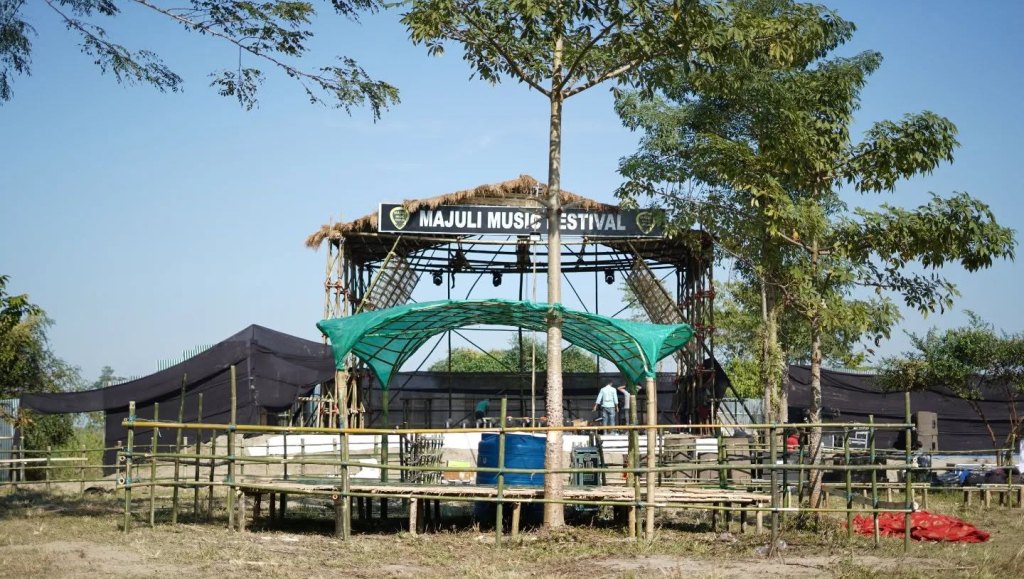
Sustainability is built into the festival’s physical structure, not just its messaging. Stages and decor use locally sourced bamboo and recycled materials, minimising the footprint on an island already losing land to erosion year after year — from roughly 880 square kilometres historically to closer to 350 today. That shrinking geography is precisely the economic vulnerability MMF was created to help address.
Majuli Music Festival vs. the Older Majuli Festival: Avoid the Confusion
Majuli hosts two different festivals that are often confused.
The Majuli Festival is a government-supported cultural event held in November, celebrating the island’s Vaishnavite Satras, Sattriya dance, Ankiya Naat, mask-making, and Raas Leela traditions.
The Majuli Music Festival is an independent, non-profit event launched in 2019, focusing on indie, folk, and contemporary music with a camping atmosphere. It is separate from the island’s religious and cultural festival.
The planned December 2025 edition was cancelled by the organisers. Since festival dates may change, always check the Majuli Music Festival Foundation‘s official channels for the latest schedule.
Where to Stay: Bamboo Cottages and Riverside Homestays
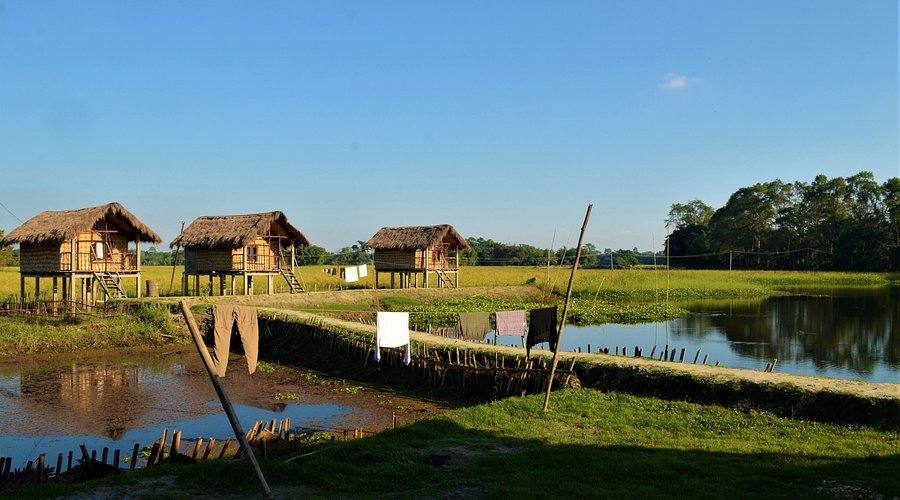
Accommodation on Majuli is part of the island’s charm, with most stays built in the traditional Mising chang ghar style on bamboo stilts.
Popular options include La Maison de Ananda, known for its bamboo cottages and Mising cuisine, and Ménam Homestay, which offers bamboo huts, tents, and riverside stays. If available, you can also check for the festival’s official campsite. As accommodation is limited, booking well in advance is strongly recommended, especially during festival weekends.
What to Eat: Mising Cuisine and Apong Rice Beer
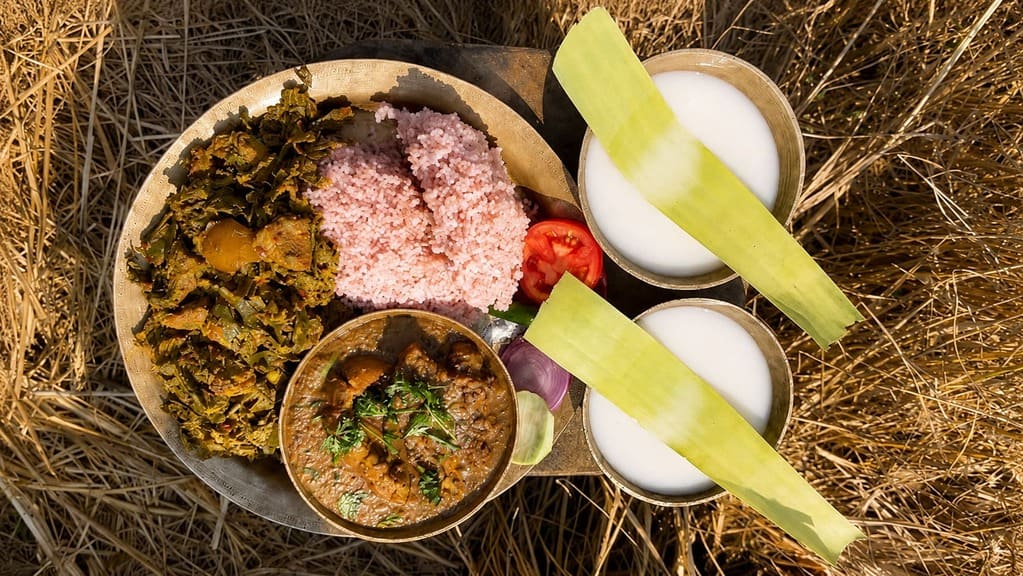
No visit to the Majuli Music Festival is complete without experiencing the island’s Mising cuisine.
Apong, the traditional Mising rice beer, is served in two main varieties: Poro Apong, a dark ceremonial brew, and Nogin Apong, a lighter version. Both play an important role in Mising festivals and celebrations.
Popular local dishes include Purang Apin, fragrant glutinous rice wrapped in tora leaves, along with leaf-wrapped river fish, smoked pork, and bamboo-cooked chicken. These specialties are widely available at festival food stalls and local homestays.
How to Reach Majuli for the Festival
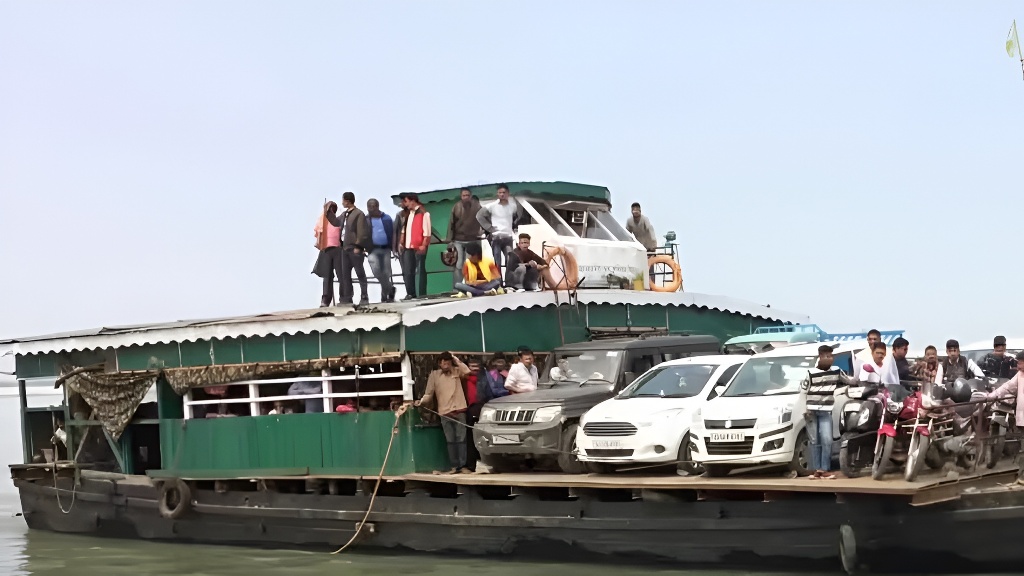
Getting to Majuli is part of the experience, with the ferry crossing being the most important part to plan.
The nearest gateway is Jorhat, accessible by air and rail. From Nimati Ghat, regular ferries take 1–1.5 hours to reach Kamalabari Ghat on Majuli. Vehicle ferries are also available for an additional fee, making it easier to explore the island.
Once on Majuli, renting a scooter or bicycle is the most convenient way to travel between the ferry terminal, accommodation, and the festival venue.
Practical Tips for Festival-Goers
Pack for changing weather, with warm clothing for cool evenings, light clothes for the day, and comfortable footwear suitable for uneven ground. A reusable water bottle is also useful, as festival venues often provide refill stations.
Take time to explore Majuli’s Satras, especially Sri Sri Samaguri Satra, renowned for its traditional mask-making. Carry sufficient cash, as ATMs are limited and many local vendors do not accept digital payments.
Frequently Asked Questions
Is alcohol allowed at the Majuli Music Festival? Commercial liquor sales are tightly regulated on the island, but the festival’s food and cultural stalls do showcase traditional Mising Apong, allowing attendees to experience the local rice beer as part of the cultural programme rather than as a separate bar offering.
How much do tickets to the Majuli Music Festival cost? As a non-profit event built around rural tourism, MMF has historically kept ticket prices well below mainstream commercial festivals, with notably low rates for local residents in past editions. Exact single-day and full festival pass pricing is announced alongside each year’s official lineup — check the festival’s own channels closer to the date.
Can I bring my own vehicle onto Majuli Island? Yes. Larger ro-ro-style ferries operating from Nimati Ghat can carry cars, SUVs, and motorcycles across to Kamalabari Ghat for an additional fee. This is worth considering if you want your own transport for getting between accommodation and the festival site at Jengraimukh.
Why the Majuli Music Festival Is Worth Following
MMF occupies a genuinely unusual place in India’s festival landscape: a non-profit event, run by people from the community it serves, on an island that is literally disappearing a little more each year to erosion, built around the idea that independent music can be both a cultural statement and an economic lifeline. It has not had a flawless run — the cancelled 2025 tribute edition is proof of how fragile organising an event like this in such a remote setting can be — but the underlying model, five editions in, has demonstrably worked for the island’s local economy and for a generation of Northeast Indian musicians who otherwise had nowhere comparable to perform.
Use the NE India Trip Planner to start planning a trip around the next confirmed edition, and explore the NorthEast India Connect Festivals & Events category for more celebrations across the region.
