




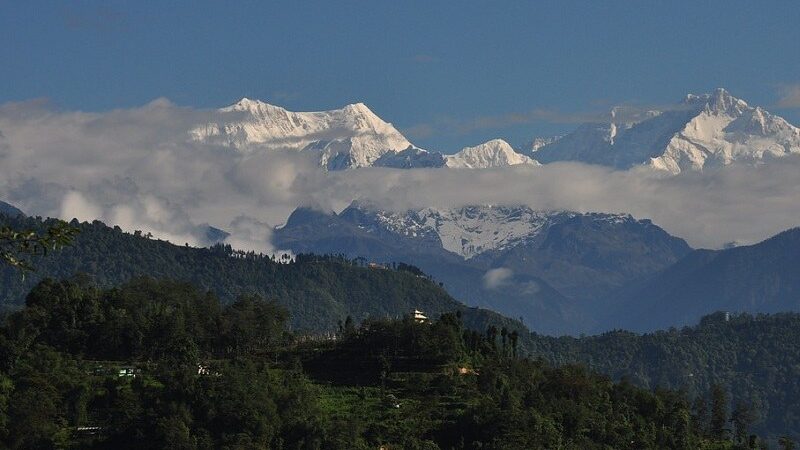
Most first-time visitors to Sikkim beeline straight for Gangtok and never look south. That’s a mistake, because Namchi quietly outclasses half the state’s famous hill stations without the crowds, the traffic, or the inflated hotel rates. Perched at 1,675 metres in the folds of South Sikkim, Namchi means “sky high” in the local Bhutia tongue, and on a clear morning, with Kanchenjunga floating above the clouds in the distance, the name makes perfect sense. If you’ve been browsing our Sikkim coverage and wondering where to go beyond Gangtok and Pelling, this is the guide that fills that gap.
Quick Facts About Namchi
| Location | South Sikkim district headquarters, India |
|---|---|
| Meaning of the Name | “Sky High” in the Bhutia/Sikkimese language |
| Elevation | Approximately 1,675 metres (5,500 ft) |
| Population | Around 12,000 (Namchi Municipal Council) |
| Distance from Gangtok | Approximately 78-80 km (3-4 hours by road) |
| Nearest Airport | Pakyong Airport (~65-90 km) or Bagdogra Airport (~100 km) |
| Nearest Railway Station | New Jalpaiguri (NJP), approximately 95 km |
| Famous For | The Samdruptse statue, Siddhesvara (Char Dham) complex, Temi Tea Garden |
| Permit Required (Indian Tourists) | None |
| Best Time to Visit | March-June and September-November |
Why Namchi Is Called the “Sky High” Town
Namchi combines “Nam” (sky) and “Chi” (high), a fitting description for a town that looks down on layers of cloud most mornings. Long before it became a planned cultural hub, the area carried a darker legend: locals say it was here that Pende Ongmoo, a Sikkimese princess accused of poisoning a Chogyal (king), was caught and executed, and her spirit is said to still linger near the Ghurpisey foothills. Today, the Sikkim government has spent decades rebuilding that history into a gentler identity — the state’s de facto cultural and religious capital.
Top Things to Do in Namchi
Samdruptse Hill and the Guru Padmasambhava Statue
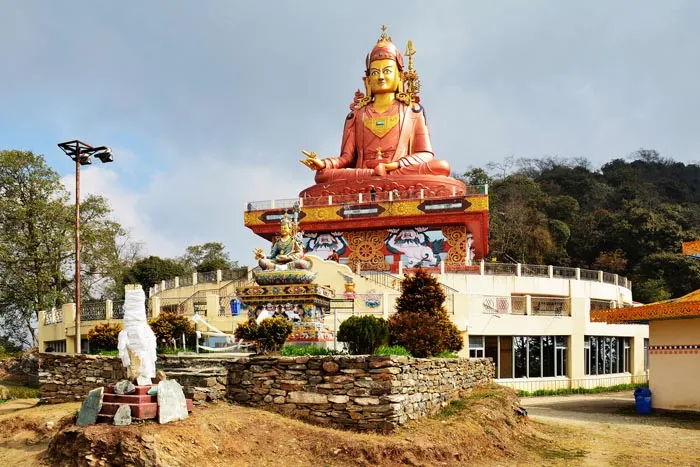
Samdruptse, meaning “wish-fulfilling hill,” is Namchi’s most photographed landmark. It holds one of the tallest statues of Guru Padmasambhava (Guru Rinpoche) anywhere in the world, completed in 2004 and rising well over a hundred feet above the surrounding pine forest. Local legend holds that the hill is actually a dormant volcano, and that monks once climbed it regularly to keep it calm.
Siddhesvara Dham: Namchi’s Char Dham Complex
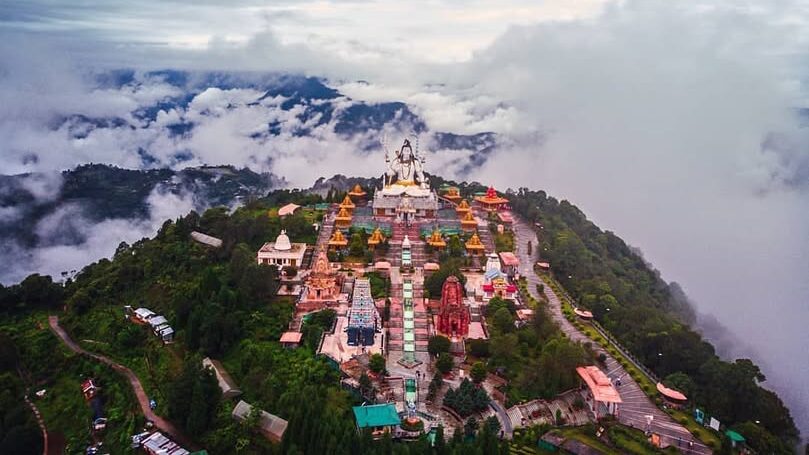
A few kilometres away on Solophok hill sits Siddhesvara Dham, more commonly called Char Dham, a pilgrimage complex inaugurated in 2011 that replicates India’s four most sacred Hindu shrines — Badrinath, Jagannath, Dwarka, and Rameswaram — alongside an 87-foot statue of Lord Shiva and the twelve Jyotirlingas. The project won the National Tourism Award for India’s “Most Innovative/Unique Tourism Project,” and remains one of the most visited religious sites in the state.
Ngadak Monastery
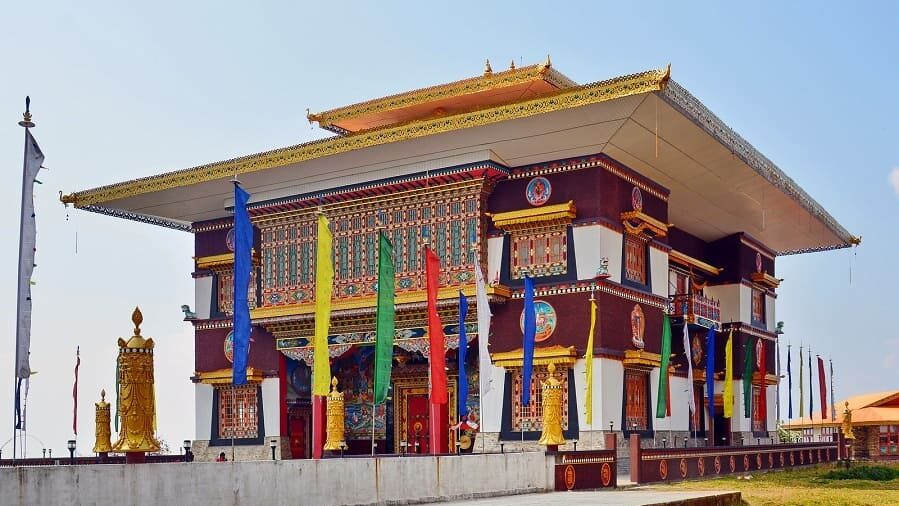
For a quieter contrast to Char Dham’s grandeur, Ngadak Monastery is one of Namchi’s oldest Buddhist monasteries, dating back to the 17th century. According to local tradition, visitors make a promise to return one day—an apt custom, as “Ngadak” is said to mean “promise” in Tibetan.
Tarey Bhir, the Rock Garden, and Temi Tea Garden
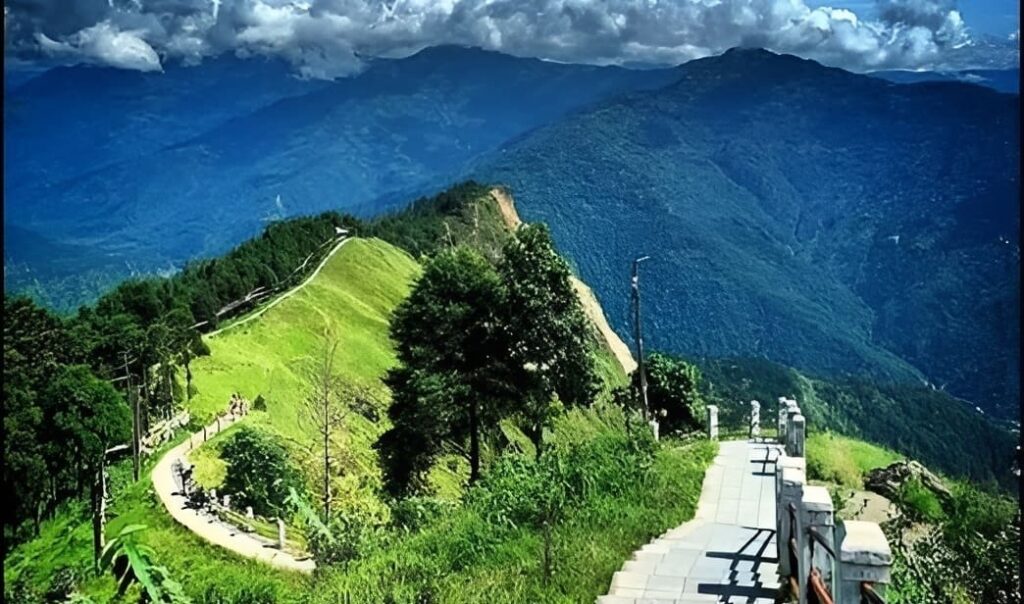
Tarey Bhir is a dramatic cliffside viewpoint roughly 3,500 feet above the valley, pairing well with the nearby Rock Garden for an easy, photogenic stroll. A short drive away, Temi Tea Garden — Sikkim’s only tea estate — wraps its terraces around the slopes below Tendong Hill and is worth a stop for tea tasted fresh rather than bought back home.
Beyond the Big Sights: Sai Mandir and Mamley
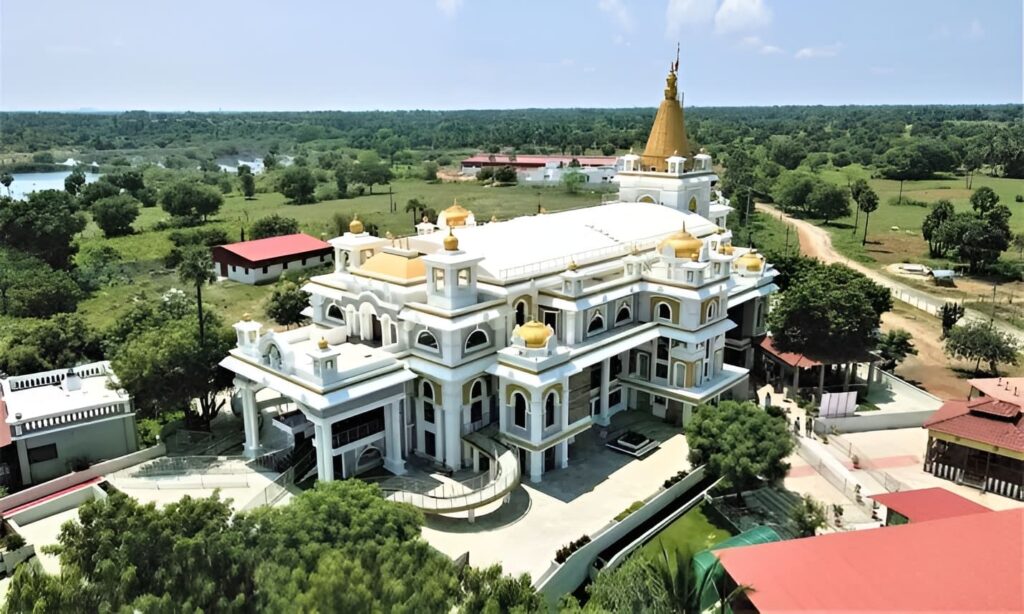
Closer to Char Dham, the Shirdi Sai Baba temple at Asangthang is a popular, easy add-on with good valley views. For something genuinely unusual, the Buxa Formation at Mamley near Namchi has been declared a national geological monument for its stromatolite-bearing limestones — fossil traces of some of Earth’s earliest life. It’s a real find for anyone into geology, but go in with realistic expectations: there’s no polished visitor centre here, and a local driver or guide who knows the exact spot will save you a lot of wandering.
Namchi vs Gangtok vs Pelling vs Ravangla: How Does It Compare?
| Destination | Best Known For | Distance from Namchi | Typical Vibe |
|---|---|---|---|
| Namchi | Char Dham, Samdruptse statue, Temi Tea Garden | — | Cultural, religious, uncrowded |
| Gangtok | MG Road, nightlife, Rumtek Monastery | ~78-80 km | Urban, busy, well-connected |
| Pelling | Kanchenjunga views, Pemayangtse Monastery | ~110-120 km | Scenic, popular with trekkers |
| Ravangla | Buddha Park, Maenam Wildlife Sanctuary | ~25 km | Quiet, high-altitude, nature-focused |
If Gangtok is Sikkim’s energetic capital and Pelling is its postcard view, Namchi is the state’s spiritual centre — built deliberately around pilgrimage and culture, with far fewer tour buses crowding the viewpoints.
Namchi’s Festivals
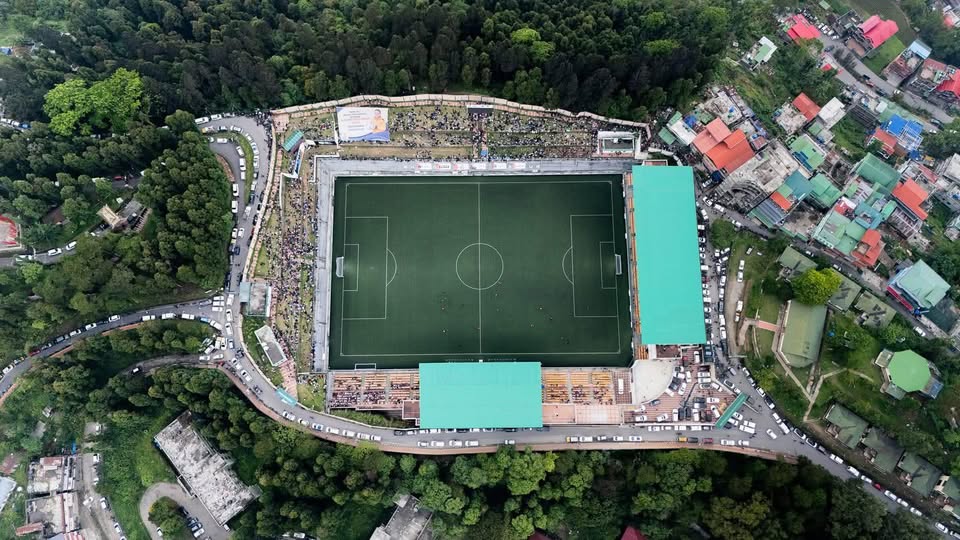
Every February, Namchi hosts Sikkim’s largest flower show, dominated by rare orchids, alongside the Gold Cup football tournament at Baichung Stadium, drawing teams from India, Nepal, Bangladesh, and Bhutan. October brings the town’s own Namchi Festival, a celebration of local food and culture worth timing a trip around. And on nearby Tendong Hill, the Lepcha community marks Tendong Lho Rum Faat each August — a thanksgiving festival tied to a legend about the hill saving their ancestors from a great flood.
Best Time to Visit Namchi
March to June and September to November are the most comfortable windows, with clear skies and mild temperatures. Spring brings blooming rhododendrons and the orchid show; autumn offers some of the clearest mountain views of the year. Avoid the monsoon months of June through August, when fog and landslides can disrupt both road travel and Kanchenjunga views.
Quick Checklist: Preparing for Namchi
- Cash vs UPI: Digital payments work fine around Central Park and the main market, but carry cash for homestays, smaller dhabas, and entry donations — hill-town network coverage can be unreliable.
- Footwear: You’ll be removing your shoes repeatedly at Char Dham and the monasteries, so pack something sturdy that’s also easy to slip on and off.
- Permits: Indian citizens need only standard photo ID. Foreign nationals need just their regular Indian visa — Namchi sits outside the restricted zones where a Protected Area Permit (PAP) applies, unlike parts of North Sikkim.
- Layers: Even in summer, evenings cool down fast once the sun drops behind the hills.
How to Reach Namchi
- By air: Pakyong Airport, Sikkim’s only airport, is roughly 65-90 km from Namchi, about 2-3 hours by road. Bagdogra Airport in Siliguri remains the more reliably connected option for major Indian cities, around 100 km and a 4-hour drive away.
- By rail: New Jalpaiguri (NJP) is the nearest working railhead today, about 95 km away. Looking ahead, the Sevok-Rangpo line under construction is expected to give Sikkim its first-ever railway station by around 2027, which would eventually sit much closer to Namchi than NJP — worth checking closer to your travel dates as that project progresses.
- By road: Namchi sits on NH-31A, well connected to Gangtok (~78-80 km), Pelling, Jorethang, and Kalimpong by jeep and bus services.
For ILP-restricted states elsewhere in the region, see our guide to Northeast India’s travel permits — Namchi itself needs none of that paperwork.
Where to Stay and What to Eat
Namchi has shifted from a sleepy administrative town into a genuine base for South Sikkim tourism, with everything from budget guest houses to mid-range hotels near the town centre and Char Dham road. For food, expect hearty Himalayan staples: momos, thukpa noodle soup, and gundruk, the fermented leafy-green dish common in Nepali-Sikkimese kitchens. A few cafés around Central Park serve good coffee if you need a break from local fare.
Nearby Day Trips From Namchi
- Ravangla and Buddha Park — around 25 km away, home to a 130-foot Buddha statue and the Maenam Wildlife Sanctuary, known for red pandas and leopard cats.
- Tendong Hill — a moderate trek above Temi, sacred to the Lepcha community, with panoramic valley views.
- Pelling and the Rabdentse Ruins — a longer drive, but worth it for Sikkim’s atmospheric second royal capital, covered in our Rabdentse Ruins guide.
- Kitam Bird Sanctuary — a convenient stop if you’re arriving via Melli on the way into Namchi.
Frequently Asked Questions About Namchi
Is one day enough? A single day covers Char Dham, Samdruptse, and a viewpoint stop, but staying overnight lets you add Temi Tea Garden or a Ravangla day trip without rushing.
Is it worth visiting if I’ve already seen Gangtok? Yes — the two serve different purposes. Gangtok is Sikkim’s urban hub; Namchi is built around pilgrimage, culture, and a noticeably slower pace.
What is Namchi best known for? The giant Guru Padmasambhava statue on Samdruptse Hill and the Char Dham complex at Siddhesvara Dham, both built specifically to position Namchi as Sikkim’s cultural and religious capital.
Final Thoughts
Namchi isn’t trying to be Gangtok, and that’s exactly its appeal. It’s a town built with intention — around faith, culture, and a genuinely sky-high view of one of the world’s great mountain ranges — and it rewards travellers willing to go one stop further than the usual Sikkim itinerary. Pair it with a day in Ravangla, a detour to the Rabdentse Ruins, or simply let Namchi’s quieter pace take over for a few days.
For more on the region, browse our full Sikkim travel coverage or check out our Northeast India tourism guide for help planning a longer trip.
