




If Gangtok is Sikkim’s cosmopolitan face and North Sikkim is its high-altitude frontier, then West Sikkim — centred on the small hill town of Pelling — is the state’s spiritual and historical heart. This is the land of Sikkim’s oldest monasteries, the ruins of its second royal capital, the sacred lake that is said to grant wishes, and the clearest views of Kangchenjunga — the world’s third-highest peak — that any ground-level location in Sikkim can offer.
Pelling itself is a modest town at 2,150 metres, strung along a ridge in the West Sikkim district. What makes it extraordinary is what surrounds it. Within a 30-km radius: Pemayangtse Monastery (one of Sikkim’s oldest and most important gompas), the crumbling royal palace complex of Rabdentse, the sacred wish-fulfilling lake of Khecheopalri, the trekking trailhead of Yuksom, and viewpoints that on clear autumn mornings produce Kangchenjunga panoramas of such scale and proximity that experienced Himalayan travelers consistently rank them among the finest mountain views on Earth.
Quick Facts About Pelling & West Sikkim
| State | Sikkim |
| District | West Sikkim |
| Main Town | Pelling |
| Altitude | 2,150 metres (7,054 feet) |
| Language | Nepali, Sikkimese (Bhutia), Lepcha, English |
| Distance from Gangtok | 115 km; approximately 4–5 hours by road |
| Distance from NJP/Siliguri | 140 km; approximately 5–6 hours by road |
| Permit Required | No special permit for Pelling itself; Dzongri/Goecha La trek requires Forest Dept permit from Yuksom |
| Best Time | October to December; March to May |
| Famous For | Pemayangtse Monastery; Kangchenjunga views; Rabdentse ruins; Khecheopalri Lake; Yuksom trek base |
The People of West Sikkim
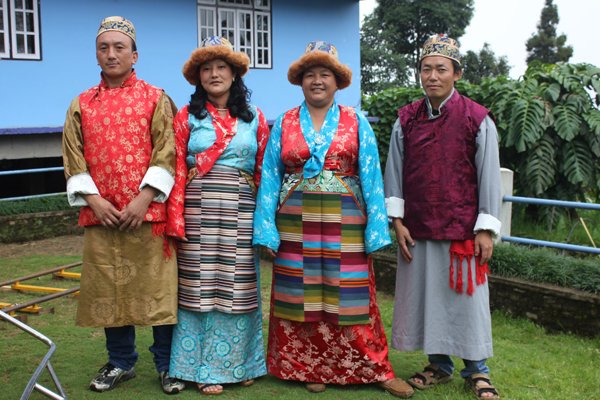
West Sikkim is the stronghold of the Bhutia community — the Tibetan-origin Buddhists who built the monastery culture that defines Sikkim’s spiritual identity. The Bhutia families of West Sikkim have maintained the Pemayangtse, Sangachoeling, and Tashiding monasteries for centuries, and the rhythm of monastic life — prayer sessions, festival ceremonies, the daily movement of monks along forest paths — still shapes the pace of the district.
Monastery governance: Pemayangtse Monastery belongs to the Nyingma (Nyingmapa) school of Tibetan Buddhism and has historically been the most senior monastery in Sikkim. The monastery’s lineage is connected to the Chogyal (the former royal family of Sikkim), and its role in the coronation of Sikkimese kings is a matter of deep historical significance.
Lepcha communities: West Sikkim’s valleys and forests are also home to Lepcha communities whose relationship with the forest and river ecosystems reflects an ecological knowledge of extraordinary depth. The sacred groves maintained by Lepcha communities in West Sikkim are among the most biodiverse forest patches in the entire Eastern Himalayas.
Top Attractions in Pelling & West Sikkim
1. Pemayangtse Monastery
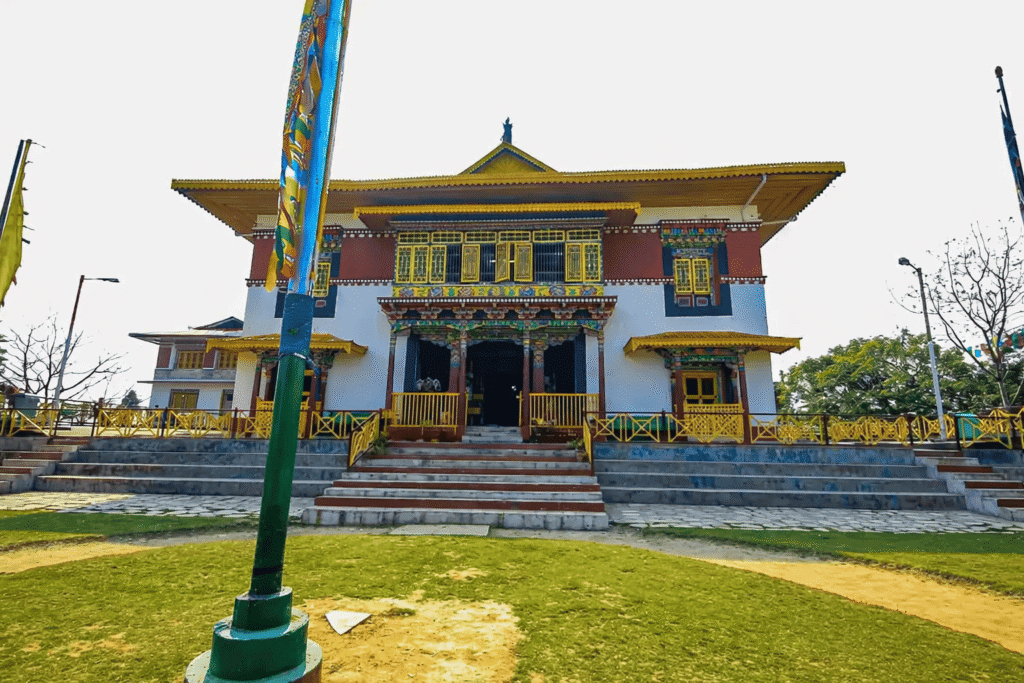
Pemayangtse Monastery — whose name means ‘Perfect Sublime Lotus’ — was founded in 1705 and is one of the oldest, largest, and most revered Buddhist monasteries in Sikkim. Sitting on a hilltop at 2,085 metres with views that sweep across to Kangchenjunga on clear days, the monastery is the religious centre of the Nyingma school in Sikkim and the most important gompa in West Sikkim.
- Founded 1705; one of the oldest and largest Nyingma monasteries in Sikkim
- Three-storey main temple with exceptional murals and a large Buddha image
- The Zangdog Palri (Guru Padmasambhava’s Heavenly Abode) — a seven-tiered wooden model of the celestial palace created by a senior monk over several years; an extraordinary artistic and spiritual achievement
- Morning prayers begin at 5:30 AM — among the most atmospheric early morning experiences in West Sikkim
- Annual Chaam (masked dance) festival in February — one of Sikkim’s most spectacular cultural events
| The Zangdog Palri on the top floor of Pemayangtse’s main temple is one of the most remarkable objects in any Sikkimese monastery — a massive, intricately detailed wooden model of the celestial realm, painted in vivid colours and populated with hundreds of figures. Allow adequate time on the top floor and bring a torch for the less-lit sections. |
2. Kangchenjunga Views from Pelling
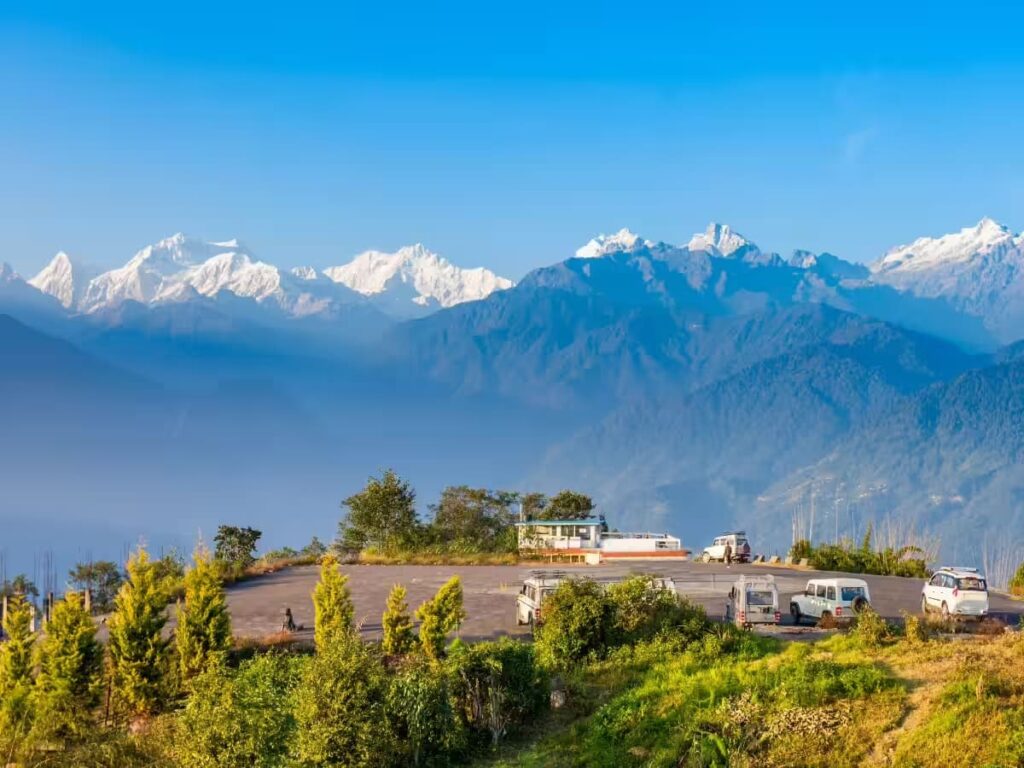
Kangchenjunga (8,586m) — the world’s third-highest peak and the guardian deity of Sikkim — is visible from Pelling with an immediacy and clarity that few other ground-level locations can match. On clear mornings from October to December, the massif fills the northern sky with a scale that is genuinely difficult to process. The peak’s five summits, the hanging glaciers, and the surrounding satellite peaks create a skyline of extraordinary drama.
- Helipad viewpoint (upper Pelling) — the most popular and accessible viewpoint
- Pemayangtse Monastery roof — the monastery’s upper terrace offers an unobstructed mountain panorama
- Darap and Rimbi viewpoints — quieter alternatives with equally good views
- Best visibility: October to December and March to April
- Best time of day: Dawn (first light on the peaks) and early morning before cloud builds
| Wake before sunrise for the most spectacular Kangchenjunga viewing. At first light, the peak catches the sun before the valleys below, creating an alpenglow effect of extraordinary beauty. By 9 AM, cloud typically begins to build around the lower slopes and the view closes. The window between 6 and 8 AM is the most rewarding. |
3. Rabdentse Ruins — Sikkim’s Lost Capital
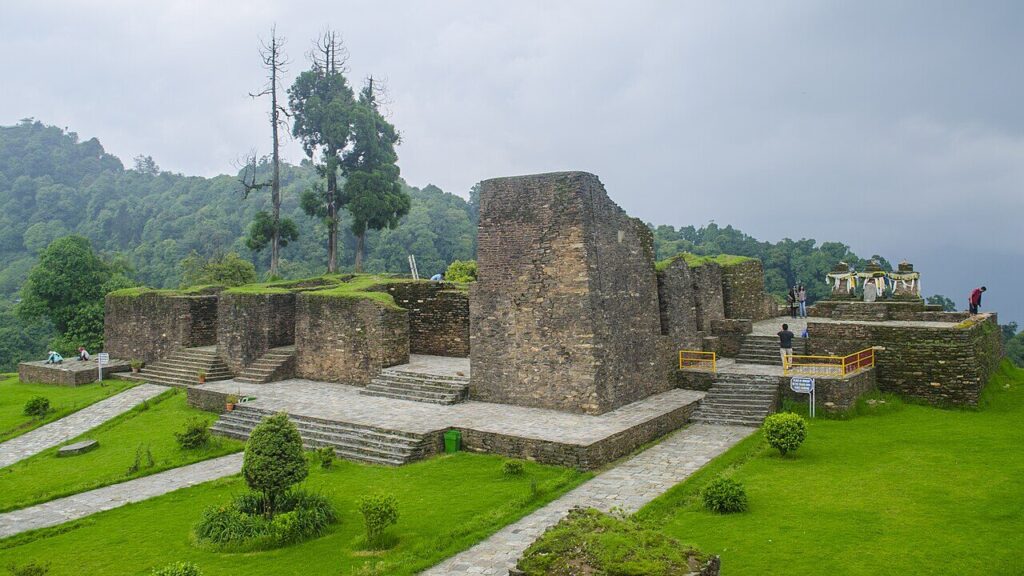
Rabdentse, 2 km from Pemayangtse, was Sikkim’s second royal capital, serving as the seat of the Chogyal (king) from the 17th century until 1814 when it was sacked by the Gorkha army from Nepal. What remains — stone walls, palace foundations, chortens (stupas), and a three-chorten monument on the ridge — sits in forested grounds with exceptional views of the Kangchenjunga range. The ruins have a melancholic grandeur that rewards slow exploration.
- 15-minute forest walk from Pemayangtse Monastery
- Palace ruins, royal chortens, and stone walls dating from the 17th–18th centuries
- Outstanding Kangchenjunga views from the ridge-top monument
- The forest surrounding the ruins is excellent for birdwatching
4. Khecheopalri Lake — The Wish-Fulfilling Lake
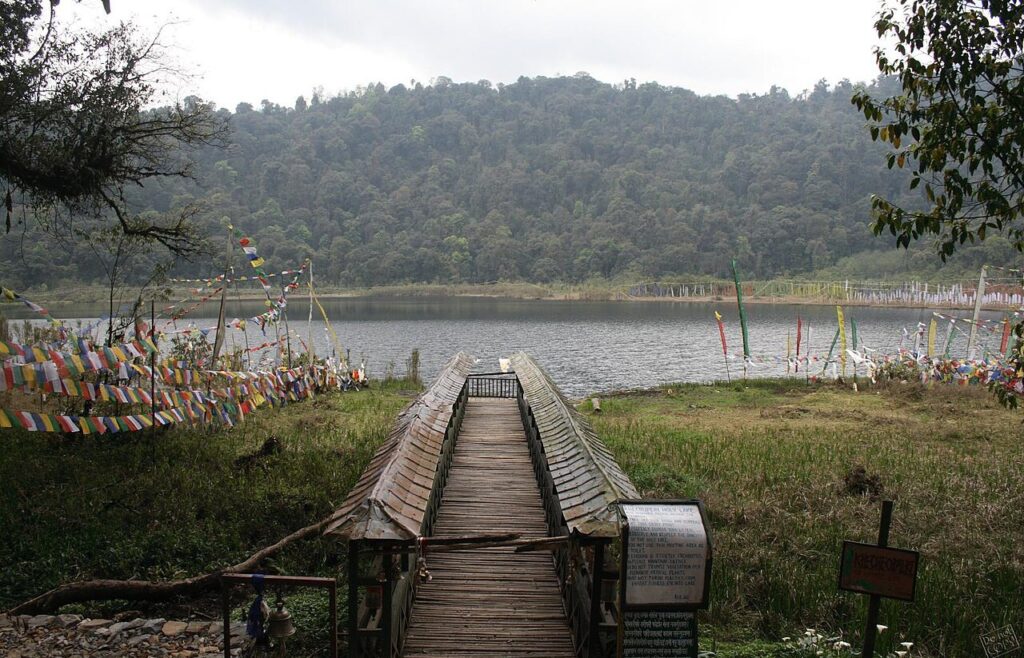
Khecheopalri Lake, 34 km from Pelling in a forest bowl, is one of Sikkim’s most sacred natural sites — a perfectly circular lake believed to be the wish-fulfilling lake of the goddess Tara and a site of profound spiritual significance for both Buddhist and Hindu communities. The lake is surrounded by forest so dense that, according to local belief, no leaf is allowed to touch its surface — birds skim the water and remove fallen leaves before they can settle.
- Sacred lake associated with the goddess Tara (Buddhist) and Hindu traditions
- The lake’s surface is reputedly free of fallen leaves at all times — removed by birds according to local belief
- A stone path circumambulates the lake — complete the circuit clockwise for a meditative walk
- Monastery guesthouse at the lakeside offers overnight stays — the most peaceful overnight in West Sikkim
- The forest around the lake has exceptional birdwatching — dawn walks are particularly productive
5. Yuksom — The First Capital & Trek Base
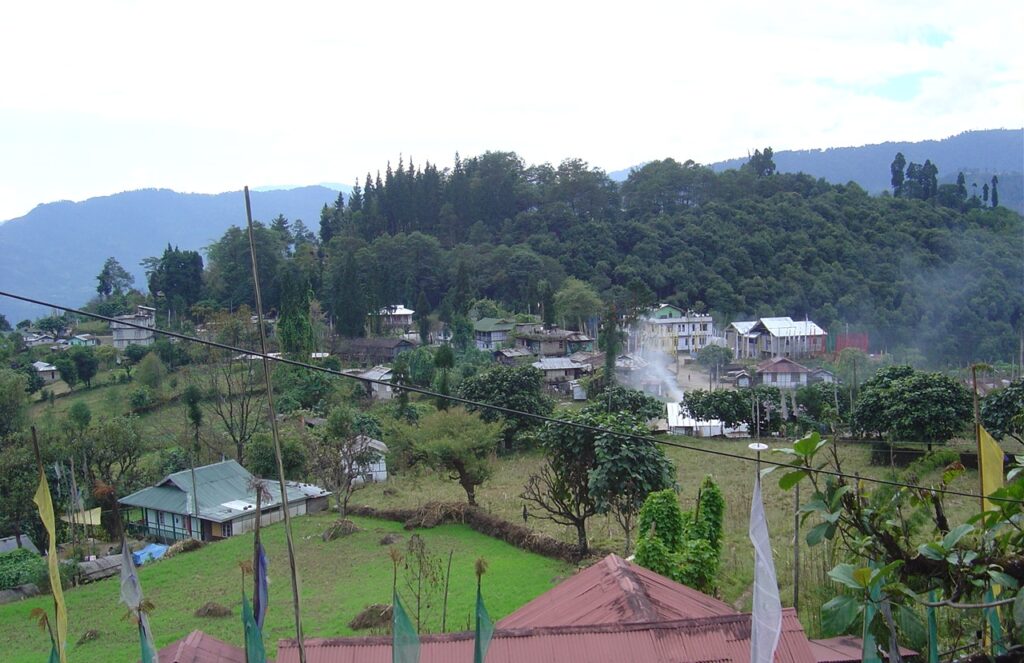
Yuksom, 40 km from Pelling at 1,780 metres, was Sikkim’s first royal capital — the place where the first Chogyal of Sikkim was crowned in 1642. It is also the starting point for the Dzongri and Goecha La treks — Sikkim’s premier trekking routes leading to the southern face of Kangchenjunga. The small town retains a quiet, forest-edge atmosphere that makes it one of the most pleasant places to spend a night in West Sikkim.
- Norbugang Chorten — the coronation site of the first Chogyal of Sikkim in 1642
- Kathok Lake — a small, serene lake with a sacred island accessible by a bridge
- Starting point for the Dzongri trek and the Goecha La trek to Kangchenjunga base
- Forest Department permit office for Dzongri/Goecha La — permits processed in Yuksom
6. Singshore Bridge — Asia’s Second-Highest Suspension Bridge
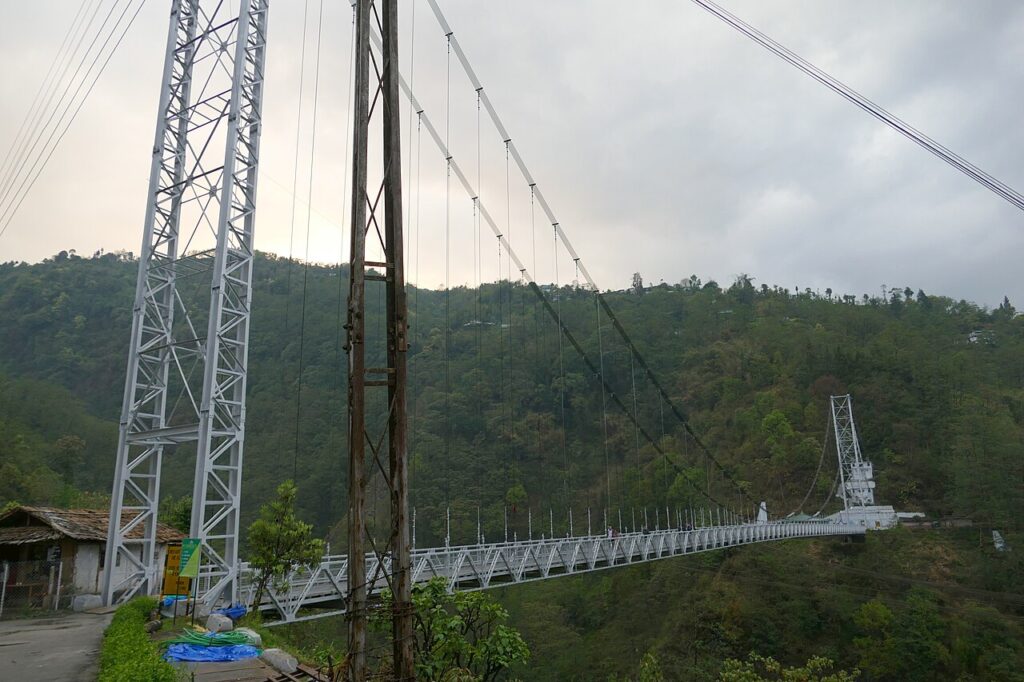
The Singshore Bridge, spanning a deep gorge between two ridgelines 30 km from Pelling, is one of Sikkim’s most dramatic engineered structures — a 198-metre suspension bridge at 96 metres above the gorge floor. The bridge has become a popular photography destination and a viewpoint over the forested valley below. Walking across its swaying span is genuinely exhilarating.
- 198 metres long; 96 metres above the gorge floor
- Views down the gorge to the Rangit River valley far below
- Combine with a visit to the Rimbi River and Rimbi waterfall area
7. Tashiding Monastery — Sikkim’s Most Sacred Gompa
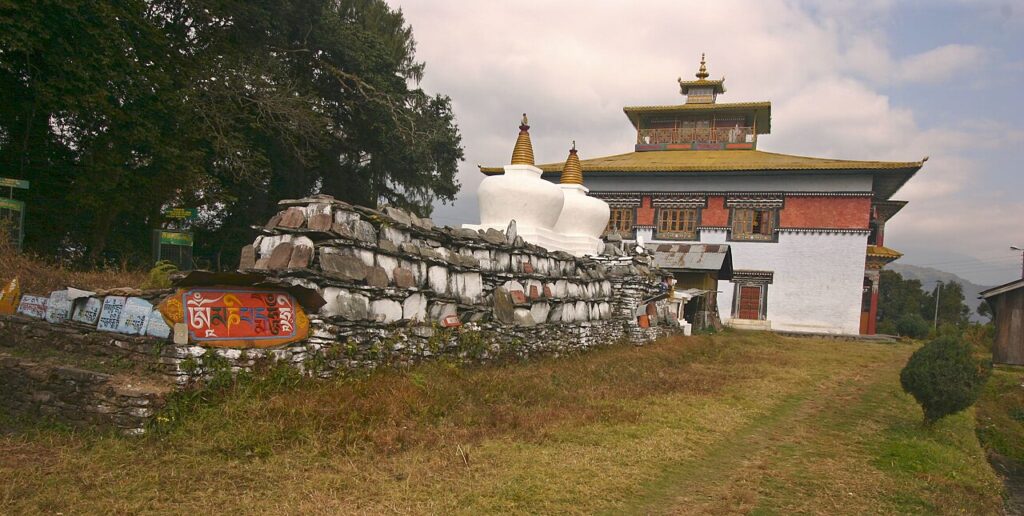
Tashiding Monastery, 45 km from Pelling on a hilltop above the Rathong and Rangit rivers, is considered the most sacred monastery in Sikkim. The monastery is the site of the Bumchu ceremony — held once a year during the Tibetan New Year — in which a sacred pot of water (whose level is said to predict the coming year’s fortunes) is opened and the water distributed to devotees. The location, on a hilltop ringed by two rivers and forested slopes, is itself extraordinary.
- Sikkim’s most sacred monastery — the Bumchu ceremony draws pilgrims from across the Himalayan world
- Set on a hilltop above the confluence of two rivers — a dramatic setting
- The monastery grounds contain hundreds of ancient chortens
Top Things to Do in Pelling & West Sikkim
- Pemayangtse dawn prayers — 5:30 AM; the sound of monks chanting in the half-lit assembly hall is transcendent
- Kangchenjunga sunrise watch — Helipad viewpoint; 5:30–6 AM; carry hot tea and warm layers
- Monastery circuit — Pemayangtse + Rabdentse ruins + Sangachoeling in a full day
- Khecheopalri Lake half-day — Morning visit; forest walk; sacred lake circuit; lunch at the lake
- Singshore Bridge — Afternoon; combine with Rimbi waterfall and forest walk
- Yuksom day trip — Historical town; Norbugang Chorten; Kathok Lake; optional: trek registration
Where to Eat in Pelling
- Momos and thukpa — Available throughout Pelling’s main road; the standard of both is excellent
- Chumbi Residency and Garuda restaurants — The most reliable mid-range dining options in Pelling with valley views
- Local Bhutia home cooking — Available at homestays; the most authentic option for experiencing West Sikkimese cuisine
- Sel Roti with butter tea — The morning breakfast of West Sikkim; available at small bakeries and tea shops
Where to Stay in Pelling
- Heritage Pelling Hotel — The most consistently recommended mid-range property; Kangchenjunga views from the rooms; ₹2,500–₹4,500
- Norbu Ghang Resort — Upper Pelling; excellent mountain views; comfortable; ₹3,000–₹5,000
- Budget guesthouses — Several options along Pelling’s main road; ₹900–₹2,000; variable quality
- Khecheopalri guesthouse — At the sacred lake; the most peaceful overnight in the district
- Yuksom homestays — Best base for trekkers; Bhutia family homestays with good food and cultural warmth
How to Reach Pelling
- From Gangtok: 115 km; approximately 4–5 hours via Jorethang or Ravangla. Shared taxis available from Gangtok’s SNT terminus.
- From NJP/Siliguri: 140 km; approximately 5–6 hours via Jorethang. Shared taxis from NJP to Geyzing (West Sikkim HQ) then onward to Pelling.
- From Darjeeling: Approximately 70–80 km; popular route combining both hill destinations.
Best Time to Visit Pelling
- October to December: Best Kangchenjunga views; clear post-monsoon skies; crisp weather; Chaam festival season
- March to May: Rhododendrons in bloom; pleasant temperatures; excellent photography light
- January to February: Cold; possible snow; extremely clear mountain views; very few tourists
- June to September: Monsoon; Kangchenjunga frequently cloud-covered; trekking routes wet; not recommended
