




There is a particular quality to Sikkim’s monasteries on this one day each year — butter lamps burning a little longer, prayer halls fuller than usual, and a quiet hope among locals that rain will fall before sunset. Drukpa Tshe Zhi is not a festival of drums and dancing. It is something gentler and, in its own way, more profound: a single sacred day that commemorates the moment Buddhism, as a living teaching, first entered the world.
Drukpa Tshe Zhi falls on the fourth day of the sixth month of the Tibetan lunar calendar, observed across Sikkim, Bhutan, and the wider Himalayan Buddhist world. In 2026, this corresponds to July 18, according to the Tibetan Nuns Project’s official conversion of the lunar calendar. According to the Government of Sikkim’s official account, the day marks the occasion when Lord Buddha gave his first sermon on the Four Noble Truths to his five original disciples in the Deer Park at Sarnath, more than 2,500 years ago. Because the date follows the Tibetan lunar calendar rather than the Gregorian one, the exact day shifts each year — it fell on July 28 in 2025.
The Government of Sikkim observes Drukpa Tshe Zhi as an official state holiday, underlining how central this day is to the state’s spiritual and cultural identity.
Quick Facts: Drukpa Tshe Zhi
| Detail | Information |
|---|---|
| Festival | Drukpa Tshe Zhi (also Drukpa Tsheshi, Chokhor Düchen) |
| Meaning | “Drukpa” = sixth month, “Tshe Zhi” = fourth day, in the Tibetan calendar |
| 2026 Date | July 18 |
| 2025 Date | July 28 |
| Commemorates | Buddha’s First Turning of the Wheel of Dharma |
| Location | Deer Park, Sarnath, India (historical event) |
| Celebrated In | Sikkim, Bhutan, Tibet, wider Himalayan Buddhist world |
| Major Sikkim Venues | Rumtek Monastery, Enchey Monastery, Pemayangtse Monastery |
| Other Sites | Muguthang (North Sikkim), Deer Park, Gangtok |
| Core Teaching | The Four Noble Truths and the Noble Eightfold Path |
| Status in Sikkim | Official government holiday |
What Is Drukpa Tshe Zhi? Meaning Behind the Name
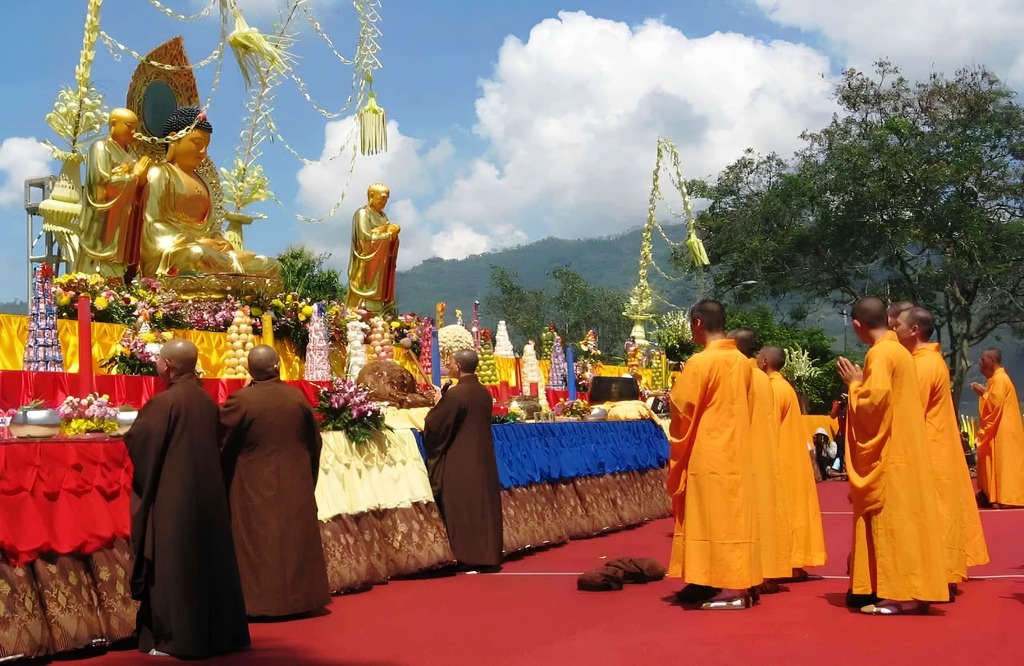
The name itself is a direct calendar reference. “Drukpa” denotes the sixth month of the Tibetan lunar calendar, and “Tshe Zhi” means the fourth day — together, simply, “the fourth day of the sixth month.” In wider Tibetan Buddhist usage, the day is also called Chokhor Düchen — “chokhor” meaning prayer wheel and “düchen” meaning great occasion — and ranks as the third of the four great düchen days in the Tibetan Buddhist calendar, alongside Saga Dawa, Universal Prayer Day, and Lhabab Düchen.
Drukpa Tshe Zhi marks the day Lord Buddha delivered his first sermon after attaining enlightenment, an event traditionally referred to as the First Turning of the Wheel of Dharma. This was not merely a teaching among many — it was the founding moment of Buddhism as a transmitted path, the instant the historical Buddha moved from private realisation to public instruction.
The Sacred Story Behind the First Sermon
The traditional account of this day, preserved by the Sikkim government, includes symbolic details often left out of shorter versions of the Buddha’s first sermon.
According to tradition, a thousand thrones appeared before the Buddha. After circling the first three, representing the Buddhas of the past, he sat on the fourth as his five original disciples, gods, bodhisattvas, and countless other beings gathered to hear him.
Brahma presented a golden wheel symbolising the spread of the Dharma, while Indra offered a white conch shell representing its message reaching all directions. Two golden deer then appeared, giving rise to the wheel-and-deer symbol still seen at Tibetan Buddhist temples.
At noon, the Buddha delivered his first sermon, teaching the Four Noble Truths to his five ascetic companions. This discourse, known as the Dhammacakkappavattana Sutta (“Setting the Wheel of Dharma in Motion”), remains central to the day’s religious observances.
The Four Noble Truths: The Core of the First Sermon
What the Buddha taught at Sarnath became the foundation of Buddhism across all traditions—a practical path to understanding and overcoming suffering.
The Four Noble Truths explain that suffering exists (Dukkha), arises from craving and ignorance (Samudaya), can be ended (Nirodha), and is overcome through the Noble Eightfold Path (Magga), which includes Right View, Right Speech, Right Action, Right Mindfulness, and other core principles.
Together, these teachings provide a practical guide to inner peace, compassion, and wisdom, and remain central to the prayers and teachings observed in Sikkim’s monasteries on this sacred day.
How Drukpa Tshe Zhi Is Observed in Sikkim
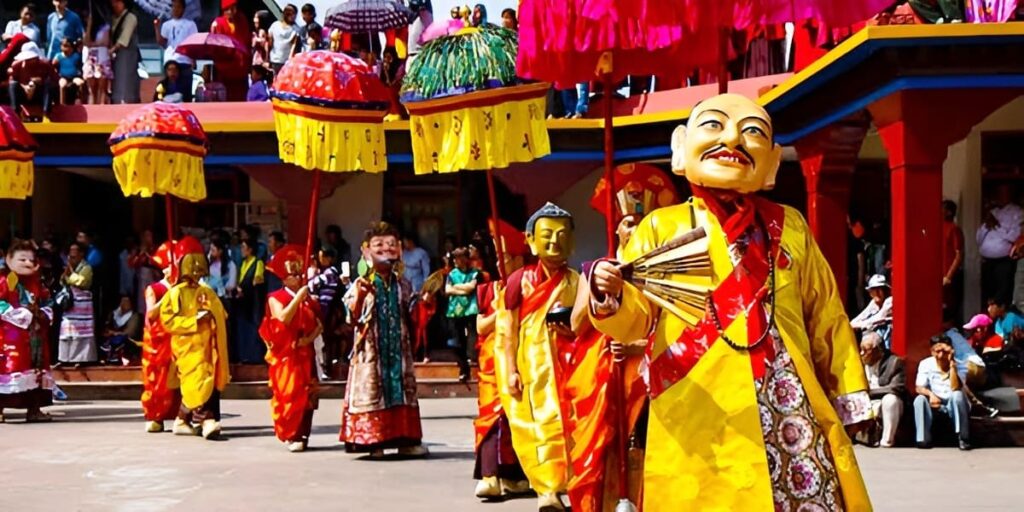
In Sikkim, Drukpa Tshe Zhi is observed with quiet devotion rather than grand public celebrations.
Major monasteries such as Rumtek, Enchey, and Pemayangtse hold special prayers, with monks reciting the Dhammacakkappavattana Sutta, offering butter lamps, and burning Sungta incense. Devotees visit to make offerings and pray for the well-being of all beings.
Many families also observe the day at home by cleaning their Choeshum (family altar) and arranging the traditional Yonchap—seven water offering bowls symbolising hospitality and devotion.
At Muguthang in North Sikkim and the Deer Park in Gangtok, religious observances are accompanied by traditional yak races, while some communities host cultural feasts.
A popular local belief holds that rain on Drukpa Tshe Zhi is especially auspicious, symbolising the cleansing of negative karma.
A Day of Multiplied Merit
Within Tibetan Buddhism, Drukpa Tshe Zhi is regarded as one of the year’s most spiritually significant days.
The Concept of Multiplied Merit: Buddhist tradition teaches that positive actions, prayers, and acts of generosity performed on Drukpa Tshe Zhi generate greatly increased spiritual merit. While traditions differ on the exact multiplier, all share the belief that wholesome deeds carry exceptional significance on this day.
This belief encourages many people in Sikkim to make offerings, perform charitable acts, and dedicate prayers for the wellbeing of all sentient beings, even if they do not regularly visit monasteries throughout the year.
Where to Experience Drukpa Tshe Zhi in Sikkim
Rumtek Monastery, roughly 24 km from Gangtok, is among the most significant venues for the day’s observances, given its standing as one of the most important Kagyu monasteries outside Tibet. Enchey Monastery, located within Gangtok itself, offers an accessible option for visitors based in the capital who want to witness the prayers without a longer journey. Pemayangtse Monastery in West Sikkim, one of the oldest and most revered monasteries in the state, holds its own ceremonial observances and is well worth the visit for travellers exploring that part of Sikkim.
Muguthang: A Genuinely Difficult Journey
The yak races at Muguthang are a unique part of Drukpa Tshe Zhi, but visiting the area requires careful planning. Located at about 15,500 feet near the Tibet border, Muguthang lies within a protected military zone and can only be accessed with a Protected Area Permit, a registered tour operator, and a 4WD vehicle.
The journey follows the Lachen–Thangu–Chopta route and requires proper acclimatisation due to the high altitude. Weather disruptions are common during the monsoon, so Muguthang should be treated as a dedicated high-altitude expedition rather than a simple festival excursion.
Quick Checklist: Etiquette for Drukpa Tshe Zhi
- Monastery movement: always circumambulate (kora) the exterior of monasteries and chortens in a clockwise direction.
- Monetary offerings: if you wish to offer money toward butter lamps or to the monastery, place clean currency notes directly on the altar cloth rather than handing them to a lama personally.
- The rain contingency: if it begins to drizzle, skip the umbrella and wear a light, hooded rain jacket instead. Locals treat the rain as a direct blessing, and opening an umbrella inside the temple gates can feel disruptive to the mood of the day.
- Photography: dress modestly, and follow the lead of monks and resident devotees regarding where photography is appropriate, particularly inside the main prayer halls during active recitation.
Planning a Visit: Practical Travel Notes
Because Drukpa Tshe Zhi follows the Tibetan lunar calendar, the exact Gregorian date shifts from year to year rather than landing on a fixed day, so it is worth checking the current year’s date through Sikkim Tourism or a Tibetan lunar calendar resource before planning travel around it.
Most visitors fly into Bagdogra Airport near Siliguri in West Bengal, then travel onward to Gangtok by road, a journey of around 4–5 hours depending on conditions. Indian citizens do not require an Inner Line Permit for Gangtok and most of East Sikkim, though parts of North Sikkim require a separate permit arranged through a registered tour operator — essential if you intend to combine Drukpa Tshe Zhi with a visit to Muguthang.
Why Drukpa Tshe Zhi Matters Beyond Sikkim
Drukpa Tshe Zhi occupies a distinctive place among Northeast India’s festival calendar: a day defined entirely by stillness, reflection, and doctrine rather than performance or spectacle. In a region known for its vibrant harvest festivals and elaborate masked dances, this quieter observance offers something genuinely different — a direct line back to the founding moment of an entire spiritual tradition, still marked with sincerity by monastic communities and ordinary households alike, nearly twenty-six centuries after the original sermon at Sarnath.
For travellers drawn to the contemplative side of Himalayan Buddhism rather than its festival pageantry, Drukpa Tshe Zhi offers a rare and genuinely moving entry point.
Use the NE India Trip Planner to start planning a visit around Drukpa Tshe Zhi, and check the NorthEast India Connect Festivals & Events calendar for the confirmed upcoming date and more celebrations across the region.
Also explore: Asar Pandhra — Sikkim’s Rice Planting Festival | Losar Festival — Sikkim | NorthEast India Connect Festivals & Events
