




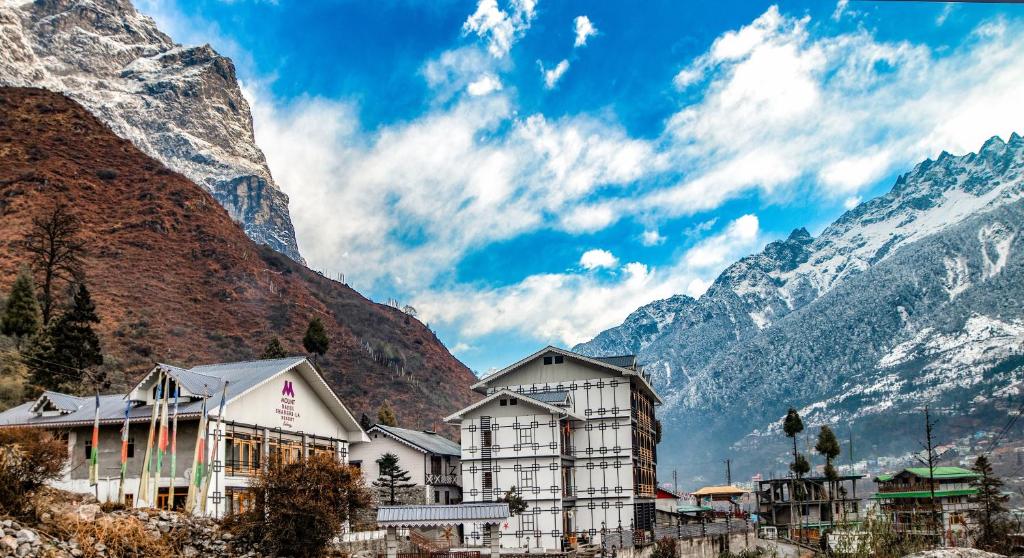
British explorer Joseph Dalton Hooker called it “the most picturesque village of Sikkim” back in 1855, and remarkably little has changed since. Lachung sits at nearly 9,000 feet in North Sikkim, right where the Lachen and Lachung Rivers meet before joining the Teesta, and it remains the base camp for two of the Eastern Himalayas’ most extraordinary sights: the rhododendron-carpeted Yumthang Valley and the stark, high-altitude drama of Zero Point. If you’ve been exploring our Sikkim travel coverage and wondering where the state’s mountain scenery gets genuinely dramatic, Lachung is where that begins.
Quick Facts About Lachung
| Location | Mangan district, North Sikkim, near the Tibet border |
|---|---|
| Elevation | Approximately 2,700-2,900 m (8,900-9,600 ft) |
| Meaning of the Name | “Small pass” |
| Distance from Gangtok | Approximately 125 km |
| Distance from Mangan | Approximately 50 km |
| Nearest Airport | Bagdogra / Pakyong |
| Population Groups | Lachungpa Bhutia, Lepcha, Tibetan descent |
| Local Governance | Dzumsa council, headed by the Pipon |
| Gateway To | Yumthang Valley, Zero Point (Yumesamdong) |
| Permit Required | Yes — Protected Area Permit (PAP) for all travellers |
| Best Time to Visit | October to May (peak bloom: March-May) |
| Vehicle Requirement | Sikkim-registered (SK) vehicle only |
Where Lachung Sits and Why It Matters
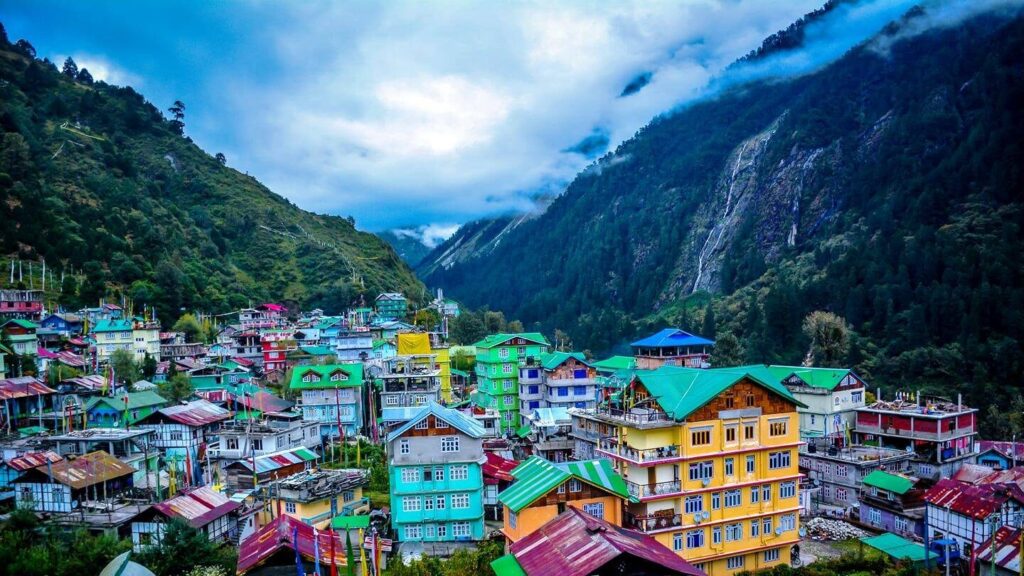
Lachung is a hill station and forward army post in Mangan district, close enough to the Tibet border that the Indian Army maintains a base here. Before the Chinese occupation of Tibet in 1950, according to Wikipedia’s account of the town, Lachung functioned as an active trading post between Sikkim and Tibet — a role that ended abruptly once the border closed. Tourism has since become the town’s economic backbone.
Most of the town’s population, known as Lachungpa Bhutia, traces Tibetan ancestry alongside Lepcha communities, and the local Dzumsa — a traditional village council headed by an elected Pipon — still governs much of daily life, a rare surviving indigenous self-governance system unique to Lachung and neighbouring Lachen.
Yumthang Valley: The Valley of Flowers
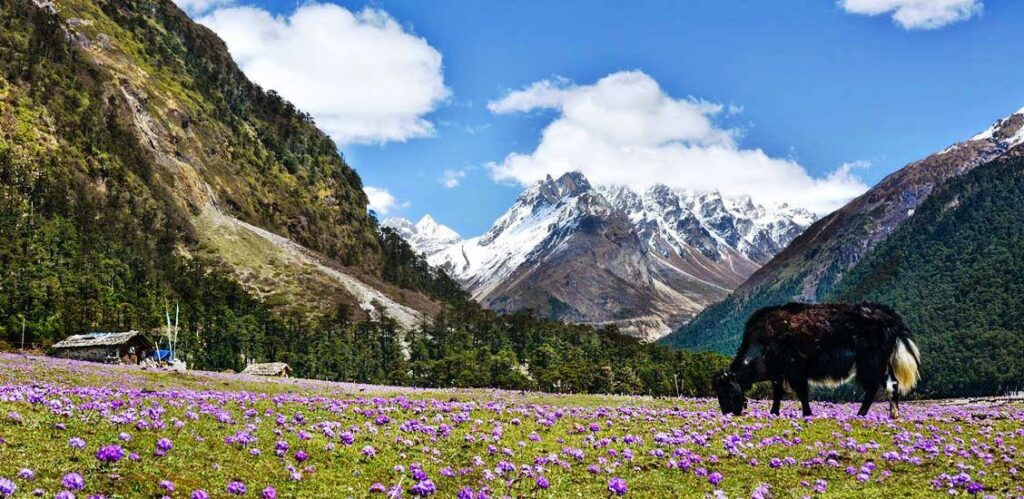
The single biggest reason travellers come to Lachung is Yumthang Valley, roughly 25 km further up the road at an elevation of about 3,564 m (11,800 ft). Between March and May, the valley erupts into a sweep of blooming rhododendrons, giving it its popular nickname, the “Valley of Flowers of Sikkim.” Come summer, the same meadows turn a deep alpine green, while winter blankets the entire valley in snow.
Botanical Note: The valley falls within the Shingba Rhododendron Sanctuary, home to over 40 documented rhododendron species alongside primulas and other high-altitude flora. The blooming window is narrow and strict — late March through May — so travelling outside it means seeing alpine greens or winter snow rather than flowers.
The Lachung and Lachen Rivers cut through the landscape here with the kind of postcard drama that’s made this stretch one of the most photographed in North Sikkim, and a hot spring near the valley floor is a popular stop for warming up after the cold mountain air.
Zero Point and the Realities of High-Altitude Travel
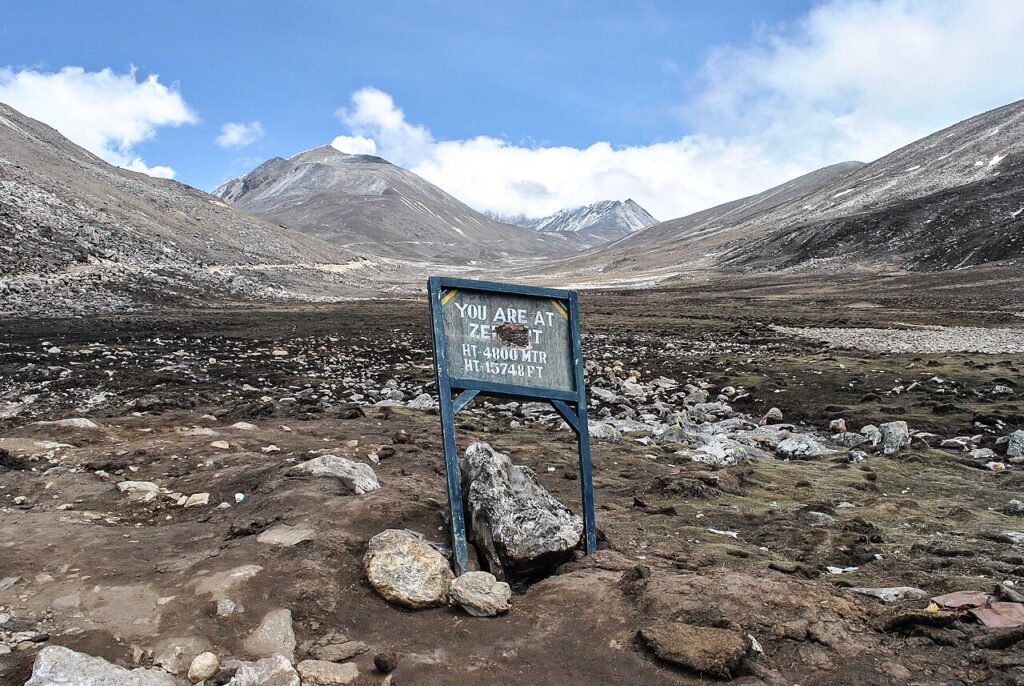
Beyond Yumthang, the road continues to Zero Point, also known as Yumesamdong, roughly 23 km further and sitting at approximately 4,663 m (15,300 ft) — the last point civilians can reach before the road becomes exclusively military territory near the Indo-China border.
Getting here fast is part of what makes this route risky. Gangtok sits at roughly 1,650 m (5,500 ft); Lachung at 2,700 m (9,000 ft); Zero Point at 4,663 m (15,300 ft). Ascending that entire span within 36 hours — which a rushed itinerary tempts travellers into — is a well-documented recipe for Acute Mountain Sickness. The sensible approach is a full night’s acclimatization in Lachung before pushing on past Yumthang the next morning. Portable oxygen canisters are available for rent at Lachung’s bazaars, and it’s worth discussing preventative medication such as Acetazolamide (Diamox) with a doctor before travelling, especially if you have any history of altitude sensitivity.
As of 2026, access is also tightly regulated beyond the altitude concerns. Independent travel isn’t permitted — visitors must go through registered tour operators — and authorities have introduced daily vehicle limits from Lachung along with weather-based cutoffs during heavy snowfall or landslides. Overnight stays at Zero Point aren’t allowed; it’s strictly a day visit from Lachung.
Lachung Monastery and Lachen: Sikkim’s Other Northern Gateway
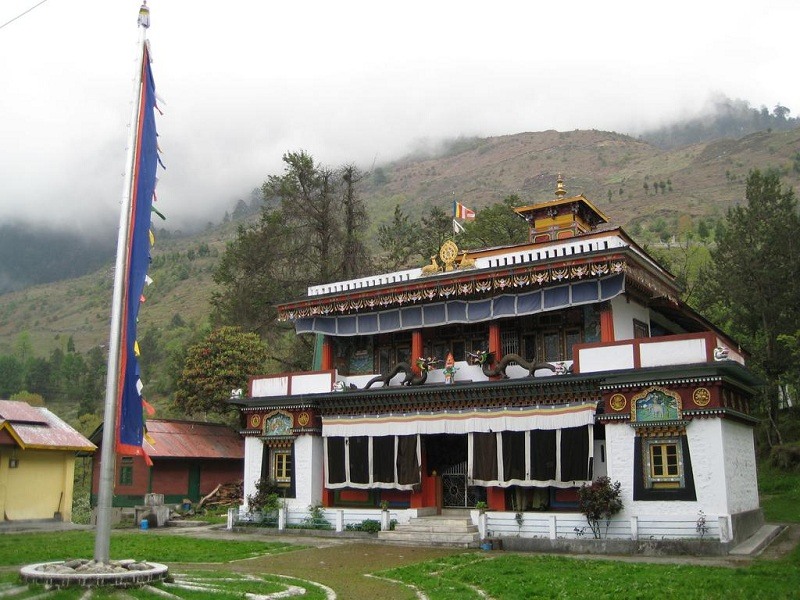
Back in town, Lachung Monastery (Lachung Gompa), belonging to the Nyingma order of Tibetan Buddhism, offers a calmer counterpoint to the valley’s drama — a worthwhile stop either before Yumthang or on the way back down.
| Destination | Gateway To | Elevation | Known For |
|---|---|---|---|
| Lachung | Yumthang Valley, Zero Point | ~2,700-2,900 m | Rhododendron valley, alpine scenery |
| Lachen | Gurudongmar Lake, Thangu Valley | ~2,750 m | One of the world’s highest lakes, more remote terrain |
Gurudongmar Lake, reached via Lachen, sits at 5,425 m and is restricted to Indian nationals only, while Yumthang and Zero Point remain open to foreign tourists with the correct permits. Many itineraries combine both bases into one loop out of Gangtok — though as of 2026 that plan needs a real-time check, since the Chungthang-Lachen road has faced repeated closures.
The Road Itself: Chungthang and the 2023 GLOF
The route from Gangtok to Lachung isn’t the fixed drive it once was. In October 2023, a catastrophic Glacial Lake Outburst Flood (GLOF) washed out major stretches of road around Chungthang — the township where the highway splits into the separate Lachen and Lachung valleys. Lachung reopened to tourists that December via an alternate route, but the Lachen side has continued facing closures well into 2026, at times forcing detours via Dzongu-Shipgyer or Dongkyala.
Expect unpaved, gravel-patched sections and possible last-minute rerouting. A high-clearance 4WD — a Scorpio or Innova with an experienced local driver — isn’t a luxury here, it’s the standard. Confirm the current road status with your Gangtok agent immediately before departure rather than trusting older trip reports.
Permits: The 2026 Rules for Entering Lachung
Lachung sits inside a Protected Area due to its proximity to Tibet, meaning every visitor — Indian or foreign — needs a Protected Area Permit (PAP).
Quick Checklist: Getting Your North Sikkim PAP
- No PAN cards accepted — checkposts require a passport, voter ID, or driving licence.
- Aadhaar is frequently rejected and hasn’t been officially accepted for this permit since September 2019.
- Carry 4+ passport-sized photographs; your Gangtok agent typically needs two, checkpoints occasionally request extras.
- Confirm your vehicle carries Sikkim (SK) plates — vehicles registered elsewhere, including WB plates, are turned back.
- Children under ~5 and travellers above 60-65 are generally discouraged or denied entry to the higher stretches.
The permit is almost always arranged through a registered Gangtok travel agent rather than applied for independently, since the government effectively requires a local liaison for this route. Our Northeast India travel permits guide covers the broader regional picture.
Also Check Out: NorthEast India Permit Assistant
What You’ll Actually Eat in Lachung
Meals here follow the Lachungpa Bhutia table, shaped by Tibetan roots and the cold. Expect steaming Thukpa, hand-rolled momos, and Chhurpi-Ningro curry — alpine fiddlehead fern (Ningro) sautéed with chhurpi, the region’s distinctive yak-milk cheese, served soft and fresh or hardened and grated over other dishes. Barley dishes and yak butter tea are common too, offering the dense, warming calories the altitude demands.
In the evenings, homestays may offer Chaang — a fermented millet beer served warm in a bamboo vessel called a tongba, sipped through a bamboo straw. It’s a genuine village tradition locals use specifically to fight off the biting winter cold.
Best Time to Visit Lachung
Lachung is a destination for a specific window: October through May is when tourists arrive in the greatest numbers, according to Wikipedia’s climate notes on the town. Spring, from March to May, is peak season for the rhododendron bloom and arguably the most rewarding time to visit. Winter turns the town and surrounding valleys into a snow-covered landscape suited to travellers chasing that specific alpine atmosphere. Monsoon months bring the heaviest rainfall of the year and the greatest risk of landslides on the approach roads — and, as recent years have shown, the greatest risk of the route being closed altogether.
How to Reach Lachung
- Fly into Bagdogra (Siliguri) or Pakyong Airport within Sikkim for a shorter onward drive.
- Continue to Gangtok, where most travellers arrange their PAP through a registered agent.
- Drive to Lachung via Mangan and Chungthang, roughly 125 km — a scenic but winding drive taking most of a day; check current road status the morning you leave.
- Continue to Yumthang and Zero Point as a day trip after a full night’s acclimatization.
Given the permit requirements, vehicle restrictions, and evolving road conditions, nearly all visitors book this leg as a pre-arranged package.
Where to Stay and Travel Tips
Accommodation is comfortable rather than luxurious, by design — Lachung follows a community-based tourism model expecting restrained nightlife and environmentally conscious behaviour from visitors. Locally owned hotels and homestays are the norm, offering warm hospitality and home-style meals. Plan at least one overnight here before the Yumthang/Zero Point push.
- Book everything through a registered operator — permits, vehicles, and road-status updates are simpler as a package.
- Build in a genuine acclimatization night before attempting Zero Point.
- Pack serious cold-weather layers, even in spring.
- Expect poor connectivity beyond Lachung, and carry cash — ATMs are unreliable this far out.
- Budget at least 4-5 days, with flexibility given how often this route has faced weather-related closures in recent years.
Final Thoughts
Lachung earns its reputation the old-fashioned way — through scenery that genuinely does look like nothing else in Sikkim, a still-functioning traditional council system, and a road that ends, quite literally, at the edge of the country. Plan around the permits, respect the altitude, book through a proper operator, and give yourself the extra day to actually enjoy Yumthang’s blooms rather than rushing through them.
For more from this part of the Himalayas, browse our Sikkim travel coverage or check our Northeast India tourism guide for help planning a longer regional itinerary.
