




There is a period of roughly six weeks — from late March through April and into early May — when the Yumthang Valley transforms. The high-altitude meadows of North Sikkim’s most famous valley, which spend most of the year under a palette of grey and brown, fill instead with colour of an almost unreasonable intensity: 24 species of rhododendron in simultaneous bloom, ranging from the deepest crimson through pink and lavender to white, layered up the valley sides and carpeting the meadow floor. Combined with the crystal-clear Teesta River running through the valley centre and the snow peaks of the Tibet border visible at the upper end, this is one of the most spectacular seasonal landscapes in the entire Himalayan range.
But Yumthang Valley is more than its flower season. At 3,564 metres, the valley offers an accessible high-altitude experience — hot springs, the Shingba Rhododendron Sanctuary, and the option to push further to Zero Point at 4,428 metres — that rewards visitors across multiple seasons. The base town of Lachung, where the valley road begins, is one of the most attractive villages in North Sikkim and offers warm Bhutia hospitality in one of the most scenic overnight settings in the Himalayas.
Quick Facts About Yumthang Valley
| State | Sikkim |
| District | North Sikkim |
| Altitude | 3,564 metres (Valley floor); 4,428 metres (Zero Point) |
| Base Town | Lachung — 25 km from Yumthang Valley |
| Distance from Gangtok | 150 km to Lachung; add 25 km to Yumthang Valley |
| Permit Required | North Sikkim Restricted Area Permit (processed in Gangtok through operators) |
| Best Time | March to May for rhododendrons; October to November for clear skies and snow peaks |
| Famous For | 24 rhododendron species; Shingba Sanctuary; hot springs; Zero Point snow experience |
| Nearest Airport | Bagdogra (West Bengal) or Pakyong (Gangtok) |
The People of Lachung: The Bhutia Community
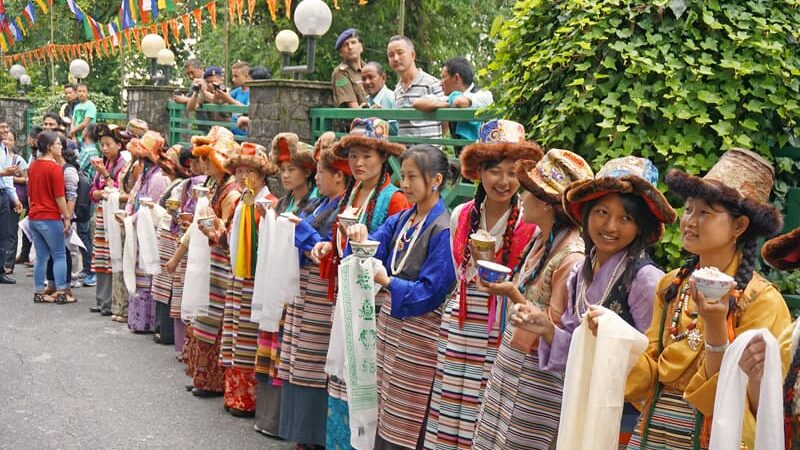
Lachung is a Bhutia settlement whose community governance system — the Dzumsa — is one of the most distinctive traditional self-governance institutions in Sikkim. The Dzumsa is a council of village elders that manages land use, regulates grazing, controls tourism within the village, and adjudicates local disputes. It functions entirely independently of the state government on matters within its purview.
Dzumsa governance: The Dzumsa system at Lachung and Lachen (the two North Sikkim Bhutia villages) has been operating continuously for centuries and was formally recognised by the Sikkim government. Under its rules, the number of guesthouses in Lachung is regulated, grazing rights are assigned seasonally, and the village forest and water resources are managed as commons.
Yak herding: The Bhutia families of Lachung move their yak herds seasonally — up to higher pastures in summer and down to the valley in winter. The yaks graze in and around Yumthang Valley during the summer months, and encountering a yak herd moving through the rhododendron meadows is one of the valley’s most characteristic scenes.
The Rhododendron Season — Month by Month
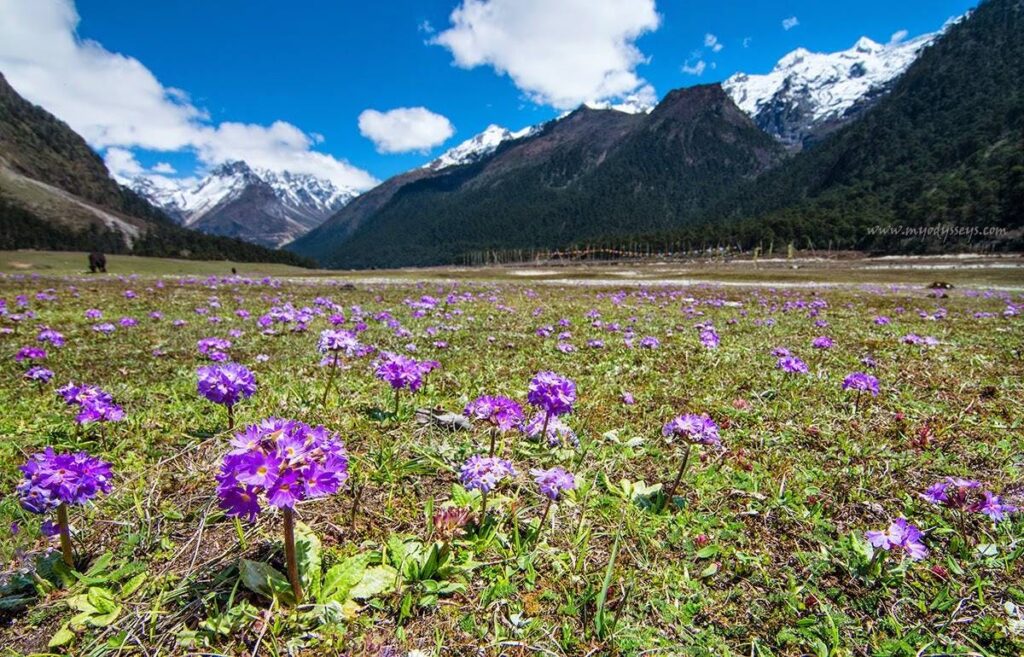
Late March: The Season Begins
The first rhododendrons to bloom in Yumthang are the lower-altitude species — Rhododendron arboreum (the tree rhododendron, crimson) begins to open on the valley sides below 3,000 metres, particularly visible on the approach road from Lachung. By late March, the valley floor itself is beginning to see the first blooms.
- Rhododendron arboreum (crimson) — first to bloom on lower slopes
- Lower valley and road approach most colourful in late March
- The valley floor meadows still largely brown; full carpet effect develops through April
April: Peak Season
April is Yumthang Valley at its most spectacular. The valley floor and lower slopes are carpeted in simultaneous bloom from multiple rhododendron species — the effect is of a landscape that has been extravagantly over-decorated by nature. The colour range from deep red to pink to white creates compositions that reward photography from any angle.
- Peak bloom: all 24 species in simultaneous flower
- Valley floor fully carpeted — the classic Yumthang photograph
- Shingba Sanctuary (described below) at maximum colour
- Visitor numbers also peak — weekends are very crowded; weekday visits strongly recommended
Early May: The Gentle Decline
By early May, the lower-altitude species have begun to pass their peak, but higher-altitude species (particularly those at and above 4,000 metres) are just coming into bloom. The valley has a slightly more complex palette — late-blooming species still vivid while others fade — and crowd numbers drop significantly from the April peak.
Rhododendrons by Species (Key Varieties)
- Rhododendron arboreum — Crimson; the most abundant; creates the dramatic red walls on valley sides
- Rhododendron campanulatum — Lavender-purple; 3,000–4,500m; particularly abundant in Shingba Sanctuary
- Rhododendron barbatum — Deep red; tree form; spectacular on upper slopes
- Rhododendron wightii — Yellow; rare; found at the highest elevations near Zero Point
- Rhododendron nivale — White; the highest-altitude species; found at and above 4,500m
Top Attractions in Yumthang Valley
1. Yumthang Valley Floor
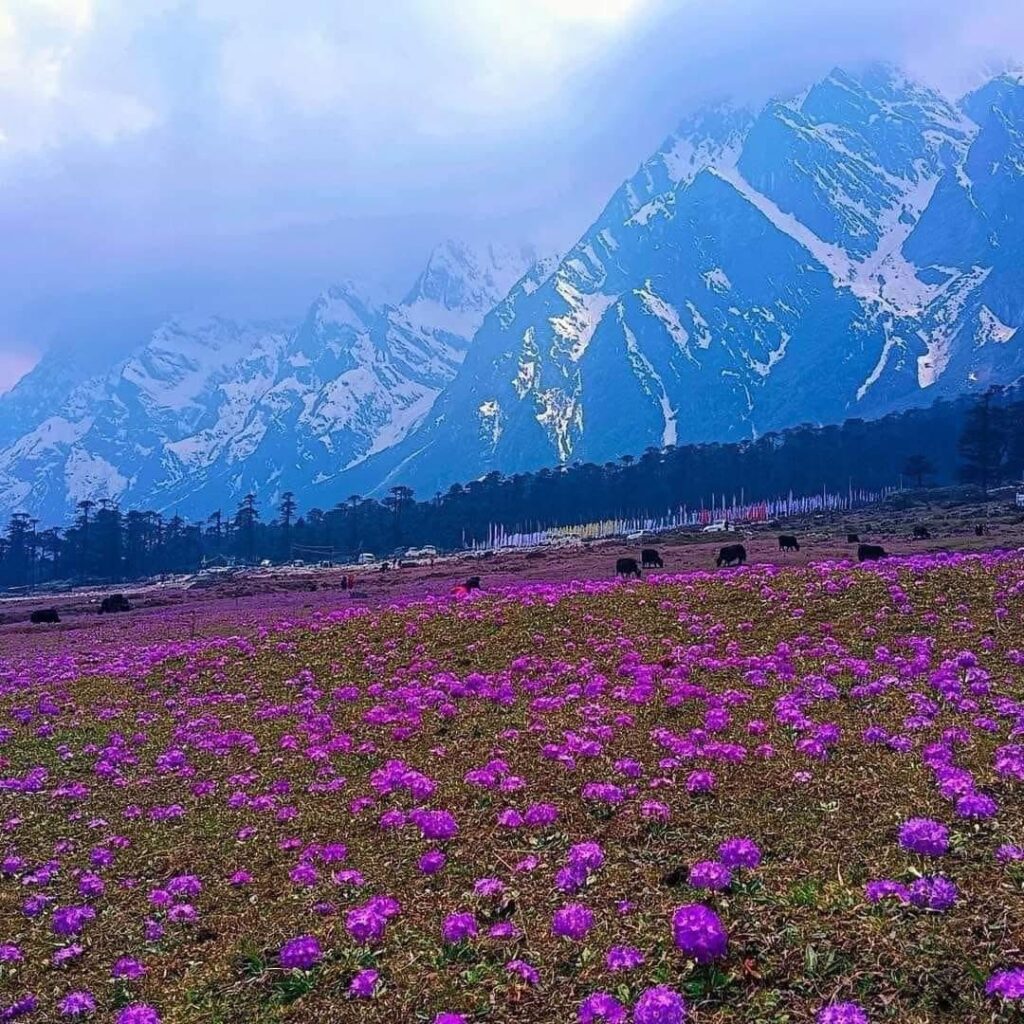
The valley floor — a wide, flat meadow at 3,564 metres through which the Teesta (Tista) River runs in crystal-clear braids — is the centrepiece of any Yumthang visit. In April, the meadow is carpeted with rhododendrons and early alpine flowers. Outside the flower season, the meadow is beautiful in its own right — a high-altitude grassland with grazing yaks, snow peaks at the valley head, and the silence of true mountain wilderness.
- Valley floor access point 25 km from Lachung via paved road
- Teesta River braids through the valley — clear enough to see the riverbed from the banks
- Yak herds graze through the valley in summer — one of Yumthang’s most characterful scenes
- Permits checked at a checkpoint on the approach road
2. Shingba Rhododendron Sanctuary
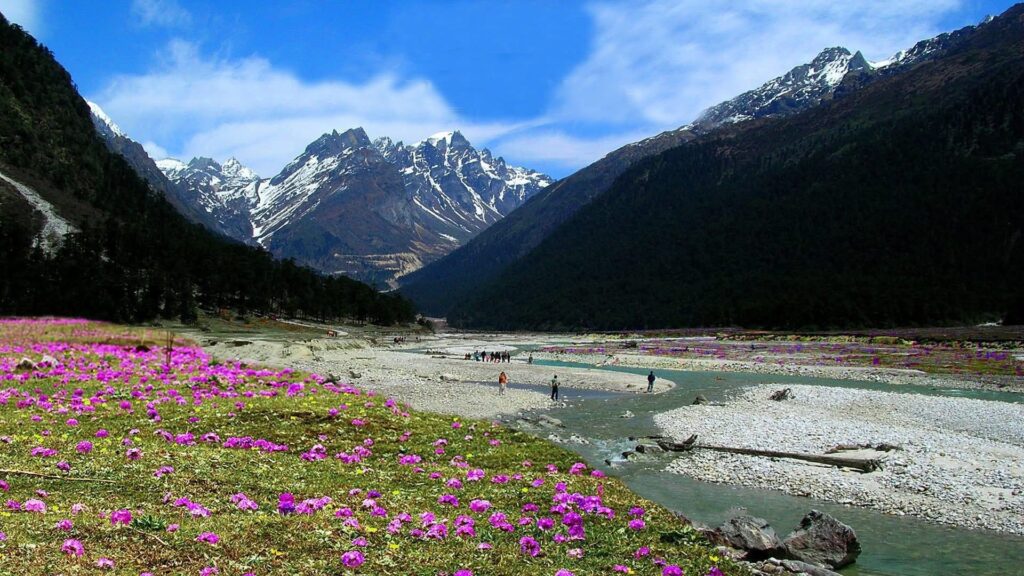
The Shingba Rhododendron Sanctuary, established to protect the extraordinary rhododendron diversity of the Yumthang area, covers an area of dense mixed rhododendron forest on the valley sides. Walking trails through the sanctuary (5–10 km, marked) pass through stands of rhododendron of multiple species growing so densely that the canopy overhead creates a tunnel of colour in bloom season.
- Marked walking trails 5–10 km through dense rhododendron forest
- 24 species of rhododendron within the sanctuary boundaries
- Outstanding birdwatching year-round — Blood Pheasant, Himalayan Monal, and multiple warbler species
- Best mid-April for peak bloom; pleasant even outside flower season
3. Yumthang Valley Hot Springs
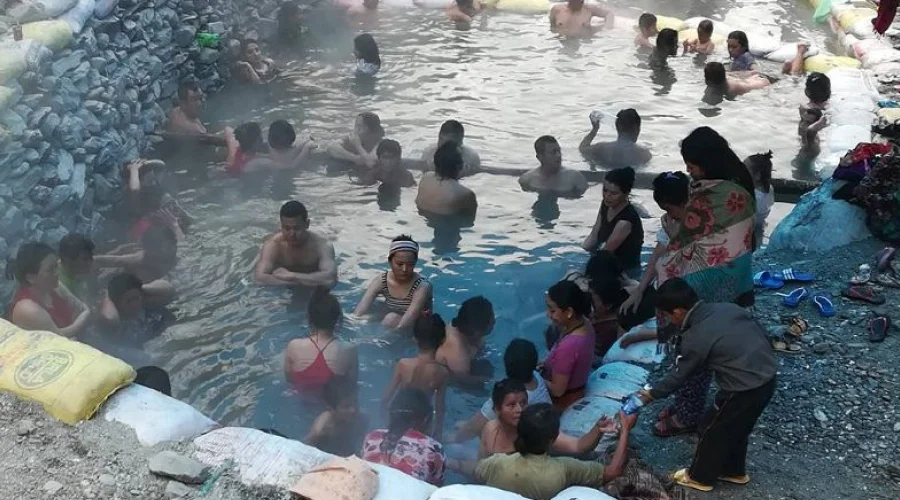
Natural hot springs emerge near the Yumthang Valley floor — sulphurous geothermal water at 40–50°C, considered medicinally beneficial by local tradition. A basic bathing facility is established at the springs. Soaking in a mountain hot spring at 3,564 metres, surrounded by rhododendrons (in season) and snow peaks, is a sensory experience of a very particular quality.
- Natural geothermal hot springs at 40–50°C
- Basic changing facilities and bathing structures
- Best combined with the valley floor walk — arrive cold, soak, then continue
4. Zero Point (Yumesamdong) — 4,428 Metres
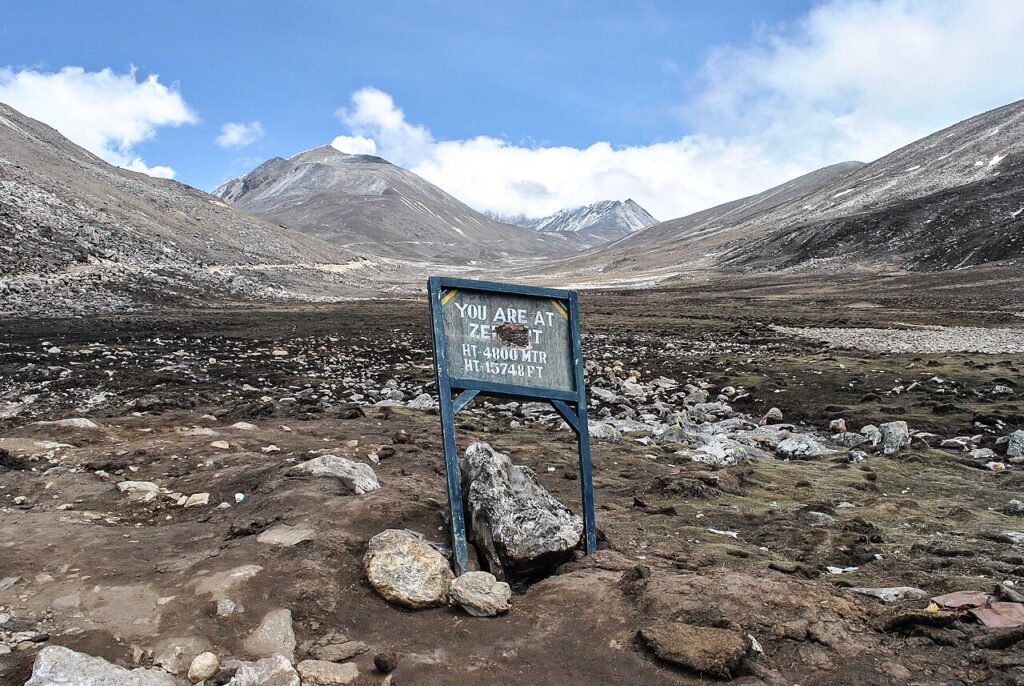
Zero Point — known locally as Yumesamdong — is the highest point accessible by road in North Sikkim, at 4,428 metres. The road from Yumthang Valley continues for a further 25 km to reach Zero Point, passing through landscapes of increasing austerity — the vegetation thins, the rock becomes dominant, and the surrounding peaks grow closer. Zero Point is covered in snow for most of the year, and for many travelers it provides their first experience of a snow-covered mountain landscape.
- 4,428 metres — the highest road-accessible point in North Sikkim
- Snow present most of the year; snowfall activity from November to May
- Views of the Tibet border peaks — closest you can get to the border by road in this region
- Altitude warning: Zero Point is 864 metres higher than Yumthang — altitude sickness risk is real; time spent here should be limited to 30–45 minutes
- Requires additional permit beyond North Sikkim RAP — arrange through Gangtok operators
| Zero Point should be treated with the same altitude respect as Gurudongmar. Do not stay more than 30–45 minutes. If you experience sudden severe headache, nausea, or disorientation, return to Lachung immediately. The drive back down to lower altitude is the most effective treatment. |
5. Lachung Village & Monastery
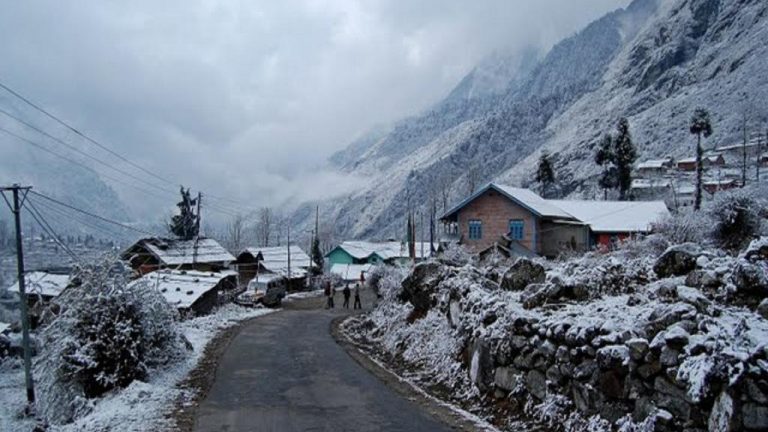
Lachung village, the base for Yumthang Valley, is one of the most attractive settlements in North Sikkim — a cluster of traditional Bhutia homes and an ornate monastery set at the confluence of the Lachung Chu and Yumthang streams. The Lachung Monastery (Nyingma school, circa 1880) is a beautiful small gompa worth visiting on arrival or return from the valley.
- Lachung Monastery: 19th century Nyingma gompa; ornate facade and well-maintained interior
- Traditional Bhutia architecture throughout the village
- The village market area has basic shops, a few restaurants, and good local honey and yak products for purchase
Top Things to Do in Yumthang Valley
- April rhododendron walk — Self-guided or with guide; the valley floor trail and Shingba Sanctuary trails are the finest walks
- Dawn photography from the valley floor — First light on the snow peaks with rhododendron foreground
- Hot spring soak — Morning or post-hike; the combination of mountain air and geothermal water is restorative
- Zero Point snow experience — If arriving in appropriate season and health; limit time at altitude
- Birdwatching in Shingba Sanctuary — Dawn walks for Blood Pheasant and Himalayan Monal
- Lachung village evening walk — Explore the Dzumsa-governed village at dusk; monastery visit
Where to Eat & Stay in Lachung
Lachung has a community-managed accommodation sector regulated by the Dzumsa — the number of guesthouses is limited to prevent overdevelopment, which means rooms fill quickly in peak season (April) and must be booked well in advance.
- Lachung guesthouses — All run by Bhutia families; basic to comfortable; ₹1,200–₹3,000 per night with meals; almost universally warm and hospitable
- Meals — Home-cooked Bhutia food: thukpa, rice, meat preparations, and local vegetables; simple and satisfying at altitude
- Booking — Arrange through your Gangtok tour operator who packages accommodation with the permit and transport
How to Reach Yumthang Valley
- From Gangtok: Day 1 — Gangtok to Lachung (120 km, approximately 6–7 hours on mountain road); Day 2 — Lachung to Yumthang (25 km, 1 hour) and back; optional Zero Point extension. Total package: 2–3 days from Gangtok.
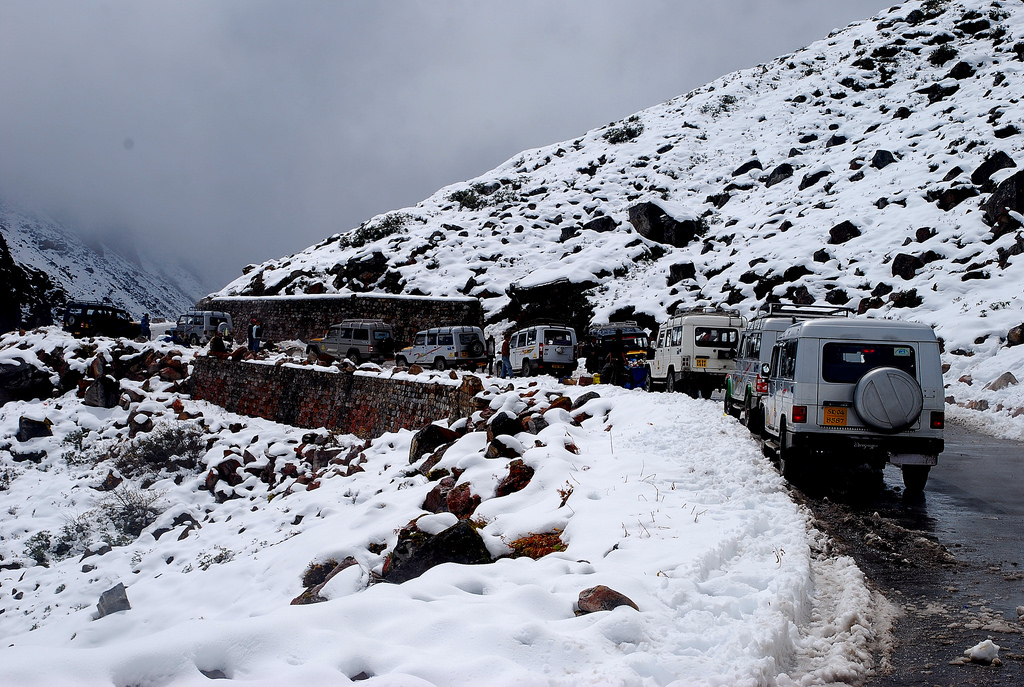
- Transport: Private 4WD vehicle arranged through Gangtok tour operators; no public transport to Lachung or Yumthang
- Combined North Sikkim package: Most operators combine Lachung/Yumthang with Lachen/Gurudongmar in a 4–5 day package — the most efficient way to see both destinations
Travel Essentials for Yumthang Valley
- North Sikkim Restricted Area Permit: process through Gangtok operator 1 day in advance
- Zero Point requires additional permit — arrange with Gangtok operator
- Warm clothing essential at all times: Yumthang is cold even in April — layers including fleece and windproof jacket
- Altitude: Yumthang Valley at 3,564m; drink water, avoid overexertion, descend if symptoms develop
- Cash only in Lachung — no ATMs; carry sufficient from Gangtok
- BSNL signal in Lachung town; no signal in Yumthang Valley
Also Read: How to Apply For Travel Permits for Traveling to Northeast India
Best Time to Visit Yumthang Valley
- April (rhododendron peak): The finest time; all 24 species in bloom; weekdays much preferred over weekends
- Late March & early May: Shoulder season; still excellent bloom but fewer crowds
- October to November: Clear skies; exceptional snow peak views; valley golden-brown; no flowers but landscape still beautiful
- December to March: Snow in the valley; road may close; cold but extraordinarily atmospheric for experienced winter travelers
- June to September: Monsoon; landslides possible on approach roads; valley green but misty
