




Somewhere between Kohima and the Manipur border, on a ridge so remote that most navigation apps still struggle with the final stretch, sits a village travel writers keep independently calling “enchanted.” Benreu has turned up more and more in 2025 and 2026 roundups of Nagaland’s hidden gems, and for once the hype is earned. Running water flows into every home from a spring the village has protected for generations, Mithun cattle wander the town centre, and the third-highest peak in Nagaland looms close enough that you can watch the sunrise from its first false summit before breakfast.
If the name sounds unfamiliar, that’s the point. Benreu sits in the Peren district, deliberately off the well-trodden Kohima-Dzukou–Khonoma circuit, and the difficulty of reaching it has kept its culture and landscape remarkably intact. Here’s the tactical version of what you need to know before committing to the journey.
Quick Facts About Benreu
| State | Nagaland |
|---|---|
| District | Peren |
| Tribe | Zeliang Naga (majority); Kuki minority |
| Altitude | 1,950 metres (approx. 7,000 feet) above sea level |
| Distance from Kohima | Approx. 67 km via Dzuleke; 6–8 hours by road |
| Distance from Dimapur | Approx. 115–120 km via Peren town; 5–7 hours by road |
| Population (2011) | 850 persons; 180 households |
| Nearest Peak | Mount Pauna — third-highest peak in Nagaland (2,486 m) |
| Mount Pauna Trek | 6–7 hours round trip; pre-dawn start recommended |
| Key Sites | Mount Pauna; Tangcubung Tekwa; Luikeing Bamzang; Releime Terwaban |
| ILP Required | Yes — Nagaland ILP mandatory for all visitors; checkpoints en route enforce it |
| Best Time | October to April; December–February for post-harvest festival season |
| Accommodation | Mount Pauna Tourist Village; a small number of village homestays |
| Average Annual Rainfall | Approx. 2,056 mm |
The Legal Checklist: Securing Your Nagaland Inner Line Permit (ILP)
No traveller can legally enter the Peren district without a valid Nagaland Inner Line Permit. The Nagaland Inner Line Permit requirement is enforced at checkpoints along both approach routes; travellers without one are turned back regardless of how far they’ve already driven.
Apply online through the official Nagaland e-ILP portal or in person at the Deputy Commissioner’s office in Dimapur or Kohima. Build in a day of buffer for processing, and carry a physical printed copy rather than a digital version, since checkpoints here still largely work off paper documentation.
Read More: How to Apply For Travel Permits for Traveling to Northeast India
Topography and Tribal Heritage: Inside the Peren District Highlands
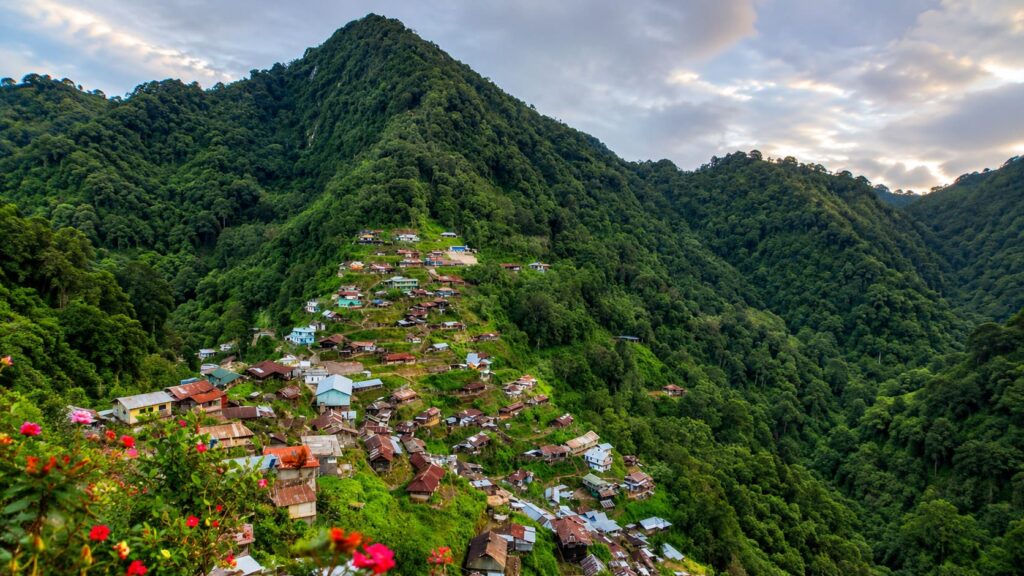
Benreu sits on a ridge directly facing Mount Pauna, at roughly 1,950 metres above sea level. From a good vantage point near the village, you can look down at terraced rice fields in the valley floor and trace the Teipuiki River, which marks the boundary between Nagaland and Manipur.
The Zeliang and Kuki Demographics: Balancing Animism and Modern Faith
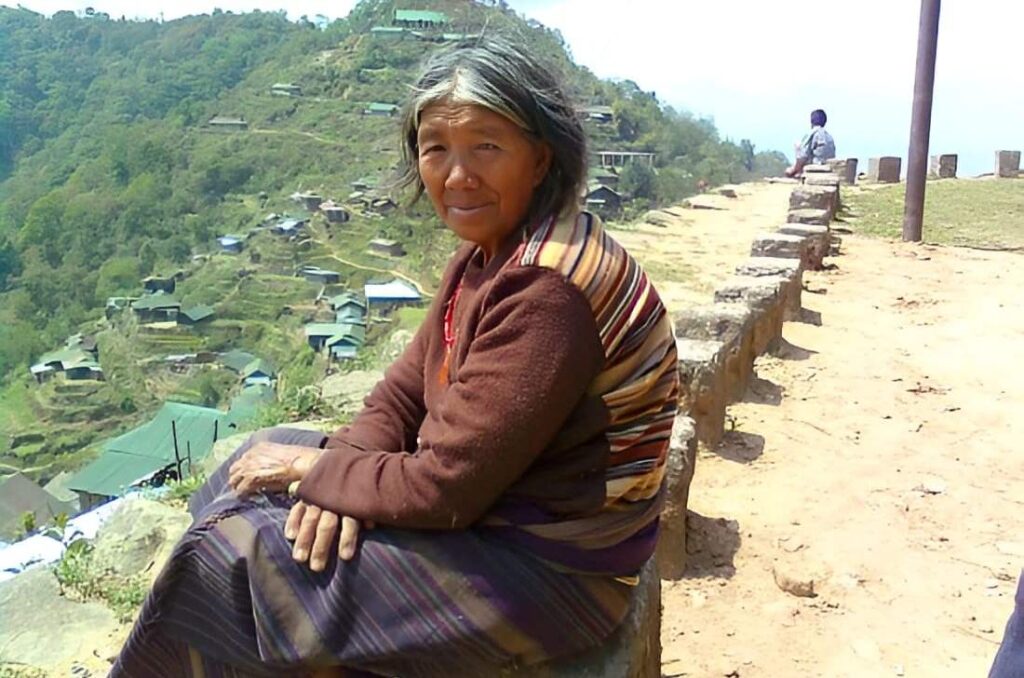
According to the 2011 Census, Benreu has a population of about 850 people living in around 180 households. The village is predominantly Zeliang, with a smaller Kuki community, and most residents follow Christianity today.
This cultural transition is reflected in village life. Traditional beliefs associated with Mireuding, the village’s guardian spirit, largely survive only in local memory. The Morung, once central to Zeliang Naga customs and community life, still stands as an important symbol of Benreu’s cultural heritage.
Deciphering the “Enchanted” Forest: Community Conservation Over Jhum
The word “enchanted” shows up constantly in coverage of Benreu, and it isn’t just marketing language. Locals maintain a long-standing ban on hunting birds and wild animals within village boundaries, and the community council banned traditional jhum, or slash-and-burn, cultivation well before such measures became a wider regional policy conversation. That ethic is also why Benreu has a reliable spring-fed water supply running into every household, a genuine rarity for a rural hill village in this region.
Mount Pauna Expedition Guide: Summiting Nagaland’s Third-Highest Peak
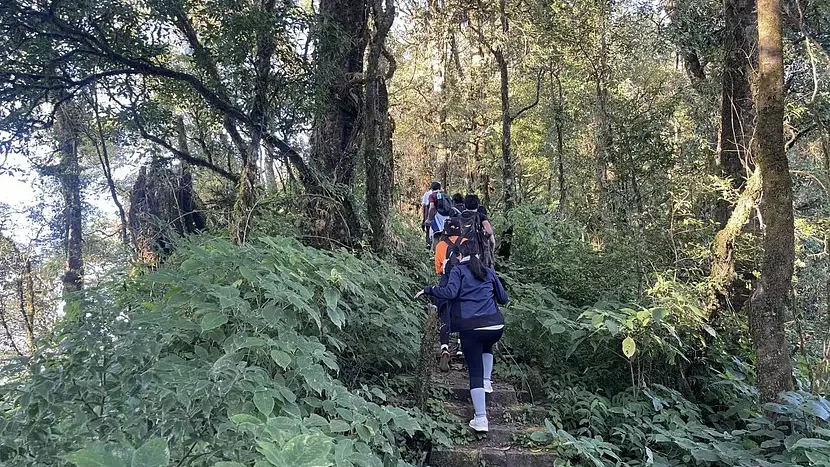
Mount Pauna dominates every conversation about Benreu. At 2,481 metres, it’s the third-highest peak in Nagaland, rising in three distinct ascending sections, and the full round trip from the village and back takes six to seven demanding hours.
The trail climbs aggressively through temperate broadleaf forest before transitioning into dwarf bamboo thickets nearer the summit, a shift in vegetation that also marks a shift in difficulty, since the narrow bamboo-lined sections accommodate only one person at a time. Most visitors start well before dawn, often around 2 or 3 a.m., specifically to reach the first peak in time for sunrise.
Leeches, Bamboo Ridges, and Pre-Dawn Technical Scrambles
The lower sections of the trek can have heavy leech activity, especially during April and October. Tucking trousers into socks and carrying salt is common practice. Higher up, the bamboo-covered slopes become slippery after rain, making a trekking pole useful.
A natural spring near the first peak supplies water to the village and highlights the area’s conservation importance. Local guides are strongly recommended, with many village youths serving as guides, combining local knowledge with a community-based livelihood initiative.
Off the Beaten Track: What to See in Benreu Beyond the Mountain
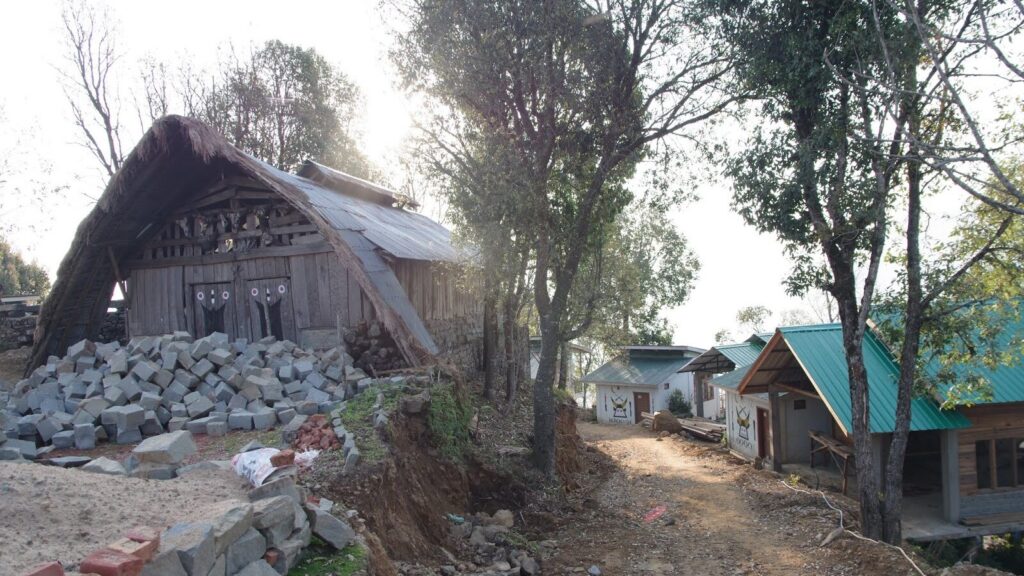
Beyond the mountain, Benreu rewards a slower, more observational kind of travel.
- Tangcubung Tekwa, a small spring-fed pool channelled into a concrete tank, is believed locally to have healing properties — with the genuinely held caveat that its effectiveness depends on the visitor’s own faith.
- Luikeing Bamzang, a nearby mountain, offers expansive valley views without the full commitment of the Mount Pauna trek.
- Reneitia, a 30-minute walk from the village centre, is a noted echo point.
- Releime Terwaban, a 15-minute trek away, is a flat stone outcrop traditionally known as the unmarried women’s meeting point — a small but evocative piece of social history from before smartphones reorganised village life.
The Social Currency of the Mithun: Naga Wealth Symbols Explained
Benreu is known for having one of the largest Mithun populations in Nagaland. In Zeliang Naga culture, Mithuns are highly valued and traditionally play a role in dowries, dispute settlements, and community feasts. The animals roam freely around the village, and visitors should treat them with respect, as harming a Mithun can result in substantial fines imposed by the village council, known as the Awang.
Bitter Teliandui Honey and Restricted Wild Ginseng
The village is also known for two things visitors rarely get to experience. Teliandui is a rare bitter-sweet honey produced by the Teliane bee, found exclusively in this part of the hills, in quantities so limited that orders need to be placed well in advance. A wild ginseng variety also grows in the local soil, though the village council restricts its sale to outsiders.
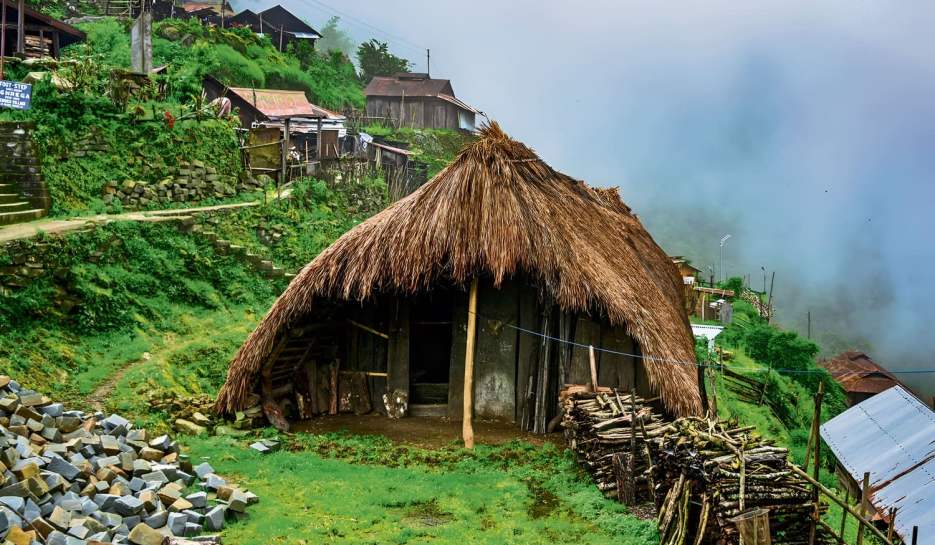
Cultural Etiquette: Respecting Zeliang Customs and the Village Council
- On arrival, it is courteous to have your guide or driver introduce your group to a village elder or council member. Respect for elders and community decisions remains an important part of village life.
- When visiting a Morung, seek permission before photographing or handling ceremonial items. Always ask before photographing people, especially elders, and avoid disruptive behaviour during community events.
- Do not purchase restricted forest products such as wild ginseng. Visitors should also keep a safe distance from free-roaming Mithun cattle, which are highly valued within the community and protected under customary law.
The Logistics Blueprint: Mapping the Two Mountain Routes to Benreu
This is the part where most travel content gets vague, and it shouldn’t, since the journey to Benreu is a defining part of the experience.
| Route Choice | Total Distance | Average Drive Time | Road Terrain Quality | Required Vehicle | Optimal Staging Strategy |
|---|---|---|---|---|---|
| Via Kohima & Dzuleke | ~67 km | 6–8 hours | Highly volatile; unpaved dirt, deep ruts, frequent mud tracks | Strictly 4WD / high clearance (Thar, Scorpio, Gypsy) | Best for pairing with Khonoma or Dzuleke |
| Via Dimapur & Peren | ~115–120 km | 5–7 hours | Paved highway to Peren town; final 30 km degrades into rough mountain tracks | High-clearance AWD or 4WD preferred | Best for fly-in travellers via Dimapur Airport/Railway |
Surviving the Kohima-Dzuleke Dirt Tracks: Vehicle and Driver Clearance
Travelling from Dzuleke to Benreu is more about having the right vehicle than covering the distance. The road is poorly mapped, there is no public transport, and much of the route requires a high-clearance 4WD vehicle with an experienced local driver due to rough, muddy conditions.
Whichever route you take, avoid the peak monsoon season when landslides and road damage are common. Carry food, water, and essentials from Kohima, Dimapur, or Peren, as there are few services along the way, and mobile network coverage can be unreliable.
The Offbeat Nagaland Backcountry Packing Checklist
Because Benreu has zero commercial tourist infrastructure or pharmacies, your pack needs these specific items, none purchasable anywhere near Peren district once you’re past the staging towns:
- A physical, printed copy of your approved ILP. Battery drains fast in cold mountain temperatures, and checkpoints expect physical validation papers.
- High-capacity power banks, 20,000mAh or above. The grid in Peren district frequently goes down for 24 to 48 hours during heavy mountain winds.
- A medical kit with broad-spectrum antibiotics, pain relievers, rehydration salts, and antihistamines. The nearest fully equipped hospital is hours away in Peren town or Kohima.
- Aggressive-lug trekking boots. The final scrambling trails up Mount Pauna are slick wet loam and moss-covered rock; smooth-soled sneakers will slip.
- Small denomination cash, specifically ₹100 and ₹200 notes. Homestays and youth guides cannot accept UPI given the poor connectivity, so carry ample physical cash.
Staying in the High Hills: Mount Pauna Tourist Village and Homestays
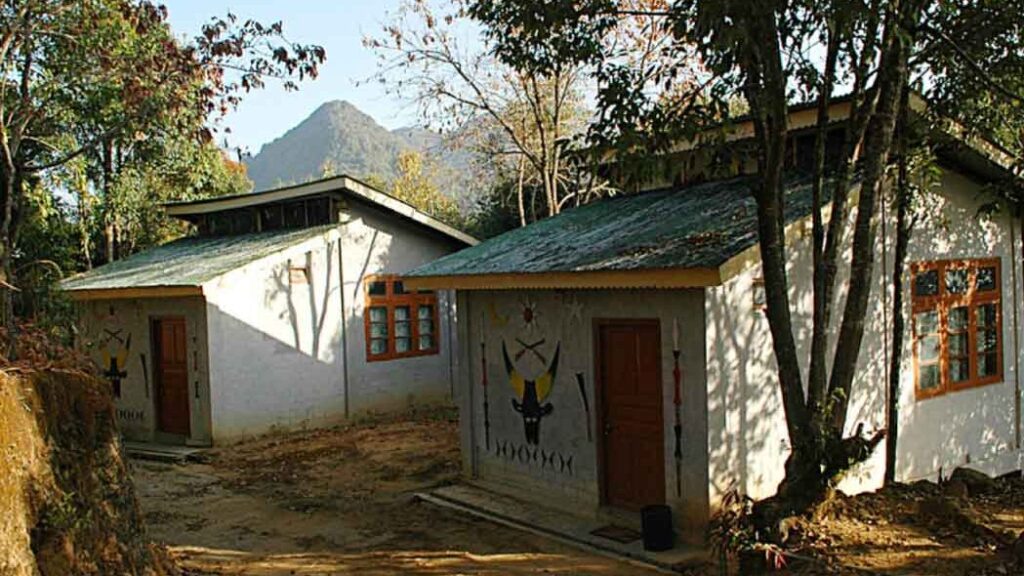
Accommodation in Benreu is centred on Mount Pauna Tourist Village, a community-linked guesthouse complex with valley views, cottages, dormitory rooms, and an on-site restaurant. Bookings are usually arranged through local tour operators or the Peren district tourism office, as the property does not operate a standard online booking system.
Several village homestays also offer a more immersive stay with local families, often including home-cooked meals and cultural experiences. As accommodation options are limited, advance booking is highly recommended.
Best Time to Visit Benreu
Most travellers find October to April the best time to visit Benreu, thanks to clearer skies, better mountain views, and more reliable road conditions.
December to February is particularly rewarding, as it coincides with the post-harvest festival season in many Naga communities. Visitors may have the opportunity to witness authentic local celebrations through their guides or homestay hosts.
The monsoon season brings heavy rain, poor visibility, and difficult road conditions, making travel and trekking considerably more challenging.
A Village Worth the Difficulty of Reaching It
Benreu is not the easiest destination to reach, but that remoteness has helped preserve its character. With community-led conservation efforts, rich Zeliang heritage, and the rewarding sunrise trek to Mount Pauna, it remains one of Northeast India’s most quietly remarkable destinations.
If you’re already building a Nagaland itinerary around Kohima, give yourself the extra day, secure your ILP well in advance, hire the right vehicle, and make the detour to Benreu. Few places in Northeast India still feel quite this untouched.
