




Every year in the first ten days of December, something extraordinary happens 12 km south of Kohima. The Kisama Heritage Village at Kisama — a permanent exhibition of traditional Naga architecture representing all 16 tribes of Nagaland — transforms into the most concentrated expression of Naga cultural identity anywhere in the world. The Hornbill Festival, named after the bird that holds the most significance across all Naga tribal traditions, brings together every tribe to perform, compete, feast, trade, and celebrate in a ten-day cultural festival that has no equivalent in the Northeast.
But Kisama is worth visiting outside the festival too. The heritage village is open year-round, and the permanent tribal morungs (communal houses) — each built according to the architectural traditions of its tribe, decorated with the tribe’s ceremonial objects and wood carvings, and housing permanent exhibitions of that tribe’s material culture — offer an introduction to Naga diversity that is genuinely educational and visually compelling. This guide covers both: Kisama as a year-round destination, and the Hornbill Festival as the event that makes it unmissable.
Quick Facts About Kisama Heritage Village & Hornbill Festival
| Location | Kisama village, 12 km south of Kohima on NH29 |
| State | Nagaland |
| Altitude | 1,444 metres (same as Kohima) |
| Hornbill Festival Dates | December 1–10 annually |
| Venue | Naga Heritage Village, Kisama |
| ILP Required | Yes — Nagaland ILP for all Indian nationals |
| Entry Fee | Nominal entry fee during Hornbill Festival; free or nominal outside festival |
| Distance from Kohima | 12 km; approximately 30 minutes by road |
| Distance from Dimapur | 85 km; approximately 3 hours by road |
| Best Time (Festival) | December 1–10; first weekend and final day most spectacular |
The Naga Heritage Village — A Permanent Cultural Archive
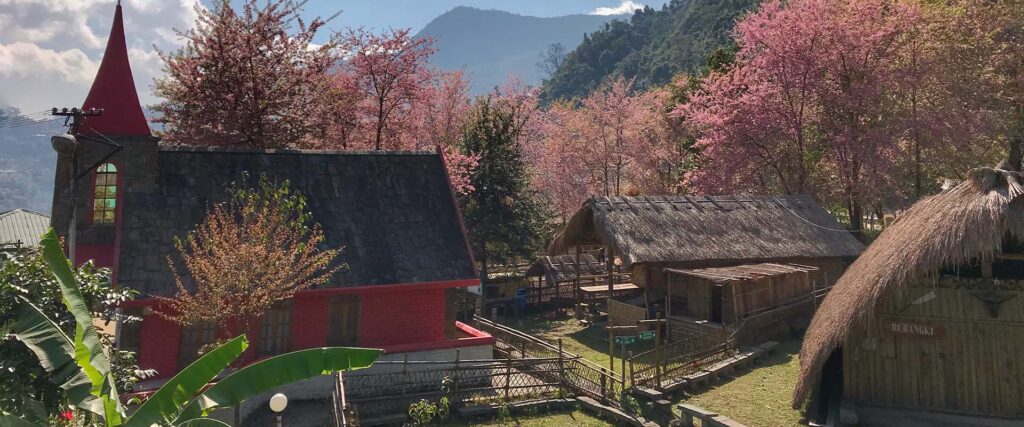
The Naga Heritage Village at Kisama was created as a permanent venue for the Hornbill Festival and a living archive of Naga tribal heritage. Each of the 16 Naga tribes of Nagaland has a morung (communal house) at the site — built using that tribe’s traditional materials, techniques, and architectural style, and representing one of the most concentrated expressions of architectural diversity in any single location in India.
The 16 tribe morungs: Angami, Ao, Chakhesang, Chang, Khiamniungan, Konyak, Kuki, Lotha, Phom, Pochuri, Rengma, Sangtam, Sumi, Yimchungrü, Zeliang, and Tikhir — each with their own morung, their own carvings, and their own cultural identity on display.
Year-round value: Outside the festival period, Kisama offers a quieter, more contemplative experience — you can spend time in each morung without crowds, read the explanatory materials, and photograph the architecture in excellent light. Many travelers who visit during Hornbill wish they had come for a quieter visit too.
The Hornbill Festival — A Complete Guide
What Is the Hornbill Festival?
The Hornbill Festival was established by the Nagaland government in 2000 with the explicit purpose of preserving, protecting, and promoting Naga cultural heritage. Named after the Great Indian Hornbill — a bird featured prominently in the ceremonial dress and folklore of virtually every Naga tribe — the festival has grown from a modest state-level event into one of India’s most internationally recognised cultural festivals, attracting visitors from across India and abroad.
The festival’s core is genuine. This is not a staged performance for tourists — it is an annual gathering of Naga tribal communities who treat the festival as a serious opportunity to display and celebrate their cultural heritage. The competitive elements — tribal song competitions, traditional wrestling, spear throwing, archery — carry real cultural weight. The food stalls are operated by tribal communities cooking their actual traditional cuisine. The craft market sells textiles and objects made by the artisans who use them.
Day-by-Day: What Happens When
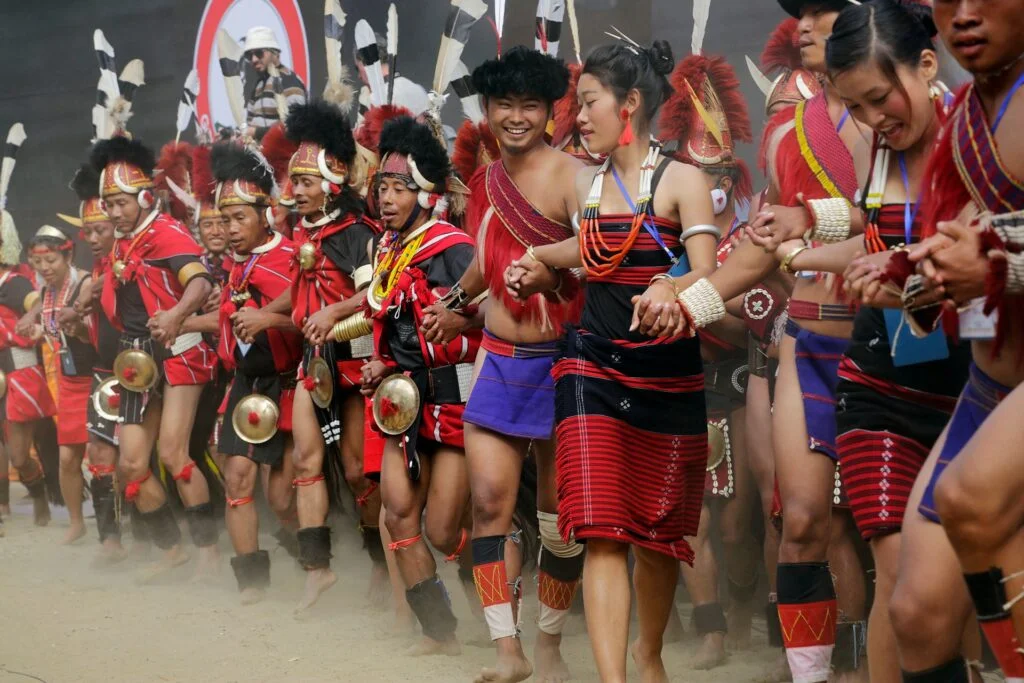
- December 1 (Opening Day): Grand inauguration ceremony; all 16 tribes in full ceremonial dress; opening cultural performances; the highest footfall of the festival — arrive very early
- December 2–4: Cultural performances by individual tribes; traditional sports begin (wrestling, archery, spear throwing); the food village reaches full operation
- December 5–7: Often the best days for photography and engagement — crowds thinner than opening weekend but all events fully operational; fashion shows of traditional tribal dress
- December 8–9: Finals of competitive events; night cultural programmes; the Hornbill Rock Festival begins (evening concerts at the main stage)
- December 10 (Closing Day): Concluding ceremonies; prize distribution; final cultural performances; powerful and emotional closing
| The single best combination: Arrive December 1 for the opening (spectacular but crowded); take a rest day on December 2; return December 5–7 for the cultural depth without the crush. If you can only do one day, December 5 or 6 offers the best balance of access, atmosphere, and content. |
Cultural Performances at Hornbill
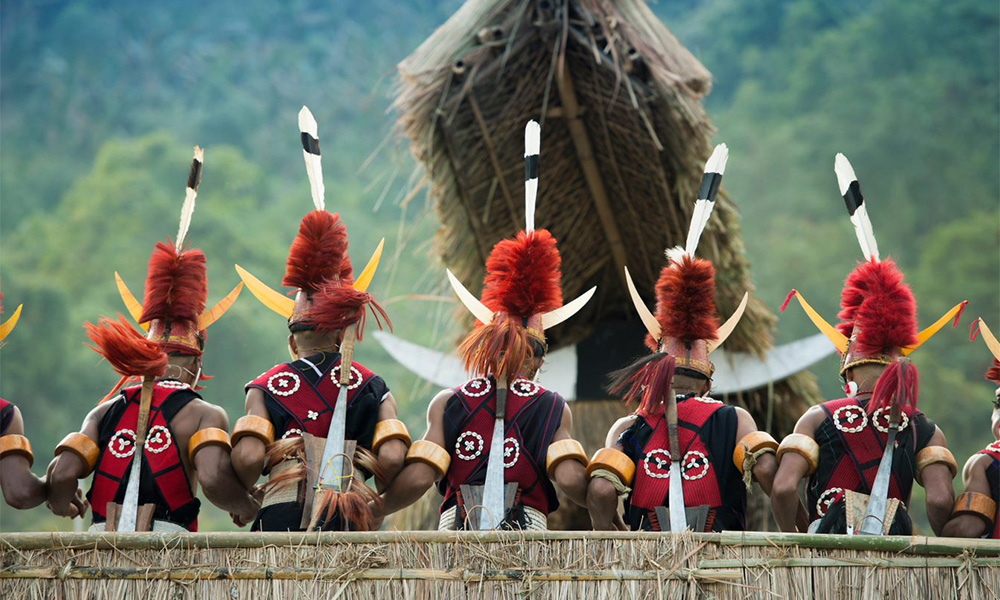
The cultural performances are the heart of the Hornbill Festival — each tribe presents its signature dances, songs, and ceremonial displays in the main performance arena.
- Angami — War dance in full warrior regalia; the warriors’ cry that opens the performance is one of the festival’s most electric moments
- Konyak — Tattooed elders in hornbill headgear performing traditional songs; the most photographed tribal representation at the festival
- Ao — The Ao tribe’s communal dances feature some of the most intricate choreography of any Naga tribe
- Chakhesang — Spectacular dress and jewellery; the women’s dances are particularly celebrated
- Lotha — The Lotha warrior dance and the Tokhu Emong harvest songs are highlights of the Lotha performance
- Sumi — The Sumi cultural performance is known for its energy and the distinctive Sumi musical instruments
Traditional Naga Sports
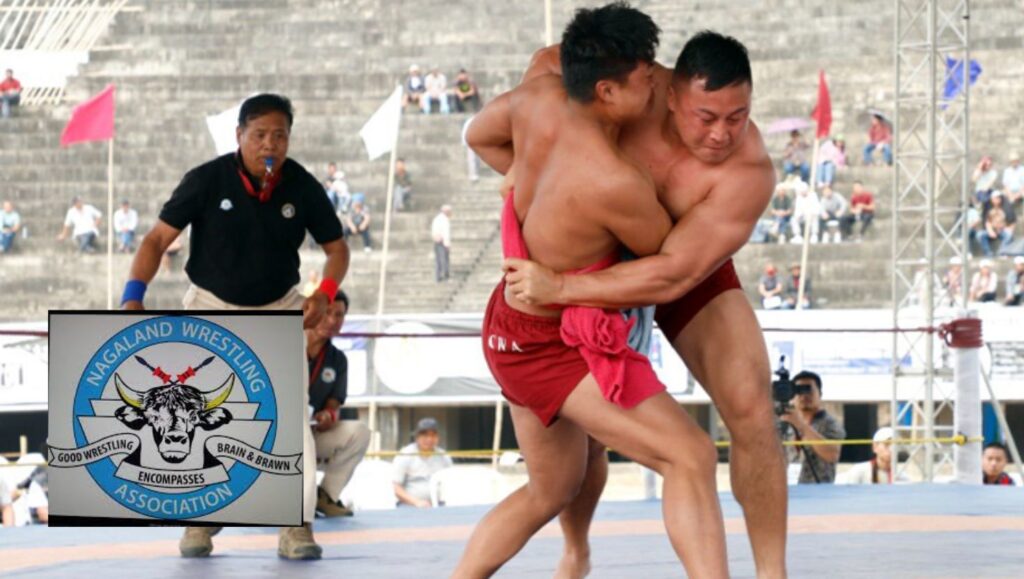
- Naga wrestling (Naga Tso-Kina) — A traditional wrestling form where the objective is to lift the opponent off the ground; physically demanding and culturally significant; finals are among the festival’s most anticipated events
- Spear throwing — Competitive accuracy contest with traditional Naga spears
- Archery — Traditional Naga bow and arrow; men and women compete in separate categories
- Log drum beating — Teams compete to produce the most resonant and rhythmically complex pattern on a traditional carved log drum
- Naga chilli eating contest — Competitive consumption of the Bhut Jolokia (King Chili) — extraordinary to watch; not recommended to enter
The Food Village
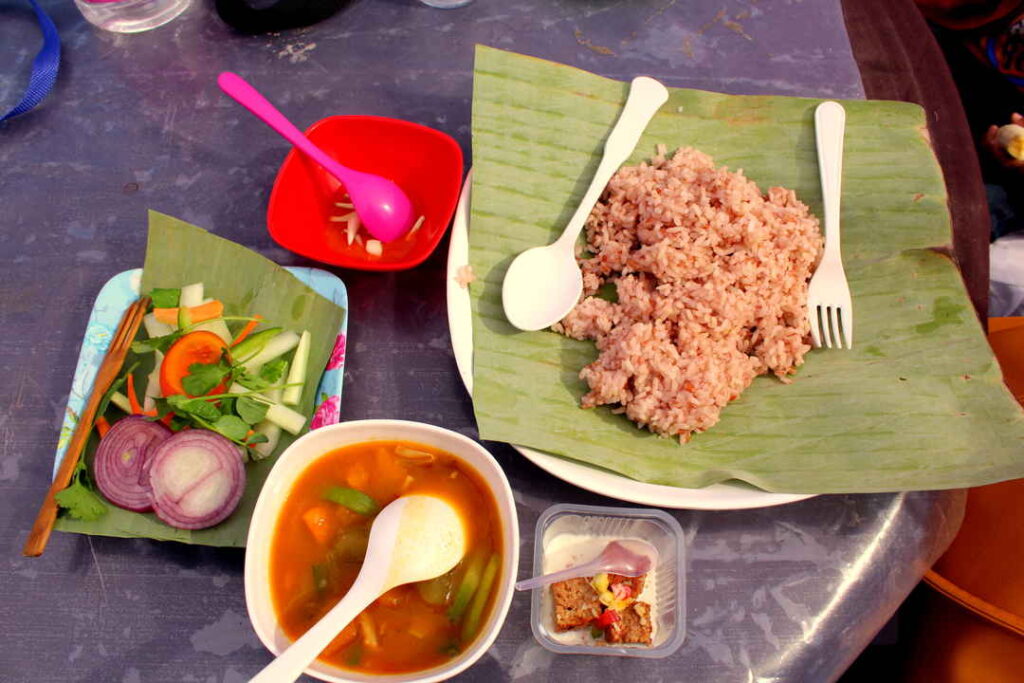
The food village at Hornbill is one of its most essential experiences — a collection of stalls operated by women from each tribe, cooking and serving their community’s traditional dishes. This is the single best opportunity in Nagaland to taste the full breadth of Naga cuisine in one location.
- Smoked pork (various tribal versions) — Every tribe has its own preparation; the differences are more significant than you might expect
- Axone (fermented soybean) dishes — Central to multiple tribal cuisines; varies dramatically in intensity by tribe
- Dog meat (Naga tradition) — Present at some stalls; a traditional food in Naga culture that surprises some visitors; entirely optional
- Anishi (dried yam leaves) dishes — Particular to the Ao tribe; a unique flavour combination
- Traditional rice beers (Zutho, Apong) — Each tribe has its own fermented rice drink; the food village is the best place to taste them side by side
| The food village opens at around 9 AM. The best strategy is to arrive early, walk the entire village once to survey all the stalls, then return to the ones that look most interesting. Ask the stall operators what they recommend — most are delighted to explain their community’s cuisine to curious visitors. |
The Craft Market
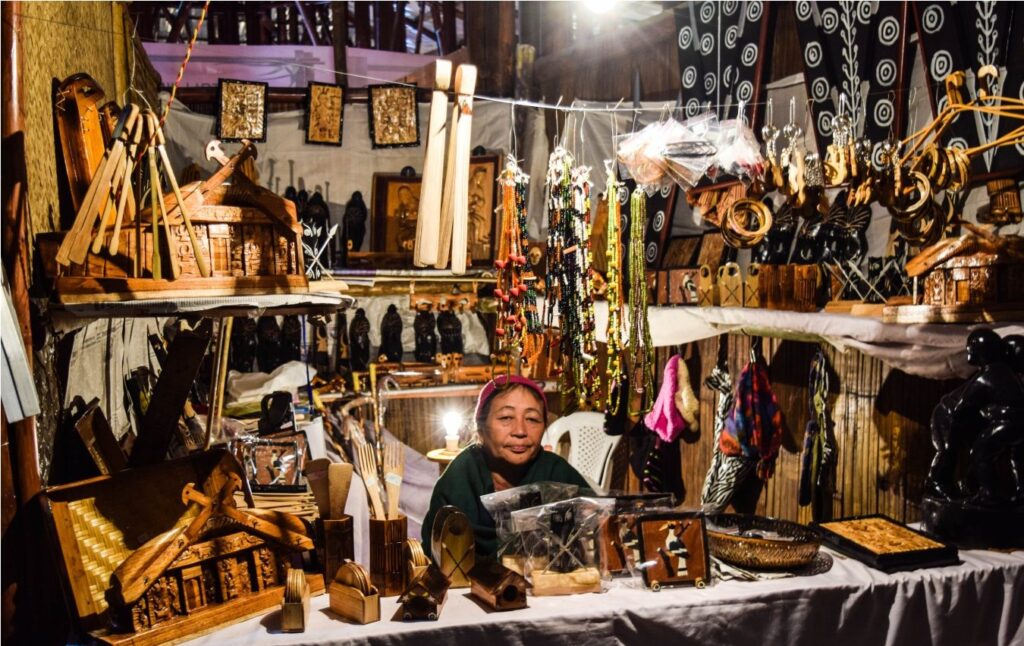
The Hornbill craft market is the finest opportunity in Nagaland to purchase authentic tribal handicrafts directly from the communities that make them. The quality is genuine — these are not factory reproductions but actual traditionally-made objects brought by artisans from their villages.
- Naga shawls and textiles — Each tribe has its own distinctive weave pattern; the Angami lohe, the Ao shawl, and the Konyak textile are among the most celebrated
- Bamboo and cane crafts — Baskets, carrying bags, and domestic objects of exceptional craftsmanship
- Jewellery and ornaments — Traditional Naga beadwork, brass ornaments, and ivory substitutes
- Wood carvings — From small decorative pieces to significant carved panels representing tribal motifs
Hornbill Rock Festival

The Hornbill International Rock Concert, held on the main stage in the evenings of the festival’s final days, is one of India’s finest rock music events — a reflection of Nagaland’s deep and genuine musical culture. Naga bands from across the state and international rock acts perform to an audience of thousands. For music lovers, the combination of daytime tribal culture and evening rock concert is uniquely Nagaland.
Visiting Kisama Outside the Hornbill Festival
The Naga Heritage Village is open year-round and admission is free or nominal outside the festival period. A quiet weekday visit allows the morungs to be explored thoughtfully — reading the tribal descriptions, examining the architectural details, and photographing the carved facades without festival crowds.
- Each morung is labelled and has interpretive materials
- Photography is excellent in morning light when the morungs face east
- The site staff can usually arrange informal cultural context for visitors outside festival season
- Combine with a visit to the Kohima War Cemetery (12 km away) for a full day from Kohima
Practical Festival Information
Getting to Kisama During Hornbill
- Private taxi from Kohima: 30 minutes; approximately ₹400–₹600 each way
- Shared taxi/sumo from Kohima: runs throughout the day during the festival; ₹50–₹80 per seat
- Festival shuttle buses organised by the tourism department — check the official Nagaland Tourism website for current year schedule
- Arrive before 9 AM to avoid traffic; the main road from Kohima to Kisama becomes congested by 10 AM on weekends
Accommodation During Hornbill Festival
- Kohima hotels — The primary base; 12 km from Kisama; book 6–8 weeks in advance; prices double or triple during the festival
- Dimapur hotels — 85 km from Kisama; significantly more accommodation options; many travelers base here and commute
- Festival camping — Limited on-site camping available; check the Nagaland Tourism website for current availability
- Homestays in Kohima and Kisama — The most affordable option; book through Nagaland Tourism or local travel agents
Check out our list of travel service providers from Nagaland
What to Bring to Hornbill
- Comfortable walking shoes — the site involves significant walking on uneven terrain
- Warm layers — December in Kohima is cold; mornings and evenings below 10°C
- Cash for food, craft market, and small purchases — card payment limited
- Camera with a zoom lens — the performance arena is large; a 70–200mm equivalent helps
- Water bottle — stays at the food village can be long; the festival is dehydrating
How to Reach Kisama / Kohima
- By Air: Fly to Dimapur Airport (only airport in Nagaland) → 85 km to Kisama or 74 km to Kohima by road
- By Train: Dimapur Railway Station → taxi to Kohima (2.5 hrs) or direct to Kisama during festival
- By Road from Guwahati: Approximately 390 km; 10–11 hours on NH27 and NH29
ILP Reminder for Nagaland
All Indian nationals require a valid Inner Line Permit to enter Nagaland. Apply at Nagaland ILP well in advance of travel — during Hornbill Festival, apply at least 2 weeks ahead to avoid any processing delays. Carry multiple printed copies at all checkpoints.
Also Read: How to Apply For Travel Permits for Traveling to Northeast India
