




Kongthong does not greet you with signage or a car park. It greets you with sound. Long before the road ends and the village comes into view, you hear them — soft, distinct musical phrases drifting across the hillside, one voice to another, notes carried on the wind the way names are carried elsewhere. You are still walking in. Someone has already been announced.
This is a village of about 700 people in the East Khasi Hills of Meghalaya, roughly 60 km from Shillong, sitting at 1,530 metres in a landscape of rolling fog, dense subtropical forest, and the kind of silence that makes a whistled tune travel far. What makes Kongthong singular — not just in Northeast India but anywhere in the world — is its tradition of Jingrwai Lawbei: every child born here is given a unique melody by their mother, composed within weeks of birth, and that melody becomes their name for life. Not a nickname. A name. A musical signature used across fields, through forests, and down village lanes in place of any spoken word.
Quick Facts About Kongthong
| District | East Khasi Hills, Meghalaya |
| Altitude | 1,530 m (5,020 ft) |
| Language | Khasi; English |
| Religion | Christianity (Presbyterian majority); Seng Khasi (indigenous faith) |
| Population | ~700 |
| Airport | Shillong (Umroi) Airport — ~78 km; Guwahati Airport — ~166 km |
| Nearest City | Shillong (~60 km, 2–2.5 hrs) |
| No ILP Required | Open to all Indian nationals |
| Best Time | October to April |
| Recognition | Best Tourism Village (Bronze), National Tourism Awards 2023; India’s entry for UNWTO Best Tourism Villages |
The People of Kongthong: Khasi Heritage & the Jingrwai Lawbei Tradition
The Khasi people are one of the few matrilineal societies still intact on earth. Property, clan identity, and family name pass through the mother’s line; the youngest daughter inherits the ancestral home; children carry their mother’s surname. In Kongthong, this matrilineal structure finds one of its most intimate expressions in the Jingrwai Lawbei tradition — a phrase that translates roughly as the “song of the first clan lady.”
A mother composes a melody for her newborn — not a fixed song from a cultural repertoire, but something original, invented for that child alone. The tune becomes how that person is called: across a field, through the forest, down the lane. Every person also carries a shorter version of the melody — a whistled nickname — for everyday quick-call use. In a village of 700, no two tunes are the same.
The tradition has practical roots in a landscape where hills, forest, and fog limit visibility, and where whistled tones carry farther and more clearly than spoken names. But it is also something more than practical. The Khasi relationship with the natural world — expressed in the living root bridges they grow across rivers, the sacred groves they protect, the oral literature they sustain — runs through the Jingrwai Lawbei as well. A melody is a gift of attention. It says: I made something only for you.
The village has a Presbyterian church and a school to Class 8. A smaller group follows Seng Khasi, the indigenous Khasi religion, and worships at the Madan Niangpyrhai — a reminder that Kongthong’s spiritual life, like its social structure, has more than one thread.
| Tripura and Meghalaya require no Inner Line Permit. All Indian nationals can travel freely. Kongthong is challenging to reach not because of paperwork but because of the road — the last 25 km requires navigation by local knowledge rather than GPS. |
Top Attractions in & Around Kongthong
1. The Village Itself — A Living Cultural Experience
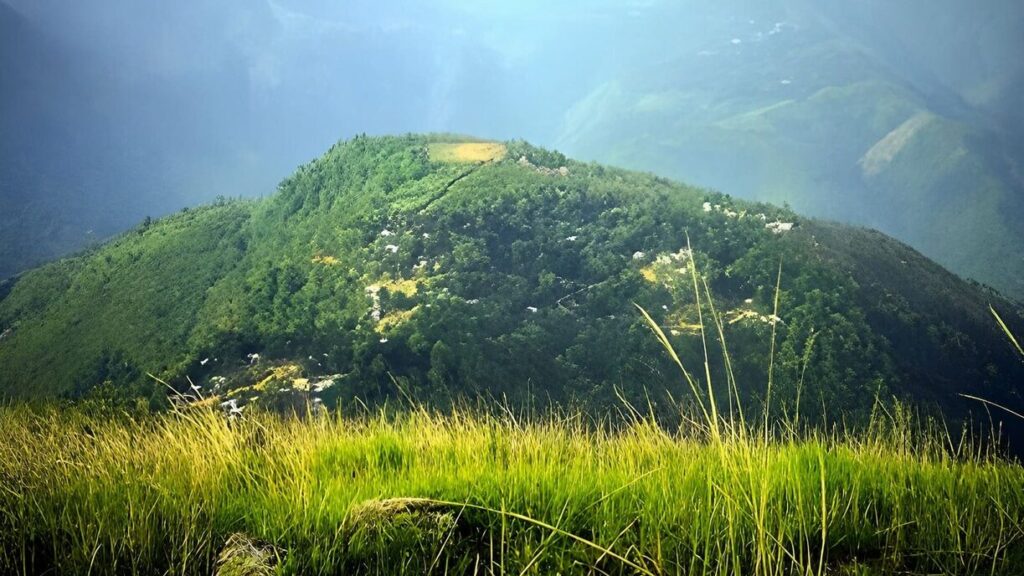
The single most important thing to do in Kongthong is arrive, slow down, and listen. Walk the lanes of thatched and corrugated-roof homes lined with marigolds and kitchen gardens. Sit near the community space in the morning. The whistled exchanges you hear are not a performance — they are people living their daily lives in a language that has no alphabet. A local guide can explain the structure of the melodies, introduce you to residents, and translate what you are hearing into something you can carry home. No other attraction in the East Khasi Hills offers this particular quality of encounter.
2. Jingkieng Myor — The Tallest Living Root Bridge

In the Khat-ar-shnong valley below and around Kongthong, the Khasi community has grown living root bridges across rivers and gorges for centuries — training the aerial roots of rubber fig trees across hand-made bamboo scaffolding until they fuse, strengthen, and become self-supporting structures that last for hundreds of years. India formally submitted these landscapes to UNESCO for World Heritage consideration in 2026. The tallest of these bridges, Jingkieng Myor, spans two granite cliffs with the Wah Sohra river rushing far below — one of the most extraordinary pieces of nature-based engineering in India. The trek to reach it is demanding; allow a full day and go with a guide.
3. Mawkyrnot Living Root Bridge
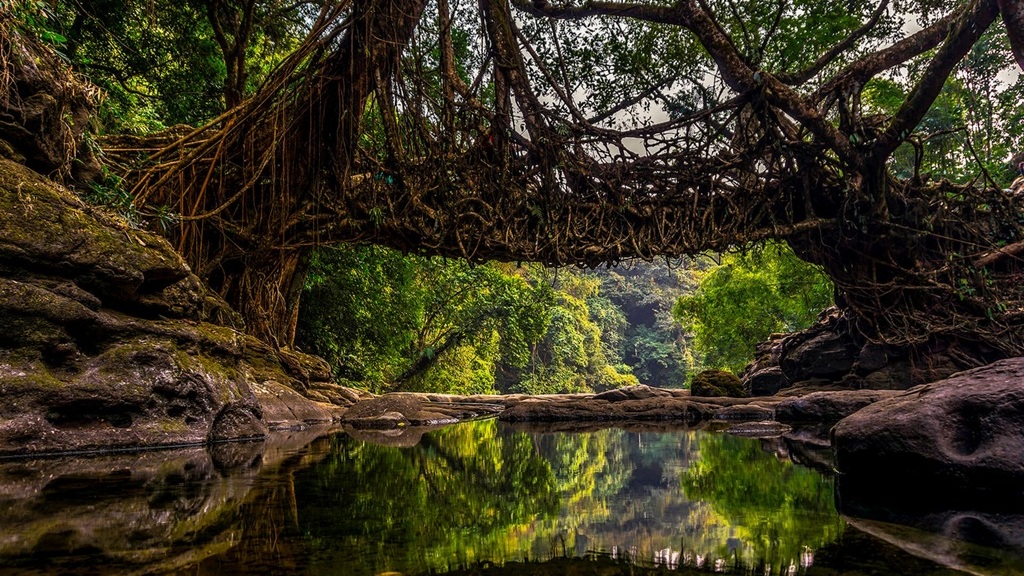
Closer to Kongthong and more accessible than Jingkieng Myor, the Mawkyrnot living root bridge is a rewarding half-day walk through subtropical forest. The trail passes through stands of bamboo and broadleaf canopy that reward birders even before the bridge comes into view. The moss-covered roots of the bridge itself, green and wet and ancient, are the most photographed subject in the valley.
4. Mawrah Viewpoint & Forest Trails
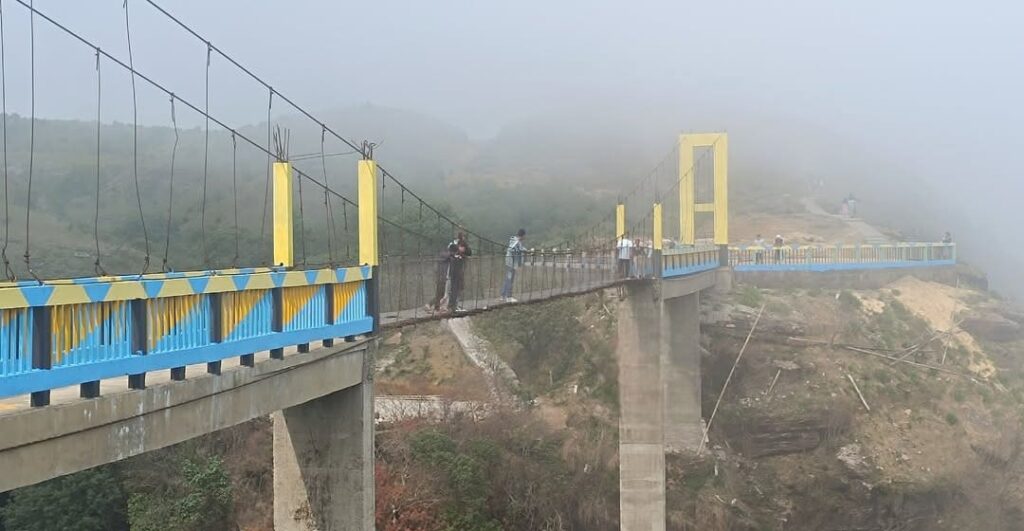
The ridge above the Khat-ar-shnong valley offers panoramic views across one of the wettest landscapes on earth — the hills surrounding Cherrapunji and Mawsynram are visible on clear days, their flanks draped in cloud. The forest trails between Kongthong and the surrounding villages pass through terrain that produces some of the finest wild honey in Meghalaya; look for sellers along the path. The nearby village of Khrang is known for Dewlieh, an herbal tea made from local plants, worth seeking out on a rest stop.
5. Khasi Cultural Interactions
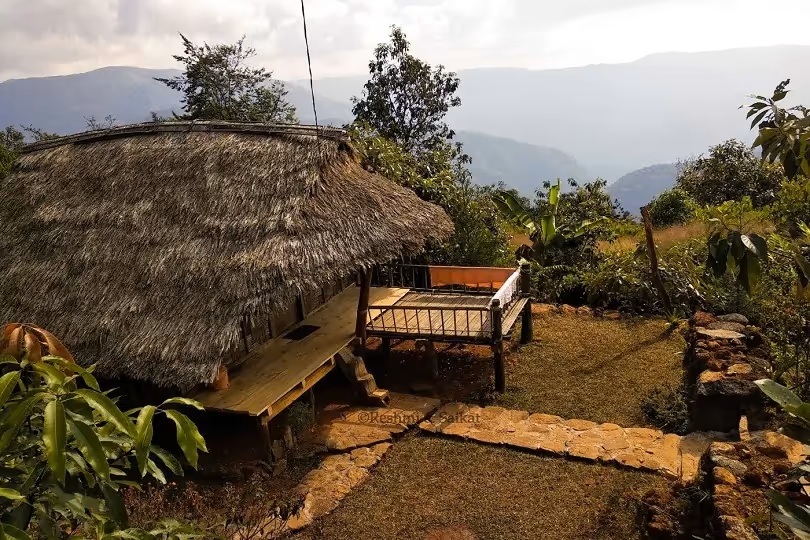
With advance arrangement through your homestay host or a local guide, it is possible to witness or participate in aspects of Khasi village life — community gatherings, the preparation of traditional food, storytelling, and during festival seasons, traditional music and dance. The Nongkrem Dance festival — a five-day Khasi thanksgiving celebration — takes place in November in the nearby Smit village and is one of the finest cultural events in Meghalaya. Kongthong’s own community rhythms are quieter but no less genuine.
Khasi Cuisine in Kongthong
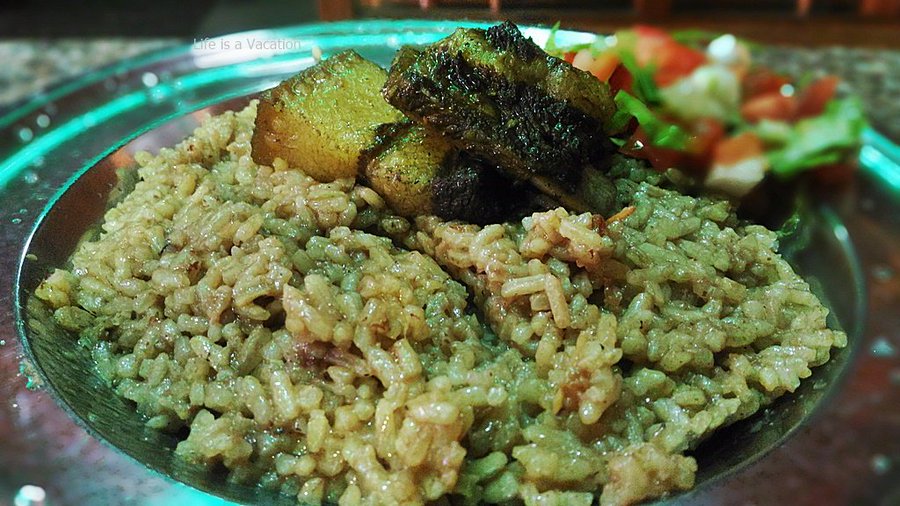
The food of the East Khasi Hills is meat-forward, simply prepared, and deeply satisfying in a landscape that demands warmth. Rice is the constant; pork and chicken are the dominant proteins; fermented and smoked ingredients give the cuisine its characteristic depth.
- Jadoh — Red rice cooked with pork or chicken in a single pot, seasoned with ginger, turmeric, and local spices. The everyday meal of the Khasi people and the most reliable thing to order anywhere in the hills.
- Dohneiiong — Pork slow-cooked in black sesame paste with ginger and chilli; one of the most distinctive preparations in Khasi cuisine, dark and rich.
- Doh Khleh — A salad of minced pork with raw onion and chilli; served cold as a side dish, fresh and sharp against heavier preparations.
- Pukhlein — Deep-fried rice flour and jaggery fritters; the classic Khasi snack, sweet and crisp, sold at roadside stalls on the drive up.
- Kongthong honey — The region’s wild honey is exceptional. Buy directly from village sellers; the dark, forest-sourced variety is the most prized.
Meals in Kongthong are eaten at homestay tables. There are no restaurants. Your host family cooks what is available; the quality is uniformly good and the hospitality is genuine.
Where to Stay
Accommodation is simple and limited. Book in advance, particularly for October–April.
- Traveller’s Nest — The most established guesthouse in Kongthong; basic but clean, with valley views and a host family that can arrange guides and local activities
- Kongthong Village Homestays — Community-run homestays in traditional bamboo and wood structures; the most authentic way to stay, with home-cooked Khasi meals included
- Mepa Homestay & Mawlynnong Homestay — Nearby village options for those who want slightly more facilities while using Kongthong as a day destination
How to Reach Kongthong
By Air: Fly to Shillong’s Umroi Airport (78 km) or Guwahati’s Lokpriya Gopinath Bordoloi Airport (166 km). From either, hire a private vehicle onward. Guwahati has more frequent connections from major cities.
By Road from Shillong: ~60 km, 2–2.5 hours. Take the road toward Mawjrong, then fork onto the Khat-ar-shnong road. The final 25 km is a mix of concrete and rough dirt track through East Khasi Hills villages — scenic, narrow, and not reliably navigable by GPS. Shared sumos run from Shillong’s Police Bazaar area toward this corridor; confirm the route with your driver. A private hired car from Shillong is the most straightforward option.
By Road from Cherrapunji (Sohra): ~51 km, approximately 2 hours. A scenic alternative approach for those already visiting Cherrapunji.
Note: The road into Kongthong is the main practical constraint on visiting. There is no public transport on the final stretch. Arrange a driver in Shillong who knows the route, or book through your homestay host.
Best Time to Visit
- October to April: Best overall conditions — cool, clear, post-monsoon greenery still vivid; the November Nongkrem festival nearby is a cultural highlight
- March to May: Spring; the forest floor comes alive; pleasant temperatures; easier trekking to the root bridges
- June to September: Monsoon — extraordinary rainfall, waterfalls at their most dramatic, and the East Khasi Hills at their most intensely green. The root bridge trails become slippery and access can be difficult. For experienced, well-prepared travellers, the monsoon has its own savage beauty. Not recommended for first visits.
- October and November are the best months: clear skies, moderate temperatures, and the cultural calendar at its richest.
