




Some festivals happen in a city. Some happen on a stage. The Ziro Festival of Music happens inside a living valley — and that is precisely what makes it unlike anything else in India. Imagine four days of indie music drifting across terraced rice fields, bamboo stages rising from the earth, pine-covered ridges framing the horizon, and an Apatani community that has made the world feel genuinely welcome in their home since 2012. That is the Ziro Festival, and the 2026 edition runs from September 24 to September 27 in Ziro Valley, Arunachal Pradesh.
Consistently ranked among the top outdoor music festivals in Asia, this is not just an event — it is the reason many people make their first trip to Northeast India. Once they arrive, the valley tends to keep them coming back.
⚠️ Important for First-Time Attendees: All tickets must be booked through the official portal at tickets.zirofestival.com. You also cannot enter Arunachal Pradesh without a travel permit — this must be sorted before anything else. Details below.
Quick Facts: Ziro Festival
| Detail | Information |
|---|---|
| Event | Ziro Festival of Music 2026 |
| Dates | September 24–27, 2026 |
| Location | Ziro Valley, Lower Subansiri District, Arunachal Pradesh |
| Altitude | 5,500 feet above sea level |
| Stages | Danyi (Sun), Pwlo (Moon), Takvr (Star) |
| Artists | 40+ national and international acts |
| Tickets | From ₹3,500 (Early Bird); 4-Day Pass ₹9,000 onwards |
| Ticket Booking | tickets.zirofestival.com |
| ILP Required | Yes — Indians via eilp.arunachal.gov.in |
| Foreigners | Protected Area Permit (PAP) — apply via e-FRRO at least 4 weeks prior |
| Organised by | PWLO Entertainment Pvt Ltd |
| Official Website | zirofestival.com |
When and Where Is the Ziro Festival?

The Ziro Festival of Music 2026 takes place from September 24 to September 27 at Ziro Valley in the Lower Subansiri district of Arunachal Pradesh. The festival grounds sit at 5,500 feet above sea level — a wide, open bowl of terraced paddy fields, pine forests, and traditional Apatani villages that resembles a painting more than an event venue.
September is when the valley is at its absolute best. The paddy fields glow gold-orange with the harvest season, the air is cool and crisp from the tail-end of the monsoon, and the pine ridges turn a deep, saturated green. The founders — Bobby Hano and Anup Kutty, guitarist of the Indian rock band Menwhopause — chose this setting in 2012 as deliberately as they chose the music. Fourteen years later, the Apatani Cultural Landscape that frames the festival is on the UNESCO Tentative World Heritage List, recognised for its extraordinary blend of indigenous agriculture, architectural tradition, and community stewardship.
Getting the Correct Arunachal Travel Permits: ILP vs. PAP Rules
Before you book a flight, pack a bag, or reserve a campsite — sort your permit. This is the single point of failure that turns back first-time visitors at the Arunachal checkpost, and it is entirely avoidable.
Indian nationals (ILP): Every Indian citizen who is not a native of Arunachal Pradesh needs an Inner Line Permit to enter the state. Apply online at eilp.arunachal.gov.in. The fee is ₹100. Most individual applications during working hours process within 24–48 hours, but during September festival season the portal is busy — apply at least 5–7 days before travel and give yourself buffer.
When filling in your districts, select Lower Subansiri — that is Ziro’s district. For your entry gate, select Kimin if you are coming by road from Guwahati or Naharlagun. These two fields trip up most first-timers. Print at least three copies; multiple checkposts will ask for one.
Foreign nationals (PAP): Apply through the e-FRRO system or an authorised government office. Allow at least 4 weeks before travel. Foreign tourists travel on specific designated circuits and must coordinate with a registered tour operator familiar with Arunachal Pradesh.
Also Read: How to Apply For Travel Permits for Traveling to Northeast India
How to Reach Ziro Valley: Train, Road, and Air Options Explained

Ziro Valley is not the easiest destination to reach, and that is a significant part of what keeps the festival’s character intact. The journey is part of the experience — but it requires planning.
The Smart Route: Taking the Donyi Polo Express via Naharlagun
The most popular and practical route for most travellers is: fly to Guwahati, then take the overnight Donyi Polo Express (train 15617) to Naharlagun, and cover the final stretch to Ziro by road.
The Donyi Polo Express departs Guwahati at 9:20 PM and arrives at Naharlagun by approximately 7:30 AM the next morning — a comfortable overnight journey that saves you a hotel night and gets you to the gateway of Arunachal Pradesh at a reasonable hour. From Naharlagun, shared taxis to Ziro take around 4–5 hours and cost approximately ₹1,200–₹2,000 per person. Book your train ticket well in advance on IRCTC — berths on this route sell out completely in the weeks before the festival.
By Air (faster but less flexible): Donyi Polo Airport near Itanagar has limited but growing connectivity from Kolkata and Guwahati. Lilabari Airport (North Lakhimpur, Assam) is another option if you can find a connection. Both are closer to Ziro than Guwahati, but flight schedules are less reliable. The Guwahati → train → road route remains the most consistent option for most attendees.
By Road from Guwahati: The full drive takes 9–10 hours via Kimin. It is scenic and manageable with a pre-arranged vehicle, but long for those unfamiliar with Arunachal’s mountain roads. Plan to arrive in Ziro a day before the festival opens — roads in late September can be affected by residual monsoon landslides, so always check conditions before departing.
Ziro Festival 2026 Tickets: How and When to Book
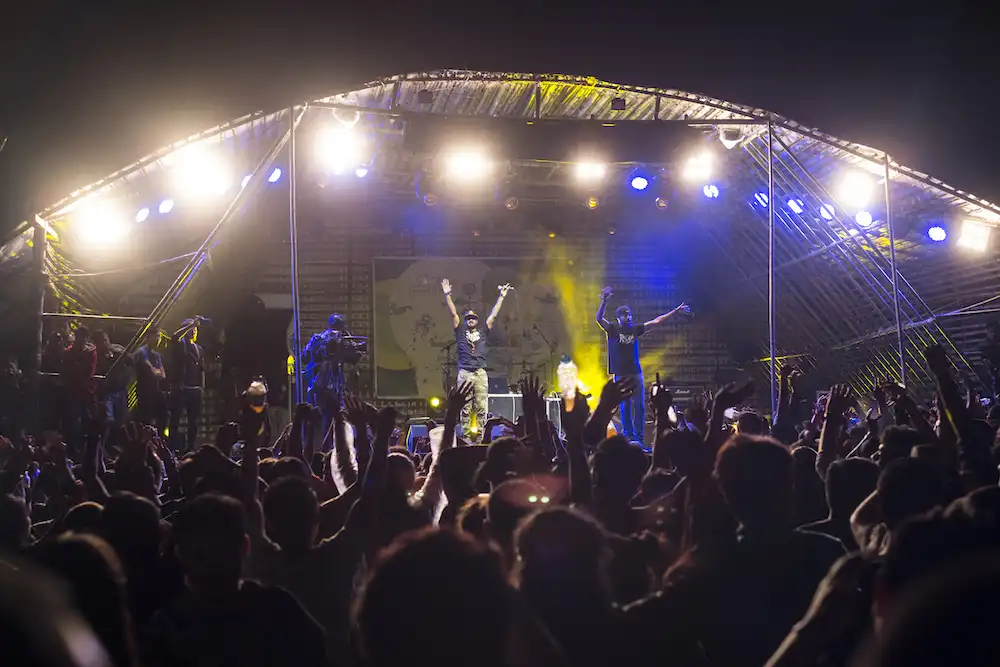
All ticketing is managed through tickets.zirofestival.com. Prices for 2026 start from approximately ₹3,500 for Early Bird passes, with the four-day pass available from ₹9,000 onwards. Camping packages are booked separately from festival entry.
Early Bird tickets are typically 30–40% cheaper than the general tier and vanish within hours of going on sale — watch the festival’s Instagram for the exact release announcement. Carry the same photo ID you used during booking when collecting your wristband at the venue. Try to collect in daylight on arrival day rather than late at night after a long road journey from Naharlagun.
Do not purchase tickets from third-party resellers, social media groups, or tour aggregators that are not official partners. Scams targeting festival-goers are common in the weeks before the event. The official portal is the only safe option.
The Three Stages: Donyi, Polo, and Taka
The festival site is compact — deliberately so. Three open-air stages, each with a distinct character rooted in Apatani cosmology.
The Donyi (Sun) Stage is the main open-air arena, set against the rice field backdrop, where the bigger evening performances take place. The Polo (Moon) Stage runs parallel across the grounds, hosting day and early-evening sets that tend toward folk and acoustic territory. The Taka (Star) Stage, added in 2023, carries the electronic programme deep into the night — a canopy-lit space under the Arunachal sky that has become one of the festival’s most beloved features.
The compact layout means there is no bad position on the grounds. You can walk the full site, stop for a meal, pick something up from a local artisan stall, and drift back to whichever stage calls you — without missing much. This unhurried quality is something the Ziro Festival protects carefully, and visitors consistently name it as central to what makes the experience different.
The 2026 artist lineup will be released in phases over the coming months — follow the official website and social media for announcements. The 2025 edition featured Shilpa Rao, Swarathma, Barmer Boys, Dualist Inquiry, Gauley Bhai, Guitar Prasanna, Uniyal, and Swanand Kirkire’s Baawra LIVE, among others — a snapshot of the festival’s consistent commitment to discovery over commercial popularity.
Accommodation Breakdown: Official Campsites vs. Local Homestays

How you choose to sleep at Ziro shapes the entire trip.
Camping at the festival grounds is the most immersive option, and for many people it is the point. Operators like Encamp Adventures offer structured camping packages with bamboo machang setups, bonfire areas, and a community atmosphere that tends to result in late-night conversations with people you have just met. Camping slots sell out months before September — book as soon as the festival confirms its dates.
Homestays with Apatani families offer a different and equally valuable experience: meals cooked in local homes, mornings that begin with rice fields and birdsong, and the kind of warmth that comes with staying as a guest rather than a visitor. The festival actively encourages the use of local homestays, and the revenue flows directly to the community. Look for options in Biiri and Hapoli — the two main settlement areas closest to the grounds.
How much does a trip to Ziro Festival cost, all in? A realistic budget for a festival-goer covering travel from Guwahati, four nights of camping or homestay, festival pass, and daily food would range from ₹18,000–₹35,000 depending on choices. Flying to Guwahati from a metro adds to this significantly.
Beyond the Music: Essential Apatani Cultural Etiquette

The Ziro Festival takes place inside a living community, not an isolated event ground, and that distinction matters. The Apatani people are exceptional hosts — but being a good guest requires some awareness.
During the festival, the local rice beer Opo (also known as apong) is one of the most authentic things you will taste all weekend. It is typically served in the reusable bamboo mugs that the festival has made a signature part of its eco-code — you buy the mug once and carry it throughout the four days. This is not a novelty; it is a direct extension of the Apatani community’s centuries-old sustainable living practice.
When venturing outside the festival grounds to explore the villages of Hong or Hari — and you absolutely should, ideally in the early morning hours — always ask permission before photographing Apatani elders. Many older community members bear traditional facial tattoos and nose plugs (yapi) that are striking and deeply culturally significant. They are not photo subjects; they are people. A simple gesture of asking, even through a festival guide or homestay host who can translate, transforms the interaction entirely. Several Apatani community members have spoken publicly about photography without consent being a recurring friction point during festival season — this is one area where being a thoughtful traveller matters.
The Ultimate Ziro Festival Packing List
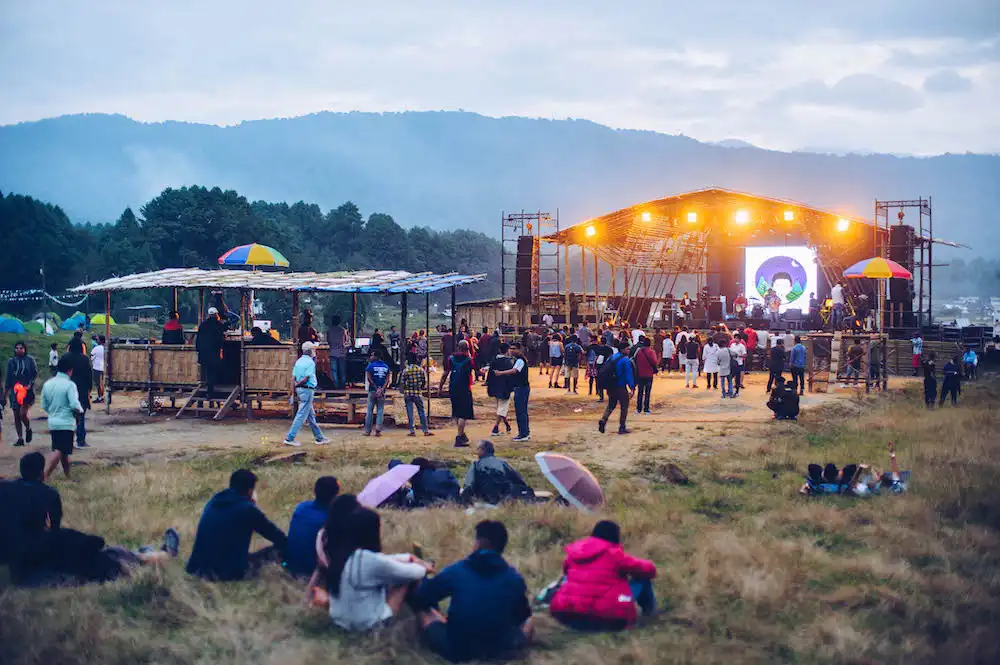
Rain during the Ziro Festival is essentially guaranteed — it is late September at 5,500 feet in the post-monsoon Northeast. Prepare accordingly.
- High-capacity power bank (20,000 mAh minimum) — campsites have limited shared charging points and a full day of shooting drains phones fast
- Headlamp or flashlight — campsite trails after dark are unlit and uneven
- Sturdy waterproof poncho or heavy-duty raincoat — umbrellas are unwieldy in festival crowds
- Gumboots (wellies) — rain turns the grounds muddy quickly; cheap gumboots available at Hapoli Market for ₹300–₹400 will save your sneakers entirely
- Ziploc bags — to protect your phone, passport, and documents during sudden downpours
- Personal water bottle — free filtered water refill stations are placed throughout the grounds
- Warm fleece or jacket — evenings at 5,500 feet are genuinely cold, especially after rain; this is the most underestimated item on every first-timer’s list
- Microfiber quick-dry towel — dries faster than cotton in humid post-monsoon conditions
On cash: This cannot be overstated. Ziro Valley’s mobile network gets severely congested during festival days due to the sudden influx of thousands of attendees. UPI, Google Pay, and card machines at food stalls and local bars frequently fail or time out. ATMs in Ziro town routinely run out of currency during the festival weekend. Withdraw sufficient cash in Guwahati, North Lakhimpur, or Naharlagun before heading up the hills. Do not count on digital payments working reliably once you are in the valley.
The 7-Day Northeast Festival Transit Blueprint
If you are flying in specifically for the festival and want to make the most of the trip, this is a clean, practical way to structure it:
Day 1 — Arrive in Guwahati. Land, check in, explore the city or visit Kamakhya Temple on Nilachal Hill. Board the overnight Donyi Polo Express (Train 15617, departs 9:20 PM) to Naharlagun.
Day 2 — Naharlagun to Ziro. Arrive Naharlagun around 7:30 AM. Take a shared taxi to Ziro (4–5 hours, ₹1,200–₹2,000). Check into your campsite or homestay in daylight and collect your festival wristband at the venue.
Days 3–6 — Festival days. Mornings are for the valley — take a walk through the paddy fields, visit Hong or Hari village, have breakfast at your homestay. Afternoons and evenings belong to the Danyi, Pwlo, and Takvr stages.
Day 7 — Return journey. Shared taxi back to Naharlagun in the morning, then board the Donyi Polo Express (Train 15618, departs Naharlagun at 6:45 PM) for the overnight journey back to Guwahati.
If your schedule allows, extending by 2–3 days to continue up to Tawang from Itanagar is one of the great road journeys of Northeast India. The NE India Trip Planner can help you piece together a personalised itinerary for the wider region, and the NorthEast India Connect Travel Permits guide covers permit requirements across all eight states in detail.
Sustainability: Why Ziro Sets the Benchmark

The festival’s sustainability ethos is built into its bones, not bolted on as branding. Every stage structure is assembled from locally sourced bamboo and wood by Apatani artisans trained through the festival’s skills development programme, then dismantled and stored for reuse the following year. No single-use plastic is permitted on the grounds. Free water refill stations eliminate disposable bottles. The bamboo mug culture for drinks — including Opo — makes this one of the few large festivals in India that genuinely reduces waste as it scales.
For festival-goers who want their choices to align with their values, Ziro is among the better options anywhere in the world.
Ziro Festival 2026: Final Visitor Checklist
- Dates: September 24–27, 2026
- Tickets: Book early at tickets.zirofestival.com — Early Bird from ₹3,500, 4-day pass from ₹9,000
- ILP (Indians): Apply at eilp.arunachal.gov.in — select Lower Subansiri district, Kimin entry gate; apply 5–7 days before travel
- PAP (foreigners): Apply via e-FRRO at least 4 weeks before travel
- Train: Donyi Polo Express (15617), Guwahati 9:20 PM → Naharlagun 7:30 AM; book on IRCTC well in advance
- Cash: Withdraw in Guwahati or Naharlagun — ATMs in Ziro run dry during the festival
- Gumboots: Available at Hapoli Market for ₹300–₹400 — buy them on arrival day
- Power bank: 20,000 mAh minimum; bring a headlamp for campsite navigation at night
- Camping/homestays: Book the moment dates are confirmed — slots fill months before September
- Event listing and updates: northeastindiaconnect.com/events/ziro-festival
The Ziro Festival of Music is, at its best, an argument for a different kind of travel — slower, more rooted in the place and people that make it possible. September 24 to 27, 2026. The valley is waiting.
