




Kangla is not merely a fort. To the Meitei people of Manipur, it is the physical and spiritual centre of their civilisation — the site where, according to tradition, the god Pakhangba (the divine serpent-dragon) first coiled himself on the earth at the beginning of the world, where the first Meitei king established his capital, and where the Meitei people’s deepest cultural, religious, and political identities are rooted.
For over 2,000 years, Kangla Fort served as the seat of Meitei kings. In the colonial era, it was seized and occupied by the British. And in 2004, it was returned to the Manipur government and the Meitei people — an act that carried an emotional weight comparable to few other heritage restitutions in Indian history.
Today, Kangla Fort sits in the heart of Imphal city — a 239-acre walled complex of historical ruins, sacred temples, sacred pools, and manicured gardens that functions simultaneously as a pilgrimage site, a heritage park, and the most spiritually charged public space in Manipur. Walking through it is not like visiting a conventional historical monument. It is like walking through a living memory.
Quick Facts About Kangla Fort
| Location | Imphal city centre, Manipur |
| Area | 239 acres |
| State | Manipur |
| Significance | Sacred seat of Meitei kings for over 2,000 years; most important heritage site in Manipur |
| Colonial History | Seized by the British in 1891; used as military cantonment until 2004 |
| Returned To Manipur | November 20, 2004 — by Prime Minister Manmohan Singh |
| Entry Hours | 9:00 AM to 5:00 PM (closed Mondays) |
| ILP Required | Yes — Manipur ILP required for all Indian nationals |
| Entry Fee | Nominal fee; camera charge additional |
| Distance from Imphal Airport | 8 km; approximately 20 minutes |
The History of Kangla — A 2,000-Year Story
The Meitei Kingdom Era
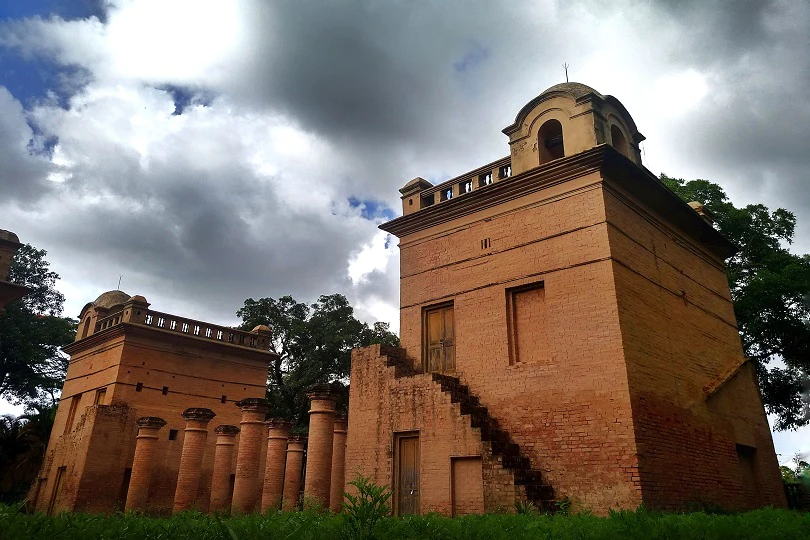
Kangla’s history as a royal and sacred site stretches back over two millennia. According to Meitei tradition, the god Pakhangba — the divine serpent-dragon who is the supreme deity of the Meitei Sanamahism faith — descended to earth and rested at Kangla Fort, consecrating it as the most sacred point of Meitei geography. The first Meitei king, Nongda Lairen Pakhangba, established his capital here in the 1st century CE, beginning a royal lineage that would continue for nearly 2,000 years.
Through the medieval period, Kangla Fort was the seat of a succession of Meitei kings who built temples, palaces, sacred pools, and fortifications that made it the most elaborate royal complex in the Northeast. The fort walls, the Kangla Sha (the paired dragon-horse guardians at the gate), the sacred Kangla Sha temple, and the ritual pools (Pukhri) that are believed to have healing properties all date from this long period of continuous Meitei occupation.
The Anglo-Manipuri War of 1891
In 1891, following a political crisis within the Meitei royal family, British forces invaded Manipur in what became known as the Anglo-Manipuri War. The Manipuri forces fought with extraordinary courage — the Battle of Khongjom (April 23, 1891) is celebrated annually as Khongjom Day in Manipur. But the British prevailed, and Kangla was seized and converted into a military cantonment. The Meitei people were forbidden from entering their most sacred site for 113 years.
The 2004 Return
The return of Kangla Fort to Manipur in November 2004 — in a ceremony attended by Prime Minister Manmohan Singh — was one of the most emotionally significant events in the state’s post-independence history. The final Indian Army units departed the fort, and for the first time in over a century, the Meitei people could walk freely through Kangla. The restoration work since 2004 has uncovered, preserved, and in some cases reconstructed elements of the original complex.
| Understanding the history of Kangla before visiting transforms the experience. When you stand at the Kangla Sha gate and see the expression on the faces of Meitei visitors — particularly elders — you understand that this is not sightseeing but homecoming. |
Top Attractions Within Kangla Fort
1. The Kangla Sha — Sacred Dragon-Horse Guardians
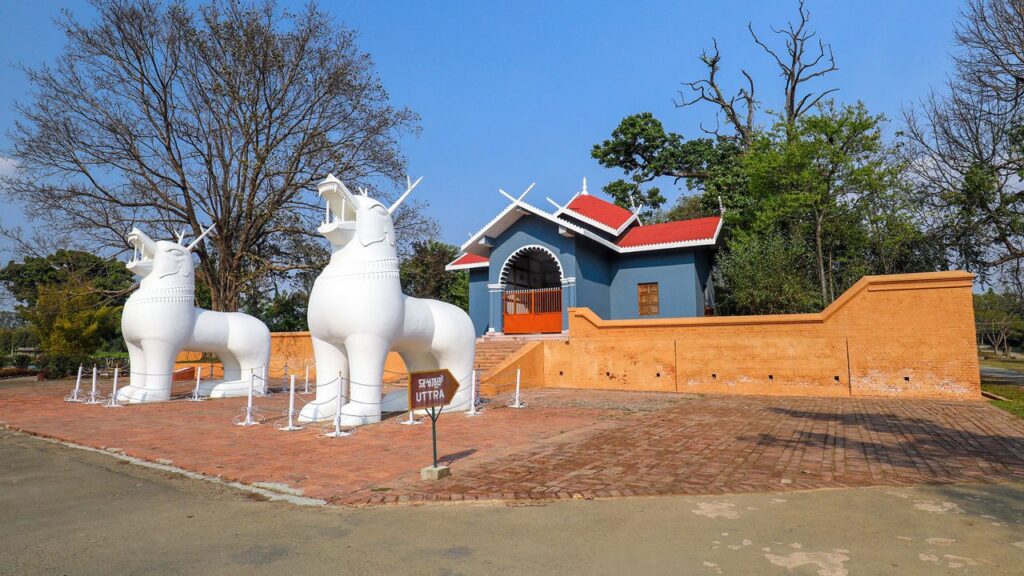
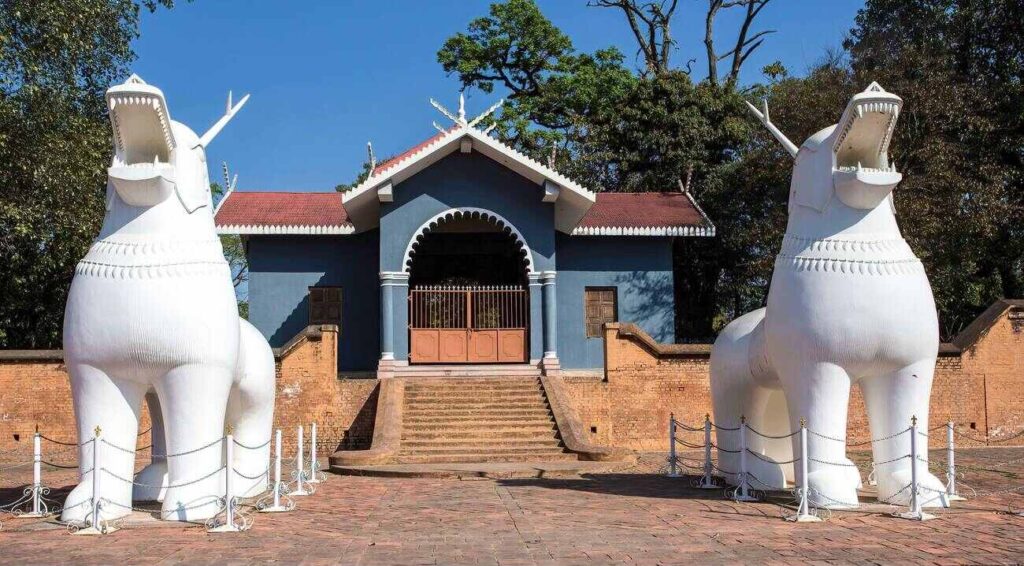
The Kangla Sha are the twin mythological creatures that guard the main gate of Kangla Fort— a composite being combining the body of a dragon with elements of a horse, unique to Meitei religious iconography. The current sculpted Kangla Sha at the fort entrance are reconstructions; the original figures were removed by the British. They represent Pakhangba, the supreme deity of Meitei Sanamahism, and their presence at the gate marks the threshold between the ordinary world and the sacred space of Kangla.
- The Kangla Sha are the most recognisable symbol of Meitei identity and of Kangla
- The main gate marks the entrance to the sacred complex — visitors should enter with respect
- Photography of the Kangla Sha is widely permitted and the sculptures are architecturally remarkable
2. Kangla Sha Temple & Sacred Pools
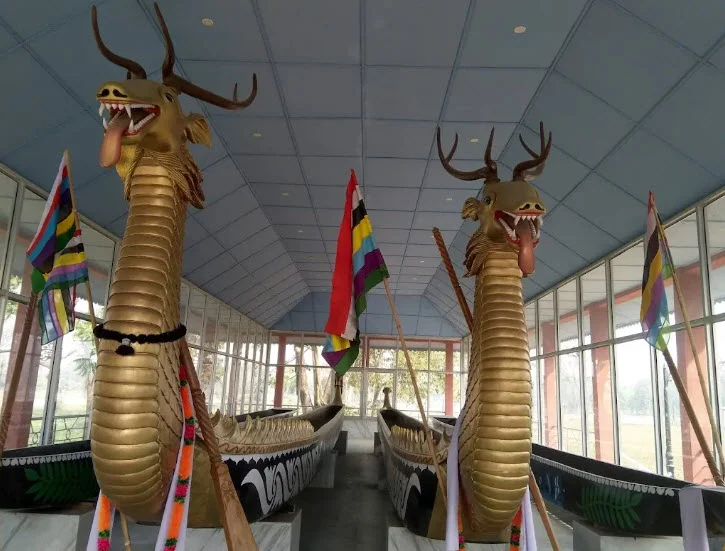
At the heart of the Kangla complex, the Kangla Sha temple and the adjacent sacred pools (Pukhri) are the most spiritually active elements of the site. The pools — believed to have been filled with sacred water since the founding of the fort — are used for ritual bathing and are treated with deep reverence by Meitei pilgrims. The temple itself is a small but intensely sacred structure that continues to receive daily ritual attention from devotees of Sanamahism.
- The sacred pools are in active religious use — approach with respect and follow visiting protocols
- The temple is the spiritual centre of the complex; religious ceremonies occur regularly
- The pools’ reflections of the surrounding trees and sky create exceptional photography conditions
3. Sana Leibak (Golden Area) — Palace Ruins
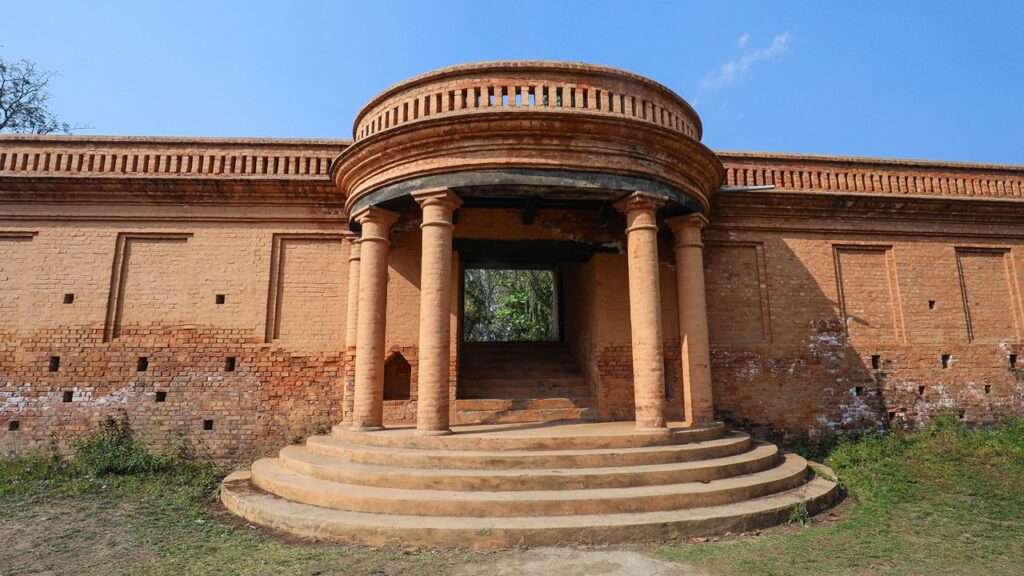
The Sana Leibak (Golden Area) in the northern section of the complex is where the main royal palace once stood — a large, elaborate wooden structure that did not survive the colonial occupation. What remains are stone foundations, ritual platforms, and the carefully maintained grounds that convey something of the palace’s scale and setting. Interpretive materials explain what once stood here.
- Original palace destroyed during and after the colonial occupation
- Stone foundations and ritual platforms from the royal complex
- The scale of the foundations conveys the ambition of the Meitei royal state
4. WWII Memorial & Imphal Peace Museum
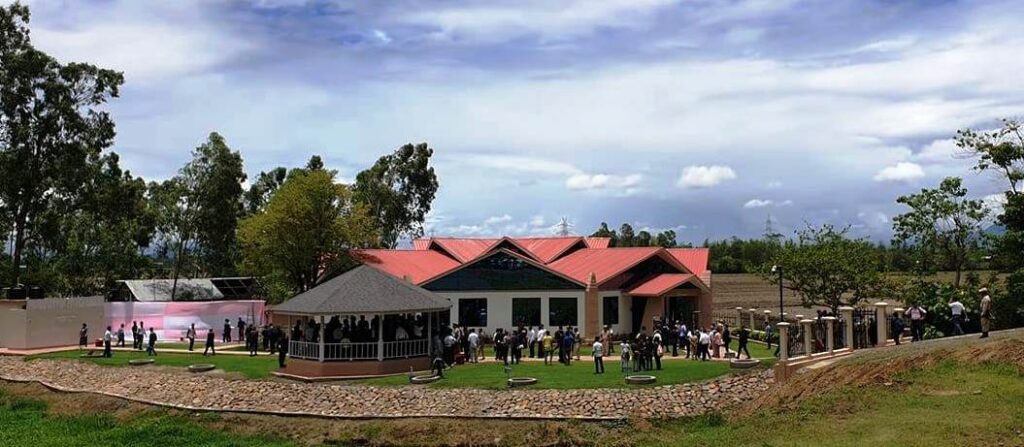
Within and immediately adjacent to Kangla Fort, the WWII Memorial and the Imphal Peace Museum remember the Battle of Imphal — one of the decisive engagements of the Second World War in Asia. The 1944 Battle of Imphal, fought partly in and around the city, was (along with Kohima) one of the battles that stopped the Japanese advance into India. The Imphal Peace Museum is a remarkable institution built as a collaboration between Japanese and Indian artists and scholars, dedicated to peace and reconciliation.
- Imphal Peace Museum: opened 2013; joint Japan-India memorial to the battle
- The museum presents both Allied and Japanese perspectives on the battle with remarkable honesty
- Free entry; allow 1–1.5 hours
- The emotional tone of the museum — sorrow rather than triumph — is unusually moving
5. The Govindajee Temple (Near Kangla Fort)
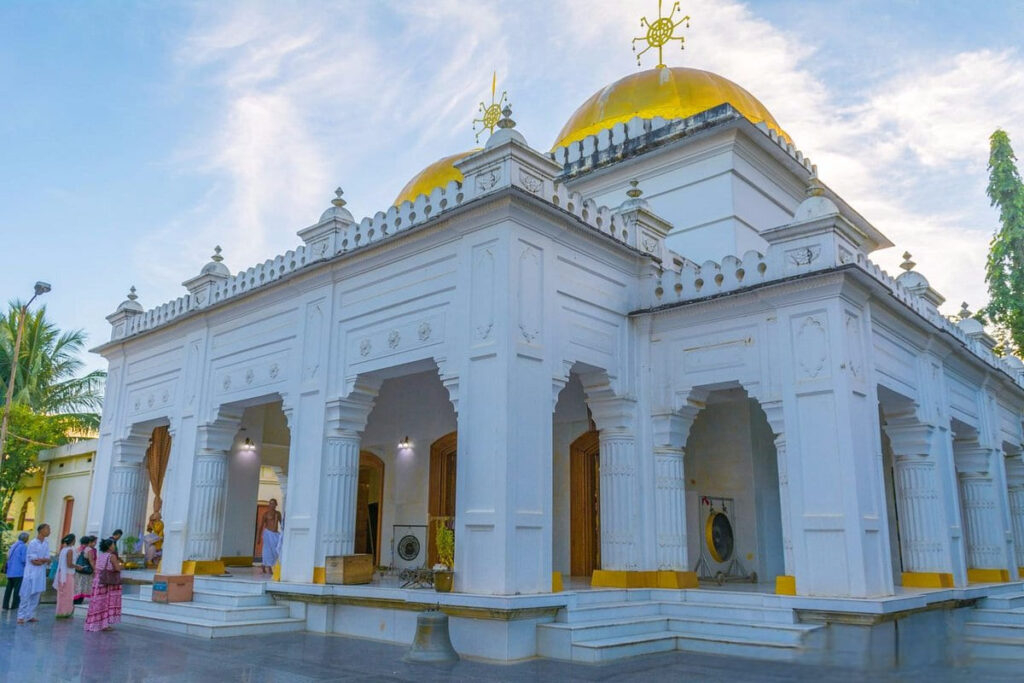
The Govindajee Temple, adjacent to Kangla Fort on the palace grounds, is one of the most important Vaishnavite temples in Manipur — built in the 18th century when the Meitei kingdom adopted Vaishnavism alongside the older Sanamahism tradition. The temple’s twin spires are the most recognisable architectural element of the Imphal skyline. Daily rituals including the elaborate Ras Lila dance performances (October–November) make Govindajee one of the most culturally active temples in Northeast India.
- Twin-spired 18th century Vaishnavite temple — the most iconic structure in the Imphal skyline
- Ras Lila performances during the Ras festival (October–November) are extraordinary
- Daily puja ceremonies open to visitors — arrive by 6 AM for the morning ritual
The Meitei Cultural Context
Sanamahism: Manipur’s indigenous faith — predating the adoption of Vaishnavism in the 18th century — centres on the worship of Sanamahi (household god) and Pakhangba (the divine serpent). The revival of Sanamahism in contemporary Manipur is one of the most significant cultural and religious developments in the state’s recent history, and Kangla Fort is the most important physical site for this revival.
Thang-Ta: The ancient Meitei martial art — combining sword (thang) and spear (ta) — was practised at Kangla by the royal guard for centuries. Thang-Ta was suppressed during the colonial period and revived after independence; demonstrations sometimes occur within the fort during cultural events.
Manipuri Classical Dance: The Ras Lila dance tradition — Manipur’s most celebrated classical art form — developed in the Kangla court and is closely associated with the Govindajee Temple. The Manipuri dance style is among the most graceful of India’s eight classical dance traditions.
Top Things to Do at Kangla Fort
- Morning walk through the entire complex — Arrive at 9 AM opening; the morning light, the temple rituals, and the relative quiet before tourist crowds make this the optimal time
- Kangla Sha temple and sacred pools — Spend time at the spiritual heart of the complex; observe without intruding
- Imphal Peace Museum — An hour well spent; particularly moving for anyone with interest in WWII history
- Govindajee Temple — Adjacent; the morning puja is accessible and deeply atmospheric
- Palace grounds walk — The full perimeter of the 239-acre complex reveals the scale of the original royal capital
- Thang-Ta demonstration — Check with Manipur Tourism for scheduled cultural events within the fort
How to Reach Kangla Fort
- From Imphal city centre: Kangla Fort is in the city centre — walking distance from most Imphal hotels and the main market area.
- From Imphal Airport: 8 km; approximately 20 minutes by taxi or auto-rickshaw.
- Auto-rickshaw from anywhere in Imphal: The most convenient local transport; most drivers know Kangla immediately.
Travel Essentials for Kangla Fort
- Manipur ILP required — apply at Manipur Inner Line Permit (ILP) or at Manipur House offices in Guwahati, Delhi, or Kolkata before travel
- Dress modestly — Kangla is an active religious site; cover shoulders and knees
- Remove footwear at the temple and sacred pool areas
- Photography: permitted in most areas; check at the entrance for current restrictions in the temple area
- Mondays: closed — plan accordingly
- Combine with Ima Keithel market (5 minutes’ walk) and Govindajee Temple on the same morning
Also Read: How to Apply For Travel Permits for Traveling to Northeast India
Best Time to Visit Kangla Fort
- October to February: Best weather; clear skies; Ras Lila festival (October–November) at Govindajee Temple is extraordinary
- March to May: Warm but manageable; Yaoshang (Manipuri Holi, February–March) creates a festive atmosphere throughout Imphal
- June to September: Monsoon; heavy rain; Kangla gardens are lush but roads throughout Manipur can be affected
