




There are places in India that feel like the edge of the known world. Mon District, in the far northeast of Nagaland, pressed against the Myanmar border and connected to the rest of India by roads that require an entire day of mountain driving to navigate, is one of them. And it is here that the Konyak Naga — the last of the headhunters, the most tattooed people in South Asia, the custodians of a warrior tradition of extraordinary ferocity and beauty — have made their home for centuries.
The Konyak are the largest Naga tribe and one of the most culturally distinct indigenous communities in South Asia. Their tattoos — elaborate facial and body markings earned through acts of bravery, traditionally through taking the head of an enemy — mark them as warriors in a tradition that officially ceased in the mid-20th century but whose cultural memory remains vivid in the faces of the elders. The village of Longwa, sitting precisely on the India-Myanmar international border, has become one of the most extraordinary destinations in Northeast India — not because it has been packaged for tourism, but because it is exactly what it appears to be: ancient, fierce, and alive.
Quick Facts About Mon District
| State | Nagaland |
| District | Mon |
| District Headquarters | Mon town |
| Altitude | 897 metres (Mon town) |
| Language | Konyak, Nagamese, English |
| Religion | Christianity (Baptist); traditional animist beliefs in some communities |
| ILP Required | Yes — Nagaland ILP for Indian nationals |
| Distance from Kohima | Approximately 340 km; 10–12 hours by road |
| Distance from Dimapur | Approximately 280 km; 8–9 hours by road |
| Best Time | October to April; November–February for cultural visits |
The Konyak People — Nagaland’s Last Warriors
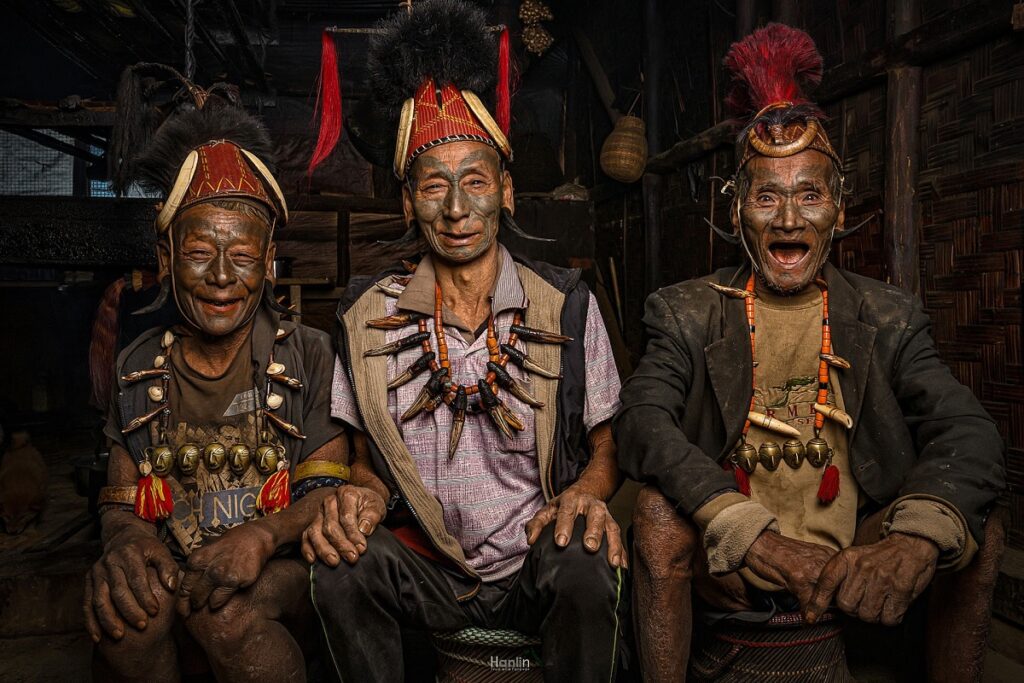
The Konyak are the largest single Naga tribe, numbering approximately 250,000 people across Mon District and extending into adjacent parts of Arunachal Pradesh and Myanmar. Their name means ‘people of the deep forest’ and they have inhabited the rugged terrain of the Patkai foothills for centuries, developing a culture of extraordinary complexity and ritual sophistication.
The tattoo tradition: Konyak facial and body tattoos were traditionally earned — not inherited. A man who took the head of an enemy in battle earned the right to receive specific tattoos marking his achievement. The tattoos served as a permanent, visible record of a warrior’s achievements and social standing. The practice of headhunting was abandoned in the mid-20th century following Christianisation, but the elders who carry these tattoos — now in their 70s and 80s — represent the last living bearers of this tradition.
The Angh system: Konyak villages are governed by an Angh (chief), whose authority is hereditary and extends across multiple villages in some cases. The Angh of Longwa is one of the most powerful traditional chiefs in Nagaland, with authority extending into Myanmar. His house literally straddles the international border.
Konyak ornaments: Alongside tattoos, Konyak warriors traditionally wore elaborate ornamental dress — hornbill feather headgear, boar tusk necklaces, brass chest plates, and warrior shields. These are still worn during festivals and cultural ceremonies and represent some of the finest examples of tribal regalia in South Asia.
Christianity and tradition: Like most Naga communities, the Konyak converted to Christianity primarily in the 20th century. But unlike in some other Naga areas, traditional practices and belief systems have coexisted with Christianity in Mon District with relatively less cultural disruption. Many Konyak families practice a hybrid of Christian and traditional Konyak spirituality.
| Cultural sensitivity note: The tattooed elders of Mon District are not tourist attractions. They are community elders who carry immense cultural significance. Always approach through a local guide, ask permission before photographing, offer a respectful greeting, and accept the cultural exchange as a privilege rather than a right. Many photographers have left Mon having paid for photographs without realising they were engaging in a transaction that reduced living cultural bearers to exhibits. |
Top Attractions in Mon District
1. Longwa Village — The House on the Border
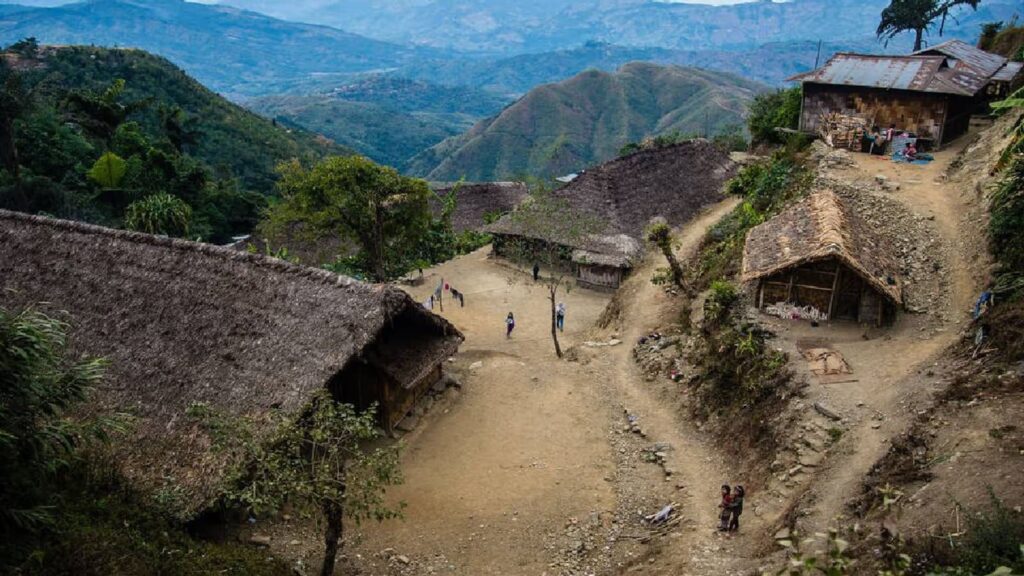
Longwa is one of the most extraordinary villages in India — a Konyak settlement of approximately 700 families whose Angh’s (chief’s) house sits precisely on the India-Myanmar international border. The chief sleeps in India but his kitchen is in Myanmar. The village extends across both sides of the border, and residents cross freely as they go about their daily lives. The international boundary is marked by a painted stone — the most understated geopolitical marker in South Asia.
- The Angh’s house straddles the India-Myanmar international border — enter the house in India; step to the back room and you are in Myanmar
- The Angh of Longwa is a hereditary chief with authority extending into Myanmar — his permission is sought before photographing elders
- Tattooed Konyak elders still live in the village — among the last living bearers of the headhunting tattoo tradition
- The village overlooks the Burmese Patkai Hills in one direction and the Indian Naga Hills in the other
- Opium has historically been cultivated in the region — visitors should be aware that this is part of the local economic context
| The Angh of Longwa is the official host of visitors to the village. Bring a gift (tobacco, local spirits, or a contribution to the community fund arranged through your guide) and present yourself with respect. The interaction with the chief and, with his permission, the tattooed elders, is the defining experience of Mon District travel. |
2. Mon Town & Surrounding Villages
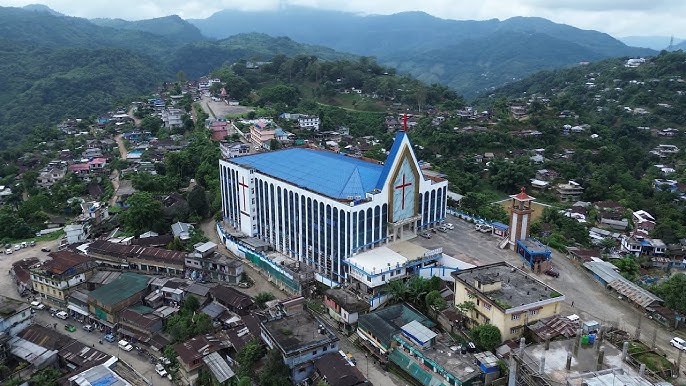
Mon town, the district headquarters, is the base for exploring the district. It is a small, quiet hill town with basic facilities, a weekly market, and a handful of guesthouses. The surrounding villages — Shangnyu, Wakching, Vongyu, and others — each have their own Angh, their own morung, and their own variation on Konyak culture.
- Shangnyu Village — Known for its traditional Konyak architecture and skilled craftspeople; the morung (men’s community house) features impressive wood carvings
- Wakching Village — Historically significant as one of the first Konyak villages to receive British anthropologists; the anthropological record from Wakching is among the richest of any Naga village
- Mon Market (Wednesday) — The weekly market draws villagers from across the district; an extraordinary opportunity to observe Konyak daily life and purchase traditional crafts
3. Aoling Festival — Konyak New Year
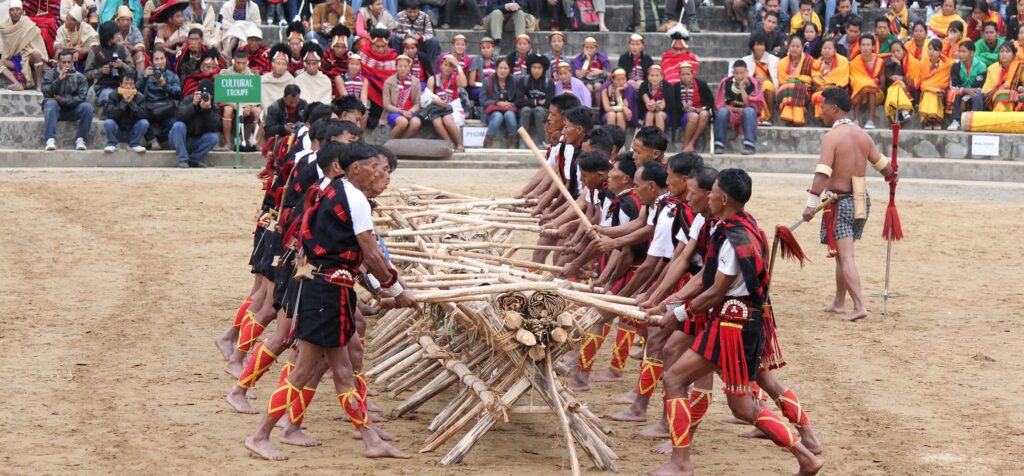
The Aoling Festival, held in the first week of April, is the most important Konyak cultural event of the year — a five-day celebration of the new agricultural season, the renewal of community bonds, and the expression of Konyak identity. The festival features the most spectacular display of Konyak warrior dress and ornament of the year, traditional Konyak songs, dances, and the communal feasting that defines Naga festival culture.
- Held annually in the first week of April across Mon District
- Best experienced in Longwa or Mon town where events are most concentrated
- Warrior dress: hornbill headgear, tattoos, brass ornaments, and warrior regalia in full display
- Traditional Konyak songs (Aoling songs) unique to the festival
- Advance planning essential — accommodation in Mon is extremely limited
4. Naginimora Coal Mines Viewpoint
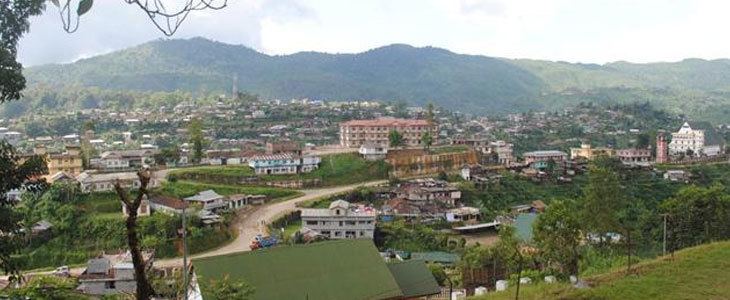
The Naginimora area, on the route between Dimapur and Mon, contains one of Nagaland’s most active coal mining regions. While not a conventional tourist attraction, the juxtaposition of traditional Naga village life with the raw industrial activity of the coal pits offers a striking visual and social contrast, and the viewpoints over the forested hills beyond are exceptional.
5. Burma Road Historical Route
The Mon District sits adjacent to the historic Burma Road corridor — the supply route used during WWII to supply Allied forces in China and Burma. Historical markers and the landscape itself carry echoes of this strategic history, and travelers with an interest in WWII history will find the Mon region adds a frontier dimension to the Kohima War Cemetery story.
Top Things to Do in Mon District
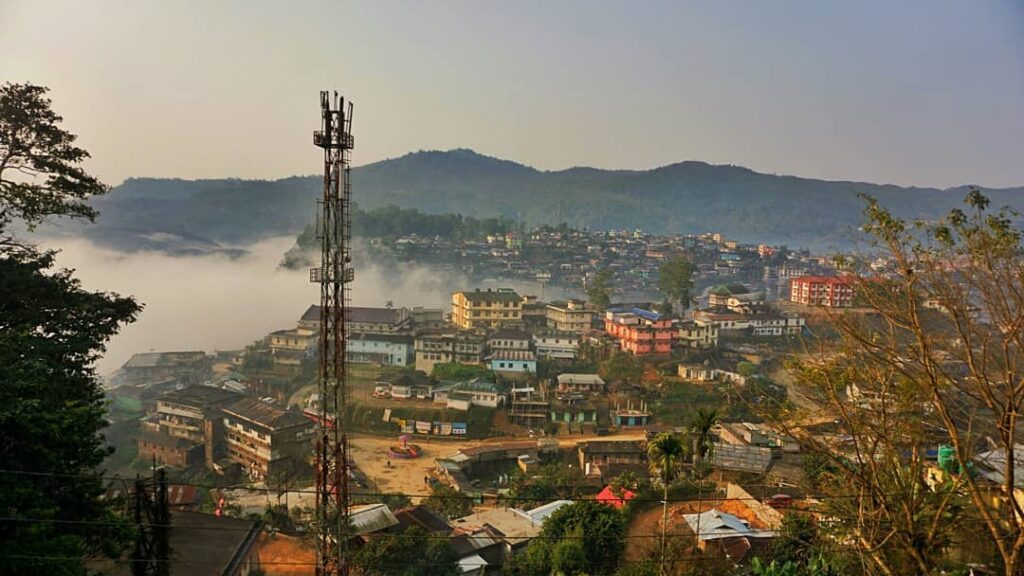
- Village circuit with local guide — 2–3 days; Longwa, Shangnyu, Wakching, and Mon town form the essential circuit; a knowledgeable local guide is essential and transforms the experience
- Attend Aoling Festival (April) — Book several months in advance; the most spectacular cultural event in Mon
- Photograph the border marker at Longwa — The painted stone marking India–Myanmar at the heart of the village is one of Northeast India’s most unusual and evocative images
- Morning market in Mon town — Wednesday market; the most authentic community gathering in the district
- Morung visits — The men’s community houses of Konyak villages are extraordinary architectural achievements; each features wood carvings documenting the village’s history
Where to Eat & Stay in Mon
Mon’s facilities are basic. The district headquarters has a handful of guesthouses and small restaurants serving Naga food. Homestays with Konyak families — arranged through local guides or the district tourism office — are the most authentic option and the best way to experience Konyak hospitality.
- Circuit House, Mon — The most reliable government accommodation; book through the Deputy Commissioner’s office
- Basic guesthouses in Mon town — ₹600–₹1,500 per night; simple but adequate
- Village homestays — Highly recommended; arranged through local guides; home-cooked Konyak meals
How to Reach Mon District
From Dimapur (Most Common Route)
- Dimapur to Mon: approximately 280 km on NH202 via Mokokchung; 8–9 hours
- The road passes through beautiful Naga hill scenery but is mountainous and slow — depart early morning
- Shared sumo taxis from Dimapur’s main taxi stand to Mon (daily service)
From Kohima
- Kohima to Mon: approximately 340 km; 10–12 hours via Mokokchung
- Most travelers fly or train to Dimapur and drive directly to Mon
By Air
- No airport in Mon; Dimapur is the only Nagaland airport
- From Dimapur, the road to Mon is the only practical option
| Mon District requires commitment. The journey is long, the roads are challenging, and the facilities are basic. But the Konyak villages of Mon offer a cultural encounter of a depth and authenticity that few places in India can match. Allow at least 3 nights in the district — the journey is too long and too important to rush. |
Travel Essentials for Mon District
- Nagaland ILP required — apply at Nagaland ILP well in advance
- Hire a registered local Konyak guide — essential for village access, translation, and cultural protocol
- Cash only — no ATMs in Mon town; carry sufficient funds from Dimapur
- Mobile signal: BSNL in Mon town; very limited or absent in remote villages
- Download offline maps of the Mon District routes — GPS is unreliable in some valleys
- Carry extra fuel — petrol stations are limited beyond Mon town
Also Read: How to Apply For Travel Permits for Traveling to Northeast India
Best Time to Visit Mon District
- October to February: Best weather; clear skies; cool and dry; excellent for village exploration
- April (Aoling Festival): Most spectacular cultural time; book well in advance
- March: Spring; pleasant temperatures; good for photography
- June to September: Monsoon; some roads become difficult; not recommended for first-time visitors
