




In 1998, the Angami Naga community of Khonoma made a decision that was remarkable for its time — and remains remarkable today. They declared their village and the surrounding forests a community conservation area, imposed a ten-year hunting ban, and committed to managing their lands according to principles of ecological sustainability. Khonoma became India’s first green village, and a model of community-driven conservation that has since been studied by governments, NGOs, and academics from across the world.
Located 20 km west of Kohima at 1,465 metres, Khonoma is not just an ecological story. It is one of the most historically significant Angami villages in Nagaland — the place that resisted British colonial forces for years longer than any other Naga settlement, where the terraced rice agriculture of the Angami reaches its most spectacular expression, and where traditional Naga village life has been preserved with a coherence that makes it one of the most rewarding village visits in Northeast India.
Quick Facts About Khonoma
| State | Nagaland |
| District | Kohima |
| Altitude | 1,465 metres |
| Distance from Kohima | 20 km; approximately 45 minutes by road |
| Population | Approximately 700 families |
| Tribe | Angami Naga |
| ILP Required | Yes — Nagaland ILP covers Khonoma |
| Conservation Status | Khonoma Nature Conservation and Tragopan Sanctuary (KNCTS) |
| Best Time | October to May; bird season October–April |
| Famous For | India’s first green village; Blyth’s Tragopan sanctuary; terraced rice fields |
The Story of Khonoma — Resistance, Loss & Renewal
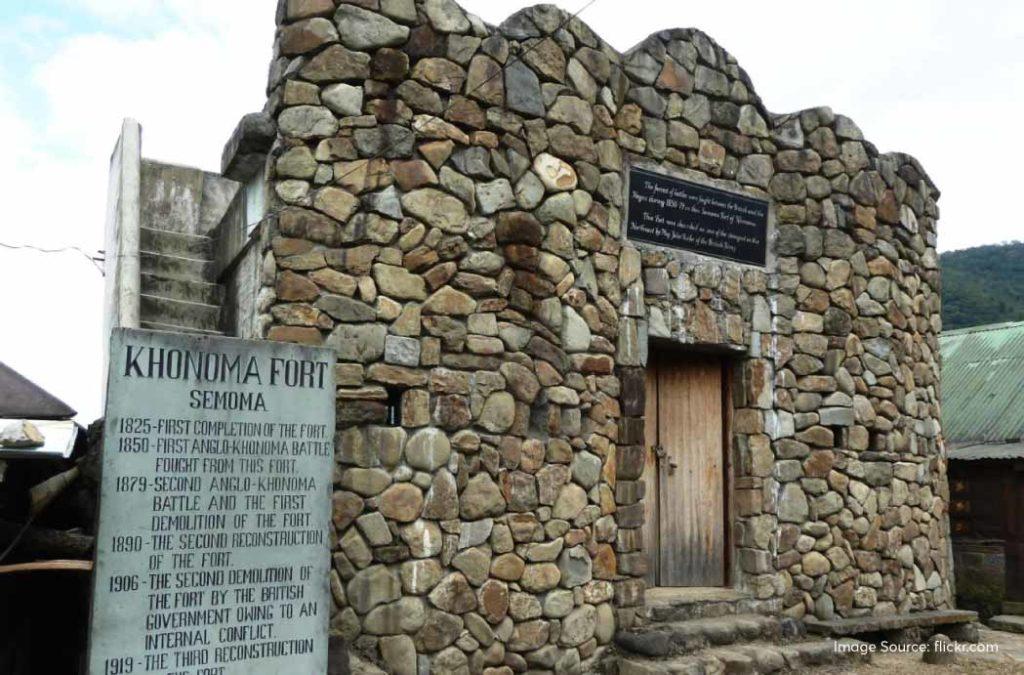
The Village That Defied the British
Khonoma’s historical significance begins with resistance. In the 19th century, when British forces were systematically pacifying the Naga Hills, Khonoma was among the last and most determined holdouts — the site of two major Anglo-Naga conflicts (1850 and 1879) in which Angami warriors repelled British advances for longer than any other Naga community. The village was eventually taken, but the spirit of fierce independence that defined those battles has never entirely left.
The stone walls, watchtowers, and defensive architecture of the old village still stand — a physical record of a community that understood the value of what it was protecting.
The Hunting That Depleted the Forest
By the late 20th century, the forests around Khonoma had been heavily depleted by hunting — not for sustenance alone, but commercially, with wildlife including the Blyth’s Tragopan (Nagaland’s state bird, found in the forests around Khonoma) being hunted to the point of local near-extinction. The community recognised the damage and made the extraordinary decision to stop.
The Conservation That Rebuilt It
The Khonoma Nature Conservation and Tragopan Sanctuary was established in 1998. Hunting was banned. Logging was regulated. A community patrolling system was set up. Within a decade, wildlife populations — including the Blyth’s Tragopan — had begun to recover measurably. The forest, which had thinned visibly, was growing back. And a community had demonstrated that indigenous land stewardship could achieve conservation outcomes that government interventions had repeatedly failed to deliver.
| Khonoma is not a wildlife sanctuary in the conventional sense — it is a community-owned and community-managed conservation area. The rules are set and enforced by the village council, not by a government forest department. This distinction is fundamental to understanding why it has worked. |
Top Attractions in Khonoma
1. The Terraced Rice Fields
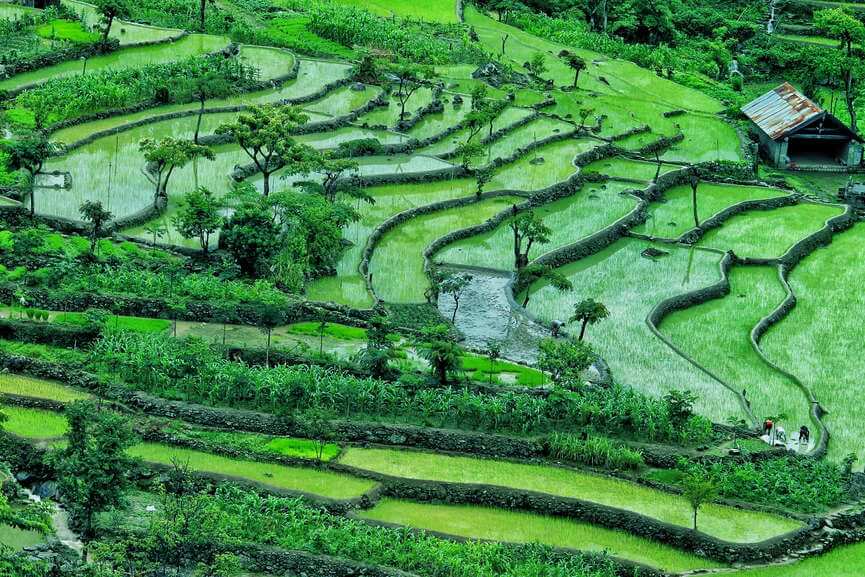
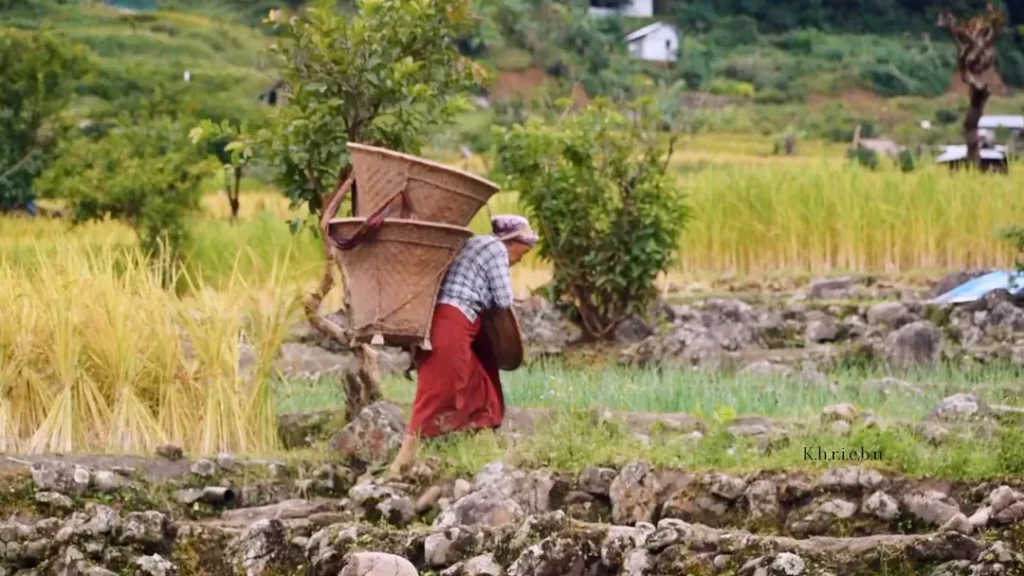
The Angami terraced rice agriculture of Khonoma is one of the most impressive examples of traditional land engineering in Northeast India — stone-walled terraces carved into steep hillsides over generations, creating a staircase of flooded rice fields that, in the growing season, mirrors the sky in a thousand small pools. Viewed from the village ridge, the terraces extending down into the valley and up the opposite hillside create a landscape of extraordinary beauty.
- Best seen June to August (flooded and planted) and September to October (golden before harvest)
- The terraces are still actively farmed by village families — traditional Angami rice varieties grown without chemical inputs
- Viewpoints from the village ridge offer the classic Khonoma panorama
2. Khonoma Nature Conservation & Tragopan Sanctuary (KNCTS)

The KNCTS covers approximately 70 square kilometres of forest, meadow, and hill terrain around the village. Guided forest walks through the sanctuary are available and offer the best chance of spotting the Blyth’s Tragopan — one of Asia’s most spectacular pheasants — along with numerous other Himalayan forest bird and mammal species.
- Blyth’s Tragopan — Nagaland’s state bird; spectacular crimson-and-blue pheasant
- Satyr Tragopan — a second tragopan species also present
- Hoolock Gibbon, Barking Deer, and Asiatic Black Bear recorded in the sanctuary
- Over 300 bird species recorded, including multiple laughingthrush, nuthatch, and warbler species
- Guided birdwatching walks available at dawn — the most productive time
3. Old Village — Historical Architecture
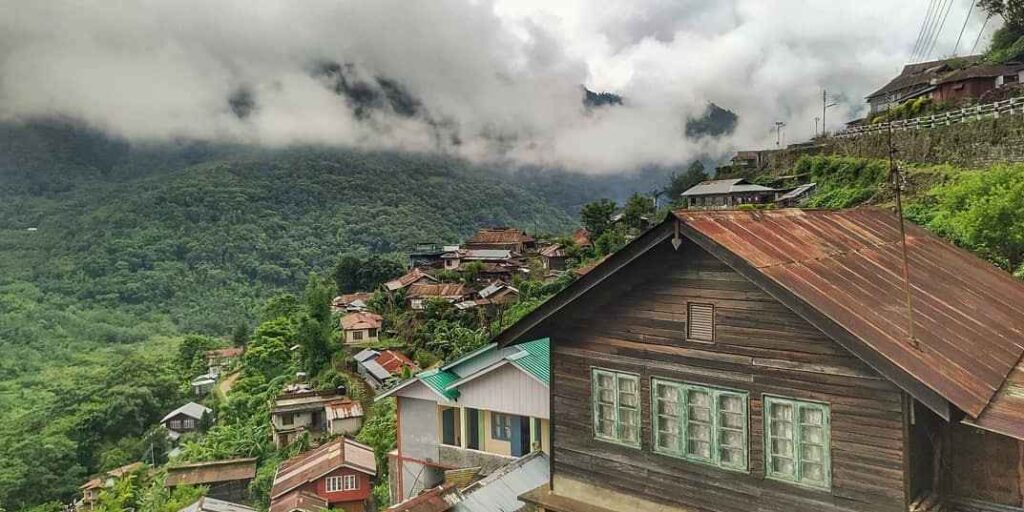
The old part of Khonoma village preserves some of the finest examples of traditional Angami fortified architecture in Nagaland. The stone gateposts that marked the old village boundaries, the defensive walls that were used in the Anglo-Naga battles, and the traditional wood-and-stone homes with their characteristic carved facades are all present and can be explored with a village guide.
- Stone defensive walls and watchtower sites from the 19th century Anglo-Naga conflicts
- Traditional Angami homes with carved doorposts and hornbill imagery
- Community morung (men’s house) — the social and cultural centre of the village
4. Village Weaving Tradition
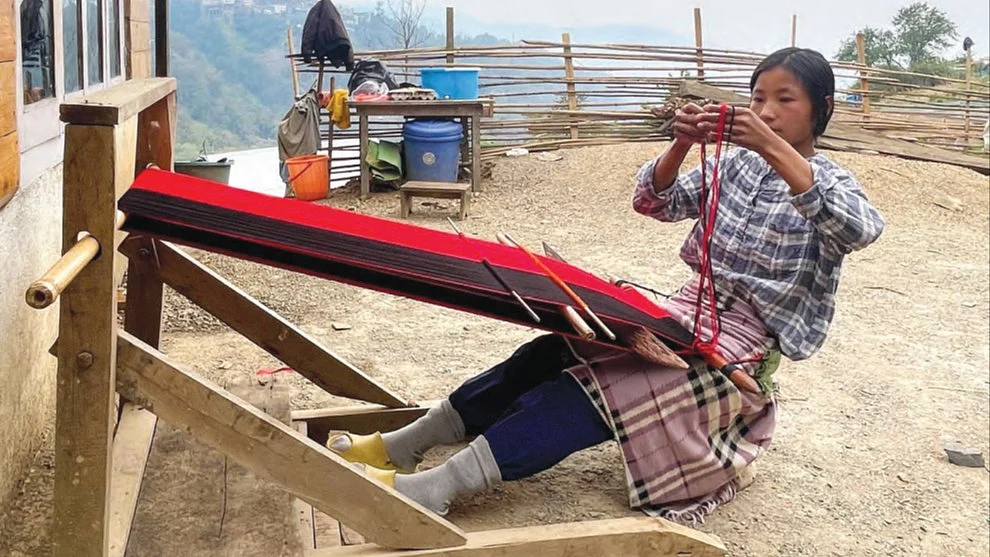
Khonoma is known for its traditional Angami weaving — shawls and textiles of exceptional quality produced on traditional back-strap and frame looms. The Angami shawl (lohe), with its distinctive colour combinations and geometric patterns, is one of Nagaland’s most recognisable textile products. Demonstrations and purchases are available directly from village weavers.
- Lohe (Angami warrior shawl) — one of the most prized Naga textiles
- Observe weaving in progress in village homes — most weavers welcome respectful visitors
- Purchase directly from the weaver — ensures fair compensation and cultural authenticity
5. Harvest & Festival Calendar
- Sekrenyi (February): The most important Angami festival; a 10-day purification ceremony with traditional songs, rituals, and feasting. Khonoma celebrates with particular depth and community participation.
- Rice harvest (September–October): The most visually spectacular time in the agricultural calendar; harvesting parties work the terraces in a community celebration of the completed growing season
- Hornbill Festival (December): Khonoma participates in the state-level festival at Kisama; the community’s cultural representation at Hornbill is consistently among the most impressive
Top Things to Do in Khonoma
- Dawn birdwatching walk in the KNCTS — The finest wildlife experience available at Khonoma; hire a local guide the previous evening to be in position at first light
- Village historical walk with guide — 2–3 hours; covers the old village, defensive architecture, the story of the conservation movement, and traditional daily life
- Terraced field photography — Best in June–August (flooded) and September–October (golden harvest)
- Weaving workshop — Observe and try traditional Angami back-strap loom weaving; purchase authentic textiles
- Overnight homestay — The single most recommended enhancement to a Khonoma visit; evening conversations with village families about the conservation story are as illuminating as any museum
Where to Eat & Stay in Khonoma
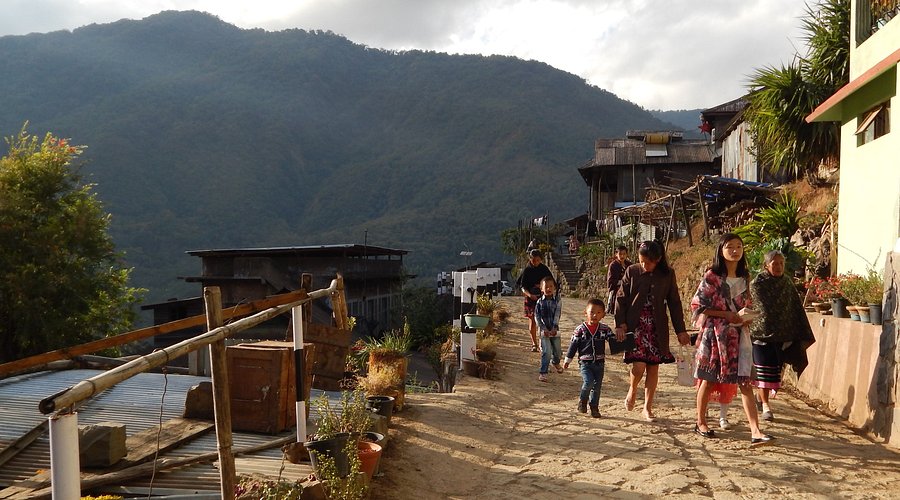
Khonoma’s accommodation and food are provided primarily through community homestays — warm, simple, and deeply rewarding. The village has developed its homestay programme with care, ensuring that visitor spending benefits local families directly.
- Community homestays — ₹1,000–₹2,000 per night including meals; the only real option and the right one
- Meals — Home-cooked Angami food; smoked pork, bamboo shoots, rice, local greens, and seasonal vegetables from the terraced fields
| Khonoma’s community tourism model is a blueprint for sustainable village tourism. Stay overnight, eat with your host family, hire local guides, buy textiles from village weavers. Every rupee spent through local channels supports the conservation effort directly. |
How to Reach Khonoma
- From Kohima: 20 km west on the Kohima–Khonoma road; approximately 45 minutes by car. Taxis available from Kohima town.
- Day trip from Kohima: Easily manageable as a full day — depart Kohima by 7 AM, arrive Khonoma for the morning forest walk, village tour, and lunch, return by evening
- Overnight: Strongly recommended — arrange homestay through the village tourism committee or Kohima tourism office in advance
Travel Essentials for Khonoma
- Nagaland ILP required — apply at New ILP (Inner Line Permit) – ILP Nagaland
- Hire a local guide — the village has trained guides who provide essential historical and ecological context
- Binoculars strongly recommended for birdwatching
- Carry cash — no ATMs; use Kohima ATMs before departure
- Respect the no-hunting conservation rules — do not disturb wildlife or pick plants in the sanctuary
Also Read: How to Apply For Travel Permits for Traveling to Northeast India
Best Time to Visit Khonoma
- October to April: Best birdwatching; Tragopan most visible in forest; clear skies; comfortable temperatures
- September to October: Golden harvest season; most visually spectacular time for the terraced fields
- February: Sekrenyi Festival — the most important Angami cultural event of the year
- June to August: Flooded terraces; monsoon green; fewer visitors; birdwatching still excellent
