




In the far eastern corner of Arunachal Pradesh, wedged between the Patkai hills of Myanmar and the ridgelines that mark the edge of the Tibetan plateau, lies Namdapha — 1,985 square kilometres of the most biodiverse and the least visited protected forest in India. If Kaziranga is the Northeast’s headline act, Namdapha National Park is its best-kept secret.
Namdapha is the only protected area in the world known to harbour all four species of big cat found in Asia: the Tiger, Leopard, Snow Leopard, and Clouded Leopard. It is also the northernmost limit of the Indian elephant, the easternmost limit of the Hoolock gibbon, and one of the most important strongholds for the Hollock Gibbon and the Red Panda. The park spans an extraordinary altitudinal range — from 200 metres in the tropical lowlands to 4,571 metres at the summit of Daphabum — creating an almost unparalleled diversity of ecosystems within a single protected area.
Visiting Namdapha requires planning, patience, and a genuine appetite for wilderness. There is no guarantee of big cat sightings. There are no luxury lodges. The trails are demanding, the leeches are plentiful in monsoon, and the isolation is absolute. This is precisely why the people who come here love it.
Quick Facts About Namdapha
| State | Arunachal Pradesh |
| District | Changlang |
| Area | 1,985 sq km (Core zone) + 177 sq km buffer |
| Altitude Range | 200 metres to 4,571 metres (Daphabum peak) |
| Nearest Town | Miao — 26 km from the park gate |
| Nearest Airport | Dibrugarh (Assam) — 160 km; Mohanbari Airport |
| Nearest Rail | Tinsukia (Assam) — 150 km |
| Permit Required | ILP for Indian nationals + park entry permit from Forest Department |
| Best Time to Visit | October to April (November–February ideal for wildlife) |
| Park Status | National Park + Tiger Reserve + Biosphere Reserve |
The People Near Namdapha: The Lisu Tribe
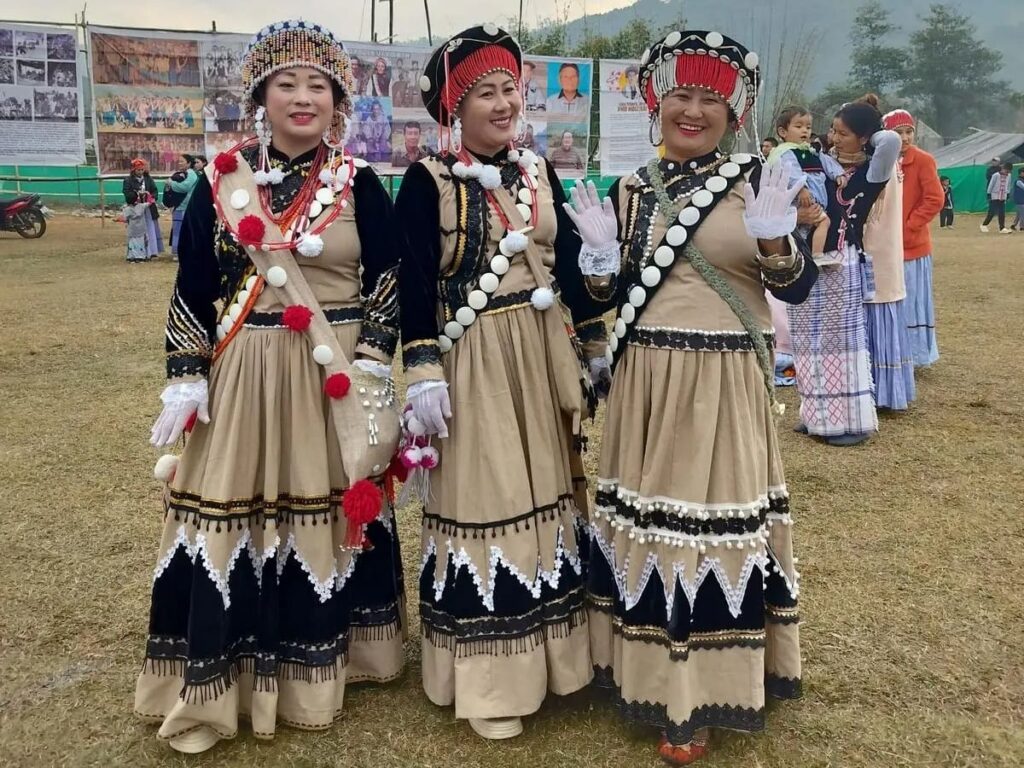
The only tribal community with traditional land rights inside Namdapha National Park is the Lisu (also spelled Lishu or Yobin) — a small community numbering around 2,000 people whose ancestral village of Gandhigram sits inside the park itself, accessible only by a 3-day trek from the park gate.
The Lisu are a Tibeto-Burman people whose cultural range extends across Myanmar, China, Thailand, and a small corner of Arunachal Pradesh. Their relationship with the Namdapha forest is one of the oldest human-ecosystem relationships in the region — they have hunted, gathered, and lived within the forest for generations while the forest has remained relatively intact.
Culture: The Lisu are known for their brightly coloured traditional dress, particularly among women — multi-coloured tunics with silver ornaments. Their music (traditional Lisu instruments include the mouth harp and various string instruments) and oral traditions are distinct from any other community in the region.
Contact: Meeting Lisu community members requires the 3-day trek to Gandhigram — one of the most remote inhabited places in India. This is a specialist itinerary requiring advance planning, experienced guides, and full camping equipment.
| The Chakma, Nocte, and Tangsa communities also live in areas surrounding the park buffer zone and offer homestay experiences in the Changlang district. |
Wildlife of Namdapha
The Four Big Cats
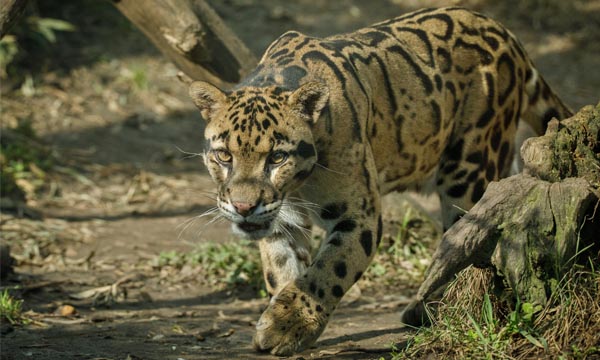
- Tiger (Panthera tigris) — A breeding population exists within the park. Sightings are rare due to the dense forest — pug marks and camera trap evidence are more commonly encountered than direct sightings.
- Leopard (Panthera pardus) — More commonly sighted than tigers; found across the park’s mid-altitude zones.
- Snow Leopard (Panthera uncia) — Recorded at high altitudes (above 3,000m) in the park; among the easternmost snow leopard habitat in India.
- Clouded Leopard (Neofelis nebulosa) — Found in the subtropical forest zones; camera traps confirm regular presence.
Other Key Species
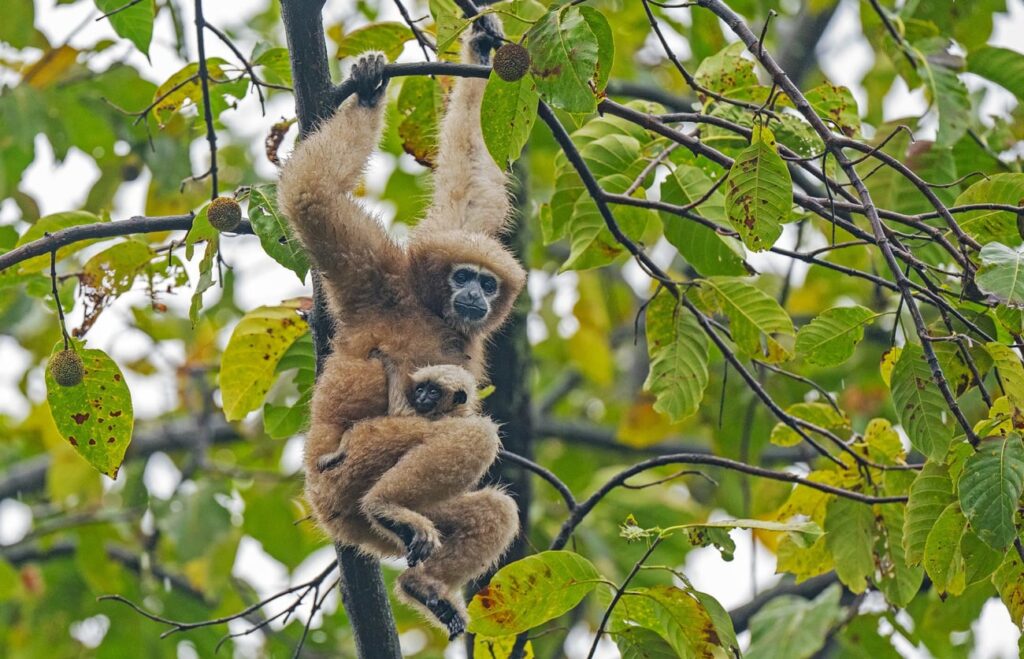
- Hoolock Gibbon — Asia’s only ape; found in the lower forest zones; the morning calls carry far and are one of the park’s most evocative sounds
- Red Panda — Present in temperate forest zones at mid-altitude; elusive but present
- Asian Elephant — Namdapha represents the northernmost breeding population; encounters in forest clearings are possible
- Gaur (Indian Bison) — Large herds use the open grassland areas near the Noa-Dehing River
- Dhole (Wild Dog) — Pack hunters active in the forest; occasionally seen at dawn
- Takin — Rare bovid found at high altitude; one of Asia’s most unusual large mammals
Birdlife
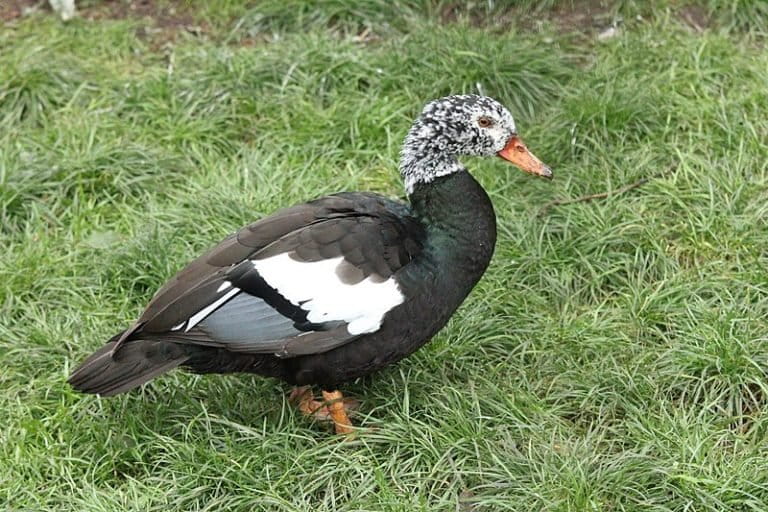
Namdapha has recorded over 440 bird species — one of the highest concentrations of avian diversity in any Indian protected area. Key species include:
- White-winged Duck — Critically endangered; Namdapha is one of its last strongholds
- Rufous-necked Hornbill, Wreathed Hornbill, Great Hornbill
- Blyth’s Tragopan — Among the finest pheasants in Asia
- Ward’s Trogon, Mrs Gould’s Sunbird, Fire-tailed Myzornis
- Multiple species of laughingthrush, liocichla, and yuhina
Top Things to Do in Namdapha
Trekking the Namdapha Wilderness Trail
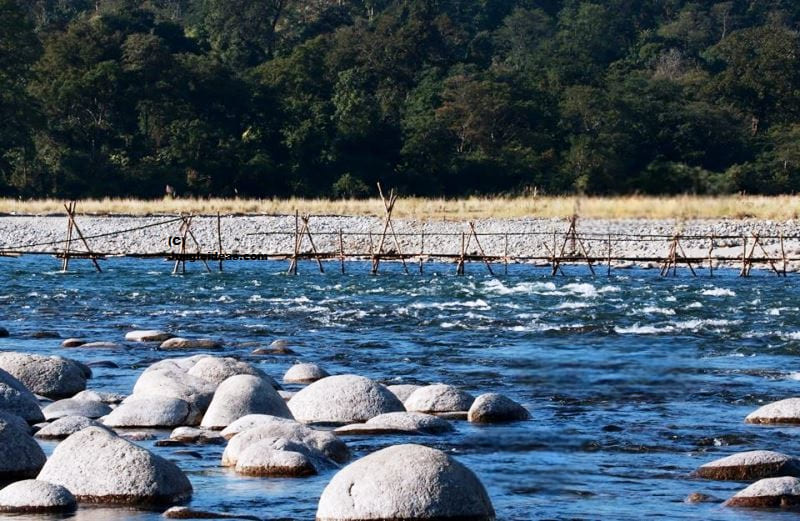
The primary way to experience Namdapha is on foot. The main trail follows the Noa-Dehing River upstream from Deban (the park’s tourism zone base camp) deep into the forest. Itineraries range from 1-day forest walks near Deban to the 6–8 day wilderness trek to Gandhigram village.
- Day 1–2 from Deban: Riverside forest walks with excellent birdwatching; elephant and deer sign commonly encountered; leech-free season October–April
- Day 3–5 itinerary: Advance camps at Hornbill Camp and Firmbase; dense forest; excellent for Hoolock Gibbon and hornbill sightings
- Full Gandhigram trek (6–8 days): For experienced trekkers with full camping equipment and experienced Lisu guides; one of the most remote trekking itineraries in India
Birdwatching at Deban
Even without venturing deep into the forest, the area around Deban forest rest house offers exceptional birdwatching. Early mornings along the river edge and forest margins regularly produce hornbills, kingfishers, drongos, and during winter migration, rare Himalayan species moving through the valley.
Wildlife Night Drives
Forest department-approved night drives along the park’s internal tracks can produce sightings of civets, flying squirrels, leopard cats, and occasionally clouded leopards. These must be arranged through the park authorities.
Visit the Butterfly Park
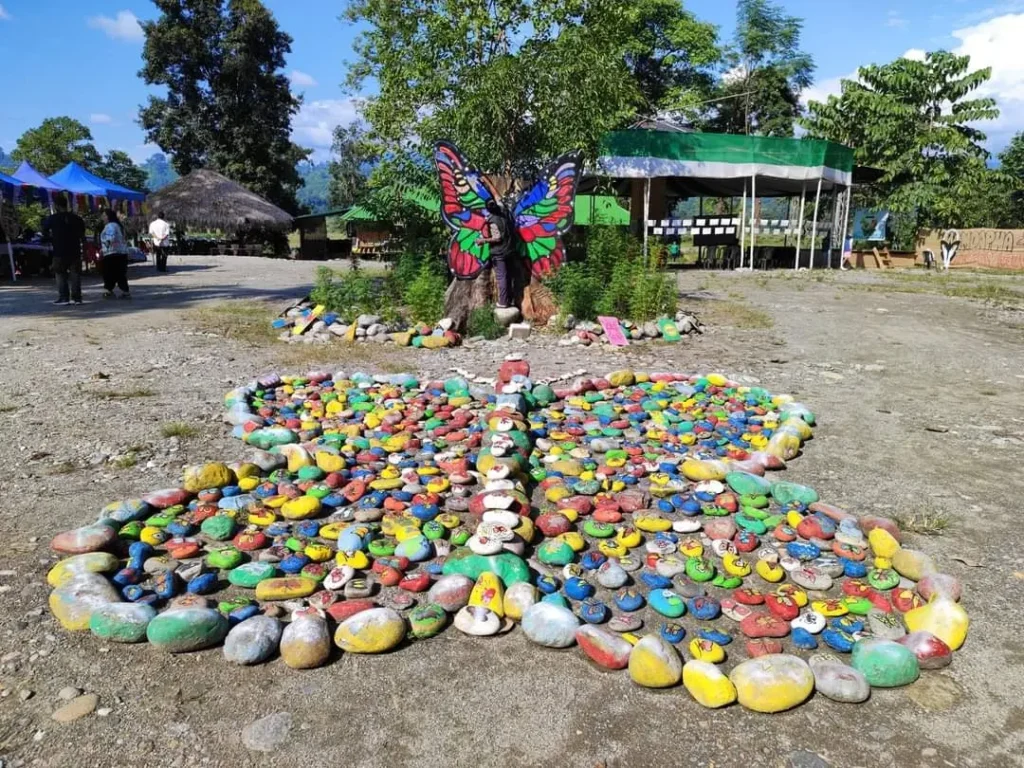
The Namdapha region has recorded over 300 butterfly species — one of the highest concentrations in India. The park’s butterfly garden near Miao offers an introduction to this extraordinary diversity before entering the park.
Where to Stay Near Namdapha
- Deban Forest Rest House — Inside the park; basic but atmospheric; the closest accommodation to the wildlife zone. Bookable through the Changlang Forest Department.
- Miao — The gateway town 26 km from the park; has basic guesthouses, a Circuit House, and a handful of homestays.
- Homestays in Miao and surrounding villages — Chakma, Tangsa, and Nocte community homestays in the buffer zone area offer cultural immersion alongside nature access.
| Book the Deban Forest Rest House well in advance — it has very limited capacity (typically 2–3 rooms) and is the most sought-after accommodation for serious wildlife visitors. Contact the Changlang District Forest Office directly. |
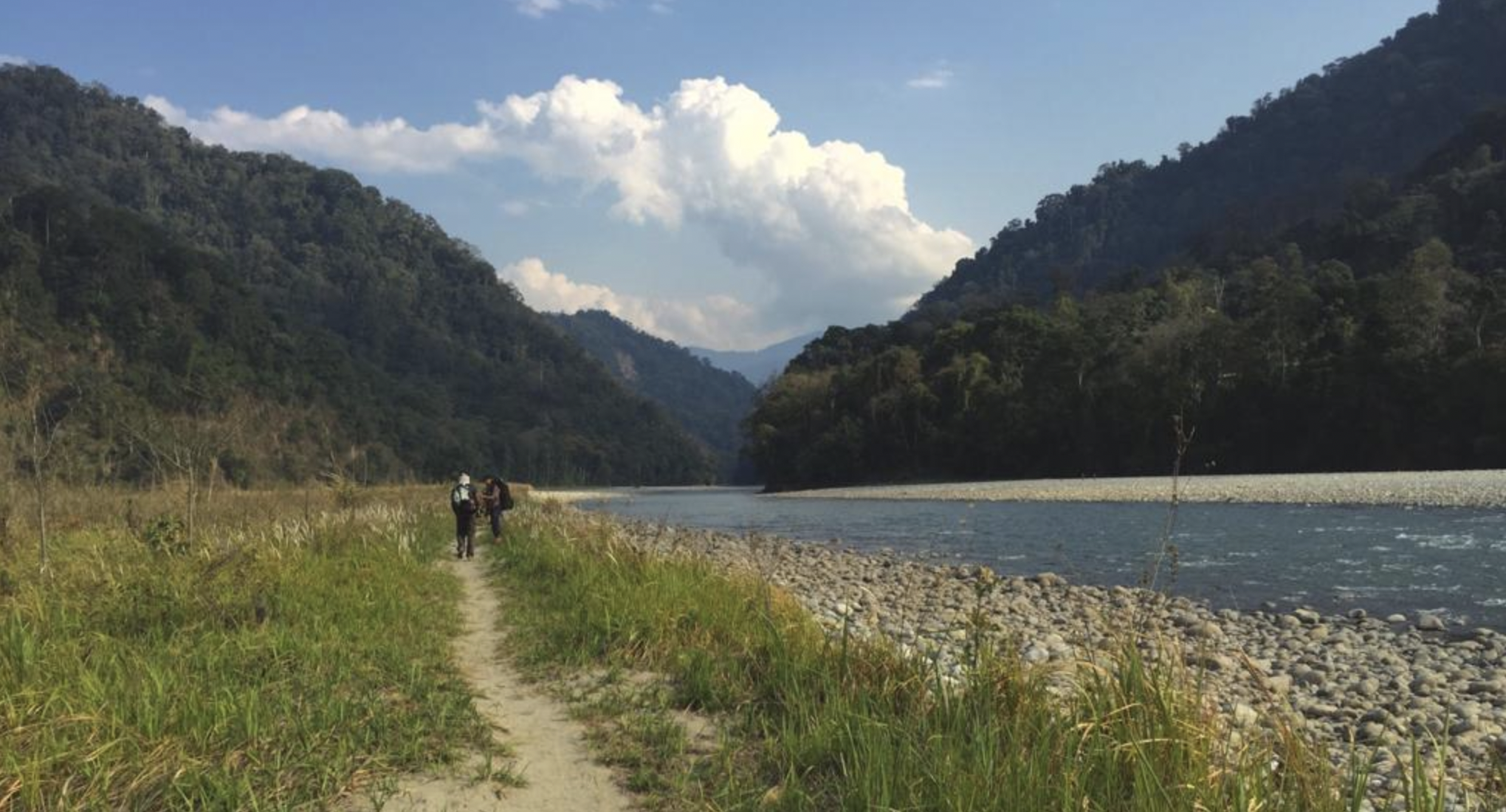
How to Reach Namdapha (Miao)
- From Guwahati: Drive or fly to Dibrugarh (Assam) → drive to Tinsukia → Margherita → Miao. Total: approximately 160 km from Dibrugarh, 5–6 hours.
- By Air: Dibrugarh Airport (Mohanbari) has connections to Guwahati, Kolkata, and Delhi. Namdapha is the most accessible of all Arunachal destinations in terms of entry point.
- By Train: Tinsukia is the nearest major rail junction — well connected to Guwahati, Kolkata, and Delhi. Shared taxis from Tinsukia to Miao.
- Final stretch: Miao to Deban is 26 km on a forest road — arrange transport through Miao or with the Forest Department.
Permits & Regulations
- ILP required for Indian nationals — Apply for Tourist eILP – ILP Arunachal Pradesh
- Forest Department entry permit required at Miao Range Office — bring ID copies and ILP
- Private vehicles cannot enter beyond Deban without Forest Department escort
- No solo trekking allowed inside the park — registered local guides are mandatory
- No plastic bags or single-use plastic permitted inside the park
- Photography permit for commercial shoots requires advance Forest Department approval
Also Read: How to Apply For Travel Permits for Traveling to Northeast India
Travel Essentials for Namdapha
- Leeches: Extremely active June to October; carry salt or a leech sock; not dangerous but unpleasant. October–April visitors largely avoid leech season.
- Clothing: Lightweight, quick-dry fabrics; long sleeves and trousers essential; waterproof layer always
- Medical: Anti-malarial prophylaxis recommended; carry rehydration salts, antiseptic, and a broad-spectrum antibiotic
- Equipment for trekking: Sleeping bag, tent, stove, and food required for overnight treks beyond Deban; no supply points exist in the deep forest
- Cash: No ATMs in Miao; withdraw cash in Tinsukia or Dibrugarh before arrival
Best Time to Visit Namdapha
- October to February: Ideal; dry season; leech-free; migratory birds arrive; wildlife most active; temperature comfortable
- March to April: Spring; excellent birdwatching as residents become active for breeding season
- May to September: Monsoon; leech season; some trails impassable; generally not recommended for casual visitors
