




Manas National Park is a story of loss and remarkable recovery. In the 1980s and 1990s, militant activity in the Bodoland region devastated what had been one of India’s finest wildlife parks — poaching ran unchecked, settlements encroached on the core zone, and rhino and tiger populations collapsed. UNESCO placed the park on its list of World Heritage Sites in Danger in 1992. By the 2010s, under a peace agreement and intensive community conservation effort, Manas had reversed the damage to a degree that conservation biologists described as extraordinary.
Today, the park is fully open, the wildlife has recovered substantially, and it holds the distinction of being simultaneously a UNESCO World Heritage Site, a UNESCO Biosphere Reserve, a Project Tiger reserve, a Project Elephant reserve, and a National Park — five major protective designations in a single ecosystem.
Manas National Park straddles the Assam–Bhutan border along the Manas River and its tributaries, covering 950 square kilometres of grassland, riverine forest, and semi-evergreen forest in the Himalayan foothills. The diversity of habitats and the altitudinal gradient — from the flat Brahmaputra floodplain to the Bhutanese hills — create conditions for a range of species found nowhere else together. The Golden Langur, one of the world’s rarest primates, is found only here and in Bhutan. The Pygmy Hog — the world’s smallest and rarest wild pig — was rescued from extinction at Manas and reintroduced here. And the Royal Bengal Tiger, whose population had been reduced to near zero, has recovered to a viable breeding number.
Quick Facts About Manas National Park
| State | Assam |
| District | Chirang and Baksa |
| Area | 950 sq km (core) + 2,837 sq km (buffer/biosphere) |
| UNESCO Status | World Heritage Site (1985; danger list 1992–2011); Biosphere Reserve |
| Border | Shares border with Royal Manas National Park (Bhutan) |
| Base Town | Barpeta Road (access) and Bansbari (park entry) |
| Nearest Airport | Guwahati Airport — 176 km |
| Nearest Rail | Barpeta Road Railway Station — 40 km from park gate |
| Permit Required | No special permit; park entry fees apply |
| Best Season | October to April; closed May–September |
| Best Time | November to March (dry season; grass lower; wildlife most visible) |
The People Around Manas: The Bodo Community

The Bodo are Assam’s largest plains tribal community and the indigenous people of the Manas region. Their relationship with Manas National Park is one of the most complex and ultimately most instructive conservation stories in India — having gone from active poaching and encroachment in the conflict years, to becoming the primary custodians of the park’s recovery through community forest protection committees and ecotourism initiatives.
Bodo Conservation Force: Formed in 2008, the Bodo Conservation Force is a community-based anti-poaching unit composed of former poachers and conflict-affected youth. Their work — patrolling park boundaries, monitoring rhino and tiger movements, and reporting illegal activity — has been central to Manas’s recovery. It represents one of the most successful examples of community-led conservation anywhere in India.
Culture and festivals: The Bodo celebrate Bwisagu (their spring festival, equivalent to Bihu) with traditional music, dance, and feasting. Their music — played on the sifung (bamboo flute), the kham (drum), and the serja (bamboo violin) — is distinctive and beautiful. Bodo silk (Dokhna) weaving is among the finest textile traditions in Assam.
The Wildlife of Manas National Park
The Golden Langur — The Rarest Primate
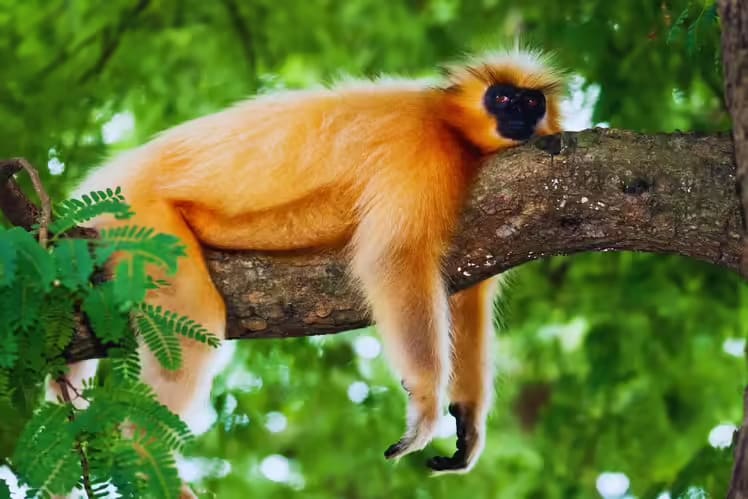
The Golden Langur (Trachypithecus geei) is one of the world’s rarest and most beautiful primates — a long-tailed leaf monkey whose coat ranges from cream-white in summer to rich golden in winter, found only in the forests of Assam’s Manas region and adjacent Bhutan. With a global wild population of approximately 6,000–7,000 individuals, the Golden Langur is classified as Endangered and Manas is one of the most important sites for its conservation.
- Classified as Endangered — global population approximately 6,000–7,000
- Found only in Manas/Assam and Bhutan — the most restricted-range primate in India
- Best seen in the forest sections north of the Manas River and in the buffer zone forest edges
- The winter coat (October–March) is the most striking golden colour — peak season for photography
The Pygmy Hog — Rescued from Extinction
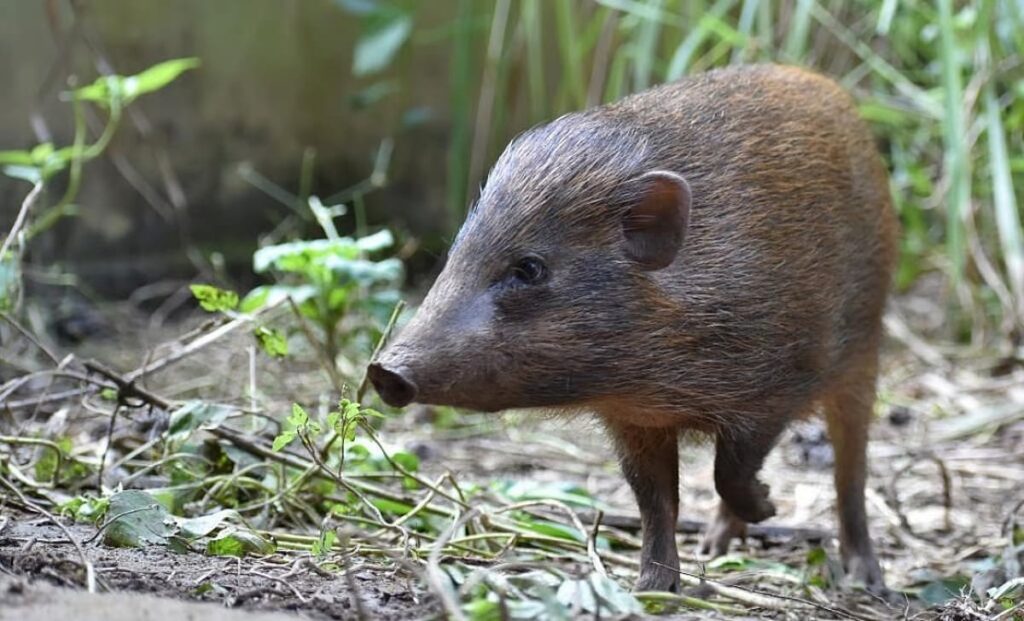
The Pygmy Hog (Porcula salvania) is the world’s smallest and rarest wild pig — a 10 kg, 30 cm tall animal that was believed extinct until a small population was discovered in Manas in 1971. A captive breeding programme was established at the Pygmy Hog Research and Breeding Centre in Guwahati, and the species has since been reintroduced to Manas National Park and two other Assam sanctuaries. This is one of the most successful mammal recovery programmes in Asia.
- World’s smallest and rarest pig — weighs approximately 10 kg
- Manas is the primary wild population site for this critically endangered species
- Sightings are rare but possible in the tall grasslands near the Manas River
Royal Bengal Tiger
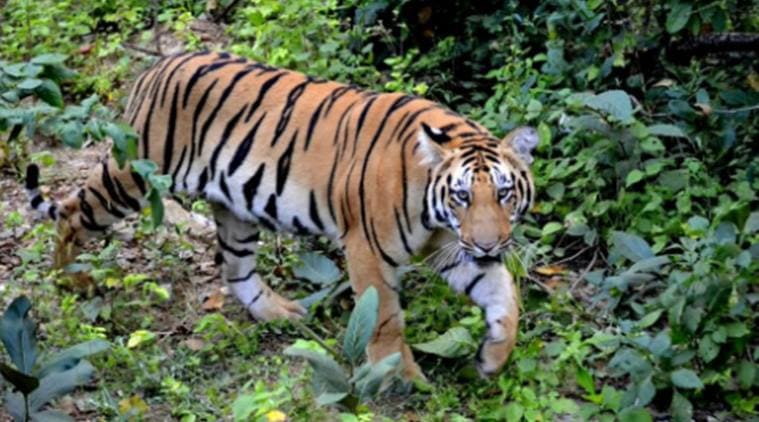
The tiger population at Manas National Park, which had collapsed to near zero in the 1990s, had recovered to an estimated 35–40 individuals in recent surveys. While this is modest compared to Kaziranga or Corbett, it represents a genuine recovery in a park where tigers were functionally locally extinct two decades ago. Sightings occur most frequently in the dry season when grass is low.
One-Horned Rhinoceros
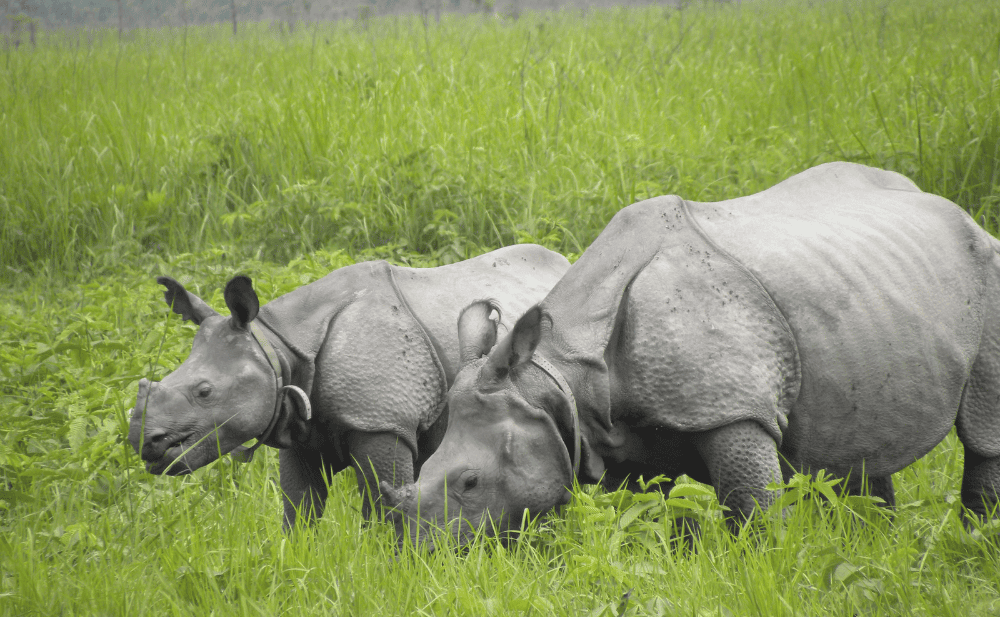
Manas National Park lost virtually its entire rhino population during the conflict years — a devastating loss from the original population of several hundred. Rhinoceroses have been reintroduced from Kaziranga and Pobitora as part of the Indian Rhino Vision 2020 programme. The population is small (approximately 5–10 individuals currently) but growing, and a sighting at Manas carries extraordinary emotional weight given the history.
Other Key Species
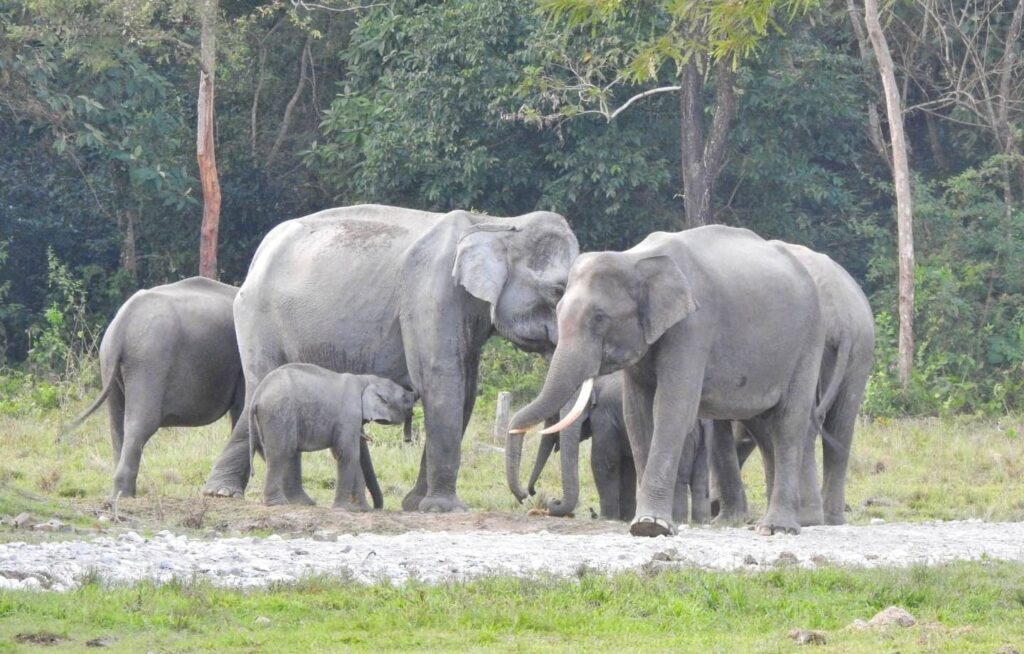
- Asian Elephant — A large population uses both the park and the adjacent Bhutan forest; often seen in the riverine sections and grassland edges
- Wild Water Buffalo — A critically endangered species with a significant Manas population
- Clouded Leopard — Present in the semi-evergreen forest zones; rarely seen but camera traps confirm regular presence
- Gaur (Indian Bison) — Large herds use the forest edges and grasslands
- Hispid Hare — Critically endangered; the tall grasslands of Manas are one of its last refugia
Birdlife at Manas National Park
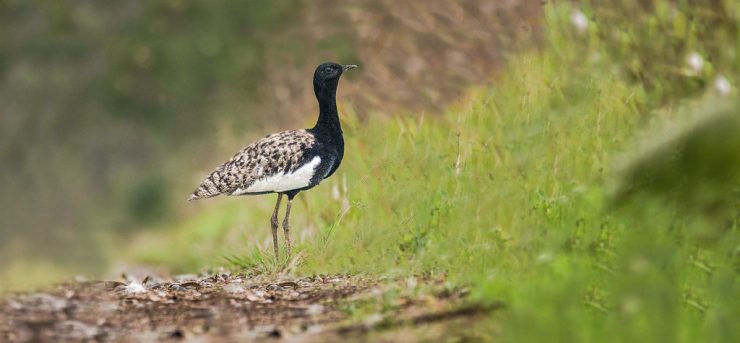
Manas National Park has recorded over 450 bird species — one of the highest counts for any protected area in India. The combination of grassland, riverine, and forest habitats in a single ecosystem creates extraordinary diversity.
- Bengal Florican — critically endangered grassland bustard
- Finn’s Weaver — globally threatened; breeds in the grasslands
- Oriental Darter, Lesser Adjutant, Black-necked Stork — wetland specialists
- Great Hornbill, Rufous-necked Hornbill — forest birds
- Multiple species of kingfisher, fish eagle, and osprey along the Manas River
Safari Options at Manas National Park
1. Jeep Safari
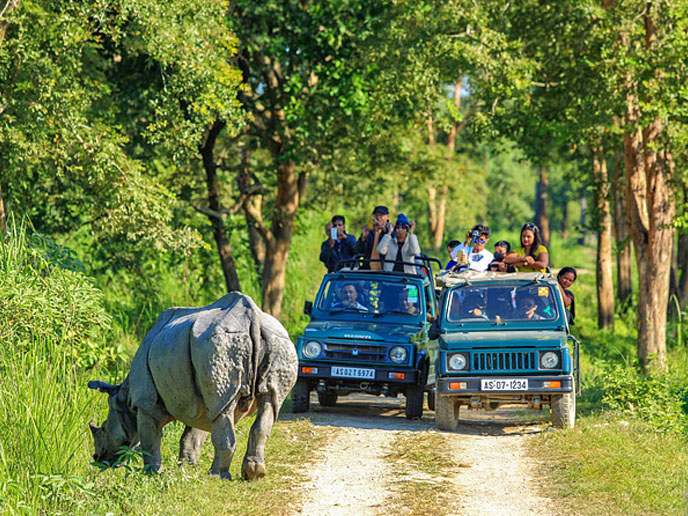
Jeep safaris in the Bansbari Range (the main visitor zone) operate morning and afternoon sessions, following tracks through grassland and riverine forest along the Manas River. The landscape is more intimate than Kaziranga — the forest is denser, the river more present, and the experience of wildlife discovery more gradual and rewarding for those willing to invest the time.
- Bansbari Range — Main visitor zone; elephant, bison, deer, and bird sightings routine; tiger and rhino encounters possible but not guaranteed
- Mathanguri — The most scenic area; riverine forest with views into Bhutan; the best section for langur and forest birds
- Morning safari: Depart by 6 AM for the best wildlife activity window
2. Elephant Safari
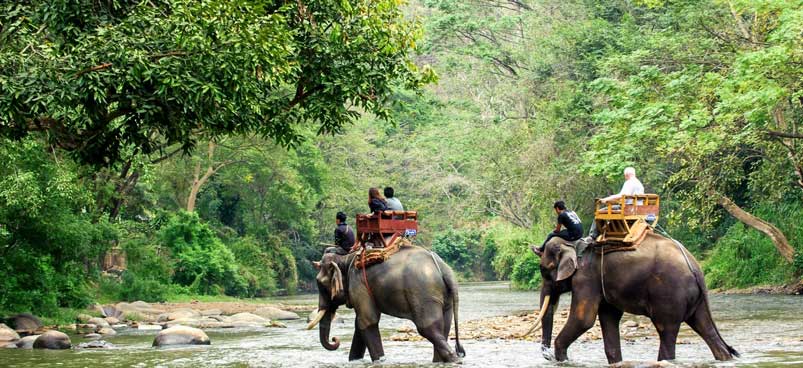
Elephant safaris at Manas National Park offer an experience similar to Kaziranga — approaching wildlife on elephant-back through tall grass. The Manas River sections are particularly rewarding for elephant safaris, allowing close approach to rhinos, buffaloes, and the riverbank bird community.
3. River Safari (Rafting/Boat)
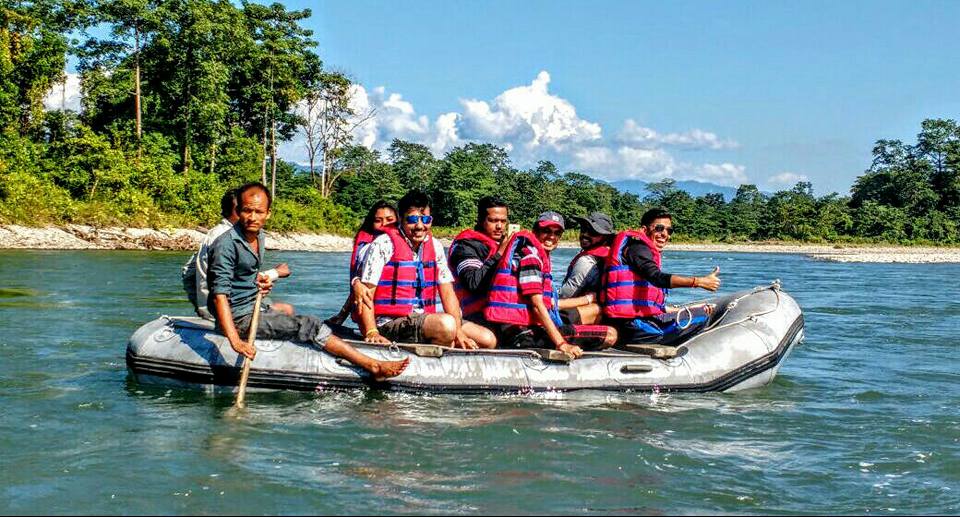
The Manas River — crystal-clear and fast-flowing from the Bhutanese hills — is the park’s most distinctive natural feature and offers a river safari experience unlike any other in Assam. Rafting and boat rides on the Manas allow wildlife observation from water level: otters, fishing cats, and the birdlife of the riverbanks are particularly well-observed from the boat.
- River rafting through the park — approximately 2–3 hours; organised through Bansbari Lodge and other operators
- The Manas River runs clear — the contrast with the muddy Brahmaputra is striking
- Best in November–March when water levels are manageable
Where to Stay at Manas National Park
- Bansbari Lodge — The finest and most celebrated eco-lodge at Manas; community-owned; exceptional wildlife positioning; ₹8,000–₹15,000; advance booking essential
- Mathanguri Forest Rest House — Inside the park on the Bhutan border; the most atmospheric accommodation in Manas; book through the Forest Department; basic facilities but extraordinary setting
- Bodoland Tourism guesthouses — Community-run accommodation at the park periphery; affordable; supports the Bodo conservation effort directly
- Budget guesthouses at Barpeta Road — The access town; ₹600–₹1,500
How to Reach Manas National Park
- From Guwahati: 176 km; approximately 4 hours on NH27 to Barpeta Road, then 40 km to Bansbari (park gate)
- By Train: Barpeta Road Railway Station is on the Guwahati–Alipurduar/New Jalpaiguri line; frequent trains from Guwahati (approximately 3 hours)
- By Air: Guwahati Airport (176 km total); no closer airport
- Combined with Kaziranga: Manas and Kaziranga can be combined in a 5–7 day Assam wildlife circuit; most travelers do Manas → Kaziranga (or reverse) with Guwahati as the hub
Travel Essentials for Manas National Park
- No permits required — park entry fees apply
- ATMs available at Barpeta Road; carry cash for park fees, tips, and village purchases
- Clothing: neutral safari colours; long sleeves and trousers for morning forest drives
- The Manas River has Class 2–3 rapids in sections; only raft with approved operators
- Manas sees fewer tourists than Kaziranga — book accommodation early during peak season (Nov–Feb) but last-minute availability is often possible
Best Time to Visit Manas National Park
- November to February: Peak season; dry grass; best wildlife visibility; Golden Langur in winter golden coat; migratory birds present
- March to April: Still excellent; pre-monsoon; some grass regrowth; fewer tourists
- October: Park just reopened; tall grass reduces sightings but atmosphere is exciting
- May to September: Park closed; flooded
