




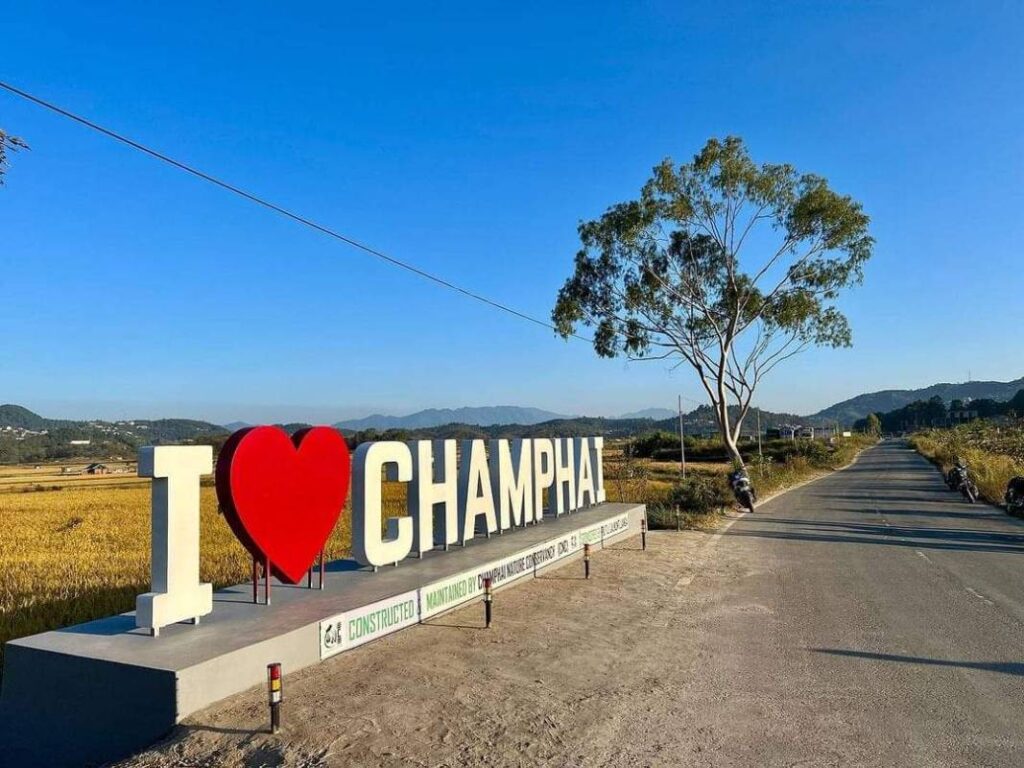
Champhai sits in a wide, flat valley at 1,678 metres — an unusual gift in a state defined by steep ridges and narrow valleys. The valley, broader and more open than anywhere else in Mizoram, was historically one of the most important agricultural areas in the Mizo Hills, and its fertile flatland still produces an abundance of fruit — grapes, apples, plums, and peaches — that give the district its reputation as Mizoram’s fruit bowl. The landscape is genuinely different from the rest of the state: you can see for kilometres across a wide valley, with the forested ridgelines of Myanmar forming the eastern horizon.
Champhai is also the closest major town in Mizoram to the Myanmar border — the Zokhawthar crossing, 27 km east of Champhai, marks the international boundary. The cross-border cultural connections here run deep: the Chin communities of Myanmar’s Chin State are ethnically and linguistically related to the Mizo, and the trading and kinship relationships across this border have never been entirely severed by the political line. Champhai is a frontier town with a distinctive energy — and it is home to the most sacred site in Mizo tradition that lies outside Mizoram’s political borders.
Quick Facts About Champhai
| State | Mizoram |
| District | Champhai |
| Altitude | 1,678 metres (5,505 feet) |
| Distance from Aizawl | Approximately 195 km; 5–6 hours by road on NH306 |
| Distance to Myanmar Border | 27 km to Zokhawthar crossing |
| Language | Mizo, English, Hindi |
| Religion | Christianity (predominantly Presbyterian) |
| ILP Required | Yes — Mizoram ILP; additional documentation for border crossing |
| Best Time | October to May; September–October for fruit harvest season |
| Famous For | Rih Dil sacred lake (Myanmar); Murlen National Park; fruit cultivation; Myanmar border |
The People of Champhai — Frontier Mizo Life
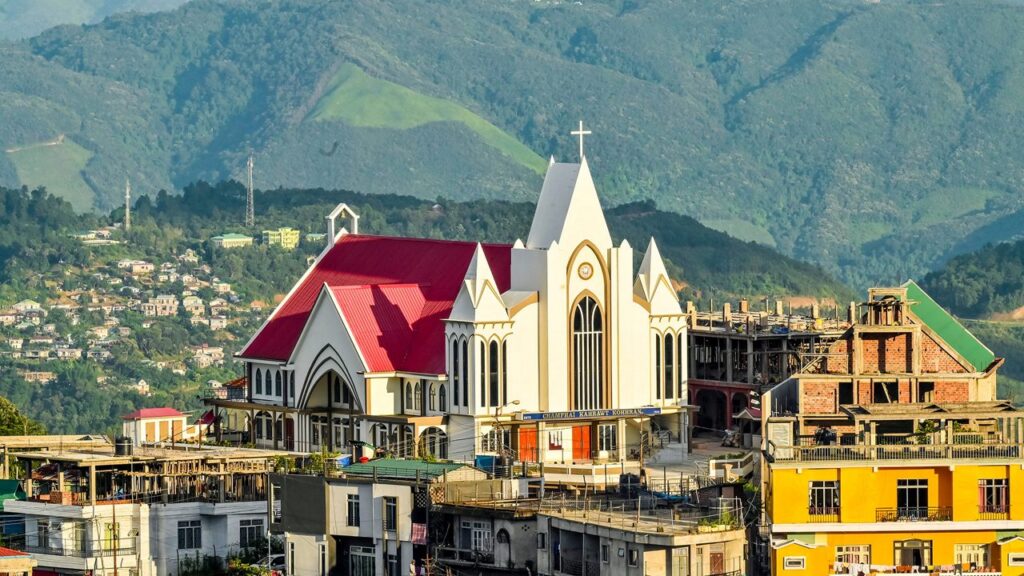
The Mizo communities of the district have lived on this cultural frontier for centuries — with the Chin people of Myanmar as their closest cultural relatives across the political boundary. The Champhai Valley Mizo maintain the same tlawmngaihna ethic as their Aizawl counterparts, but their proximity to the border gives their community life a distinctive quality — a comfort with cultural permeability, a familiarity with cross-border movement, and a historical memory of a time when the hills on both sides of the border were simply Mizo-Chin territory without a political line.
Cross-border kinship: Many families have relatives in Chin State, Myanmar. The Chin people — divided from their Mizo cultural relatives by the British colonial boundary drawn in 1826 — maintained cross-border family and trade connections through the colonial period and into independence. The Presbyterian Church serves as a common institutional bond across the border, with church congregations on both sides participating in each other’s events.
Fruit cultivation: The valley’s unusual flatness and fertile soil support a horticulture economy that is rare in Mizoram — apple, grape, plum, peach, and passion fruit orchards cover the valley floor. September and October, when the fruit harvest is underway, is one of the most pleasant times to visit.
Top Attractions in Champhai
1. Rih Dil — The Sacred Lake in Myanmar
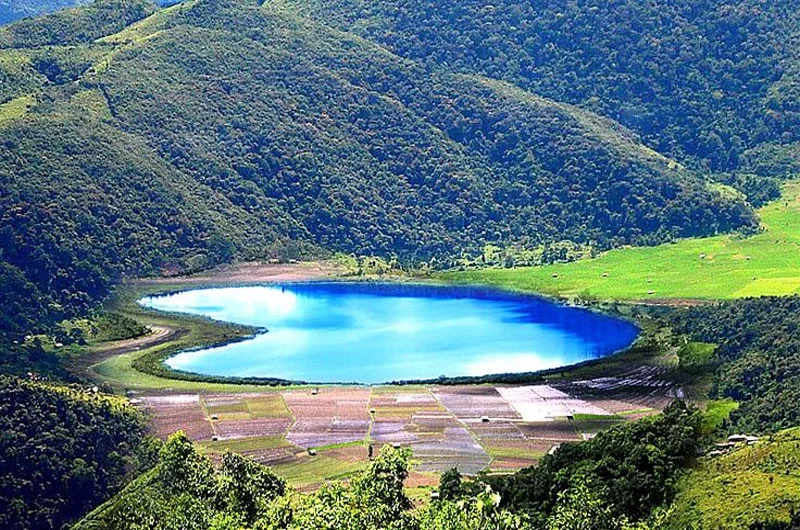
Rih Dil is the most sacred site in Mizo spiritual tradition — a kidney-shaped lake in Myanmar’s Chin State, just 8 km across the border from Zokhawthar, that the Mizo believe is the resting place of the souls of the dead on their journey to the afterlife. The lake appears in Mizo folk songs, oral literature, and spiritual narratives as the ultimate destination — the place where all Mizo souls go after death. It is, in the deepest sense, the Mizo heaven on earth.
The lake was separated from Mizoram by the colonial boundary in 1826, and for generations of Mizo it existed as a place of enormous spiritual longing that could not be visited. Since the normalisation of border relations, Indian nationals with appropriate documentation have been able to visit Rih Dil — an experience that carries emotional weight for Mizo visitors that is difficult for outsiders to fully appreciate.
- Sacred Mizo site — the soul-destination in Mizo spiritual tradition
- Located 8 km inside Myanmar from the Zokhawthar border crossing
- Requires border crossing documentation — verify current conditions before planning
- For Mizo visitors: a profoundly emotional experience; for non-Mizo visitors: a deeply interesting cultural encounter
- The lake itself is a beautiful natural kidney-shaped water body in forested Myanmar hills
| Visiting Rih Dil: This requires crossing the India-Myanmar border at Zokhawthar. Indian nationals can cross with appropriate border area documentation (verify current requirements with the Champhai District Collector’s office). Political conditions in Myanmar may affect border access — always check current status before planning a Rih Dil visit. When the crossing is open, it is one of the most meaningful experiences available to any traveler in Mizoram. |
2. Thasiama Seno Neihna Viewpoint
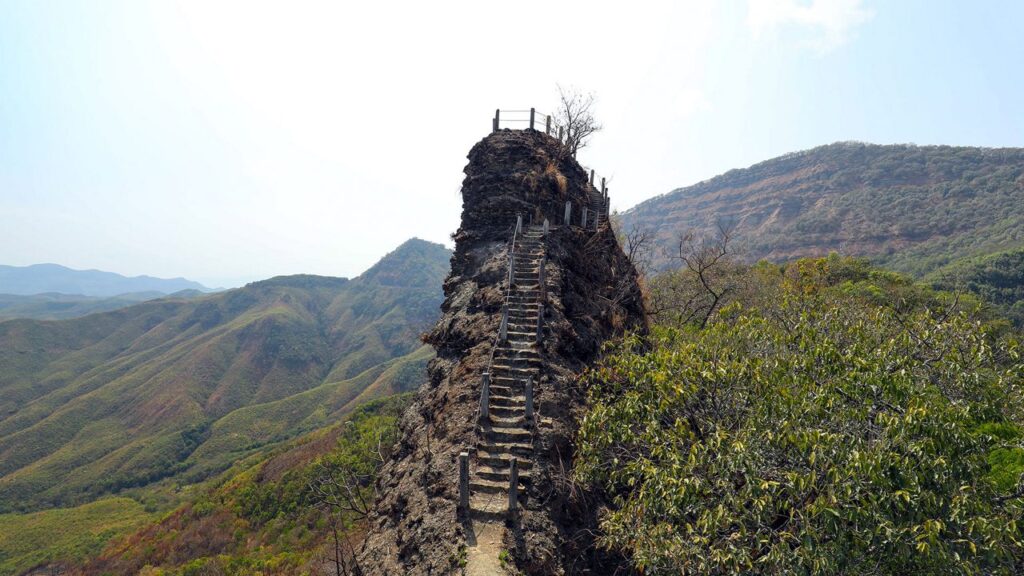
The Thasiama Seno Neihna viewpoint above Champhai town offers the finest panoramic view of the Champhai Valley — the wide, flat valley floor with its patchwork of cultivation, orchards, and village settlements, framed by the forested ridgelines of Myanmar to the east. The viewpoint is best at dawn when the valley below is still in shadow and the eastern hills catch the first light.
- Panoramic view over the Champhai Valley and toward Myanmar
- Dawn visit: the valley in shadow while the Myanmar hills are lit — exceptional photography
- 15–20 minutes from Champhai town centre by vehicle or 45 minutes on foot
3. Murlen National Park
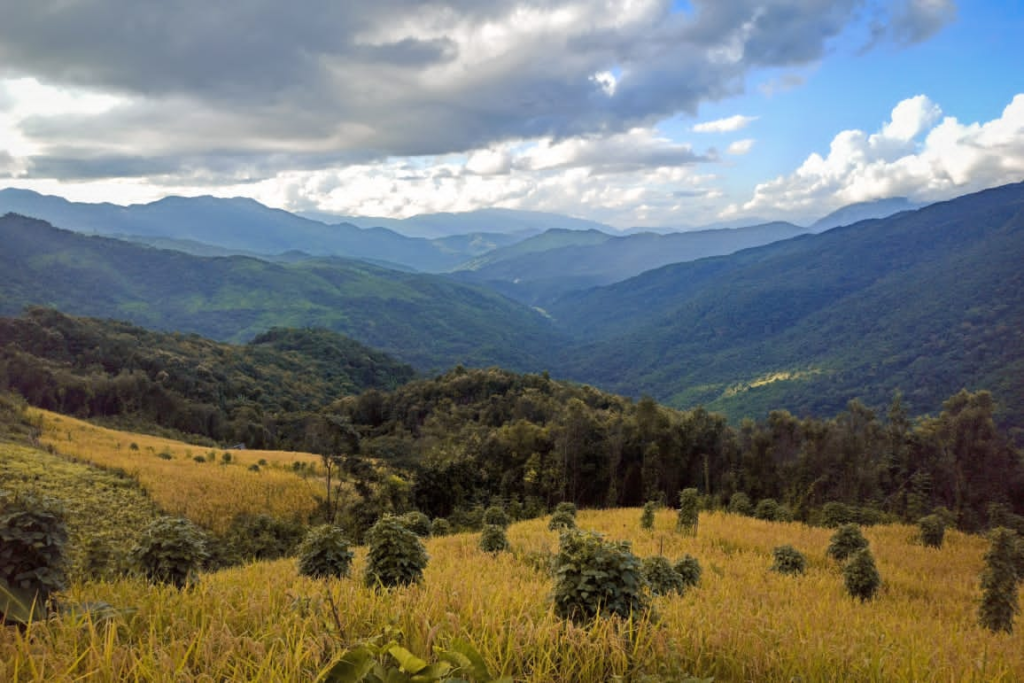
Murlen National Park, 60 km north of Champhai, is one of Mizoram’s two national parks and one of the least visited protected areas in Northeast India. The park’s 100 square kilometres of subtropical and temperate forest support populations of Clouded Leopard, Asiatic Black Bear, Hoolock Gibbon, and over 150 bird species including the rare Blyth’s Tragopan. The park’s remoteness — the road access requires a 4WD vehicle and several hours beyond Champhai — ensures that wildlife encounters are genuinely undisturbed.
- Clouded Leopard, Asiatic Black Bear, Hoolock Gibbon confirmed resident species
- Over 150 bird species including Blyth’s Tragopan and multiple hornbill species
- Forest Department permit required; no solo entry
- Local guide essential — arrange through Champhai District Forest Office
4. Zokhawthar — The Border Town
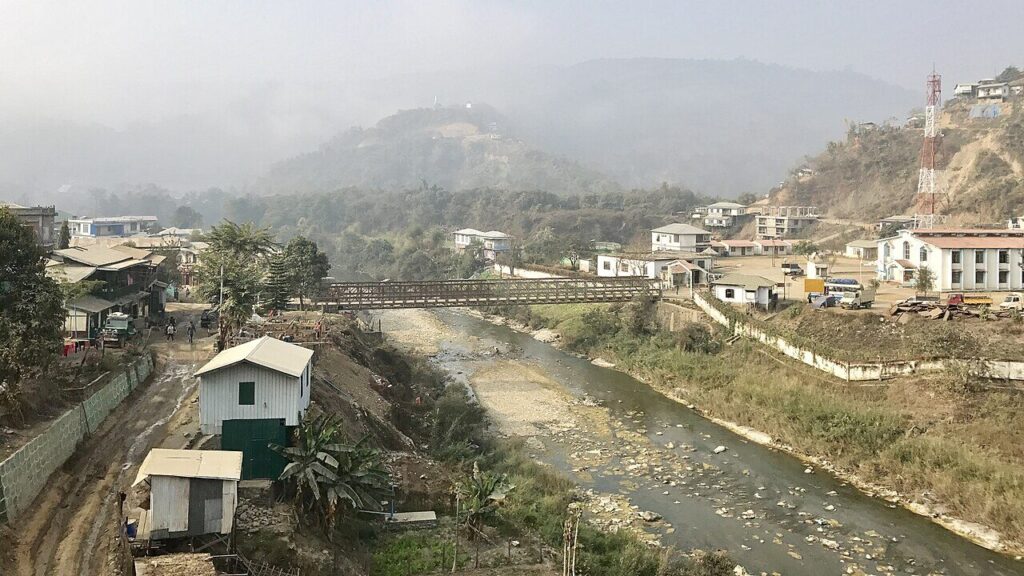
Zokhawthar, 27 km east of Champhai, is Mizoram’s main border crossing with Myanmar — a small town at the political boundary where the Chin-Mizo cultural continuum becomes most visible. The border market at Zokhawthar sells goods from Myanmar and China alongside Indian products, and the daily cross-border movement of people with kinship and trade connections on both sides creates an atmosphere distinctly different from any other border town in the Northeast.
- 27 km from Champhai; approximately 45 minutes by road
- Border market with Myanmar and Chinese goods
- The Phit Lui waterfall is visible on the Myanmar side from the border area
- Cross-border family and trade connections evident in the daily activity
5. Champhai Valley Orchards
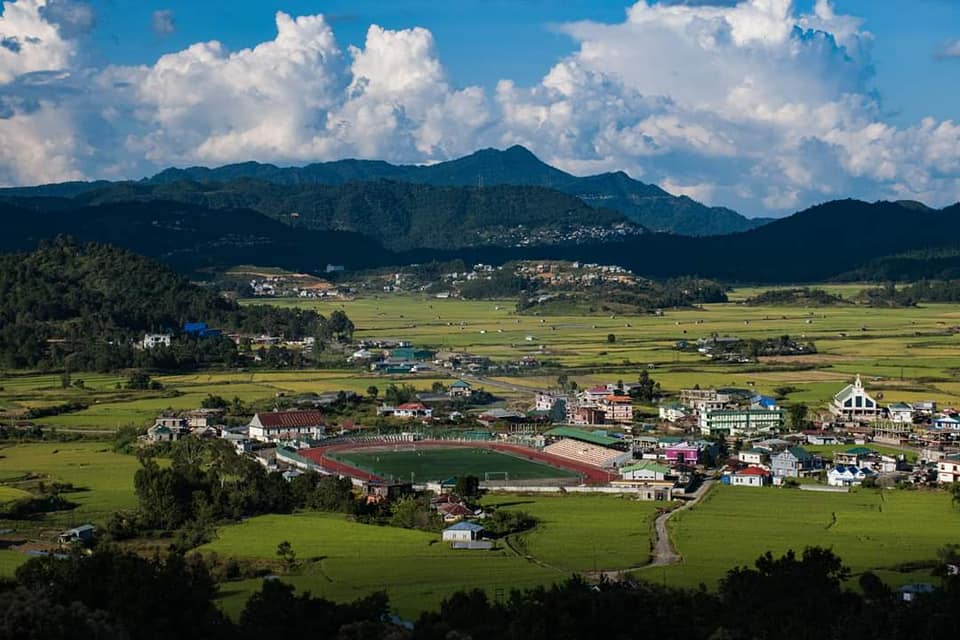
The fruit orchards of the Champhai Valley are one of Mizoram’s most distinctive agricultural landscapes — row upon row of apple, grape, plum, and peach trees on the valley floor, productive in a way that the steep hillsides of the rest of Mizoram cannot support. September and October are the harvest months when the orchards are in full production.
- Apple, grape, plum, peach, and passion fruit orchards on the valley floor
- September–October: harvest season; the most productive and photogenic time
- Several orchards welcome visitor access; ask at the Champhai Tourism office
6. Lengteng Wildlife Sanctuary
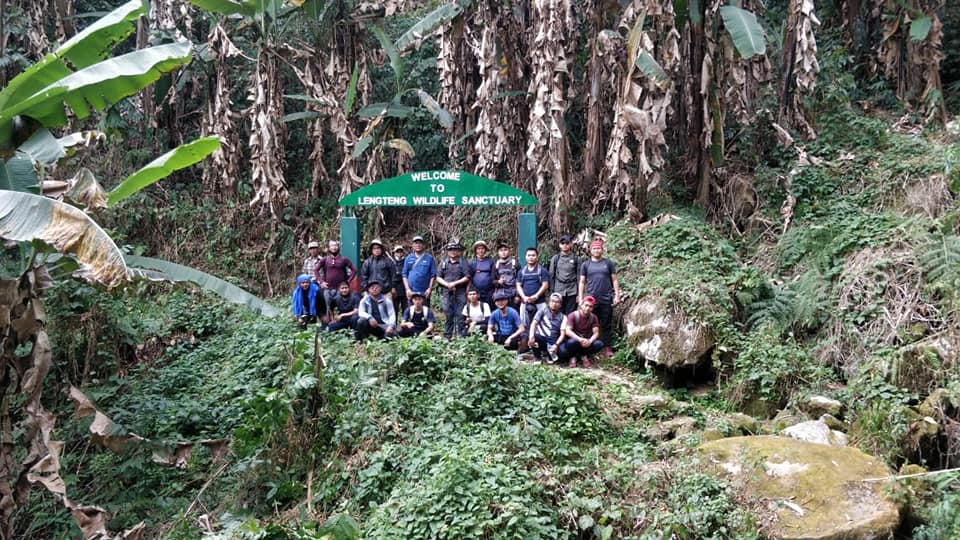
Lengteng Wildlife Sanctuary, north of Champhai, provides additional protected habitat for the wildlife of the Champhai district — particularly for the Blyth’s Tragopan and other pheasant species, as well as the diverse forest birdlife of the Indo-Burmese transition zone. The sanctuary can be accessed as a day trip from Champhai with a Forest Department permit and local guide.
Champhai & the Mizo-Chin Cultural Connection
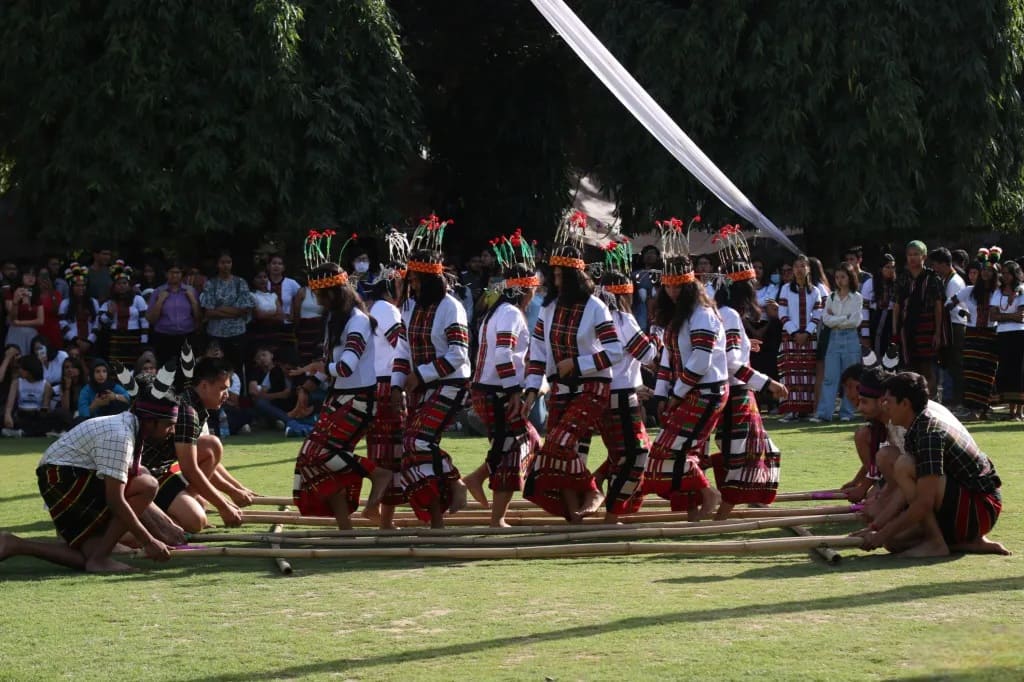
The most compelling aspect of Champhai for culturally curious travelers is the opportunity to witness the Mizo-Chin cultural continuum — the shared heritage of peoples divided by a colonial-era political boundary who have maintained their cultural connections across it. The Zo people (of whom the Mizo and Chin are the primary groups) are perhaps the clearest example in Northeast India of a cultural community whose territorial reality is larger than any political boundary acknowledges.
The Presbyterian Church’s cross-border role, the shared Mizo-Chin oral traditions and folk songs, the kinship relationships that continue across the Zokhawthar crossing, and the presence of Chin refugees in Mizoram since Myanmar’s 2021 military coup all contribute to Champhai’s character as a place where the inadequacy of political borders as cultural dividers is most viscerally apparent.
Top Things to Do in Champhai
- Thasiama Seno Neihna viewpoint at dawn — The finest landscape photography in Champhai; arrive before sunrise
- Rih Dil visit (border crossing required) — The most profoundly meaningful experience available in Champhai; verify border conditions
- Champhai valley orchard walk — September–October peak; the most productive and pleasant agricultural landscape in Mizoram
- Zokhawthar border market — Cross-cultural commercial life at the frontier; morning most active
- Murlen National Park day trip — Wildlife and forest; 4WD required; full day
- Village walks in the Champhai valley — Mizo village life at its most relaxed; the flat valley allows easy walking between settlements
Where to Eat & Stay in Champhai
- Government Circuit House — The most reliable accommodation in Champhai; book through the Deputy Commissioner’s office; central location
- Basic guesthouses — Several options along the main road; ₹600–₹1,500 per night
- Church guesthouses — Available through local Presbyterian congregations; clean and affordable
- Local Mizo food stalls — The best eating in Champhai; bai, sawhchiar, and smoked pork available at the market area
How to Reach Champhai
- From Aizawl: 195 km on NH306; approximately 5–6 hours through multiple ridgelines and valleys. The road is generally good but mountainous.
- By shared taxi: Daily shared taxis from Aizawl (Bazar Tlang area) to Champhai; journey time 5–6 hours.
- By private vehicle: Most comfortable option; hire from Aizawl for a 2–3 day circuit including Tam Dil.
Travel Essentials for Champhai
- Mizoram ILP required — carry at all times
- Additional documentation for Zokhawthar border crossing — verify with Champhai District Collector’s office
- ATMs available in Champhai town — use before heading to more remote areas
- Mobile: Airtel and BSNL work in Champhai town; signal degrades on the roads to Murlen and in some valley areas
- Political conditions in Myanmar may affect border access — verify before planning Rih Dil or Zokhawthar visits
Also Read: How to Apply For Travel Permits for Traveling to Northeast India
Best Time to Visit Champhai
- September to October: Fruit harvest season; orchards productive; fresh valley fruit available; pleasant temperatures
- October to February: Best visibility; clear skies; excellent for valley views and wildlife
- March to May: Spring; flowers; pre-monsoon warmth; good for Murlen birdwatching
- June to August: Monsoon; heavy rain; some road sections affected; travel less predictable
