




Sepahijala Wildlife Sanctuary has a distinction that few wildlife reserves in India can match for sheer accessibility: it sits 28 km from a state capital Agartala, on a good road, and offers a genuine wildlife experience that does not require a jeep safari, an overnight stay, or specialist expertise. You can leave Agartala after breakfast, spend a full morning in the forest with the capped langurs and the birdlife of the sanctuary, eat lunch at the lakeside, visit the botanical garden and zoological park in the afternoon, and be back in Agartala for dinner. And yet the wildlife of Sepahijala Wildlife Sanctuary — the primates above all — is authentic, wild, and consistently rewarding.
The sanctuary covers 18.53 square kilometres of mixed deciduous forest in the Sipahijola district of Tripura. What makes it remarkable is not its size — it is relatively small — but its primate diversity. Sepahijala Wildlife Sanctuary is one of the few places in the world where five primate species can be reliably observed in a single visit: the Capped Langur, the Rhesus Macaque, the Pig-tailed Macaque, the Phayre’s Leaf Monkey, and the Slow Loris. The Capped Langur is the most iconic — a handsome, silver-furred monkey with a distinctive dark cap that is Sepahijala’s most photographed resident.
Quick Facts About Sepahijala Wildlife Sanctuary
| State | Tripura |
| District | Sipahijola |
| Area | 18.53 sq km |
| Distance from Agartala | 28 km; approximately 45 minutes by road on NH44 |
| Established | 1987 |
| No ILP Required | Tripura is open to all Indian nationals |
| Entry Hours | Sunrise to sunset; zoo has its own operating hours |
| Best Time | October to April; November–February for migratory birds on the lake |
| Famous For | Capped Langur; 5 primate species; botanical garden; Sipahijola Lake; Clouded Leopard |
| Facilities | Zoological park, botanical garden, boating lake, nature trails |
The Wildlife of Sepahijala
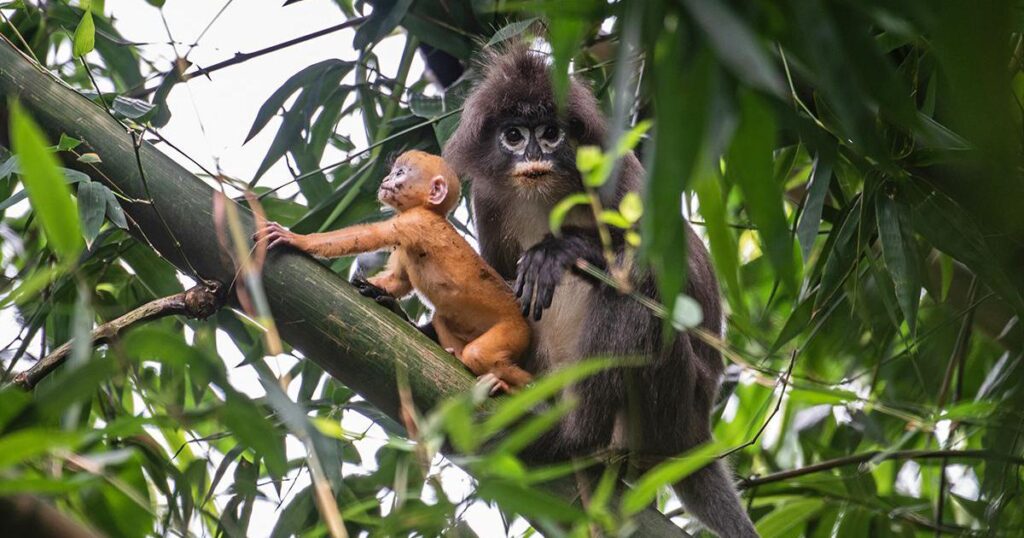
The Primates — Five Species in One Reserve
Sepahijala’s primate community is its most exceptional wildlife feature. Five primate species in a single forest — four langurs and macaques plus the nocturnal Slow Loris — makes it one of the most primate-rich small reserves in India.
Capped Langur (Trachypithecus pileatus): The sanctuary’s most iconic species and Tripura’s state animal. The capped langur is a large, silver-grey colobine monkey with a dark ‘cap’ of darker fur on the crown, long tail, and leaf-eating diet. It lives in the forest canopy and is best observed from the forest trails in the early morning. The langur’s call — a distinctive ‘wheeng’ — is one of the characteristic sounds of the Sepahijala forest.
Phayre’s Leaf Monkey (Trachypithecus phayrei): A second leaf monkey species, smaller and darker than the capped langur, with a distinctive white eye ring. Phayre’s Leaf Monkey is globally Endangered and the Sepahijala Wildlife Sanctuary population is one of the most accessible in India.
Rhesus Macaque: The most adaptable and ubiquitous of India’s primates; present throughout the sanctuary and around the zoo and botanical garden.
Pig-tailed Macaque: A larger, more terrestrial macaque species; less commonly seen but present in the denser forest sections.
Slow Loris: Nocturnal and rarely observed in daylight; the Slow Loris is a critically endangered primate found in Sepahijala’s forest. Night walks with a forest guard provide the best sighting opportunity.
| Primate watching at Sepahijala Wildlife Sanctuary: The capped langur is most reliably seen in the early morning (6–9 AM) on the forest trails near the northern section of the sanctuary. Look for movement in the canopy rather than on the ground — the langurs spend most of their time in the upper and middle forest layers. Their loud calls are the best locator. |
Clouded Leopard
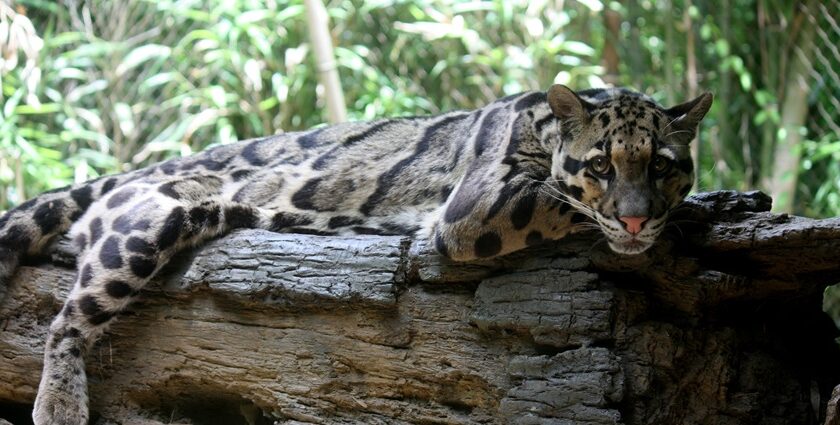
Sepahijala Wildlife Sanctuary is one of the few sanctuaries in Tripura with a confirmed Clouded Leopard population. The clouded leopard — a medium-sized wild cat with distinctive cloud-patterned markings, the largest canine teeth relative to body size of any living cat, and exceptional climbing ability — is nocturnal and extremely shy. Camera traps confirm regular presence; direct sightings are rare but possible on dawn forest walks.
- Nationally protected species; one of India’s most elusive wild cats
- Best chance of sighting: dawn forest walks on the less-trafficked trails
- The sanctuary’s small size and intact forest canopy provides reasonable habitat for this arboreal predator
Other Mammals
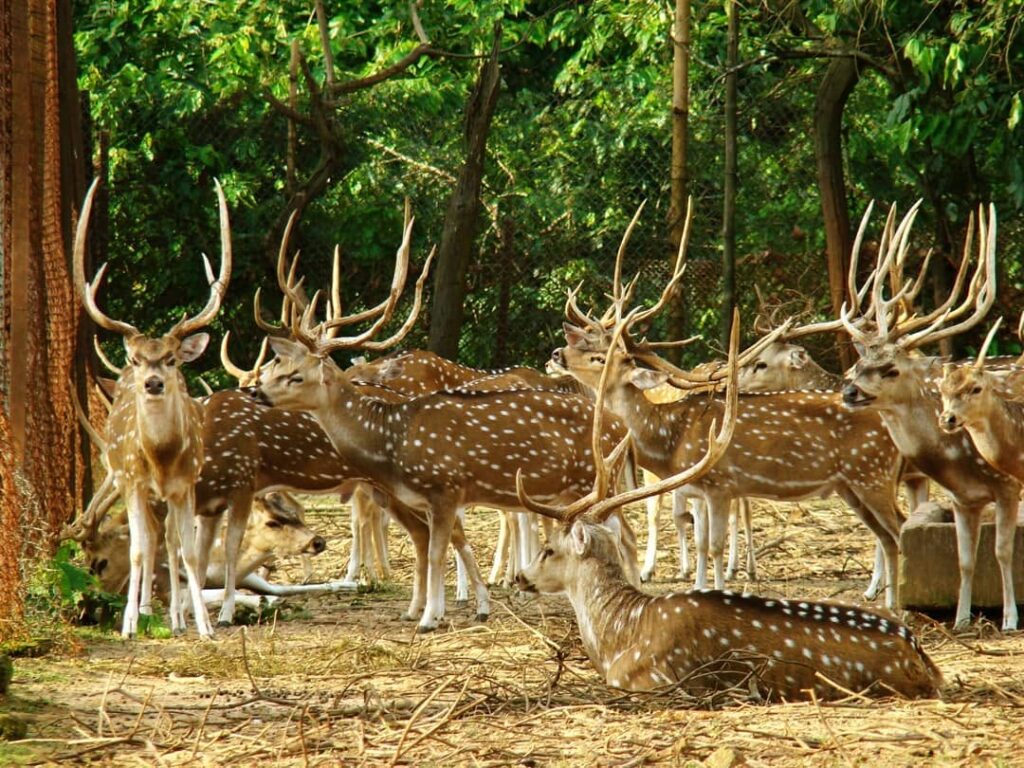
- Leopard — Also present; again nocturnal and rarely seen but confirmed by camera traps
- Barking Deer (Muntjac) — Commonly heard barking in the forest at dawn and dusk
- Wild Boar — Present throughout the sanctuary; frequently seen on the forest floor
- Sambar Deer — Present in the denser forest sections
Birdlife at Sepahijala Wildlife Sanctuary
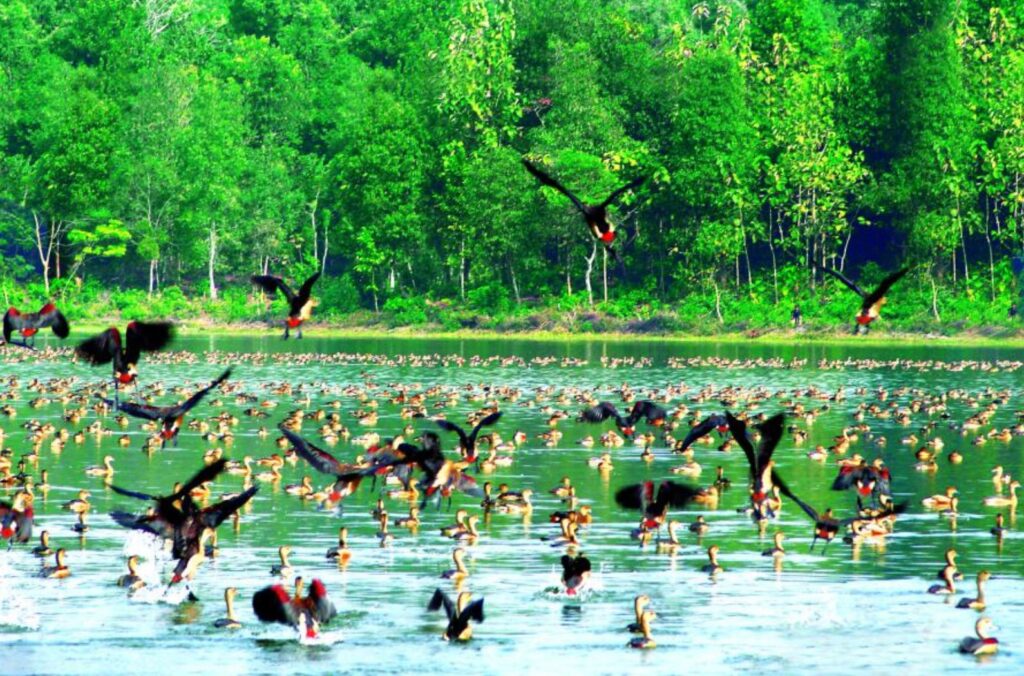
Sepahijala Wildlife Sanctuary has recorded over 150 bird species — an excellent total for a small reserve, reflecting the diversity of forest, wetland, and grassland habitats within its boundaries. The combination of forest birds (in the sanctuary proper) and waterbirds (on Sipahijola Lake) makes it an outstanding day destination for birdwatchers.
- Oriental Pied Hornbill — Frequently seen flying between forest sections; the large bill and distinctive call make it unmistakable
- Crested Serpent Eagle — Common raptor of the forest canopy; the loud repeated ‘kew-kew-kew’ call is one of the forest’s signature sounds
- Great Hornbill — Present in the larger forest sections; the deep honking call announces its presence before it appears
- Spot-billed Pelican, Lesser Adjutant — On Sipahijola Lake; common year-round
- Multiple species of kingfisher, heron, and egret — Along the lake edge and streams throughout the sanctuary
- Migratory waterfowl — October to March; Bar-headed Goose, multiple duck species
The Botanical Garden
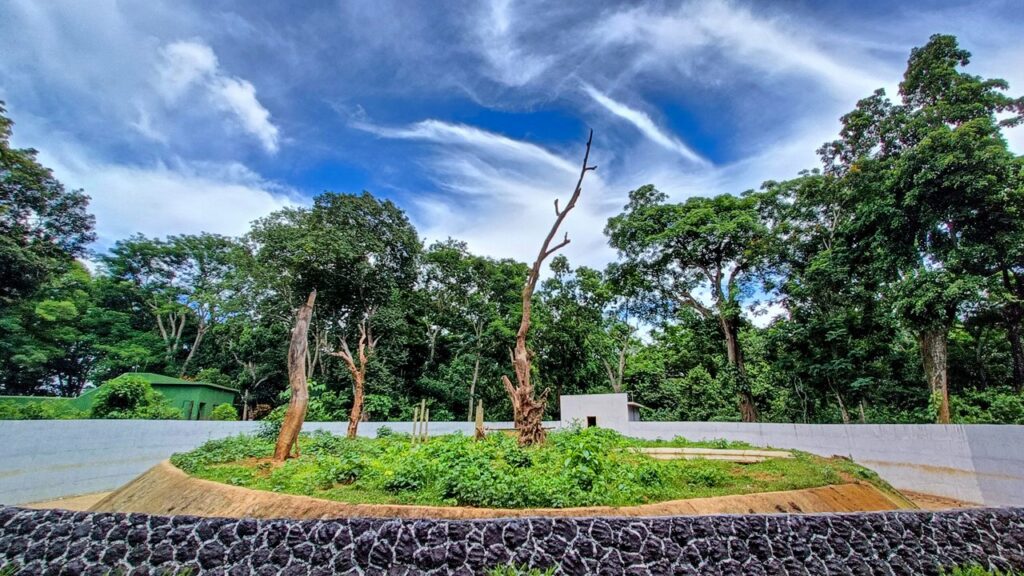
Sepahijala’s botanical garden, within the sanctuary grounds, is one of the finest in Northeast India — a well-maintained collection of native and exotic plant species with particular strength in orchids and medicinal plants.
- Extensive orchid collection — including multiple species endemic to Tripura and the Northeast
- Medicinal plant garden with interpretive labels explaining traditional uses
- Cactus house and succulent collection
- The botanical garden provides a pleasant walking environment even for visitors primarily interested in plants rather than wildlife
Sepahijala Zoological Park
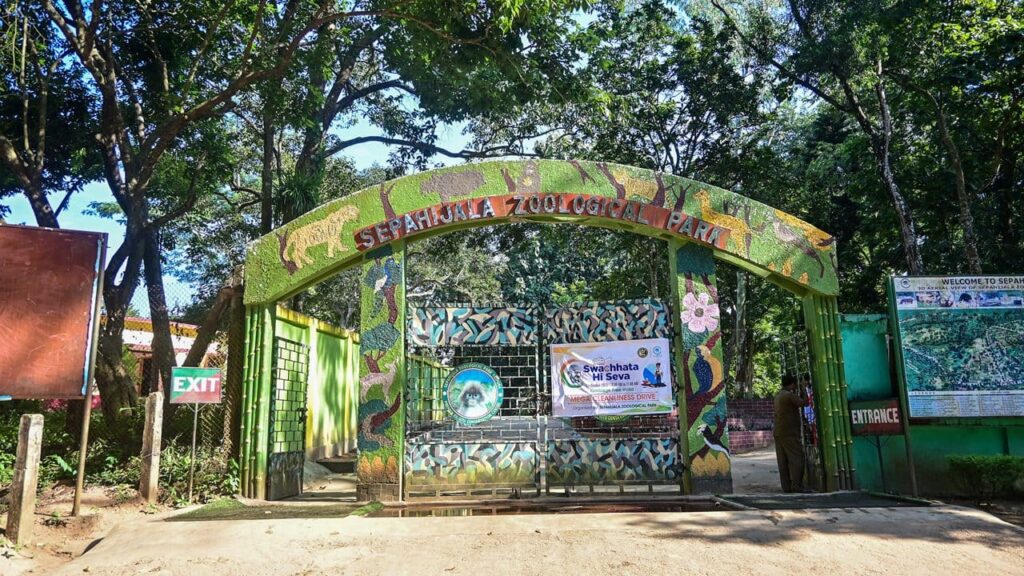
The Sepahijala Zoological Park, integrated with the sanctuary, houses species including those found in the sanctuary (allowing close observation) as well as several species not present in the wild sections — most significantly the Royal Bengal Tiger and the Indian Bison (Gaur). The zoo is better than average in its enclosure quality and species presentation.
- Royal Bengal Tiger — the most popular zoo resident
- Clouded Leopard — in enclosures that allow close observation; the best view of this species most visitors will get
- The primate section includes capped langur in enclosures — useful for detailed photography
- The zoo is well-managed relative to many Indian state zoos
Sipahijola Lake — Boating & Birdwatching
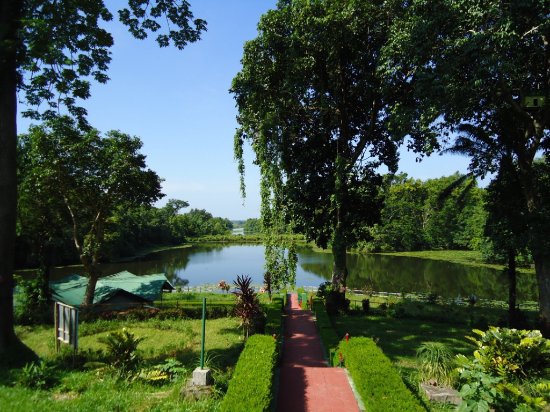
Sipahijola Lake, within the sanctuary grounds, is a pleasant freshwater lake with boating facilities and excellent waterbird populations. Pedal boats and rowing boats are available for hire. The lake’s waterbird population — including pelicans, adjutant storks, and multiple duck species in winter — makes a morning on the water an excellent birdwatching session.
- Pedal boats and rowing boats: approximately ₹50–₹100 per 30 minutes
- Best birdwatching: October to March when migratory waterfowl are present
- The lake provides a pleasant break between the forest trails and the botanical garden
How to Experience Sepahijala Wildlife Sanctuary Best — A Day Plan
- 6:00–7:00 AM — Arrive: Dawn arrival to catch the primate activity window; the sanctuary forest is most productive before 9 AM
- 7:00–9:30 AM — Forest trails: Capped langur and bird watching in the forest; follow the northern trails for the best primate habitat
- 9:30–11:00 AM — Lake boating: Sipahijola Lake boat ride for waterbirds and a change of pace
- 11:00 AM–1:00 PM — Botanical garden: Orchid collection and medicinal plant garden
- 1:00–2:00 PM — Lunch: At the sanctuary canteen or picnic area
- 2:00–4:00 PM — Zoological park: Afternoon visit to the zoo; good for clouded leopard and tiger observation
- 4:00–5:00 PM — Return to Agartala: 45 minutes back to the capital
Where to Eat & Stay at Sepahijala Wildlife Sanctuary
- Day trip from Agartala — The standard approach; 28 km and 45 minutes makes it easily manageable
- Sepahijala Tourism guesthouse — Simple accommodation within the sanctuary; ₹800–₹1,500; the best option for dawn forest walks
- Sanctuary canteen — Basic Bengali food; reliable for lunch
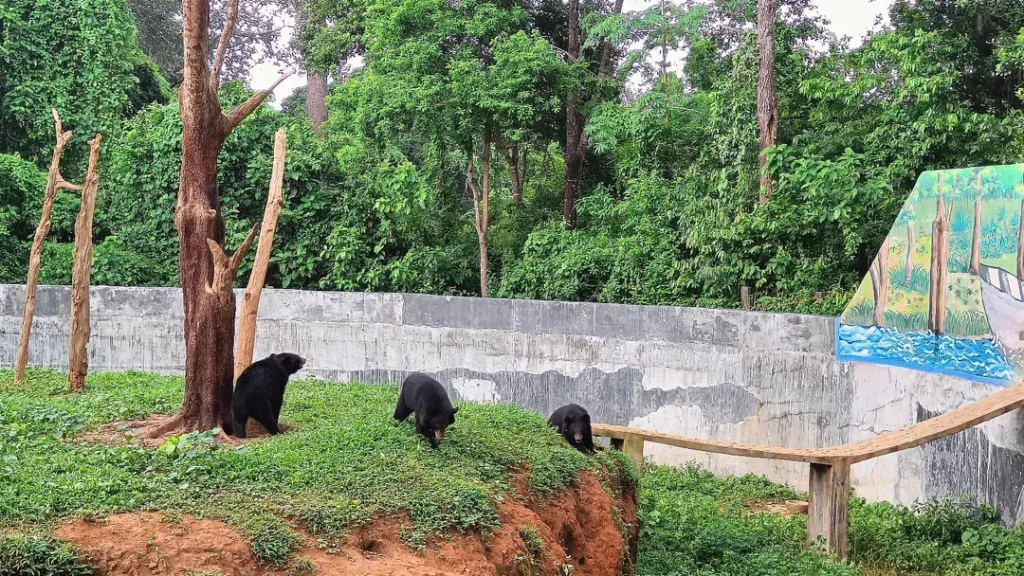
How to Reach Sepahijala Wildlife Sanctuary
- From Agartala: 28 km south on NH44; approximately 45 minutes by car. Taxis available from Agartala city.
- By bus: State transport and private buses from Agartala toward Udaipur stop at Bishalgarh; change for Sepahijala (5 km from the main road)
- Private taxi hire: Most efficient; approximately ₹1,200–₹1,800 for a round-trip day hire from Agartala
Best Time to Visit Sepahijala Wildlife Sanctuary
- October to February: Best wildlife activity; migratory birds on the lake; comfortable temperatures; clearest forest conditions
- March to April: Spring; new leaf growth; breeding activity increases primate visibility
- May to September: Hot and humid; monsoon (July–September); forest intensely green but trails wet; best avoided for first visits
