




The most common budget mistake travelers make in Northeast India is treating it like the rest of India. The mental models that work for Rajasthan — cheap guesthouses everywhere, food under ₹100 at every corner, trains at every hour — do not translate cleanly here. Northeast India is not expensive, but it has its own cost structure, and understanding that structure before you book is the difference between a trip that runs on budget and one that surprises you at every payment.
Two things drive costs up in Northeast India relative to other Indian regions: distance and infrastructure. The region is large, inter-state transport is expensive, and four of the eight states require permits and have limited tourist infrastructure, which means fewer budget options and higher prices where they exist. Wildlife parks add a specific, significant cost that needs to be budgeted separately. And flying, which is often the only practical option for reaching certain states, is never cheap.
What keeps costs down: food. Across all eight states, eating local is genuinely affordable and genuinely outstanding. Mizo bai, Meitei eromba, Assamese masor tenga — these cost ₹100–₹200 at local stalls and require no compromise on quality. The traveler who eats where locals eat is not roughing it. They are eating better than the traveler paying ₹600 at a tourist restaurant in Gangtok.
All figures below are per person per day, excluding flights. Flights are a separate budget item addressed in the transport section.
The Three Budget Tiers
Budget (₹ 500–₹2,500/day): Dormitory or guesthouse accommodation, local dhabas and market stalls, shared taxis and state buses, self-guided exploration.
Mid-Range (₹2,500–₹5,500/day): Private rooms in well-regarded guesthouses or 2–3 star hotels, sit-down restaurants, private taxi hire for flexibility, one or two premium experiences such as a guided trek or elephant safari.
Comfort/Premium (₹5,500–₹15,000+/day): Eco-lodges and 3–4 star hotels, private vehicles throughout, guided tours, premium safari properties at Kaziranga and Manas.
Accommodation — What to Expect at Each Level
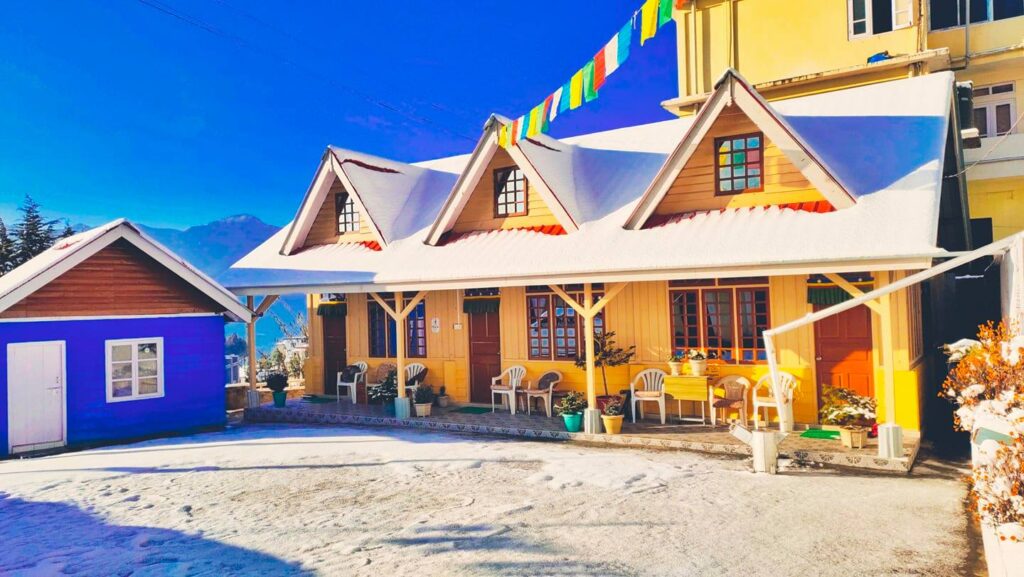
Budget accommodation (₹500–₹1,500/night) is available across most of Northeast India, though quality and availability vary by state. In Guwahati, guesthouses near the railway station or Fancy Bazar run ₹700–₹1,200. Shillong’s Police Bazar area has several reliable budget options at ₹800–₹1,500. Kohima’s basic guesthouses cost ₹700–₹1,200. The genuinely exceptional value at this level is the homestay circuit: Majuli’s community homestays, including meals at ₹600–₹1,000 per person, Jampui Hills homestays in Tripura at ₹500–₹800 with meals, and Mon District guesthouses in Nagaland at ₹600–₹1,000. These are not just cheap — they are, at their best, the most rewarding accommodation experiences in Northeast India.
Mid-range accommodation (₹1,500–₹4,000/night) covers a wide band of solid, comfortable options in the major traveler cities. Gangtok offers Hotel Sonam Delek and Modern Central Lodge in the ₹2,000–₹3,500 range. Pelling runs ₹2,500–₹4,000 for Heritage Pelling and Norbu Ghang Resort. In Agartala, Hotel Welcome Palace and Royal Guest House sit at ₹2,000–₹3,500. Aizawl’s Hotel Regency is ₹2,500–₹4,500. Imphal’s Hotel Classic Grande and Citius Hotel both fall in the ₹2,500–₹4,000 range. Tawang, despite its remoteness, has reliable mid-range options, including The Tawang House at ₹2,000–₹3,500.
Premium accommodation (₹4,000–₹15,000/night) is where the wildlife properties justify the price. At Kaziranga, Iora The Retreat (₹8,000–₹15,000), Wild Grass Resort (₹5,000–₹9,000), and Diphlu River Lodge (₹7,000–₹12,000) are the benchmarks — early safari departures from your doorstep, guided naturalists, and the kind of immersion that a budget guesthouse an hour away cannot replicate. Manas has Bansbari Lodge at ₹8,000–₹15,000. In Guwahati, the Vivanta and Radisson Blu both run ₹6,000–₹10,000. Gangtok’s Elgin Nor-Khill, a heritage hotel, is ₹8,000–₹15,000.
Food — The Budget-Friendly Column
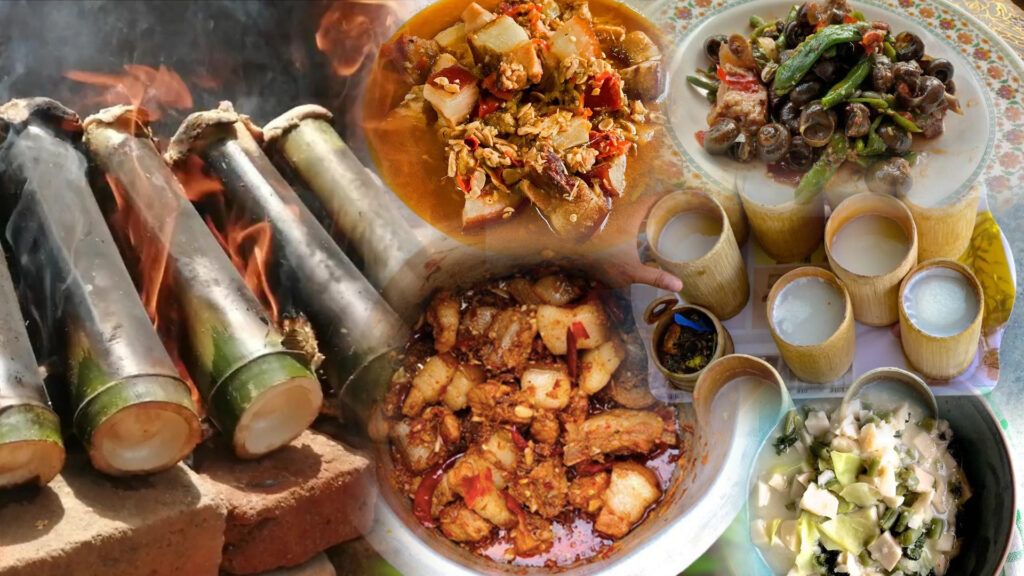
Food is where every tier of Northeast India traveler wins. The distinction between budget and mid-range eating is comfort and context, not quality.
Budget eating (₹150–₹400/meal): Local dhabas across all states serve full meals at ₹80–₹200. The food stalls around Imphal’s Ima Keithel market serve plates of Meitei food at ₹60–₹150. Six momos at Kohima market run ₹60–₹100. An Assamese thali at a local restaurant is ₹150–₹250. Gangtok’s momo stalls are ₹80–₹150. These are not consolation meals for travelers watching their spending — they are the right way to eat in Northeast India.
Mid-range eating (₹400–₹800/meal): Sit-down restaurants in Gangtok, Shillong, and Guwahati average ₹300–₹600 per person. Dzükou Tribal Kitchen in Kohima — one of the best introductions to Naga cuisine available — runs ₹400–₹600 for a full meal. David’s Kitchen in Aizawl delivers Mizo cuisine at ₹350–₹550. Cherrapunji resort dining sits at ₹400–₹700.
Premium eating (₹800–₹2,000/meal): Resort dining at Kaziranga and Manas runs ₹600–₹1,200 per person, though most premium properties offer full-board packages at ₹2,000–₹3,500 per day that make individual meal pricing irrelevant. Gangtok’s hotel restaurants average ₹600–₹1,000.
Transport — The Biggest Cost Variable
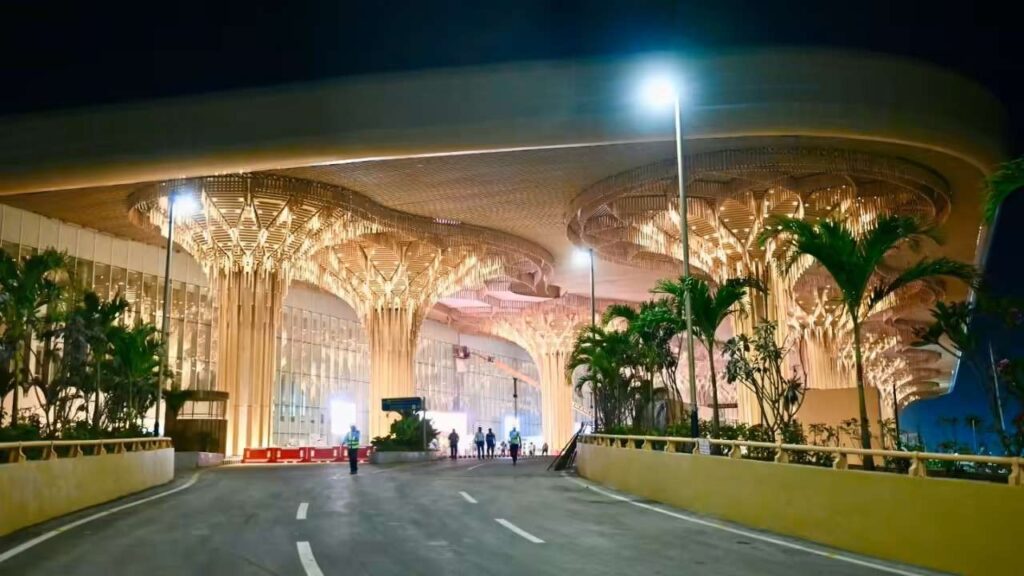
Getting There by Air
Flights are a significant and unavoidable cost for most Northeast India itineraries. Current indicative fares one-way:
Kolkata to Guwahati: ₹2,500–₹6,000 (1 hour). Delhi to Guwahati: ₹3,500–₹8,000 (2.5 hours). Guwahati to Imphal: ₹3,000–₹6,000. Guwahati to Aizawl (Lengpui): ₹3,500–₹7,000. Guwahati to Dimapur: ₹2,500–₹5,000. Guwahati to Bagdogra (Sikkim gateway): ₹2,500–₹5,000.
Book 6–8 weeks in advance for October–March travel. Prices climb steeply in the two weeks before departure on these routes.
Getting Around by Road
Shared taxis (Sumos) are the budget traveler’s primary tool within and between states — fixed routes, shared costs, and reliable coverage of the most traveled corridors. Guwahati to Shillong is ₹200–₹250 per seat (3 hours). Kohima to Dimapur is ₹250–₹350 per seat (3 hours). Gangtok to NJP is ₹250–₹350 per seat (4.5 hours).
Private taxi hire gives you control over departure times, stops, and pace — at a cost. Full-day hire for most routes runs ₹2,500–₹4,500. Multi-day outstation hire with the driver staying overnight is ₹3,000–₹5,000 per day. For a group of four, splitting the cost, private hire becomes highly competitive with shared taxis while delivering considerably more flexibility.
State buses are the cheapest option at ₹100–₹300 per journey — slower, less comfortable, but available on most main routes and perfectly adequate for travelers with time and patience.
Safari and Park Entry
Budget this separately and treat it as a fixed cost rather than an average daily figure, because it is substantial and clustered:
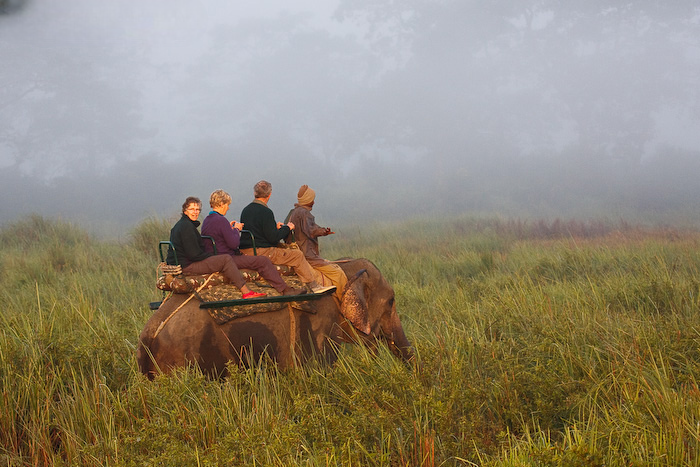
Kaziranga jeep safari: ₹2,500–₹3,500 per jeep (up to 4 passengers); each range (Central, Eastern, Western) is a separate booking. Kaziranga elephant safari: ₹900–₹1,200 per person, with very limited availability — book in advance. Manas jeep safari: ₹1,500–₹2,500 per jeep. Keibul Lamjao National Park in Manipur: ₹50–₹100 entry with boat hire at ₹300–₹500. Namdapha in Arunachal: ₹250–₹500 per person with a mandatory guide at ₹1,000–₹1,500 per day. Sepahijala in Tripura: a modest ₹30–₹50 entry with a ₹100 camera fee.
Permit Costs — Smaller Than You Expect
The Inner Line Permit (ILP) required for Nagaland, Manipur, Mizoram, and Arunachal Pradesh carries a low direct cost: ₹50–₹100 in administrative fees per state. North Sikkim’s Restricted Area Permit runs ₹300–₹500, including operator processing. Arunachal’s restricted inner areas require an additional Protected Area Permit on top of the standard ILP. If you apply through an operator who packages the ILP with transport (common and convenient), the all-in handling cost is ₹300–₹600 per person. Permits are not where your budget goes — they are where your lead time goes.
Per-State Daily Cost Summary
Average per-person-per-day estimates, excluding flights:
| State | Budget | Mid-Range | Comfort |
| Assam (Guwahati/Kaziranga) | ₹1,500–₹2,000 | ₹3,000–₹4,500 | ₹7,000–₹15,000 |
| Meghalaya (Shillong/Cherrapunji) | ₹1,800–₹2,500 | ₹3,500–₹5,000 | ₹6,000–₹10,000 |
| Nagaland (Kohima) | ₹1,500–₹2,200 | ₹2,800–₹4,000 | ₹5,000–₹8,000 |
| Arunachal Pradesh (Tawang) | ₹2,000–₹3,000 | ₹3,500–₹5,500 | ₹6,000–₹10,000 |
| Manipur (Imphal) | ₹1,500–₹2,000 | ₹2,500–₹4,000 | ₹5,000–₹8,000 |
| Mizoram (Aizawl) | ₹1,800–₹2,500 | ₹3,000–₹4,500 | ₹5,500–₹9,000 |
| Tripura (Agartala) | ₹1,200–₹1,800 | ₹2,500–₹3,800 | ₹4,500–₹7,000 |
| Sikkim (Gangtok/Pelling) | ₹1,800–₹2,500 | ₹3,000–₹5,000 | ₹6,000–₹12,000 |
Tripura is the most affordable state overall. Arunachal Pradesh is the most expensive at budget and mid-range levels, driven by limited accommodation supply and the logistical costs of remote destinations like Tawang. Assam’s comfort tier is the widest range — the gap between a mid-range Guwahati hotel and a premium Kaziranga eco-lodge is significant.
Sample 10-Day Trip Budgets
Budget 10-day trip (Guwahati, Kaziranga, Kohima): ₹25,000–₹35,000 per person excluding flights. Roughly: accommodation ₹12,000; food ₹6,000; transport ₹10,000; safaris and entry fees ₹4,000; permits ₹500; miscellaneous ₹2,500.
Mid-range 10-day trip (same route): ₹50,000–₹70,000 per person excluding flights. Roughly: accommodation ₹25,000; food ₹12,000; transport ₹18,000; safaris ₹8,000; guided tours ₹4,000; permits ₹500; miscellaneous ₹3,000.
Comfort 10-day trip (Kaziranga eco-lodge, Gangtok premium hotel, Hornbill Festival accommodation): ₹1,00,000–₹1,50,000 per person excluding flights.
Five Cost-Saving Moves That Actually Work
Travel in a group. Private taxi costs are fixed per vehicle, not per person. Four travelers sharing a private taxi pay individual rates comparable to shared sumos, with complete flexibility over timing and stops.
Eat local, always. This is not a budget compromise — it is the correct way to eat in Northeast India. Tribal and regional cuisines across all eight states are served at street level for ₹100–₹200 and are better than tourist restaurant equivalents at three times the price.
Choose homestays over hotels in the right places. In Majuli, Khonoma, Jampui Hills, and Ziro Valley, homestays include meals and provide access to local life that no hotel replicates — often at a lower all-in cost than a mid-range hotel without meals.
Avoid Hornbill Festival dates if it is not your primary reason for visiting. Accommodation in Kohima triples in price during December 1–10. October, November, or January gives equivalent cultural access to Nagaland at standard prices.
Take the train to NJP instead of flying to Bagdogra for Sikkim. The cost difference is substantial and the road journey from NJP to Gangtok — along the Teesta river — is one of Northeast India’s better arrival experiences.
