




The phrase ‘untouched heaven’ is used so frequently in tourism writing that it has lost nearly all meaning. In Dima Hasao — the autonomous district in southern Assam, formerly called the North Cachar Hills, bounded by Nagaland to the east, Manipur to the south, and Cachar and Karbi Anglong to the west — it happens to be accurate. Dima Hasao is one of the least visited and least developed districts in Assam, despite containing Assam’s only hill station (Haflong), the highest peak in the state (Thingthubung in the Barail Range, 1,866 metres), the most spectacular waterfall in the North Cachar Hills (Panimur on the Kopili River), the most mysterious ecological phenomenon in the Northeast (the Jatinga bird deaths), and the most celebrated and now officially GI-tagged indigenous product in Assam (Judima rice wine, awarded the Geographical Indication in 2021).
The district’s name reflects its primary indigenous community: Dima, a short form of the Dimasa (meaning ‘sons of the big river’, referring to the Brahmaputra); Hasao, meaning ‘hills’. The Dimasa people built the Kachari Kingdom — one of the most significant pre-Ahom kingdoms in Assam — with their capital at Maibang in this very district (and later at Dimapur, now in Nagaland). Their contemporary descendants maintain a cultural identity of remarkable vitality — the Bushu Dima festival, the Judima wine tradition, the intricate weaving tradition — alongside eight other tribal communities whose co-existence in the hills of this autonomous district constitutes one of the most diverse human landscapes in the entire Northeast.
Quick Facts About Dima Hasao District
| QUICK FACTS | DIMA HASAO DISTRICT, ASSAM |
| State | Assam |
| Former Name | North Cachar Hills District |
| Status | Autonomous district under the Sixth Schedule of the Constitution |
| Headquarters | Haflong |
| Area | 4,890 sq km |
| Highest Peak | Thingthubung (Barail Range) — 1,866 metres; highest peak in Assam |
| GI Tagged Product | Judima rice wine — first GI tag for a rice wine from Northeast India (2021) |
| Primary Tribes | Dimasa, Hmar, Kuki, Hrangkhol, Biate, Vaiphei, Rongmei Naga, Zeme Naga |
| Key Attractions | Haflong, Jatinga, Panimur Falls, Maibang, Barail Range, Umrangso, Tumjang Peak |
| Best Time | October to April; September–October for Jatinga & Amur Falcon Festival |
The Eight Tribes — A Living Cultural Mosaic
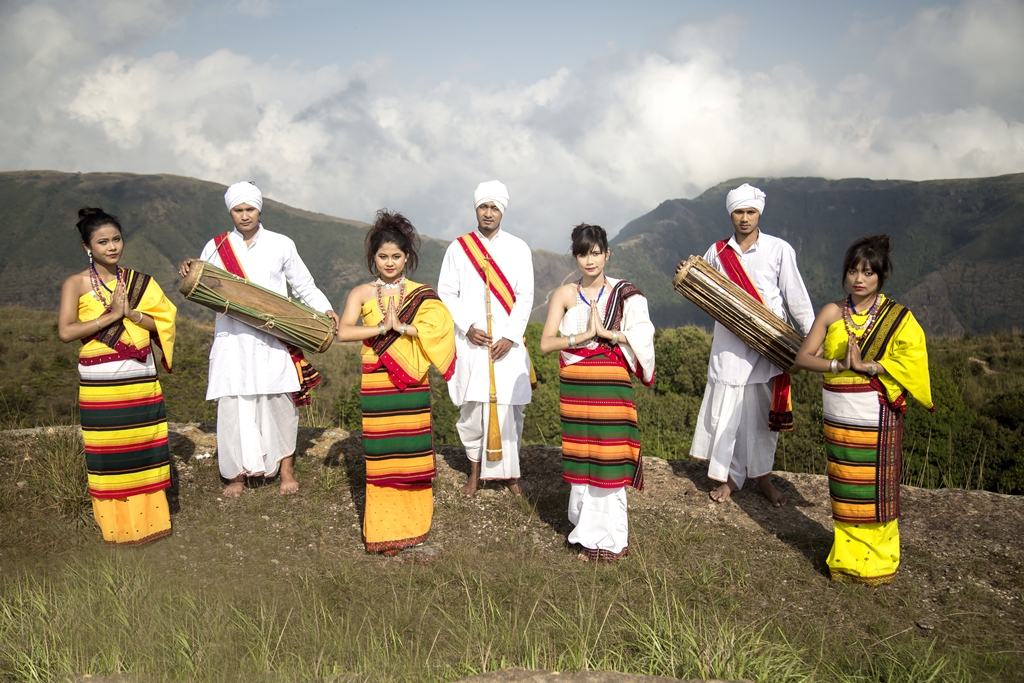
What makes Dima Hasao exceptional among Assam’s hill districts is not merely its landscape but its human diversity. Eight distinct tribal communities share these hills, each maintaining its own language, traditions, and cultural identity within the framework of the autonomous district administration.
The Dimasa are the district’s founding community and its most historically prominent people — the builders of the Kachari Kingdom, the originators of the Bushu Dima festival, and the custodians of the GI-tagged Judima rice wine tradition. Their handloom textiles, woven in geometric patterns on traditional loin-strap looms, are among the most distinctive in the Northeast.
The Hmar, concentrated in the Jiribam sub-division and its borderlands, maintain a strong oral literary tradition and are one of the few tribes in Assam with a substantial body of written literature in their own language. The Kuki and Hrangkhol communities share cultural affinities with groups across Manipur and Mizoram — their festivals and material culture bridging the hill communities of three states. The Biate people, centred around Khobak Village, are custodians of one of the district’s most mysterious archaeological inheritances: centuries-old megalithic stone jars used historically for rice beer fermentation, a practice that long predates any written record of the community.
The Vaiphei and Rongmei Naga communities add further texture to the district’s religious and linguistic landscape, while the Zeme Naga — whose traditional territory extends from these hills into Nagaland — maintain a rich tradition of oral mythology rooted in the Barail Range itself. For the culturally curious traveller, a journey through Dima Hasao is less a single destination than a layered encounter with eight distinct worlds.
| ILP Notice: No Inner Line Permit is required to visit Dima Hasao, Haflong, or anywhere within the district. The district is open to all Indian and foreign nationals without any special permit. |
The Jatinga Phenomenon — The Valley Where Birds Die
Of all the natural mysteries in Northeast India, none has attracted more scientific inquiry or public fascination than what happens in a small valley 9 kilometres from Haflong. In September and October, on moonless nights between 7 PM and 10 PM, thousands of birds descend on the village of Jatinga, apparently disoriented, flying toward lights and dying in large numbers. The phenomenon has been documented for over a century and involves more than 40 species — not only resident birds but migratory species with no established presence in the area, suggesting the valley operates as some kind of navigational trap during a specific annual window.
| Why do birds die in Jatinga? Scientific consensus points to a combination of heavy post-monsoon fog, the valley’s specific wind topography, and disorienting artificial light sources on moonless nights. The valley’s orientation and microclimatic conditions appear to disorient birds during migration, drawing them toward lights and causing mass casualties. The traditional Dimasa explanation attributed the phenomenon to supernatural forces — a divine curse on the valley. Season: September–November; peak September–October. Timing: 7 PM to 10 PM on moonless nights. |
The Barail Range — Above the Clouds
Thingthubung & Tumjang Peak
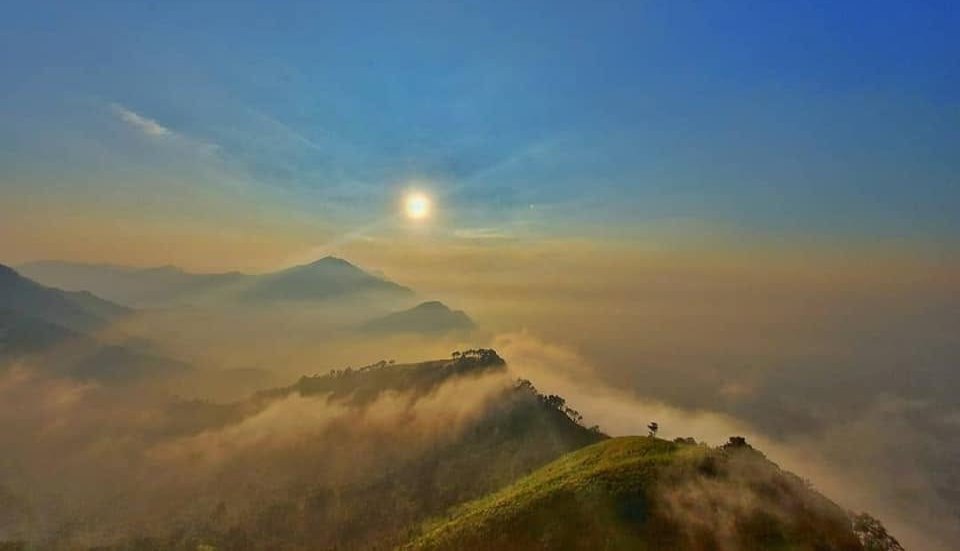
The Barail Range forms the spine of Dima Hasao and constitutes the highest hill system in Assam. Thingthubung (1,866 metres) is the state’s highest peak — a serious trek through dense subtropical and then temperate forest, with ridge-top views that extend into Nagaland and Manipur on clear days. The trek is not formally developed and requires a local guide from Haflong.
Tumjang Peak and the nearby Sielkal Peak have emerged in recent years as the district’s most socially celebrated trekking destination. Situated in the Barail range, the trails climb through forested ridges into an above-the-cloud landscape of rolling misty hillsides that photographs spectacularly and delivers the kind of elemental, enveloping quietness that motivated trekkers come specifically to find. The experience of standing in a cloud-sea at ridge height while valley settlements remain invisible far below has made Tumjang a word-of-mouth sensation across Northeast India’s trekking community.
| Practical Note: Treks to Tumjang Peak and Thingthubung are not formally developed with marked trails or tourist infrastructure. Local guides can be arranged through operators in Haflong. Treks typically require an overnight camp. The best season for ridge visibility is October to February. |
Umrangso — Reservoir Town, Golf Course & the Falcon Festival
The Kopili Reservoir & the Natural Golf Course
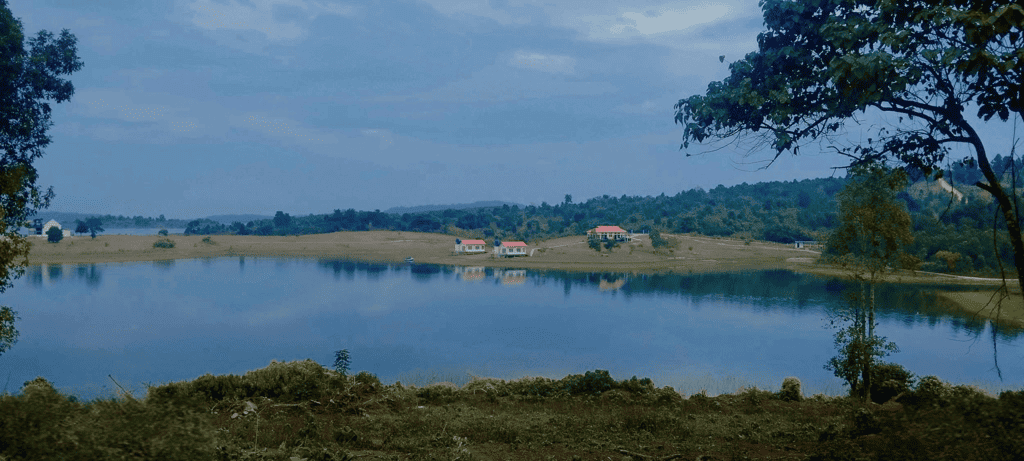
Umrangso, approximately 112 kilometres from Haflong along mountain roads, sits around the Kopili Hydroelectric Project reservoir — a combination of industrial engineering and natural scenery that creates one of the most unusual landscapes in Dima Hasao. The reservoir, backed by forested hills and supplied by a dam that provides much of Assam’s power, is the setting for boating, angling, and some of the district’s most dramatic open-water views.
Beside the reservoir lies one of Dima Hasao’s most frequently overlooked landmarks: the Umrangso Natural 18-Hole Golf Course. The course sits at the junction of the reservoir’s forested banks and open hillside meadow, making it one of the most scenically distinctive golf settings in the Northeast. Even non-golfers find it worth visiting for the landscape alone — a wide, naturally contoured green corridor against the reservoir backdrop.
The Amur Falcon Festival
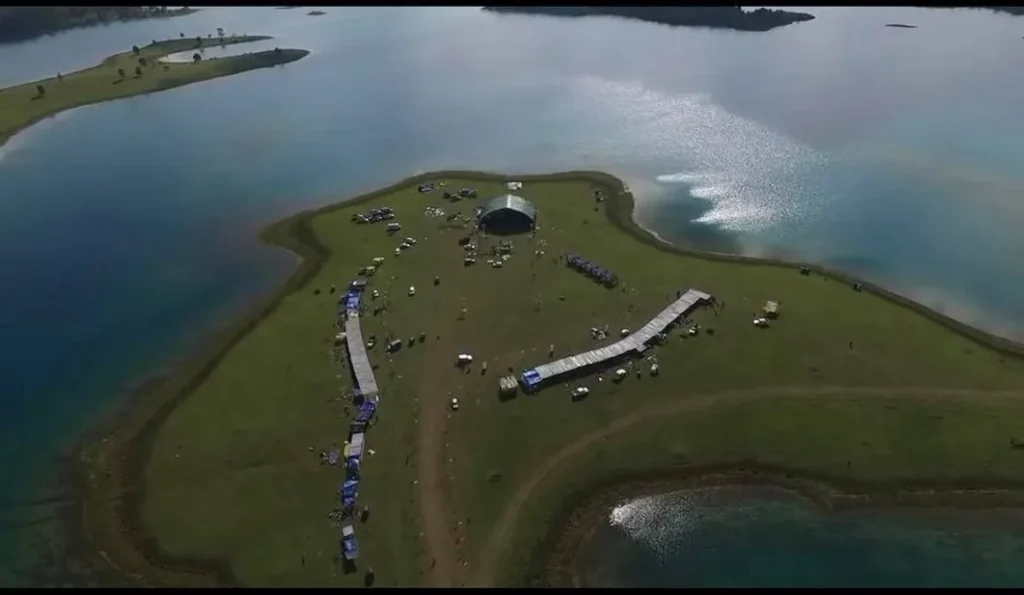
Each winter, the skies over the Kopili reservoir area host one of the most extraordinary wildlife spectacles in India: the arrival of Amur Falcons migrating from Siberia. These small raptors — among the longest-distance migrants of any bird of prey in the world — use the reservoir and its surrounding forests as a roosting stopover, arriving in the tens of thousands before continuing their onward journey to southern Africa. The Falcon Festival at Umrangso celebrates this annual phenomenon with local cultural programmes, conservation awareness activities, and guided wildlife viewing. The event has grown into one of the most distinctive annual gatherings in the Dima Hasao calendar, drawing both birders and general travellers who encounter the spectacle for the first time with barely contained disbelief.
Garampani Hot Springs
Near Umrangso, the Garampani hot springs offer thermal water with the warm-mineral quality that spring-fed pools have provided travellers for centuries. The springs are a functional rest stop on the circuit between Haflong and the southern reaches of the district.
Offbeat & Emerging Destinations
Khobak Village & the Lungzubel Megalithic Jars
In the hills above Khobak Village lives the Biate community, one of Dima Hasao’s oldest tribal groups, and with them the district’s most archaeologically mysterious inheritance: the Lungzubel site, where ancient megalithic stone jars stand in the landscape as silent evidence of a pre-Christian material culture. The jars were used historically for the fermentation of rice beer — a function that connects them, across centuries, to the living tradition of rice wine production that continues in Dimasa households today. The site is not formally excavated or interpreted for visitors, which makes it all the more compelling as an encounter with archaeological evidence in its natural context.
Thuruk Village — Frost & Snow in Assam
Thuruk Village sits at sufficient altitude in the Barail foothills that it occasionally experiences light snowfall or frost conditions during the coldest weeks of winter — making it one of the few locations in Assam where this is possible. For travellers who associate Assam exclusively with the subtropical plains and tea gardens of the Brahmaputra valley, finding frost-covered hillside settlements is a genuinely disorienting and memorable experience. The village is best visited in December or January for the best chance of catching cold-weather conditions.
Hajong Lake — The Tortoise Lake
Hajong Lake is a small natural water body with a reputation disproportionate to its size: it serves as a natural sanctuary for rare freshwater tortoise species and is wrapped in tribal conservation traditions that predate formal wildlife protection in Assam by generations. The local communities have historically treated the lake and its tortoise population as protected under customary law — a form of indigenous conservation that remains ecologically effective. The site has an unhurried, contemplative quality that rewards visitors who come without expectations of spectacle.
Fiangpui Church & Viewpoint
Fiangpui Church, built on a hill summit near Haflong, is the largest and oldest church in Dima Hasao district. Its hilltop position makes it equally significant as a viewpoint — on clear mornings, the panoramic view across the town of Haflong and the valley below is among the finest accessible overlooks in the district. The church itself is architecturally distinctive within the broader landscape of hill district religious architecture, reflecting the deep Christian heritage of many of the district’s tribal communities.
Maibang — The Dimasa Capital in Stone
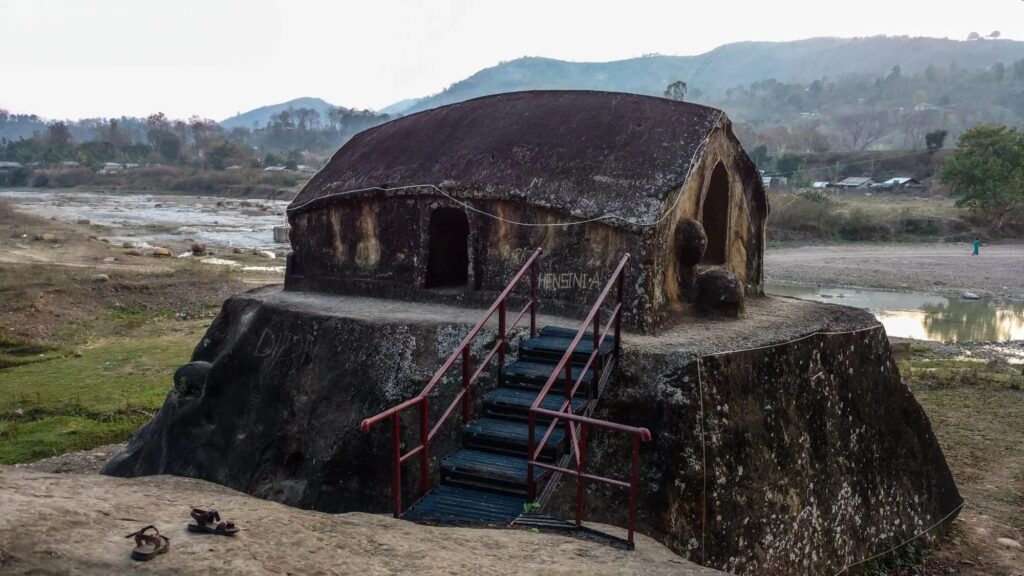
Maibang, 53 kilometres from Haflong on the Mahur River, was the capital of the Dimasa Kachari Kingdom before it relocated to Dimapur (now in Nagaland). The ruins at Maibang include the Stone House — the only ancient stone building in the Dima Hasao area, its construction method still debated by historians — and the active Ramchandi Temple, where a living Hindu religious tradition continues within the archaeological landscape. Maibang means ‘land of prosperity’ in the Dimasa language, and the setting beside the Mahur River gives the site a tranquility that is almost at odds with the medieval significance of what stands here.
| Judima GI Tag — What It Means: The Geographical Indication awarded to Judima rice wine in 2021 was the first ever given to a rice wine from Northeast India. It protects the name ‘Judima’ for exclusive use by the Dimasa community of Dima Hasao. Purchasing Judima directly from a Dimasa producer during the Bushu Dima festival or through local markets is simultaneously the most authentic cultural experience and the most direct economic benefit a visitor can provide to the community. |
Panimur Falls — The Niagara of Assam
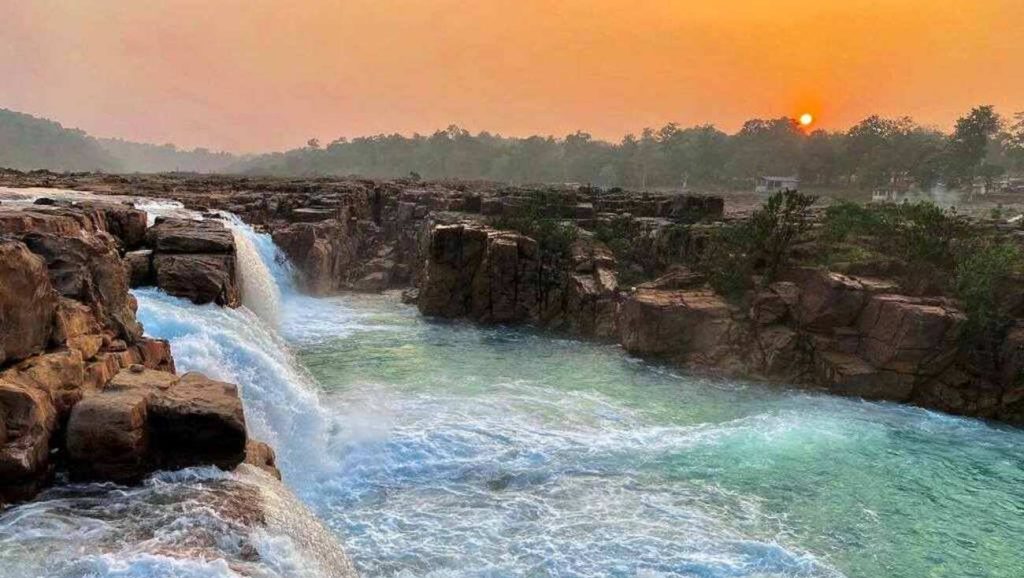
Panimur Falls, on the Kopili River in the southern reaches of the district, is the largest waterfall in Dima Hasao and one of the most impressive in all of Assam. The falls are at their most dramatic during and immediately after the monsoon (July to September), when the full volume of the Kopili comes over the drop, but remain accessible and impressive throughout the October–April window. The Magh Purnima festival in January or February draws pilgrims and travellers from across the region to the falls’ riverine setting.
Two Routes Through Dima Hasao
Route 1 — 3-Day Cultural & Heritage Circuit
- Day 1 — Arrive Haflong by Vistadome train from Guwahati via Lumding (see below); Haflong Lake at dusk; Fiangpui Church viewpoint at sunset if arriving early enough
- Day 2 — Drive to Maibang (53 km): Stone House ruins, Ramchandi Temple, Mahur River setting; return via Jatinga village and the Ethnic Village
- Day 3 — Morning: Khobak Village and the Lungzubel megalithic stone jars (Biate community); afternoon: Haflong orchid garden and Judima tasting at a Dimasa producer; depart Haflong
Route 2 — 4-Day Adventure & Offbeat Circuit
- Day 1 — Arrive Haflong by Vistadome; acclimatise; Haflong Lake and Fiangpui Church viewpoint
- Day 2 — Tumjang Peak trekking (overnight camp recommended for cloud-sea sunrise); local guide from Haflong essential
- Day 3 — Drive to Umrangso (112 km): Natural Golf Course at Kopili reservoir; Amur Falcon viewing (October–November); Garampani hot springs; overnight in Umrangso
- Day 4 — Morning Kopili reservoir boating; drive to Panimur Falls; return to Haflong or continue to Silchar
How to Reach Dima Hasao
By Train — The Vistadome Hill Line
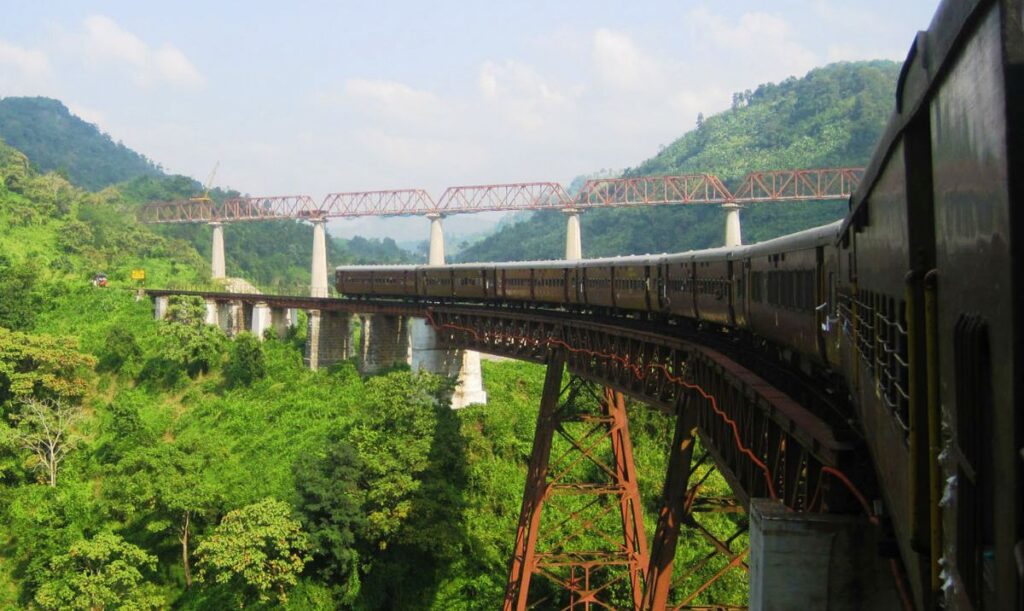
The train journey from Guwahati to New Haflong via Lumding is one of the finest rail experiences in Assam and a destination attraction in its own right. The Lumding–Silchar hill section — on which New Haflong station sits — is an engineering achievement in mountain terrain, with the track passing through forested gorges, over iron bridges, and along hillside cuttings that bring the Barail landscape right to the carriage window.
The Vistadome tourist coaches, with their large panoramic windows and roof glazing, are available on select trains on this route. Booking the Vistadome coach significantly enhances the journey — the landscape visibility and the quality of natural light through the expanded glass make the 5–6 hour hill section feel less like a commute and more like a moving panorama. Seats in Vistadome coaches can be booked through the IRCTC website or app; book as far in advance as possible, as these coaches fill quickly on weekend departures.
| Train Booking Tip: Search for trains from Guwahati or Lumding to New Haflong on IRCTC. Look for ‘VISTADOME’ coach class when selecting seats. Trains on the hill section run less frequently than on main lines — check the IRCTC timetable for current schedules and book several weeks ahead for weekend travel. |
By Road
NH27 from Guwahati covers approximately 310 kilometres (7–8 hours). NH37 via Silchar provides an alternative southern approach. Mountain road conditions require careful driving; the journey is scenic but slow after the plains section ends.
By Air
Silchar Airport (approximately 108 km from Haflong) is the nearest. Guwahati Airport (310 km) offers better connectivity and pairs naturally with a Vistadome train leg onward to Haflong.
Best Time to Visit Dima Hasao
- October to April — Best overall conditions; pleasant temperatures in Haflong; all roads accessible; Barail trekking comfortable
- September to October — Jatinga bird phenomenon active; Amur Falcon Festival at Umrangso (November)
- January to February — Bushu Dima Festival; Magh Purnima at Panimur Falls; cool and clear; possible frost at Thuruk Village
- December to January — Best chance of frost/cold weather at Thuruk Village; Barail ridge walks in crisp visibility
- June to September — Monsoon; Panimur at maximum volume; roads can be difficult; Jatinga most active at season’s end
