




Almost everything that enters Nagaland passes through Dimapur first. The only airport in Nagaland is here. The only railway station in Nagaland is here. The highways from Assam that thread up into the hill districts of one of India’s most ethnically complex states all originate in Dimapur. The city is the commercial, logistical, and transit centre of Nagaland, sitting at the geographical boundary where the rolling plains of Assam give way to the forested ridges of the Naga Hills — and its position at this boundary has defined its character for well over a millennium.
Dimapur means the ‘city near a great river’ in Naga — the great river being the Dhansiri, which flows along the city’s edge and gave the Kachari kingdom that once ruled here its agricultural wealth. The Dimasa Kachari were a Tibeto-Burman people who established their capital at Dimapur and built, sometime between the 10th and 13th centuries CE, a city significant enough to leave ruins that still stand in the city centre today — mysterious mushroom-shaped stone pillars of uncertain function, inscribed with birds, elephants, flowers, and the figure of a man raising his arms to the sky.
Dimapur is the only city in Nagaland situated in the plains rather than in the hills — a geographical distinction that makes it simultaneously the most accessible and the most commercially developed part of the state. It is the city through which all routes to Kohima, Mokokchung, Mon, and the more remote hill districts begin. Travelers who spend only a transit night here miss a city with genuine historical depth and a commercial energy that reflects the entire Northeast’s diversity.
Quick Facts About Dimapur
| State | Nagaland |
| District | Dimapur |
| Role | Commercial hub; only city in Nagaland on the plains; transport gateway |
| Altitude | 232 metres — significantly lower than most Nagaland towns |
| River | Dhansiri River — tributary of the Brahmaputra |
| Airport | Dimapur Airport (DMU) — only airport in Nagaland; 6 km from Kachari Ruins |
| Railway | Dimapur Railway Station — only railway station in Nagaland |
| Distance to Kohima | 74 km; approximately 2.5–3 hours by road on NH29 |
| ILP Required | Yes — Inner Line Permit required for all Indian nationals entering Nagaland |
| Best Time | October to March |
| Climate | Warmer than hill towns; subtropical plains climate; monsoon heavy July–September |
The History of Dimapur — City of the Kachari Kingdom
The Dimasa Kachari Kingdom
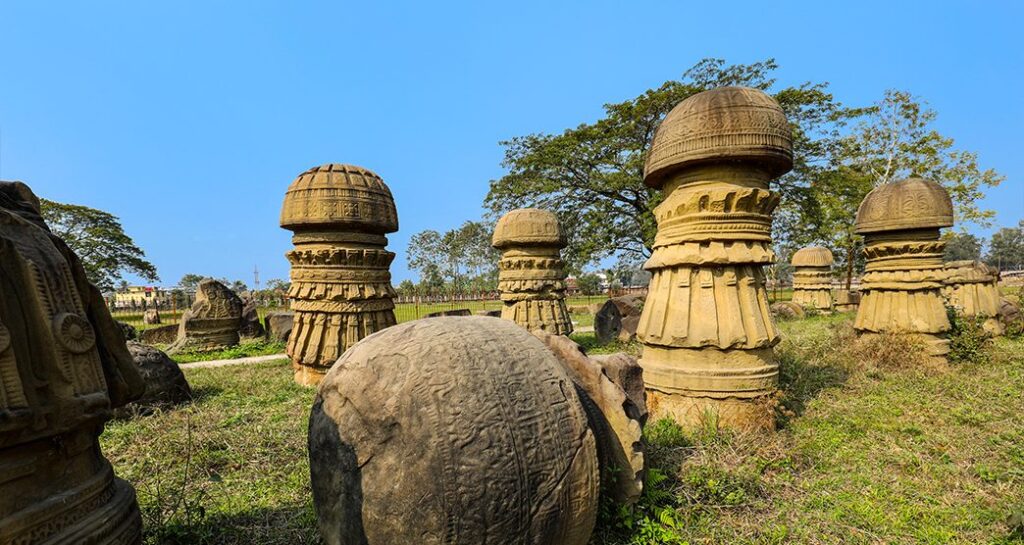
The Dimasa Kachari — a Tibeto-Burman people whose broader ethnic group still inhabits parts of Assam and Nagaland — established their capital at Dimapur well before the 13th century. At its height, the Kachari kingdom extended across much of the plains of what is now the Brahmaputra valley, and Dimapur was its political, ceremonial, and commercial centre. The kingdom was known for its prosperity and military strength — and for a building programme that produced the extraordinary pillar complex that survives today in the city centre.
In the 13th century, the Ahom kingdom — a powerful Tai-Ahom dynasty from Southeast Asia that established and maintained a kingdom in Assam from the 13th to the 19th century — invaded and displaced the Kacharis from Dimapur. The Kachari kingdom retreated eastward, eventually relocating to Khaspur near Silchar in present-day Assam, where a different branch of the dynasty continued until the British colonial period. The ruins of their Dimapur capital were left behind, their original function forgotten or deliberately obscured by the disruption.
WWII — Dimapur as the Allied Supply Base
During the Second World War, Dimapur’s position as the railhead and plains gateway made it the most important Allied logistics base in Northeast India. The Battle of Kohima (April–June 1944), which stopped the Japanese invasion of India, was supplied and reinforced from Dimapur — the 2nd British Division that relieved Kohima marched up the 74-kilometre road from Dimapur to the besieged hill town. Without Dimapur’s rail connection and supply infrastructure, the battle of Kohima could not have been won. The city’s WWII role is rarely celebrated compared to the famous tennis court battle at Kohima, but it was foundational.
Top Attractions in Dimapur
1. The Dimasa Kachari Ruins — The Mushroom Pillars
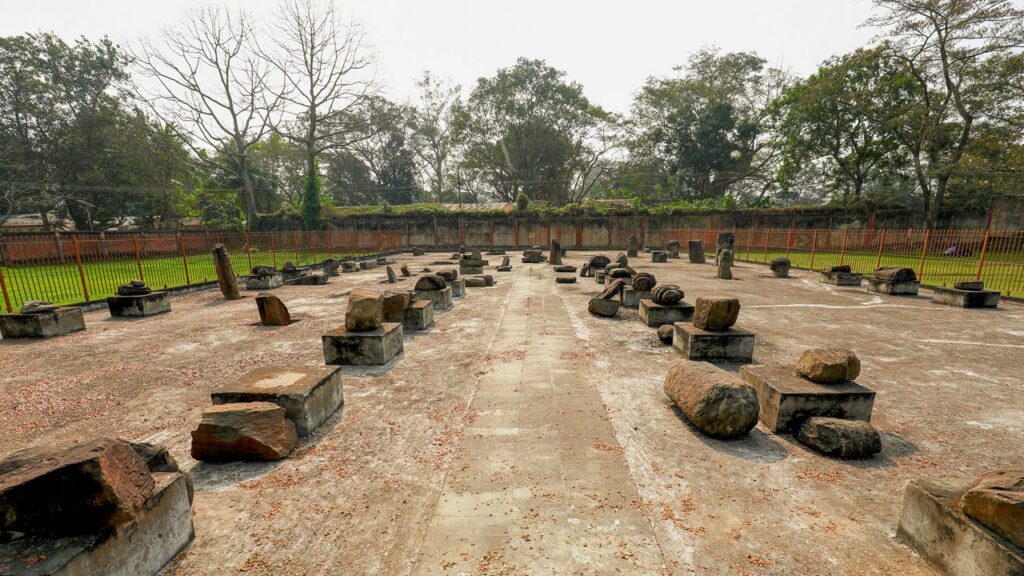
The Kachari Ruins — known formally as the Dimasa Kachari Ruins or Kachari Rajbari Ruins — are the city’s most significant historical attraction and one of the most genuinely mysterious archaeological sites in Northeast India. Located behind the Naga Shopping Arcade in the heart of Dimapur, the ruins consist of a series of stone pillars of sandstone, generally 8 to 10 feet (approximately 2.4–3 metres) high, topped with distinctive mushroom-shaped domes.
The pillars are carved with representations of birds, animals (deer, elephants, cows), flowers, and spearheads — and, most intriguingly, with the image of a human figure raising both arms skyward as if in celebration or supplication. The meaning of this recurring figure is not known. Some pillars are V-shaped and are believed to be memorial stones. The purpose of the entire complex — whether ceremonial, ritual, astronomical, or some combination — remains debated among archaeologists.
- Approximately 30 pillars remain standing in varying states of preservation
- Carved in sandstone with motifs including lotus flowers, Aryan decorative elements, birds, and animals
- A chess-like arrangement, believed by local folklore to have been a game played by giants of the Kachari era
- The site is protected by iron railings; respectful visitors walk among the pillars without climbing them
- Best visited early morning (7–9 AM) for the light on the carved surfaces and before the midday heat
| Historical note: The Incredible India description dates the ruins to the 10th century; other sources cite a broad 10th–13th century range. The pillars are unique to this site and culture — no comparable megalithic tradition exists at this scale anywhere else in Nagaland or Northeast India. For travelers interested in pre-Ahom archaeology, these ruins represent a genuinely rare survival. Source: Incredible India official; Dimapur NIC district site; tripoto.com. |
2. Diezephe Craft Village
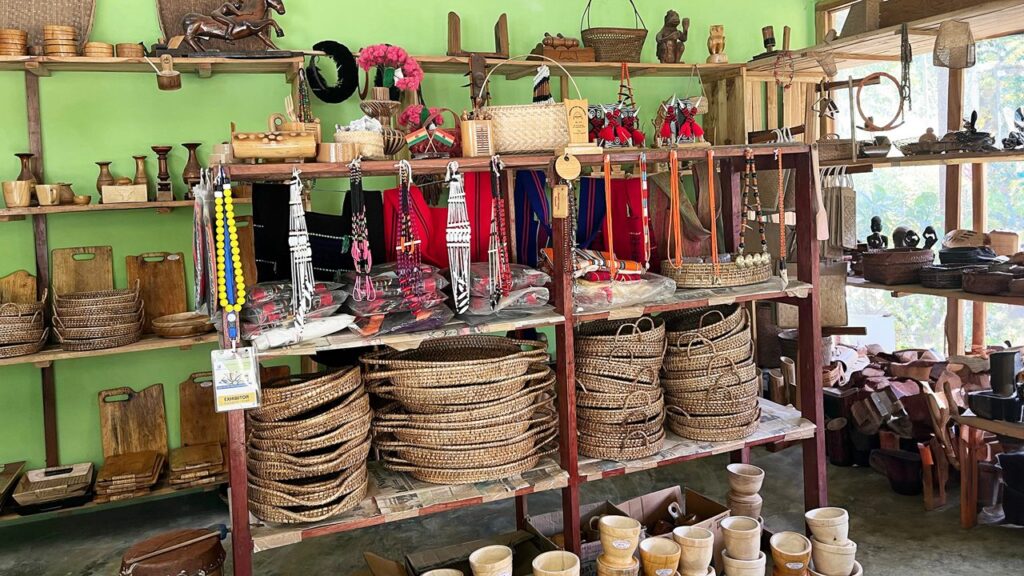
The Diezephe Craft Village, 13 kilometres from Dimapur city centre in the direction of Kohima, is one of the finest places in Nagaland to observe and purchase traditional Naga handicrafts made by working artisans. The village is home to a community of skilled craftspeople who specialise in wood carving, bamboo and cane work, and handloom weaving — producing items of genuine quality rather than mass-produced tourist goods.
- 13 km from Dimapur on the Kohima highway; approximately 30 minutes
- Nagaland Handloom and Handicrafts Development Corporation has supported the village’s artisan community
- Wood carving: traditional Naga motifs, warrior figures, clan animals
- Bamboo and cane: baskets, furniture, household items of exceptional craft quality
- Handloom weaving: the Naga shawl tradition in multiple tribal patterns — purchase directly from the weaver for authenticity and fair price
3. Triple Falls (Seithekima Village)
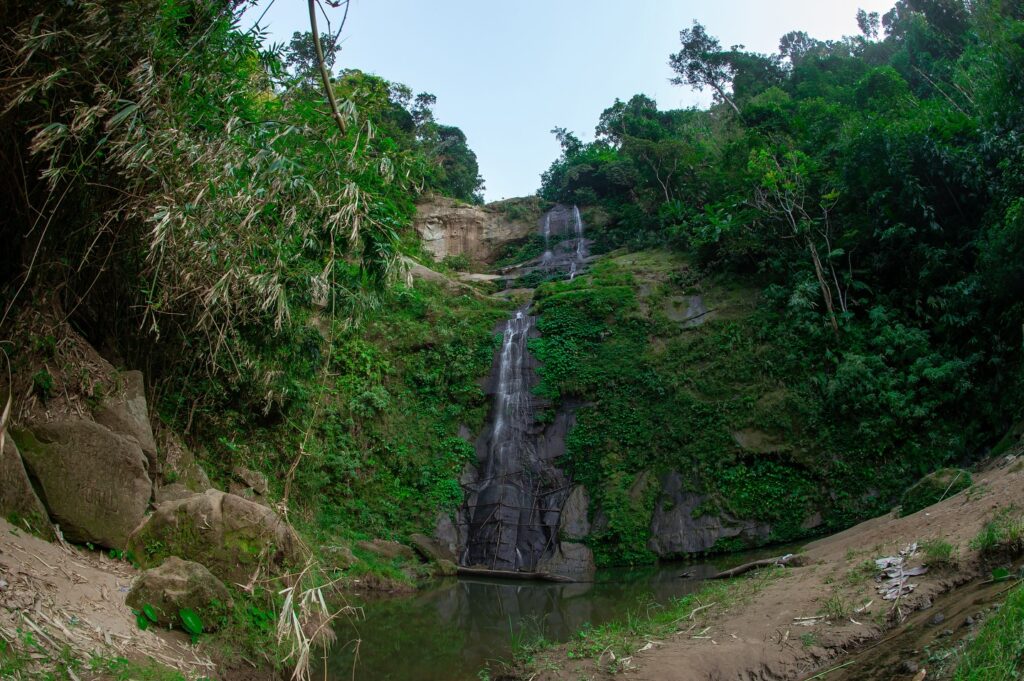
Triple Falls, located in Seithekima village near Dimapur, is a three-strand waterfall that cascades from approximately 280 feet (85 metres) into a natural pool, surrounded by lush subtropical forest. One of the few natural spectacles accessible from Dimapur without a hill drive, Triple Falls makes an excellent half-day excursion.
- Height: approximately 280 feet (85 metres)
- The falls divide into three separate streams before reuniting in the pool
- The surrounding forest is part of the broader Dimapur subtropical zone — bird-rich in the early morning
- Seithekima village is approximately 15–20 km from Dimapur city
4. Rangapahar Reserve Forest
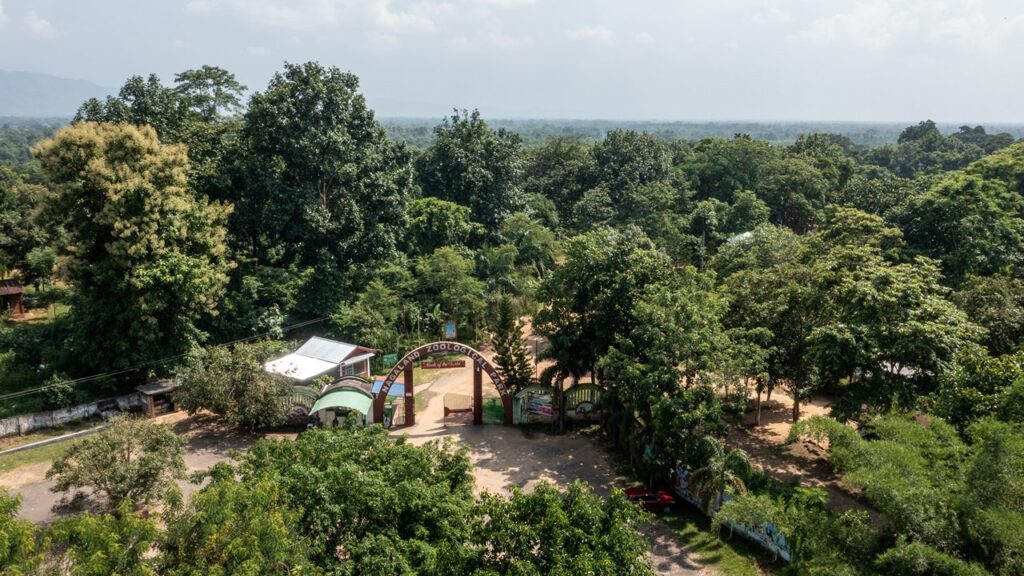
The Rangapahar Reserve Forest, on the outskirts of Dimapur, is a protected forest patch that provides the city with its most accessible encounter with Nagaland’s subtropical forest biodiversity. The forest houses several species of mammals, numerous medicinal plants, and a diverse bird community. The Nagaland Zoological Park — housing tigers, leopards, deer, and hornbills — is adjacent to the reserve.
- Nagaland Zoological Park: open 8 AM to 4 PM weekdays (closed Monday); approximately 80–150 daily visitors on weekdays
- Forest walks for birdwatching possible at dawn with forest department permission
- Medicinal plant diversity — the reserve is used by Naga traditional medicine practitioners
5. Hong Kong Market
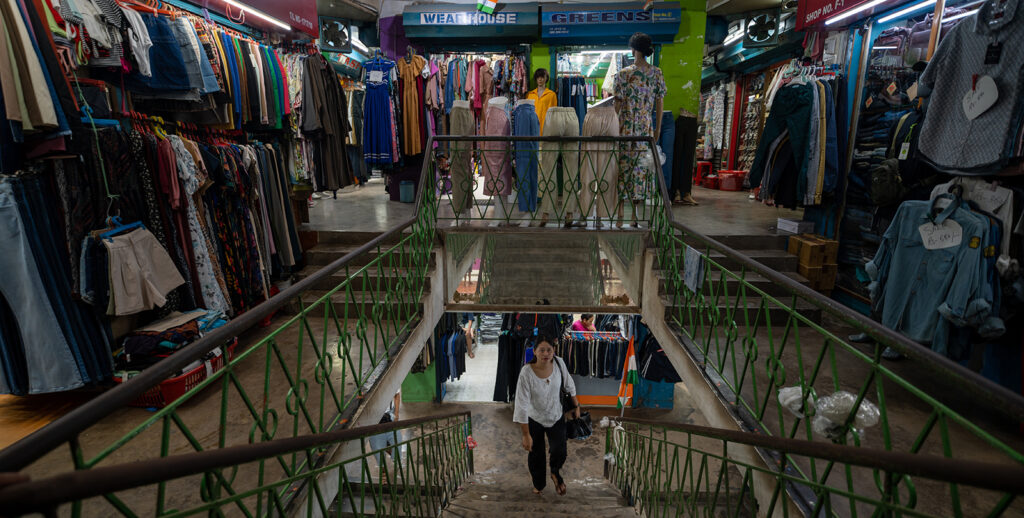
The Hong Kong Market in central Dimapur is one of the most commercially eclectic markets in the Northeast — a multi-level trading space where imported goods from Southeast Asia and China sit alongside traditional Naga handicrafts, tribal jewellery, and the extraordinary range of Naga food products: fermented meats, bamboo shoot preparations, dried fish, and the Bhoot Jolokia (ghost chili) — one of the world’s hottest chilies, grown in and around Dimapur and sold fresh or dried.
- The Bhoot Jolokia / Raja Mircha — the ghost pepper — originates in this region; several stalls specialise in it
- Naga shawls from multiple tribal traditions available; compare prices across stalls before buying
- Ruzaphema Bazaar (5 km from city centre toward Kohima): handicrafts and the extraordinary range of Naga foodstuffs including live insects sold as protein
Naga Cuisine in Dimapur
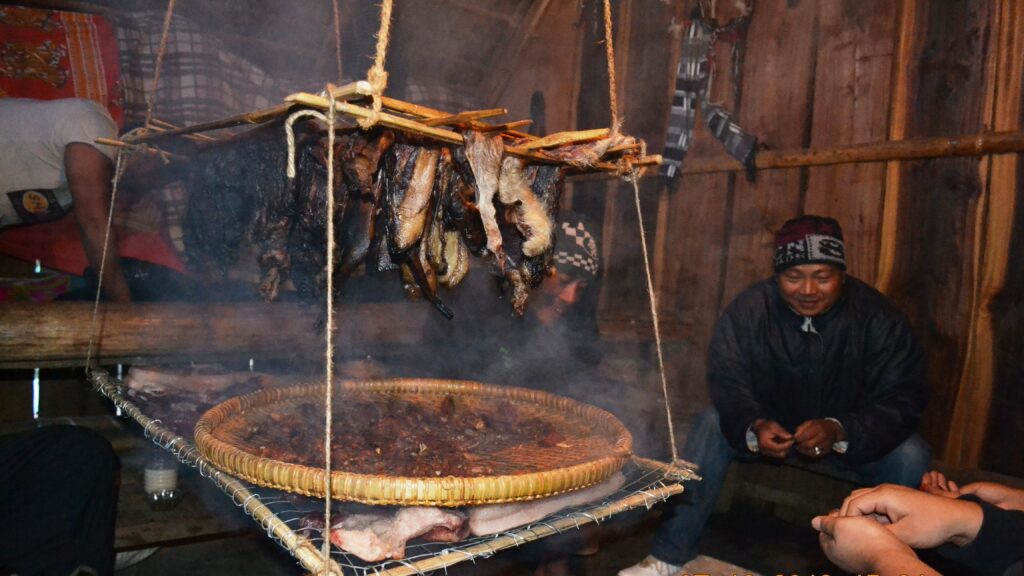
Dimapur’s position as Nagaland’s commercial hub means it offers the widest range of Naga tribal cuisine available in any single city — including preparations from the Ao, Angami, Sumi, Chakhesang, and Lotha traditions that are not available in smaller hill towns.
- Smoked pork with Bhoot Jolokia — The most iconic Naga preparation; slow-smoked pork with one of the world’s hottest chilies; a defining flavour experience
- Bamboo shoot curry — Fermented bamboo shoot cooked with pork, chicken, or beef; tangy, intensely savoury
- Anishi — Dried yam leaves fermented with pork fat; a distinctive Naga preparation that divides visitors but is central to the Angami food tradition
- Rice beer (Zutho/Dzutse) — Fermented rice beer served at room temperature in bamboo vessels; the social drink of the Naga peoples
- Sticky rice preparations — Multiple varieties of glutinous rice cooked in bamboo, in leaf packages, or with sesame — the staple and the craft food together
How to Reach Dimapur
- By Air: Dimapur Airport is well-connected to Delhi, Kolkata, Guwahati, and Imphal. Taxis from the airport to the city centre take approximately 20 minutes.
- By Train: Dimapur Railway Station is on the broad-gauge line from Guwahati; trains from Guwahati take approximately 5 hours. The Saraighat Express and other Assam mainline trains connect Dimapur regularly.
- By Road: NH29 from Guwahati (approximately 280 km, 7–8 hours) via Tezpur is the main road entry. NH29 continues to Kohima (74 km, 2.5–3 hours from Dimapur).
ILP — Obtain Before Entering Nagaland
All Indian nationals require an Inner Line Permit to enter Nagaland. Obtain at Nagaland House offices in Guwahati, Delhi, or Kolkata, or online at Nagaland ILP. The permit can also be obtained at Dimapur’s entry checkpoint, but an advance online application is strongly recommended.
Also Read: How to Apply For Travel Permits for Traveling to Northeast India
Best Time to Visit Dimapur
- October to February: Best weather; comfortable plains temperatures (15–25°C); transition from Hornbill Festival season
- November to December: Hornbill Festival (1–10 December in Kohima, 74 km away) coincides with peak tourist season; Dimapur as the transit hub is at its most active
- July to September: Monsoon; heavy rain; the plains can flood; avoid if possible
